
Search
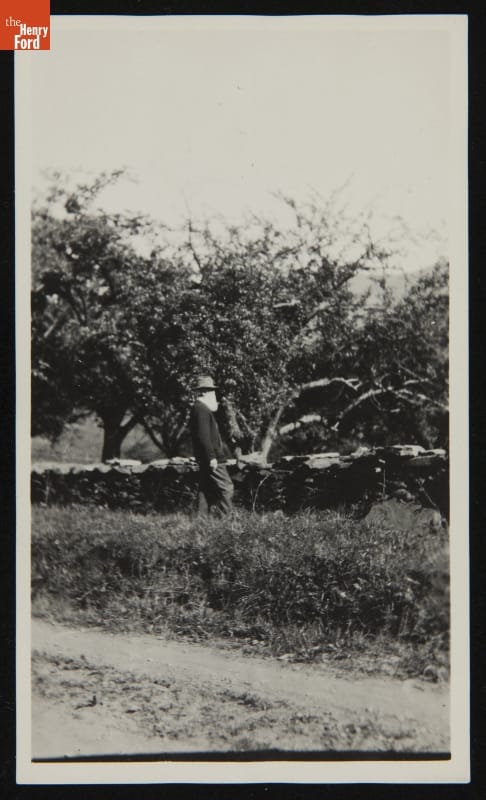
- John Burroughs at Woodchuck Lodge, September 22, 1917 - John Burroughs (1837-1921) was an internationally known naturalist and essayist who wrote about accessible and familiar landscapes. In 1913, with financial assistance from Henry Ford, Burroughs purchased the house built by his brother Curtis on land near Burroughs's birthplace in Roxbury, New York. Woodchuck Lodge, as Burroughs referred to it, became his summer retreat and its natural surroundings became the subject of his creative works.
- September 22, 1917
- Collections - Artifact
John Burroughs at Woodchuck Lodge, September 22, 1917
John Burroughs (1837-1921) was an internationally known naturalist and essayist who wrote about accessible and familiar landscapes. In 1913, with financial assistance from Henry Ford, Burroughs purchased the house built by his brother Curtis on land near Burroughs's birthplace in Roxbury, New York. Woodchuck Lodge, as Burroughs referred to it, became his summer retreat and its natural surroundings became the subject of his creative works.
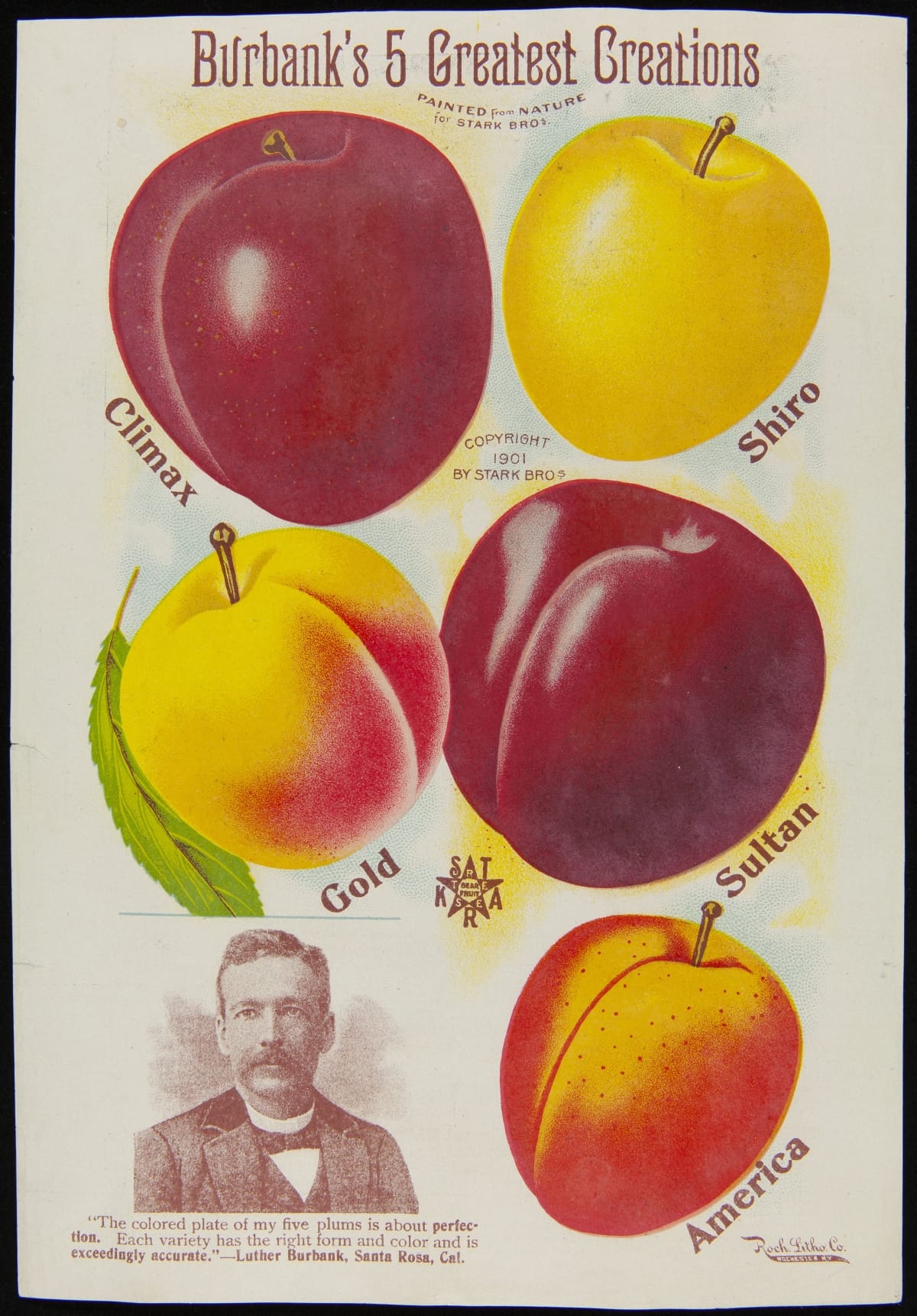
- Stark Bro's Nurseries & Orchards Company Trade Card, "Burbank's 5 Greatest Creations," 1901 - Luther Burbank's 1893 catalog, <em>New Creations in Fruits and Flowers</em>, captured the attention of established nursery businesses, including Stark Brothers Nurseries in Missouri. Clarence Stark traveled to California to see Burbank's creations for himself and purchased the rights to sell some of Burbank's plum varieties. This began an exclusive distribution partnership that continued after Burbank's death.
- 1901
- Collections - Artifact
Stark Bro's Nurseries & Orchards Company Trade Card, "Burbank's 5 Greatest Creations," 1901
Luther Burbank's 1893 catalog, New Creations in Fruits and Flowers, captured the attention of established nursery businesses, including Stark Brothers Nurseries in Missouri. Clarence Stark traveled to California to see Burbank's creations for himself and purchased the rights to sell some of Burbank's plum varieties. This began an exclusive distribution partnership that continued after Burbank's death.
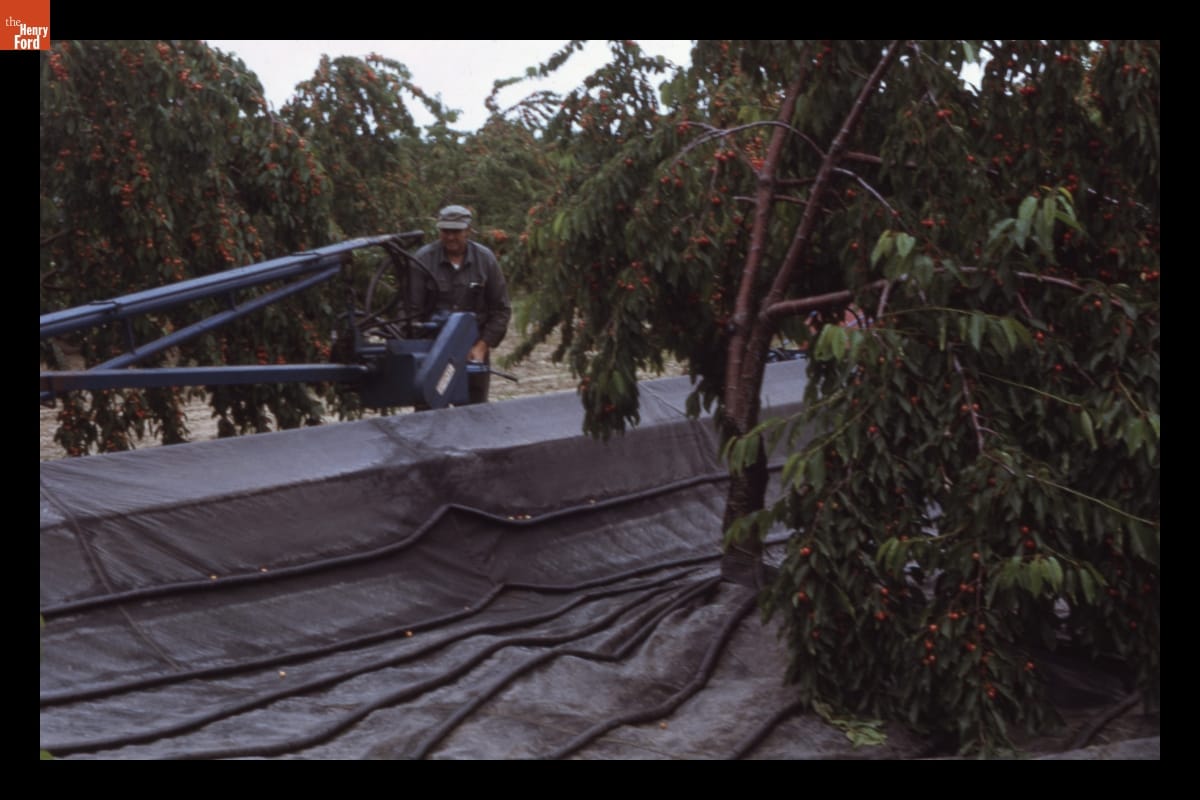
- Henry Gee Preparing the Tree Shaker during Cherry Harvest, 1972 - Cherry growers hired pickers (often migrant laborers) to harvest their crops, but growers sought faster, less labor-intensive solutions. Agricultural engineers developed mechanical harvesters by the late 1960s. These machines shook the trees, causing the ripe fruit to drop onto collecting mats. This slide shows a stage in a mechanical harvest on a family farm in Michigan's cherry-growing region near Traverse City.
- 1972
- Collections - Artifact
Henry Gee Preparing the Tree Shaker during Cherry Harvest, 1972
Cherry growers hired pickers (often migrant laborers) to harvest their crops, but growers sought faster, less labor-intensive solutions. Agricultural engineers developed mechanical harvesters by the late 1960s. These machines shook the trees, causing the ripe fruit to drop onto collecting mats. This slide shows a stage in a mechanical harvest on a family farm in Michigan's cherry-growing region near Traverse City.
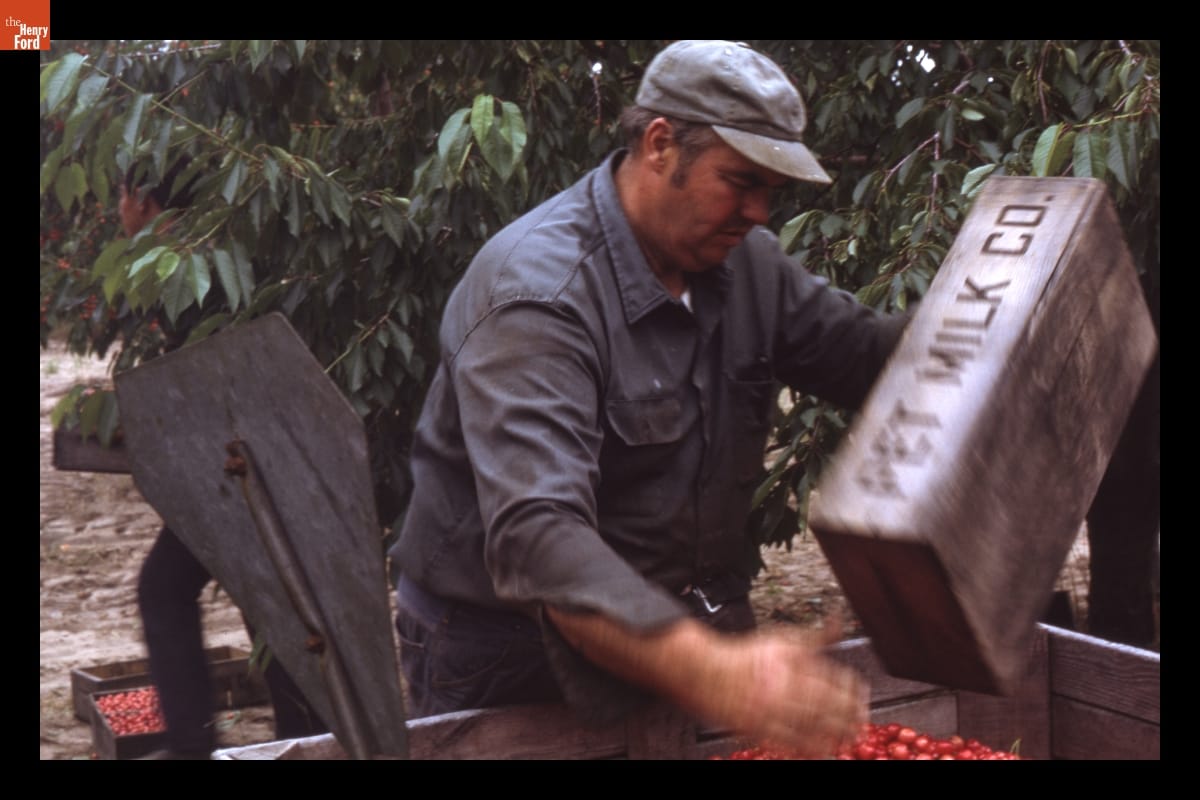
- Henry Gee Loading Cherries into a Crate, 1972 - Cherry growers hired pickers (often migrant laborers) to harvest their crops, but growers sought faster, less labor-intensive solutions. Agricultural engineers developed mechanical harvesters by the late 1960s. These machines shook the trees, causing the ripe fruit to drop onto collecting mats. This slide shows a stage in a mechanical harvest on a family farm in Michigan's cherry-growing region near Traverse City.
- 1972
- Collections - Artifact
Henry Gee Loading Cherries into a Crate, 1972
Cherry growers hired pickers (often migrant laborers) to harvest their crops, but growers sought faster, less labor-intensive solutions. Agricultural engineers developed mechanical harvesters by the late 1960s. These machines shook the trees, causing the ripe fruit to drop onto collecting mats. This slide shows a stage in a mechanical harvest on a family farm in Michigan's cherry-growing region near Traverse City.
- Linda Malosh Gee Removing Leaves and Debris from Harvested Cherries, 1972 - Cherry growers hired pickers (often migrant laborers) to harvest their crops, but growers sought faster, less labor-intensive solutions. Agricultural engineers developed mechanical harvesters by the late 1960s. These machines shook the trees, causing the ripe fruit to drop onto collecting mats. This slide shows a stage in a mechanical harvest on a family farm in Michigan's cherry-growing region near Traverse City.
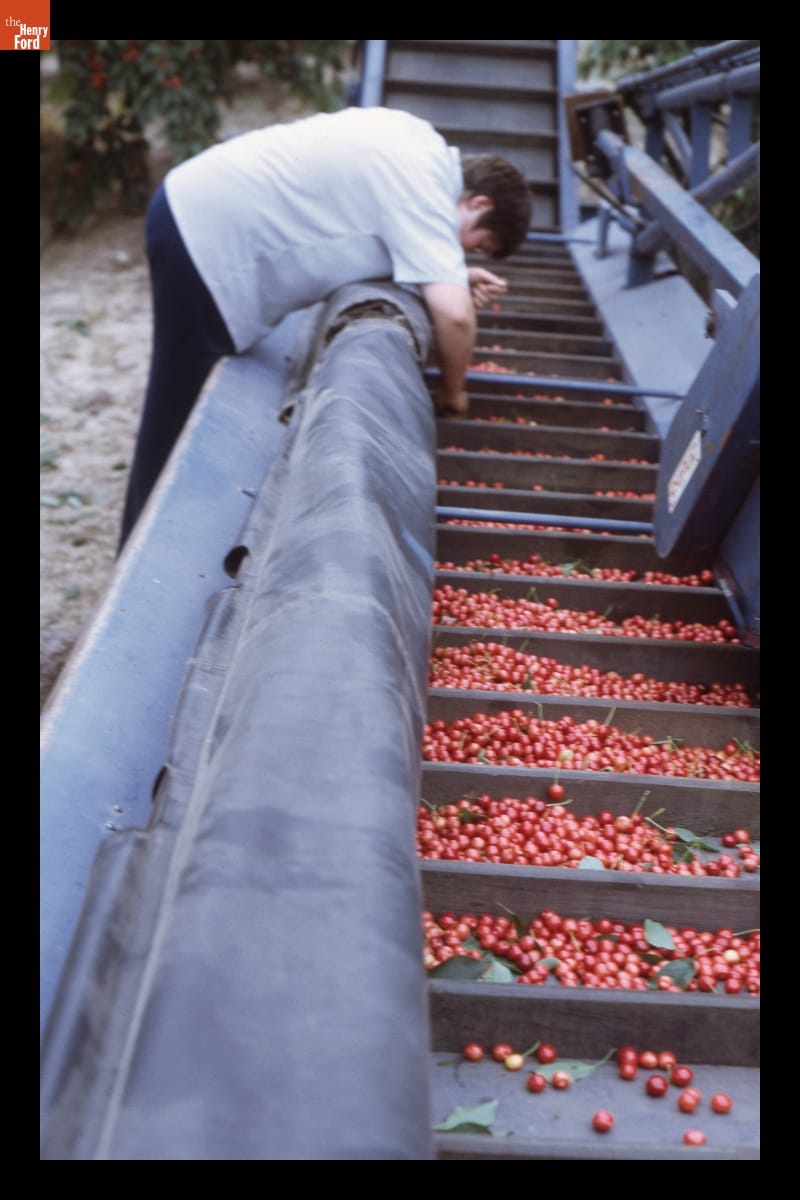
- 1972
- Collections - Artifact
Linda Malosh Gee Removing Leaves and Debris from Harvested Cherries, 1972
Cherry growers hired pickers (often migrant laborers) to harvest their crops, but growers sought faster, less labor-intensive solutions. Agricultural engineers developed mechanical harvesters by the late 1960s. These machines shook the trees, causing the ripe fruit to drop onto collecting mats. This slide shows a stage in a mechanical harvest on a family farm in Michigan's cherry-growing region near Traverse City.
- Worker Driving Tractor through Cherry Orchard, 1972 - Cherry growers hired pickers (often migrant laborers) to harvest their crops, but growers sought faster, less labor-intensive solutions. Agricultural engineers developed mechanical harvesters by the late 1960s. These machines shook the trees, causing the ripe fruit to drop onto collecting mats. This slide shows a stage in a mechanical harvest on a family farm in Michigan's cherry-growing region near Traverse City.
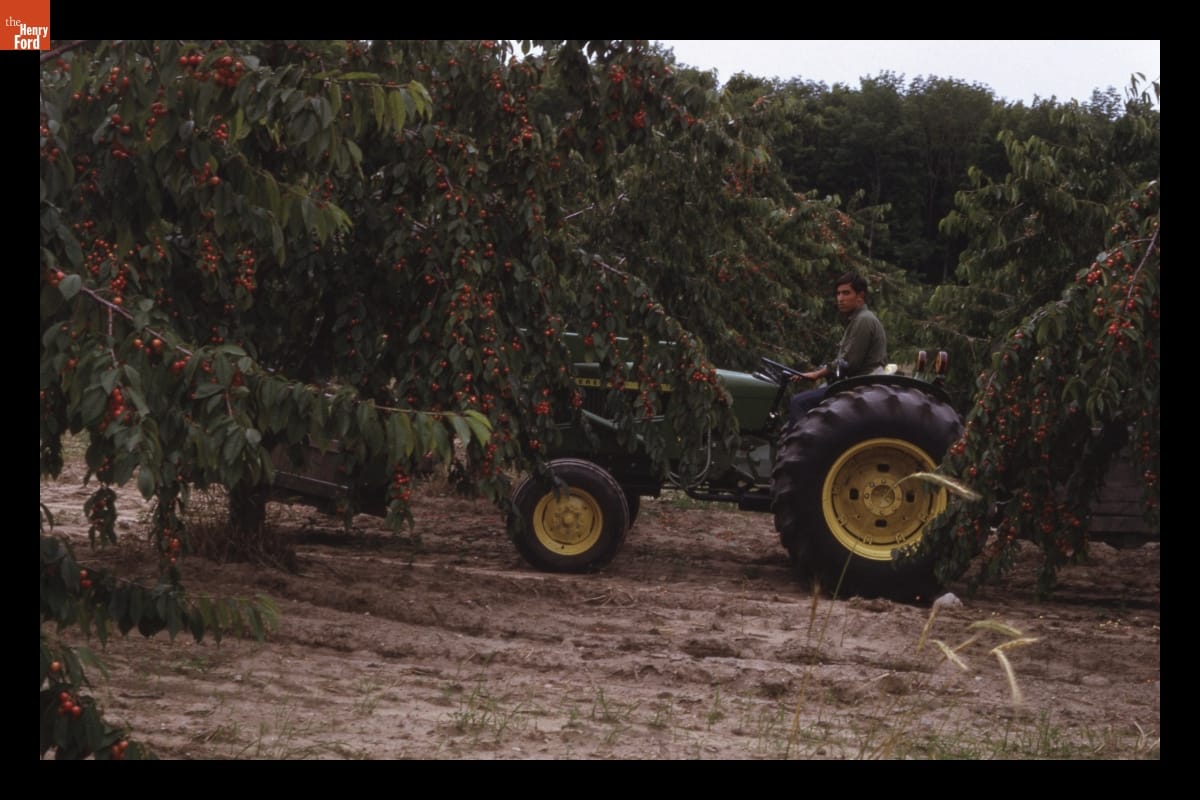
- 1972
- Collections - Artifact
Worker Driving Tractor through Cherry Orchard, 1972
Cherry growers hired pickers (often migrant laborers) to harvest their crops, but growers sought faster, less labor-intensive solutions. Agricultural engineers developed mechanical harvesters by the late 1960s. These machines shook the trees, causing the ripe fruit to drop onto collecting mats. This slide shows a stage in a mechanical harvest on a family farm in Michigan's cherry-growing region near Traverse City.
- Photochrom Print, Oranges Growing in a California Valley, 1898-1905 - From 1895 to 1924, the Detroit Publishing Company was one of the major image publishers in the world. The company had a wide-ranging stock of original photographs, including many scenes from around the world. These colorful prints were reproduced for ads, purchased to decorate homes and offices, bought as souvenirs, and used as teaching tools in schools and libraries.
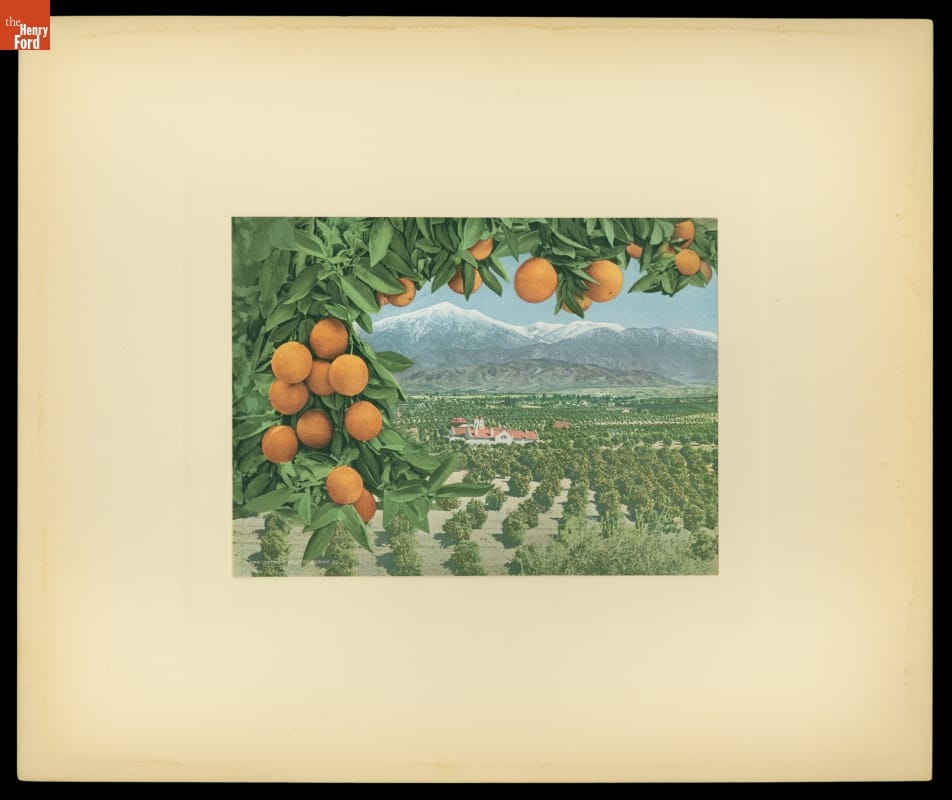
- circa 1898-1905
- Collections - Artifact
Photochrom Print, Oranges Growing in a California Valley, 1898-1905
From 1895 to 1924, the Detroit Publishing Company was one of the major image publishers in the world. The company had a wide-ranging stock of original photographs, including many scenes from around the world. These colorful prints were reproduced for ads, purchased to decorate homes and offices, bought as souvenirs, and used as teaching tools in schools and libraries.
- Photograph Album, California Packing Corporation Ranches and Orchards, 1919-1927 -

- 1919-1927
- Collections - Artifact
Photograph Album, California Packing Corporation Ranches and Orchards, 1919-1927
- Ladder, Used by Luther Burbank, circa 1910 - Luther Burbank (1849-1926), an American horticulturalist and author, gained a reputation for selective breeding that yielded more than 800 new fruits, vegetables, flowers, and other plants. He used traditional gardening tools in his plant research, like this ladder designed for use with fruit trees. With it he could climb into the limbs bearing fruit and clip buds or twigs for grafting.
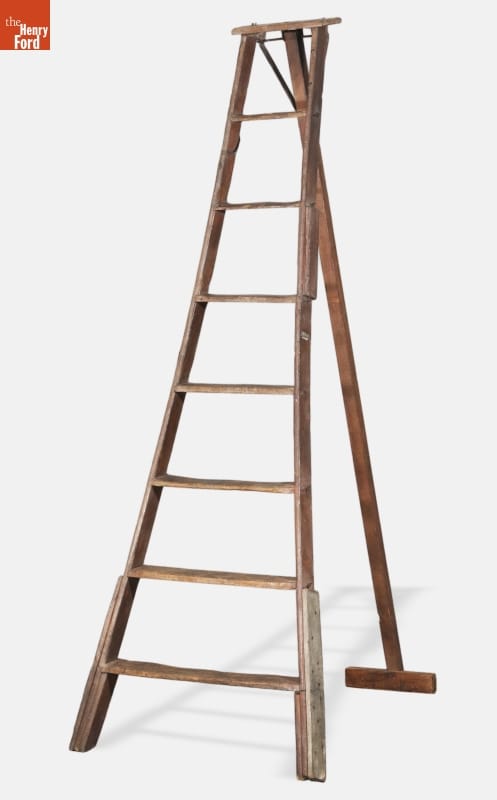
- circa 1910
- Collections - Artifact
Ladder, Used by Luther Burbank, circa 1910
Luther Burbank (1849-1926), an American horticulturalist and author, gained a reputation for selective breeding that yielded more than 800 new fruits, vegetables, flowers, and other plants. He used traditional gardening tools in his plant research, like this ladder designed for use with fruit trees. With it he could climb into the limbs bearing fruit and clip buds or twigs for grafting.
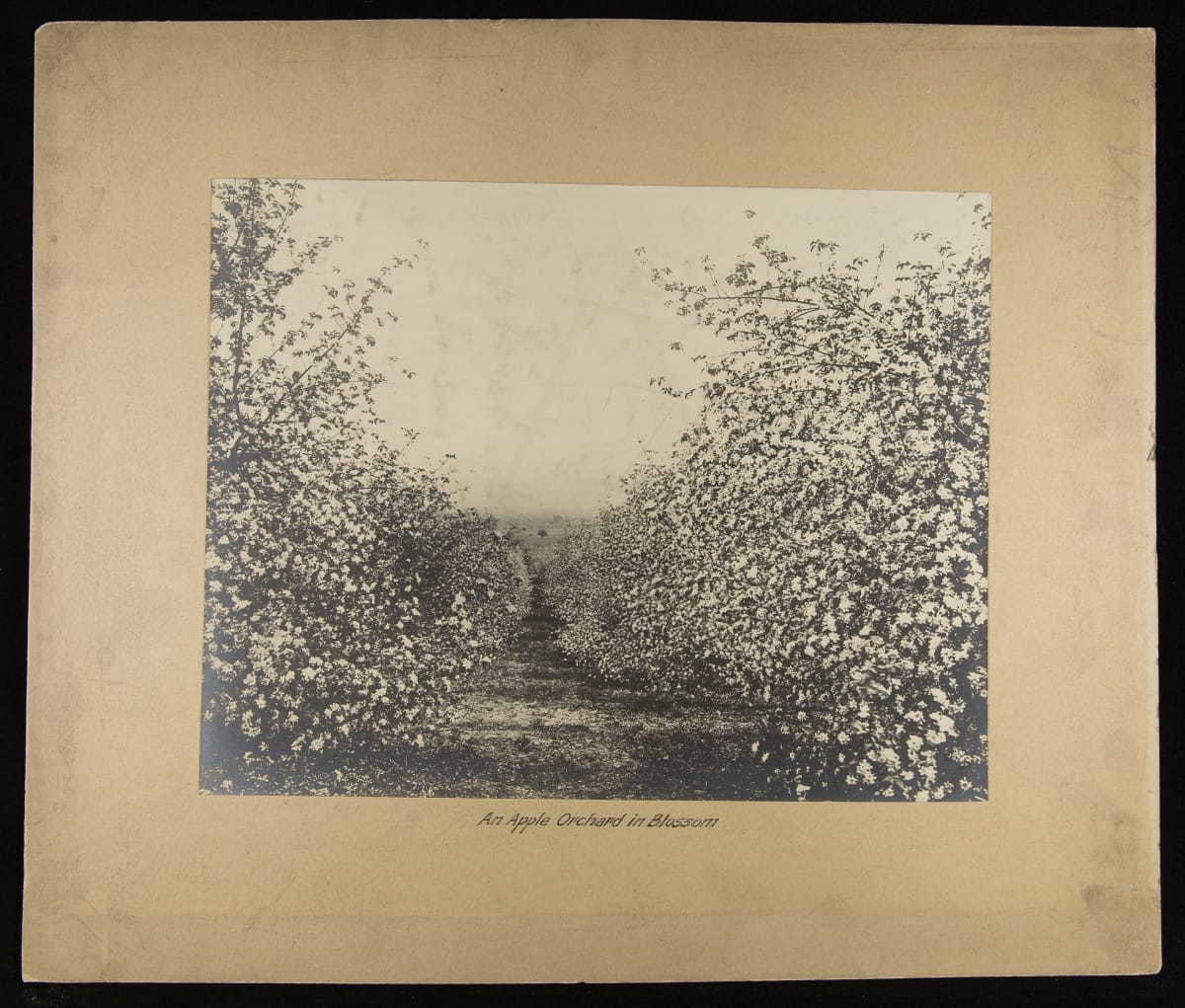
- Apple Orchard in Blossom, circa 1925 - Entrepreneur H.J. Heinz recognized that producing high-quality products began with growing the best ingredients. He managed every aspect of the process from seed selection to harvest to ensure that only the best ingredients became Heinz pickled foods, preserves, and condiments. This photograph shows an apple orchard where apples for Heinz products were grown.
- circa 1925
- Collections - Artifact
Apple Orchard in Blossom, circa 1925
Entrepreneur H.J. Heinz recognized that producing high-quality products began with growing the best ingredients. He managed every aspect of the process from seed selection to harvest to ensure that only the best ingredients became Heinz pickled foods, preserves, and condiments. This photograph shows an apple orchard where apples for Heinz products were grown.