
Search
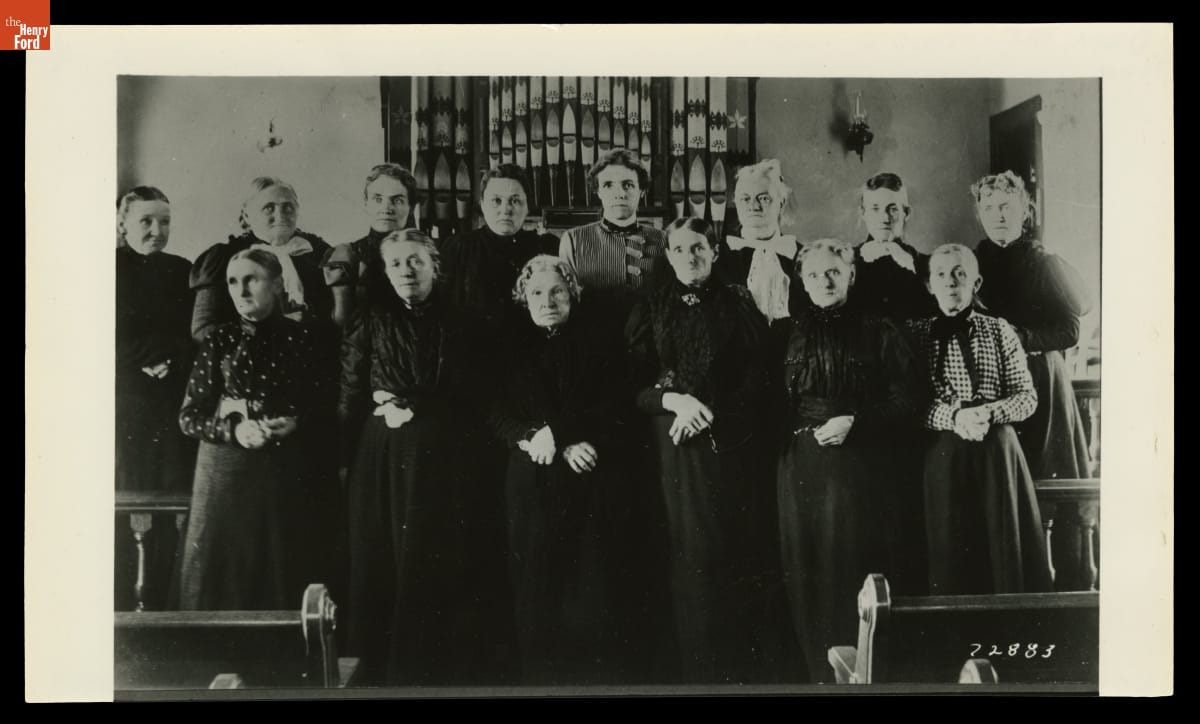
- Women's Group at Christ Episcopal Church, Dearborn, Michigan, circa 1899 -
- circa 1899
- Collections - Artifact
Women's Group at Christ Episcopal Church, Dearborn, Michigan, circa 1899
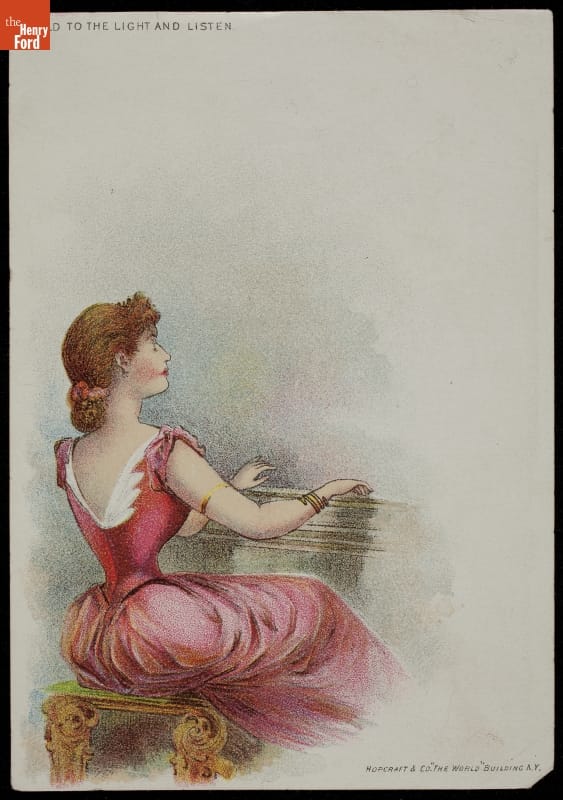
- Trade Card for Organs, Story & Clark Organ Co., 1880-1900 - In the last third of the nineteenth century, an unprecedented variety of consumer goods flooded the American market. Some enterprising advertisers sought to distinguish their products from the competition by distributing trade cards. Special versions revealed hidden images and words when held to the light. Americans enjoyed and often saved the popular little advertisements, which survive as historical records of consumerism in the United States.
- 1880-1900
- Collections - Artifact
Trade Card for Organs, Story & Clark Organ Co., 1880-1900
In the last third of the nineteenth century, an unprecedented variety of consumer goods flooded the American market. Some enterprising advertisers sought to distinguish their products from the competition by distributing trade cards. Special versions revealed hidden images and words when held to the light. Americans enjoyed and often saved the popular little advertisements, which survive as historical records of consumerism in the United States.
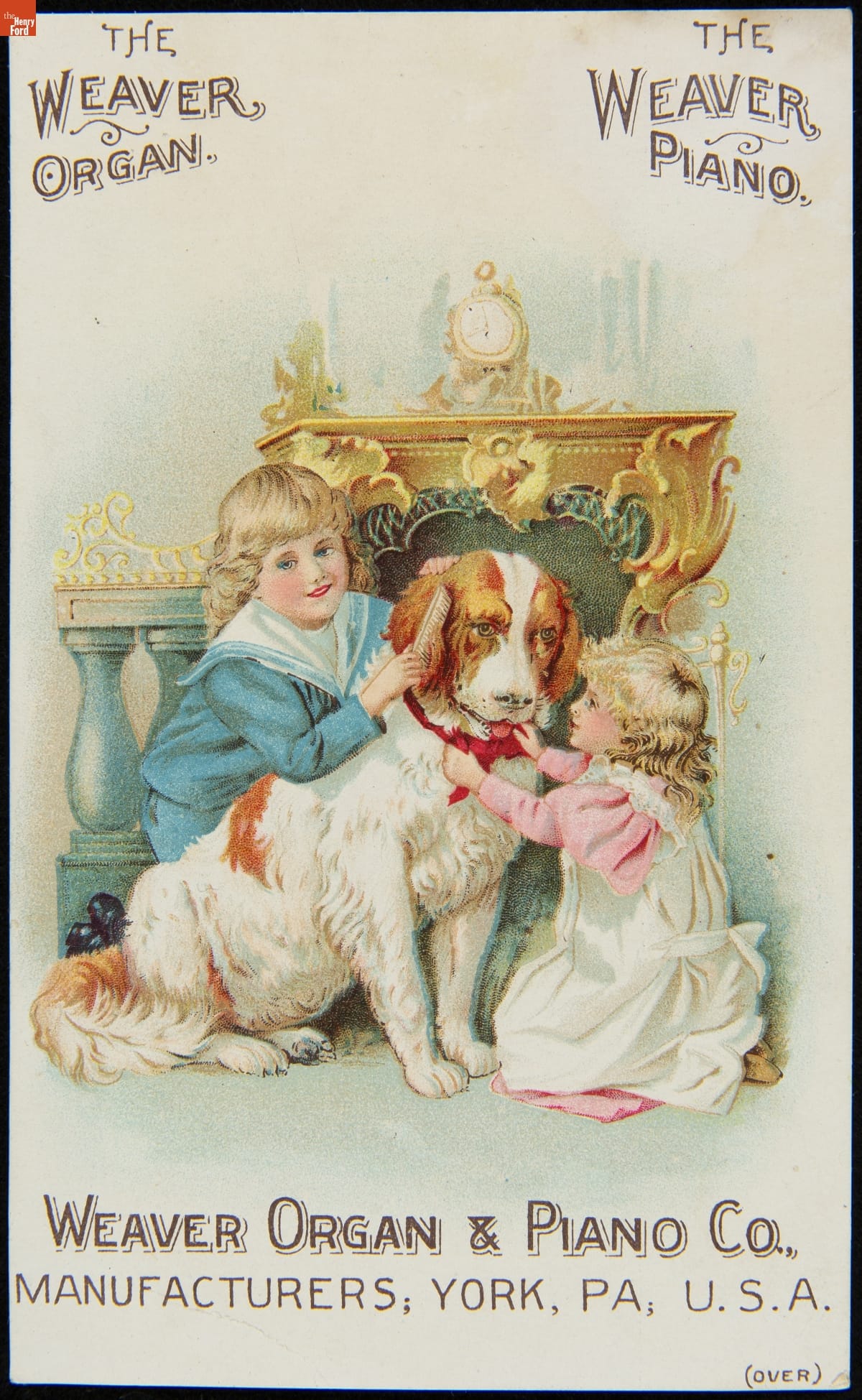
- Trade Card for Weaver Organ and Piano Company, 1898 - In the last third of the nineteenth century, an unprecedented variety of consumer goods and services flooded the American market. Advertisers, armed with new methods of color printing, bombarded potential customers with trade cards. Americans enjoyed and often saved the vibrant little advertisements found in product packages or distributed by local merchants. Many survive as historical records of commercialism in the United States.
- 1898
- Collections - Artifact
Trade Card for Weaver Organ and Piano Company, 1898
In the last third of the nineteenth century, an unprecedented variety of consumer goods and services flooded the American market. Advertisers, armed with new methods of color printing, bombarded potential customers with trade cards. Americans enjoyed and often saved the vibrant little advertisements found in product packages or distributed by local merchants. Many survive as historical records of commercialism in the United States.
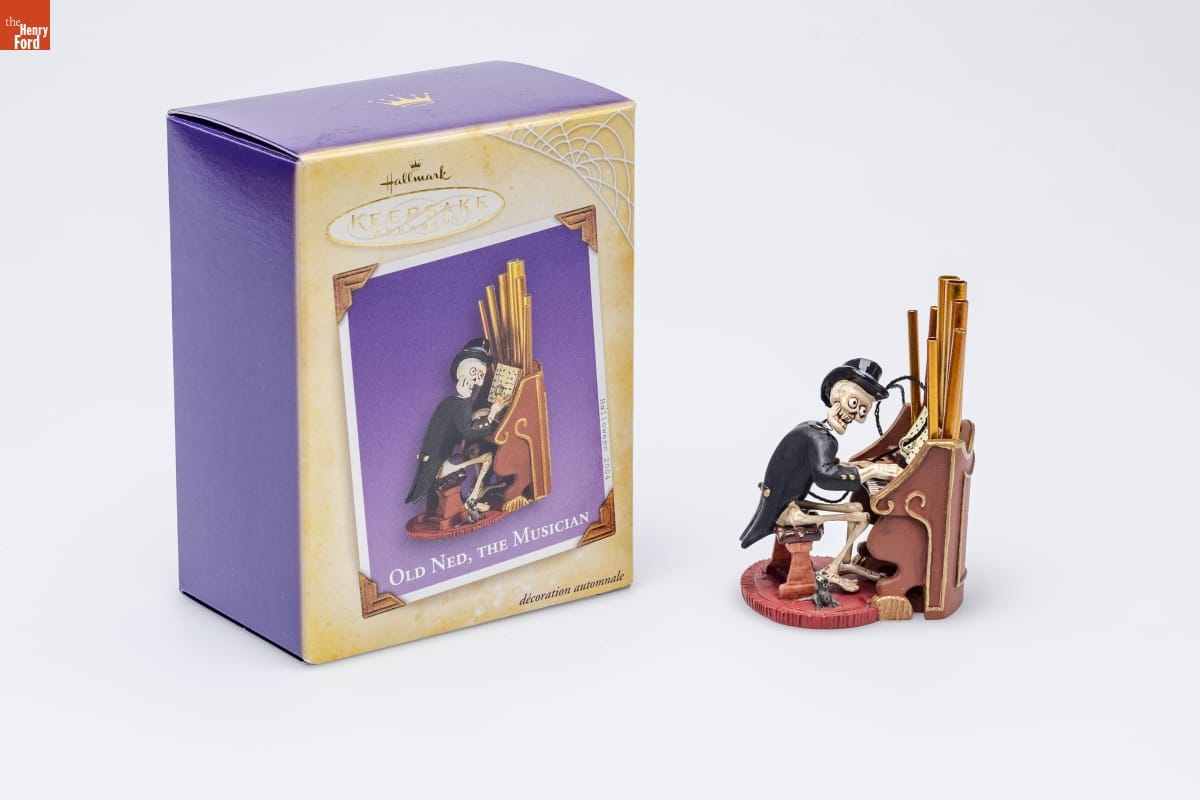
- Hallmark "Old Ned, the Musician" Halloween Ornament, 2004 - Hallmark has created Halloween ornaments since the early 2000s. In 2004, the company produced ornaments for its "The Mansion on Ravenswood Lane" display piece. The series consisted of character ornaments that inhabited different rooms of the mansion. Each box contained a short description of the character written by Scott Emmons.
- 2004
- Collections - Artifact
Hallmark "Old Ned, the Musician" Halloween Ornament, 2004
Hallmark has created Halloween ornaments since the early 2000s. In 2004, the company produced ornaments for its "The Mansion on Ravenswood Lane" display piece. The series consisted of character ornaments that inhabited different rooms of the mansion. Each box contained a short description of the character written by Scott Emmons.
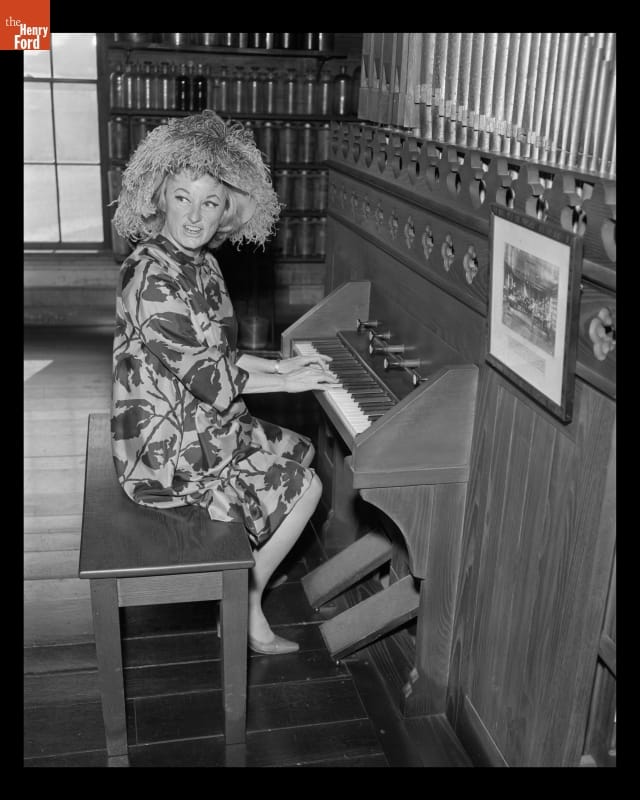
- Phyllis Diller Visiting Menlo Park Laboratory, Greenfield Village, April 2, 1968 - Many famous individuals have visited Greenfield Village and Henry Ford Museum over the years. Actors, authors, and artists have passed through the entrance gates; business leaders, royalty, politicians, and a host of others have toured the exhibits. Photographs by the institution's photographer were taken if the celebrity allowed it. Comedienne Phyllis Diller and her then-husband Warde Donovan spent time visiting Greenfield Village in 1968.
- April 02, 1968
- Collections - Artifact
Phyllis Diller Visiting Menlo Park Laboratory, Greenfield Village, April 2, 1968
Many famous individuals have visited Greenfield Village and Henry Ford Museum over the years. Actors, authors, and artists have passed through the entrance gates; business leaders, royalty, politicians, and a host of others have toured the exhibits. Photographs by the institution's photographer were taken if the celebrity allowed it. Comedienne Phyllis Diller and her then-husband Warde Donovan spent time visiting Greenfield Village in 1968.
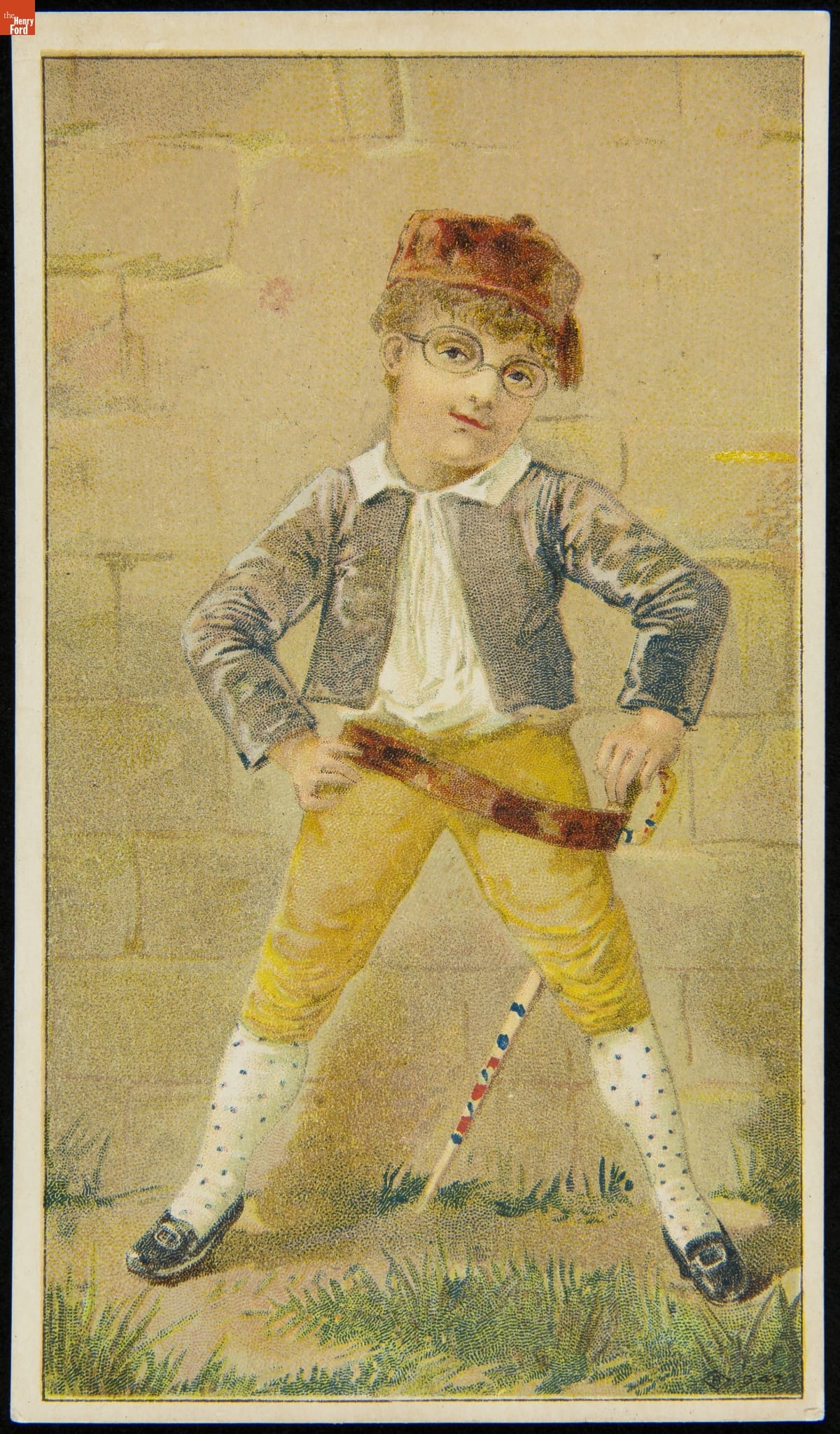
- Trade Card for Pianos and Organs, William Stires & Son, 1880-1900 - In the last third of the nineteenth century, an unprecedented variety of consumer goods and services flooded the American market. Advertisers, armed with new methods of color printing, bombarded potential customers with trade cards. Americans enjoyed and often saved the vibrant little advertisements found in product packages or distributed by local merchants. Many survive as historical records of commercialism in the United States.
- 1880-1900
- Collections - Artifact
Trade Card for Pianos and Organs, William Stires & Son, 1880-1900
In the last third of the nineteenth century, an unprecedented variety of consumer goods and services flooded the American market. Advertisers, armed with new methods of color printing, bombarded potential customers with trade cards. Americans enjoyed and often saved the vibrant little advertisements found in product packages or distributed by local merchants. Many survive as historical records of commercialism in the United States.