
Search
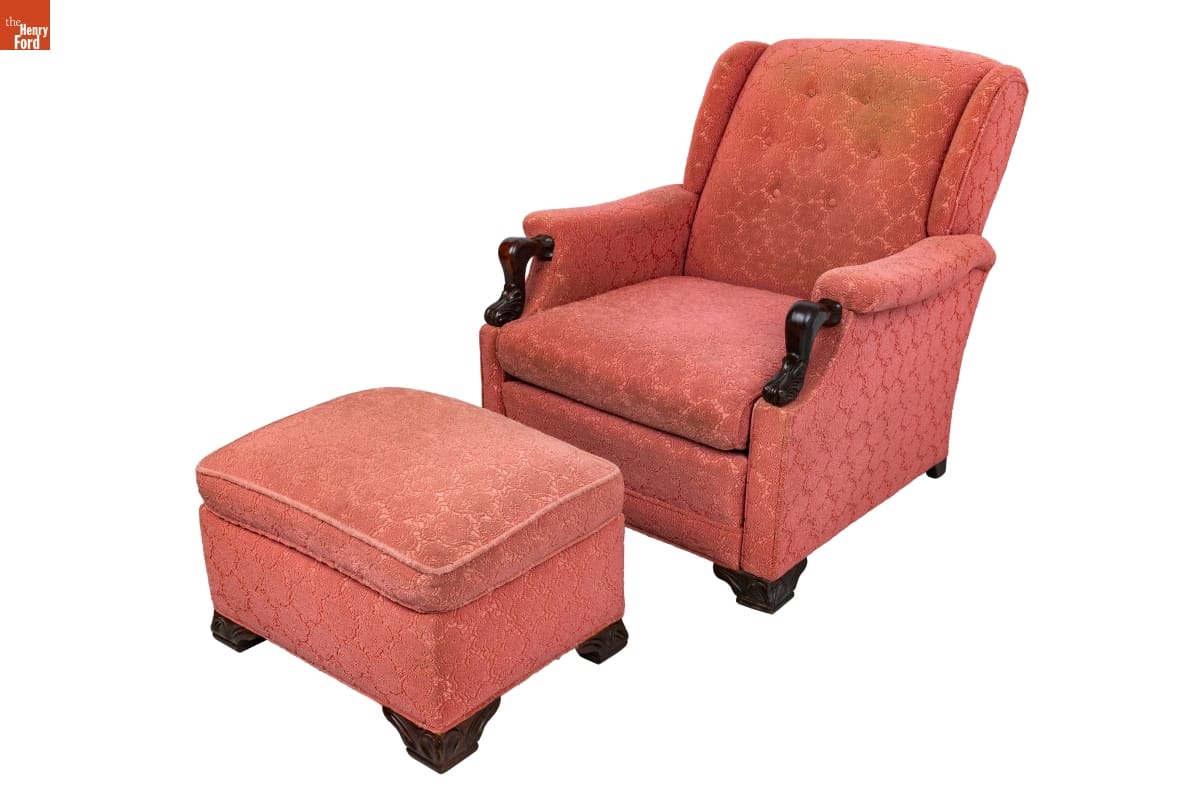
- La-Z-Boy Chair Company Reclining Chair and Ottoman, 1941 - This reclining chair was one of the first upholstered chairs produced by La-Z-Boy co-founders Edwin Shoemaker and Edward Knabusch. The earliest La-Z-Boys featured a patented reclining system and included a separate ottoman. Later technical refinements would produce a built-in footrest, eliminating the need for an ottoman and leading to the modern La-Z-Boy recliner.
- 1941
- Collections - Artifact
La-Z-Boy Chair Company Reclining Chair and Ottoman, 1941
This reclining chair was one of the first upholstered chairs produced by La-Z-Boy co-founders Edwin Shoemaker and Edward Knabusch. The earliest La-Z-Boys featured a patented reclining system and included a separate ottoman. Later technical refinements would produce a built-in footrest, eliminating the need for an ottoman and leading to the modern La-Z-Boy recliner.
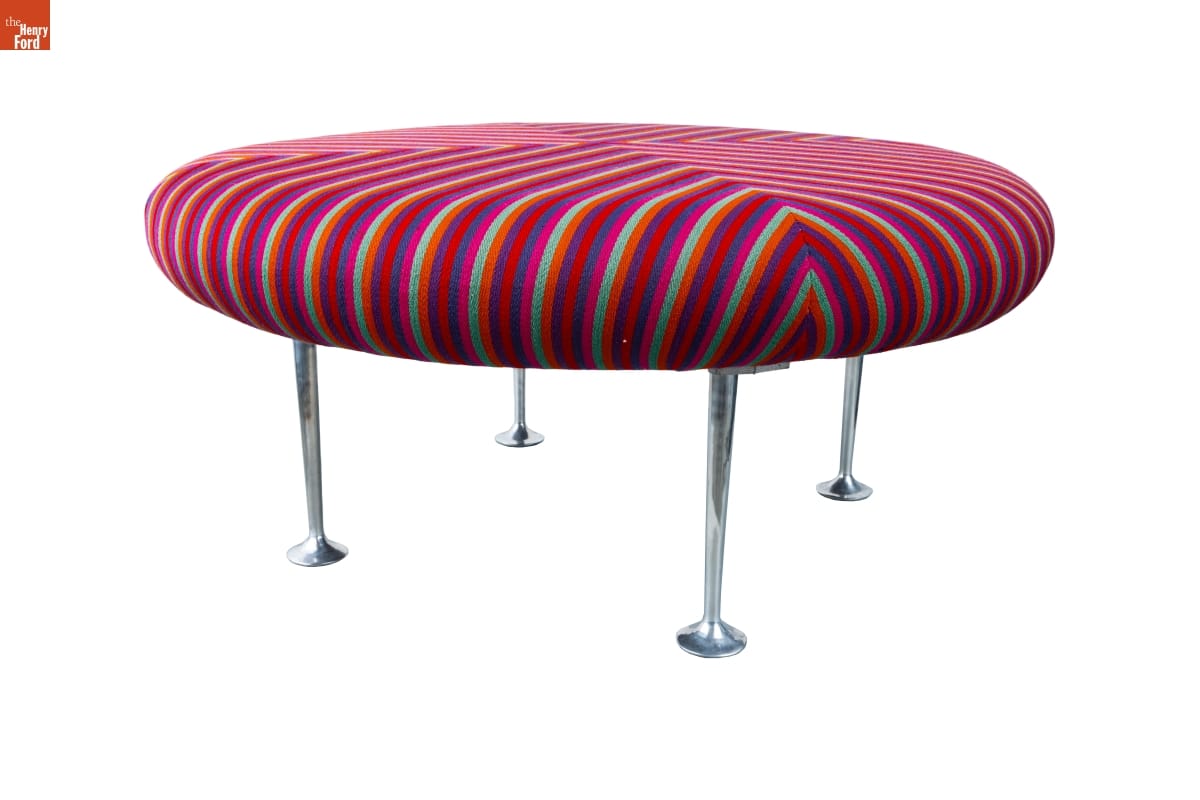
- Ottoman Footstool, from The Girard Group Series, 1966 - Alexander Girard was best known as a textile designer, but he also practiced architecture, graphic design, interior design, and furniture design. This ottoman design, initially created as part of Girard's large-scale redesign for Braniff International Airways, was later sold by Herman Miller Inc. in the Girard Group Series. Girard-designed textiles were available for the upholstery too -- this one features his colorful "Jacob's Coat" pattern.
- 1966
- Collections - Artifact
Ottoman Footstool, from The Girard Group Series, 1966
Alexander Girard was best known as a textile designer, but he also practiced architecture, graphic design, interior design, and furniture design. This ottoman design, initially created as part of Girard's large-scale redesign for Braniff International Airways, was later sold by Herman Miller Inc. in the Girard Group Series. Girard-designed textiles were available for the upholstery too -- this one features his colorful "Jacob's Coat" pattern.
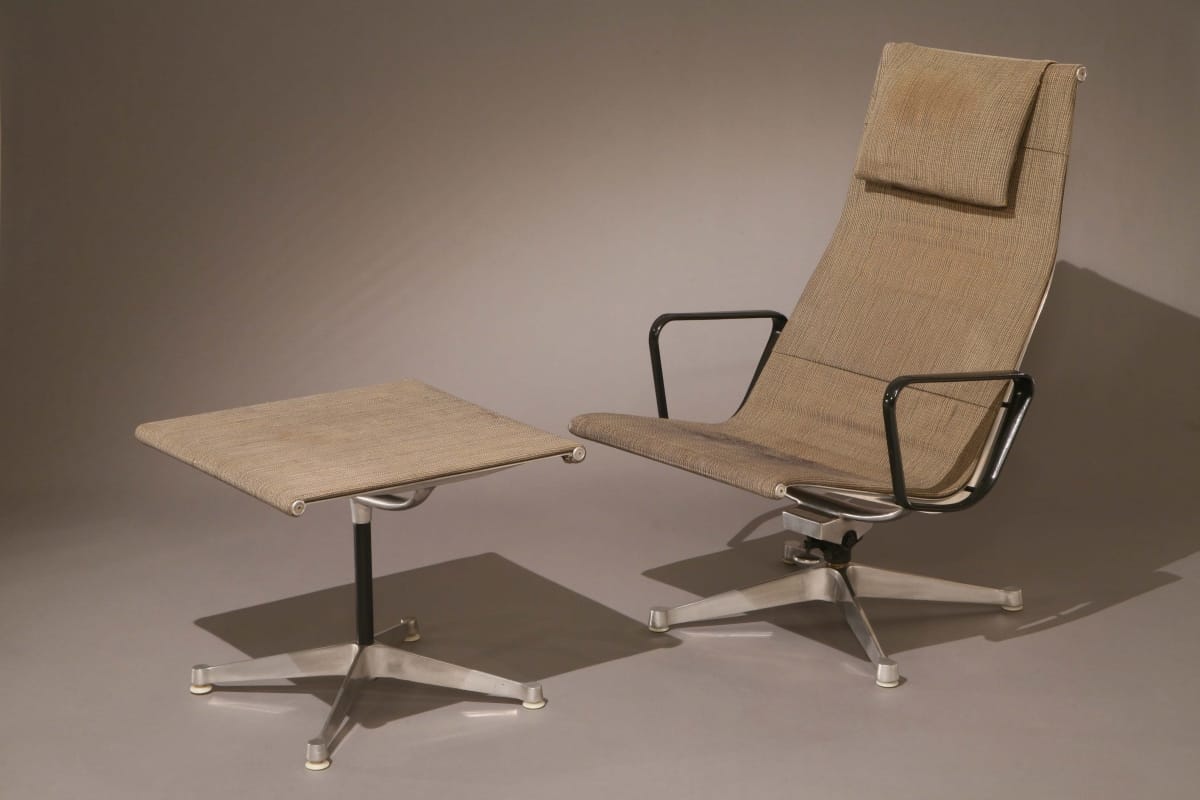
- Reclining Chair with Arms and Ottoman, 1958-1991 -
- 1958-1991
- Collections - Artifact
Reclining Chair with Arms and Ottoman, 1958-1991
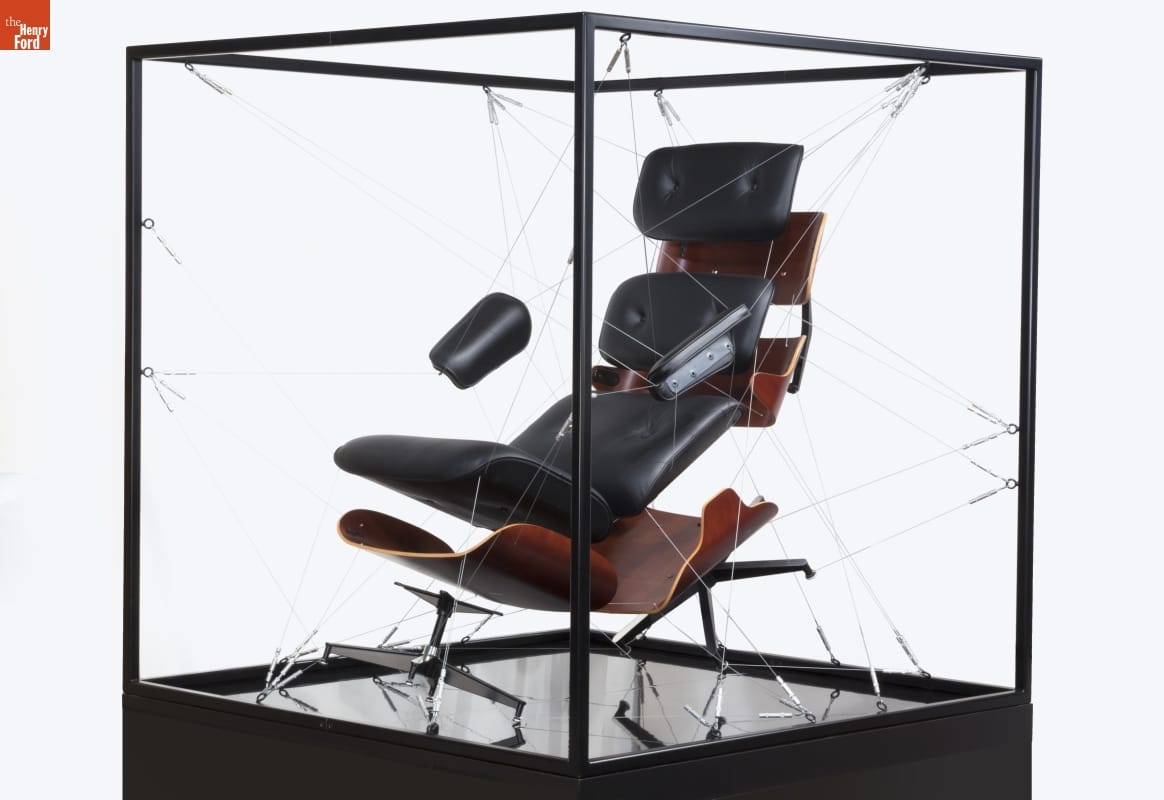
- Exploded Eames Lounge Chair and Ottoman, 2006 - This artistically suspended piece explores the complex way plywood, leather, and aluminum came together to form Charles and Ray Eames' innovative -- yet classic -- lounge chair and ottoman. The molded rosewood shell and plush upholstery achieve Charles' stated ambition to create the inviting look of a well-used baseball mitt.
- 2006
- Collections - Artifact
Exploded Eames Lounge Chair and Ottoman, 2006
This artistically suspended piece explores the complex way plywood, leather, and aluminum came together to form Charles and Ray Eames' innovative -- yet classic -- lounge chair and ottoman. The molded rosewood shell and plush upholstery achieve Charles' stated ambition to create the inviting look of a well-used baseball mitt.
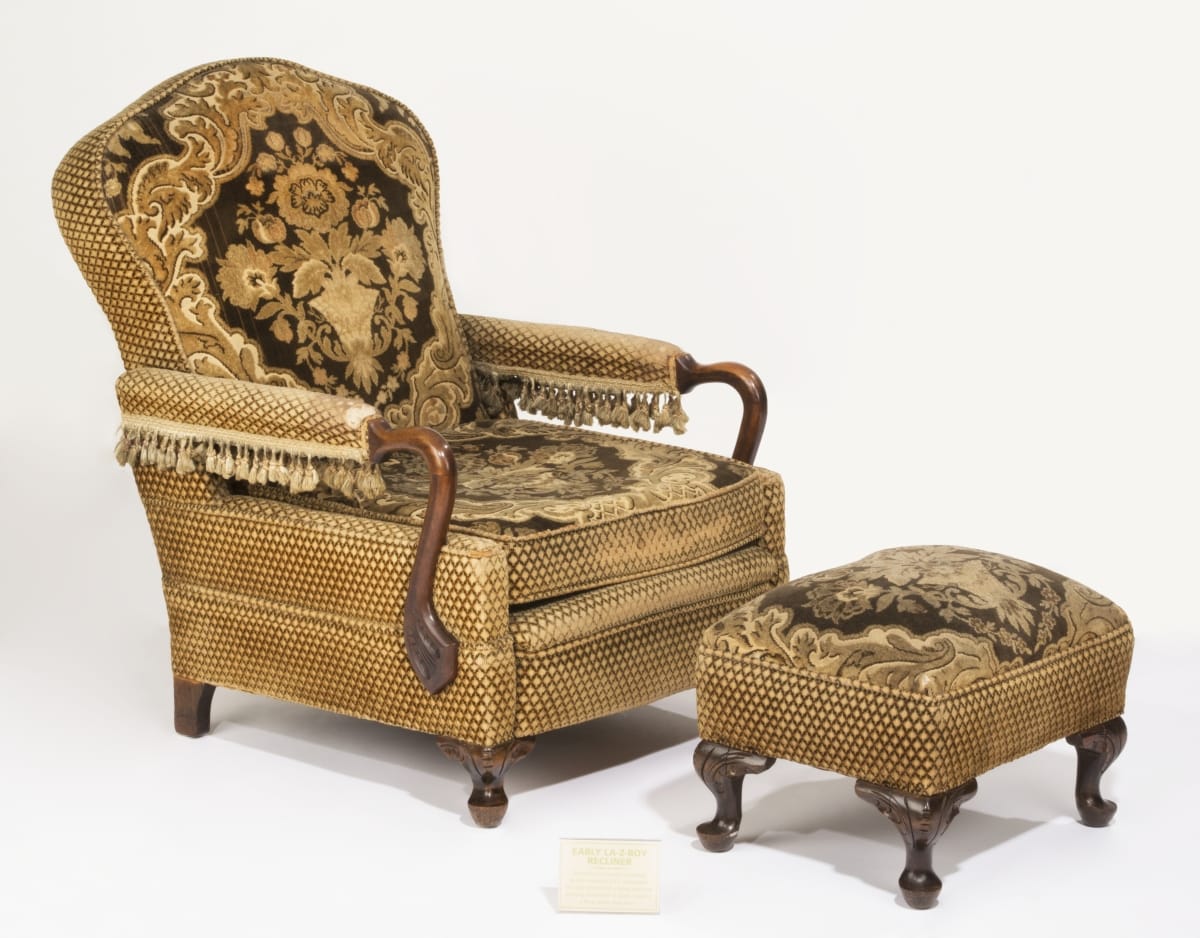
- Floral City Furniture Company La-Z-Boy Reclining Chair with Ottoman, 1929 - This reclining chair was one of the first upholstered chairs produced by La-Z-Boy co-founders Edwin Shoemaker and Edward Knabusch. The earliest La-Z-Boys featured a patented reclining system and included a separate ottoman. Later technical refinements would produce a built-in footrest, eliminating the need for an ottoman and leading to the modern La-Z-Boy recliner.
- 1929
- Collections - Artifact
Floral City Furniture Company La-Z-Boy Reclining Chair with Ottoman, 1929
This reclining chair was one of the first upholstered chairs produced by La-Z-Boy co-founders Edwin Shoemaker and Edward Knabusch. The earliest La-Z-Boys featured a patented reclining system and included a separate ottoman. Later technical refinements would produce a built-in footrest, eliminating the need for an ottoman and leading to the modern La-Z-Boy recliner.
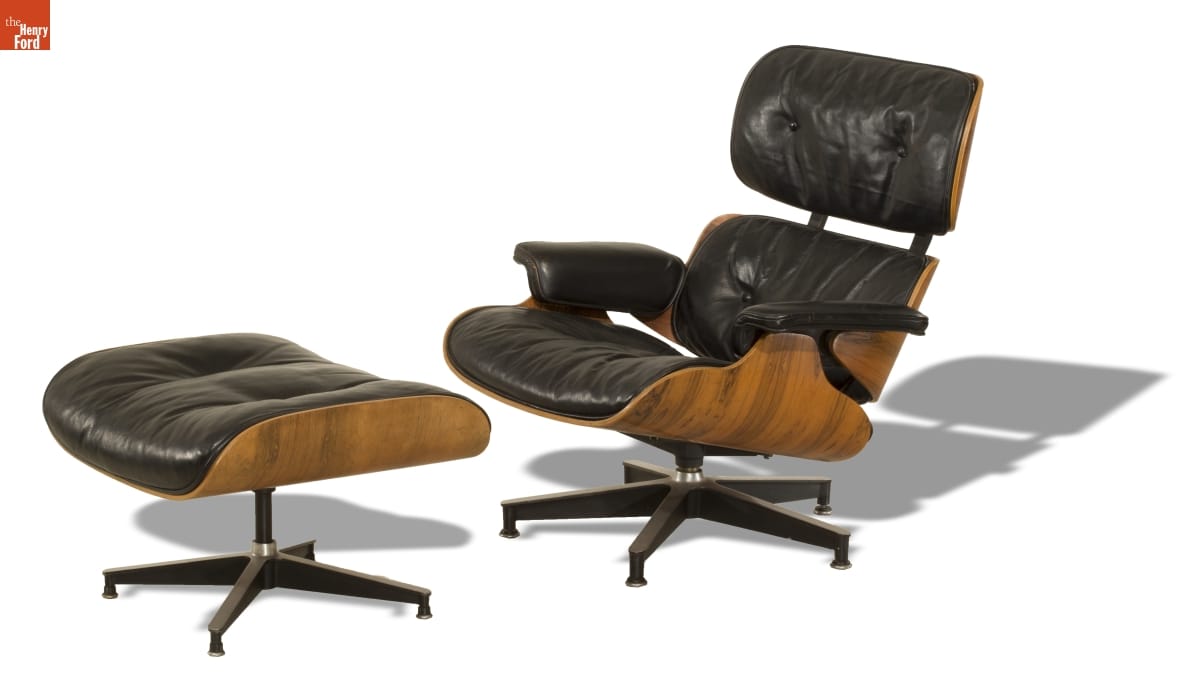
- Eames Lounge Chair and Ottoman, Introduced in 1956 - Charles Eames, co-designer of this chair, felt it had "a sort of ugliness" about it--although he conceded that "it has apparently given a lot of pleasure to people." In production since 1956, it is one of the most recognizable pieces of 20th Century furniture--a design that meshes elemental luxury with the finely honed simplicity of Charles and Ray Eames' best work.
- 1956
- Collections - Artifact
Eames Lounge Chair and Ottoman, Introduced in 1956
Charles Eames, co-designer of this chair, felt it had "a sort of ugliness" about it--although he conceded that "it has apparently given a lot of pleasure to people." In production since 1956, it is one of the most recognizable pieces of 20th Century furniture--a design that meshes elemental luxury with the finely honed simplicity of Charles and Ray Eames' best work.
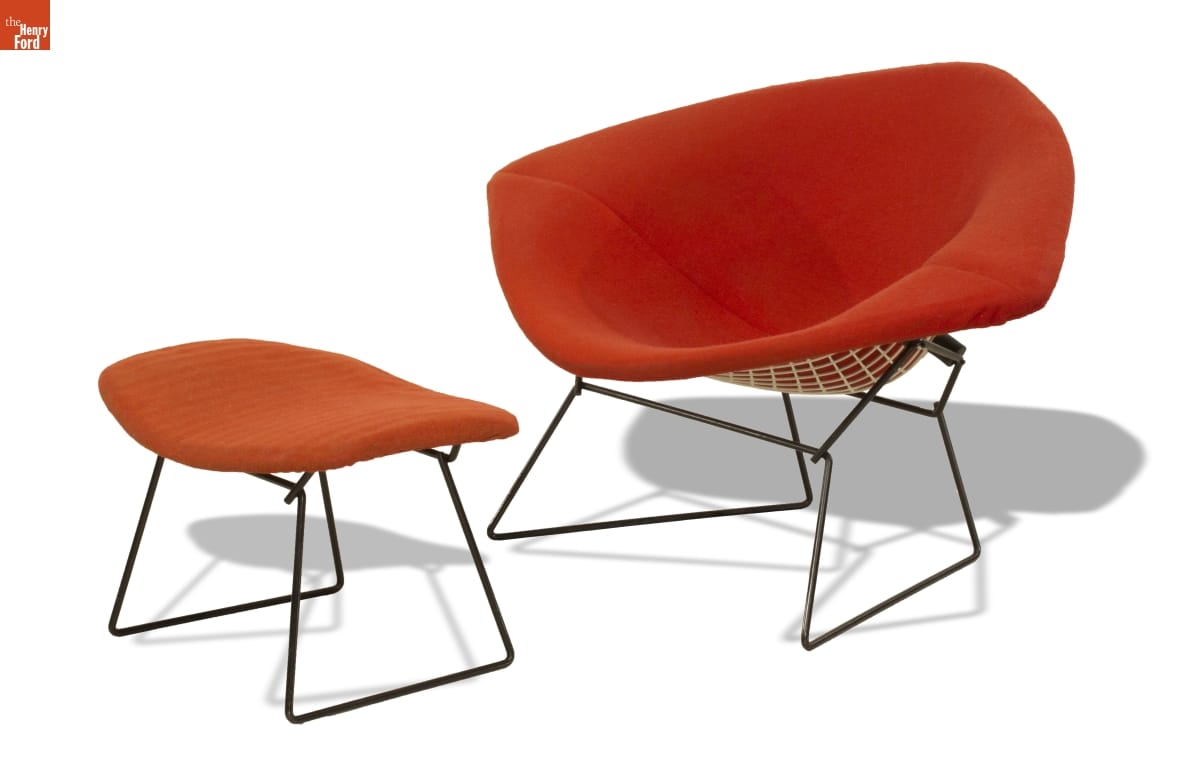
- Bertoia Diamond Chair and Ottoman, 1952 - Italian-born designer, painter, and sculptor Harry Bertoia's fascination with metalcrafts touched all areas of his work, from jewelry to furniture. Inspired by a household wire dish rack, he designed his steel chairs as functional sculpture--comfortable, but also "studies in space, form, and metal." And studies in unity too: this chair's diamond-shaped silhouette repeats the basic welded mesh pattern.
- 1952
- Collections - Artifact
Bertoia Diamond Chair and Ottoman, 1952
Italian-born designer, painter, and sculptor Harry Bertoia's fascination with metalcrafts touched all areas of his work, from jewelry to furniture. Inspired by a household wire dish rack, he designed his steel chairs as functional sculpture--comfortable, but also "studies in space, form, and metal." And studies in unity too: this chair's diamond-shaped silhouette repeats the basic welded mesh pattern.
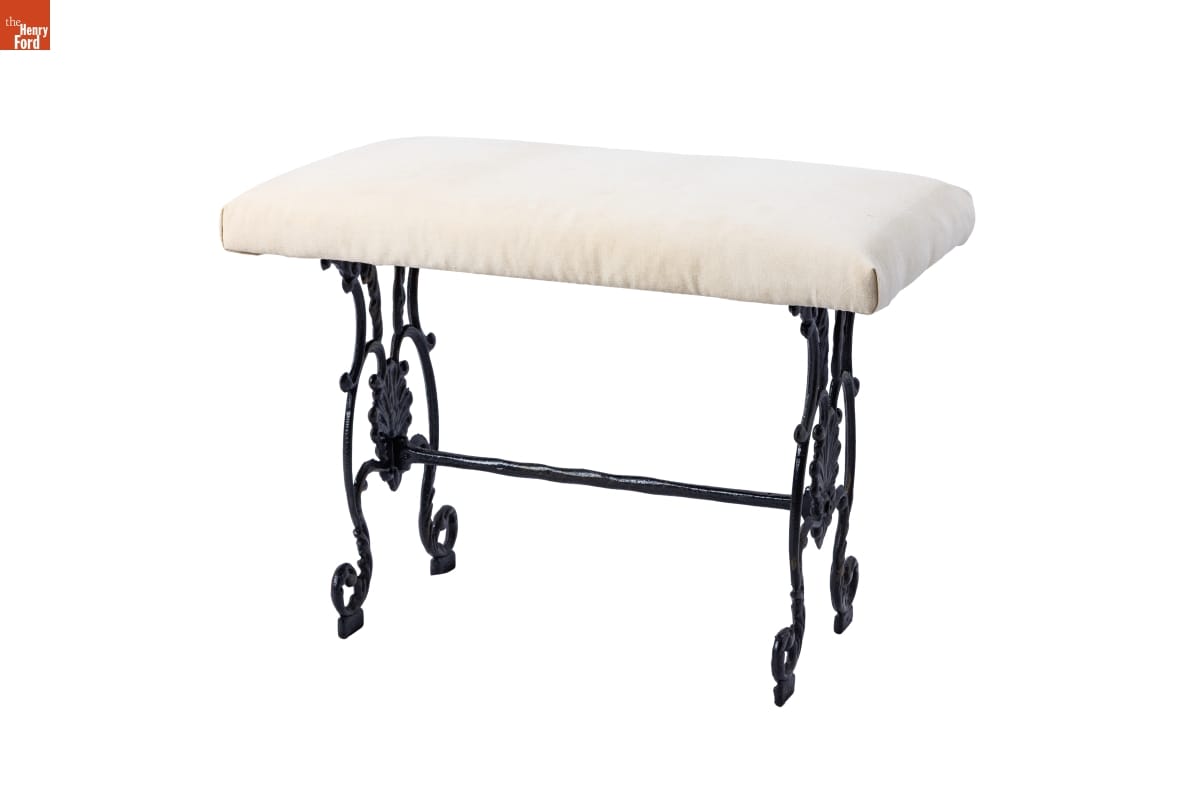
- Ottoman Footstool Used by the Jackson Family, Selma, Alabama - In 2023, The Henry Ford acquired the Selma, Alabama, home of Dr. Sullivan and Richie Jean Sherrod Jackson, where Dr. Martin Luther King and Civil Rights leaders planned the 1965 Selma-to-Montgomery Voting Rights marches. The Jackson Home opened in Greenfield Village in 2026. The home and its contents not only document the voting rights struggle but also shed light on 20th-century Black American middle-class life.
- Collections - Artifact
Ottoman Footstool Used by the Jackson Family, Selma, Alabama
In 2023, The Henry Ford acquired the Selma, Alabama, home of Dr. Sullivan and Richie Jean Sherrod Jackson, where Dr. Martin Luther King and Civil Rights leaders planned the 1965 Selma-to-Montgomery Voting Rights marches. The Jackson Home opened in Greenfield Village in 2026. The home and its contents not only document the voting rights struggle but also shed light on 20th-century Black American middle-class life.
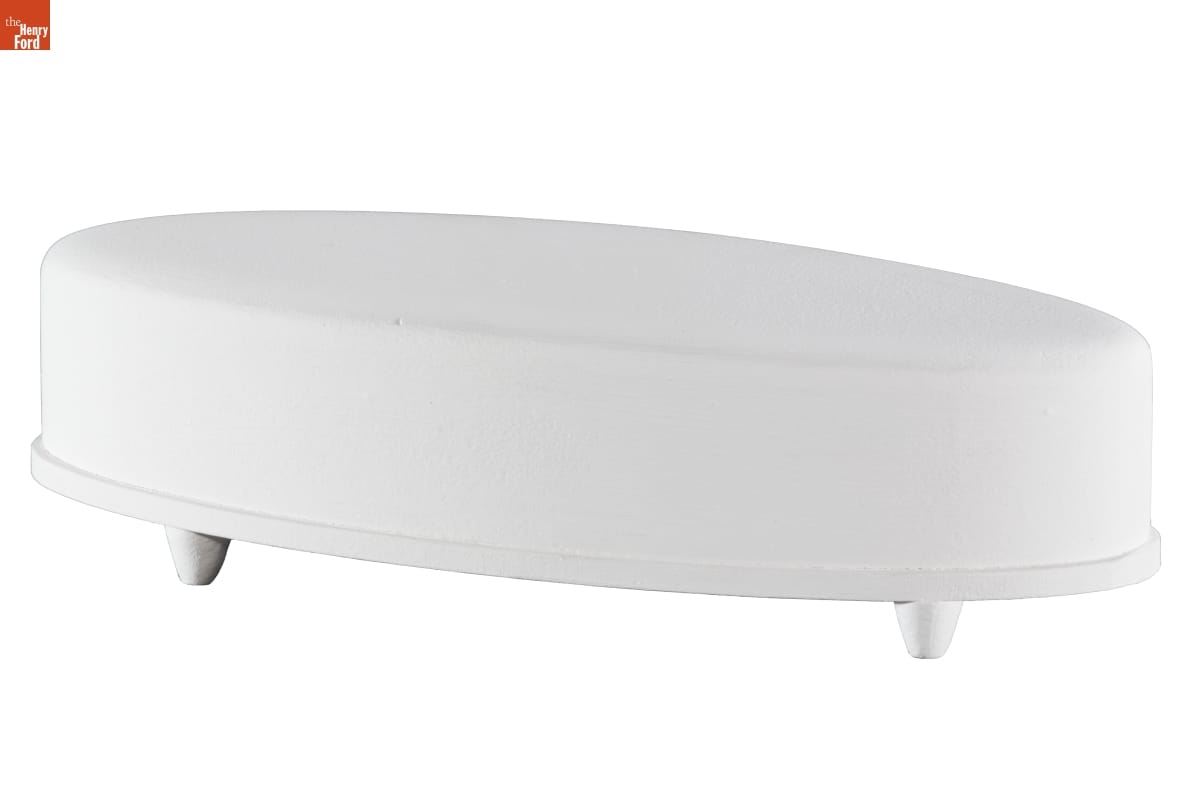
- Ottoman Model - Starting in the early 1980s--and already established as an internationally recognized architect--Michael Graves began to pursue a parallel career as a product designer. Over the following three and a half decades he and his collaborators designed everything from humble household goods to limited edition luxury items for clients as diverse as Steuben, Alessi, Target, J. C. Penney, and Disney.
- Collections - Artifact
Ottoman Model
Starting in the early 1980s--and already established as an internationally recognized architect--Michael Graves began to pursue a parallel career as a product designer. Over the following three and a half decades he and his collaborators designed everything from humble household goods to limited edition luxury items for clients as diverse as Steuben, Alessi, Target, J. C. Penney, and Disney.