
Search
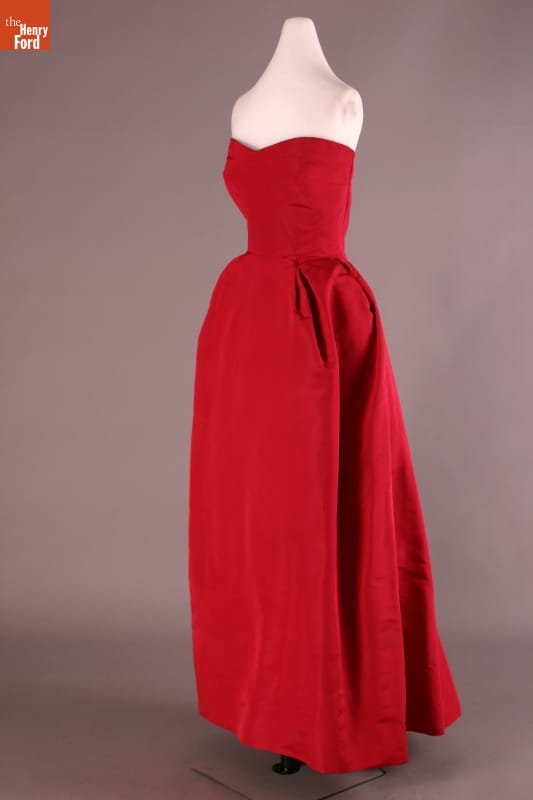
- Christian Dior Evening Dress, "Clorinde," Worn by Elizabeth Parke Firestone, 1952 - Elizabeth Parke Firestone, wife of tire magnate Harvey S. Firestone, Jr., cultivated a refined sense of fashion through years of interest in clothing design and collaboration with world-renowned couturiers. Paris designer Christian Dior used a great deal of red in his clothing line. Firestone favored pinks and fuchsias over true reds making this dress an unusual choice for her.
- 1952
- Collections - Artifact
Christian Dior Evening Dress, "Clorinde," Worn by Elizabeth Parke Firestone, 1952
Elizabeth Parke Firestone, wife of tire magnate Harvey S. Firestone, Jr., cultivated a refined sense of fashion through years of interest in clothing design and collaboration with world-renowned couturiers. Paris designer Christian Dior used a great deal of red in his clothing line. Firestone favored pinks and fuchsias over true reds making this dress an unusual choice for her.
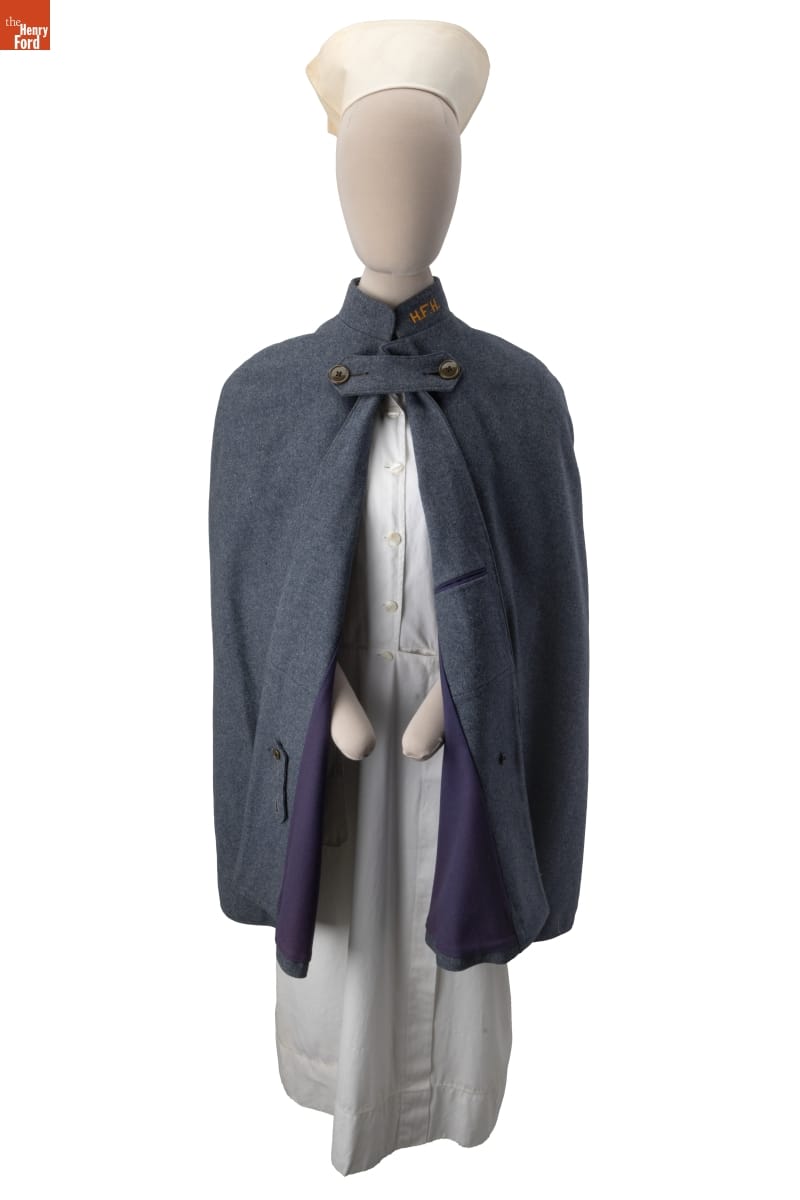
- Nurse's Cape, Worn by Marie Goltry, 1957 - For decades, nurses' uniforms were white -- in the early 1900s, white was considered more sanitary and scientific. Nurses wore a crisp white dress, white cap, white hose, and sturdy white shoes. The uniform was reassuring to patients who knew their care was in the hands of a trained professional. This gray wool flannel cape protected against the cold.
- 1957
- Collections - Artifact
Nurse's Cape, Worn by Marie Goltry, 1957
For decades, nurses' uniforms were white -- in the early 1900s, white was considered more sanitary and scientific. Nurses wore a crisp white dress, white cap, white hose, and sturdy white shoes. The uniform was reassuring to patients who knew their care was in the hands of a trained professional. This gray wool flannel cape protected against the cold.
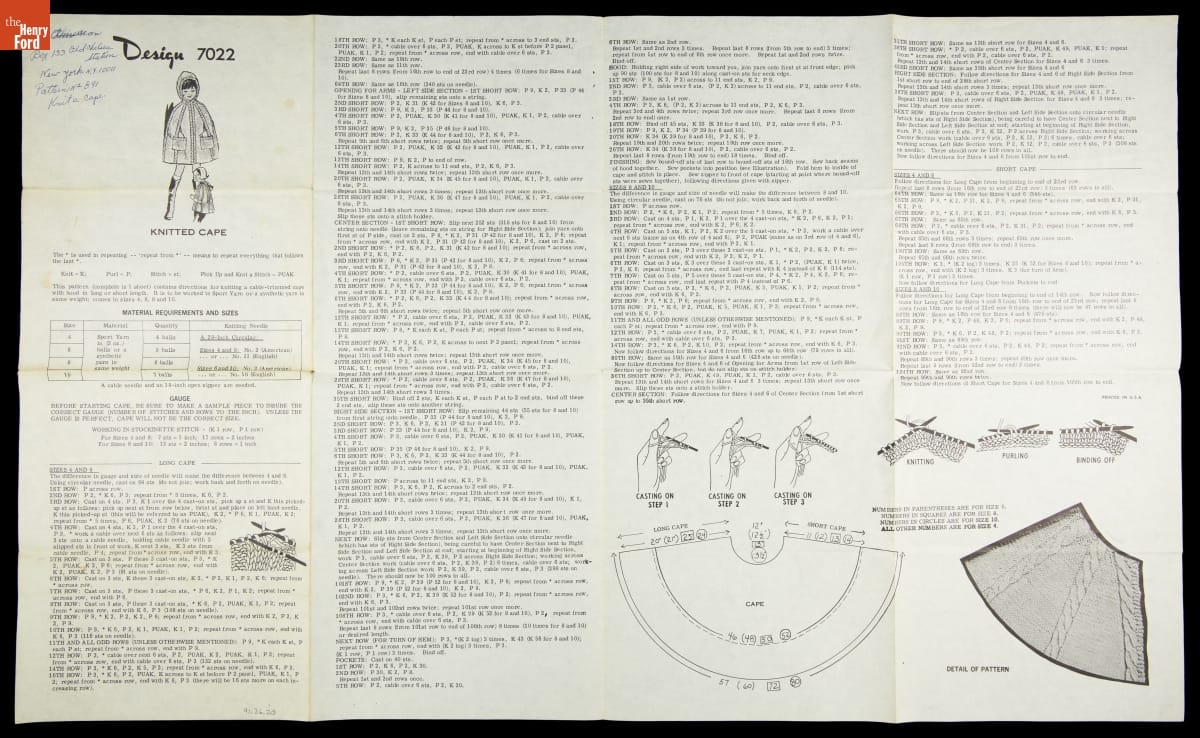
- Needlecraft Service Design 7022, "Knitted Cape," circa 1960 -
- circa 1960
- Collections - Artifact
Needlecraft Service Design 7022, "Knitted Cape," circa 1960
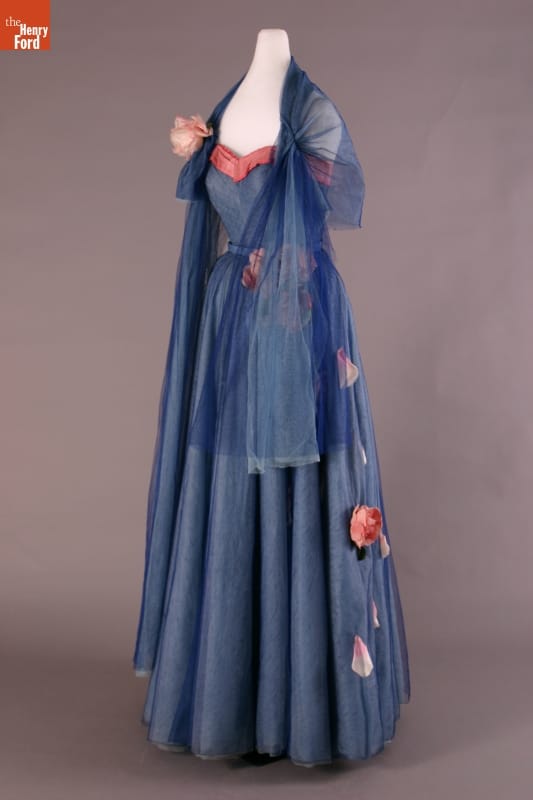
- Evening Dress with Stole Worn by Elizabeth Parke Firestone, circa 1948 -
- circa 1948
- Collections - Artifact
Evening Dress with Stole Worn by Elizabeth Parke Firestone, circa 1948
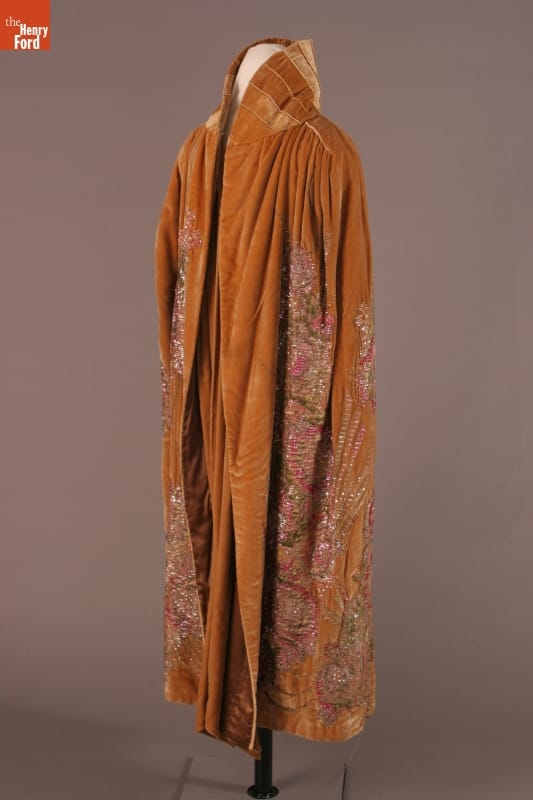
- Cape, 1927-1929 -
- 1927-1929
- Collections - Artifact
Cape, 1927-1929
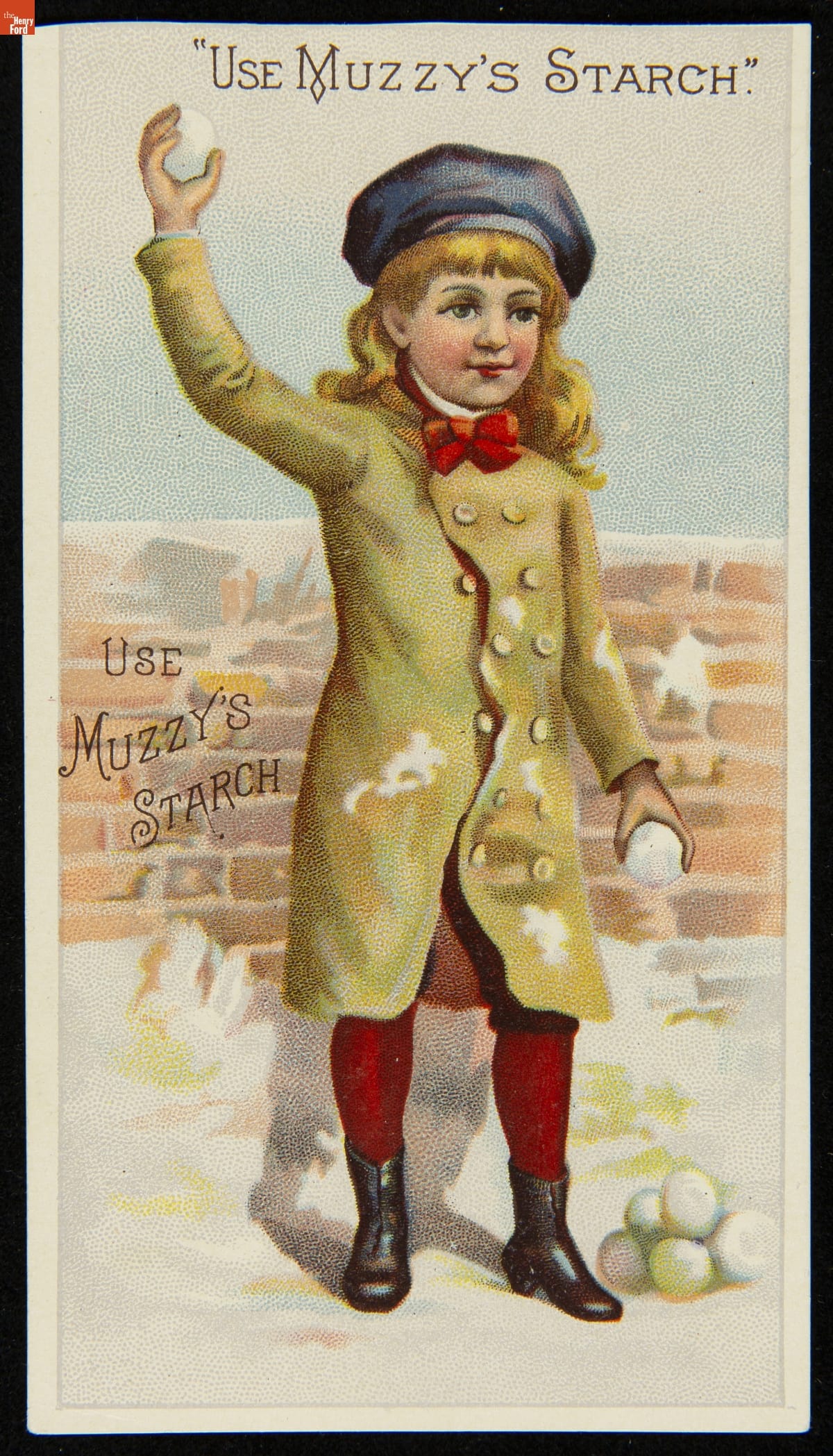
- Trade Card for Muzzy's Corn Starch, Muzzy Starch Co., 1880-1900 - As color printing gained momentum in the late 19th century, trade cards became a major means of advertising goods and services. Americans enjoyed and often saved the little advertisements found in product packages or distributed by local merchants. This trade card advertises Muzzy's Corn Starch.
- 1880-1900
- Collections - Artifact
Trade Card for Muzzy's Corn Starch, Muzzy Starch Co., 1880-1900
As color printing gained momentum in the late 19th century, trade cards became a major means of advertising goods and services. Americans enjoyed and often saved the little advertisements found in product packages or distributed by local merchants. This trade card advertises Muzzy's Corn Starch.
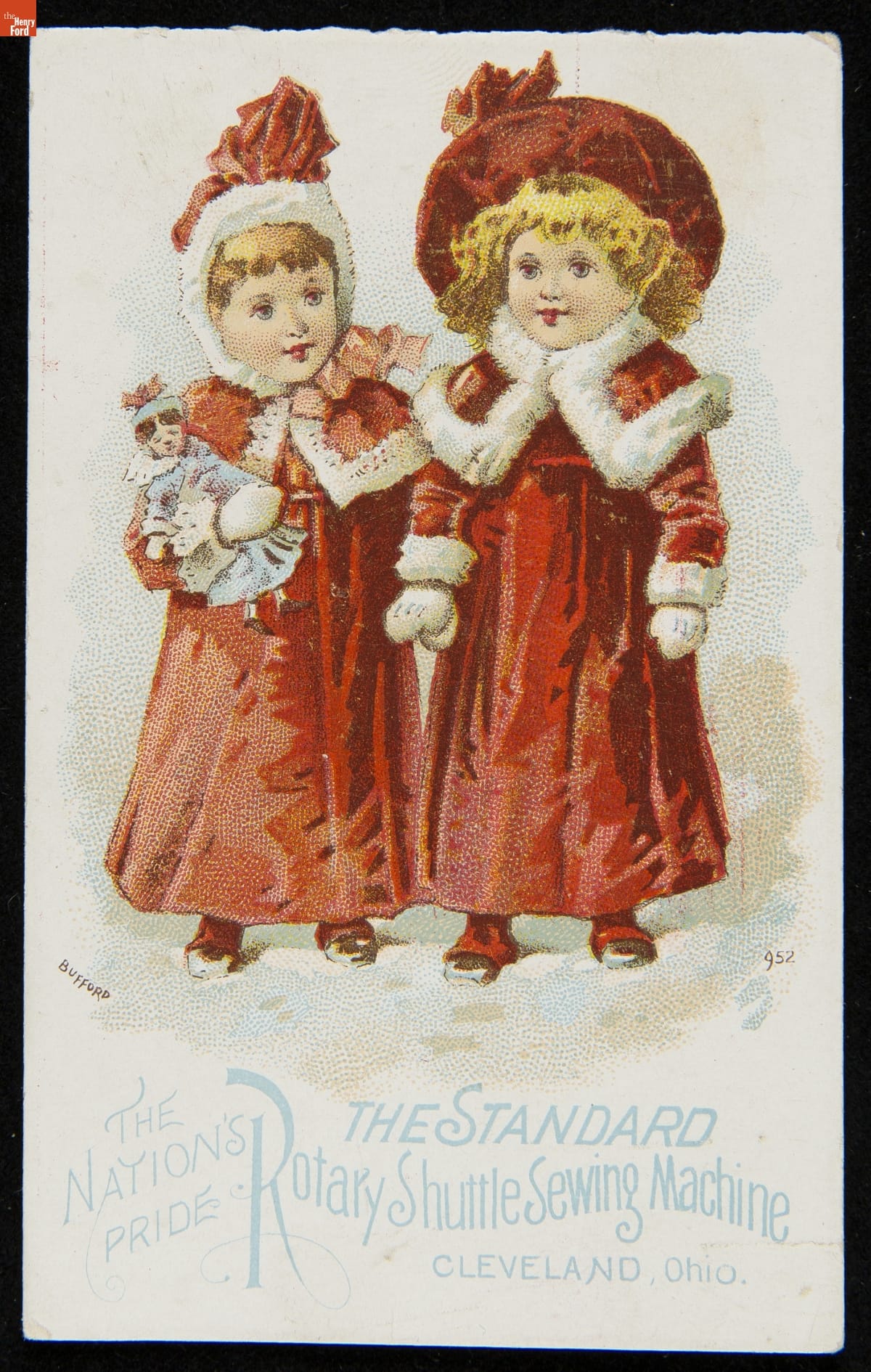
- Trade Card for the Standard Rotary Shuttle Sewing Machine, Standard Sewing Machine Co., 1880-1900 - As color printing gained momentum in the late 19th century, trade cards became a major means of advertising goods and services. Americans enjoyed and often saved the little advertisements found in product packages or distributed by local merchants. This trade card advertises the Standard Sewing Machine Company.
- 1880-1900
- Collections - Artifact
Trade Card for the Standard Rotary Shuttle Sewing Machine, Standard Sewing Machine Co., 1880-1900
As color printing gained momentum in the late 19th century, trade cards became a major means of advertising goods and services. Americans enjoyed and often saved the little advertisements found in product packages or distributed by local merchants. This trade card advertises the Standard Sewing Machine Company.
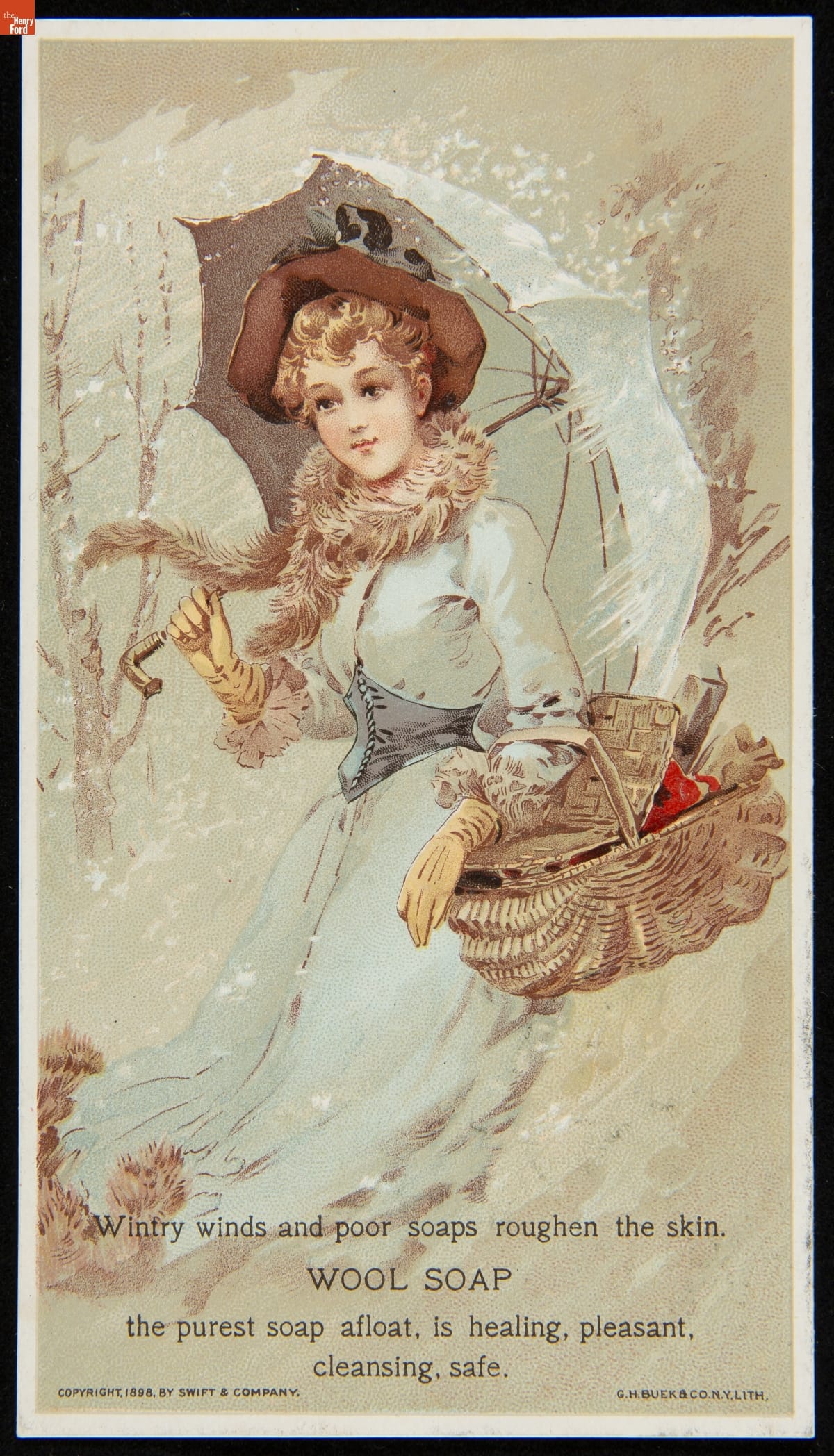
- Trade Card for Wool Soap, Swift & Co., 1898 - In the last third of the nineteenth century, an unprecedented variety of consumer goods and services flooded the American market. Advertisers, armed with new methods of color printing, bombarded potential customers with trade cards. Americans enjoyed and often saved the vibrant little advertisements found in product packages or distributed by local merchants. Many survive as historical records of commercialism in the United States.
- circa 1898
- Collections - Artifact
Trade Card for Wool Soap, Swift & Co., 1898
In the last third of the nineteenth century, an unprecedented variety of consumer goods and services flooded the American market. Advertisers, armed with new methods of color printing, bombarded potential customers with trade cards. Americans enjoyed and often saved the vibrant little advertisements found in product packages or distributed by local merchants. Many survive as historical records of commercialism in the United States.
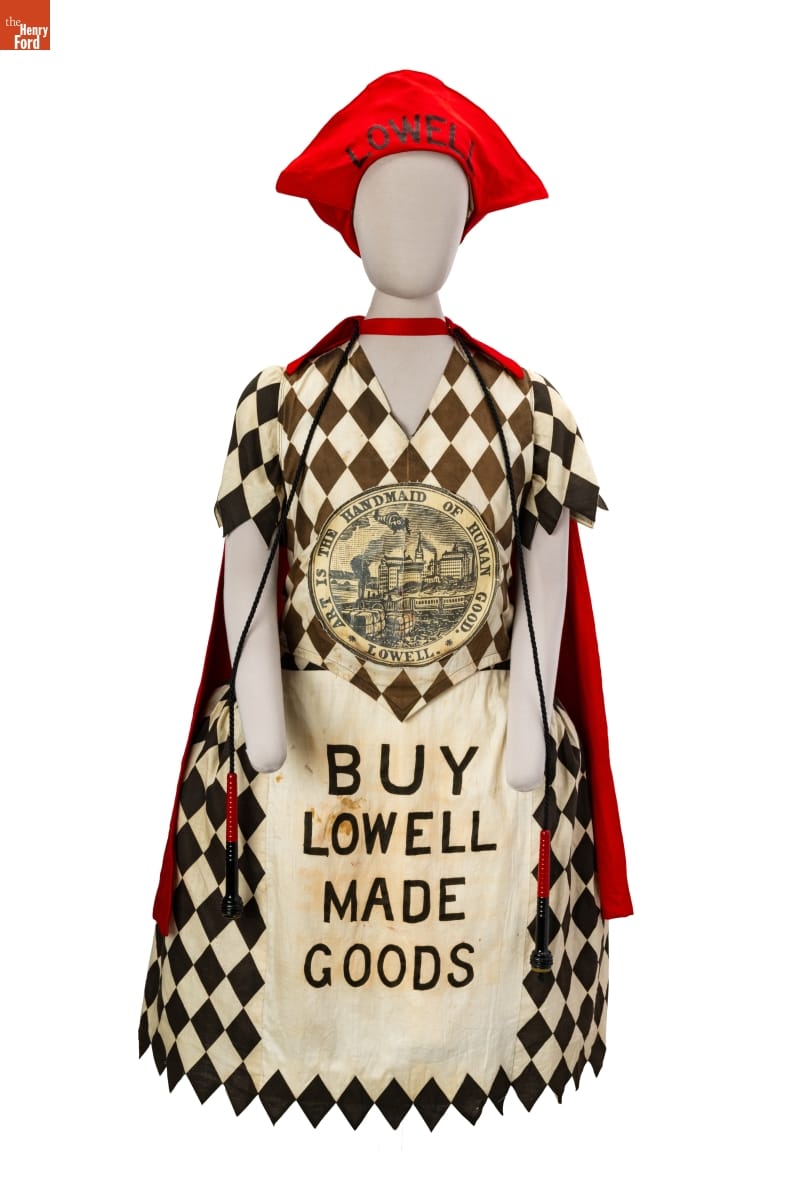
- "Buy Lowell Made Goods" Ensemble, 1920-1929 - This dress encouraged residents of Lowell, Massachusetts to "Buy Lowell Made Goods." The city was an industrial hub for cotton textile production during the 19th and early 20th centuries; in the 1920s, local businesses and other organizations adopted the "Buy Lowell Made Goods" slogan to celebrate the city and stimulate its economy.
- 1920-1929
- Collections - Artifact
"Buy Lowell Made Goods" Ensemble, 1920-1929
This dress encouraged residents of Lowell, Massachusetts to "Buy Lowell Made Goods." The city was an industrial hub for cotton textile production during the 19th and early 20th centuries; in the 1920s, local businesses and other organizations adopted the "Buy Lowell Made Goods" slogan to celebrate the city and stimulate its economy.
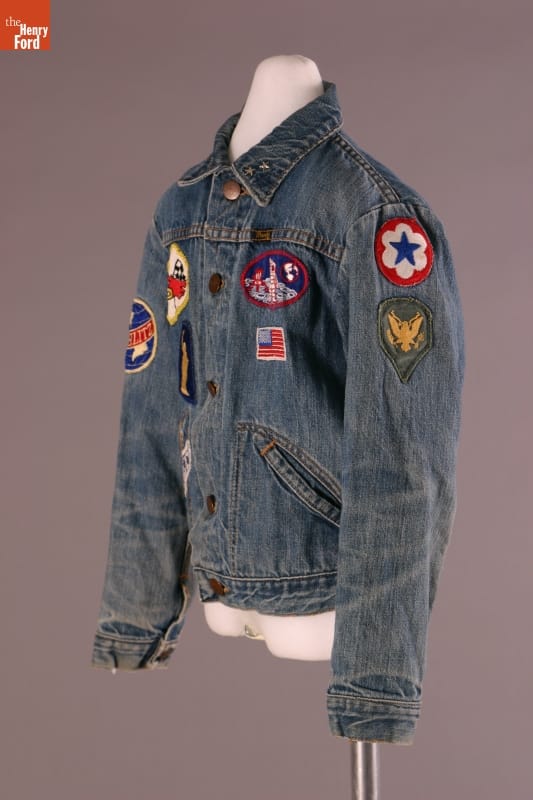
- Boy's Denim Jacket Customized with Patches, circa 1973 -
- circa 1973
- Collections - Artifact
Boy's Denim Jacket Customized with Patches, circa 1973