
Search
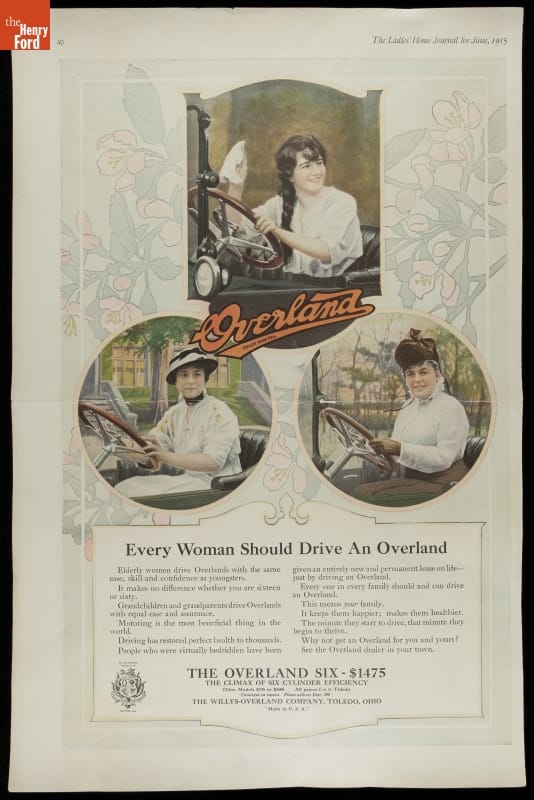
- "Every Woman Should Drive an Overland" Willys-Overland Advertisement, 1915 - Willys-Overland made a direct appeal to women in this advertisement from the June 1915 issue of <em>Ladies' Home Journal</em>. The ad boasted the ease with which Overland cars could be operated by drivers of all ages. It also described driving as a tonic for wellbeing, making the extravagant claim that "driving has restored perfect health to thousands."
- June 01, 1915
- Collections - Artifact
"Every Woman Should Drive an Overland" Willys-Overland Advertisement, 1915
Willys-Overland made a direct appeal to women in this advertisement from the June 1915 issue of Ladies' Home Journal. The ad boasted the ease with which Overland cars could be operated by drivers of all ages. It also described driving as a tonic for wellbeing, making the extravagant claim that "driving has restored perfect health to thousands."
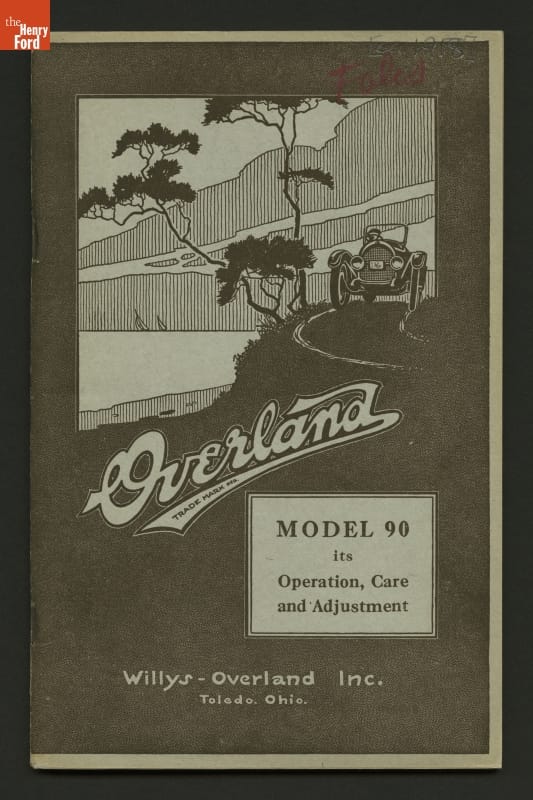
- Owner's Manual for Overland Model 90, Its Operation, Care and Adjustment, Willys-Overland Inc., Toledo, Ohio, circa 1918 - If you wanted a bit more than the basic Ford Model T, the 1918 Willys-Overland offered it. The car had more room, more style, more power, and it had an electric starter and a sliding-gear transmission -- but it also cost a bit more. This 1918 owner's manual laid out the features that owners would find when purchasing an Overland.
- circa 1918
- Collections - Artifact
Owner's Manual for Overland Model 90, Its Operation, Care and Adjustment, Willys-Overland Inc., Toledo, Ohio, circa 1918
If you wanted a bit more than the basic Ford Model T, the 1918 Willys-Overland offered it. The car had more room, more style, more power, and it had an electric starter and a sliding-gear transmission -- but it also cost a bit more. This 1918 owner's manual laid out the features that owners would find when purchasing an Overland.
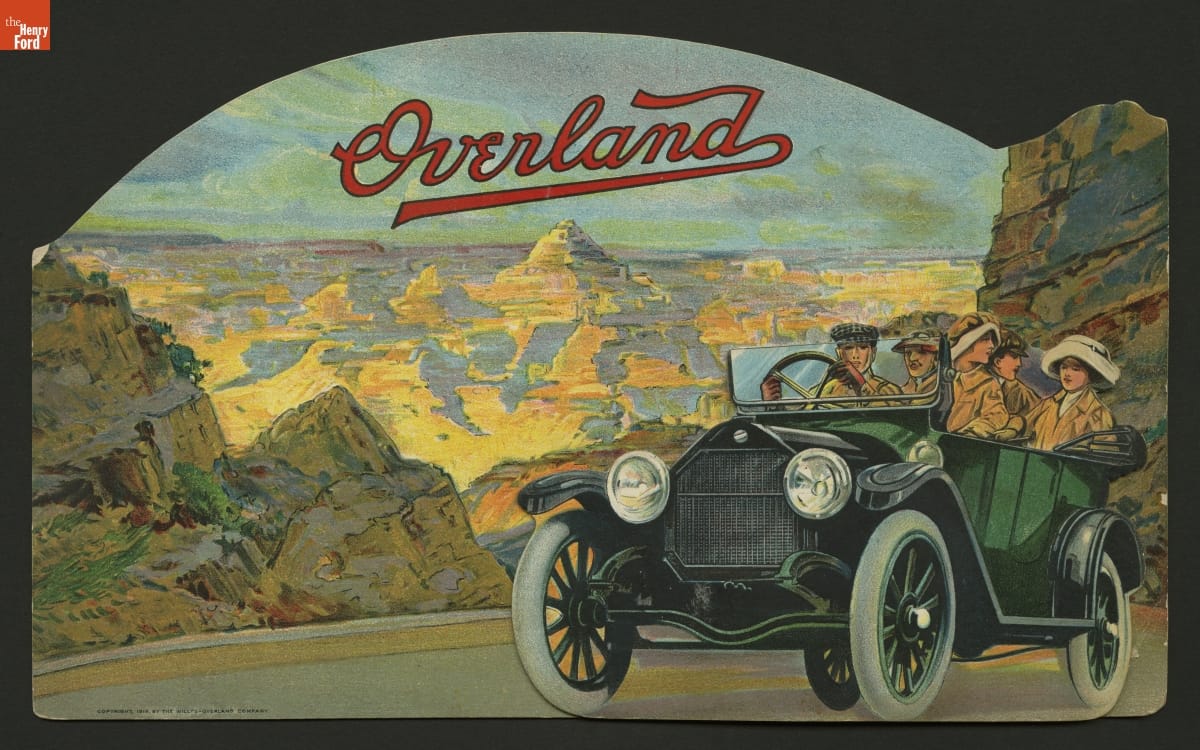
- Advertising Display Card for Overland Automobiles, 1914 - As cars became more affordable, people began to use them for touring as well as for daily transportation. This 1914 Willys-Overland display card shows a group of tourists traveling through America.
- 1914
- Collections - Artifact
Advertising Display Card for Overland Automobiles, 1914
As cars became more affordable, people began to use them for touring as well as for daily transportation. This 1914 Willys-Overland display card shows a group of tourists traveling through America.
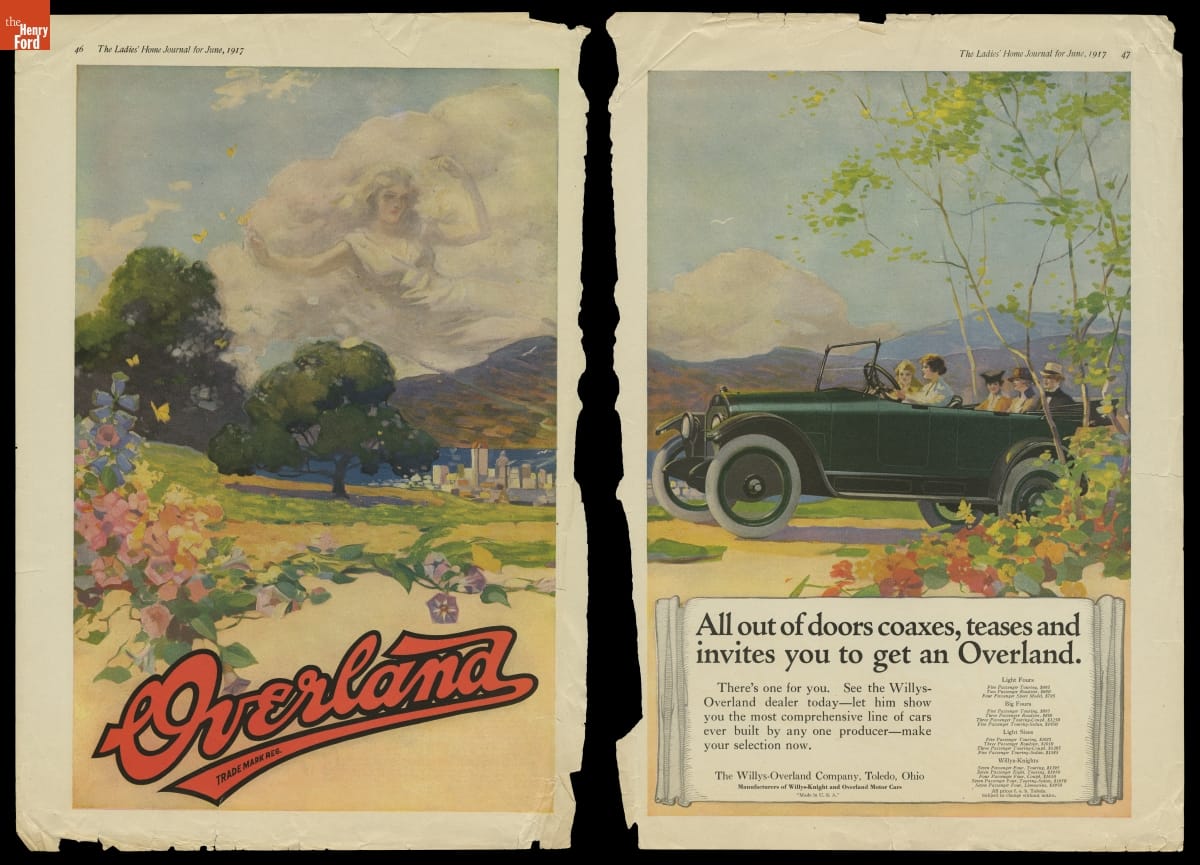
- Advertisement, "All out of doors coaxes, teases and invites you to get an Overland," June 1917 - Claude Cox formed Overland Automobile Company in Terre Haute, Indiana, in 1903 and moved it to Indianapolis two years later. John North Willys bought the failing firm in 1908, turned its fortunes around, and relocated the company to Toledo, Ohio. This summertime advertisement from 1917 promoted Overland automobiles as a way for people to explore the great outdoors.
- June 01, 1917
- Collections - Artifact
Advertisement, "All out of doors coaxes, teases and invites you to get an Overland," June 1917
Claude Cox formed Overland Automobile Company in Terre Haute, Indiana, in 1903 and moved it to Indianapolis two years later. John North Willys bought the failing firm in 1908, turned its fortunes around, and relocated the company to Toledo, Ohio. This summertime advertisement from 1917 promoted Overland automobiles as a way for people to explore the great outdoors.
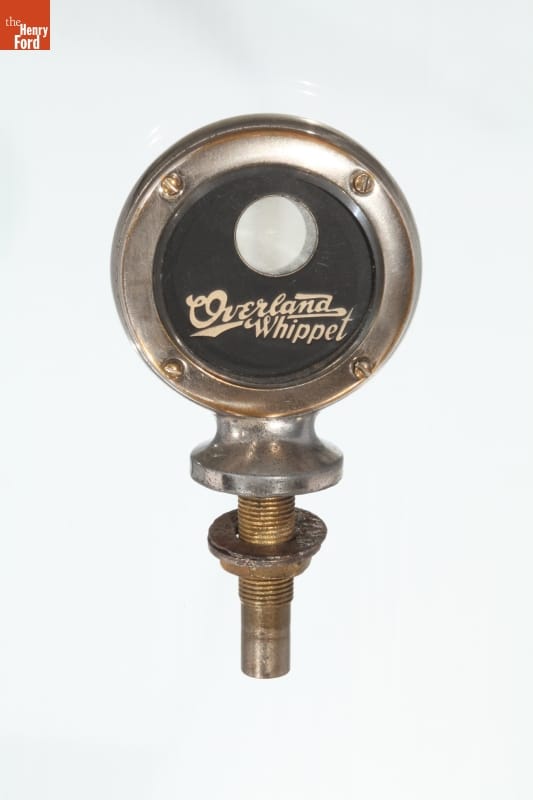
- Overland Whippet Motometer, 1920-1930 - Willys-Overland of Toledo, Ohio, introduced its low-priced Whippet car for 1926. Generally marketed as its own make, the Whippet was slim but quick -- like the breed of dogs for which it was named. The car boasted four-wheel brakes and full-pressure lubrication, and prices started around $525. The Great Depression ended Whippet production in 1931.
- 1920-1930
- Collections - Artifact
Overland Whippet Motometer, 1920-1930
Willys-Overland of Toledo, Ohio, introduced its low-priced Whippet car for 1926. Generally marketed as its own make, the Whippet was slim but quick -- like the breed of dogs for which it was named. The car boasted four-wheel brakes and full-pressure lubrication, and prices started around $525. The Great Depression ended Whippet production in 1931.