
Search
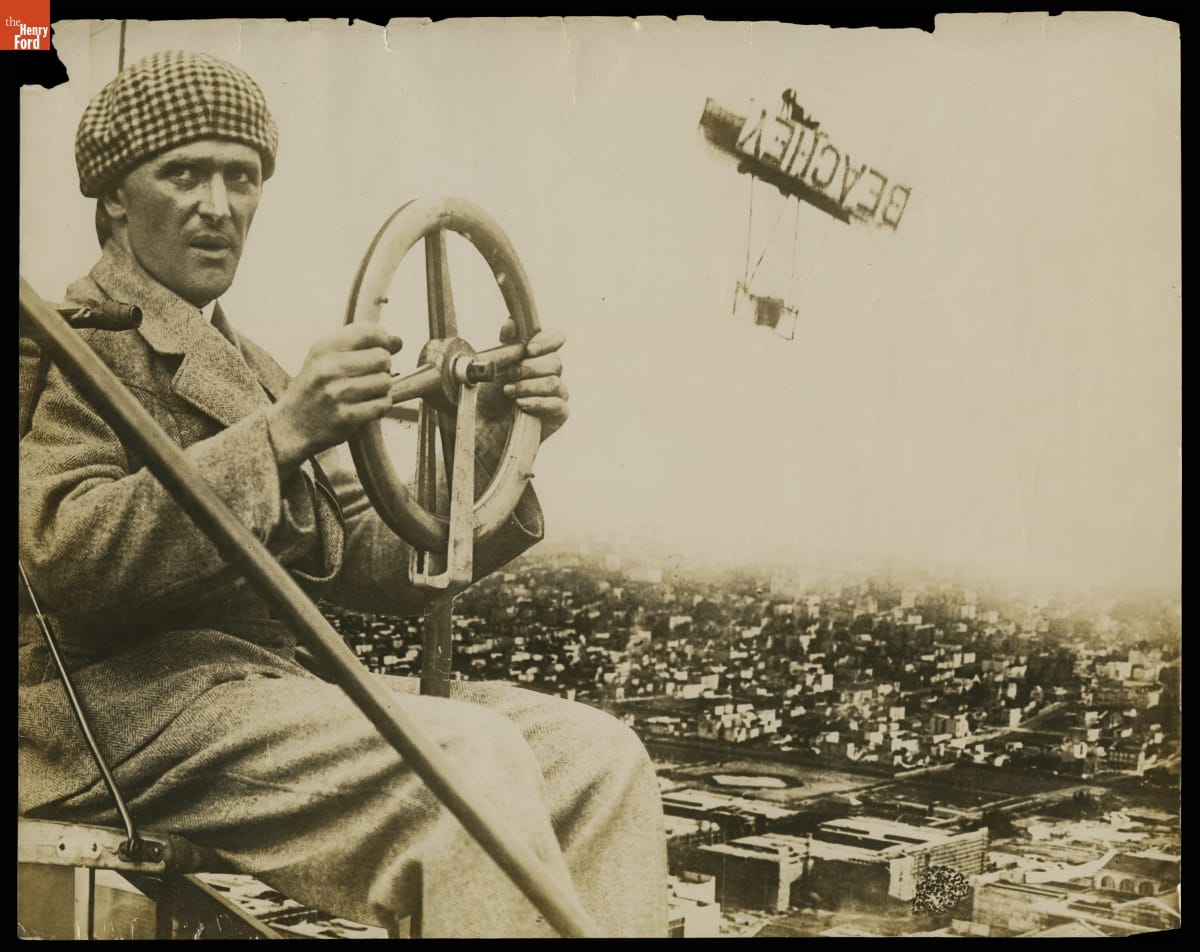
- Lincoln Beachey Stunt Flying over San Francisco, California, circa 1915 - Lincoln Beachey is remembered as America's first great stunt flyer. He perfected a series of aerobatic maneuvers -- including spins, dives, spirals, and loops -- and earned fame and fortune by staging heart-stopping exhibition flights for audiences across the country. Beachey died when the wings broke loose from his airplane during a stunt flight over San Francisco Bay in 1915.
- circa 1915
- Collections - Artifact
Lincoln Beachey Stunt Flying over San Francisco, California, circa 1915
Lincoln Beachey is remembered as America's first great stunt flyer. He perfected a series of aerobatic maneuvers -- including spins, dives, spirals, and loops -- and earned fame and fortune by staging heart-stopping exhibition flights for audiences across the country. Beachey died when the wings broke loose from his airplane during a stunt flight over San Francisco Bay in 1915.
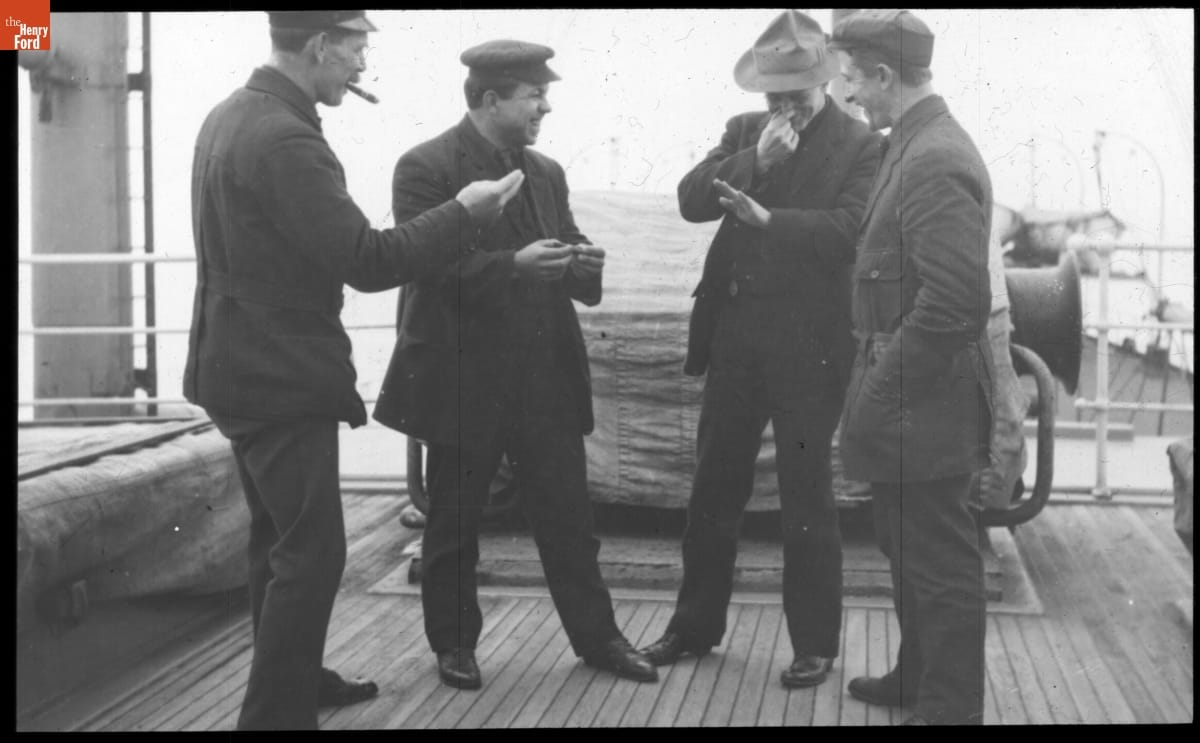
- The Thomas Flyer Team aboard the SS Shawmut, Journeying to Japan, New York to Paris Race, 1908 - In early April, officials for the 1908 New York to Paris race decided that the remaining teams should ship their vehicles from the west coast of the United States to Asia. Instead of crossing the Bering Strait from Alaska into Russia, the race would begin again in Vladivostok. The now-trailing American team crossed the Pacific on the SS <em>Shawmut</em>.
- 1908
- Collections - Artifact
The Thomas Flyer Team aboard the SS Shawmut, Journeying to Japan, New York to Paris Race, 1908
In early April, officials for the 1908 New York to Paris race decided that the remaining teams should ship their vehicles from the west coast of the United States to Asia. Instead of crossing the Bering Strait from Alaska into Russia, the race would begin again in Vladivostok. The now-trailing American team crossed the Pacific on the SS Shawmut.
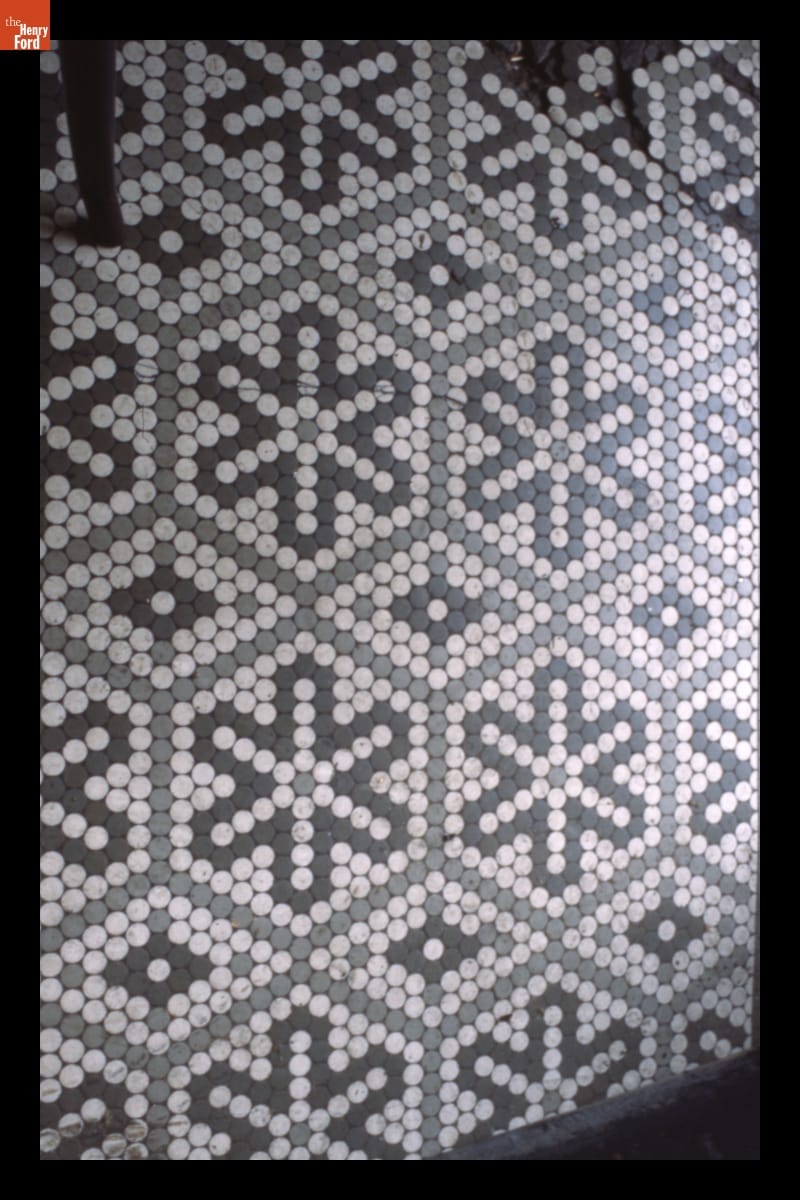
- Floor Tile in Georgia-Pacific (G-P) Diner, Jarratt, Virginia, June 1991 -
- June 01, 1991
- Collections - Artifact
Floor Tile in Georgia-Pacific (G-P) Diner, Jarratt, Virginia, June 1991
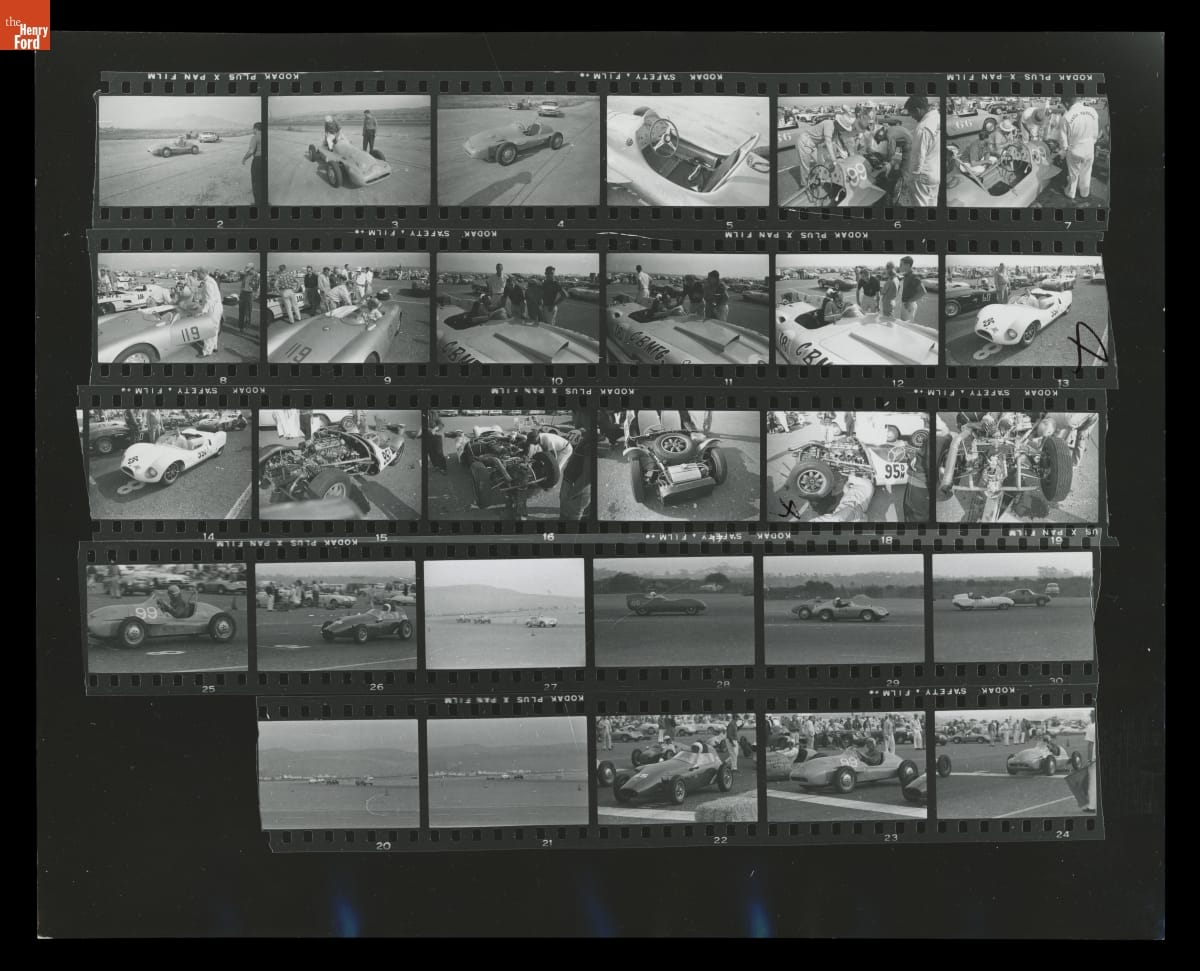
- Contact Sheet, Pacific Coast Championship Races, Hourglass Field, San Diego, California, November 1959 -
- 14 November 1959-15 November 1959
- Collections - Artifact
Contact Sheet, Pacific Coast Championship Races, Hourglass Field, San Diego, California, November 1959
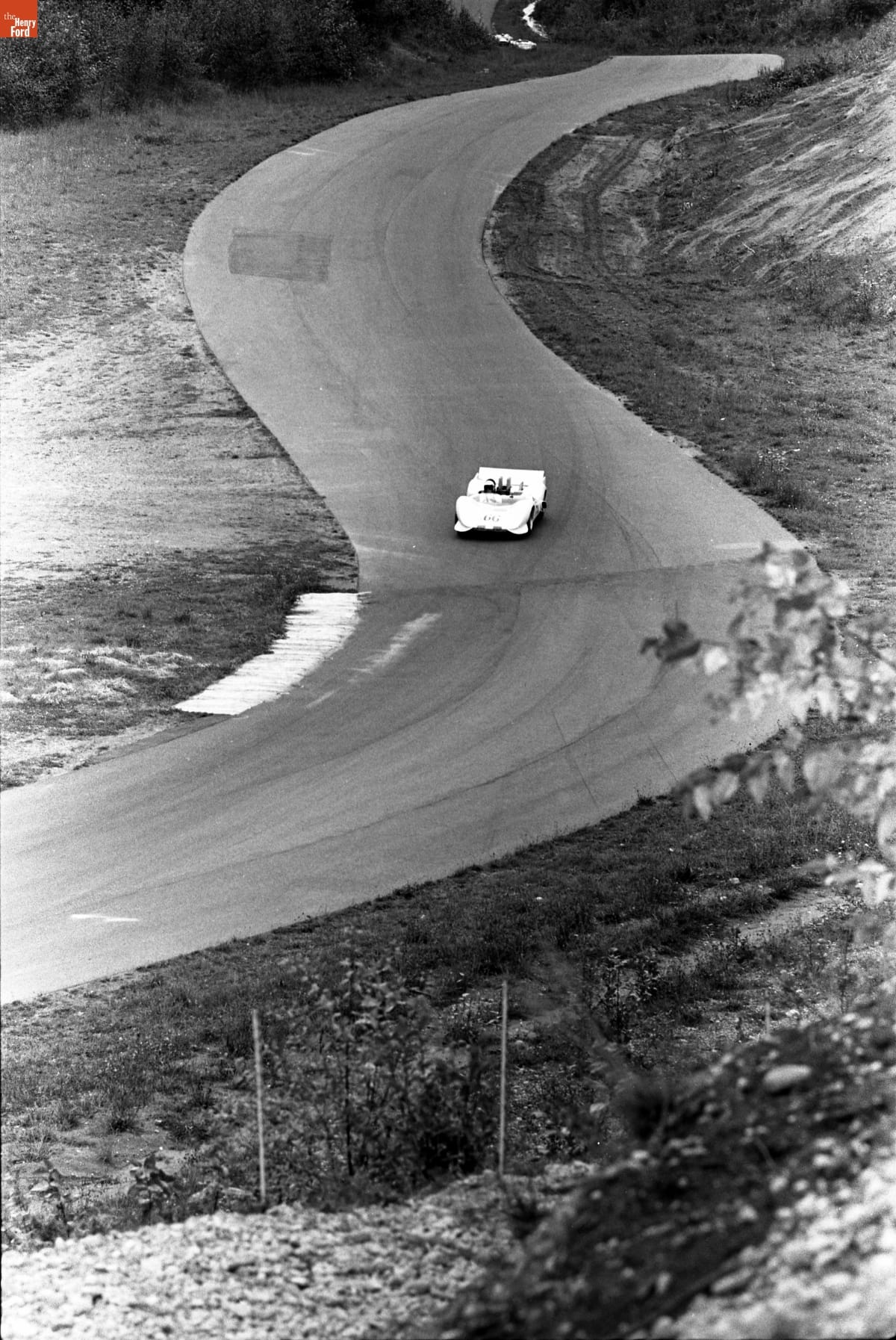
- Northwest Grand Prix, Pacific Raceways, Kent, Washington, October 1965 - Photographer Dave Friedman captured and preserved auto racing history. His work -- and his collection of works by other photographers -- documents key races, cars, drivers, and teams. This photo is from the 1965 Northwest Grand Prix, where driver Jim Hall finished first overall in his #66 Chevrolet-powered Chaparral 2C car.
- 08 October 1965-10 October 1965
- Collections - Artifact
Northwest Grand Prix, Pacific Raceways, Kent, Washington, October 1965
Photographer Dave Friedman captured and preserved auto racing history. His work -- and his collection of works by other photographers -- documents key races, cars, drivers, and teams. This photo is from the 1965 Northwest Grand Prix, where driver Jim Hall finished first overall in his #66 Chevrolet-powered Chaparral 2C car.
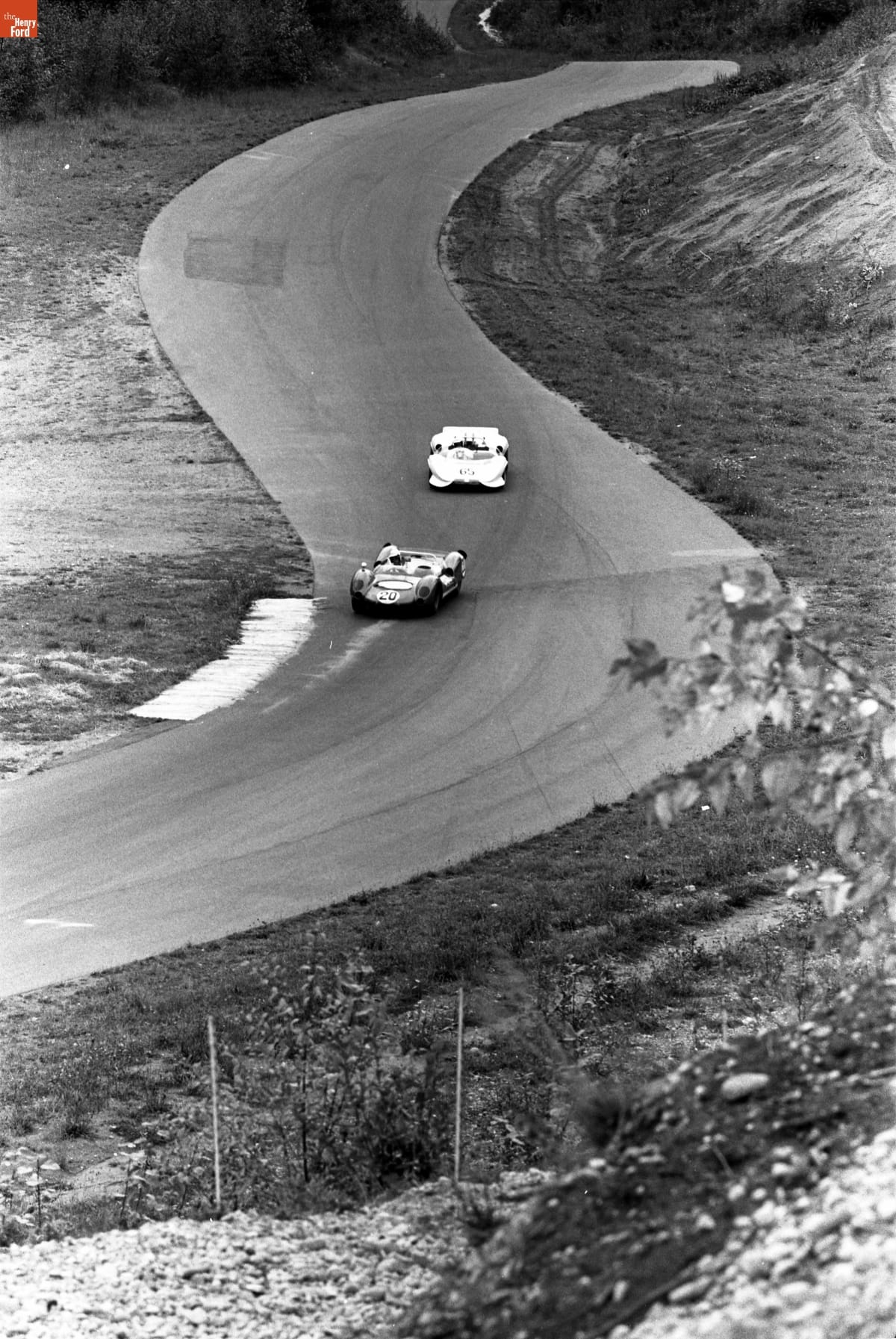
- Northwest Grand Prix, Pacific Raceways, Kent, Washington, October 1965 - Photographer Dave Friedman captured and preserved auto racing history. His work -- and his collection of works by other photographers -- documents key races, cars, drivers, and teams. This photo is from the 1965 Northwest Grand Prix, where driver Jim Hall finished first overall in his #66 Chevrolet-powered Chaparral 2C car.
- 08 October 1965-10 October 1965
- Collections - Artifact
Northwest Grand Prix, Pacific Raceways, Kent, Washington, October 1965
Photographer Dave Friedman captured and preserved auto racing history. His work -- and his collection of works by other photographers -- documents key races, cars, drivers, and teams. This photo is from the 1965 Northwest Grand Prix, where driver Jim Hall finished first overall in his #66 Chevrolet-powered Chaparral 2C car.
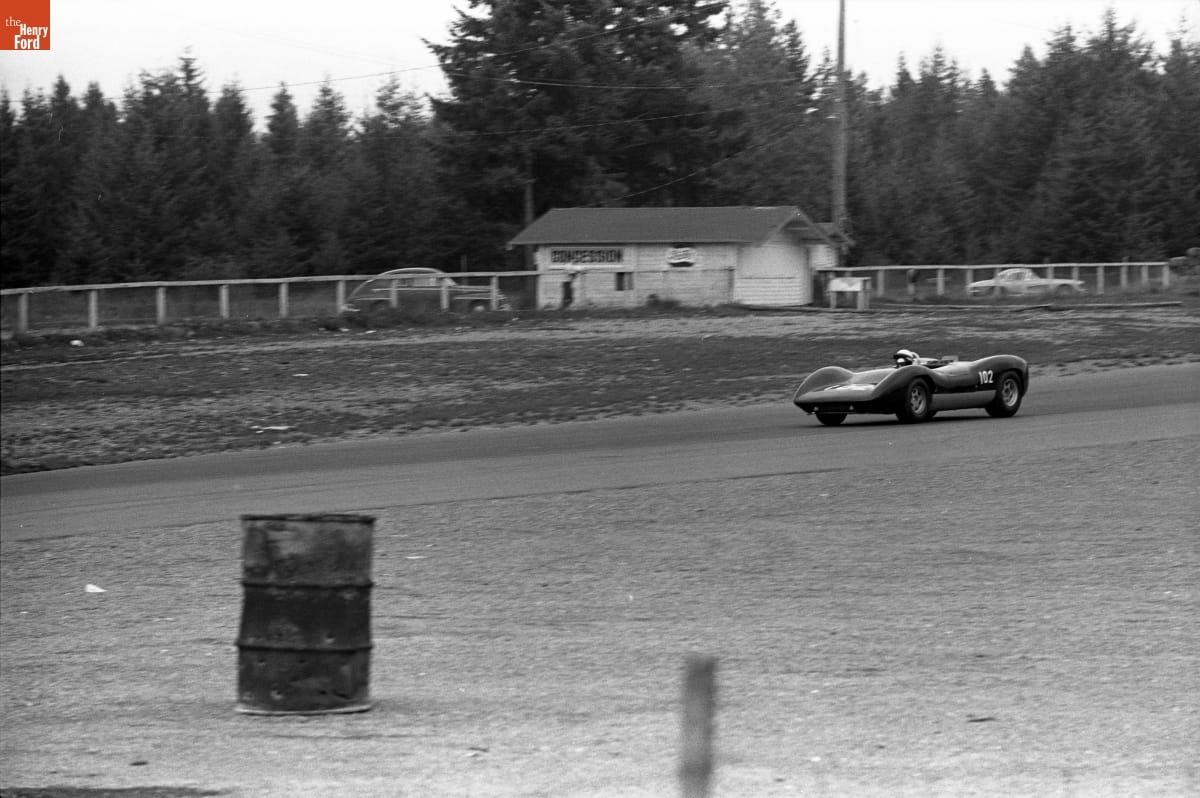
- Northwest Grand Prix, Pacific Raceways, Kent, Washington, October 1965 - Photographer Dave Friedman captured and preserved auto racing history. His work -- and his collection of works by other photographers -- documents key races, cars, drivers, and teams. This photo is from the 1965 Northwest Grand Prix, where driver Jim Hall finished first overall in his #66 Chevrolet-powered Chaparral 2C car.
- 08 October 1965-10 October 1965
- Collections - Artifact
Northwest Grand Prix, Pacific Raceways, Kent, Washington, October 1965
Photographer Dave Friedman captured and preserved auto racing history. His work -- and his collection of works by other photographers -- documents key races, cars, drivers, and teams. This photo is from the 1965 Northwest Grand Prix, where driver Jim Hall finished first overall in his #66 Chevrolet-powered Chaparral 2C car.
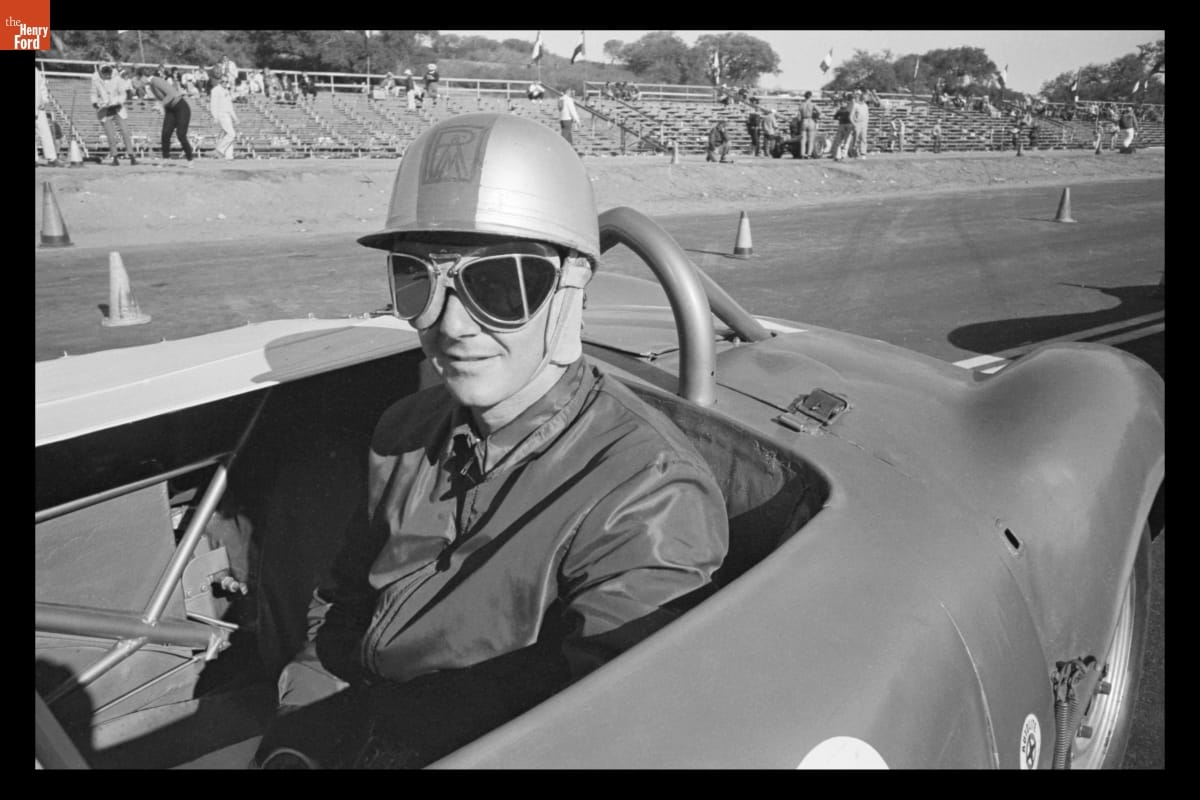
- Pacific Grand Prix, Monterey, California, October 1961 - Dave Friedman captured and preserved auto racing history through his photography. His work -- and his collection of works by other photographers -- documents key races, cars, drivers, and teams. The 1961 Pacific Grand Prix took place at Laguna Seca Raceway near Monterey, California. Sir Stirling Moss claimed the victory in a Lotus 19 Monte Carlo powered by a Coventry Climax FPF engine.
- 20 October 1961 - 22 October 1961
- Collections - Artifact
Pacific Grand Prix, Monterey, California, October 1961
Dave Friedman captured and preserved auto racing history through his photography. His work -- and his collection of works by other photographers -- documents key races, cars, drivers, and teams. The 1961 Pacific Grand Prix took place at Laguna Seca Raceway near Monterey, California. Sir Stirling Moss claimed the victory in a Lotus 19 Monte Carlo powered by a Coventry Climax FPF engine.
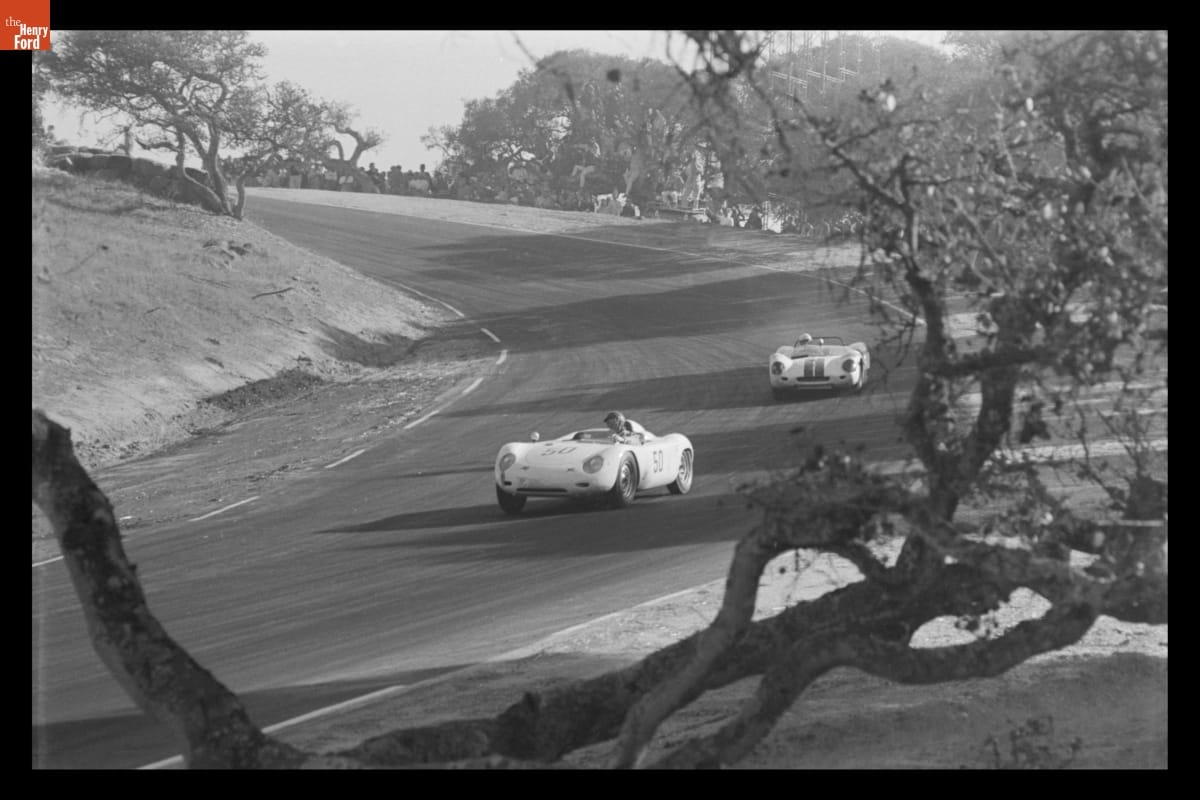
- Porsche 718 RS 61 Driven by Ken Miles in the Pacific Grand Prix, Monterey, California, October 1961 - Dave Friedman captured and preserved auto racing history through his photography. His work -- and his collection of works by other photographers -- documents key races, cars, drivers, and teams. The 1961 Pacific Grand Prix took place at Laguna Seca Raceway near Monterey, California. Sir Stirling Moss claimed the victory in a Lotus 19 Monte Carlo powered by a Coventry Climax FPF engine.
- 20 October 1961 - 22 October 1961
- Collections - Artifact
Porsche 718 RS 61 Driven by Ken Miles in the Pacific Grand Prix, Monterey, California, October 1961
Dave Friedman captured and preserved auto racing history through his photography. His work -- and his collection of works by other photographers -- documents key races, cars, drivers, and teams. The 1961 Pacific Grand Prix took place at Laguna Seca Raceway near Monterey, California. Sir Stirling Moss claimed the victory in a Lotus 19 Monte Carlo powered by a Coventry Climax FPF engine.
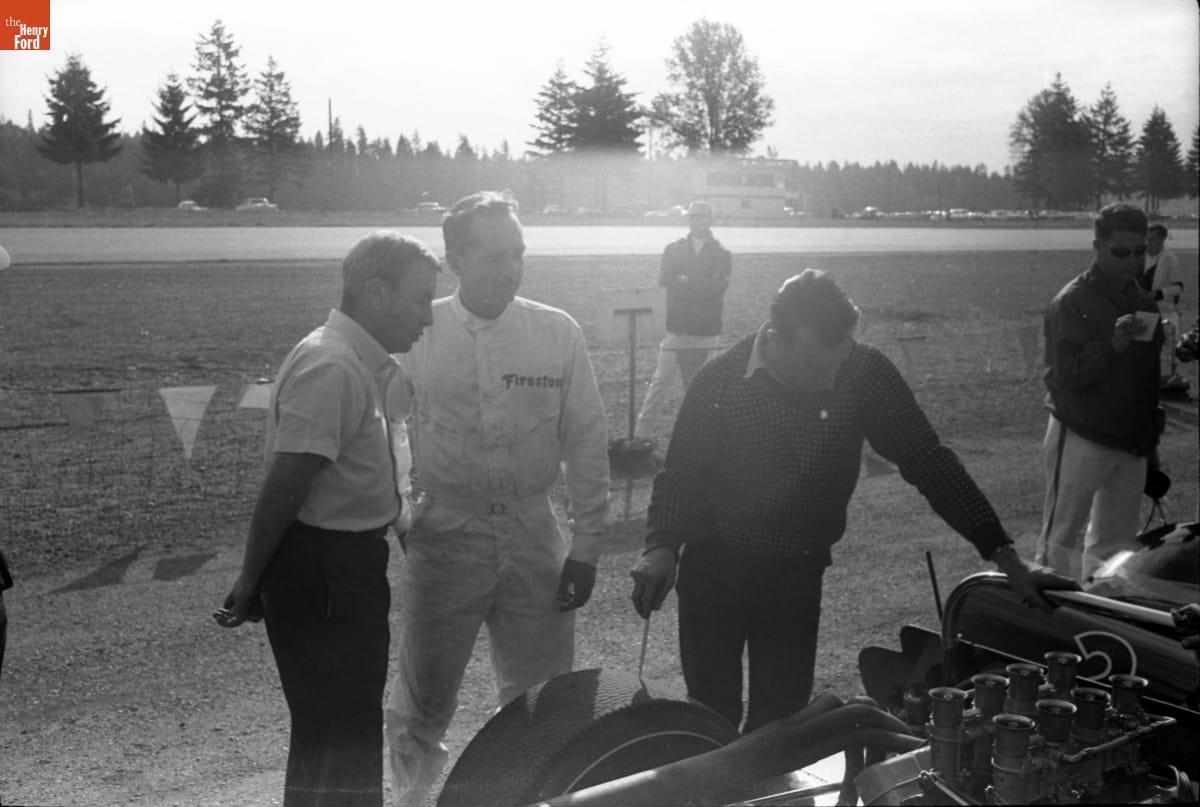
- Northwest Grand Prix, Pacific Raceways, Kent, Washington, October 1965 - Photographer Dave Friedman captured and preserved auto racing history. His work -- and his collection of works by other photographers -- documents key races, cars, drivers, and teams. This photo is from the 1965 Northwest Grand Prix, where driver Jim Hall finished first overall in his #66 Chevrolet-powered Chaparral 2C car.
- 08 October 1965-10 October 1965
- Collections - Artifact
Northwest Grand Prix, Pacific Raceways, Kent, Washington, October 1965
Photographer Dave Friedman captured and preserved auto racing history. His work -- and his collection of works by other photographers -- documents key races, cars, drivers, and teams. This photo is from the 1965 Northwest Grand Prix, where driver Jim Hall finished first overall in his #66 Chevrolet-powered Chaparral 2C car.