
Search
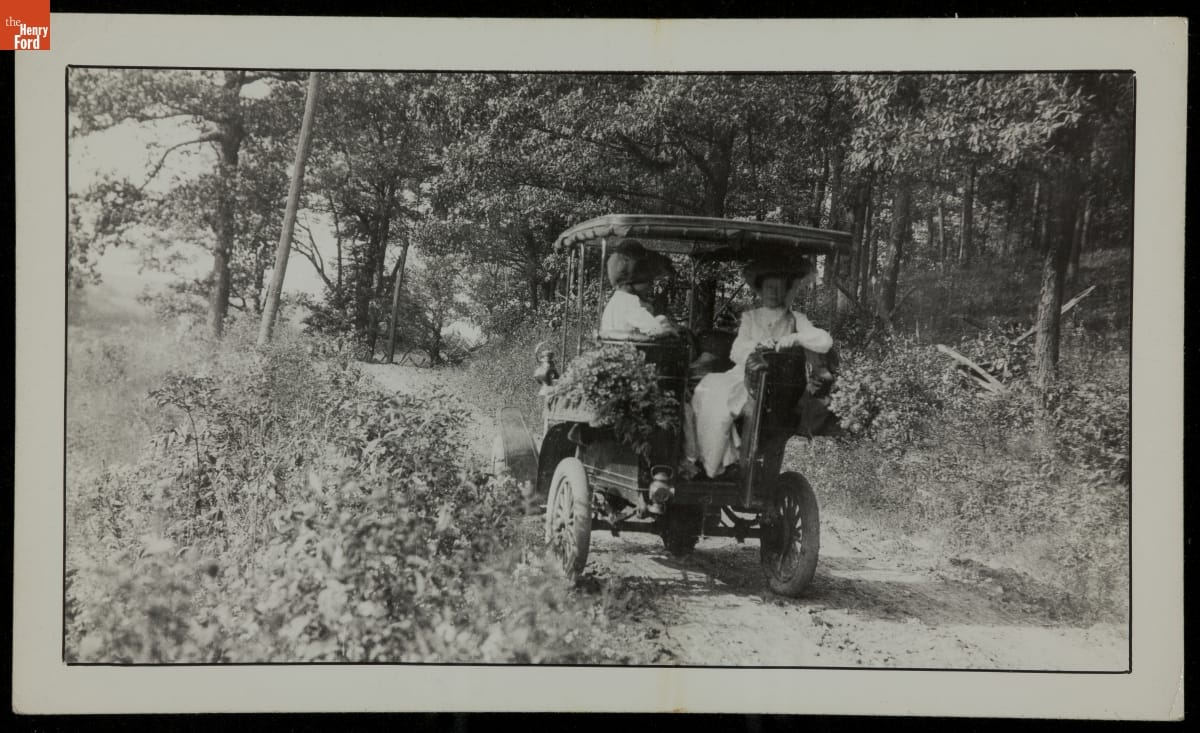
- Two Women Looking Out the Back of 1904 Packard, circa 1905 - This 1904 Packard had a rear center door, which was common on horse-drawn vehicles of the time. Automobiles were in transition. They were playthings for the wealthy, yet to replace buggies for everyday transportation. These well-to-do women use a custom-made wicker hamper to carry flowers they may have gathered during their expensive excursion.
- circa 1905
- Collections - Artifact
Two Women Looking Out the Back of 1904 Packard, circa 1905
This 1904 Packard had a rear center door, which was common on horse-drawn vehicles of the time. Automobiles were in transition. They were playthings for the wealthy, yet to replace buggies for everyday transportation. These well-to-do women use a custom-made wicker hamper to carry flowers they may have gathered during their expensive excursion.
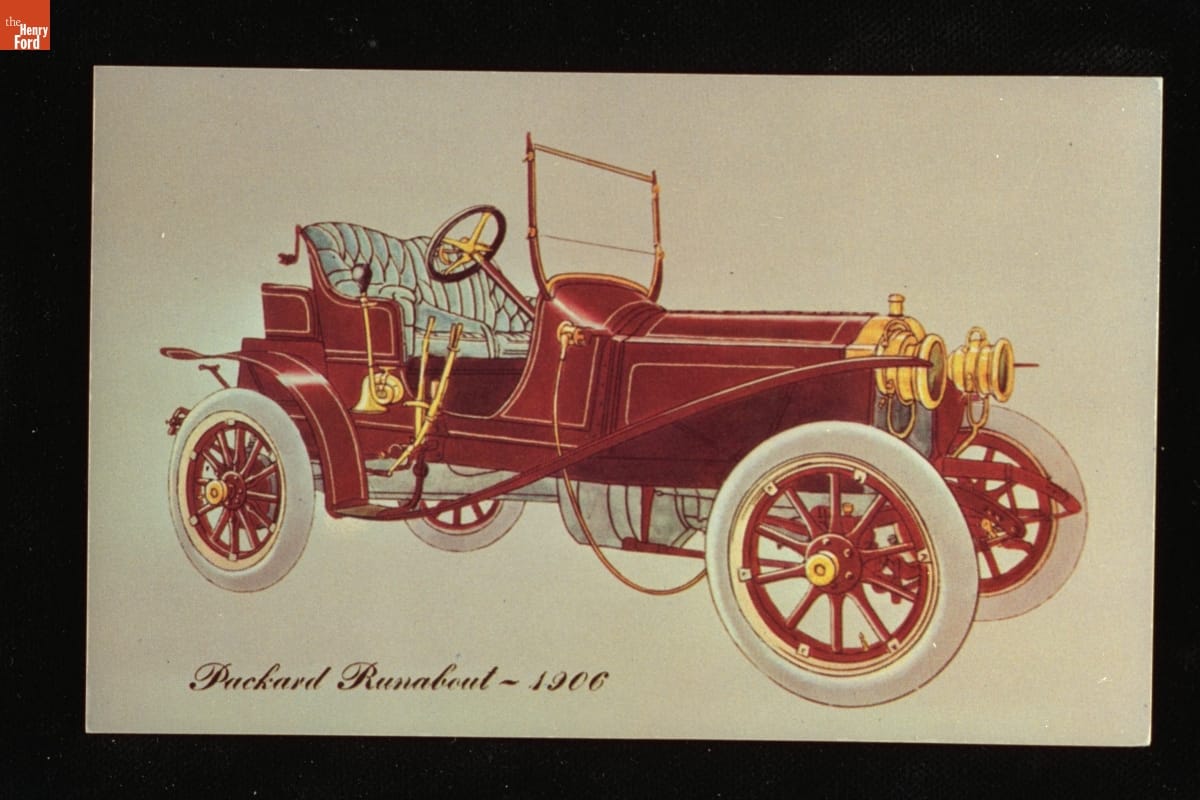
- Packard Runabout - 1906 - This postcard, featuring an illustration of an early Packard automobile, was published by the Autoprints company of New York. Postcards like this were sold to visitors at Henry Ford Museum & Greenfield Village in the 1950s. James Ward Packard founded Packard Motor Car Company in 1899. It became America's premier luxury marque and largely remained so until production ended in 1958.
- 1906
- Collections - Artifact
Packard Runabout - 1906
This postcard, featuring an illustration of an early Packard automobile, was published by the Autoprints company of New York. Postcards like this were sold to visitors at Henry Ford Museum & Greenfield Village in the 1950s. James Ward Packard founded Packard Motor Car Company in 1899. It became America's premier luxury marque and largely remained so until production ended in 1958.
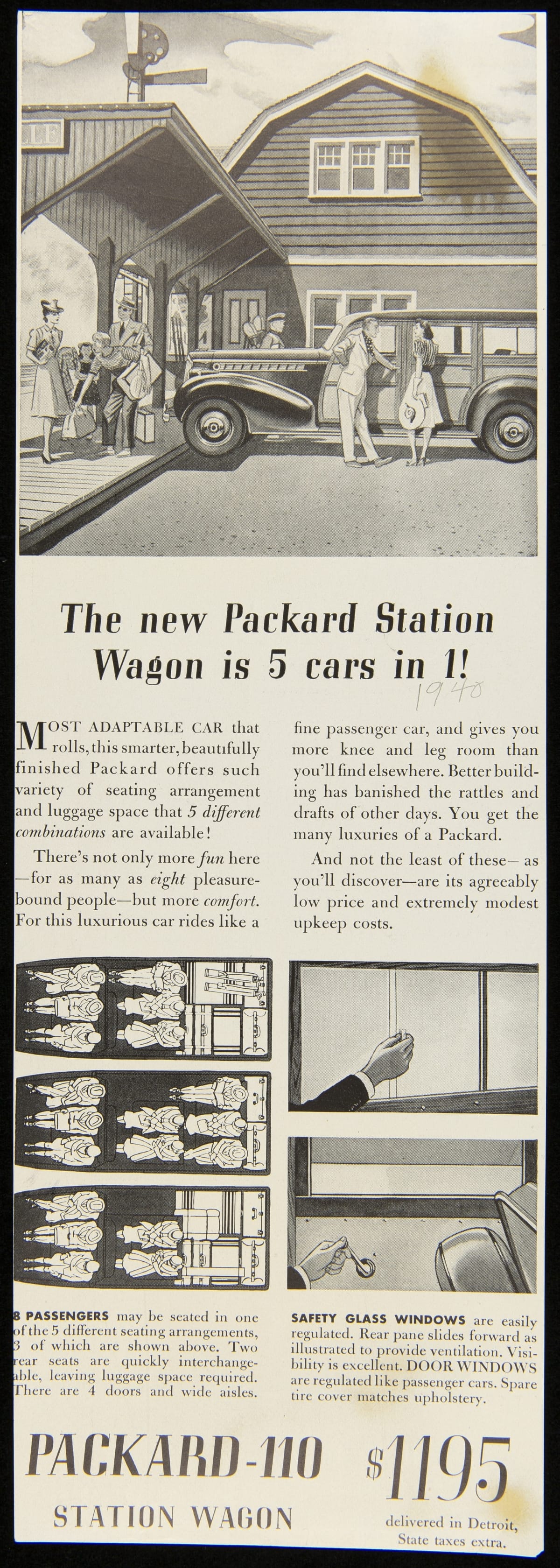
- "New Packard Station Wagon is 5 Cars In 1!," 1940 - Flexibility is generally a strong selling point when it comes to marketing automobiles. This 1940 advertisement from Packard claimed that the company's station wagons could be arranged in five different seating and cargo-carrying configurations. The 110 series cars were a more affordable option in the upmarket automaker's lineup -- but still with "the many luxuries of a Packard."
- 1940
- Collections - Artifact
"New Packard Station Wagon is 5 Cars In 1!," 1940
Flexibility is generally a strong selling point when it comes to marketing automobiles. This 1940 advertisement from Packard claimed that the company's station wagons could be arranged in five different seating and cargo-carrying configurations. The 110 series cars were a more affordable option in the upmarket automaker's lineup -- but still with "the many luxuries of a Packard."
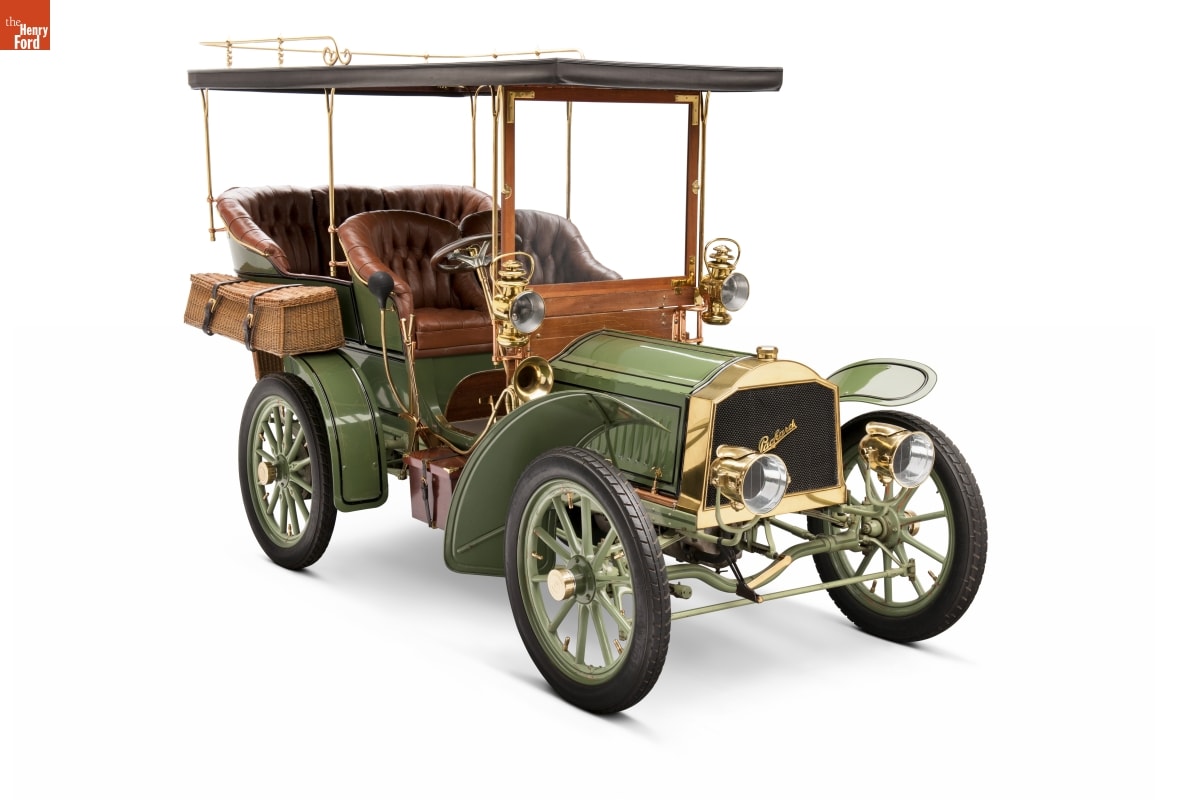
- 1904 Packard Model L Touring Car - James Ward Packard built his first car in Warren, Ohio, in 1899. By 1903 a group of Detroit investors had purchased the company and moved the operation to a new factory in Detroit. One of the first cars built there was the Model L touring car. It was the first four-cylinder Packard and the first with the tombstone-shaped radiator shell that became a Packard trademark.
- 1904
- Collections - Artifact
1904 Packard Model L Touring Car
James Ward Packard built his first car in Warren, Ohio, in 1899. By 1903 a group of Detroit investors had purchased the company and moved the operation to a new factory in Detroit. One of the first cars built there was the Model L touring car. It was the first four-cylinder Packard and the first with the tombstone-shaped radiator shell that became a Packard trademark.
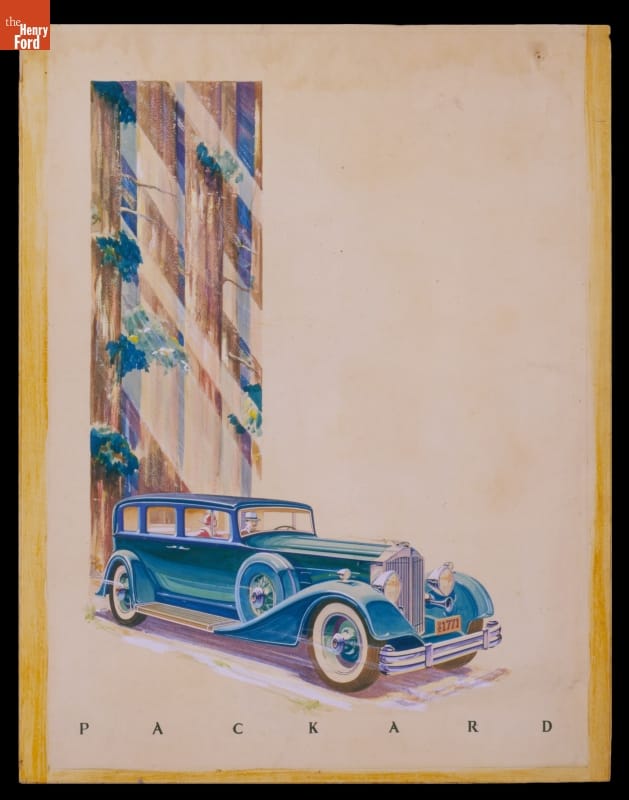
- Advertising Layout Painted by William L. Mitchell, "Packard," 1933 - Bill Mitchell joined General Motors' Art and Colour Section in 1935 and served as GM's head of design from 1958 to 1977. Mitchell created this advertising layout for Packard in 1933 while he was working for the Barron Collier Advertising Agency in New York City.
- 1933
- Collections - Artifact
Advertising Layout Painted by William L. Mitchell, "Packard," 1933
Bill Mitchell joined General Motors' Art and Colour Section in 1935 and served as GM's head of design from 1958 to 1977. Mitchell created this advertising layout for Packard in 1933 while he was working for the Barron Collier Advertising Agency in New York City.
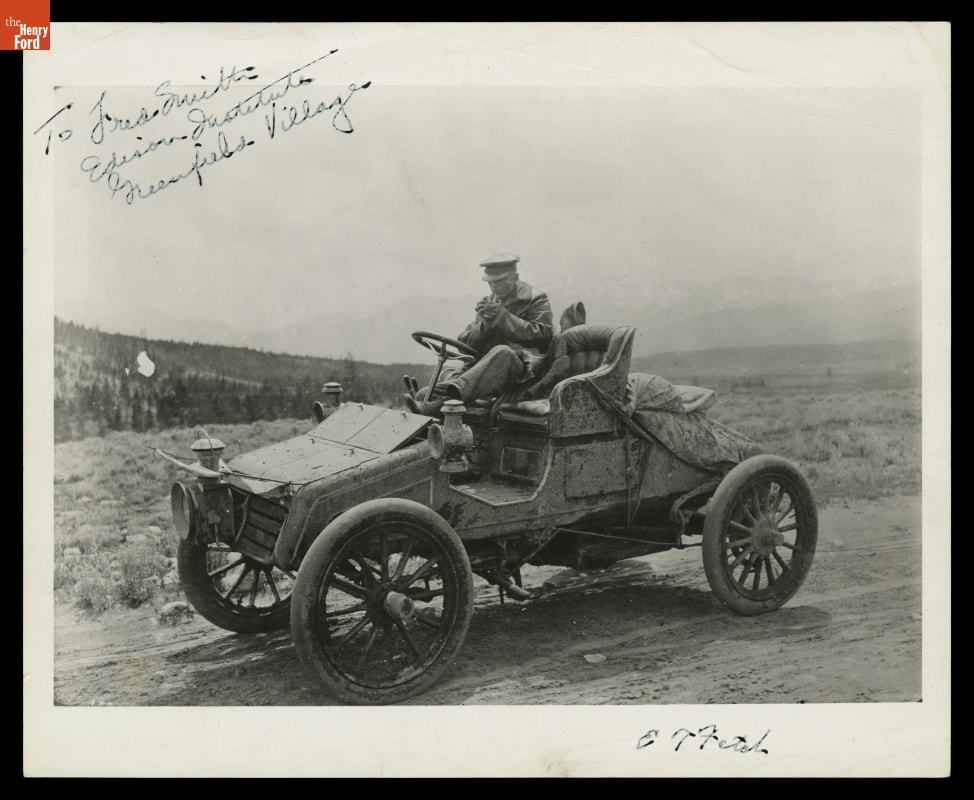
- Driver Tom Fetch in "Old Pacific" on the Cross-Country Trip Sponsored by Packard Motor Car Company, 1903 - In 1903, two men drove a Packard Model F nicknamed "Old Pacific" from San Francisco to New York. It was the second automobile to complete the epic journey. Few roads stretched west of the Mississippi, and if the men encountered a problem, they had to solve it themselves. This photograph shows a desolate landscape, the dust-covered Packard, and E.T. "Tom" Fetch.
- 1903
- Collections - Artifact
Driver Tom Fetch in "Old Pacific" on the Cross-Country Trip Sponsored by Packard Motor Car Company, 1903
In 1903, two men drove a Packard Model F nicknamed "Old Pacific" from San Francisco to New York. It was the second automobile to complete the epic journey. Few roads stretched west of the Mississippi, and if the men encountered a problem, they had to solve it themselves. This photograph shows a desolate landscape, the dust-covered Packard, and E.T. "Tom" Fetch.
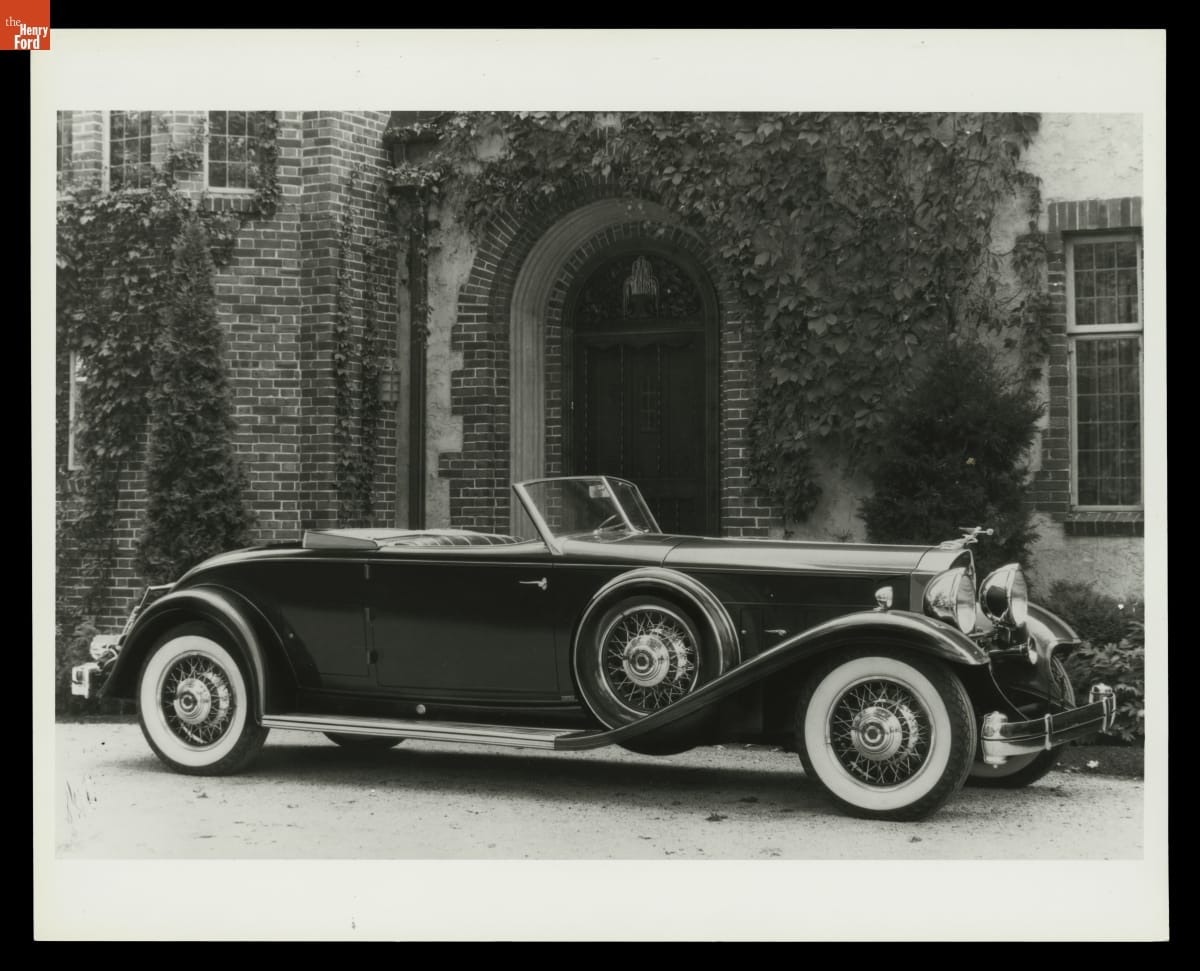
- 1932 Packard De Luxe Eight Model 2071 Convertible Coupe - For 1932, Packard offered its eight-cylinder models in three versions. The new Light Eight, with a comparatively low price of $1,795, was introduced in response to the Great Depression. The mid-line Standard Eight started at $2,485. The Deluxe Eight was Packard's premium eight-cylinder car. It started at $3,690 and boasted a top speed of 85 mph.
- 1932
- Collections - Artifact
1932 Packard De Luxe Eight Model 2071 Convertible Coupe
For 1932, Packard offered its eight-cylinder models in three versions. The new Light Eight, with a comparatively low price of $1,795, was introduced in response to the Great Depression. The mid-line Standard Eight started at $2,485. The Deluxe Eight was Packard's premium eight-cylinder car. It started at $3,690 and boasted a top speed of 85 mph.
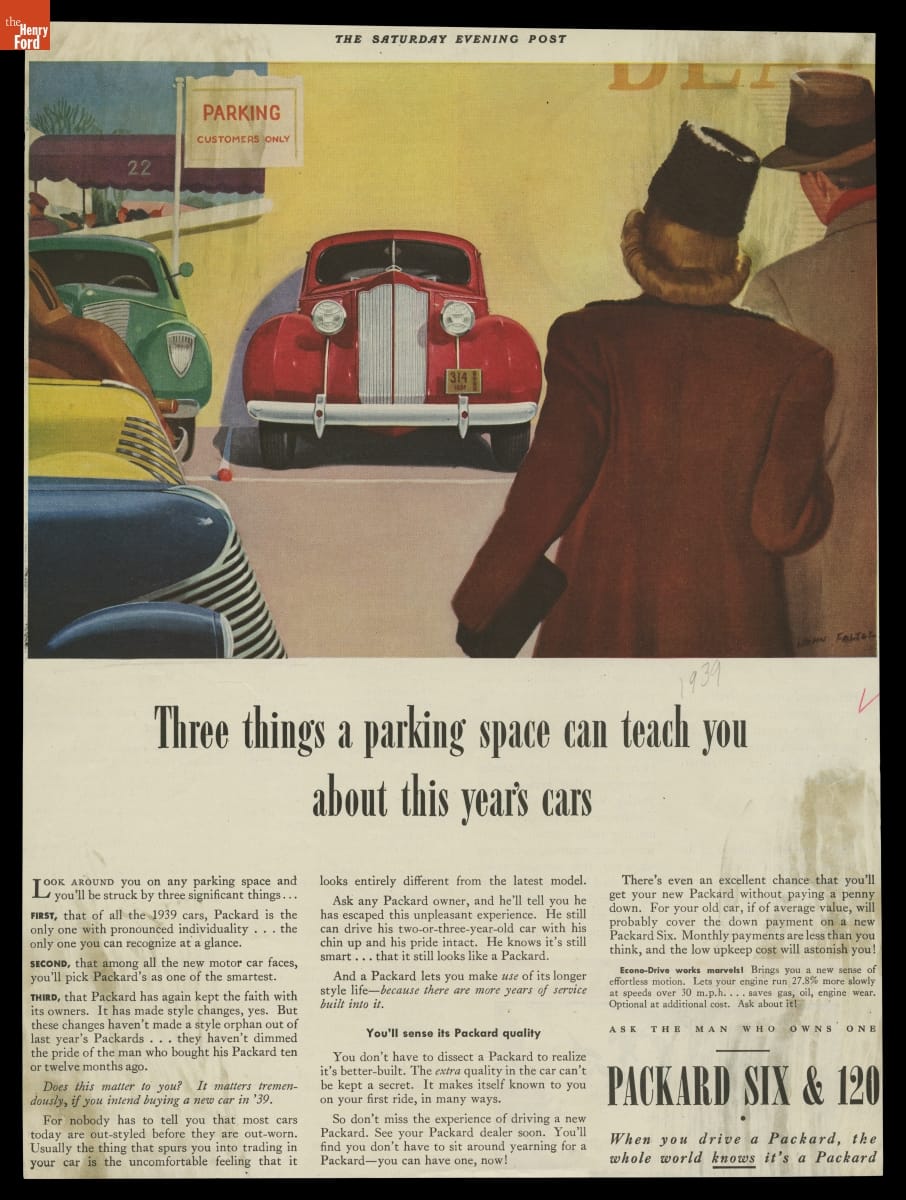
- Packard Advertisement, "Three Things a Parking Space Can Teach You About This Year's Cars," February 1939 - Packard automobiles stood apart from the rest -- or at least that's what this 1939 advertisement for the luxury automaker wanted you to believe. Certainly, Packard's tombstone-shaped radiator was distinctive. The company first used the design in 1904, and it remained a Packard trademark until the firm ended operations in 1958.
- February 11, 1939
- Collections - Artifact
Packard Advertisement, "Three Things a Parking Space Can Teach You About This Year's Cars," February 1939
Packard automobiles stood apart from the rest -- or at least that's what this 1939 advertisement for the luxury automaker wanted you to believe. Certainly, Packard's tombstone-shaped radiator was distinctive. The company first used the design in 1904, and it remained a Packard trademark until the firm ended operations in 1958.
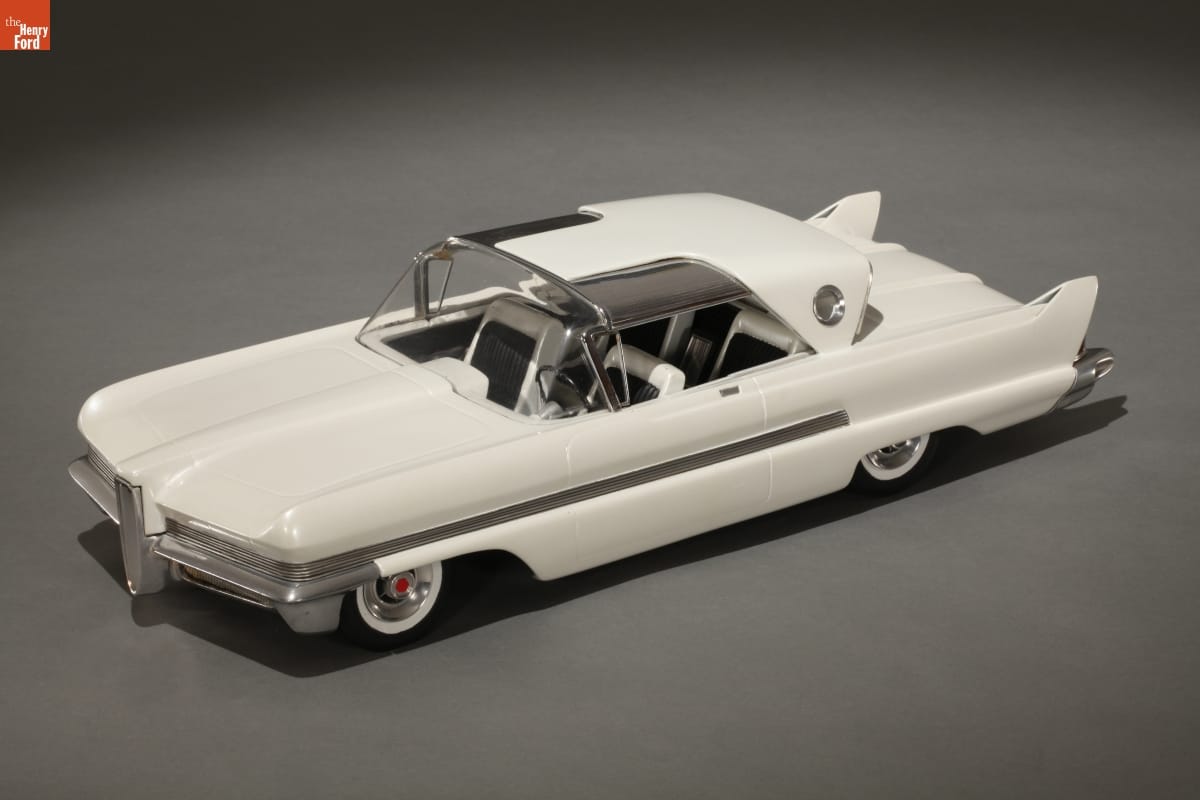
- Packard Predictor Scale Model, 1956 - This 1/16-scale model depicts the Packard Predicator, a concept car designed by William Schmidt and Richard Teague. The Packard Predictor concept was a 1956 exercise to visualize a future design direction for Packard. But by 1959, the Packard brand was history.
- 1956
- Collections - Artifact
Packard Predictor Scale Model, 1956
This 1/16-scale model depicts the Packard Predicator, a concept car designed by William Schmidt and Richard Teague. The Packard Predictor concept was a 1956 exercise to visualize a future design direction for Packard. But by 1959, the Packard brand was history.
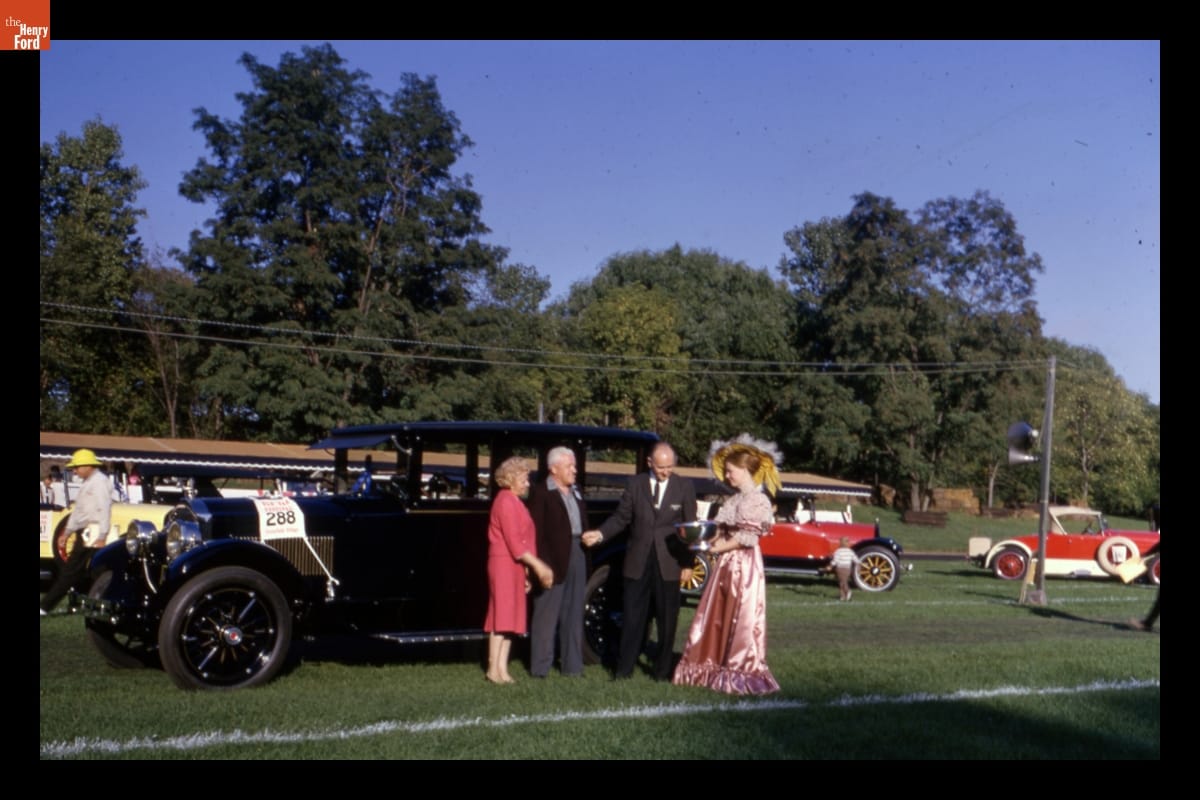
- 1924 Packard Sedan Receiving Prize at Old Car Festival in Greenfield Village, September 1964 - Held annually since 1951, The Henry Ford's Old Car Festival brings together hundreds of vintage motor vehicles and thousands of spectators each year. Awards are a longstanding tradition at the event, where eligible cars are judged on their authenticity and the quality of their restoration work. Executive director Donald A. Shelley presented several awards during his tenure from 1954-1976.
- 12 September 1964 - 13 September 1964
- Collections - Artifact
1924 Packard Sedan Receiving Prize at Old Car Festival in Greenfield Village, September 1964
Held annually since 1951, The Henry Ford's Old Car Festival brings together hundreds of vintage motor vehicles and thousands of spectators each year. Awards are a longstanding tradition at the event, where eligible cars are judged on their authenticity and the quality of their restoration work. Executive director Donald A. Shelley presented several awards during his tenure from 1954-1976.