
Search
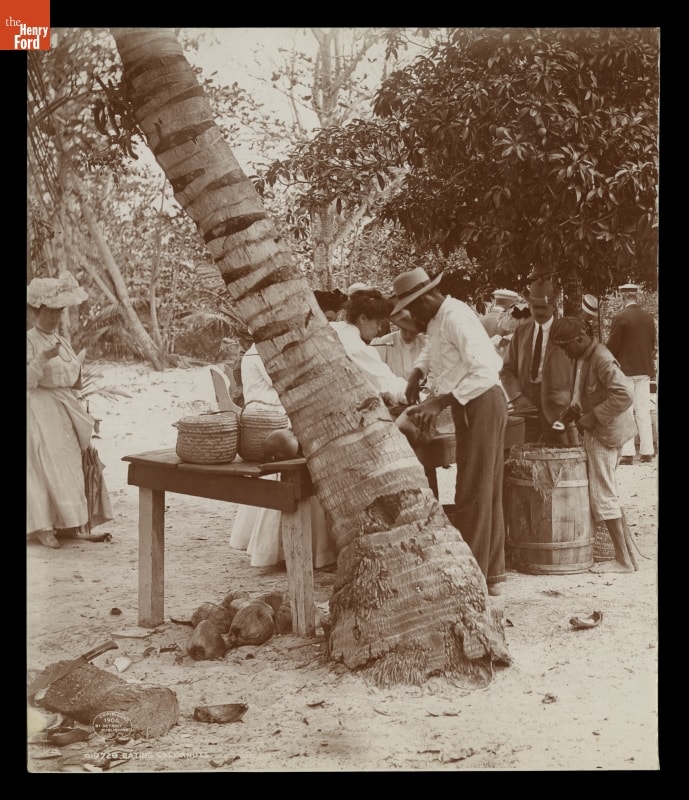
- "Eating Cocoanuts," Bahama Islands, circa 1900 - From 1895 to 1924, the Detroit Publishing Company was one of the major image publishers in the world. The company's wide-ranging stock of original photographs documented life and landscapes from across the nation and around the globe. From the tens of thousands of negatives, the company created prints, postcards, lantern slides, panoramas, and other merchandise for sale to educators, businessmen, advertisers, homeowners and travelers.
- circa 1900
- Collections - Artifact
"Eating Cocoanuts," Bahama Islands, circa 1900
From 1895 to 1924, the Detroit Publishing Company was one of the major image publishers in the world. The company's wide-ranging stock of original photographs documented life and landscapes from across the nation and around the globe. From the tens of thousands of negatives, the company created prints, postcards, lantern slides, panoramas, and other merchandise for sale to educators, businessmen, advertisers, homeowners and travelers.
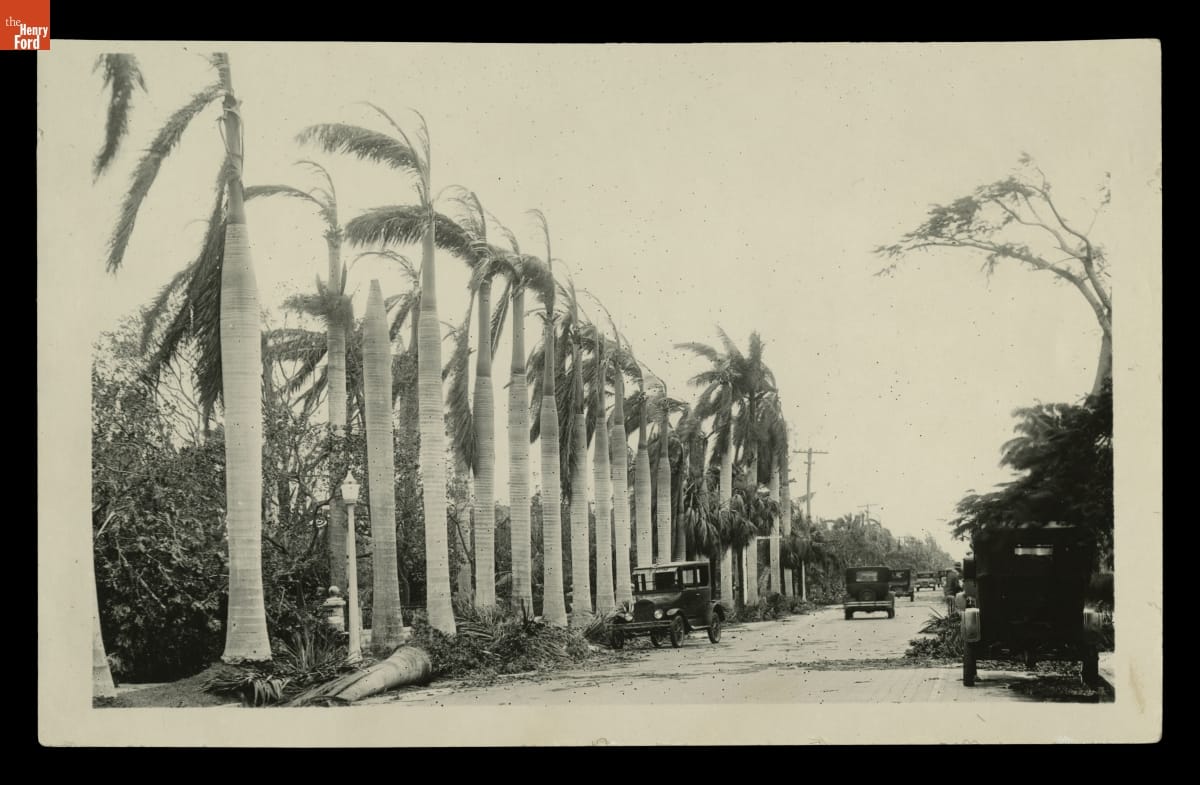
- Damaged Royal Palm Trees on First Street, Fort Myers, Florida, 1926 - In 1916, Henry and Clara Ford purchased "The Mangoes." The Fort Myers, Florida, property adjoined the winter home of Thomas Edison -- Henry's friend and mentor. The Fords' estate featured a Craftsman bungalow and grounds lush with citrus trees and tropical plants. This image shows damage done by a hurricane in the city of Fort Myers in September 1926.
- September 01, 1926
- Collections - Artifact
Damaged Royal Palm Trees on First Street, Fort Myers, Florida, 1926
In 1916, Henry and Clara Ford purchased "The Mangoes." The Fort Myers, Florida, property adjoined the winter home of Thomas Edison -- Henry's friend and mentor. The Fords' estate featured a Craftsman bungalow and grounds lush with citrus trees and tropical plants. This image shows damage done by a hurricane in the city of Fort Myers in September 1926.
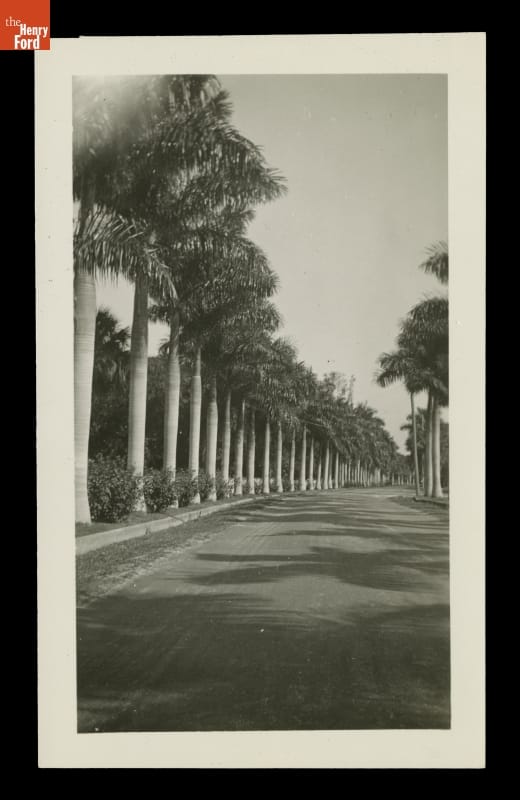
- Royal Palm Trees, Fort Myers, Florida, circa 1925 - In 1916, Henry and Clara Ford purchased "The Mangoes." The Fort Myers, Florida, property adjoined the winter home of Thomas Edison -- Henry's friend and mentor. The Fords' estate featured a Craftsman bungalow and grounds lush with citrus trees and tropical plants. This image shows one of the streets near their residence lined with stately royal palms.
- circa 1925
- Collections - Artifact
Royal Palm Trees, Fort Myers, Florida, circa 1925
In 1916, Henry and Clara Ford purchased "The Mangoes." The Fort Myers, Florida, property adjoined the winter home of Thomas Edison -- Henry's friend and mentor. The Fords' estate featured a Craftsman bungalow and grounds lush with citrus trees and tropical plants. This image shows one of the streets near their residence lined with stately royal palms.
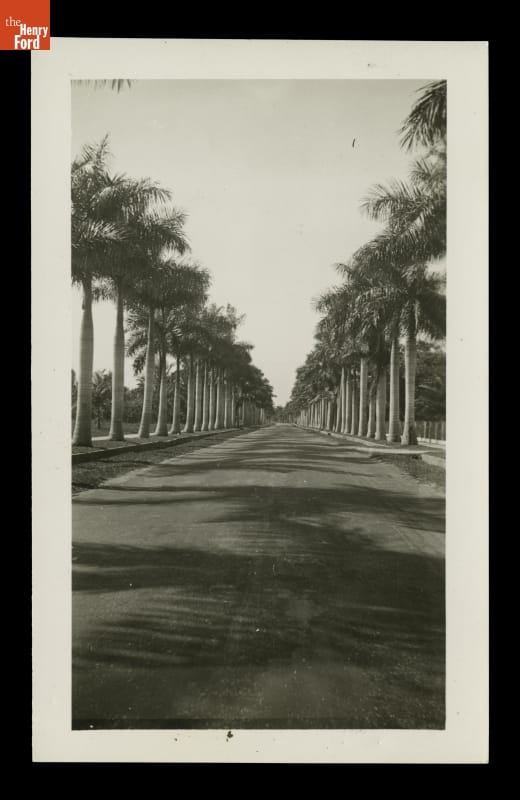
- Royal Palm Trees, Fort Myers, Florida, circa 1925 - In 1916, Henry and Clara Ford purchased "The Mangoes." The Fort Myers, Florida, property adjoined the winter home of Thomas Edison -- Henry's friend and mentor. The Fords' estate featured a Craftsman bungalow and grounds lush with citrus trees and tropical plants. This image shows one of the streets near their residence lined with stately royal palms.
- circa 1925
- Collections - Artifact
Royal Palm Trees, Fort Myers, Florida, circa 1925
In 1916, Henry and Clara Ford purchased "The Mangoes." The Fort Myers, Florida, property adjoined the winter home of Thomas Edison -- Henry's friend and mentor. The Fords' estate featured a Craftsman bungalow and grounds lush with citrus trees and tropical plants. This image shows one of the streets near their residence lined with stately royal palms.
- Harwood Steiger Fabric, "Orchard" - The screen-printed fabrics produced by the studio of Harwood Steiger, Inc. are replete with motifs from the American Southwest. Although husband-and-wife proprietors Harwood and Sophie Steiger were born in the Northeast, the Sonoran Desert became their home. Its flora, fauna, and wildlife were a constant inspiration in their enduring partnership, which saw Harwood as the primary artist, and Sophie as the expert botanist and businesswoman.
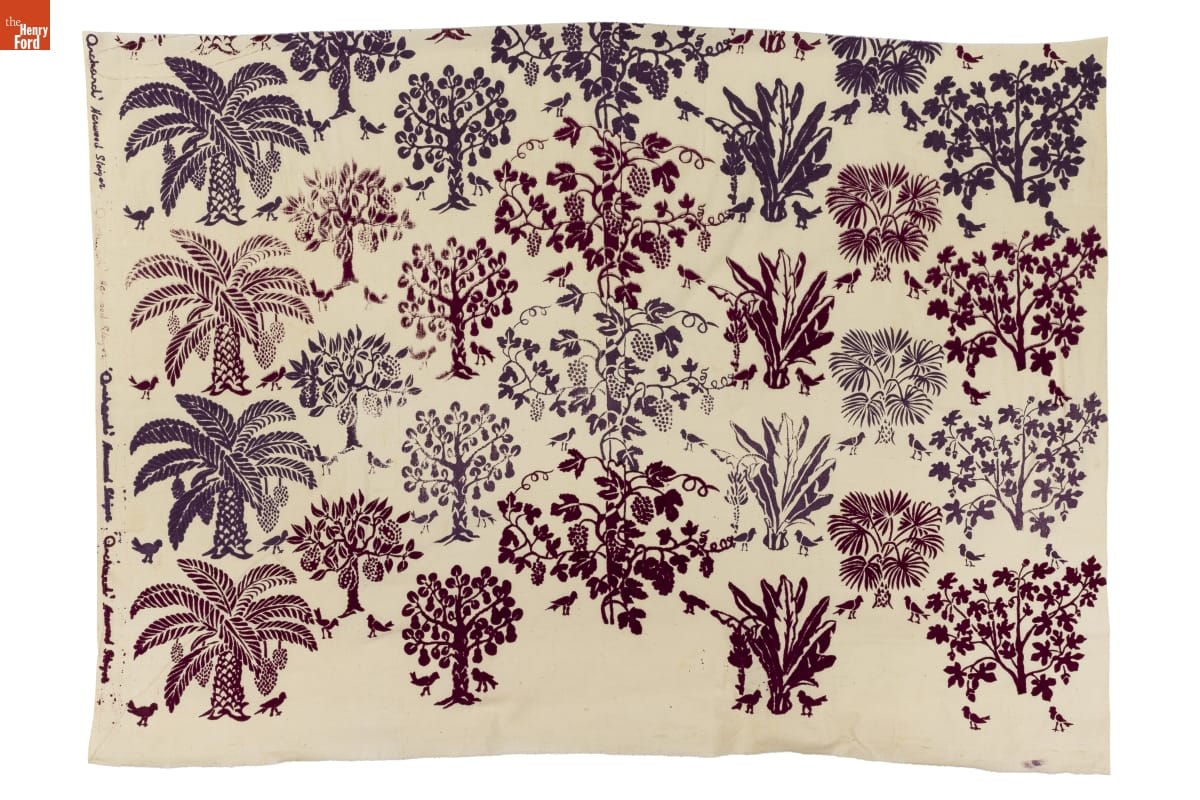
- 1956-1980
- Collections - Artifact
Harwood Steiger Fabric, "Orchard"
The screen-printed fabrics produced by the studio of Harwood Steiger, Inc. are replete with motifs from the American Southwest. Although husband-and-wife proprietors Harwood and Sophie Steiger were born in the Northeast, the Sonoran Desert became their home. Its flora, fauna, and wildlife were a constant inspiration in their enduring partnership, which saw Harwood as the primary artist, and Sophie as the expert botanist and businesswoman.
- Vase by Mark Peiser, 1978 - Mark Peiser transformed the world of glass through a technique he devised which involves drawing with melted glass canes of various colors on molten glass. He encapsulates these images between layers of glass to create the 3D effect of his "Paperweight Vase" series (1975-1981). Landscape imagery is a frequent subject for this series.
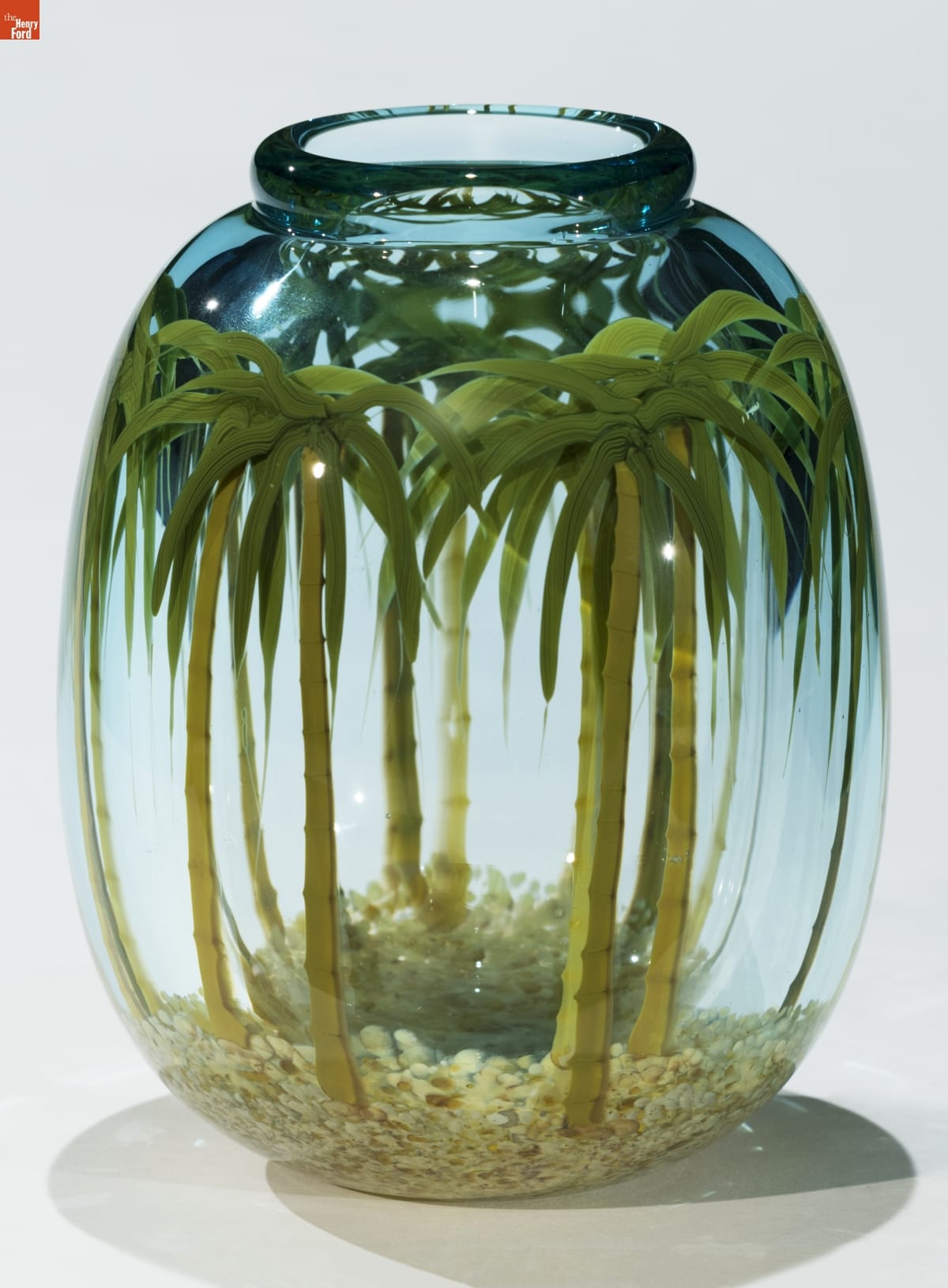
- 1978
- Collections - Artifact
Vase by Mark Peiser, 1978
Mark Peiser transformed the world of glass through a technique he devised which involves drawing with melted glass canes of various colors on molten glass. He encapsulates these images between layers of glass to create the 3D effect of his "Paperweight Vase" series (1975-1981). Landscape imagery is a frequent subject for this series.
- H. J. Heinz Company Exhibition at the Pittsburgh Exposition, October 20, 1905 - In addition to the great World's Fair exhibits, the H. J. Heinz Company displayed their products at regional fairs and expositions. These exhibits generally included product displays, free product samples, promotional pamphlets, slide shows of the Heinz plant in Pittsburgh, and pickle-pin souvenirs--all set in a refined drawing-room atmosphere.
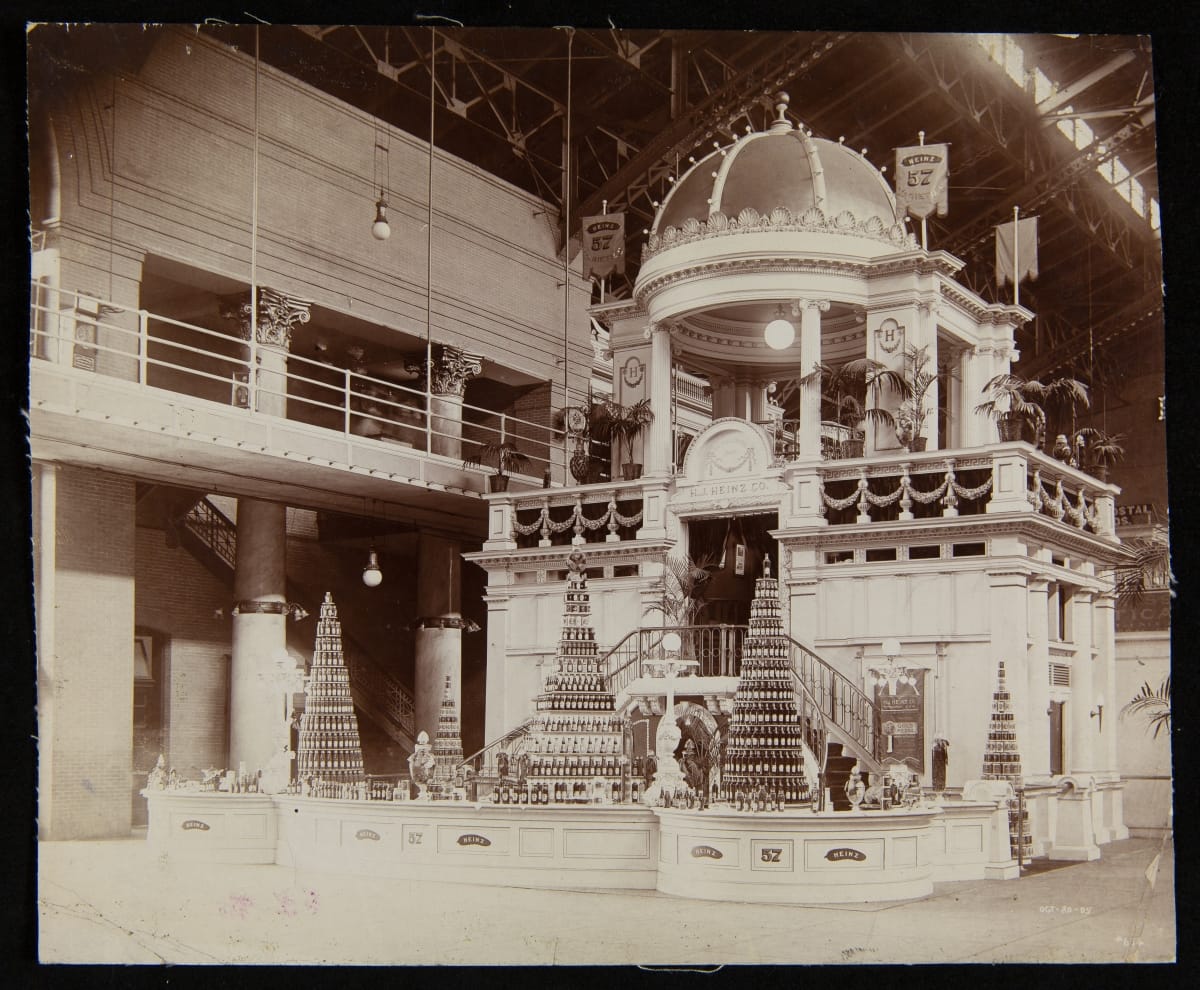
- October 20, 1905
- Collections - Artifact
H. J. Heinz Company Exhibition at the Pittsburgh Exposition, October 20, 1905
In addition to the great World's Fair exhibits, the H. J. Heinz Company displayed their products at regional fairs and expositions. These exhibits generally included product displays, free product samples, promotional pamphlets, slide shows of the Heinz plant in Pittsburgh, and pickle-pin souvenirs--all set in a refined drawing-room atmosphere.
- Crate Label, "Hula Brand Apples," circa 1950 - Colorful, eye-catching labels from the early and mid-1900s frequently depicted popular themes and motifs--and sometimes cultural stereotypes. Illustrations of native Hawaiians often centered on women in grass skirts--a poor reference to the hula. Rather than showing the true depth of this native Hawaiian art form, tradition, and dance, these images exposed an idealized and sensual view of Pacific Islanders by white, mainland American consumers.
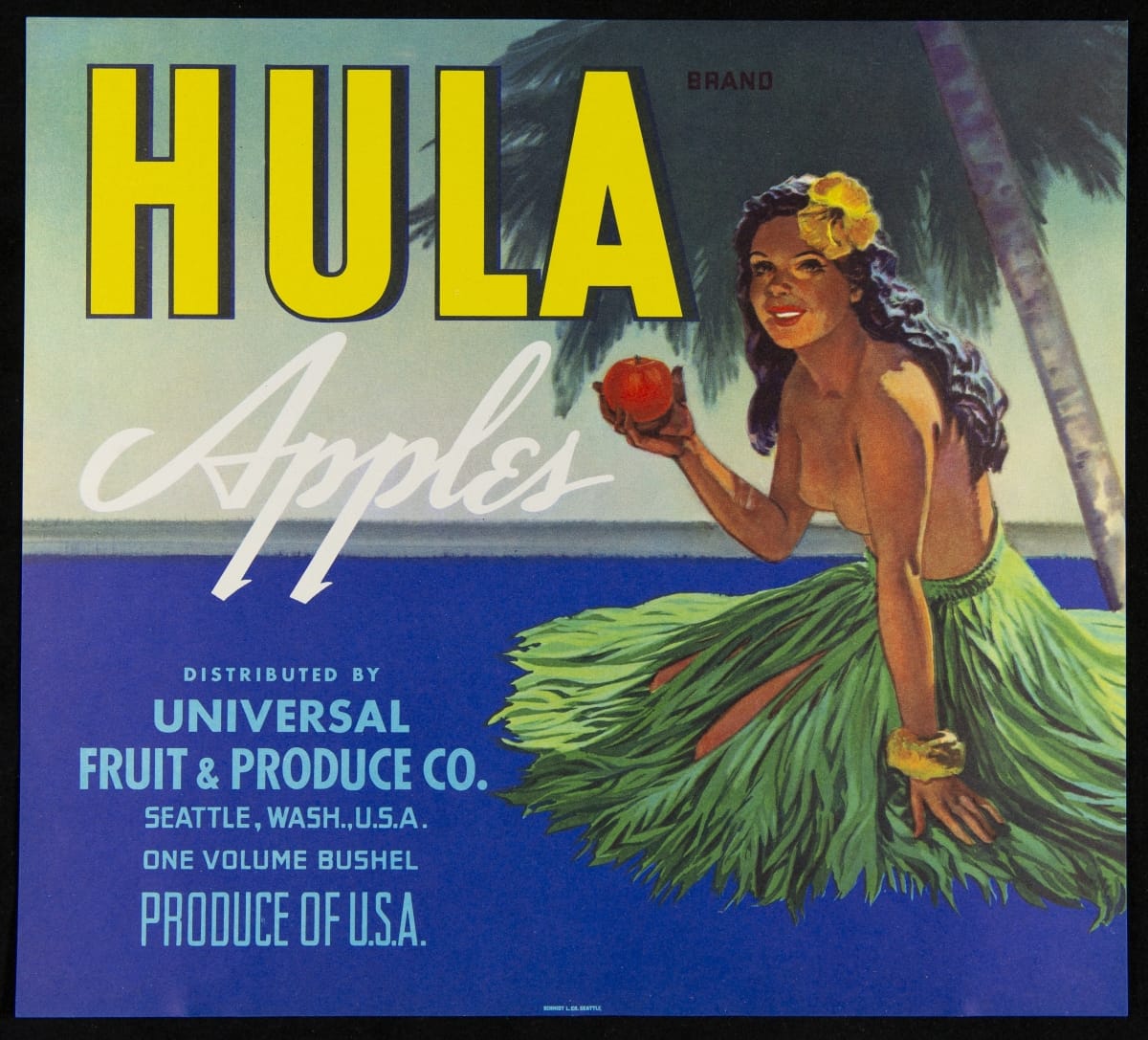
- circa 1950
- Collections - Artifact
Crate Label, "Hula Brand Apples," circa 1950
Colorful, eye-catching labels from the early and mid-1900s frequently depicted popular themes and motifs--and sometimes cultural stereotypes. Illustrations of native Hawaiians often centered on women in grass skirts--a poor reference to the hula. Rather than showing the true depth of this native Hawaiian art form, tradition, and dance, these images exposed an idealized and sensual view of Pacific Islanders by white, mainland American consumers.