
Search
- Pamphlet, "Land O' Lakes Spray Dry Milk" -

- Collections - Artifact
Pamphlet, "Land O' Lakes Spray Dry Milk"
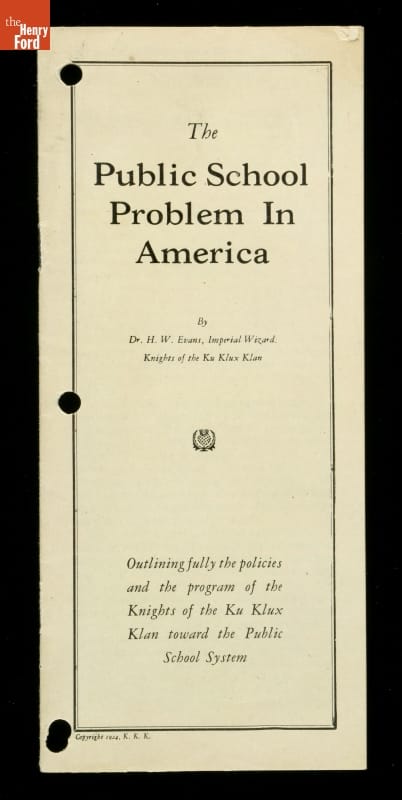
- "The Public School Problem in America," 1924 - This 1924 Ku Klux Klan-authored pamphlet attacked the problems of the American public educational system -- lack of school funding and high rates of illiteracy. The pamphlet also stirred up fears about immigrants and Catholics -- targets of Klan assaults. These groups, the Klan believed, were not becoming assimilated into an American way of life because of poor schooling or the role of church-dominated institutions.
- 1924
- Collections - Artifact
"The Public School Problem in America," 1924
This 1924 Ku Klux Klan-authored pamphlet attacked the problems of the American public educational system -- lack of school funding and high rates of illiteracy. The pamphlet also stirred up fears about immigrants and Catholics -- targets of Klan assaults. These groups, the Klan believed, were not becoming assimilated into an American way of life because of poor schooling or the role of church-dominated institutions.
- "The Goodness of Providence," circa 1840 -
- circa 1840
- Collections - Artifact
"The Goodness of Providence," circa 1840
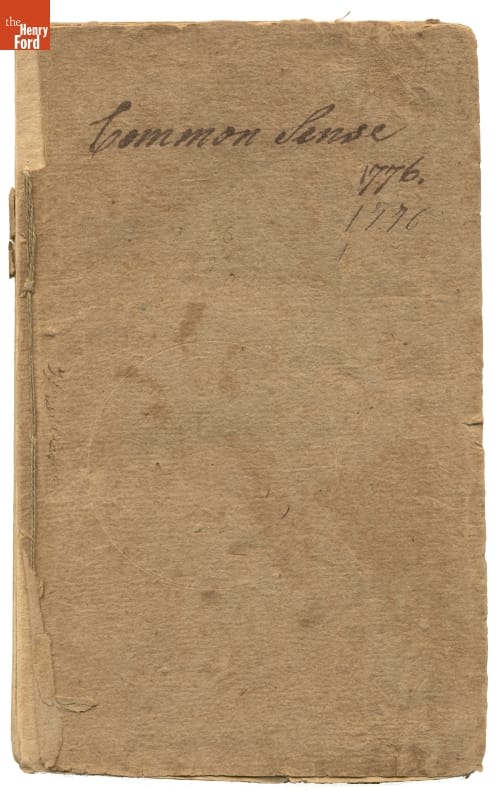
- "Common Sense; Addressed to the Inhabitants of America," February 1776 - Thomas Paine had tried many different jobs in England, but jumped at the chance to work in the printing business over in the American colonies. And there he found his voice. Not being a politician, he had nothing to lose with his little pamphlet. Although he made them sound like just "common sense," his arguments for independence were extremely radical at the time.
- February 14, 1776
- Collections - Artifact
"Common Sense; Addressed to the Inhabitants of America," February 1776
Thomas Paine had tried many different jobs in England, but jumped at the chance to work in the printing business over in the American colonies. And there he found his voice. Not being a politician, he had nothing to lose with his little pamphlet. Although he made them sound like just "common sense," his arguments for independence were extremely radical at the time.
- "Lynching Northern Style," June 1949 -
- June 01, 1949
- Collections - Artifact
"Lynching Northern Style," June 1949
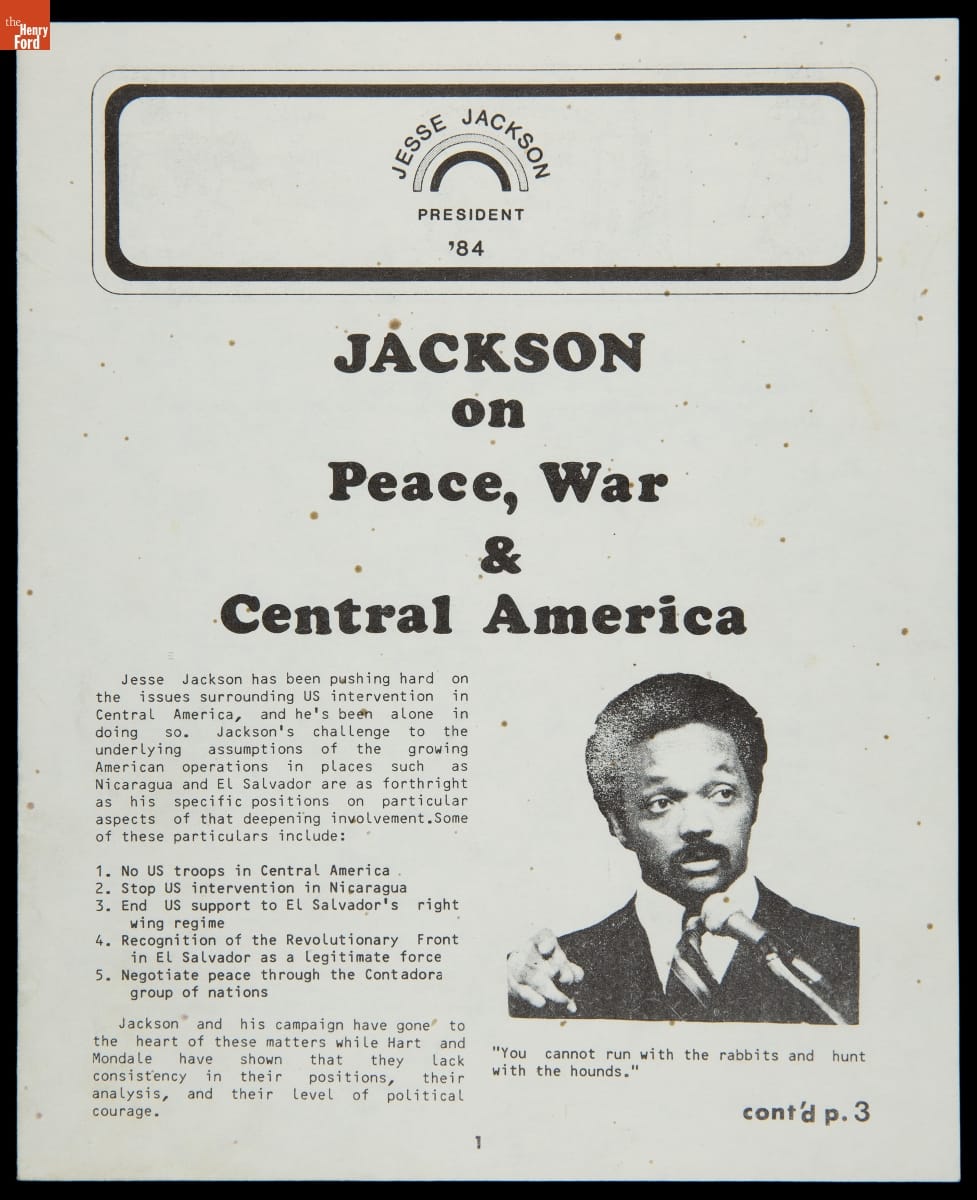
- "Jesse Jackson President '84: Jackson on Peace, War, & Central America," May 8, 1984 - Civil rights activist and organizer Jesse Jackson ran for the Democratic Presidential nomination in 1984. Jackson had served in various civil rights organizations during the 1960s and 1970s. He then went on to create PUSH (People United to Save Humanity) [1971] and the National Rainbow Coalition [1984] to help give a voice to underserved Americans. Jackson garnered several million votes but lost the nomination.
- May 08, 1984
- Collections - Artifact
"Jesse Jackson President '84: Jackson on Peace, War, & Central America," May 8, 1984
Civil rights activist and organizer Jesse Jackson ran for the Democratic Presidential nomination in 1984. Jackson had served in various civil rights organizations during the 1960s and 1970s. He then went on to create PUSH (People United to Save Humanity) [1971] and the National Rainbow Coalition [1984] to help give a voice to underserved Americans. Jackson garnered several million votes but lost the nomination.
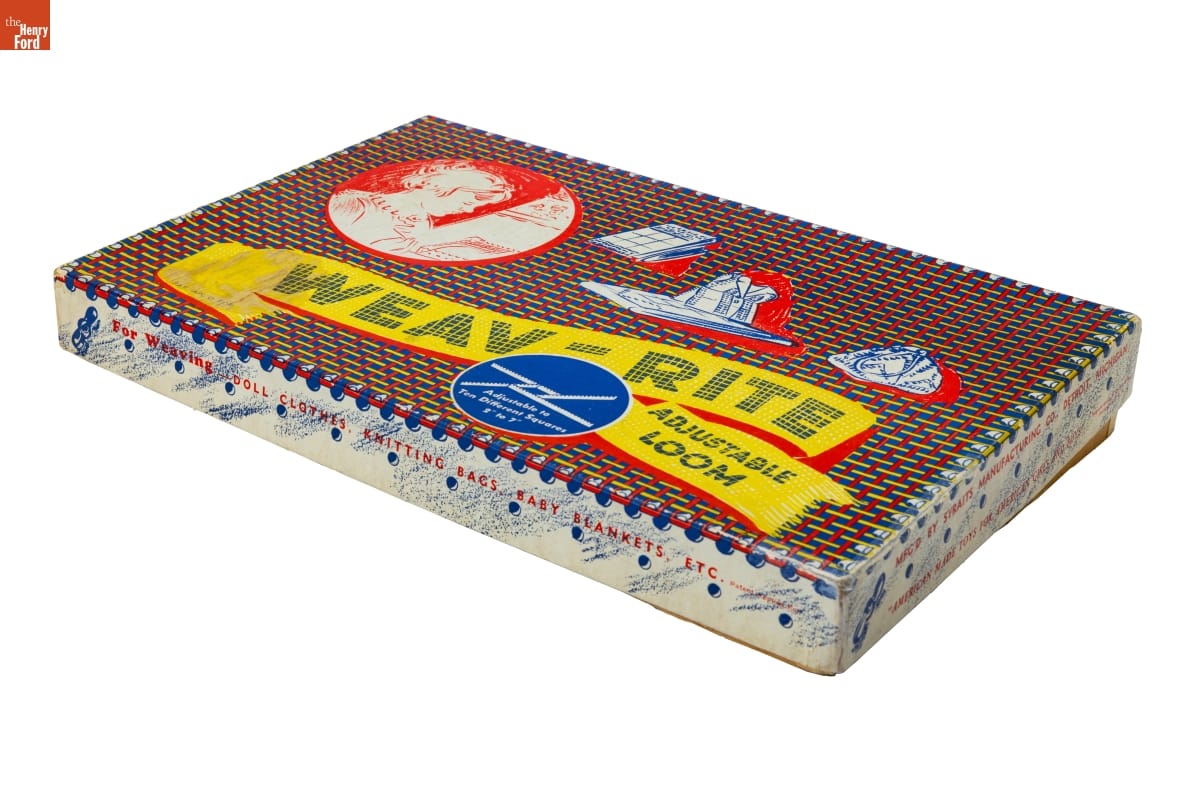
- Weav-Rite Adjustable Loom, circa 1940 -
- circa 1940
- Collections - Artifact
Weav-Rite Adjustable Loom, circa 1940
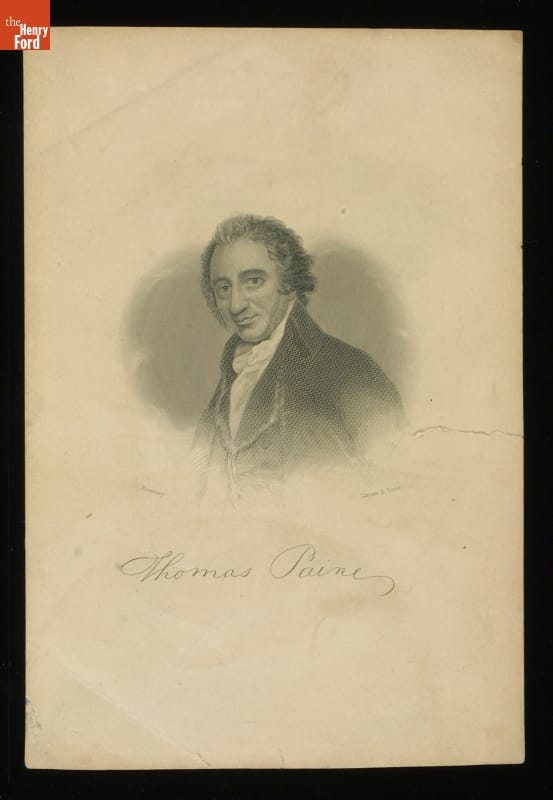
- Engraving, Portrait of Thomas Paine, Based on a 1792 Painting by George Romney -
- 1792
- Collections - Artifact
Engraving, Portrait of Thomas Paine, Based on a 1792 Painting by George Romney
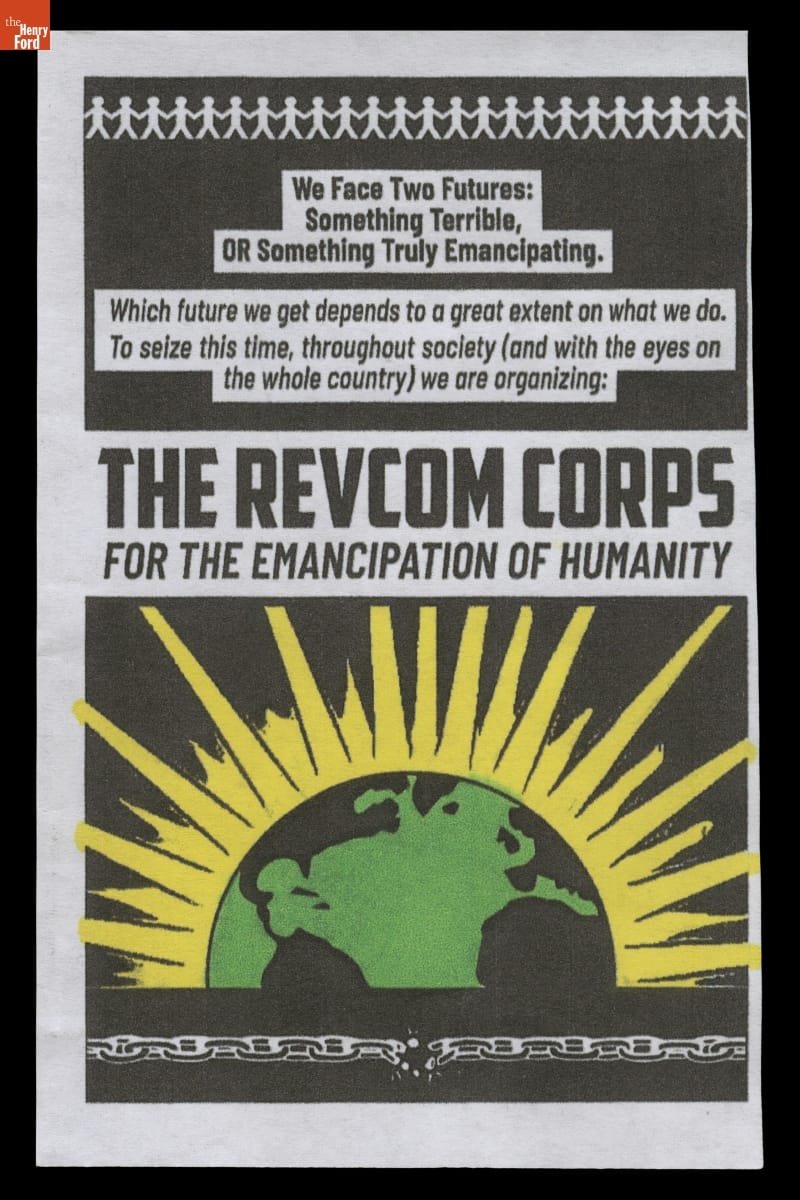
- "The Revcom Corps: For the Emancipation of Humanity" - The Revolutionary Communist Party (RCP or Revcoms) grew out of the left-wing political movement of the 1970s and 1980s, espousing Marxist, Leninist, and Maoist ideologies. The far-left RCP, founded in 1975, believes that the current system of American government cannot be reformed and must be overthrown and replaced with a socialist state.
- Collections - Artifact
"The Revcom Corps: For the Emancipation of Humanity"
The Revolutionary Communist Party (RCP or Revcoms) grew out of the left-wing political movement of the 1970s and 1980s, espousing Marxist, Leninist, and Maoist ideologies. The far-left RCP, founded in 1975, believes that the current system of American government cannot be reformed and must be overthrown and replaced with a socialist state.
- "Segregation or Death," circa 1957 - White supremacists agitated for continued segregation after the 1954 Brown v. Board of Education decision. This pamphlet laid out their racist view arguing for the continued separation of whites and blacks. Civil Rights activists urged Americans to reject this mindset and to continue the march toward equality.

- 1957
- Collections - Artifact
"Segregation or Death," circa 1957
White supremacists agitated for continued segregation after the 1954 Brown v. Board of Education decision. This pamphlet laid out their racist view arguing for the continued separation of whites and blacks. Civil Rights activists urged Americans to reject this mindset and to continue the march toward equality.