
Search
- Henry Ford's Private Railroad Car "Fair Lane," 1921 - By 1920, Henry and Clara Ford found it increasingly difficult to travel with any degree of privacy. They purchased a private railcar and named it <EM>Fair Lane</EM>. The car had four private rooms, an observation lounge, a dining room, and a fully equipped kitchen. It could accommodate eight passengers. The couple made over 400 trips using <EM>Fair Lane</EM> before selling the passenger car in 1942.

- June 23, 1921
- Collections - Artifact
Henry Ford's Private Railroad Car "Fair Lane," 1921
By 1920, Henry and Clara Ford found it increasingly difficult to travel with any degree of privacy. They purchased a private railcar and named it Fair Lane. The car had four private rooms, an observation lounge, a dining room, and a fully equipped kitchen. It could accommodate eight passengers. The couple made over 400 trips using Fair Lane before selling the passenger car in 1942.
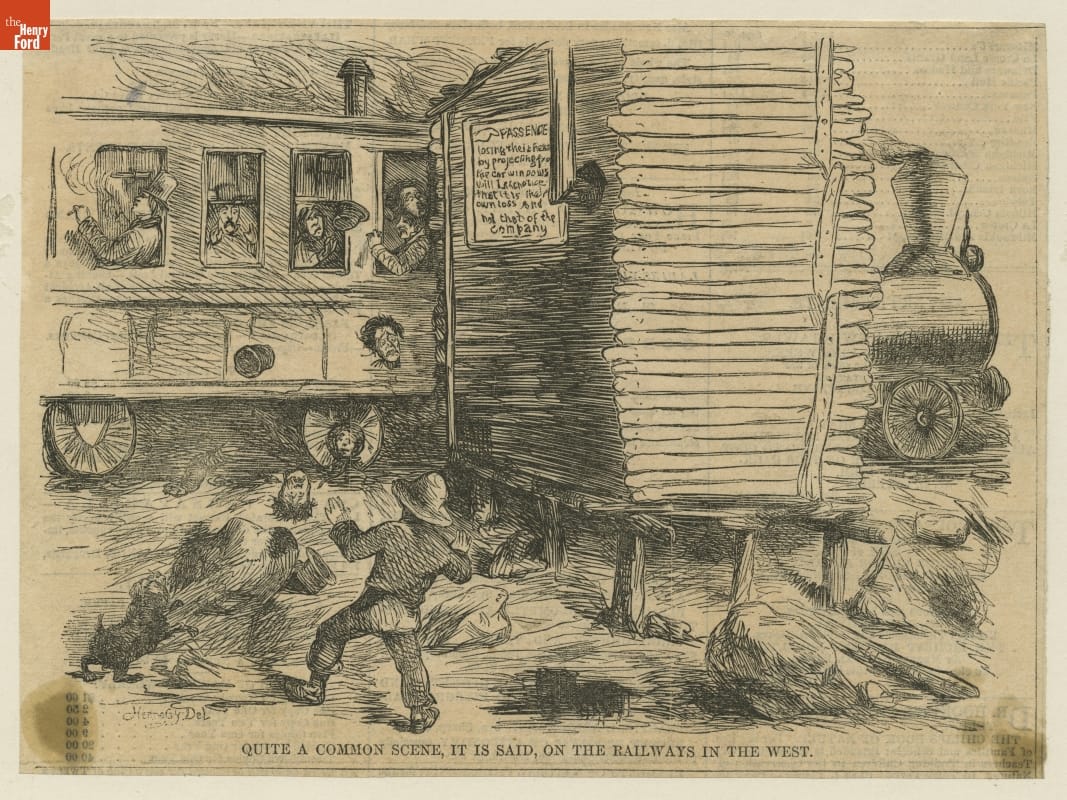
- Wood Engraving, "Quite a Common Scene, it is Said, on the Railways in the West," 1858 - While close clearances -- tight spaces between railroad cars and trackside structures -- did exist, this 1858 illustration from <em>Harper's Weekly</em> exaggerated the dangers faced by passengers who stuck their heads through windows. More likely threats from an open window included sparks, cinders and smoke from the steam locomotive pulling the train -- all of which could irritate eyes and damage clothing.
- 1858
- Collections - Artifact
Wood Engraving, "Quite a Common Scene, it is Said, on the Railways in the West," 1858
While close clearances -- tight spaces between railroad cars and trackside structures -- did exist, this 1858 illustration from Harper's Weekly exaggerated the dangers faced by passengers who stuck their heads through windows. More likely threats from an open window included sparks, cinders and smoke from the steam locomotive pulling the train -- all of which could irritate eyes and damage clothing.
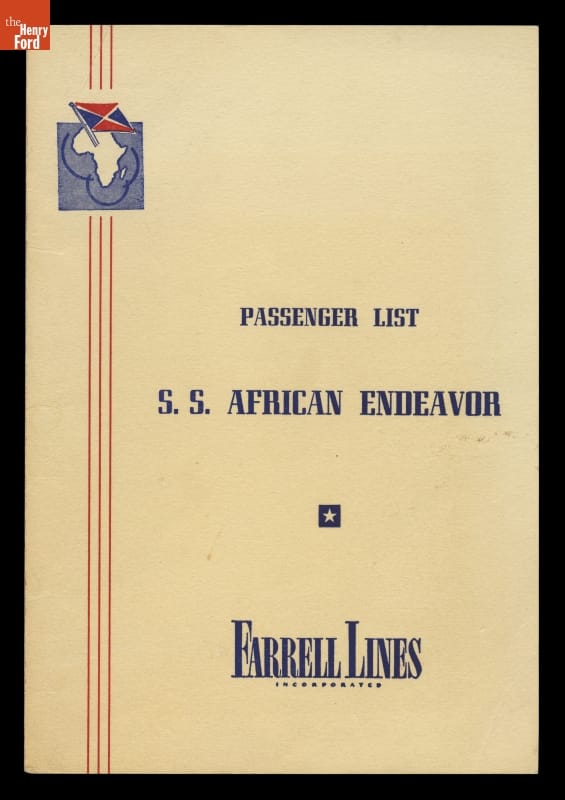
- Passenger List for SS African Endeavor, Farrell Lines, Cape Town to New York, 1954 - Launched in 1939, SS <em>Delbrasil</em> ran between New Orleans and South America. During World War II, the ship became a U.S. Navy troop transport under the name USS <em>George F. Elliott</em>. Following the war, American South African Lines -- later, Farrell Lines -- acquired the ship, rechristened it SS <em>African Endeavor</em>, and operated it between New York City and Cape Town, South Africa.
- 1954
- Collections - Artifact
Passenger List for SS African Endeavor, Farrell Lines, Cape Town to New York, 1954
Launched in 1939, SS Delbrasil ran between New Orleans and South America. During World War II, the ship became a U.S. Navy troop transport under the name USS George F. Elliott. Following the war, American South African Lines -- later, Farrell Lines -- acquired the ship, rechristened it SS African Endeavor, and operated it between New York City and Cape Town, South Africa.
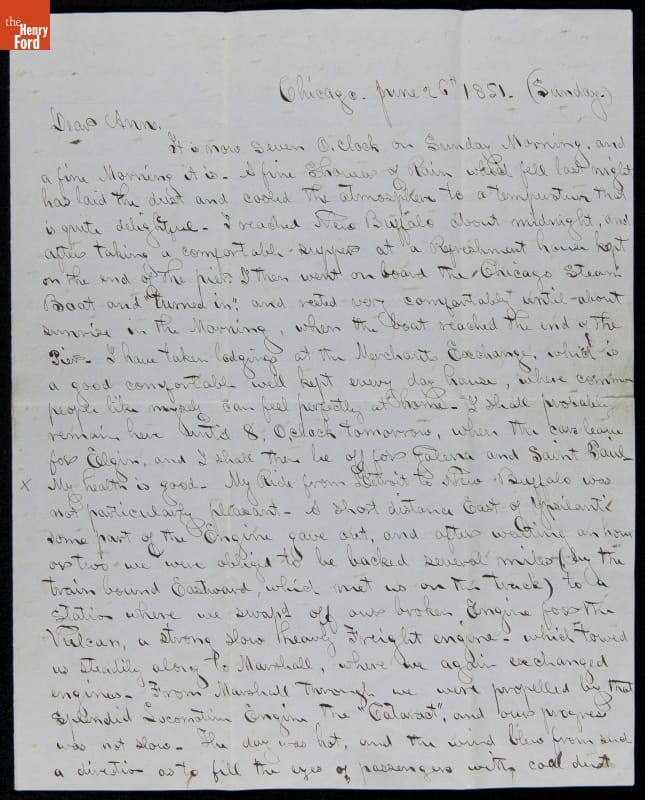
- Letter from E.P. Goodrich to Ann Goodrich, 1851 - This 1851 letter describes a trip on the Michigan Central Railroad from Detroit to Chicago. Author E.P. Goodrich colorfully relates the trials of mid-19th-century rail travel. Equipment breakdowns, smoke, and cinders were common, and average speeds were low. Because the Michigan Central wasn't completed into Chicago until 1852, Goodrich finished his journey by steamboat from New Buffalo across Lake Michigan.
- June 26, 1851
- Collections - Artifact
Letter from E.P. Goodrich to Ann Goodrich, 1851
This 1851 letter describes a trip on the Michigan Central Railroad from Detroit to Chicago. Author E.P. Goodrich colorfully relates the trials of mid-19th-century rail travel. Equipment breakdowns, smoke, and cinders were common, and average speeds were low. Because the Michigan Central wasn't completed into Chicago until 1852, Goodrich finished his journey by steamboat from New Buffalo across Lake Michigan.
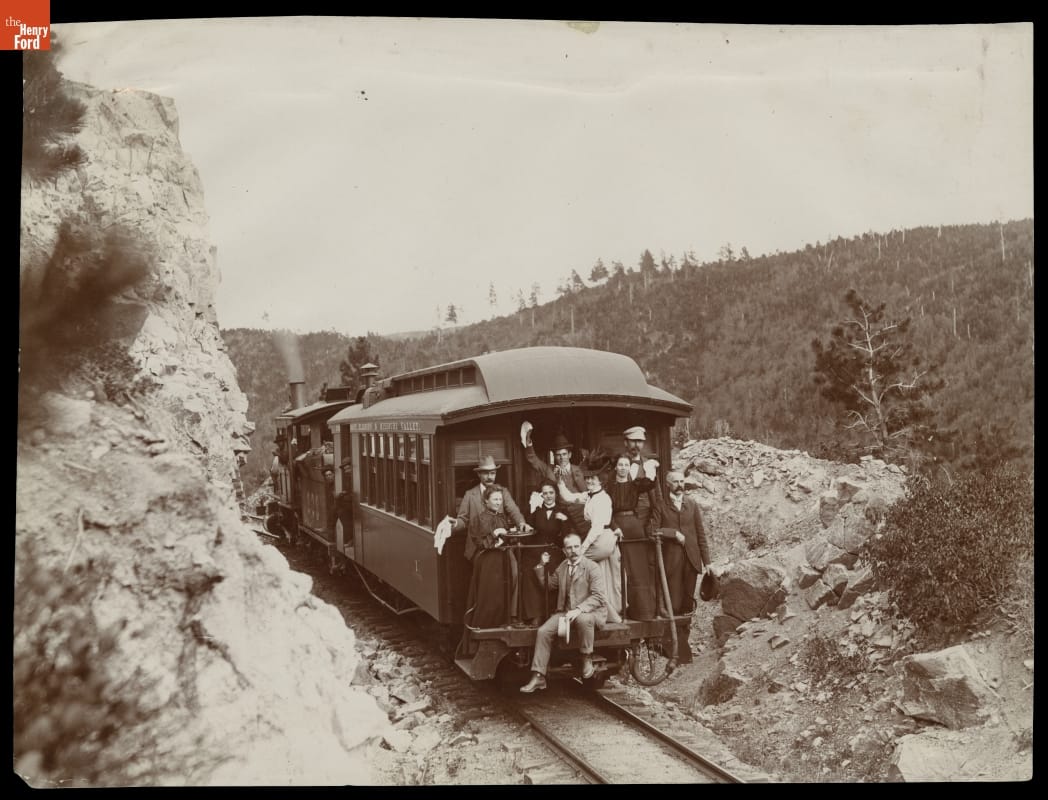
- Passengers on the Fremont, Elkhorn and Missouri Valley Railroad, South Dakota, circa 1895 - Passengers gathered for a photograph when the Fremont, Elkhorn, and Missouri Valley train stopped in a South Dakota mountain pass. The photograph, taken about 1907, shows the happy group on the back platform while the engineer and others peer out from the side.
- circa 1895
- Collections - Artifact
Passengers on the Fremont, Elkhorn and Missouri Valley Railroad, South Dakota, circa 1895
Passengers gathered for a photograph when the Fremont, Elkhorn, and Missouri Valley train stopped in a South Dakota mountain pass. The photograph, taken about 1907, shows the happy group on the back platform while the engineer and others peer out from the side.
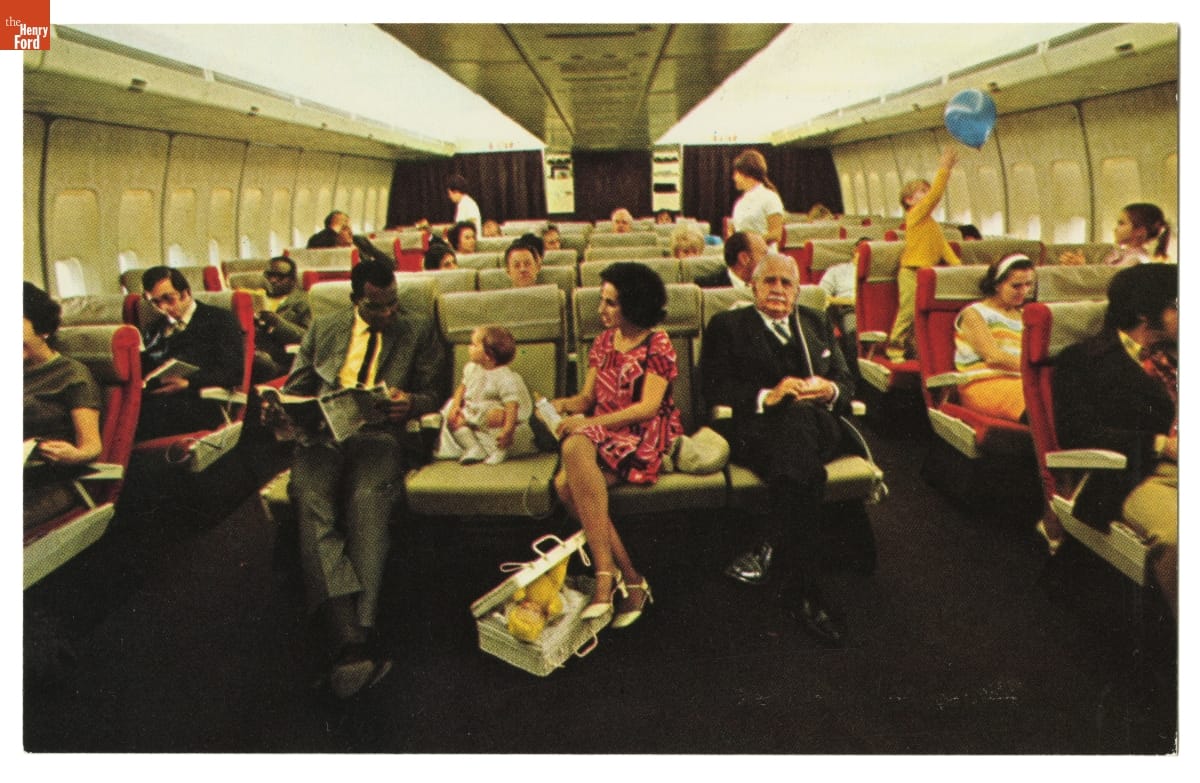
- Advertising Postcard for Pan American Airlines, circa 1970, "The Plane with All the Room in the World" - For much of the 20th century, Pan American World Airways exemplified innovation in air travel. The carrier pioneered the use of wide-body jumbo jets, like the Boeing 747 featured on this postcard, in the 1970s. But rising fuel costs and difficulty establishing domestic U.S. routes strained the company in the 1980s. Pan Am ended operations in 1991.
- circa 1970
- Collections - Artifact
Advertising Postcard for Pan American Airlines, circa 1970, "The Plane with All the Room in the World"
For much of the 20th century, Pan American World Airways exemplified innovation in air travel. The carrier pioneered the use of wide-body jumbo jets, like the Boeing 747 featured on this postcard, in the 1970s. But rising fuel costs and difficulty establishing domestic U.S. routes strained the company in the 1980s. Pan Am ended operations in 1991.
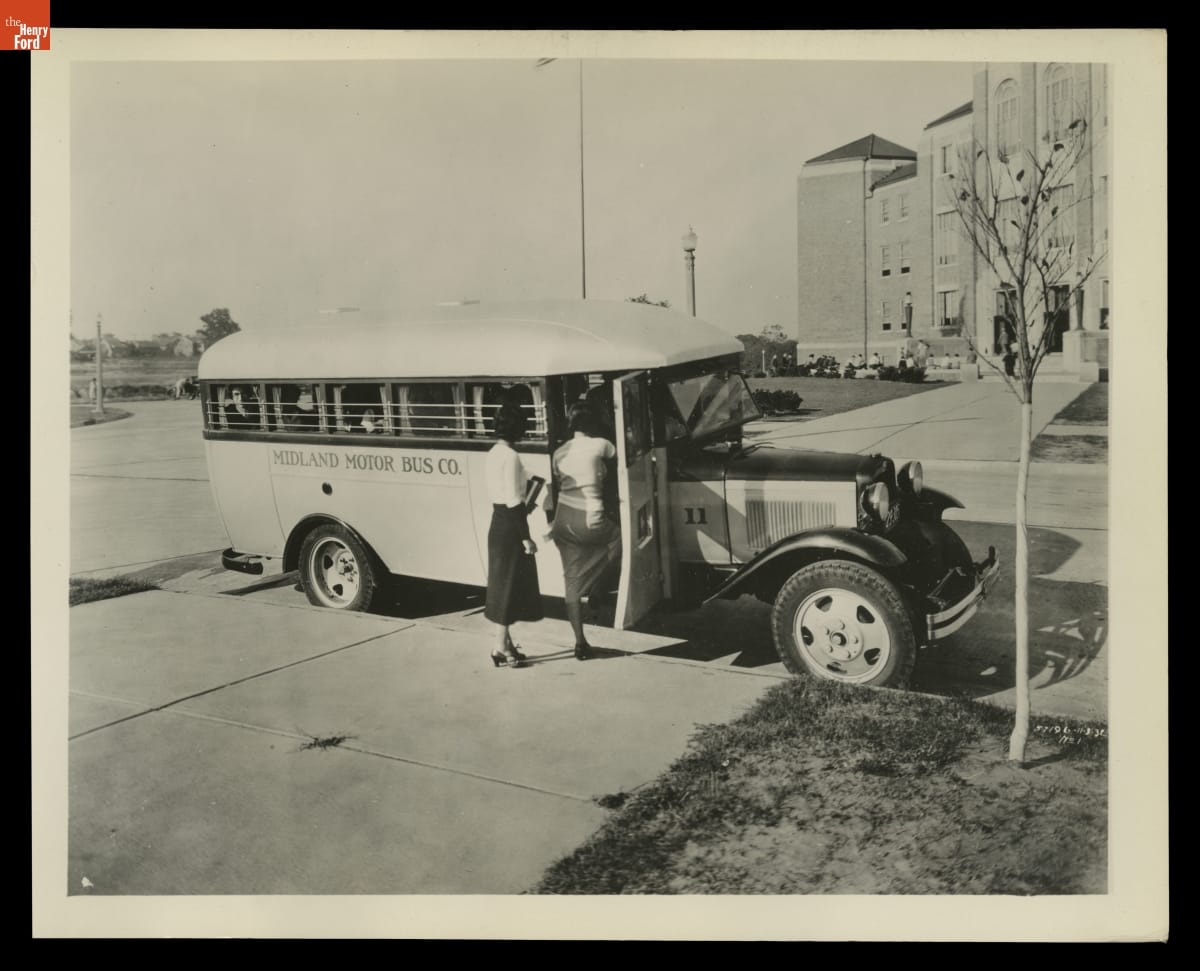
- Ford Bus Used by Midland Motor Bus Co., 1932 - Ford Motor Company added school buses to its lineup in 1931, and late that summer it introduced a modified version for general transit service. The Type 330-B bus featured metal window guards and a built-up roof panel to give more headroom for 21 adult passengers. Ford's bus bodies were supplied by Union City Body Company of Indiana.
- November 03, 1932
- Collections - Artifact
Ford Bus Used by Midland Motor Bus Co., 1932
Ford Motor Company added school buses to its lineup in 1931, and late that summer it introduced a modified version for general transit service. The Type 330-B bus featured metal window guards and a built-up roof panel to give more headroom for 21 adult passengers. Ford's bus bodies were supplied by Union City Body Company of Indiana.
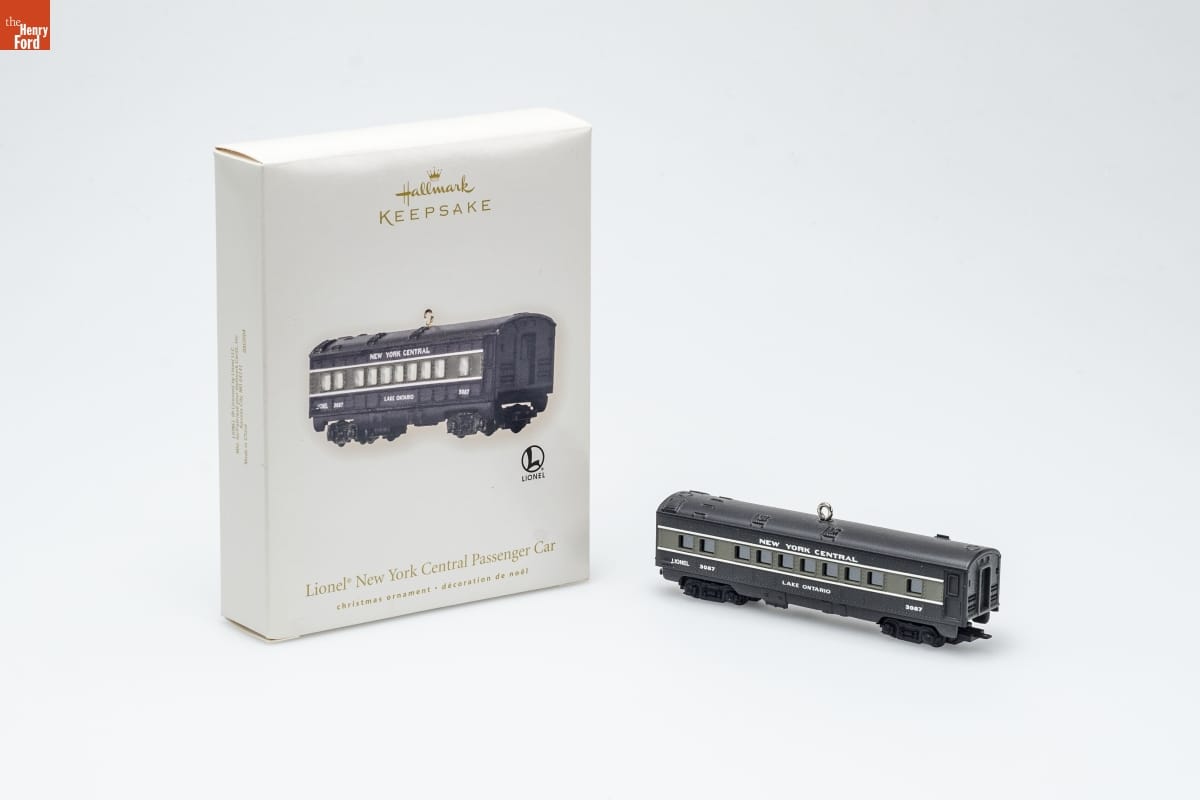
- Hallmark "Lionel New York Central Passenger Car" Christmas Ornament, 2008 - Already known for greeting cards, Hallmark introduced a line of Christmas ornaments in 1973. The company's annual release of an increasing array of ornaments revolutionized Christmas decorating, appealing to customers' interest in marking memories and milestones as well as expressing one's personality and unique tastes.
- 2008
- Collections - Artifact
Hallmark "Lionel New York Central Passenger Car" Christmas Ornament, 2008
Already known for greeting cards, Hallmark introduced a line of Christmas ornaments in 1973. The company's annual release of an increasing array of ornaments revolutionized Christmas decorating, appealing to customers' interest in marking memories and milestones as well as expressing one's personality and unique tastes.
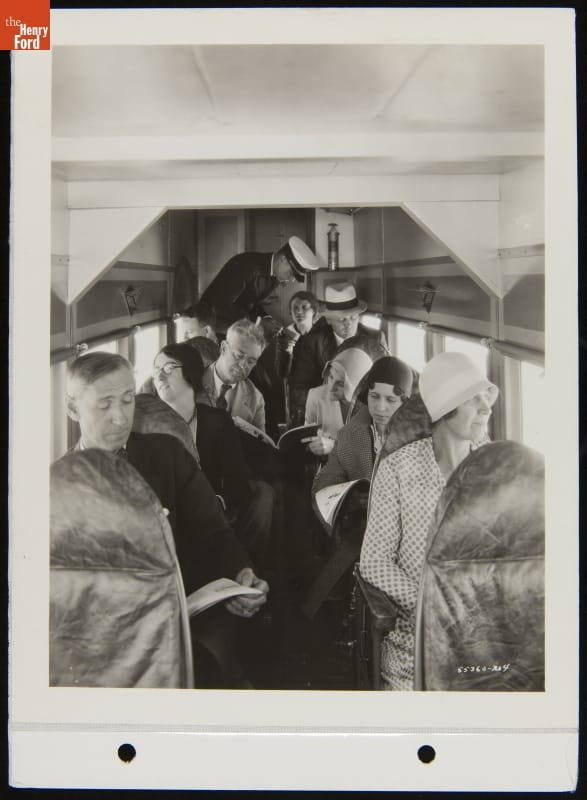
- Ford Tri-Motor Airplane, Interior Cabin Showing Steward Serving Passengers, September 1929 - Passenger air travel was a completely new -- and perhaps fearsome -- concept for most Americans in the 1920s. National advertisements for the Ford Tri-Motor promoted "roomy and comfortable" wicker passenger chairs -- one of the many advertised amenities used to convince a skeptical public of the appeal of flying in a Ford plane. Later models of the Ford Tri-Motor featured almuminum seats covered with leather.
- September 01, 1930
- Collections - Artifact
Ford Tri-Motor Airplane, Interior Cabin Showing Steward Serving Passengers, September 1929
Passenger air travel was a completely new -- and perhaps fearsome -- concept for most Americans in the 1920s. National advertisements for the Ford Tri-Motor promoted "roomy and comfortable" wicker passenger chairs -- one of the many advertised amenities used to convince a skeptical public of the appeal of flying in a Ford plane. Later models of the Ford Tri-Motor featured almuminum seats covered with leather.
- Food Conservation Train, Pennsylvania, October 1917 - The H.J. Heinz Company had humble beginnings in 1869 and has since become one of the most recognized names in the food industry today. This artifact, from the H.J. Heinz Company Collection, is one from The Henry Ford's sizeable collection of material dedicated to telling the company's history of innovative business practices and marketing techniques.
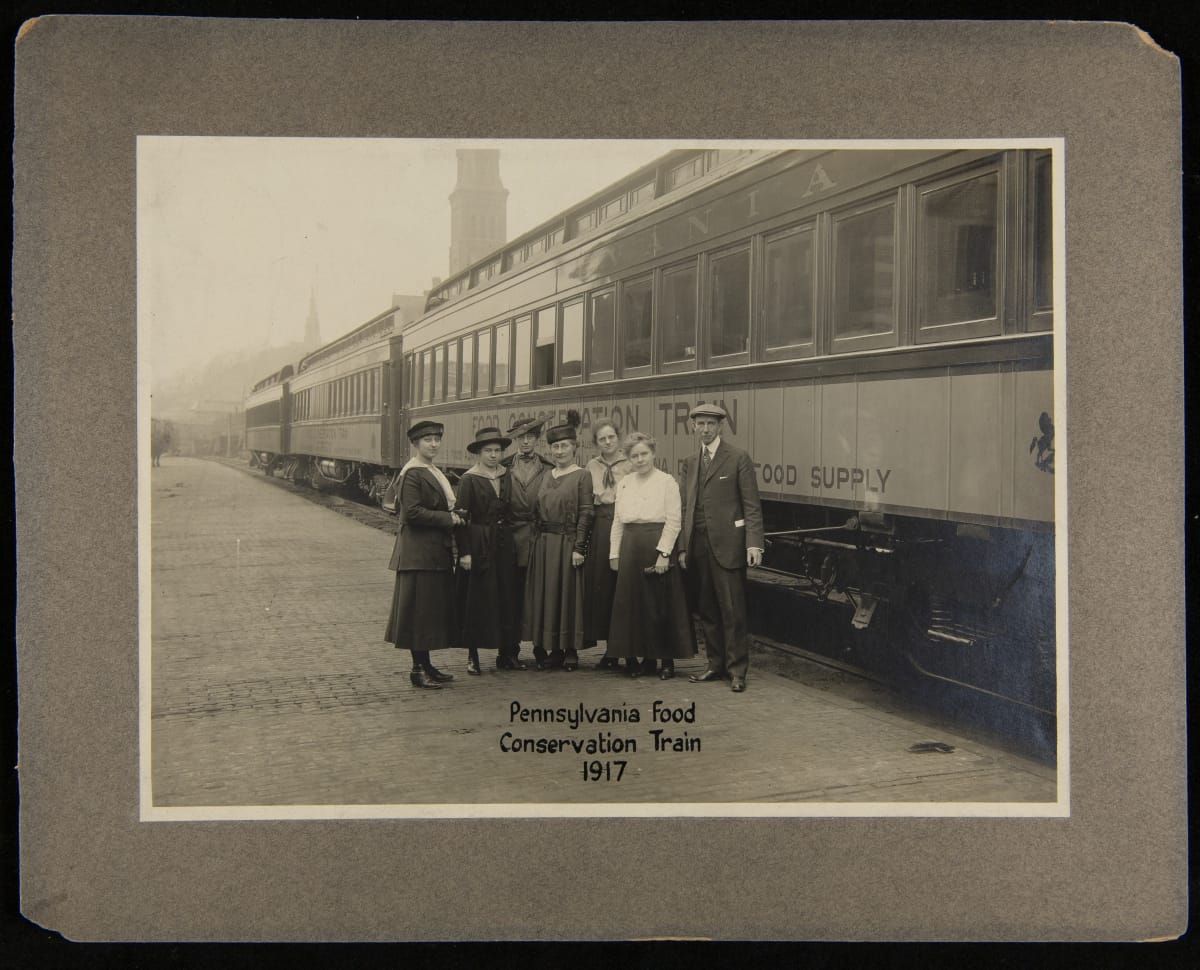
- October 01, 1917
- Collections - Artifact
Food Conservation Train, Pennsylvania, October 1917
The H.J. Heinz Company had humble beginnings in 1869 and has since become one of the most recognized names in the food industry today. This artifact, from the H.J. Heinz Company Collection, is one from The Henry Ford's sizeable collection of material dedicated to telling the company's history of innovative business practices and marketing techniques.