
Search
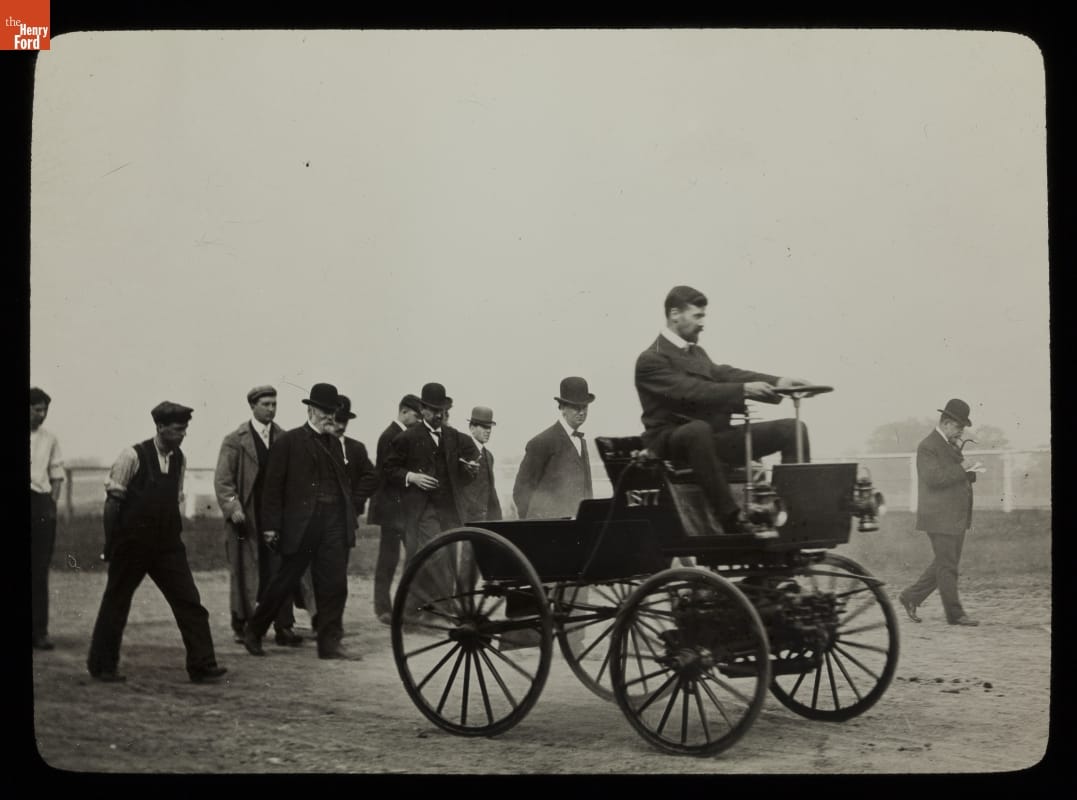
- Driving the Selden Motor Buggy during the Selden Patent Suit - George Selden conceived -- but didn't build -- a self-propelled gasoline-powered vehicle in 1877 and patented the idea in 1895. The Association of Licensed Automobile Manufacturers enforced Selden's patent, but Henry Ford fought ALAM in court. This car was completed for Selden in 1907 as evidence for the legal battle. Ford ultimately won, freeing himself and other automakers from paying royalties to ALAM.
- 1907-1911
- Collections - Artifact
Driving the Selden Motor Buggy during the Selden Patent Suit
George Selden conceived -- but didn't build -- a self-propelled gasoline-powered vehicle in 1877 and patented the idea in 1895. The Association of Licensed Automobile Manufacturers enforced Selden's patent, but Henry Ford fought ALAM in court. This car was completed for Selden in 1907 as evidence for the legal battle. Ford ultimately won, freeing himself and other automakers from paying royalties to ALAM.
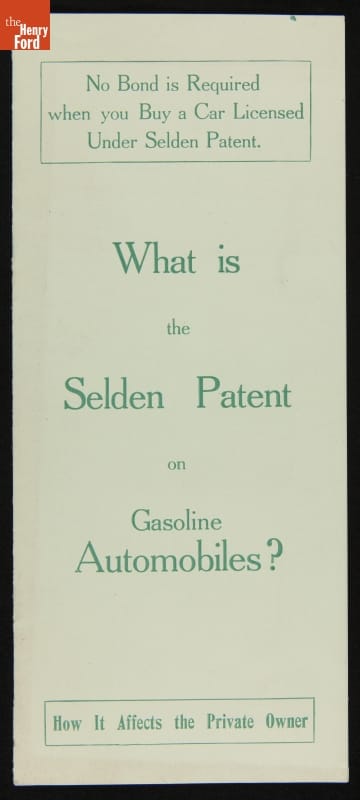
- "What is the Selden Patent on Gasoline Automobiles?," 1910 - The Association of Licensed Automobile Manufacturers believed that George Selden's 1895 patent covered any and all internal combustion automobiles. When Henry Ford refused to pay ALAM's requested royalties, the organization took him to court. After a lengthy legal battle, the U.S. Court of Appeals found in Ford's favor in 1911. Automakers were freed from patent fees and Ford became a folk hero.
- April 12, 1910
- Collections - Artifact
"What is the Selden Patent on Gasoline Automobiles?," 1910
The Association of Licensed Automobile Manufacturers believed that George Selden's 1895 patent covered any and all internal combustion automobiles. When Henry Ford refused to pay ALAM's requested royalties, the organization took him to court. After a lengthy legal battle, the U.S. Court of Appeals found in Ford's favor in 1911. Automakers were freed from patent fees and Ford became a folk hero.
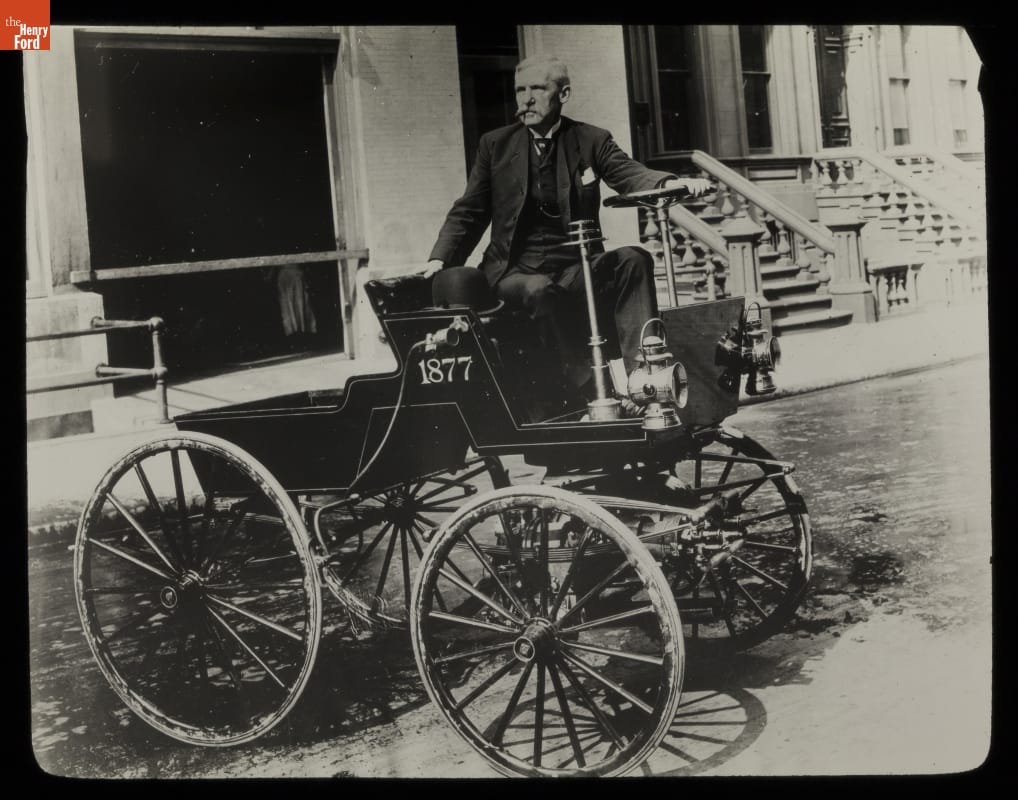
- George Selden with the 1907 Selden Motor Buggy during the Selden Patent Suit - George Selden conceived -- but didn't build -- a self-propelled gasoline-powered vehicle in 1877 and patented the idea in 1895. The Association of Licensed Automobile Manufacturers enforced Selden's patent, but Henry Ford fought ALAM in court. This car was completed for Selden in 1907 as evidence for the legal battle. Ford ultimately won, freeing himself and other automakers from paying royalties to ALAM.
- 1907-1911
- Collections - Artifact
George Selden with the 1907 Selden Motor Buggy during the Selden Patent Suit
George Selden conceived -- but didn't build -- a self-propelled gasoline-powered vehicle in 1877 and patented the idea in 1895. The Association of Licensed Automobile Manufacturers enforced Selden's patent, but Henry Ford fought ALAM in court. This car was completed for Selden in 1907 as evidence for the legal battle. Ford ultimately won, freeing himself and other automakers from paying royalties to ALAM.
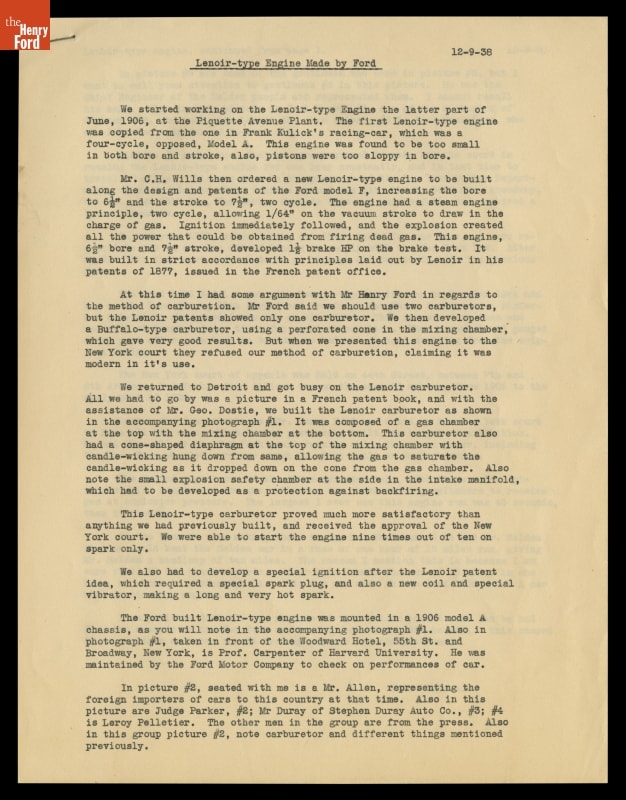
- Memoir, "Lenoir-type Engine Made by Ford," December 9, 1938 - Belgian-French engineer Jean Joseph Lenoir patented a non-compression internal combustion engine in 1860. During Henry Ford's legal battle over the 1895 Selden automobile patent, Ford claimed his engines were based on Lenoir's design and not subject to the Selden patent. This reminiscence from Ford employee Fred Allison describes building a Lenoir-type engine to exhibit to the New York Court of Appeals.
- December 09, 1938
- Collections - Artifact
Memoir, "Lenoir-type Engine Made by Ford," December 9, 1938
Belgian-French engineer Jean Joseph Lenoir patented a non-compression internal combustion engine in 1860. During Henry Ford's legal battle over the 1895 Selden automobile patent, Ford claimed his engines were based on Lenoir's design and not subject to the Selden patent. This reminiscence from Ford employee Fred Allison describes building a Lenoir-type engine to exhibit to the New York Court of Appeals.
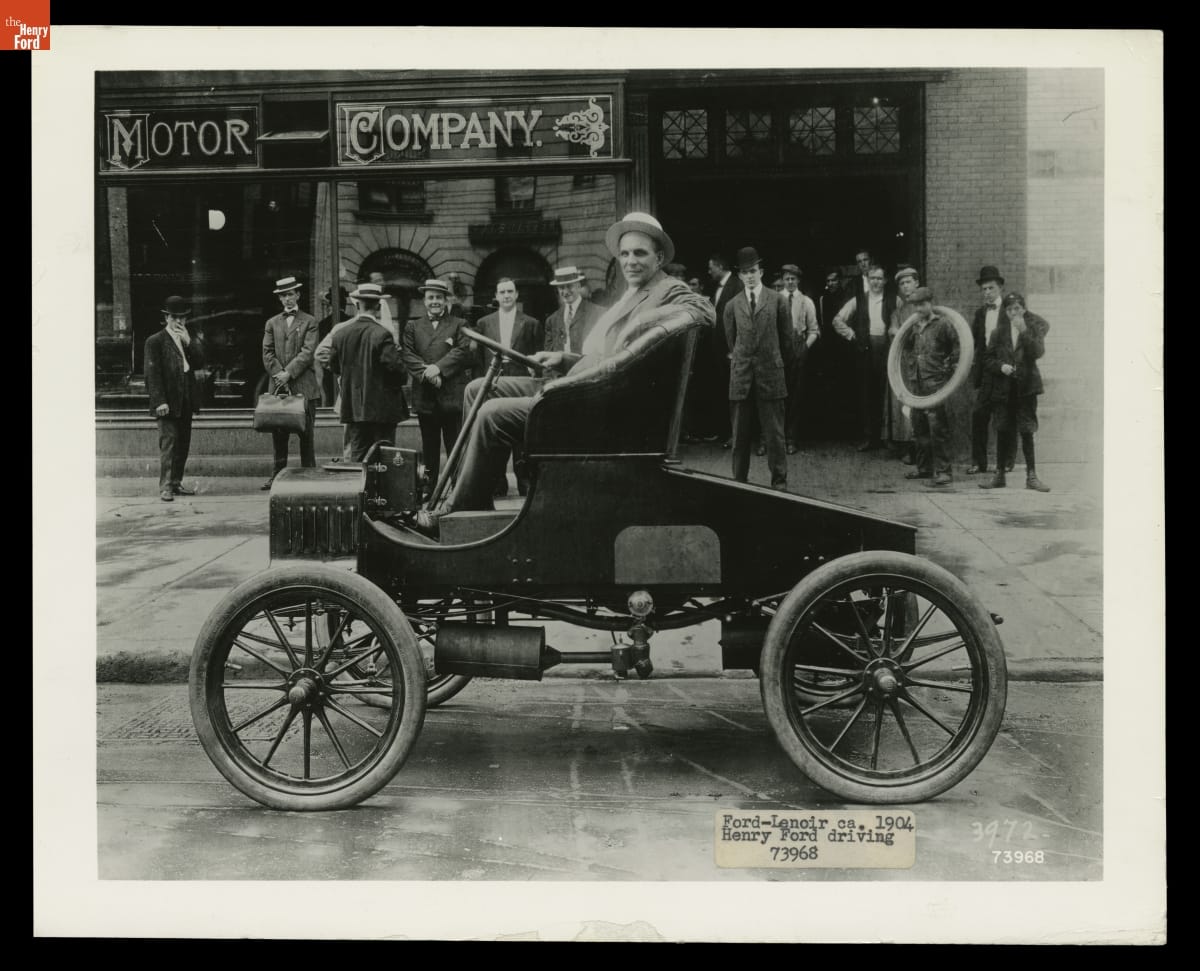
- Henry Ford Seated in Ford Model A with Lenoir Engine, New York City, 1907 - The Association of Licensed Automobile Manufacturers claimed that George Selden's 1895 patent covered all internal combustion automobiles. Henry Ford refused to pay royalties, and ALAM sued. During the legal battle, Ford's team exhibited this functional Model A with an engine from a design patented by Jean Joseph Lenoir in 1860 -- predating Selden's work. The U.S. Court of Appeals ruled in Ford's favor in 1911.
- 1907
- Collections - Artifact
Henry Ford Seated in Ford Model A with Lenoir Engine, New York City, 1907
The Association of Licensed Automobile Manufacturers claimed that George Selden's 1895 patent covered all internal combustion automobiles. Henry Ford refused to pay royalties, and ALAM sued. During the legal battle, Ford's team exhibited this functional Model A with an engine from a design patented by Jean Joseph Lenoir in 1860 -- predating Selden's work. The U.S. Court of Appeals ruled in Ford's favor in 1911.
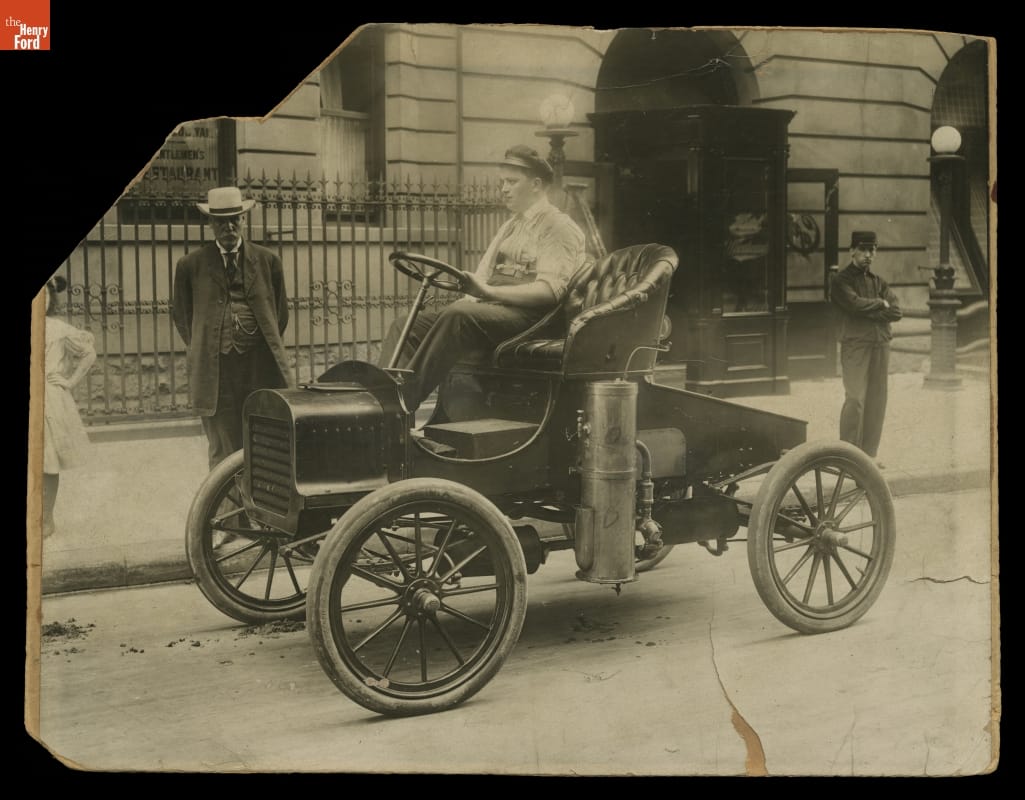
- Court-Ordered Automobile Test for the Selden Patent Suit, 1907, "In Front of Woodward Hotel, 55th and Broadway" - George Selden conceived -- but didn't build -- a gasoline-powered vehicle in 1877 and received a patent in 1895. The Association of Licensed Automobile Manufacturers enforced Selden's patent, but Henry Ford waged a successful legal battle against ALAM. The court ordered tests of a working version of Selden's proposed vehicle, and of the early Ford Motor Company automobile pictured here.
- 1907
- Collections - Artifact
Court-Ordered Automobile Test for the Selden Patent Suit, 1907, "In Front of Woodward Hotel, 55th and Broadway"
George Selden conceived -- but didn't build -- a gasoline-powered vehicle in 1877 and received a patent in 1895. The Association of Licensed Automobile Manufacturers enforced Selden's patent, but Henry Ford waged a successful legal battle against ALAM. The court ordered tests of a working version of Selden's proposed vehicle, and of the early Ford Motor Company automobile pictured here.
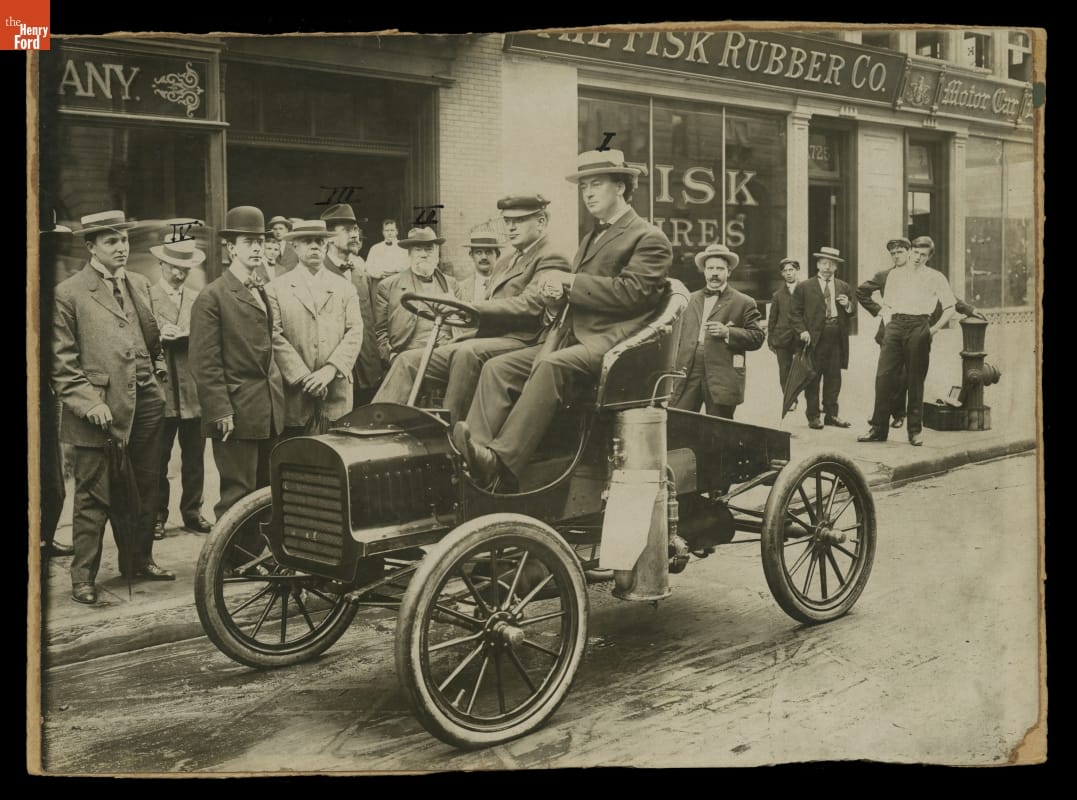
- Court-Ordered Automobile Test for the Selden Patent Suit, 1907, "In Front of Ford Store Between 54th and 55th on Broadway" - George Selden conceived -- but didn't build -- a gasoline-powered vehicle in 1877 and received a patent in 1895. The Association of Licensed Automobile Manufacturers enforced Selden's patent, but Henry Ford waged a successful legal battle against ALAM. The court ordered tests of a working version of Selden's proposed vehicle, and of the early Ford Motor Company automobile pictured here.
- 1907
- Collections - Artifact
Court-Ordered Automobile Test for the Selden Patent Suit, 1907, "In Front of Ford Store Between 54th and 55th on Broadway"
George Selden conceived -- but didn't build -- a gasoline-powered vehicle in 1877 and received a patent in 1895. The Association of Licensed Automobile Manufacturers enforced Selden's patent, but Henry Ford waged a successful legal battle against ALAM. The court ordered tests of a working version of Selden's proposed vehicle, and of the early Ford Motor Company automobile pictured here.
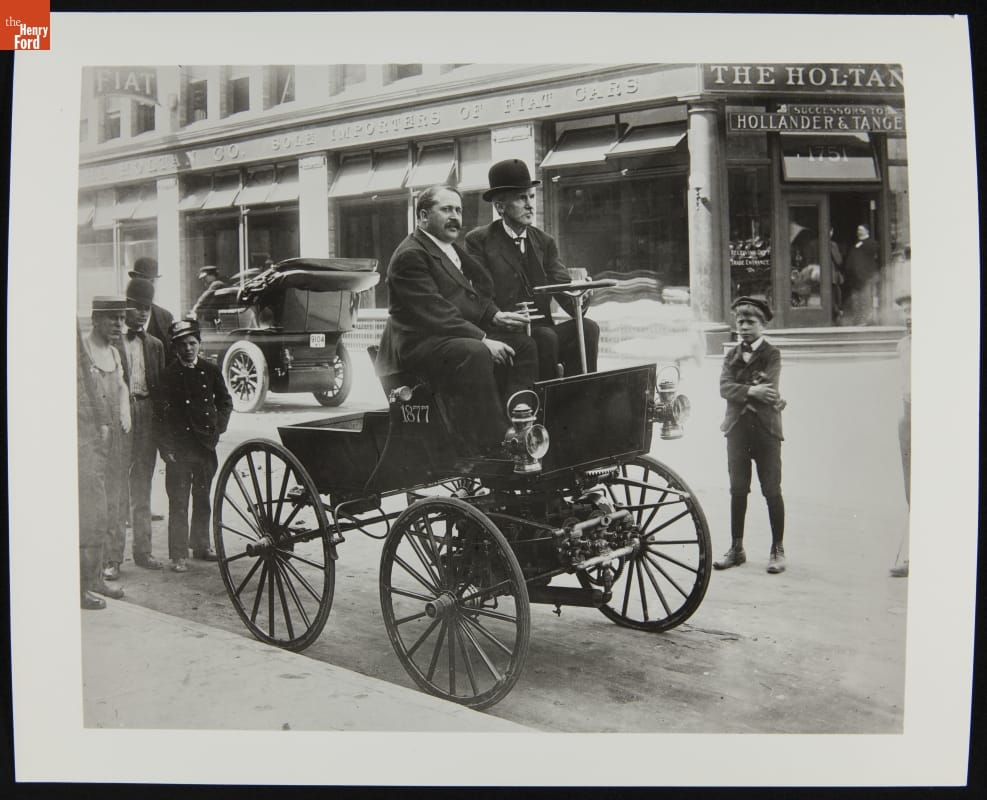
- George Selden with the 1907 Selden Motor Buggy during the Selden Patent Suit - George Selden conceived -- but didn't build -- a self-propelled gasoline-powered vehicle in 1877 and patented the idea in 1895. The Association of Licensed Automobile Manufacturers enforced Selden's patent, but Henry Ford fought ALAM in court. This car was completed for Selden in 1907 as evidence for the legal battle. Ford ultimately won, freeing himself and other automakers from paying royalties to ALAM.
- 1907-1911
- Collections - Artifact
George Selden with the 1907 Selden Motor Buggy during the Selden Patent Suit
George Selden conceived -- but didn't build -- a self-propelled gasoline-powered vehicle in 1877 and patented the idea in 1895. The Association of Licensed Automobile Manufacturers enforced Selden's patent, but Henry Ford fought ALAM in court. This car was completed for Selden in 1907 as evidence for the legal battle. Ford ultimately won, freeing himself and other automakers from paying royalties to ALAM.
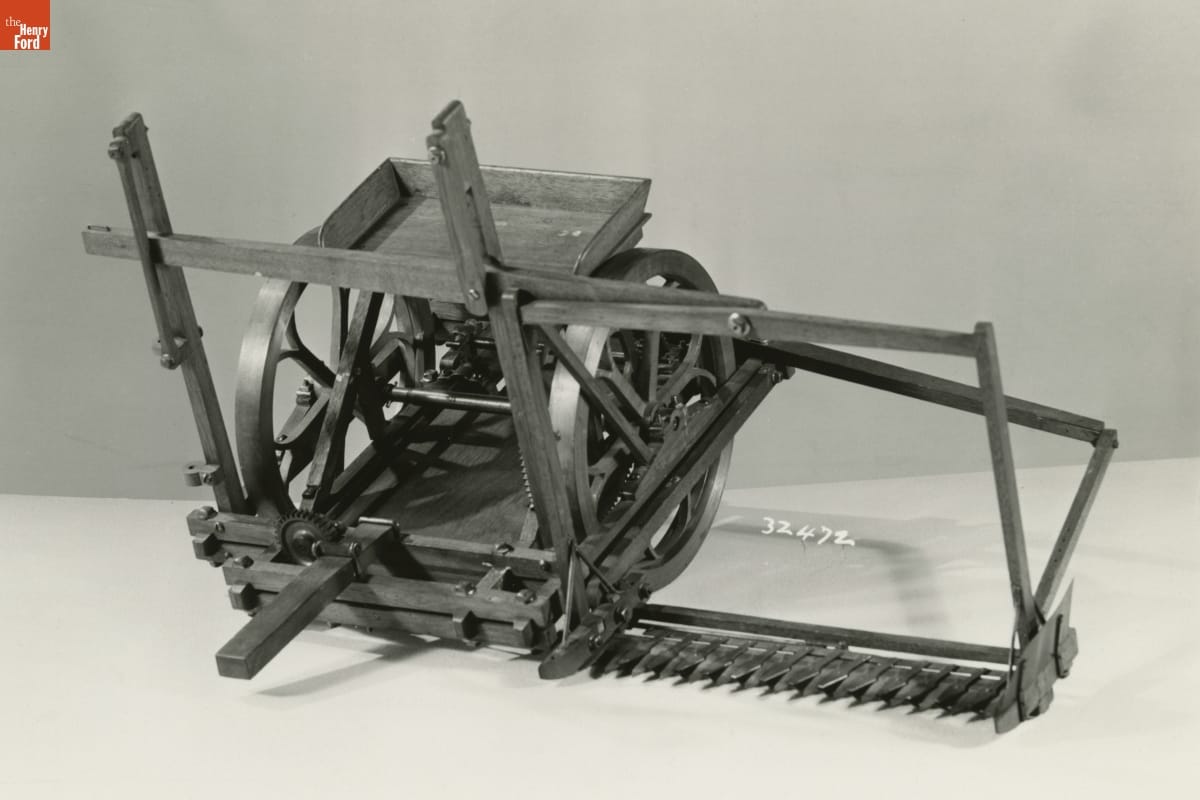
- Model of Mowing Machine, circa 1867, Used in Patent Infringement Case -
- circa 1867
- Collections - Artifact
Model of Mowing Machine, circa 1867, Used in Patent Infringement Case
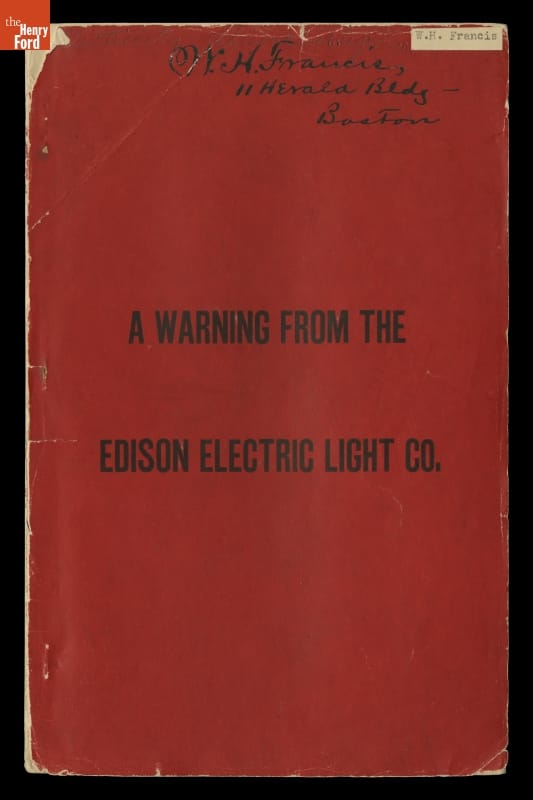
- "A Warning from the Edison Electric Light Company," 1887 - The late-nineteenth-century "War of Currents" pitted the backers of direct current (DC) against those who believed alternating current (AC) was the best way to transmit electricity. In this partisan publication the Edison Electric Light Company touted the advantages of their DC system, fueled the public's fear by reprinting reports of horrific deaths caused by high-voltage AC, and attacked the backers of AC who, company officials believed, misled investors.
- 1887
- Collections - Artifact
"A Warning from the Edison Electric Light Company," 1887
The late-nineteenth-century "War of Currents" pitted the backers of direct current (DC) against those who believed alternating current (AC) was the best way to transmit electricity. In this partisan publication the Edison Electric Light Company touted the advantages of their DC system, fueled the public's fear by reprinting reports of horrific deaths caused by high-voltage AC, and attacked the backers of AC who, company officials believed, misled investors.