
Search
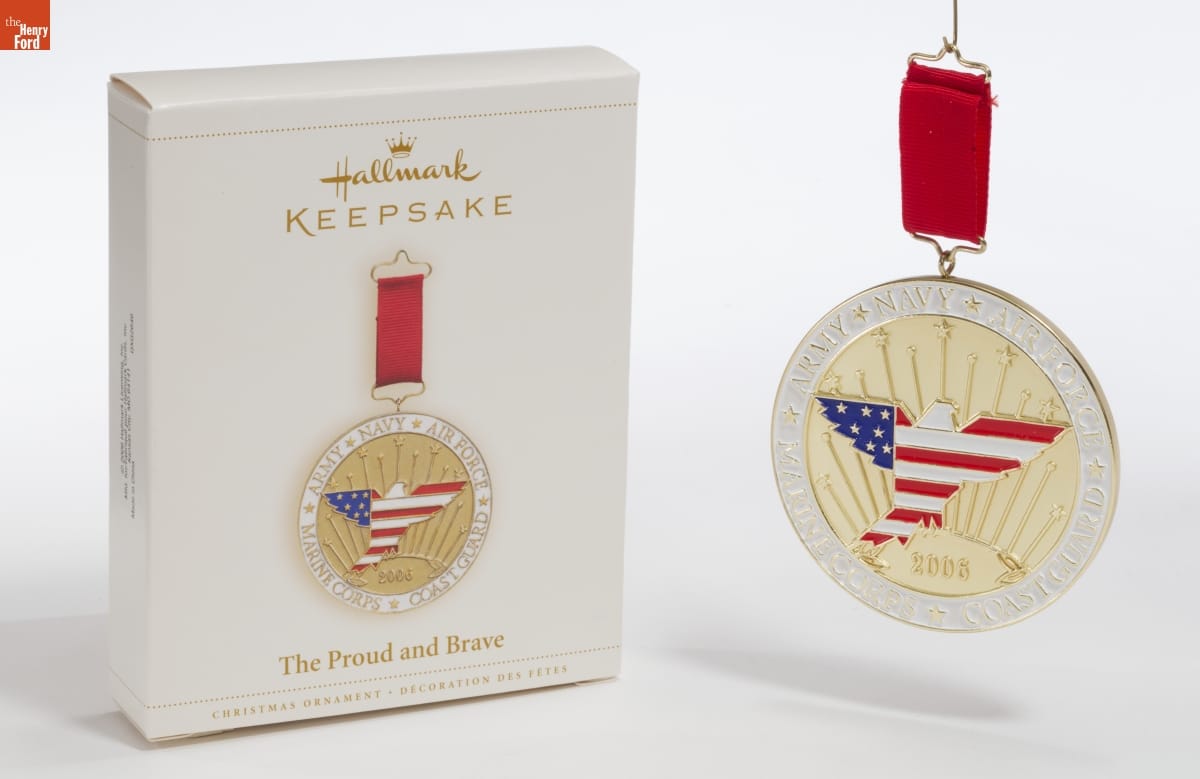
- Hallmark "The Proud and Brave" Christmas Ornament, 2006 - Already known for greeting cards, Hallmark introduced a line of Christmas ornaments in 1973. The company's annual release of an increasing array of ornaments revolutionized Christmas decorating, appealing to customers' interest in marking memories and milestones as well as expressing one's personality and unique tastes.
- 2006
- Collections - Artifact
Hallmark "The Proud and Brave" Christmas Ornament, 2006
Already known for greeting cards, Hallmark introduced a line of Christmas ornaments in 1973. The company's annual release of an increasing array of ornaments revolutionized Christmas decorating, appealing to customers' interest in marking memories and milestones as well as expressing one's personality and unique tastes.
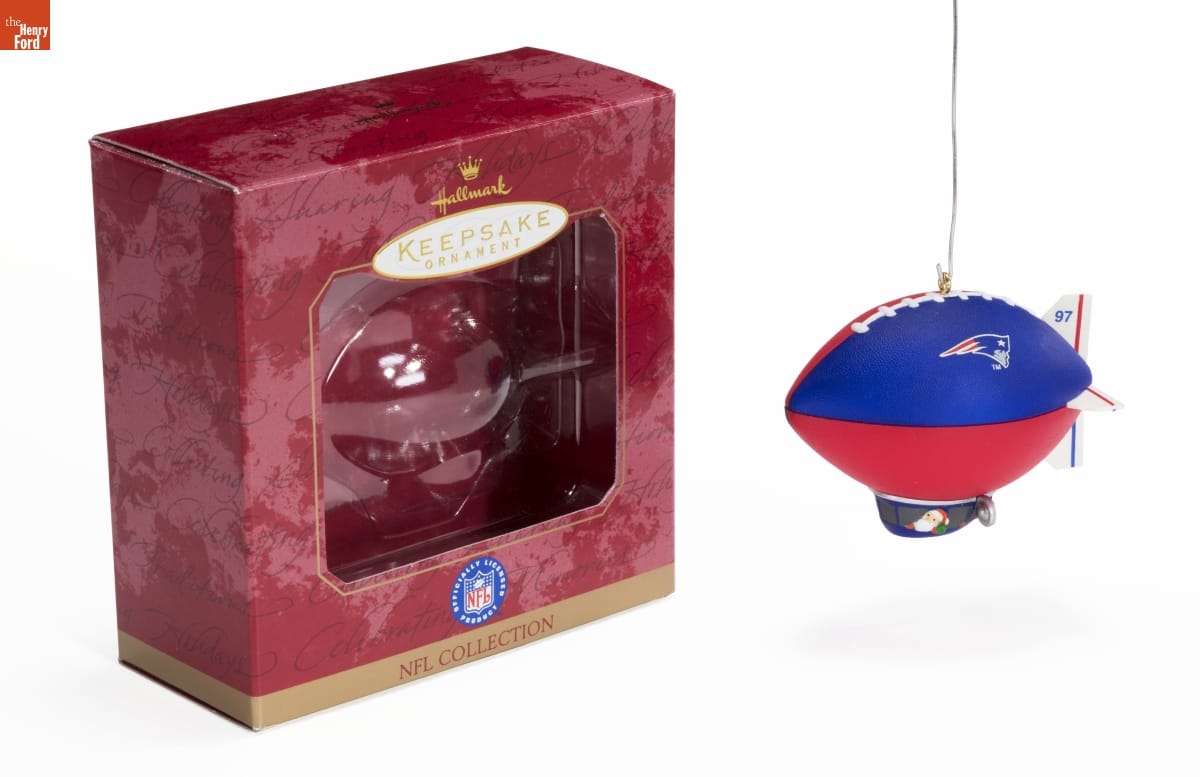
- Hallmark "NFL Collection: New England Patriots" Christmas Ornament, 1997 - Already known for greeting cards, Hallmark introduced a line of Christmas ornaments in 1973. The company's annual release of an increasing array of ornaments revolutionized Christmas decorating, appealing to customers' interest in marking memories and milestones as well as expressing one's personality and unique tastes.
- 1997
- Collections - Artifact
Hallmark "NFL Collection: New England Patriots" Christmas Ornament, 1997
Already known for greeting cards, Hallmark introduced a line of Christmas ornaments in 1973. The company's annual release of an increasing array of ornaments revolutionized Christmas decorating, appealing to customers' interest in marking memories and milestones as well as expressing one's personality and unique tastes.
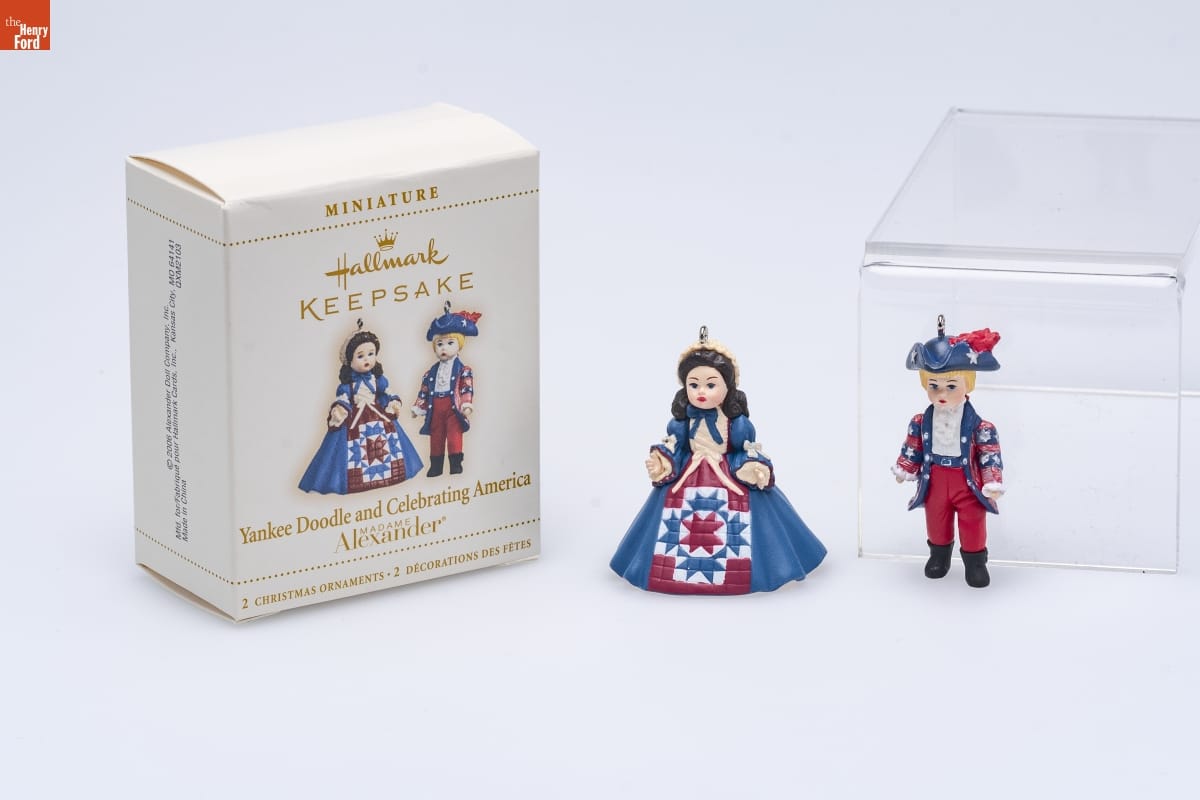
- Hallmark "Madame Alexander: Yankee Doodle and Celebrating America" Miniature Christmas Ornaments, 2006 - Already known for greeting cards, Hallmark introduced a line of Christmas ornaments in 1973. The company's annual release of an increasing array of ornaments revolutionized Christmas decorating, appealing to customers' interest in marking memories and milestones as well as expressing one's personality and unique tastes.
- 2006
- Collections - Artifact
Hallmark "Madame Alexander: Yankee Doodle and Celebrating America" Miniature Christmas Ornaments, 2006
Already known for greeting cards, Hallmark introduced a line of Christmas ornaments in 1973. The company's annual release of an increasing array of ornaments revolutionized Christmas decorating, appealing to customers' interest in marking memories and milestones as well as expressing one's personality and unique tastes.
- Tattoo Flash Portfolio, circa 1918 - Tattoos communicate stories. Their content ranges from deeply personal and traditional--to regrettable and frivolous. In the early 1900s, "Professor" Waters apprenticed as a tattoo artist in carnivals and New York's Bowery District. He ran a successful supply shop in Detroit (1918-1939), patenting the standard "two-coil" tattoo machine in 1929. Designs from his flash sheets continue to inspire tattooists today.
- circa 1918
- Collections - Artifact
Tattoo Flash Portfolio, circa 1918
Tattoos communicate stories. Their content ranges from deeply personal and traditional--to regrettable and frivolous. In the early 1900s, "Professor" Waters apprenticed as a tattoo artist in carnivals and New York's Bowery District. He ran a successful supply shop in Detroit (1918-1939), patenting the standard "two-coil" tattoo machine in 1929. Designs from his flash sheets continue to inspire tattooists today.
- Tattoo Flash, circa 1925 - Tattoos communicate stories. Their content ranges from deeply personal and traditional--to regrettable and frivolous. In the early 1900s, "Professor" Waters apprenticed as a tattoo artist in carnivals and New York's Bowery District. He ran a successful supply shop in Detroit (1918-1939), patenting the standard "two-coil" tattoo machine in 1929. Designs from his flash sheets continue to inspire tattooists today.
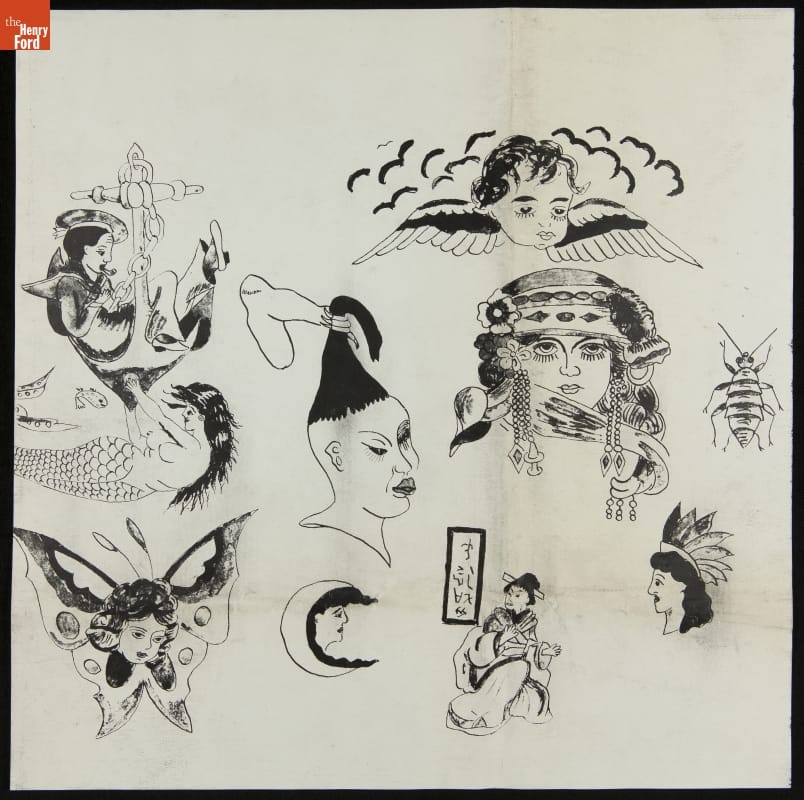
- circa 1925
- Collections - Artifact
Tattoo Flash, circa 1925
Tattoos communicate stories. Their content ranges from deeply personal and traditional--to regrettable and frivolous. In the early 1900s, "Professor" Waters apprenticed as a tattoo artist in carnivals and New York's Bowery District. He ran a successful supply shop in Detroit (1918-1939), patenting the standard "two-coil" tattoo machine in 1929. Designs from his flash sheets continue to inspire tattooists today.
- Embroidered Pillow Cover, Gift to Henry Ford, 1915-1930 - For many women in the early 20th century, Henry Ford's affordable automobile represented freedom and financial security, especially if they were fortunate enough to be part of the Ford Motor Company family. Their expressions of thanks were often homemade, like this embroidered pillow cover. Perhaps the motif acknowledged Henry Ford's efforts to encourage peace and pacifism for the United States.
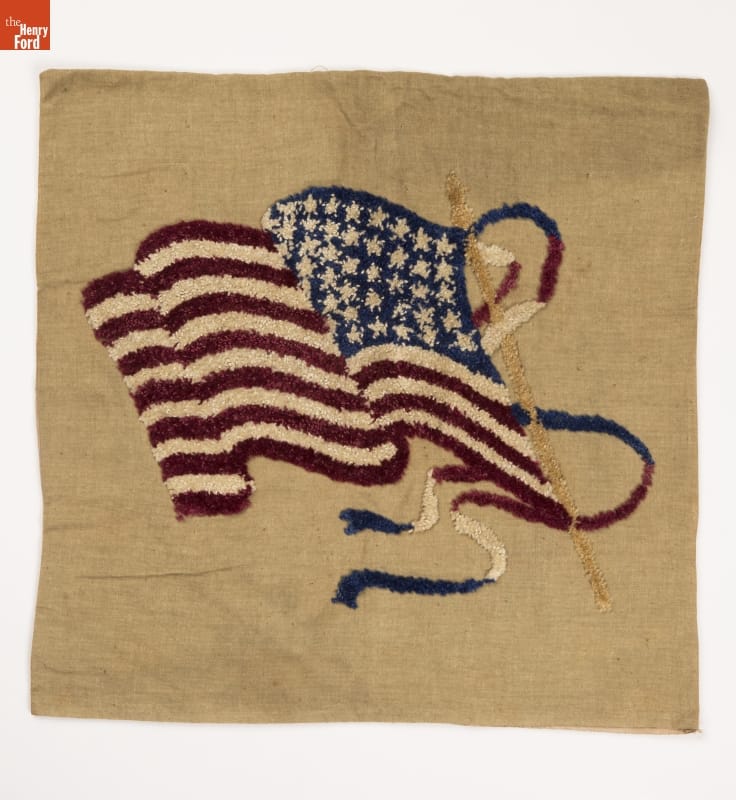
- 1915-1930
- Collections - Artifact
Embroidered Pillow Cover, Gift to Henry Ford, 1915-1930
For many women in the early 20th century, Henry Ford's affordable automobile represented freedom and financial security, especially if they were fortunate enough to be part of the Ford Motor Company family. Their expressions of thanks were often homemade, like this embroidered pillow cover. Perhaps the motif acknowledged Henry Ford's efforts to encourage peace and pacifism for the United States.
- Forty-Eight Star American Flag, 1935-1950 - American flags and patriotic symbols adorned much of the everyday material in the United States during the Second World War. Flags such as this one may have been displayed in home or office signaling support for American victory.
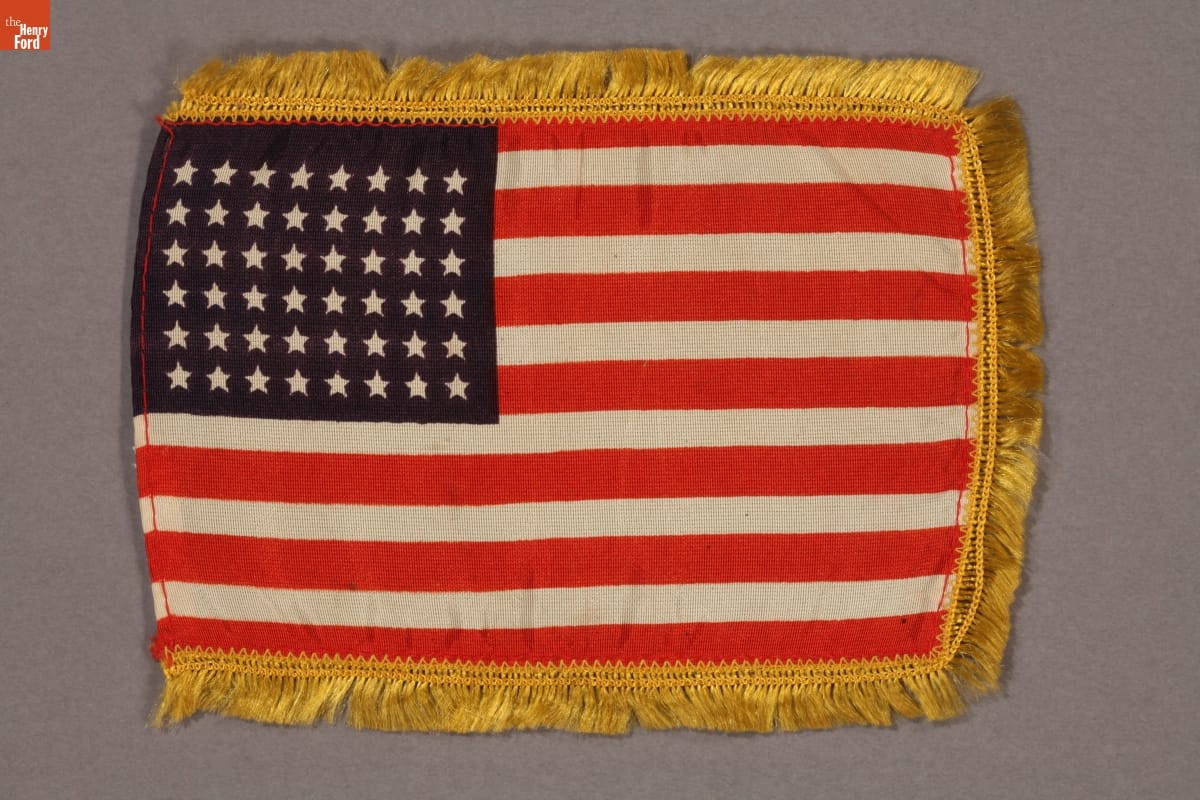
- 1935-1950
- Collections - Artifact
Forty-Eight Star American Flag, 1935-1950
American flags and patriotic symbols adorned much of the everyday material in the United States during the Second World War. Flags such as this one may have been displayed in home or office signaling support for American victory.
- Letter Written by Union Army Private Albert Manning from "Camp Foster," Roanoke Island, North Carolina, February 17, 1862 -
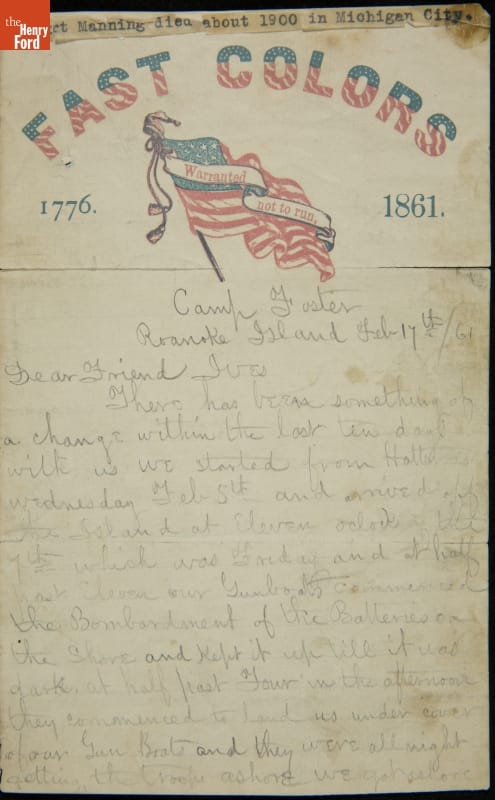
- February 17, 1862
- Collections - Artifact
Letter Written by Union Army Private Albert Manning from "Camp Foster," Roanoke Island, North Carolina, February 17, 1862
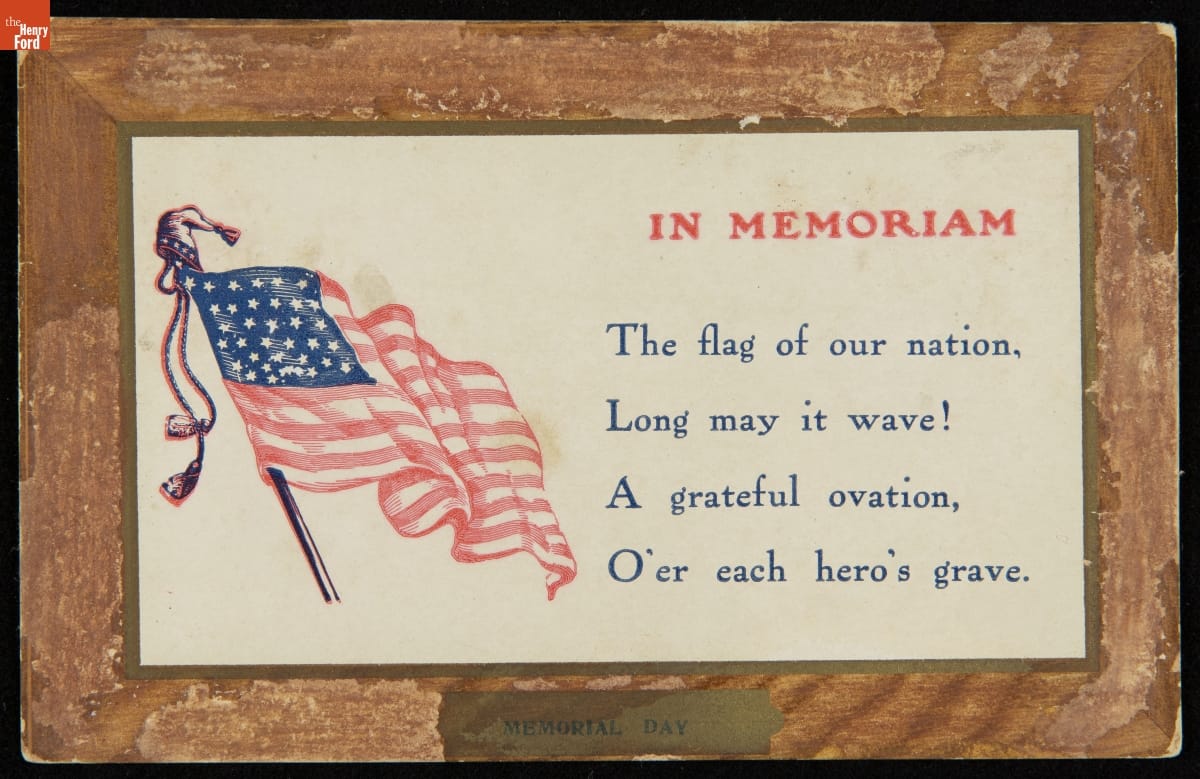
- "In Memoriam, The flag of our nation, Long may it wave! A grateful ovation, O'er each hero's grave." circa 1906 - Beginning in 1868, May 30 was proclaimed "Decoration Day" as a day for mourners to honor the Civil War dead by decorating their graves with flowers. After World War I, the observance became better known as Memorial Day, and it broadened to honor the dead of all America's wars. Memorial Day was declared a national holiday in 1971.
- circa 1906
- Collections - Artifact
"In Memoriam, The flag of our nation, Long may it wave! A grateful ovation, O'er each hero's grave." circa 1906
Beginning in 1868, May 30 was proclaimed "Decoration Day" as a day for mourners to honor the Civil War dead by decorating their graves with flowers. After World War I, the observance became better known as Memorial Day, and it broadened to honor the dead of all America's wars. Memorial Day was declared a national holiday in 1971.
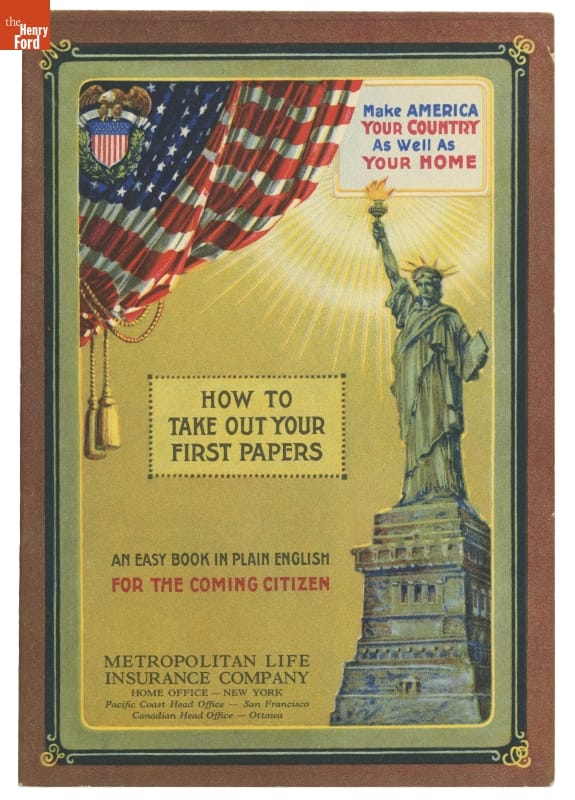
- "How to Take Out Your First Papers: An Easy Book in Plain English for the Coming Citizen," circa 1923 - In the early 20th century, mass immigration posed the challenge of integrating, or assimilating, immigrants into American society. Anglo-Americans believed that Americanization was the first step towards assimilation into a greater nation. This pamphlet is an example of a private agency that established an Americanization program to help immigrants learn American values and ultimately gain United States citizenship.
- circa 1923
- Collections - Artifact
"How to Take Out Your First Papers: An Easy Book in Plain English for the Coming Citizen," circa 1923
In the early 20th century, mass immigration posed the challenge of integrating, or assimilating, immigrants into American society. Anglo-Americans believed that Americanization was the first step towards assimilation into a greater nation. This pamphlet is an example of a private agency that established an Americanization program to help immigrants learn American values and ultimately gain United States citizenship.