
Search
- Letter from John Richards to George C. Gebelein, June 12, 1937 - George Gebelein, a silversmith from Boston, Massachusetts, created the Scudder Memorial Trophy for St. Paul's School, a college preparatory school near Concord, New Hampshire. The rowing trophy was designed by John Wiggins, a well-known woodcarver. The school presents the trophy, first awarded in 1937, to the winner of the annual First Crew race between the school's Shattuck and Halcyon boat clubs.
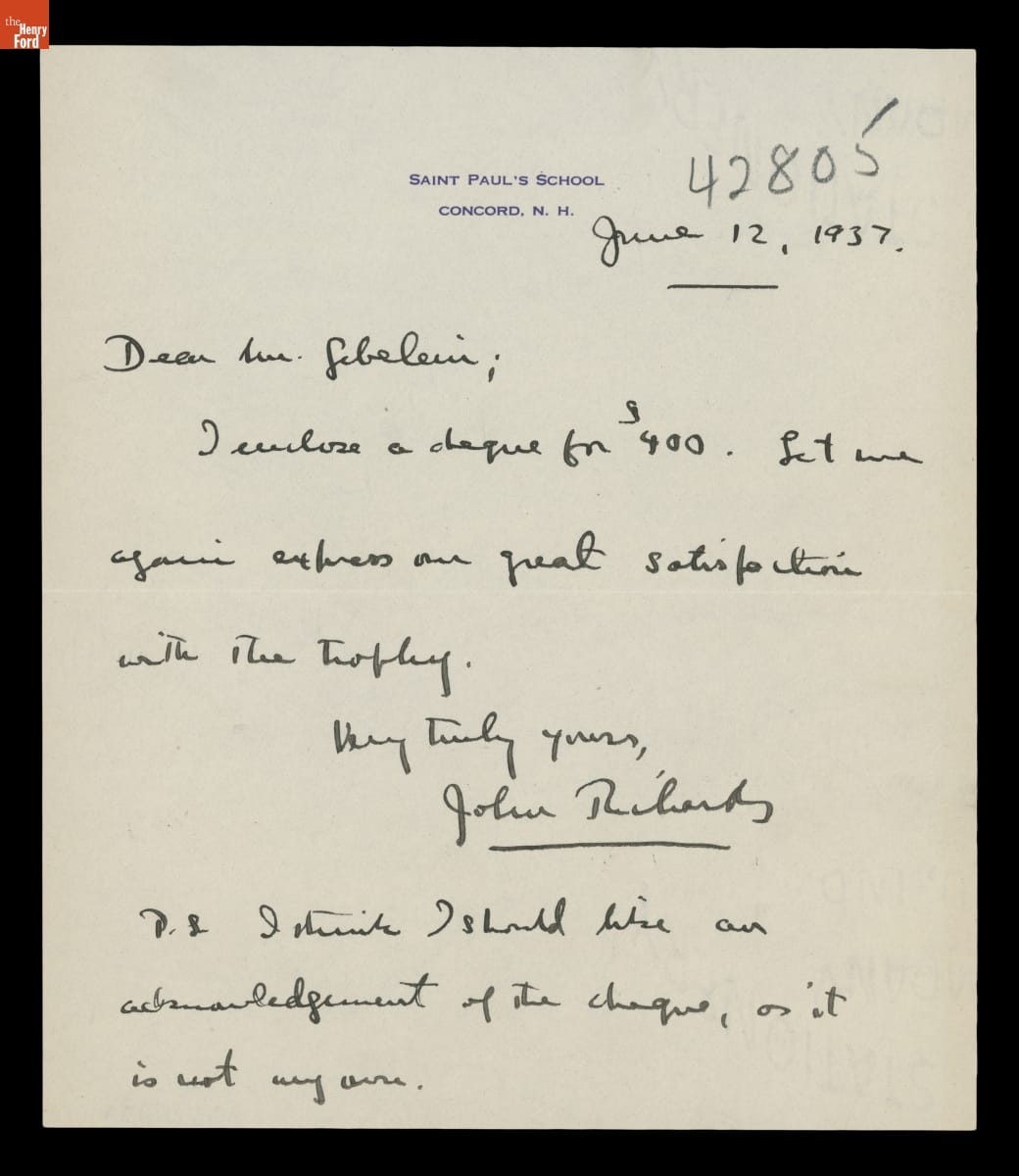
- June 12, 1937
- Collections - Artifact
Letter from John Richards to George C. Gebelein, June 12, 1937
George Gebelein, a silversmith from Boston, Massachusetts, created the Scudder Memorial Trophy for St. Paul's School, a college preparatory school near Concord, New Hampshire. The rowing trophy was designed by John Wiggins, a well-known woodcarver. The school presents the trophy, first awarded in 1937, to the winner of the annual First Crew race between the school's Shattuck and Halcyon boat clubs.
- Letter from George C. Gebelein to John Richards, June 9, 1937 - George Gebelein, a silversmith from Boston, Massachusetts, created the Scudder Memorial Trophy for St. Paul's School, a college preparatory school near Concord, New Hampshire. The rowing trophy was designed by John Wiggins, a well-known woodcarver. The school presents the trophy, first awarded in 1937, to the winner of the annual First Crew race between the school's Shattuck and Halcyon boat clubs.
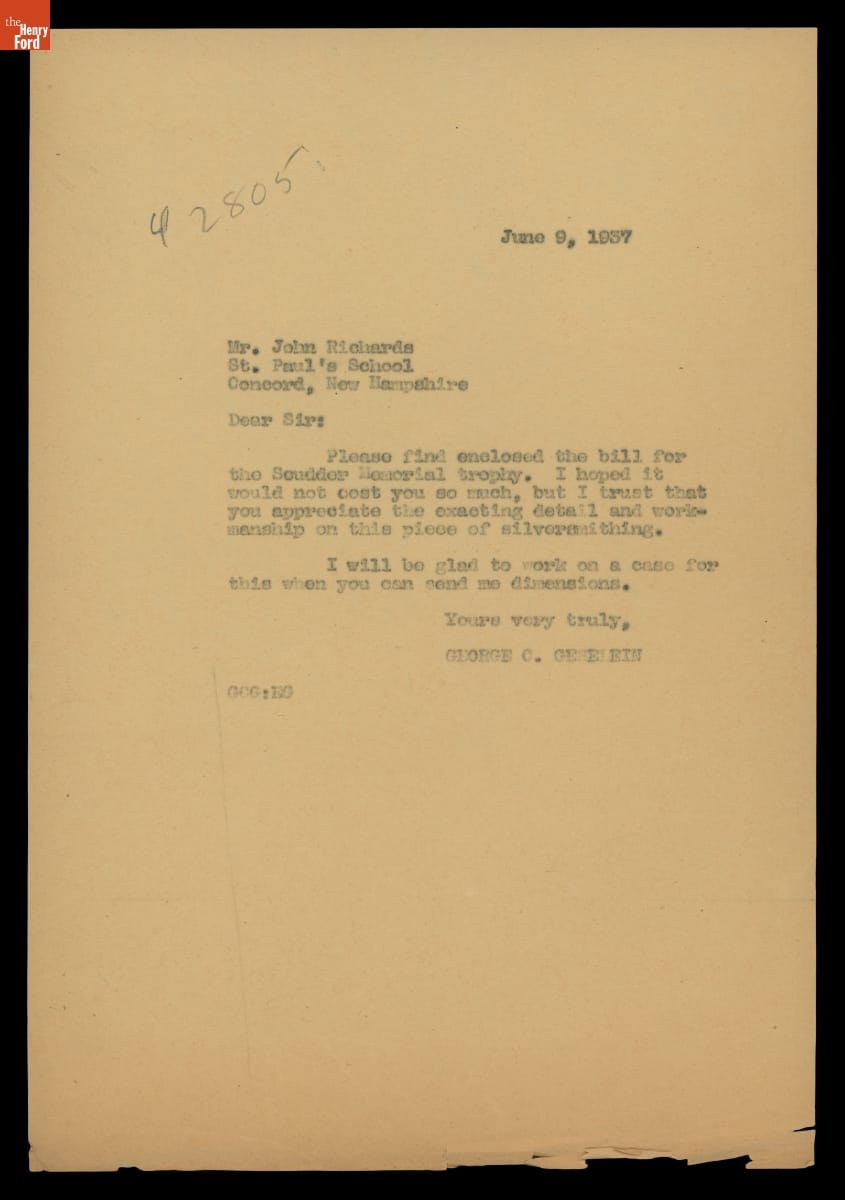
- June 09, 1937
- Collections - Artifact
Letter from George C. Gebelein to John Richards, June 9, 1937
George Gebelein, a silversmith from Boston, Massachusetts, created the Scudder Memorial Trophy for St. Paul's School, a college preparatory school near Concord, New Hampshire. The rowing trophy was designed by John Wiggins, a well-known woodcarver. The school presents the trophy, first awarded in 1937, to the winner of the annual First Crew race between the school's Shattuck and Halcyon boat clubs.
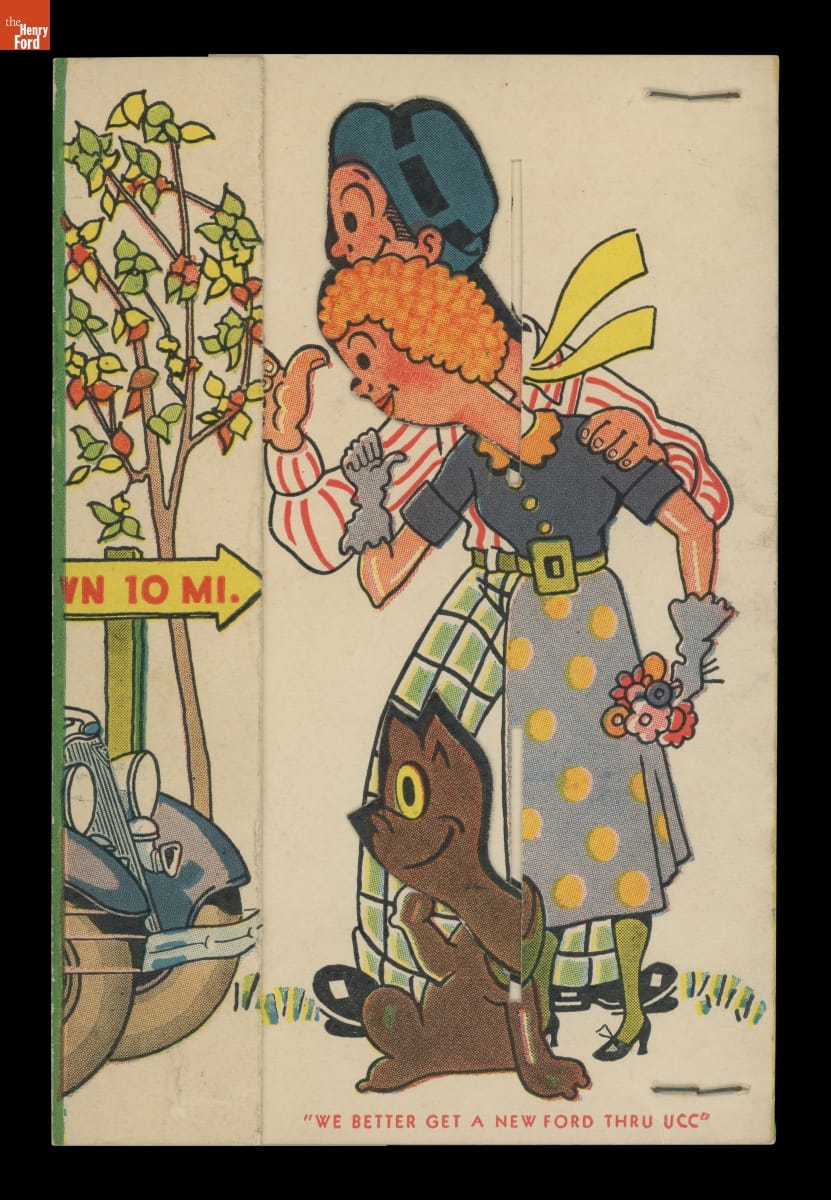
- Universal Credit Company Advertisement, "Watch the Fords Go By," circa 1932 - In 1928, Ford Motor Company set up the Universal Credit Company (UCC) to finance the sale of its cars. Ford sold the company five years later, but UCC remained a primary financer for buyers of Ford vehicles. UCC created this moveable, attention-grabbing advertisement to promote its services. The heads of the hitchhikers turn to "Watch the Fords go by!" when opened.
- circa 1932
- Collections - Artifact
Universal Credit Company Advertisement, "Watch the Fords Go By," circa 1932
In 1928, Ford Motor Company set up the Universal Credit Company (UCC) to finance the sale of its cars. Ford sold the company five years later, but UCC remained a primary financer for buyers of Ford vehicles. UCC created this moveable, attention-grabbing advertisement to promote its services. The heads of the hitchhikers turn to "Watch the Fords go by!" when opened.
- Letter from the Office of Edsel Ford to Richard Trotter, Ordering a Drawing, December 24, 1924 -
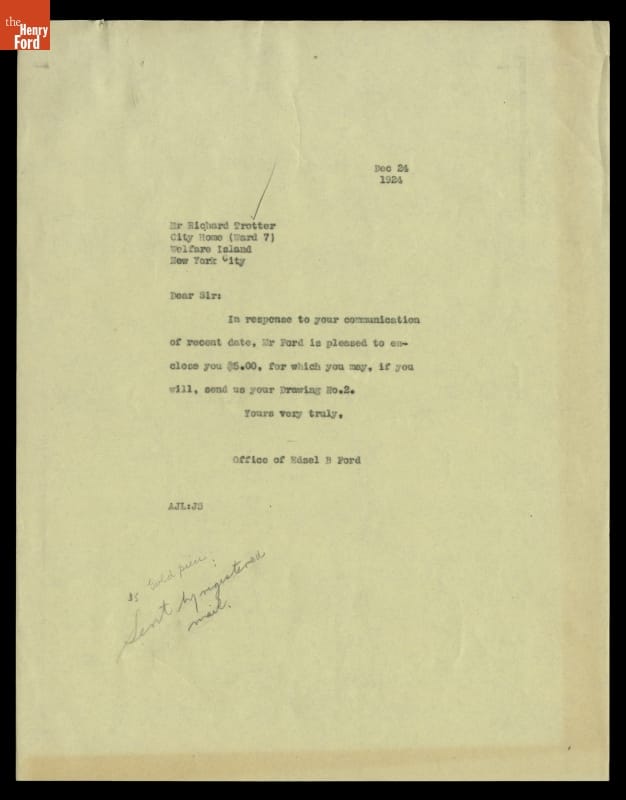
- December 24, 1924
- Collections - Artifact
Letter from the Office of Edsel Ford to Richard Trotter, Ordering a Drawing, December 24, 1924
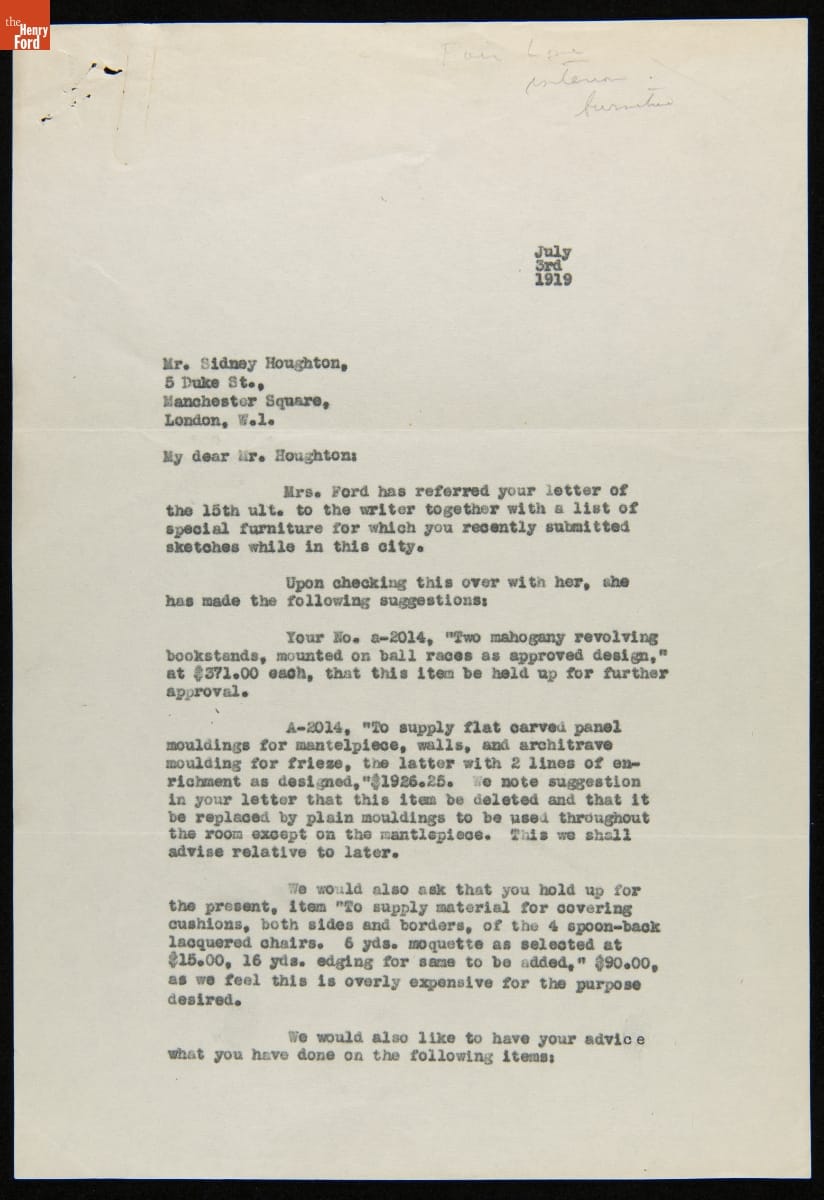
- Letters from Frank Campsall to Sidney Houghton and W.C. Anderson regarding Choosing Furniture for Fair Lane, July 1919 - Sidney Houghton, a London-based interior designer, met Henry Ford during World War I. Houghton worked on Ford's "Eagle Boats," supplied to the U.S. and British Navies. Following the War, Henry and Clara Ford commissioned Houghton to create a variety of interiors for their home and other projects. This letter references work proposed for Fair Lane, the Fords' home in Dearborn, Michigan.
- July 01, 1919
- Collections - Artifact
Letters from Frank Campsall to Sidney Houghton and W.C. Anderson regarding Choosing Furniture for Fair Lane, July 1919
Sidney Houghton, a London-based interior designer, met Henry Ford during World War I. Houghton worked on Ford's "Eagle Boats," supplied to the U.S. and British Navies. Following the War, Henry and Clara Ford commissioned Houghton to create a variety of interiors for their home and other projects. This letter references work proposed for Fair Lane, the Fords' home in Dearborn, Michigan.