
Search
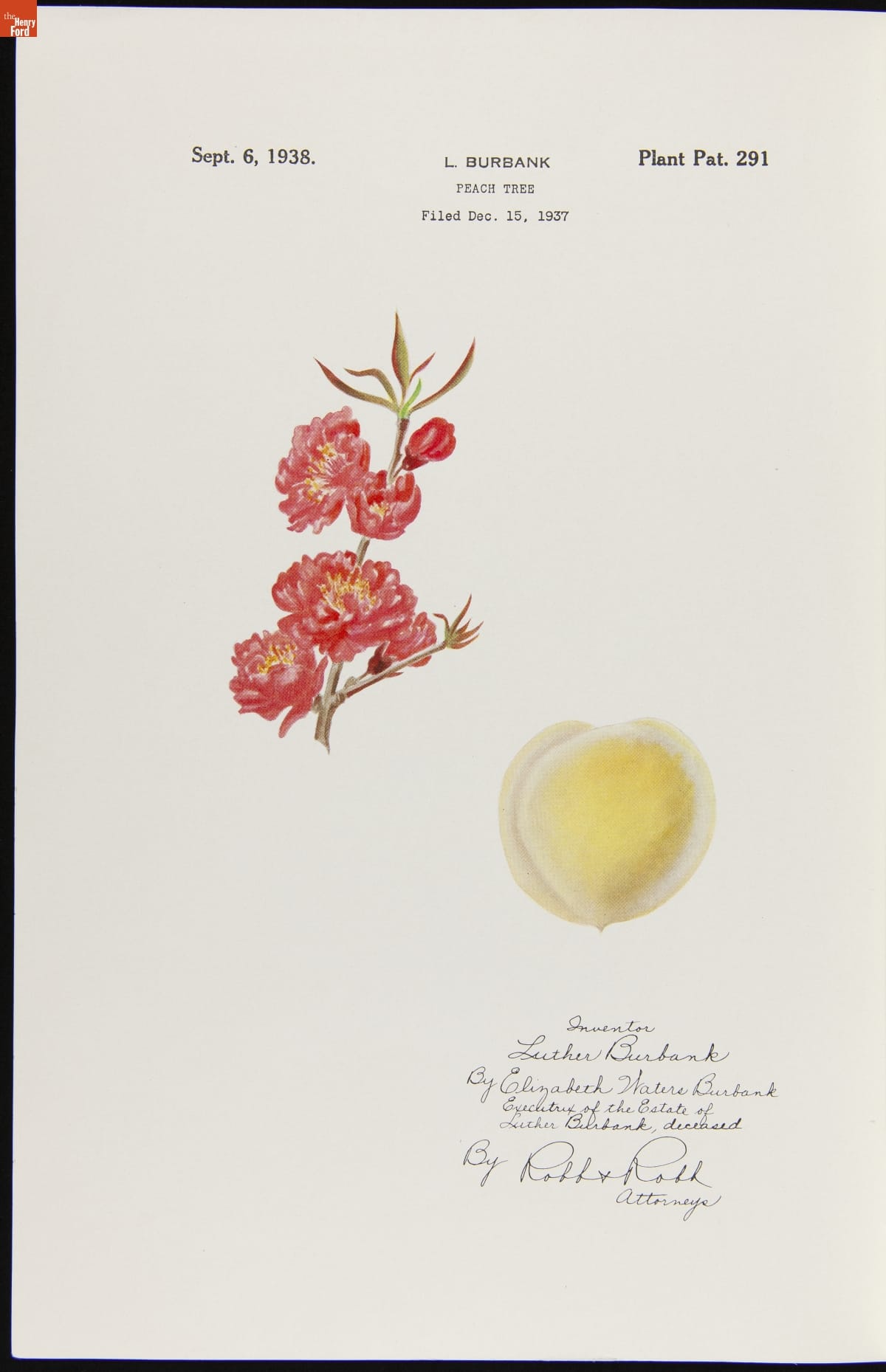
- U.S. Plant Patent 291, for Luther Burbank Peach Tree, Granted to Elizabeth Waters Burbank, September 6, 1938 - Natural plant reproduction once seemed beyond human intervention, but in 1930, the U.S. Patent and Trademark Office began recognizing the work of horticulturalists by awarding patents for new or improved plant varieties. Luther Burbank, the prolific American plant breeder, died in 1926, but his life's work helped justify plant patents. Burbank ultimately received 16 patents, awarded posthumously to his widow.
- September 06, 1938
- Collections - Artifact
U.S. Plant Patent 291, for Luther Burbank Peach Tree, Granted to Elizabeth Waters Burbank, September 6, 1938
Natural plant reproduction once seemed beyond human intervention, but in 1930, the U.S. Patent and Trademark Office began recognizing the work of horticulturalists by awarding patents for new or improved plant varieties. Luther Burbank, the prolific American plant breeder, died in 1926, but his life's work helped justify plant patents. Burbank ultimately received 16 patents, awarded posthumously to his widow.
- "Eighty Winters in Michigan Orchards," Special Bulletin No. 149, February 1926 -
- February 01, 1926
- Collections - Artifact
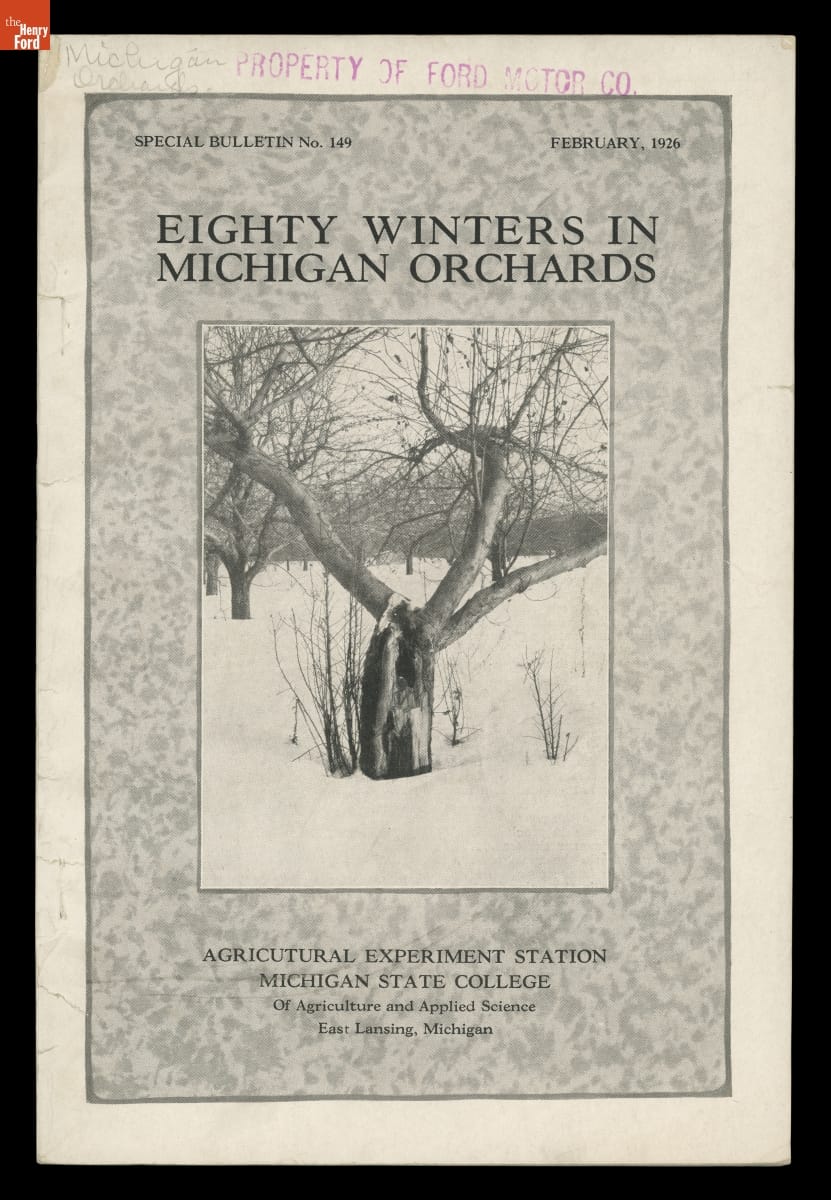
"Eighty Winters in Michigan Orchards," Special Bulletin No. 149, February 1926
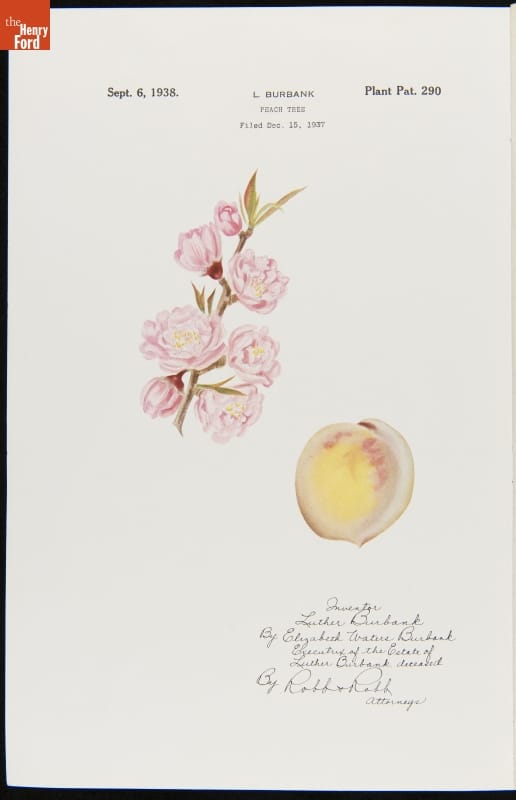
- U.S. Plant Patent 290, for Luther Burbank Peach Tree, Granted to Elizabeth Waters Burbank, September 6, 1938 - Natural plant reproduction once seemed beyond human intervention, but in 1930, the U.S. Patent and Trademark Office began recognizing the work of horticulturalists by awarding patents for new or improved plant varieties. Luther Burbank, the prolific American plant breeder, died in 1926, but his life's work helped justify plant patents. Burbank ultimately received 16 patents, awarded posthumously to his widow.
- September 06, 1938
- Collections - Artifact
U.S. Plant Patent 290, for Luther Burbank Peach Tree, Granted to Elizabeth Waters Burbank, September 6, 1938
Natural plant reproduction once seemed beyond human intervention, but in 1930, the U.S. Patent and Trademark Office began recognizing the work of horticulturalists by awarding patents for new or improved plant varieties. Luther Burbank, the prolific American plant breeder, died in 1926, but his life's work helped justify plant patents. Burbank ultimately received 16 patents, awarded posthumously to his widow.