
Search
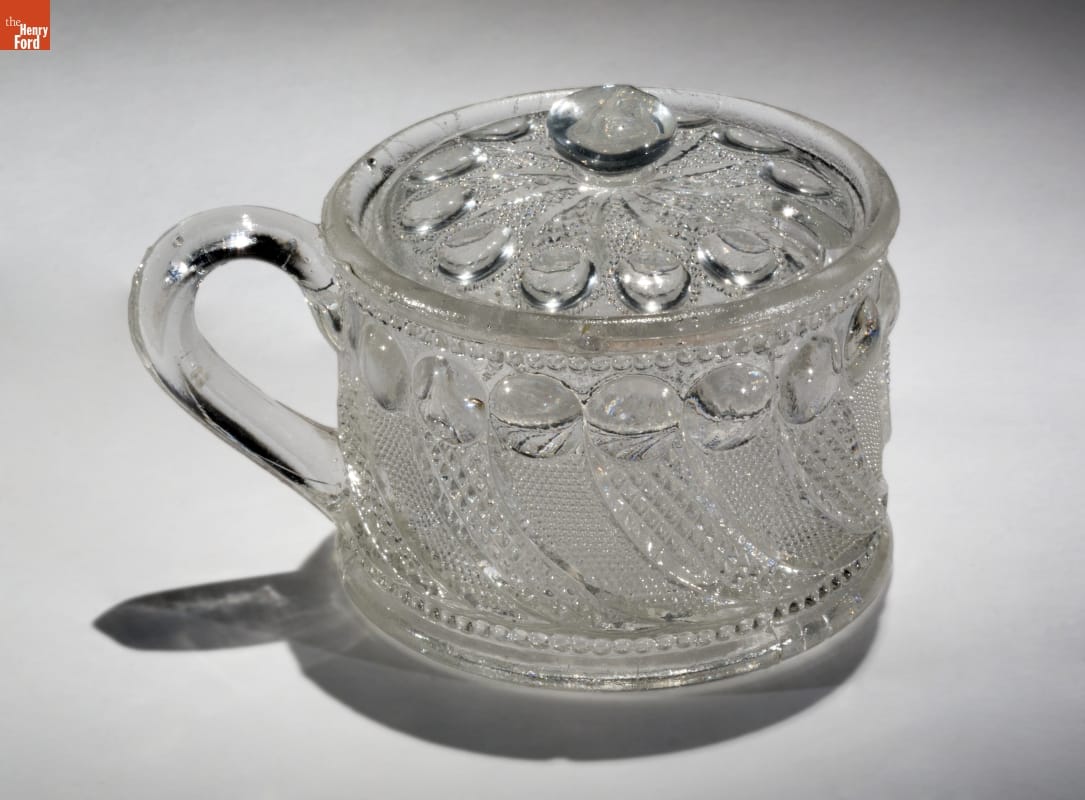
- Mustard Pot, 1830-1845 - Mechanically pressed glass was an innovation in glass history, making decorative, "patterned" glass available to a broad audience. One of the earliest types of pressed glass, dating to the 1830s is known as "Lacy Glass". Complex stippled patterns were developed to help hide technical defects caused by early presses, when the glass gather was cut off and dropped into a mold.
- 1830-1845
- Collections - Artifact
Mustard Pot, 1830-1845
Mechanically pressed glass was an innovation in glass history, making decorative, "patterned" glass available to a broad audience. One of the earliest types of pressed glass, dating to the 1830s is known as "Lacy Glass". Complex stippled patterns were developed to help hide technical defects caused by early presses, when the glass gather was cut off and dropped into a mold.
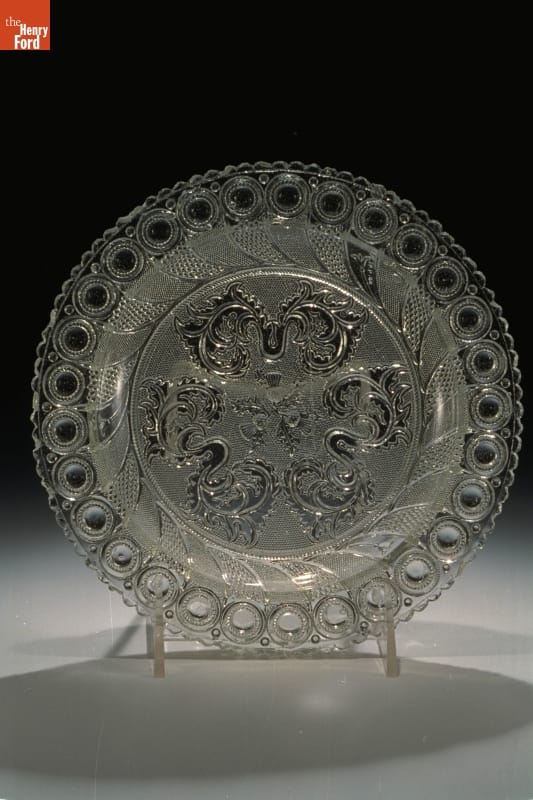
- Plate, 1830-1845 - Mechanically pressed glass was an innovation in glass history, making decorative, "patterned" glass available to a broad audience. One of the earliest types of pressed glass, dating to the 1830s is known as "Lacy Glass". Complex stippled patterns were developed to help hide technical defects caused by early presses, when the glass gather was cut off and dropped into a mold.
- 1830-1845
- Collections - Artifact
Plate, 1830-1845
Mechanically pressed glass was an innovation in glass history, making decorative, "patterned" glass available to a broad audience. One of the earliest types of pressed glass, dating to the 1830s is known as "Lacy Glass". Complex stippled patterns were developed to help hide technical defects caused by early presses, when the glass gather was cut off and dropped into a mold.
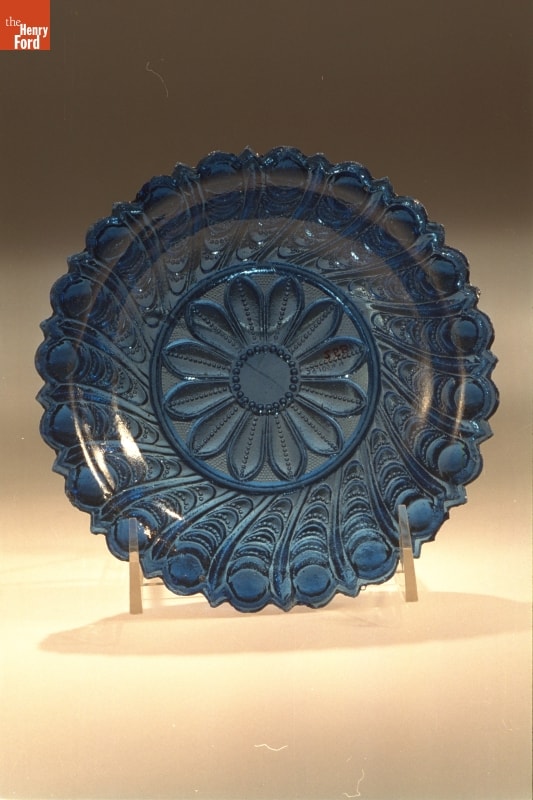
- Dish, 1830-1845 - Mechanically pressed glass was an innovation in glass history, making decorative, "patterned" glass available to a broad audience. One of the earliest types of pressed glass, dating to the 1830s is known as "Lacy Glass". Complex stippled patterns were developed to help hide technical defects caused by early presses, when the glass gather was cut off and dropped into a mold.
- 1830-1845
- Collections - Artifact
Dish, 1830-1845
Mechanically pressed glass was an innovation in glass history, making decorative, "patterned" glass available to a broad audience. One of the earliest types of pressed glass, dating to the 1830s is known as "Lacy Glass". Complex stippled patterns were developed to help hide technical defects caused by early presses, when the glass gather was cut off and dropped into a mold.
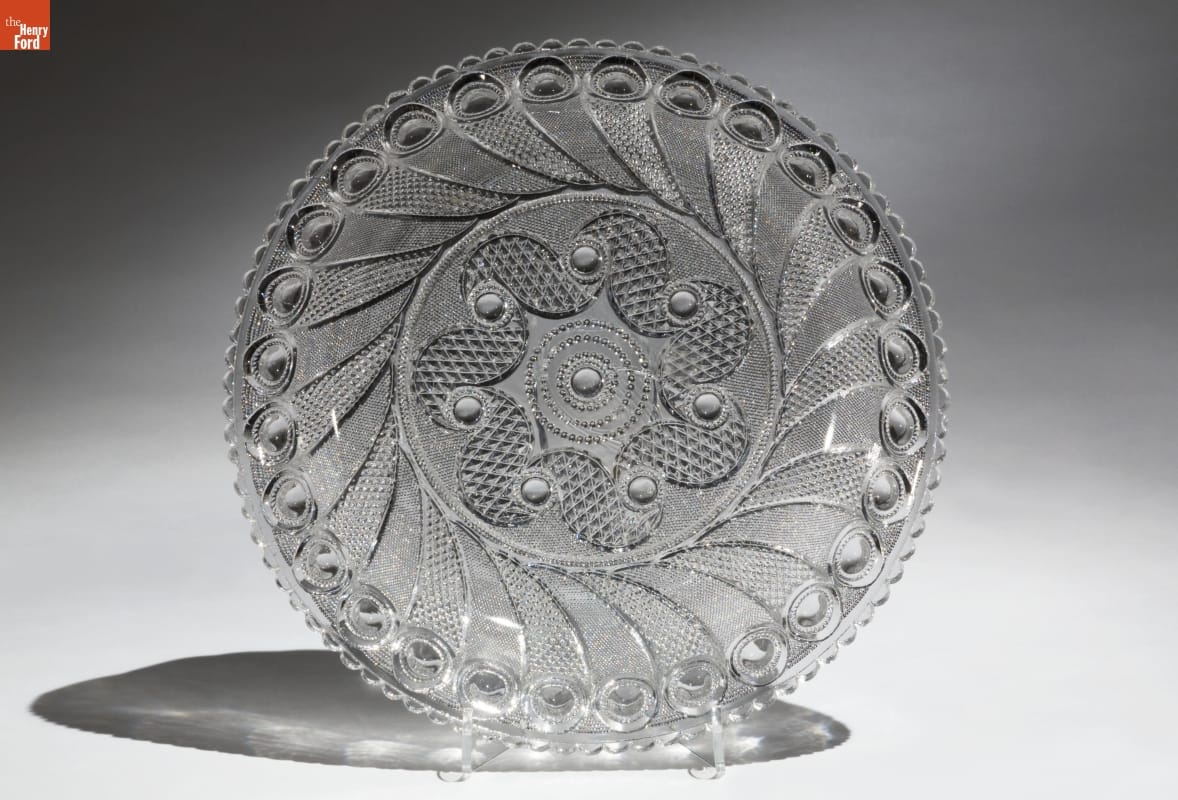
- Dish, 1830-1845 - Mechanically pressed glass was an innovation in glass history, making decorative, "patterned" glass available to a broad audience. One of the earliest types of pressed glass, dating to the 1830s is known as "Lacy Glass". Complex stippled patterns were developed to help hide technical defects caused by early presses, when the glass gather was cut off and dropped into a mold.
- 1830-1845
- Collections - Artifact
Dish, 1830-1845
Mechanically pressed glass was an innovation in glass history, making decorative, "patterned" glass available to a broad audience. One of the earliest types of pressed glass, dating to the 1830s is known as "Lacy Glass". Complex stippled patterns were developed to help hide technical defects caused by early presses, when the glass gather was cut off and dropped into a mold.
- Creamer, 1830-1840 - Mechanically pressed glass was an innovation in glass history, making decorative, "patterned" glass available to a broad audience. One of the earliest types of pressed glass, dating to the 1830s is known as "Lacy Glass". Complex stippled patterns were developed to help hide technical defects caused by early presses, when the glass gather was cut off and dropped into a mold.
- 1830-1840
- Collections - Artifact
Creamer, 1830-1840
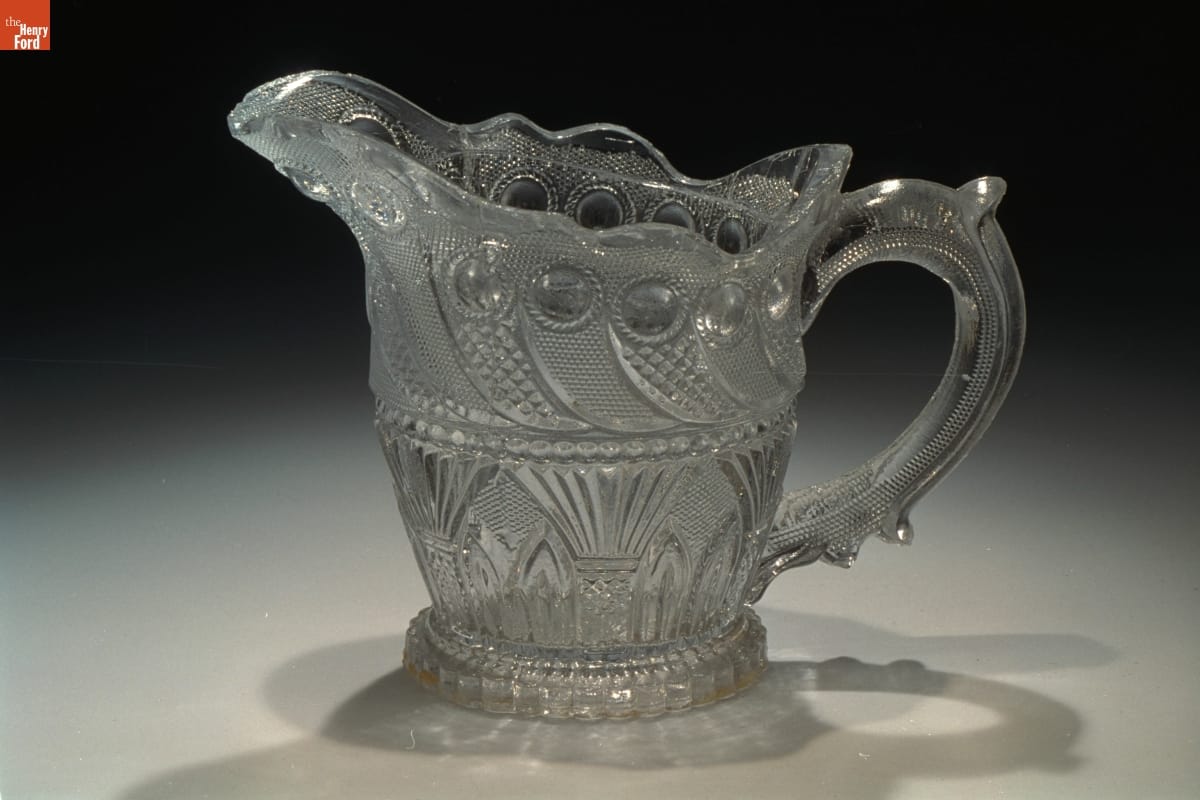
Mechanically pressed glass was an innovation in glass history, making decorative, "patterned" glass available to a broad audience. One of the earliest types of pressed glass, dating to the 1830s is known as "Lacy Glass". Complex stippled patterns were developed to help hide technical defects caused by early presses, when the glass gather was cut off and dropped into a mold.
- Bowl, 1830-1840 - Mechanically pressed glass was an innovation in glass history, making decorative, "patterned" glass available to a broad audience. One of the earliest types of pressed glass, dating to the 1830s is known as "Lacy Glass". Complex stippled patterns were developed to help hide technical defects caused by early presses, when the glass gather was cut off and dropped into a mold.
- 1830-1840
- Collections - Artifact
Bowl, 1830-1840
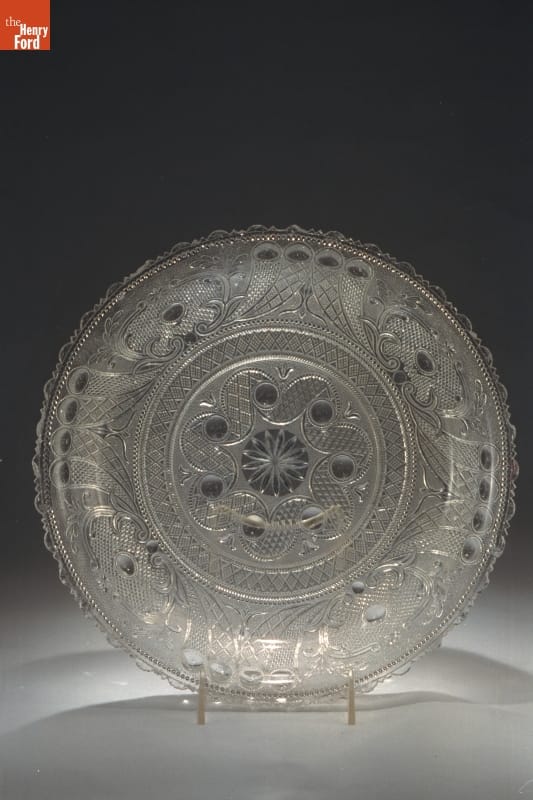
Mechanically pressed glass was an innovation in glass history, making decorative, "patterned" glass available to a broad audience. One of the earliest types of pressed glass, dating to the 1830s is known as "Lacy Glass". Complex stippled patterns were developed to help hide technical defects caused by early presses, when the glass gather was cut off and dropped into a mold.
- 3-Dimensional Christmas Card, "A Merry, Merry Christmas," 1951 - Karl Koehler designed three-dimensional Christmas cards in the late 1940s and 1950s. He folded, scored, and snipped paper printed with his artwork, then assembled the cards in his studio. Koehler's creations folded flat for mailing, but when opened they brought unexpected joy with their pop-out shapes. Holiday shoppers found his line of "Mantelpiece" cards at high-end department stores throughout the country.
- 1951
- Collections - Artifact
3-Dimensional Christmas Card, "A Merry, Merry Christmas," 1951
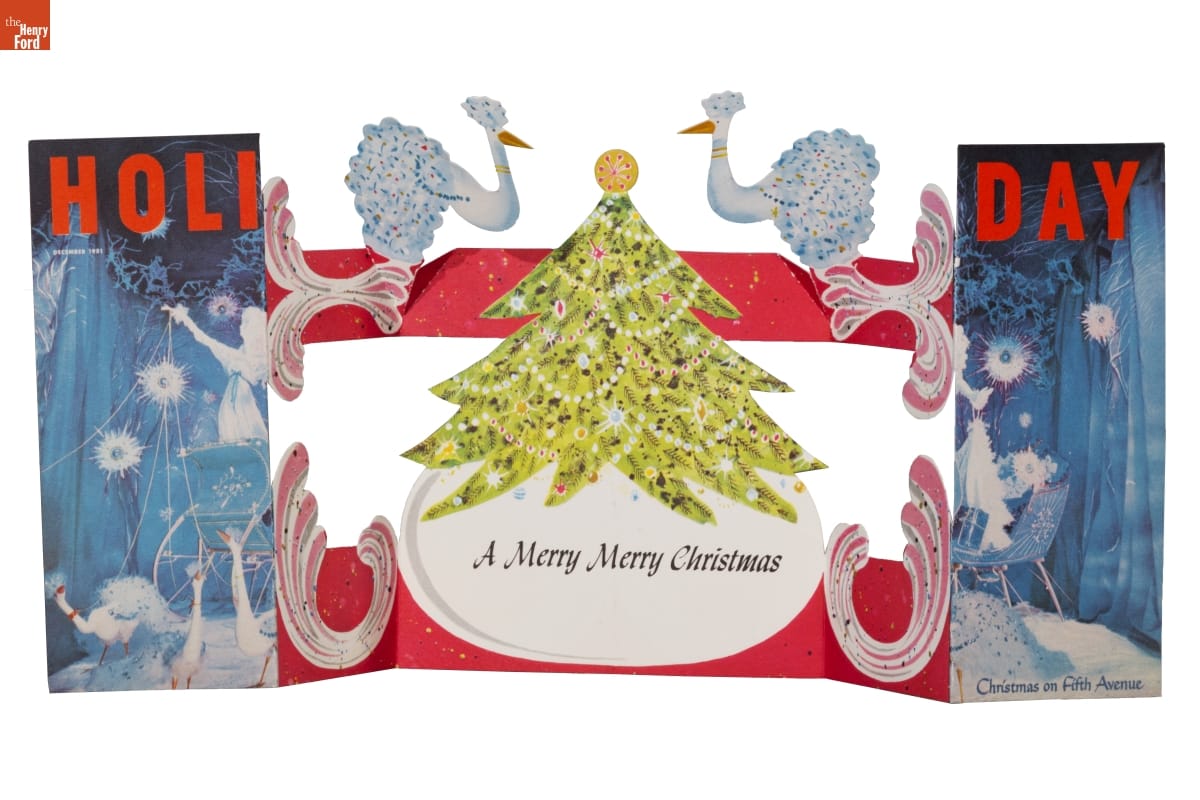
Karl Koehler designed three-dimensional Christmas cards in the late 1940s and 1950s. He folded, scored, and snipped paper printed with his artwork, then assembled the cards in his studio. Koehler's creations folded flat for mailing, but when opened they brought unexpected joy with their pop-out shapes. Holiday shoppers found his line of "Mantelpiece" cards at high-end department stores throughout the country.
- Advertisement for the 1928 Lincoln Seven Passenger Sedan - The 1928 Lincolns differed little from their 1927 predecessors. The company initially resisted the growing trend toward model years, claiming that its automobiles were so well designed that major annual changes weren't necessary. Calendar year production for 1928 was 6,362 units. Prices ranged from $3,300 for a chassis only to $7,400 for a LeBaron-bodied cabriolet.
- March 01, 1928
- Collections - Artifact
Advertisement for the 1928 Lincoln Seven Passenger Sedan
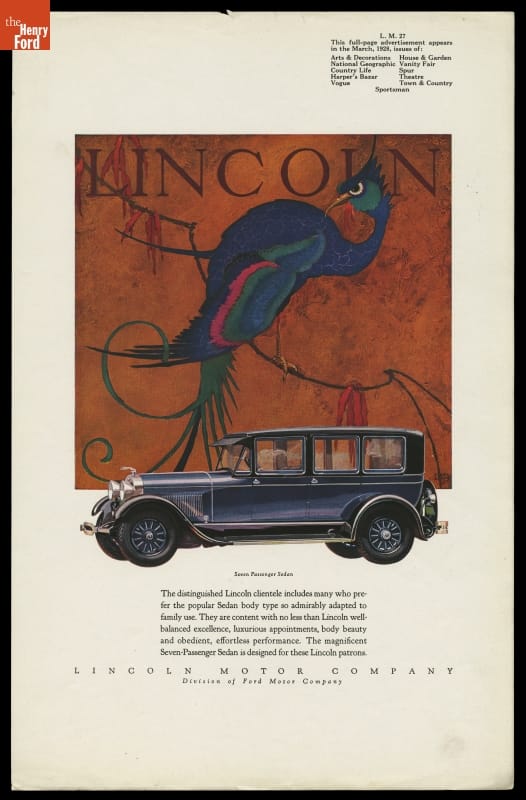
The 1928 Lincolns differed little from their 1927 predecessors. The company initially resisted the growing trend toward model years, claiming that its automobiles were so well designed that major annual changes weren't necessary. Calendar year production for 1928 was 6,362 units. Prices ranged from $3,300 for a chassis only to $7,400 for a LeBaron-bodied cabriolet.
- Dish, 1840-1850 - Mechanically pressed glass was an innovation in glass history, making decorative, "patterned" glass available to a broad audience. One of the earliest types of pressed glass, dating to the 1830s is known as "Lacy Glass". Complex stippled patterns were developed to help hide technical defects caused by early presses, when the glass gather was cut off and dropped into a mold.
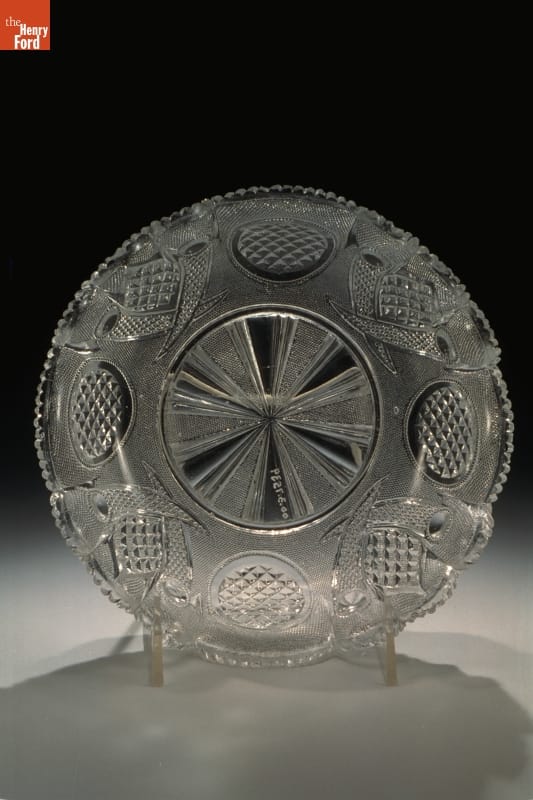
- 1840-1850
- Collections - Artifact
Dish, 1840-1850
Mechanically pressed glass was an innovation in glass history, making decorative, "patterned" glass available to a broad audience. One of the earliest types of pressed glass, dating to the 1830s is known as "Lacy Glass". Complex stippled patterns were developed to help hide technical defects caused by early presses, when the glass gather was cut off and dropped into a mold.
- Dish, 1825-1845 - Mechanically pressed glass was an innovation in glass history, making decorative, "patterned" glass available to a broad audience. One of the earliest types of pressed glass, dating to the 1830s is known as "Lacy Glass". Complex stippled patterns were developed to help hide technical defects caused by early presses, when the glass gather was cut off and dropped into a mold.
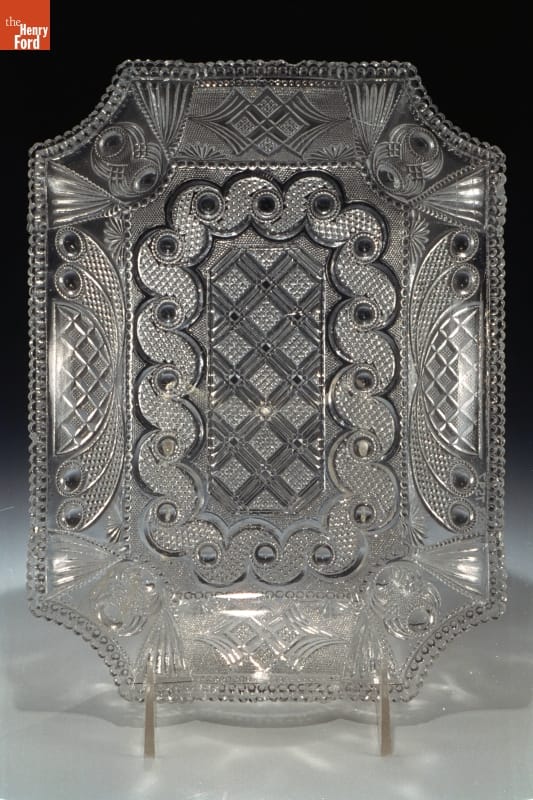
- 1825-1845
- Collections - Artifact
Dish, 1825-1845
Mechanically pressed glass was an innovation in glass history, making decorative, "patterned" glass available to a broad audience. One of the earliest types of pressed glass, dating to the 1830s is known as "Lacy Glass". Complex stippled patterns were developed to help hide technical defects caused by early presses, when the glass gather was cut off and dropped into a mold.