
Search
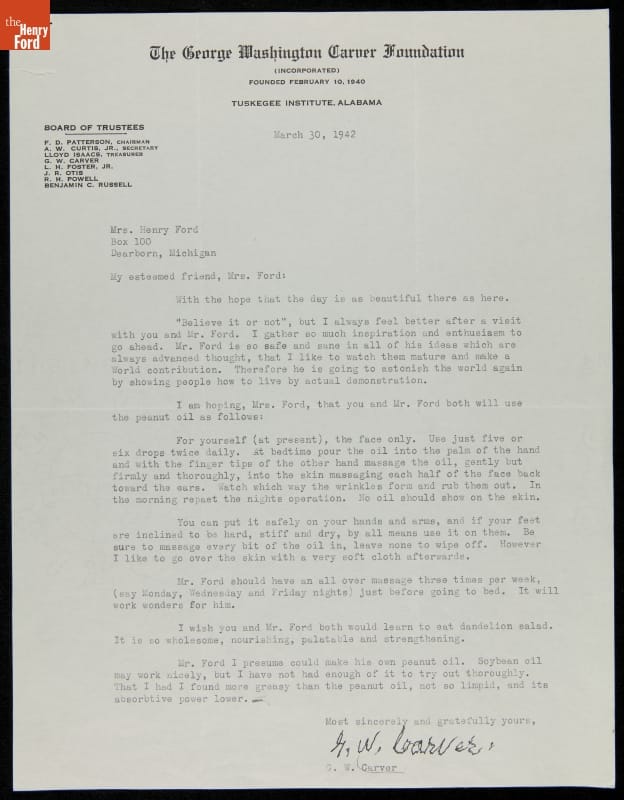
- Letter from George Washington Carver to Clara Ford, March 30, 1942 - George Washington Carver and Henry Ford became friends in the late 1930s, drawn together by a mutual interest in plants and industry. Carver's warm letters to both Henry and Clara Ford speak to the genuine depth of the friendship. In this letter to Clara, which was presumably accompanied a bottle of peanut oil, Carver offered advice on how to use the oil for natural health.
- March 30, 1942
- Collections - Artifact
Letter from George Washington Carver to Clara Ford, March 30, 1942
George Washington Carver and Henry Ford became friends in the late 1930s, drawn together by a mutual interest in plants and industry. Carver's warm letters to both Henry and Clara Ford speak to the genuine depth of the friendship. In this letter to Clara, which was presumably accompanied a bottle of peanut oil, Carver offered advice on how to use the oil for natural health.
- Recipe Booklet, "Planters Peanut Oil Presents: Appliance Cooking for All Seasons," 1972 -

- 1972
- Collections - Artifact
Recipe Booklet, "Planters Peanut Oil Presents: Appliance Cooking for All Seasons," 1972
- Austin Curtis, George Washington Carver, Henry Ford, Wilbur Donaldson and Frank Campsall Inspect Peanut Oil, Tuskegee Institute, March 1938 - In 1938, Henry Ford visited his friend George Washington Carver at the Tuskegee Institute in Alabama, where Carver had lived and conducted his agricultural research and education since 1896. Carver advocated for peanuts as healthful for humans and good for depleted soils. In this photo Austin Curtis, Carver's assistant; Carver; Ford; and two of Ford's employees, Wilbur Donaldson and Frank Campsall, consider bottles of peanut oil.

- March 01, 1938
- Collections - Artifact
Austin Curtis, George Washington Carver, Henry Ford, Wilbur Donaldson and Frank Campsall Inspect Peanut Oil, Tuskegee Institute, March 1938
In 1938, Henry Ford visited his friend George Washington Carver at the Tuskegee Institute in Alabama, where Carver had lived and conducted his agricultural research and education since 1896. Carver advocated for peanuts as healthful for humans and good for depleted soils. In this photo Austin Curtis, Carver's assistant; Carver; Ford; and two of Ford's employees, Wilbur Donaldson and Frank Campsall, consider bottles of peanut oil.
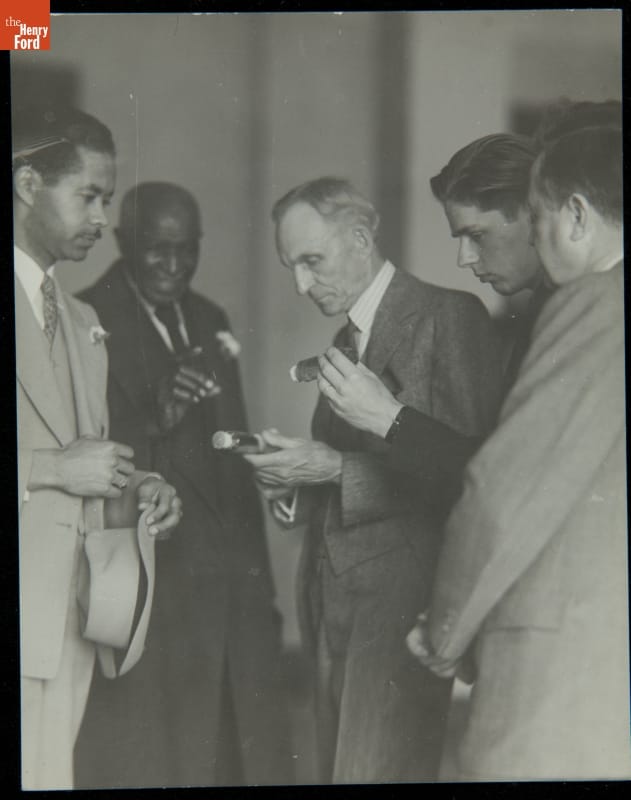
- Austin Curtis, George Washington Carver, Henry Ford, Wilbur Donaldson and Frank Campsall Inspect Bottles of Peanut Oil, Tuskegee Institute, March 1938 - In 1938, Henry Ford visited his friend George Washington Carver at the Tuskegee Institute in Alabama, where Carver had lived and conducted his agricultural research and education since 1896. Carver advocated for peanuts as healthful for humans and good for depleted soils. In this photo Austin Curtis, Carver's assistant; Carver; Ford; and two of Ford's employees, Wilbur Donaldson and Frank Campsall, consider bottles of peanut oil.
- March 01, 1938
- Collections - Artifact
Austin Curtis, George Washington Carver, Henry Ford, Wilbur Donaldson and Frank Campsall Inspect Bottles of Peanut Oil, Tuskegee Institute, March 1938
In 1938, Henry Ford visited his friend George Washington Carver at the Tuskegee Institute in Alabama, where Carver had lived and conducted his agricultural research and education since 1896. Carver advocated for peanuts as healthful for humans and good for depleted soils. In this photo Austin Curtis, Carver's assistant; Carver; Ford; and two of Ford's employees, Wilbur Donaldson and Frank Campsall, consider bottles of peanut oil.