
Search
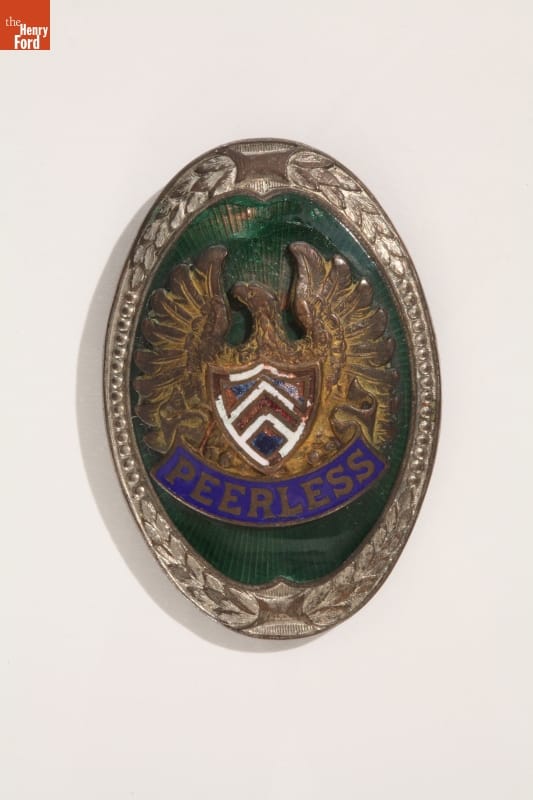
- Peerless Radiator Emblem, 1920-1930 - This emblem underscores the quality and luxury of Peerless vehicles. Peerless Motor Car Company, founded in 1900, manufactured quality luxury cars and, for a time, was "peerless." But during the 1920s, the company found it hard to compete with other luxury car makers. The years following the stock market crash of 1929 brought an end to the manufacturer.
- 1920-1930
- Collections - Artifact
Peerless Radiator Emblem, 1920-1930
This emblem underscores the quality and luxury of Peerless vehicles. Peerless Motor Car Company, founded in 1900, manufactured quality luxury cars and, for a time, was "peerless." But during the 1920s, the company found it hard to compete with other luxury car makers. The years following the stock market crash of 1929 brought an end to the manufacturer.
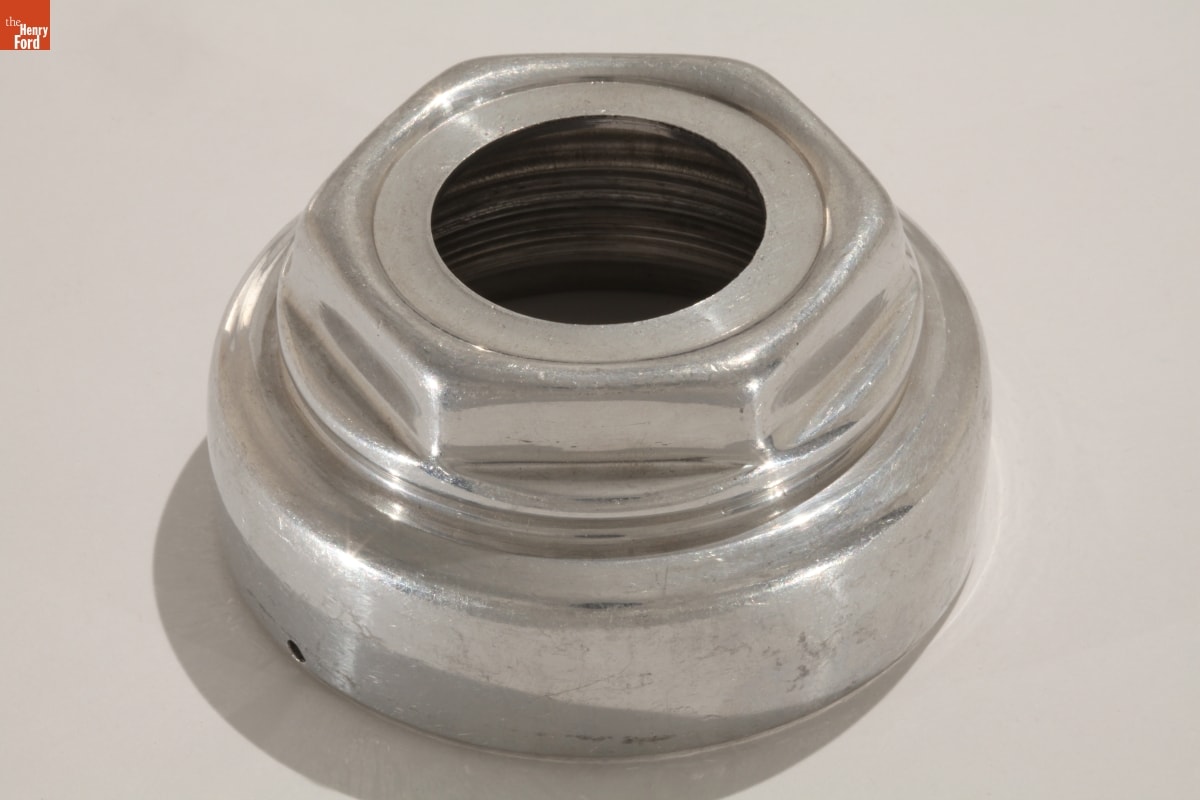
- Peerless Hubcap, 1920-1931 - Early automobile wheels had a central hub with a greased wheel bearing. Hub caps kept grease in and dust out. Beginning in 1915, the Aluminum Goods Manufacturing Company of Manitowoc, Wisconsin, supplied hubcaps -- including this one -- to many automotive manufacturers. Hubcaps became functionally unnecessary as wheels evolved, but they remained important components of style and marketing.
- 1920-1931
- Collections - Artifact
Peerless Hubcap, 1920-1931
Early automobile wheels had a central hub with a greased wheel bearing. Hub caps kept grease in and dust out. Beginning in 1915, the Aluminum Goods Manufacturing Company of Manitowoc, Wisconsin, supplied hubcaps -- including this one -- to many automotive manufacturers. Hubcaps became functionally unnecessary as wheels evolved, but they remained important components of style and marketing.
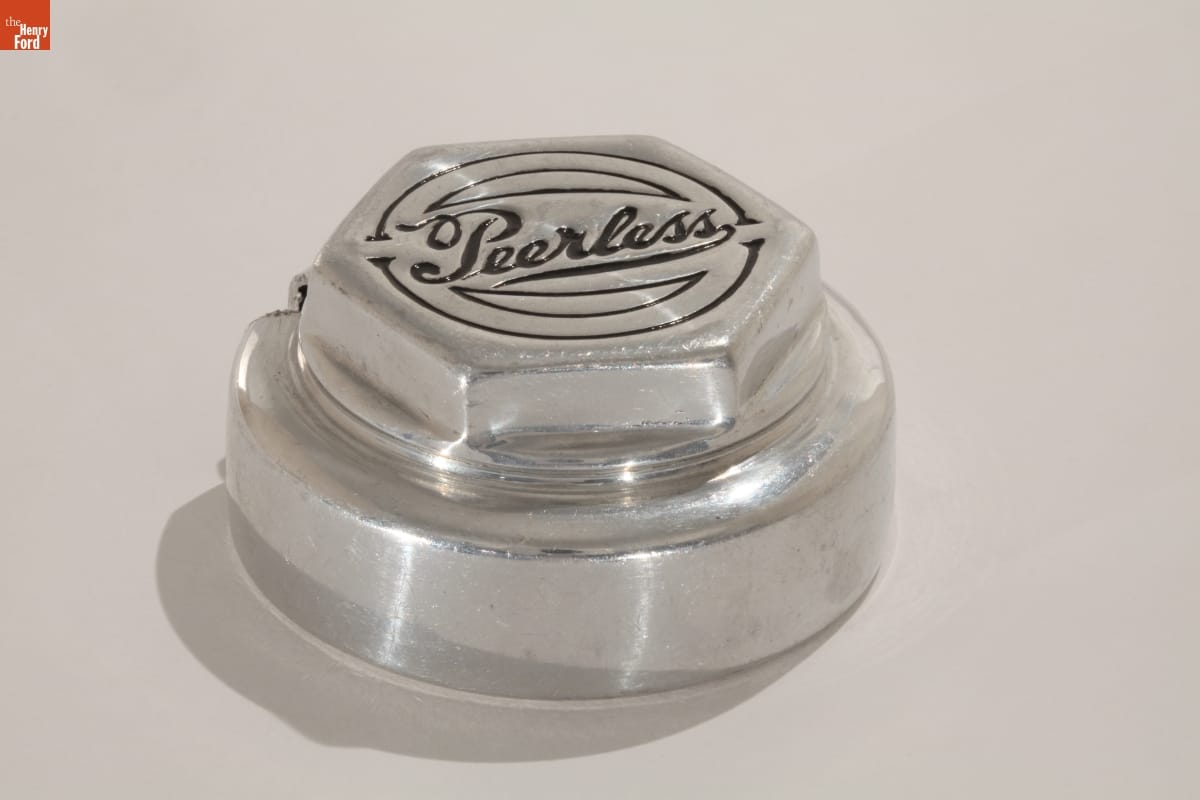
- Peerless Hubcap, circa 1920 - Early automobile wheels had a central hub with a greased wheel bearing. Hub caps kept grease in and dust out. As wheels evolved and hubcaps became functionally unnecessary, they remained important to both manufacturers -- who branded wheel covers with maker names or logos -- and consumers -- who identified with hubcaps as statements about their cars and themselves.
- circa 1920
- Collections - Artifact
Peerless Hubcap, circa 1920
Early automobile wheels had a central hub with a greased wheel bearing. Hub caps kept grease in and dust out. As wheels evolved and hubcaps became functionally unnecessary, they remained important to both manufacturers -- who branded wheel covers with maker names or logos -- and consumers -- who identified with hubcaps as statements about their cars and themselves.
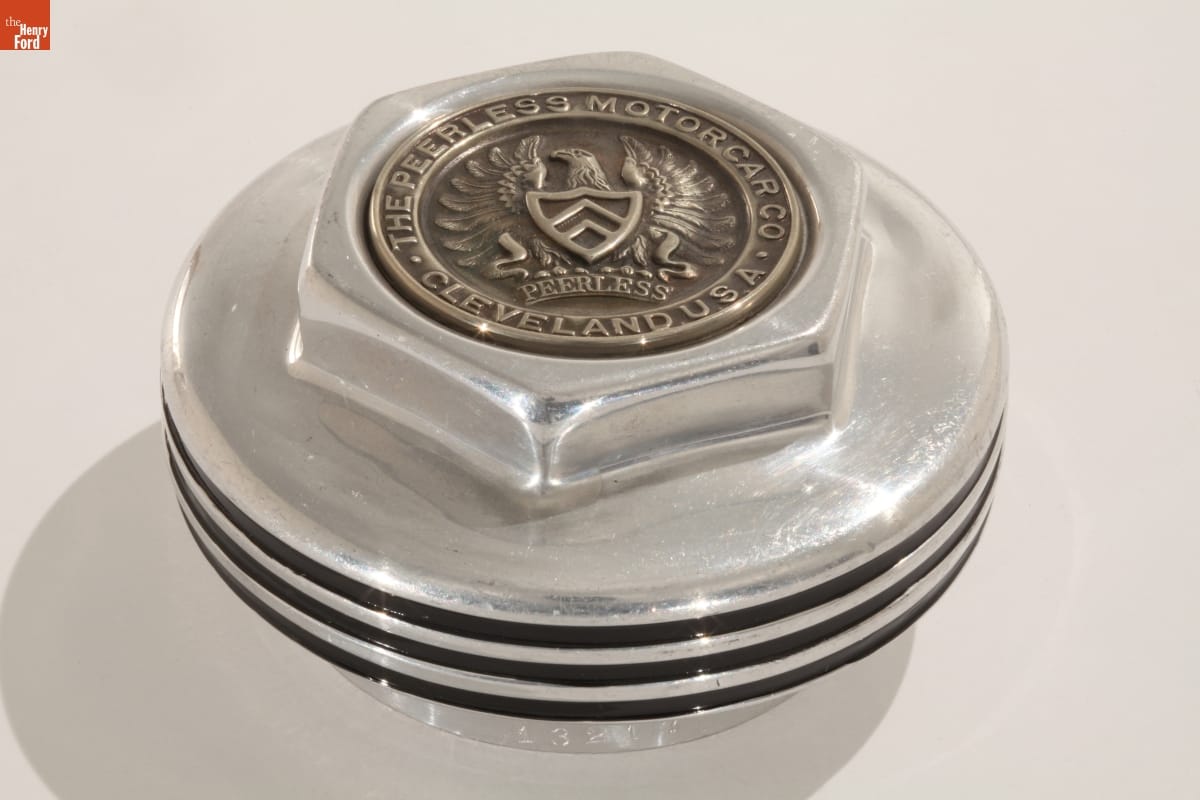
- Peerless Hubcap, 1925-1931 - Early automobile wheels had a central hub with a greased wheel bearing. Hub caps kept grease in and dust out. As wheels evolved and hubcaps became functionally unnecessary, they remained important to both manufacturers -- who branded wheel covers with maker names or logos -- and consumers -- who identified with hubcaps as statements about their cars and themselves.
- 1925-1931
- Collections - Artifact
Peerless Hubcap, 1925-1931
Early automobile wheels had a central hub with a greased wheel bearing. Hub caps kept grease in and dust out. As wheels evolved and hubcaps became functionally unnecessary, they remained important to both manufacturers -- who branded wheel covers with maker names or logos -- and consumers -- who identified with hubcaps as statements about their cars and themselves.
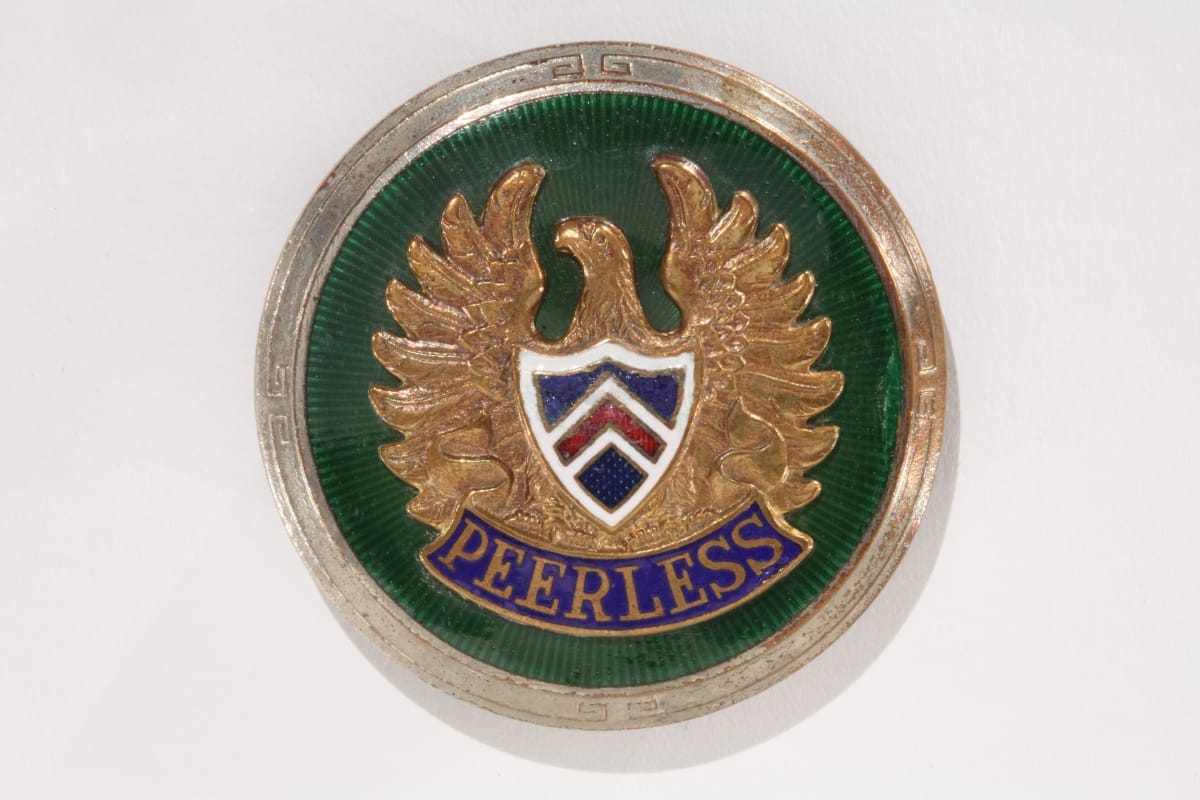
- Peerless Radiator Emblem, circa 1925 - Early automobile manufacturers took advantage of the prominent location of radiators and affixed branded emblems to them. As cars evolved and radiators were hidden within vehicle bodies, manufacturers retained this practice by branding hoods or grilles. Emblems remained important branding tools, but also became meaningful to consumers as statements about their cars and themselves.
- circa 1925
- Collections - Artifact
Peerless Radiator Emblem, circa 1925
Early automobile manufacturers took advantage of the prominent location of radiators and affixed branded emblems to them. As cars evolved and radiators were hidden within vehicle bodies, manufacturers retained this practice by branding hoods or grilles. Emblems remained important branding tools, but also became meaningful to consumers as statements about their cars and themselves.
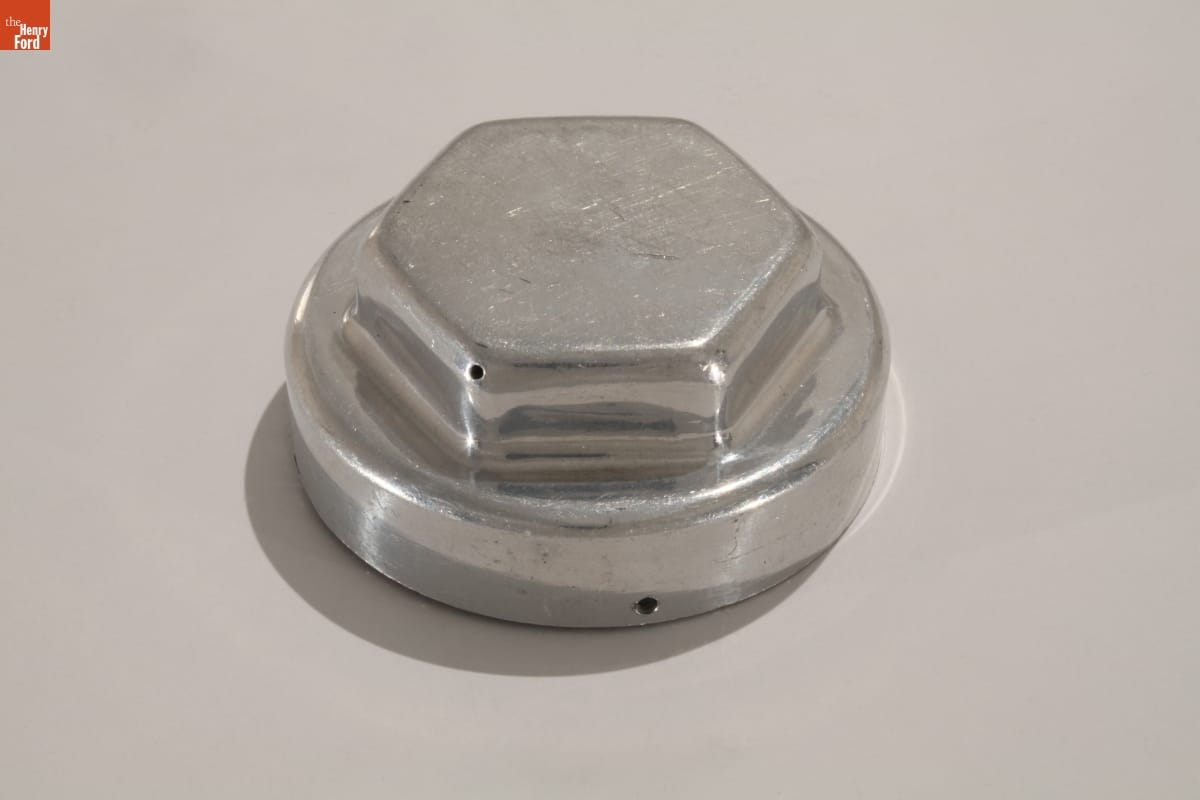
- Peerless Gasoline Tank Cap, 1919-1931 - Beginning in 1915, the Aluminum Goods Manufacturing Company of Manitowoc, Wisconsin, supplied parts such as hubcaps and gasoline-tank caps to automotive manufacturers. This fuel cap was made for the Peerless Motor Car Company in Cleveland, Ohio.
- 1920-1931
- Collections - Artifact
Peerless Gasoline Tank Cap, 1919-1931
Beginning in 1915, the Aluminum Goods Manufacturing Company of Manitowoc, Wisconsin, supplied parts such as hubcaps and gasoline-tank caps to automotive manufacturers. This fuel cap was made for the Peerless Motor Car Company in Cleveland, Ohio.
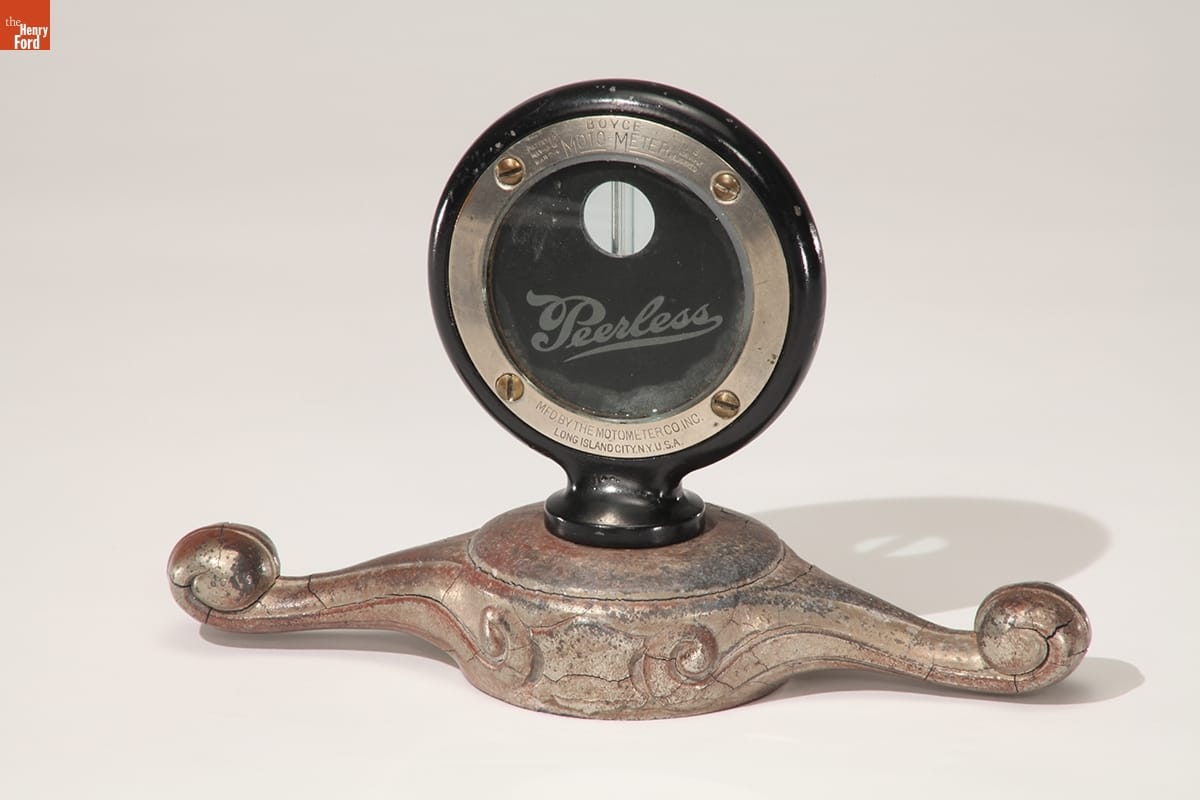
- Peerless Motometer and Radiator Cap, circa 1925 - Automobiles often came without temperature gauges before the early 1930s, so enterprising manufacturers sold aftermarket motometers. Mounted on a car's radiator, these devices measured and displayed coolant water vapor temperature, notifying drivers if their automobiles were in danger of overheating. Moto-Meter Co. Inc. dominated the American market, producing the popular Boyce motometer and others featuring an automotive manufacturer's name or logo.
- circa 1925
- Collections - Artifact
Peerless Motometer and Radiator Cap, circa 1925
Automobiles often came without temperature gauges before the early 1930s, so enterprising manufacturers sold aftermarket motometers. Mounted on a car's radiator, these devices measured and displayed coolant water vapor temperature, notifying drivers if their automobiles were in danger of overheating. Moto-Meter Co. Inc. dominated the American market, producing the popular Boyce motometer and others featuring an automotive manufacturer's name or logo.
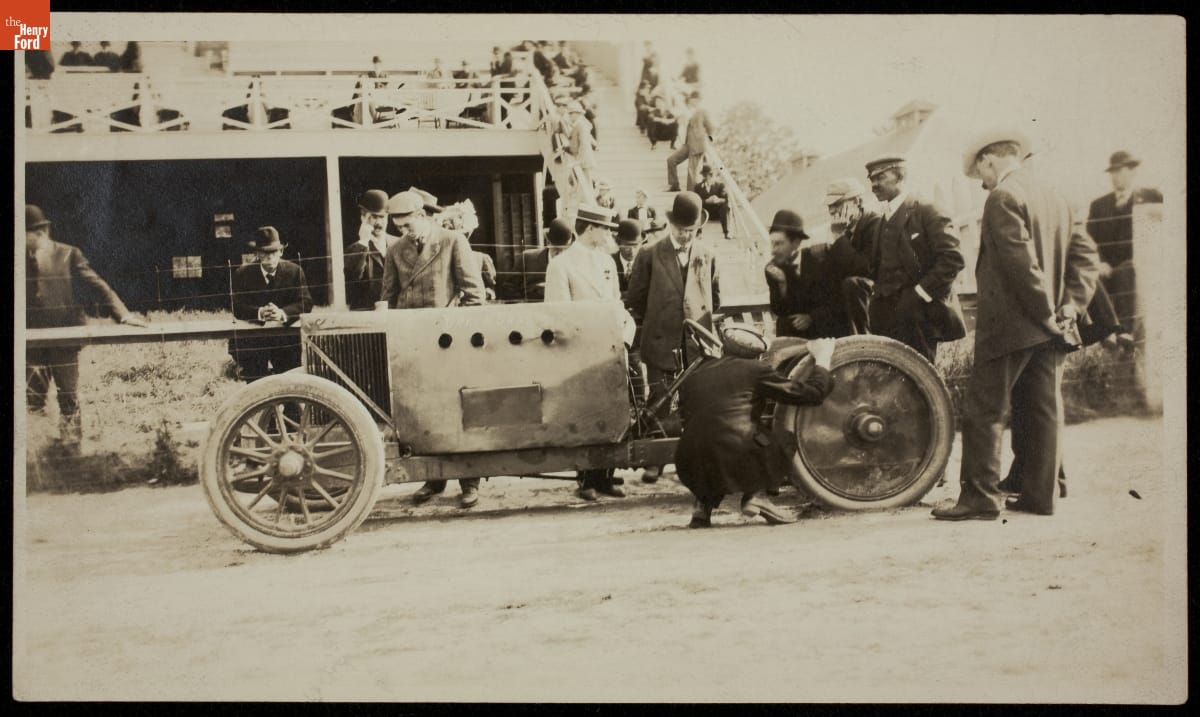
- Barney Oldfield and the Peerless "Green Dragon" Racecar, circa 1905 - From 1904 to 1908, Barney Oldfield drove the Peerless "Green Dragon" at race meets and exhibition events throughout the United States. This photograph shows the race car being examined by onlookers at a local dirt track.
- circa 1905
- Collections - Artifact
Barney Oldfield and the Peerless "Green Dragon" Racecar, circa 1905
From 1904 to 1908, Barney Oldfield drove the Peerless "Green Dragon" at race meets and exhibition events throughout the United States. This photograph shows the race car being examined by onlookers at a local dirt track.
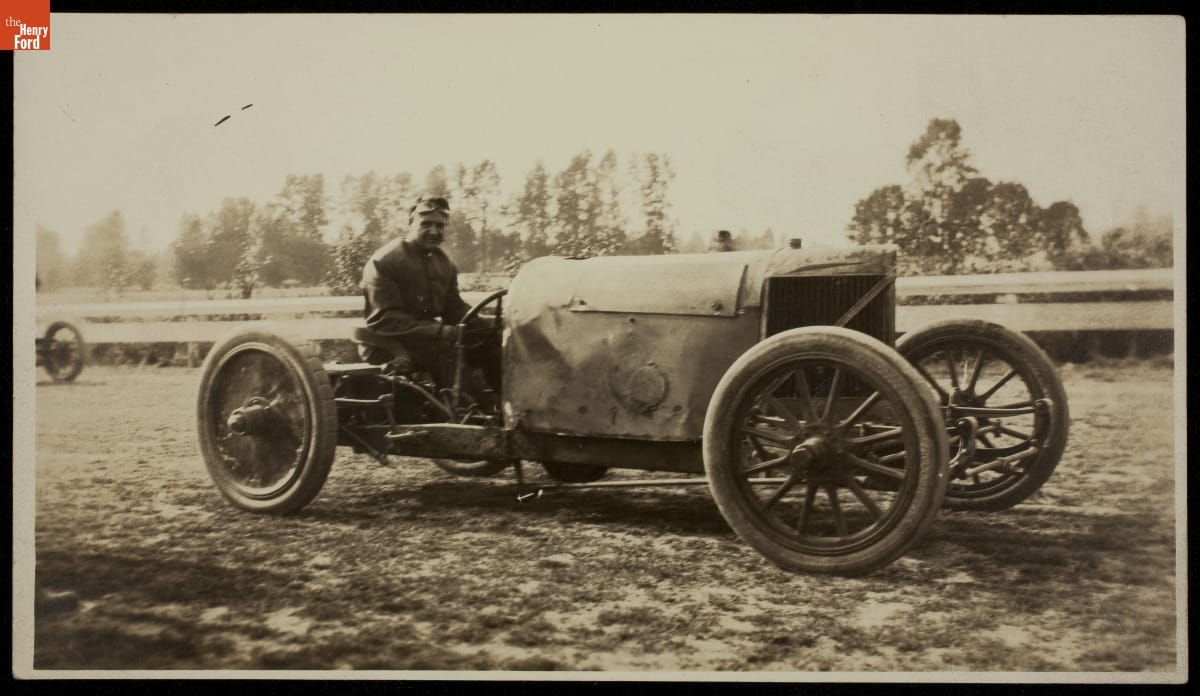
- Barney Oldfield Behind the Wheel of the Peerless "Green Dragon" Racecar, circa 1905 - From 1904 to 1908, Barney Oldfield drove the Peerless "Green Dragon" at race meets and exhibition events throughout the United States. Some of these competitions took place at local horse tracks. This photograph shows the cigar-chomping racer posing on a dirt-covered track.
- circa 1905
- Collections - Artifact
Barney Oldfield Behind the Wheel of the Peerless "Green Dragon" Racecar, circa 1905
From 1904 to 1908, Barney Oldfield drove the Peerless "Green Dragon" at race meets and exhibition events throughout the United States. Some of these competitions took place at local horse tracks. This photograph shows the cigar-chomping racer posing on a dirt-covered track.
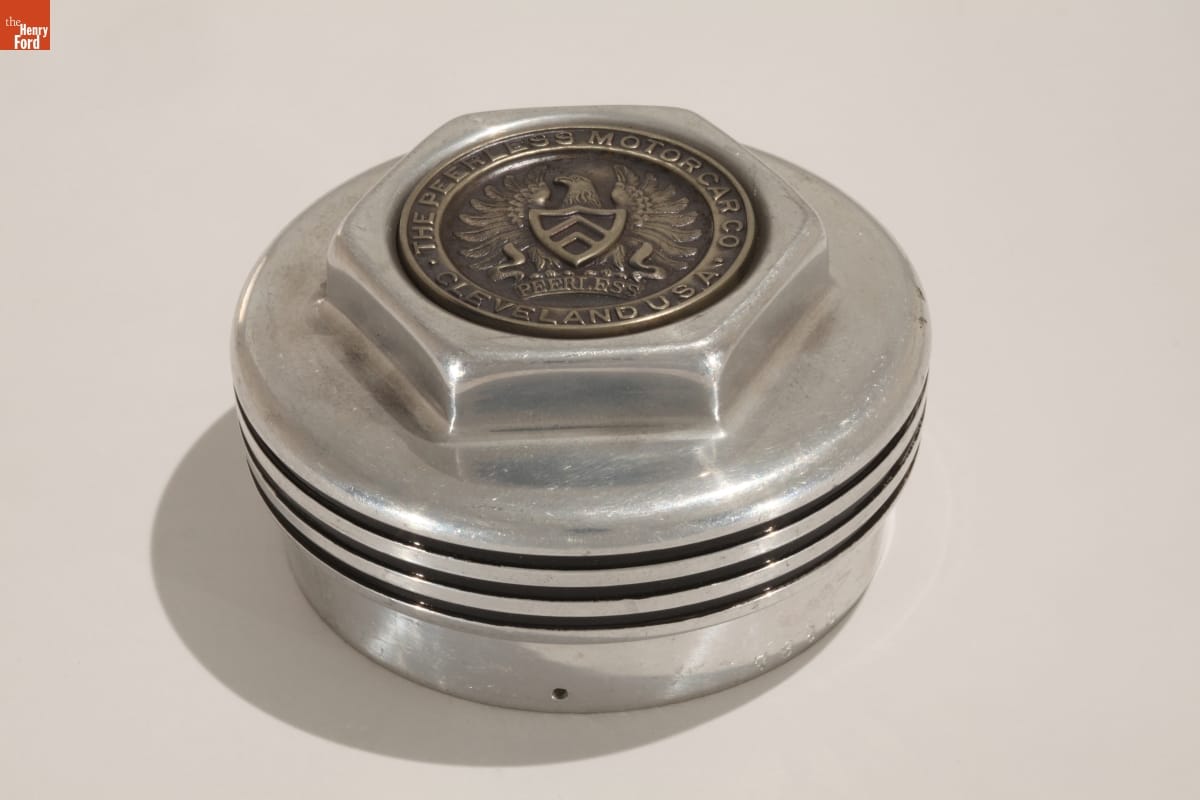
- Peerless Hubcap, 1925-1931 - Early automobile wheels had a central hub with a greased wheel bearing. Hub caps kept grease in and dust out. As wheels evolved and hubcaps became functionally unnecessary, they remained important to both manufacturers -- who branded wheel covers with maker names or logos -- and consumers -- who identified with hubcaps as statements about their cars and themselves.
- 1925-1931
- Collections - Artifact
Peerless Hubcap, 1925-1931
Early automobile wheels had a central hub with a greased wheel bearing. Hub caps kept grease in and dust out. As wheels evolved and hubcaps became functionally unnecessary, they remained important to both manufacturers -- who branded wheel covers with maker names or logos -- and consumers -- who identified with hubcaps as statements about their cars and themselves.