
Search
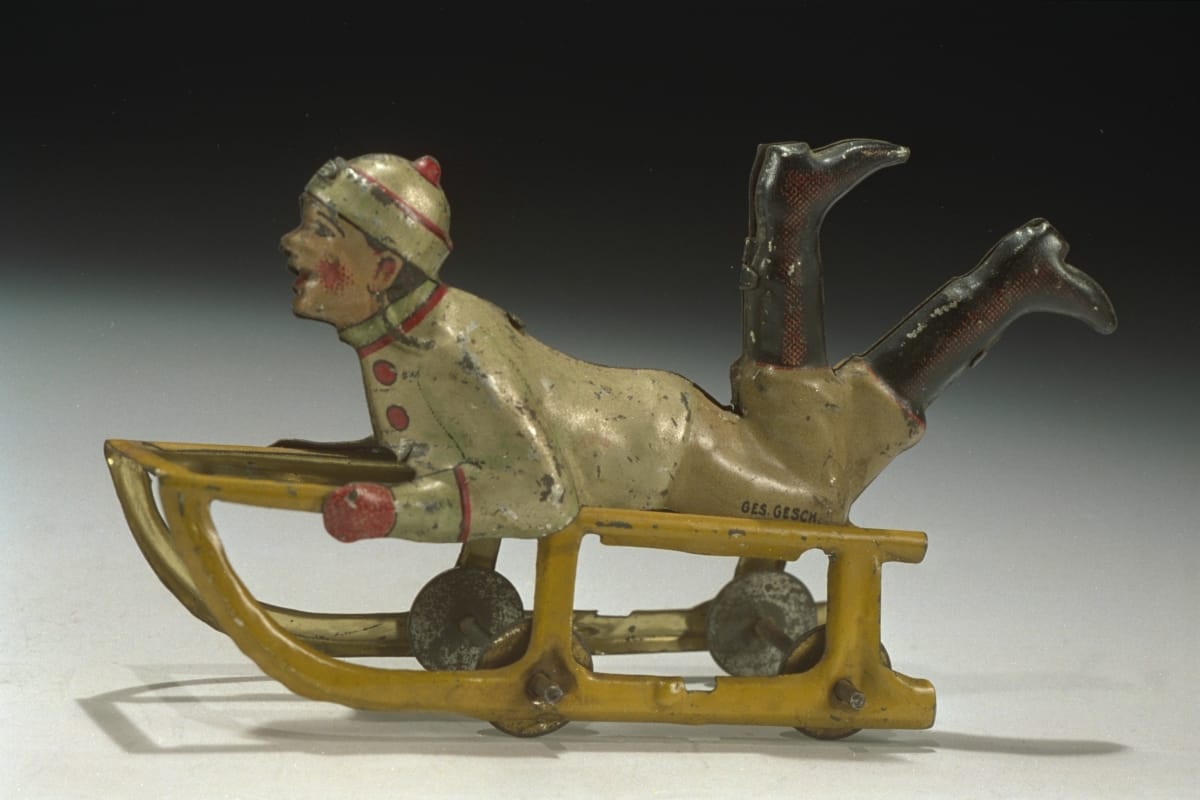
- Boy on Sled Toy, 1900-1940 - Toy companies began making small, inexpensive, yet colorful, tin toys in the late 19th century. Over the years, toymakers stamped tin into shapes of animals, trains, boats, soldiers and even this boy on his sled. Children could purchase these low-priced toys from shopkeepers or street vendors. These mass-produced toys -- though not meant to last -- provided fun for just a few pennies.
- 1900-1940
- Collections - Artifact
Boy on Sled Toy, 1900-1940
Toy companies began making small, inexpensive, yet colorful, tin toys in the late 19th century. Over the years, toymakers stamped tin into shapes of animals, trains, boats, soldiers and even this boy on his sled. Children could purchase these low-priced toys from shopkeepers or street vendors. These mass-produced toys -- though not meant to last -- provided fun for just a few pennies.
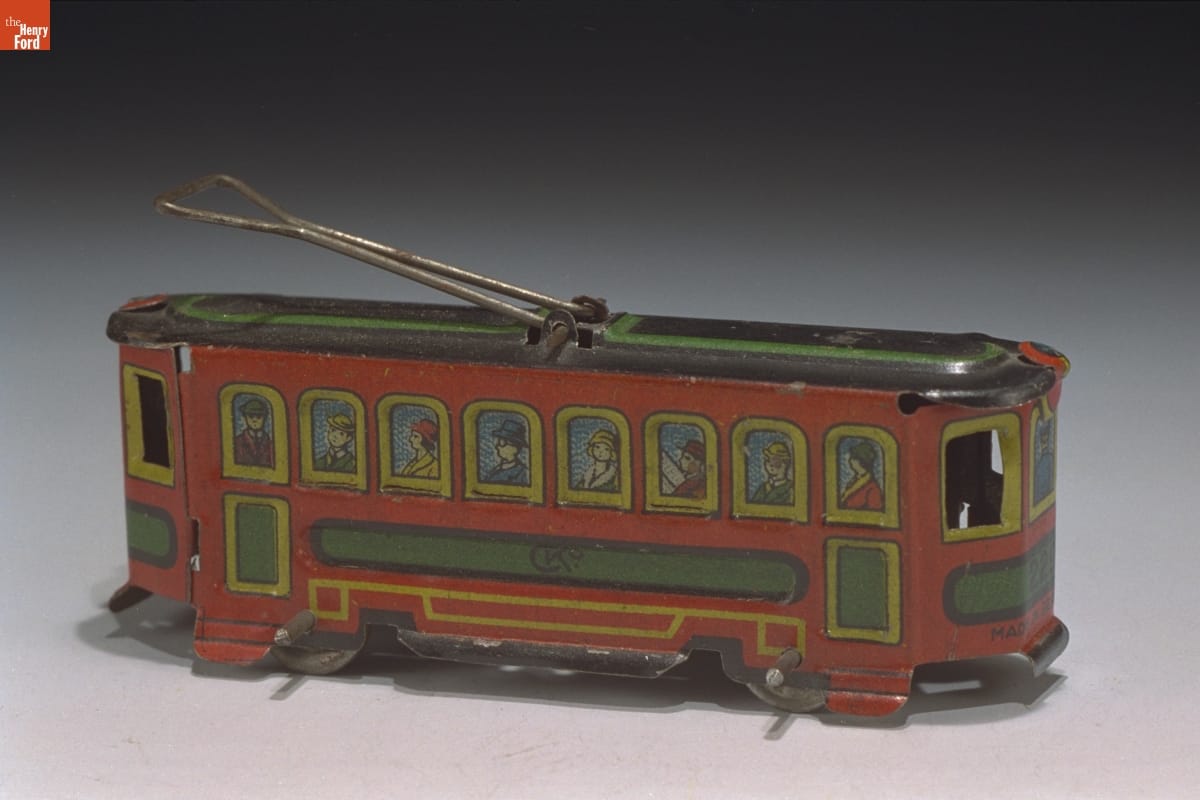
- Toy Streetcar, 1920-1940 - Toy companies began making small, inexpensive, yet colorful, tin toys in the late 19th century. Over the years, toymakers stamped tin into shapes of animals, airplanes, boats, soldiers and even this streetcar. Children could purchase these low-priced toys from shopkeepers or street vendors. These mass-produced toys -- though not meant to last -- provided fun for just a few pennies.
- 1920-1940
- Collections - Artifact
Toy Streetcar, 1920-1940
Toy companies began making small, inexpensive, yet colorful, tin toys in the late 19th century. Over the years, toymakers stamped tin into shapes of animals, airplanes, boats, soldiers and even this streetcar. Children could purchase these low-priced toys from shopkeepers or street vendors. These mass-produced toys -- though not meant to last -- provided fun for just a few pennies.
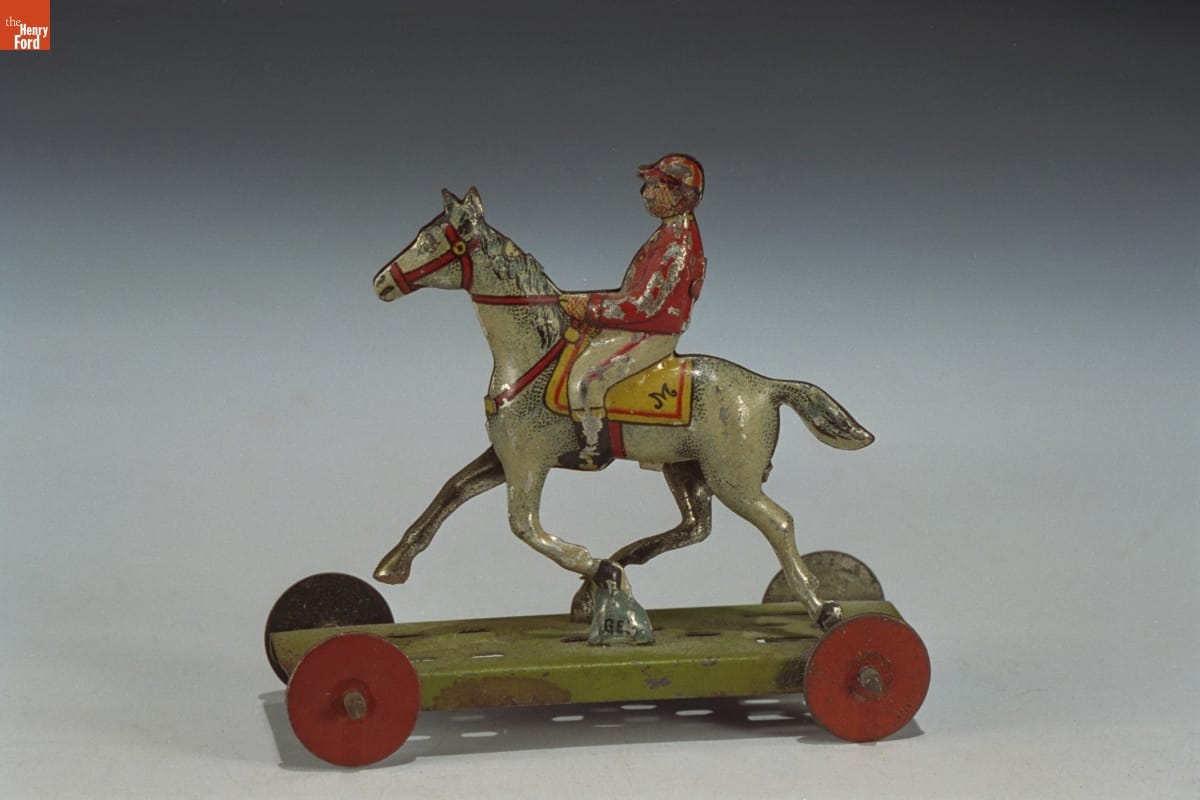
- Horse and Rider Penny Toy, 1890-1930 - Toy companies began making small, inexpensive, yet colorful, tin toys in the late 19th century. Over the years, toymakers stamped tin into shapes of animals, trains, boats, soldiers and even this horse and rider. Children could purchase these low-priced toys from shopkeepers or street vendors. These mass-produced toys -- though not meant to last -- provided fun for just a few pennies.
- 1890-1930
- Collections - Artifact
Horse and Rider Penny Toy, 1890-1930
Toy companies began making small, inexpensive, yet colorful, tin toys in the late 19th century. Over the years, toymakers stamped tin into shapes of animals, trains, boats, soldiers and even this horse and rider. Children could purchase these low-priced toys from shopkeepers or street vendors. These mass-produced toys -- though not meant to last -- provided fun for just a few pennies.
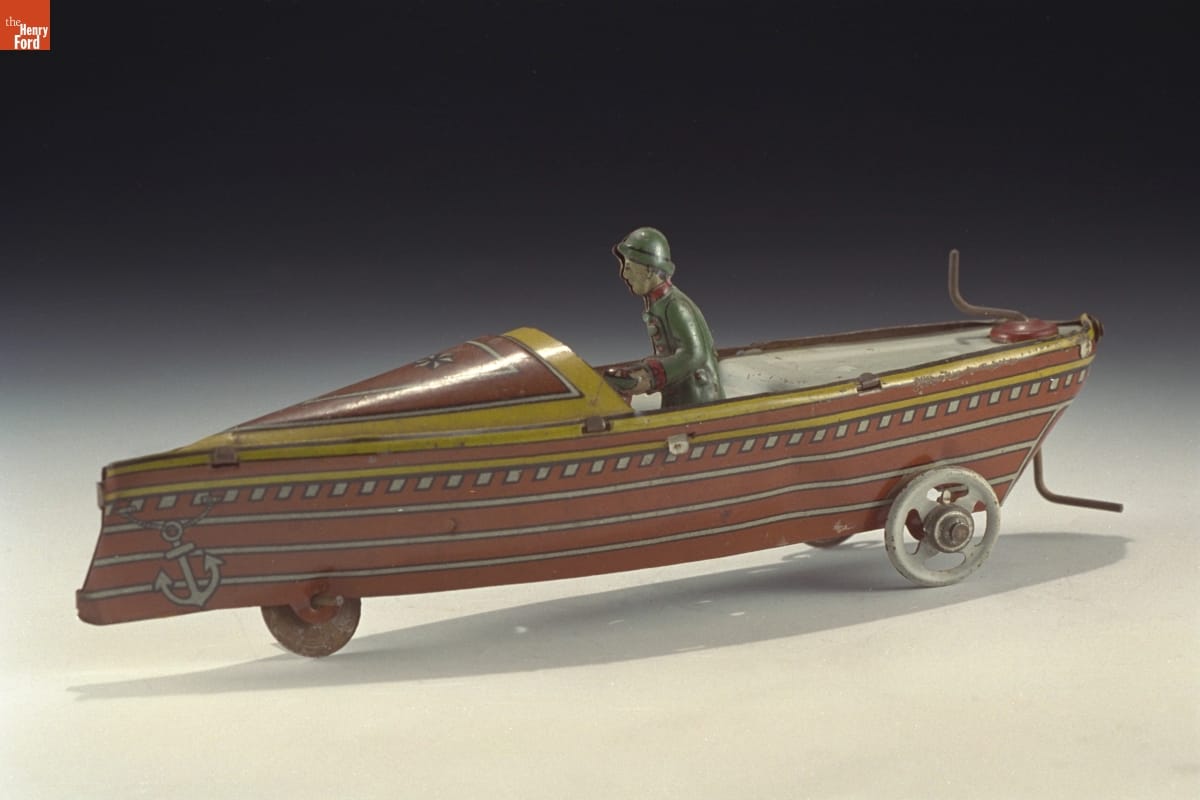
- Toy Motorboat, 1890-1920 - Toy companies began making small, inexpensive, yet colorful, tin toys in the late 19th century. Over the years, toymakers stamped tin into shapes of animals, planes, trains, soldiers and even this motorboat. Children could purchase these low-priced toys from shopkeepers or street vendors. These mass-produced toys -- though not meant to last -- provided fun for just a few pennies.
- 1890-1920
- Collections - Artifact
Toy Motorboat, 1890-1920
Toy companies began making small, inexpensive, yet colorful, tin toys in the late 19th century. Over the years, toymakers stamped tin into shapes of animals, planes, trains, soldiers and even this motorboat. Children could purchase these low-priced toys from shopkeepers or street vendors. These mass-produced toys -- though not meant to last -- provided fun for just a few pennies.
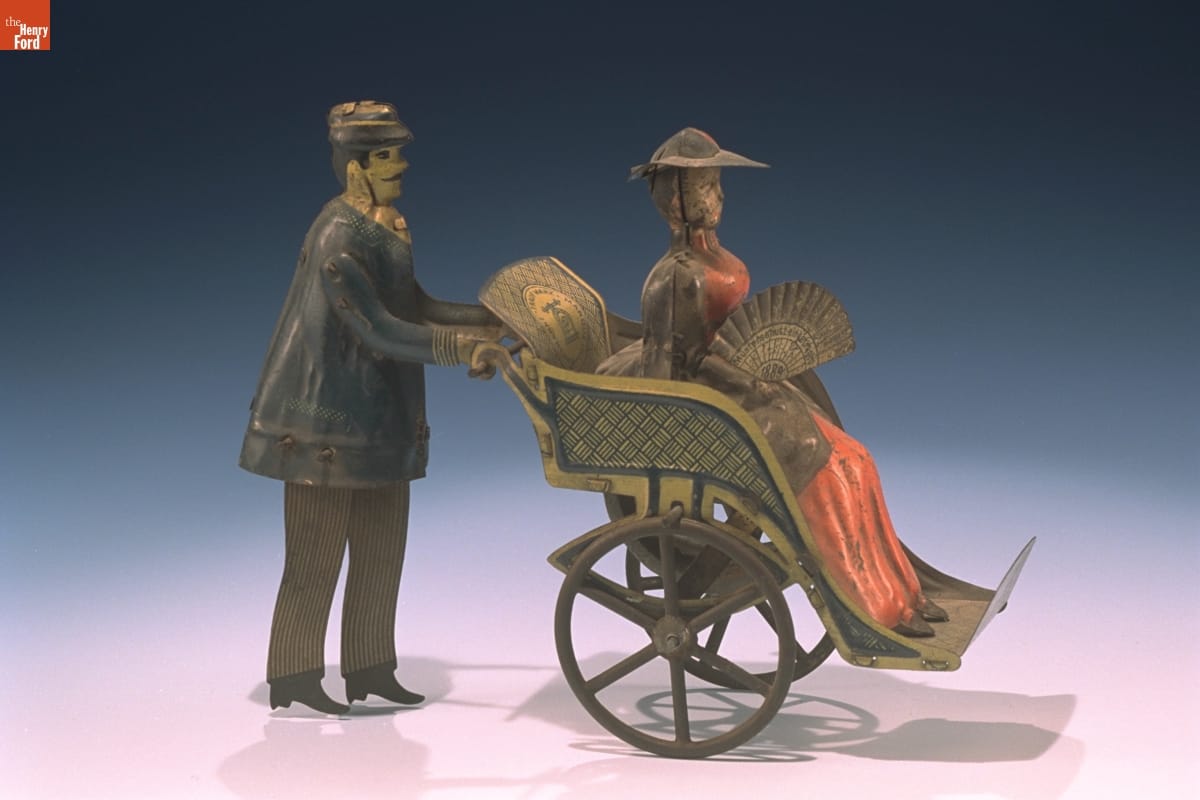
- Mechanical Toy, Woman Pushed in Rolling Chair, 1889-1900 - This small toy was made by Ernest Paul Lehmann, a German toy maker in the late 1800s. The colorful lithographed tin toy operates by a friction wheel mechanism. Once set in motion, the man merrily pushes the rolling chair while the woman fans herself and enjoys the ride.
- 1889-1900
- Collections - Artifact
Mechanical Toy, Woman Pushed in Rolling Chair, 1889-1900
This small toy was made by Ernest Paul Lehmann, a German toy maker in the late 1800s. The colorful lithographed tin toy operates by a friction wheel mechanism. Once set in motion, the man merrily pushes the rolling chair while the woman fans herself and enjoys the ride.
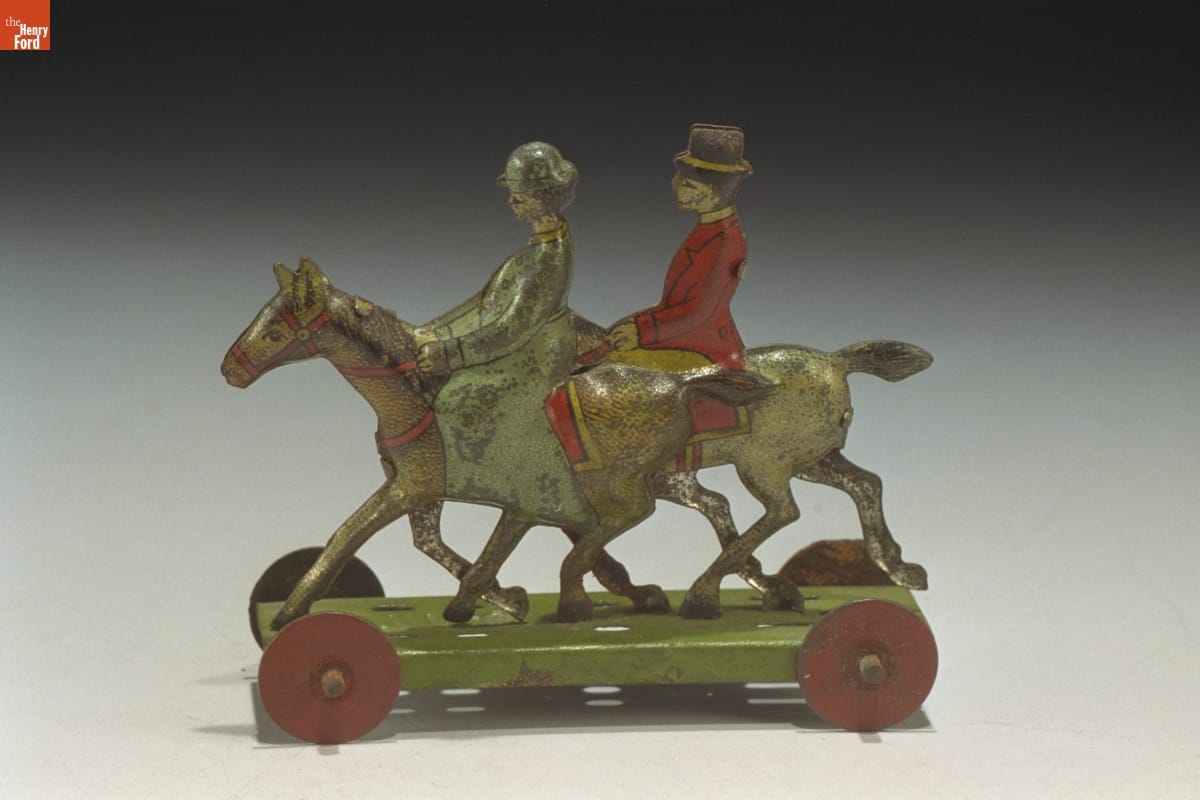
- Horses and Riders Penny Toy, circa 1890 - Toy companies began making small, inexpensive, yet colorful, tin toys in the late 19th century. Over the years, toymakers stamped tin into shapes of animals, trains, boats, soldiers and even this couple riding horses. Children could purchase these low-priced toys from shopkeepers or street vendors. These mass-produced toys -- though not meant to last -- provided fun for just a few pennies.
- circa 1890
- Collections - Artifact
Horses and Riders Penny Toy, circa 1890
Toy companies began making small, inexpensive, yet colorful, tin toys in the late 19th century. Over the years, toymakers stamped tin into shapes of animals, trains, boats, soldiers and even this couple riding horses. Children could purchase these low-priced toys from shopkeepers or street vendors. These mass-produced toys -- though not meant to last -- provided fun for just a few pennies.
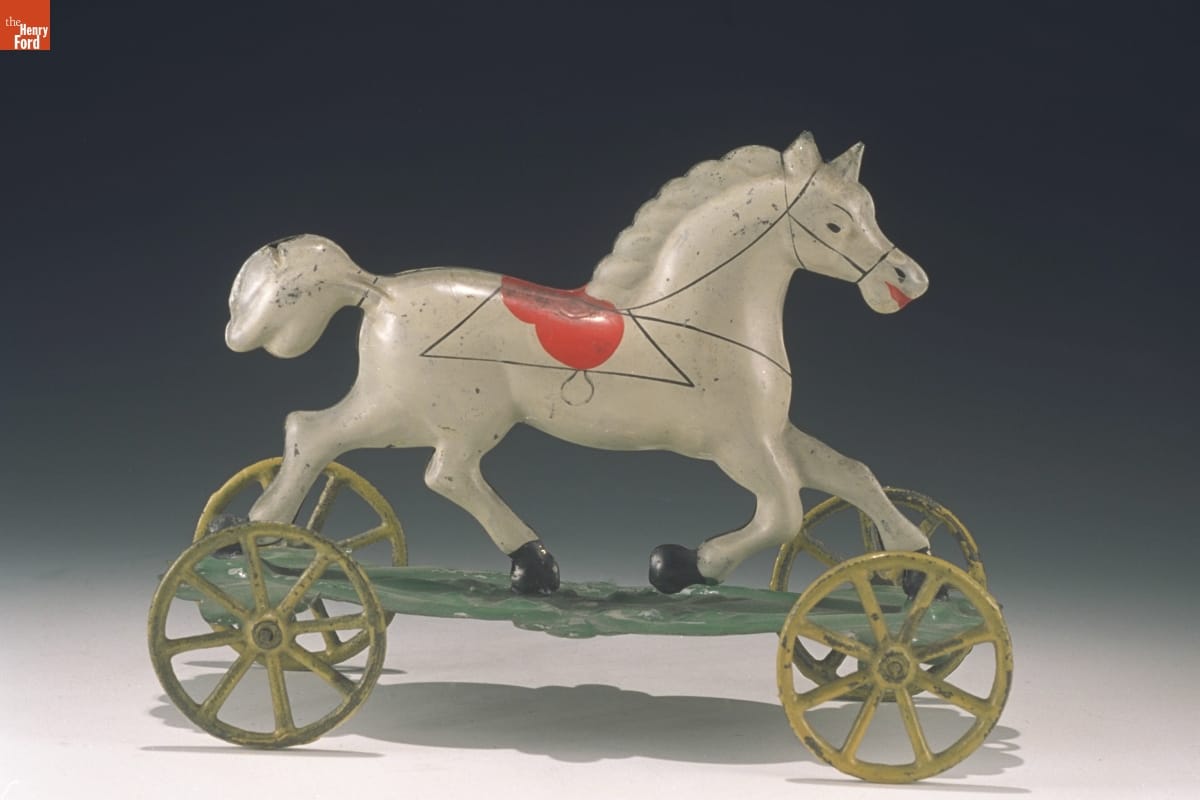
- Horse Tin Toy, circa 1870 - Children's love of animals has spurred manufacturers to create numerous varieties of toy animals over the years, from clever movable toys to cuddly stuffed animals. The Dover Stamping Company, founded in 1833, gained its current name in 1857. By the 1860s, the company was offering a full line of tin housewares as well as tin novelty toys.
- circa 1870
- Collections - Artifact
Horse Tin Toy, circa 1870
Children's love of animals has spurred manufacturers to create numerous varieties of toy animals over the years, from clever movable toys to cuddly stuffed animals. The Dover Stamping Company, founded in 1833, gained its current name in 1857. By the 1860s, the company was offering a full line of tin housewares as well as tin novelty toys.
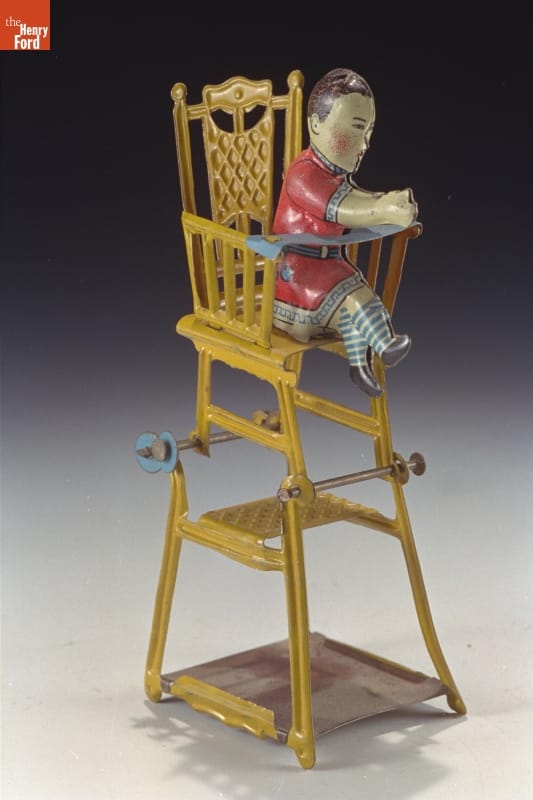
- Highchair with Baby Penny Toy, 1900-1930 - The high chair inverts to become a table and chair. The firm that made this toy, J.P. Meier, founded in 1879, was one of the more prolific penny toy manufacturers at the turn of the century.
- 1900-1930
- Collections - Artifact
Highchair with Baby Penny Toy, 1900-1930
The high chair inverts to become a table and chair. The firm that made this toy, J.P. Meier, founded in 1879, was one of the more prolific penny toy manufacturers at the turn of the century.
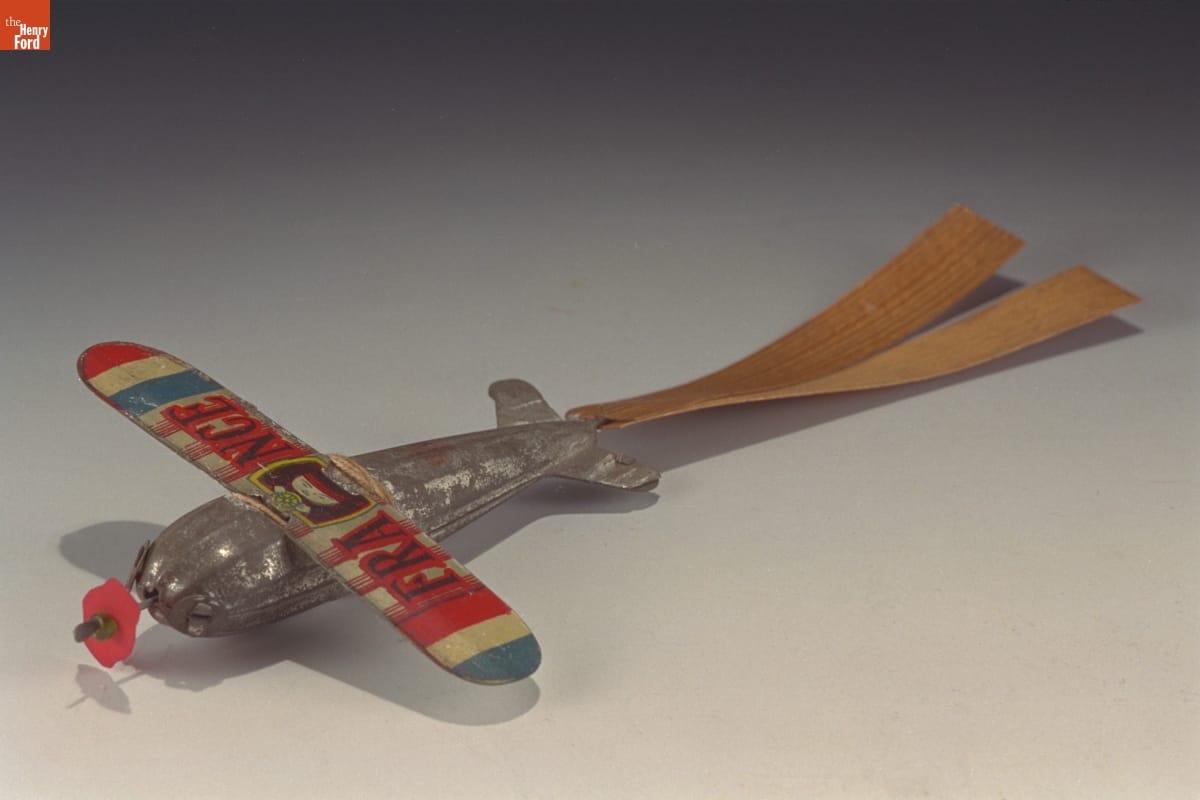
- Toy French Monoplane, 1920-1940 - Toy companies began making small, inexpensive, yet colorful, tin toys in the late 19th century. Over the years, toymakers stamped tin into shapes of animals, trains, boats, soldiers and even this airplane. Children could purchase these low-priced toys from shopkeepers or street vendors. These mass-produced toys -- though not meant to last -- provided fun for just a few pennies.
- 1920-1940
- Collections - Artifact
Toy French Monoplane, 1920-1940
Toy companies began making small, inexpensive, yet colorful, tin toys in the late 19th century. Over the years, toymakers stamped tin into shapes of animals, trains, boats, soldiers and even this airplane. Children could purchase these low-priced toys from shopkeepers or street vendors. These mass-produced toys -- though not meant to last -- provided fun for just a few pennies.
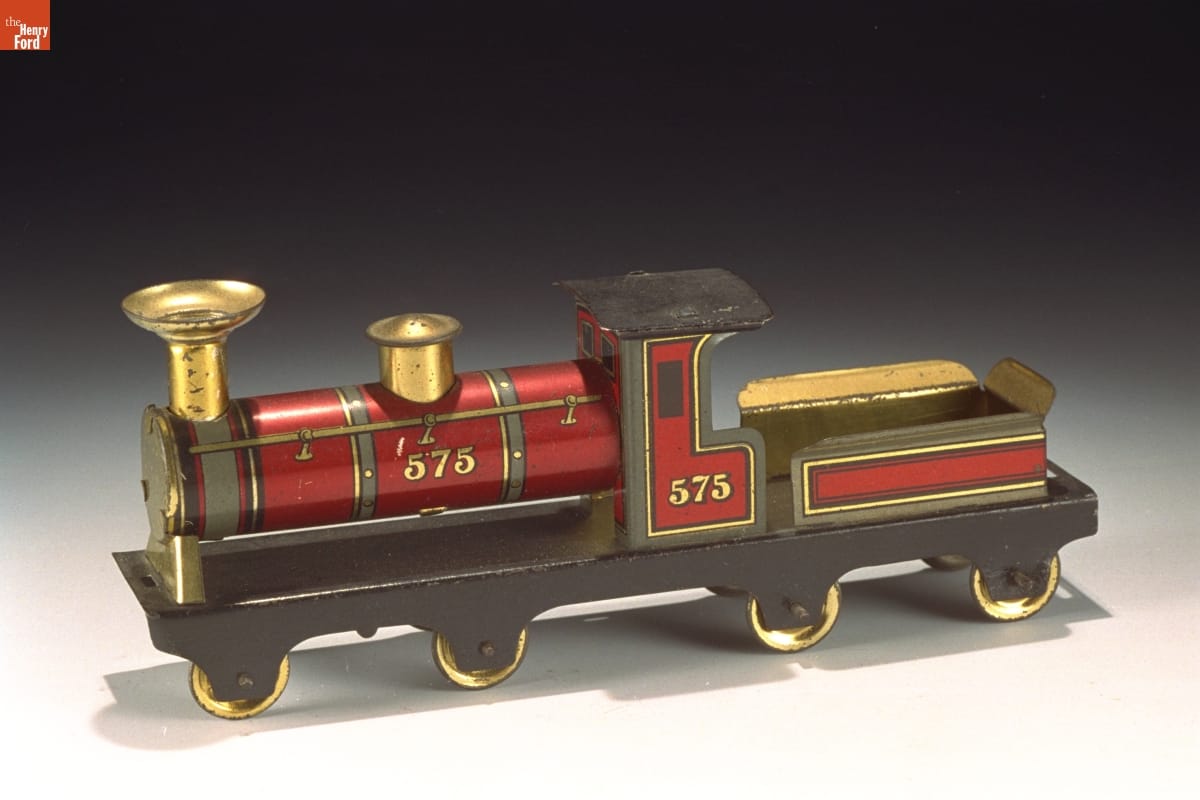
- Toy Locomotive, 1890-1920 - Toy companies began making small, inexpensive, yet colorful, tin toys in the late 19th century. Over the years, toymakers stamped tin into shapes of animals, airplanes, boats, soldiers and even this train engine. Children could purchase these low-priced toys from shopkeepers or street vendors. These mass-produced toys -- though not meant to last -- provided fun for just a few pennies.
- 1890-1920
- Collections - Artifact
Toy Locomotive, 1890-1920
Toy companies began making small, inexpensive, yet colorful, tin toys in the late 19th century. Over the years, toymakers stamped tin into shapes of animals, airplanes, boats, soldiers and even this train engine. Children could purchase these low-priced toys from shopkeepers or street vendors. These mass-produced toys -- though not meant to last -- provided fun for just a few pennies.