
Search
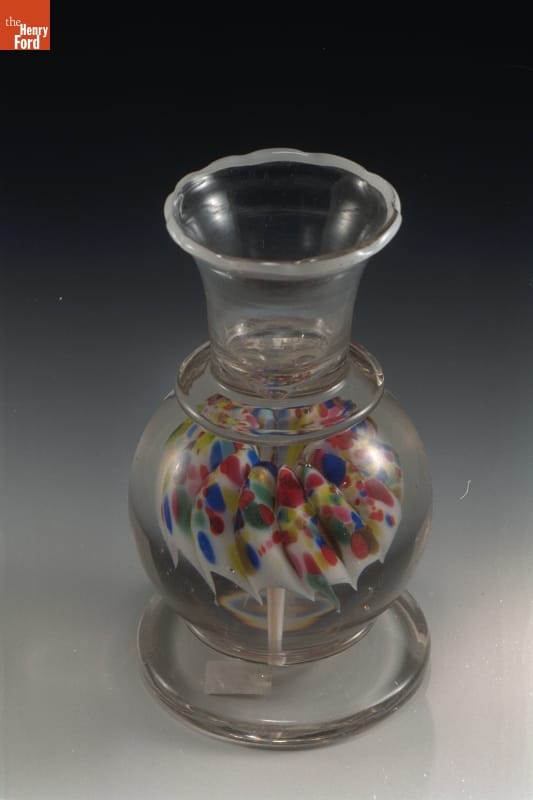
- Pen Holder, 1900-1915 - Art Glass is ornamental and decorative glass dating from the mid-to-late 19th century through the early 20th century. Makers of Art Glass employed newly developed technologies for producing vibrant colors and surface textures. This is most famously seen in the iridescent surfaces of Louis Comfort Tiffany and his contemporaries, although Art Glass took many shapes and forms.
- 1900-1915
- Collections - Artifact
Pen Holder, 1900-1915
Art Glass is ornamental and decorative glass dating from the mid-to-late 19th century through the early 20th century. Makers of Art Glass employed newly developed technologies for producing vibrant colors and surface textures. This is most famously seen in the iridescent surfaces of Louis Comfort Tiffany and his contemporaries, although Art Glass took many shapes and forms.
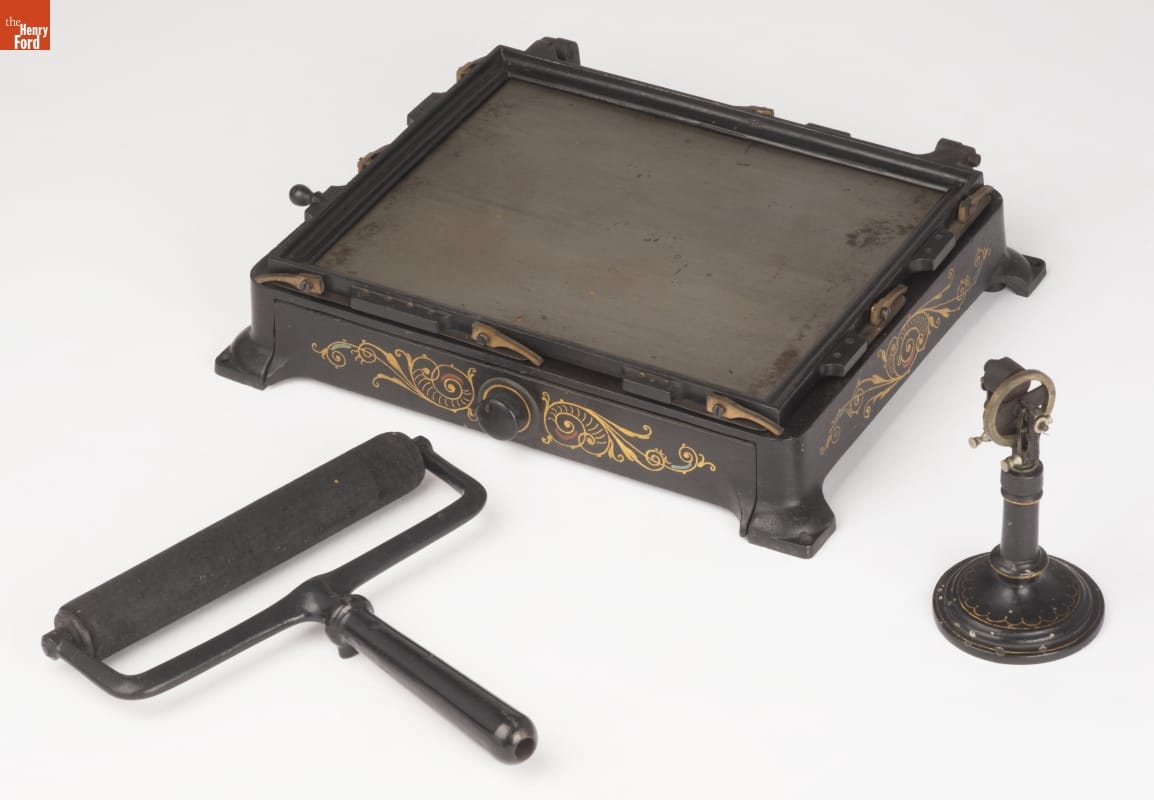
- Edison's Autographic Press and Electric Pen, 1875-1880 - Thomas Edison's electric pen, an ancestor of both the mimeograph and the tattoo needle, was a successful product in the mid-1870s. Users would write normally with the pen, which, instead of a nib, had a needle powered by an electric motor. The needle poked holes into a stencil, which was then used to copy the document. Many businesses found document duplication an attractive possibility.
- 1875-1880
- Collections - Artifact
Edison's Autographic Press and Electric Pen, 1875-1880
Thomas Edison's electric pen, an ancestor of both the mimeograph and the tattoo needle, was a successful product in the mid-1870s. Users would write normally with the pen, which, instead of a nib, had a needle powered by an electric motor. The needle poked holes into a stencil, which was then used to copy the document. Many businesses found document duplication an attractive possibility.
- Fountain Pen, 1952-1960 -
- 1952-1960
- Collections - Artifact
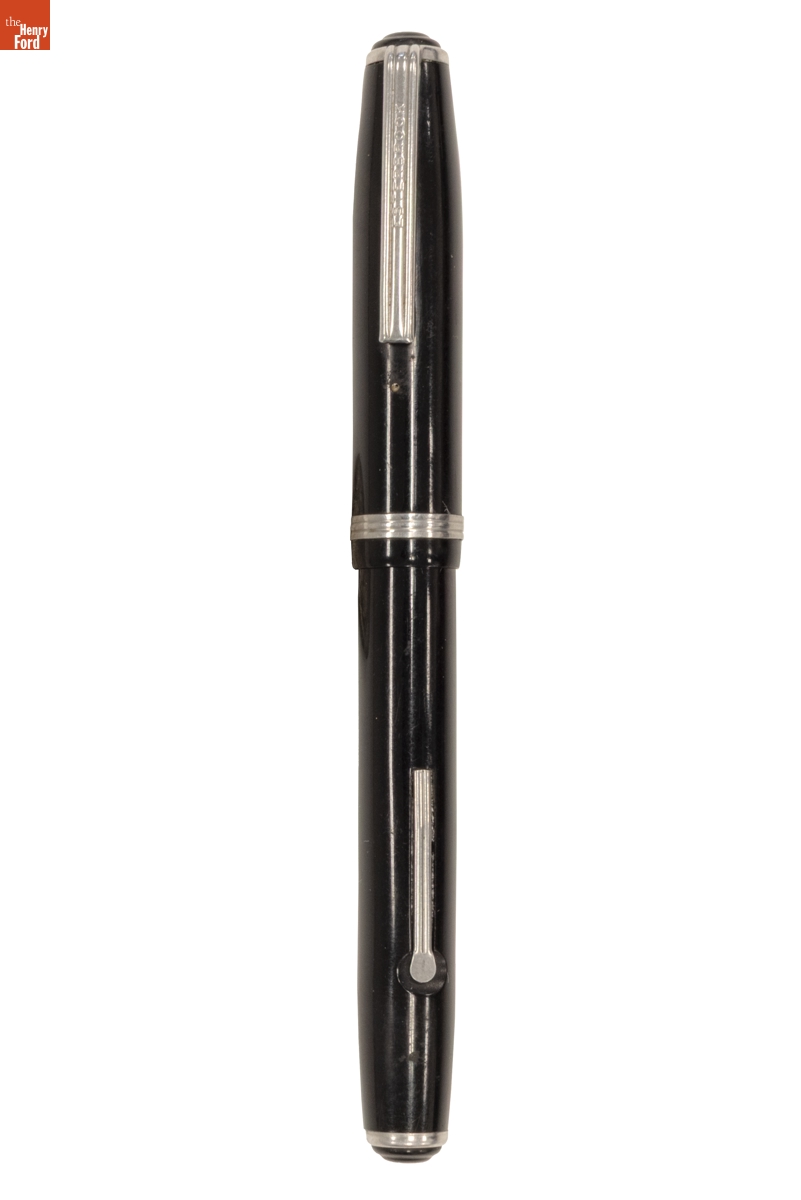
Fountain Pen, 1952-1960
- Fountain Pen, 1960-1970 -
- circa 1960
- Collections - Artifact
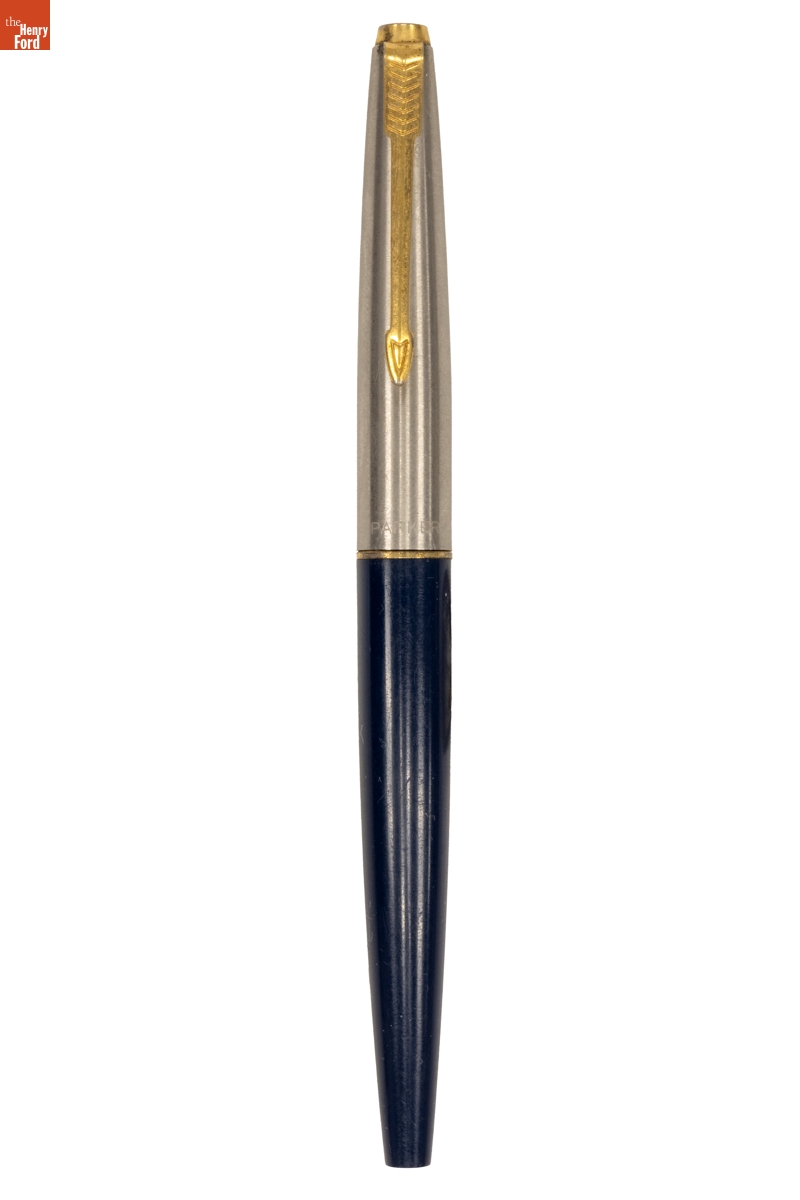
Fountain Pen, 1960-1970
- Dip Pen, circa 1890 - Pens with metal tips called nibs became widely used in the mid-1800s thanks to mass production. To write, the tip of the pen was dipped into ink. The metal tip was replaced when it became dull. Pens with metal nibs required dipping into ink less often than quill pens (made of a feather), which had been used for thousands of years.
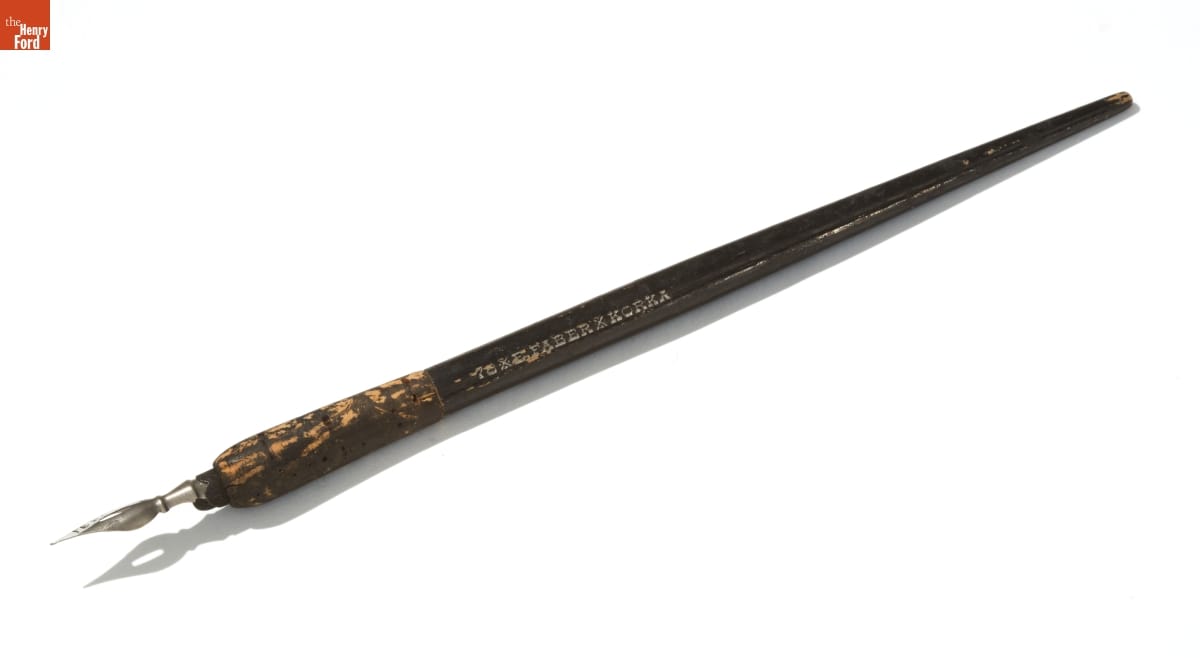
- circa 1890
- Collections - Artifact
Dip Pen, circa 1890
Pens with metal tips called nibs became widely used in the mid-1800s thanks to mass production. To write, the tip of the pen was dipped into ink. The metal tip was replaced when it became dull. Pens with metal nibs required dipping into ink less often than quill pens (made of a feather), which had been used for thousands of years.
- Dip Pen, circa 1930 - Pens with metal tips called nibs became widely used in the mid-1800s thanks to mass production. To write, the tip of the pen was dipped into ink. The metal tip was replaced when it became dull. Pens with metal nibs required dipping into ink less often than quill pens (made of a feather), which had been used for thousands of years.
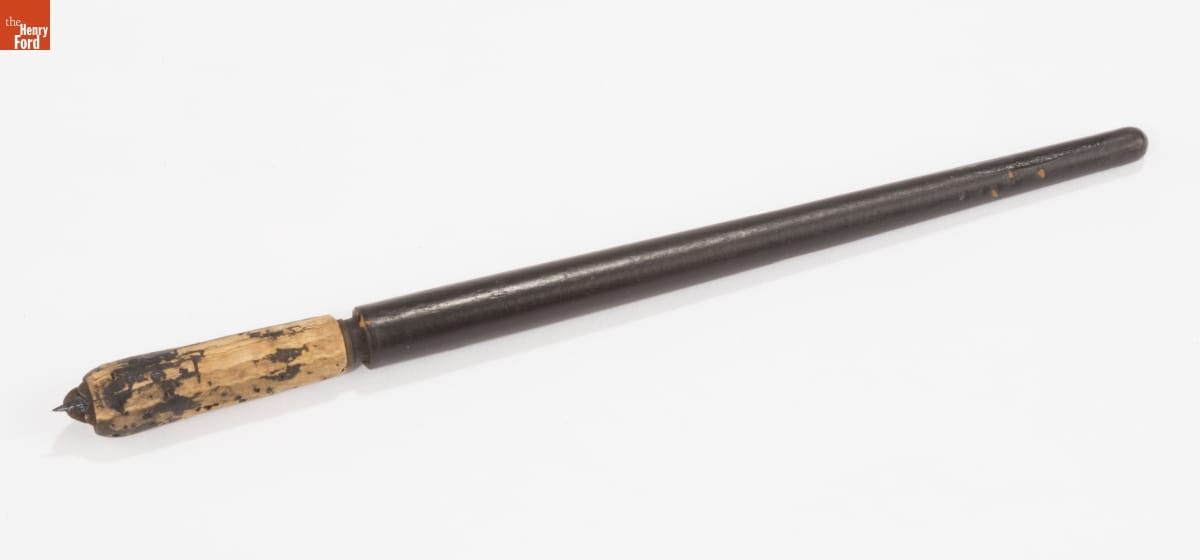
- circa 1930
- Collections - Artifact
Dip Pen, circa 1930
Pens with metal tips called nibs became widely used in the mid-1800s thanks to mass production. To write, the tip of the pen was dipped into ink. The metal tip was replaced when it became dull. Pens with metal nibs required dipping into ink less often than quill pens (made of a feather), which had been used for thousands of years.
- Inkstand, 1791-1792 -
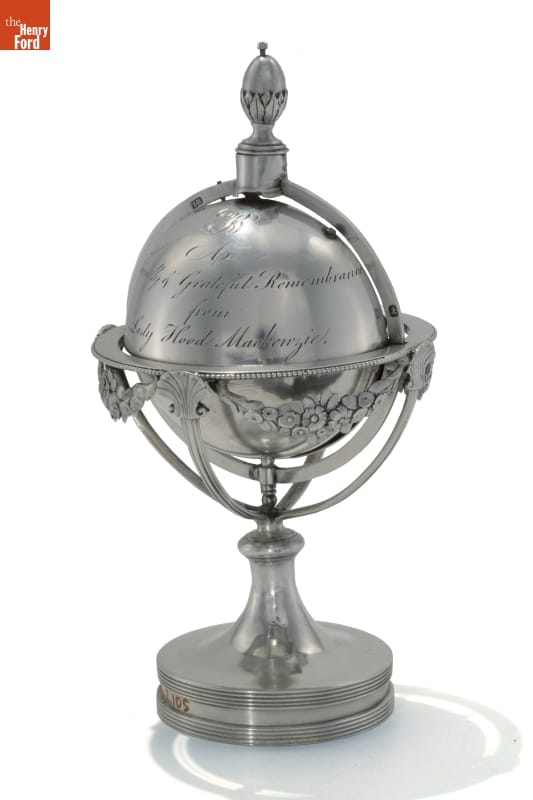
- 1791-1792
- Collections - Artifact
Inkstand, 1791-1792
- Quill Pen, 1850-1950 - In the nineteenth century, schoolchildren's access to pens and paper was limited, especially on the frontier. Quill pens such as this one could be made with only a knife and a feather (generally from a goose). To write, the pointed tip of the quill was dipped into ink. Quill pens had to be sharpened regularly.
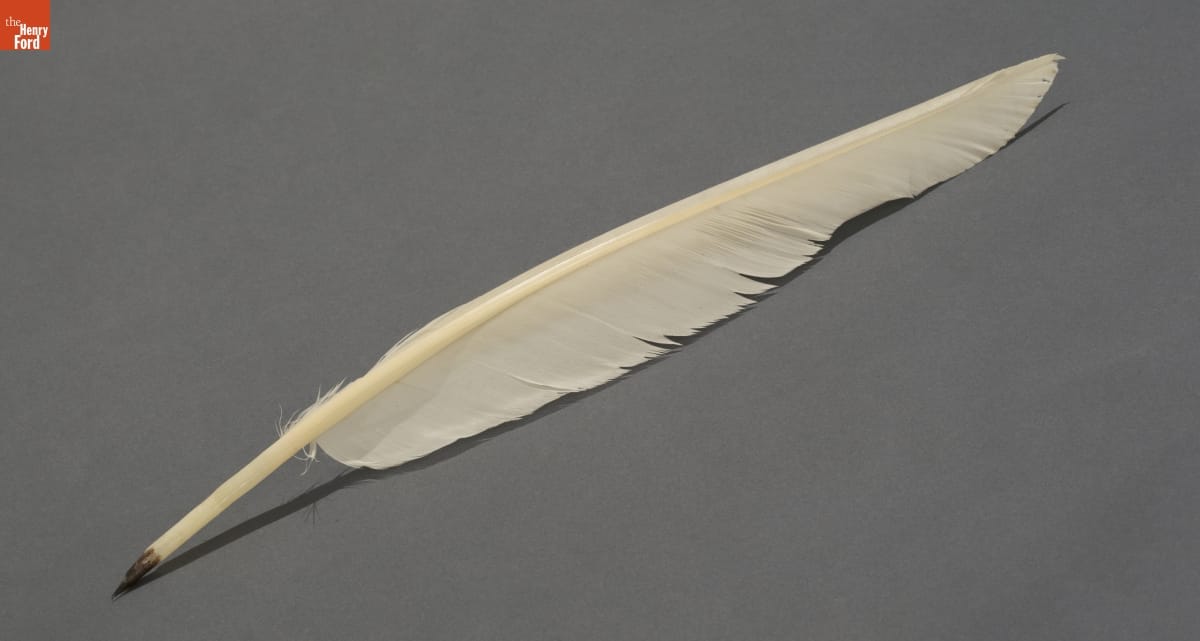
- 1850-1950
- Collections - Artifact
Quill Pen, 1850-1950
In the nineteenth century, schoolchildren's access to pens and paper was limited, especially on the frontier. Quill pens such as this one could be made with only a knife and a feather (generally from a goose). To write, the pointed tip of the quill was dipped into ink. Quill pens had to be sharpened regularly.
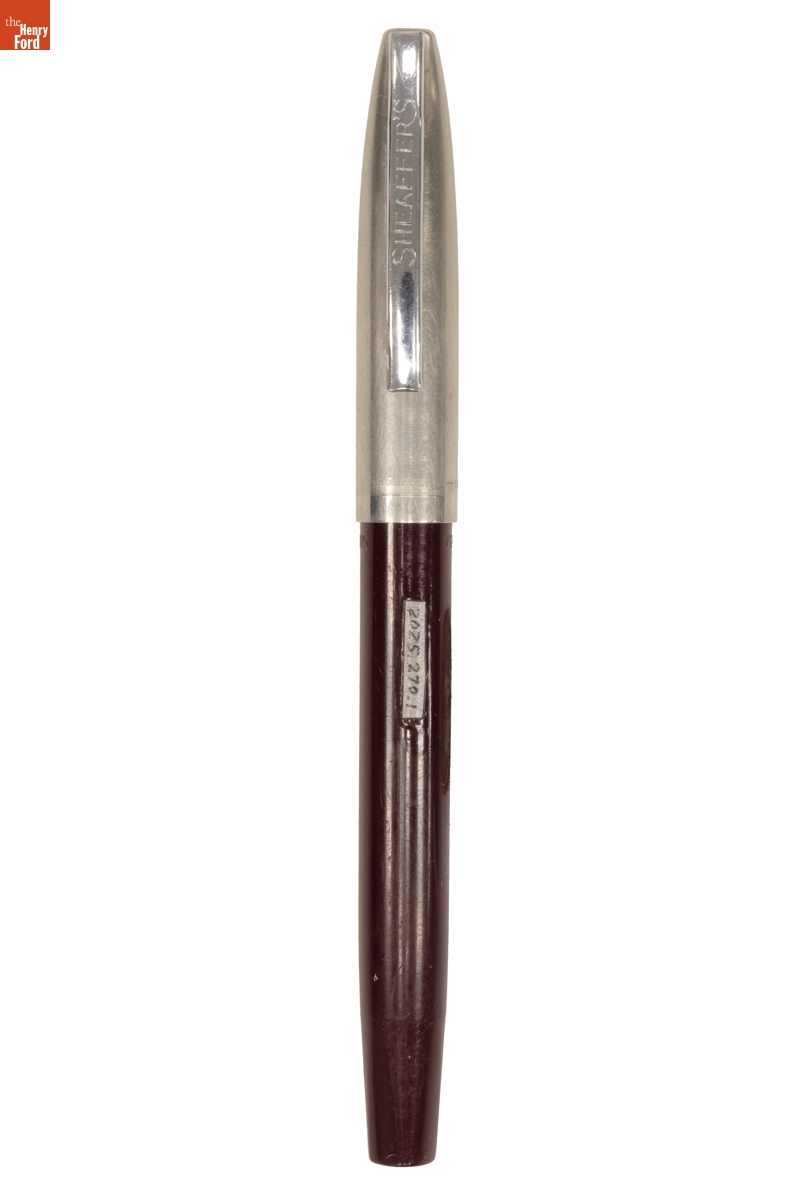
- Fountain Pen, 1962-1964 -
- 1962-1964
- Collections - Artifact
Fountain Pen, 1962-1964
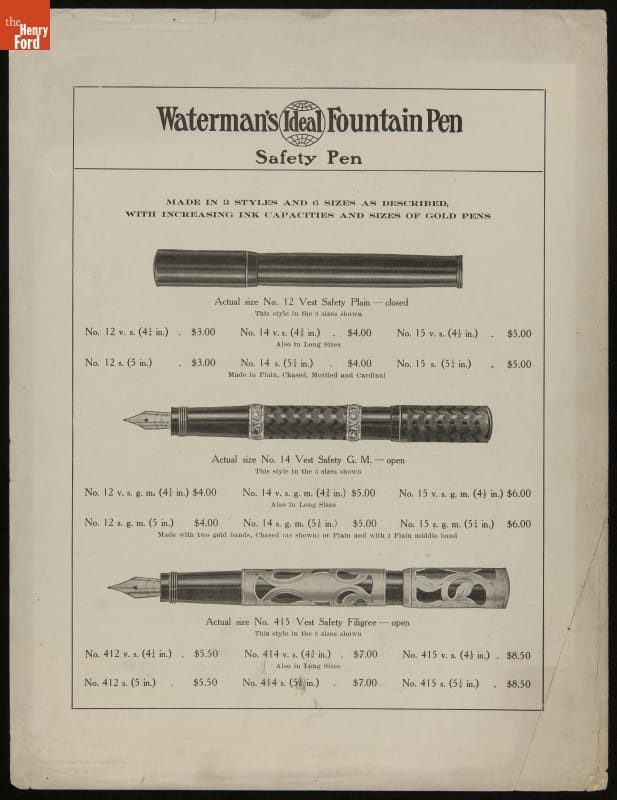
- Page from L. E. Waterman Company Catalog Advertising Waterman's Ideal Fountain Pens, circa 1915 - Many pen inventions during the early 20th century attempted to simulate the hollow channel of the goose-feather quill pen but ensure a smooth, controlled flow of ink. For Waterman's Safety Pen, introduced in 1907, the user would fill the barrel with the day's supply of ink using an eyedropper, then screw down the cap to seal the barrel.
- circa 1915
- Collections - Artifact
Page from L. E. Waterman Company Catalog Advertising Waterman's Ideal Fountain Pens, circa 1915
Many pen inventions during the early 20th century attempted to simulate the hollow channel of the goose-feather quill pen but ensure a smooth, controlled flow of ink. For Waterman's Safety Pen, introduced in 1907, the user would fill the barrel with the day's supply of ink using an eyedropper, then screw down the cap to seal the barrel.