
Search
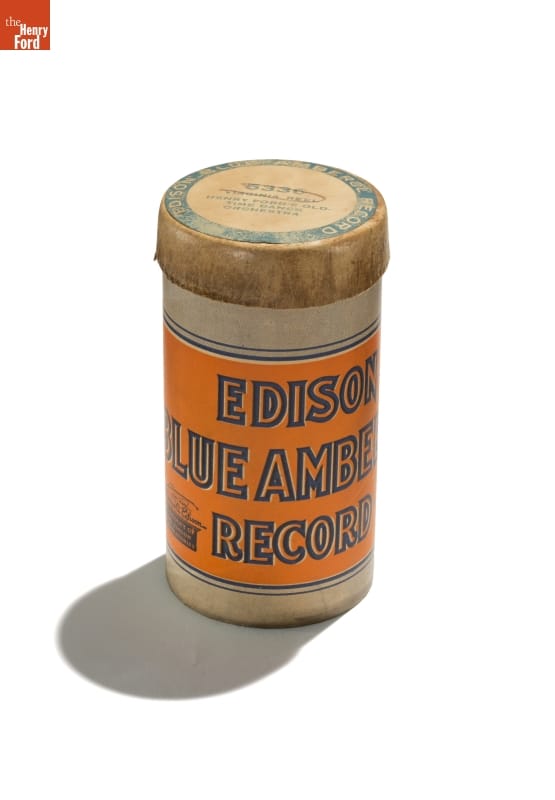
- Blue Amberol Cylinder Record, "Virginia Reel," 1927 - During the 1920s, Henry Ford organized an "Old Time Orchestra" to play at dances Ford hosted to teach his friends and business associates the dances of Ford's rural youth. In 1925, Thomas Edison's staff traveled to Dearborn, Michigan, to record Ford's orchestra. For this recording, they set up their equipment at Fair Lane, Ford's home, capturing the orchestra playing this American country dance.
- 1927
- Collections - Artifact
Blue Amberol Cylinder Record, "Virginia Reel," 1927
During the 1920s, Henry Ford organized an "Old Time Orchestra" to play at dances Ford hosted to teach his friends and business associates the dances of Ford's rural youth. In 1925, Thomas Edison's staff traveled to Dearborn, Michigan, to record Ford's orchestra. For this recording, they set up their equipment at Fair Lane, Ford's home, capturing the orchestra playing this American country dance.
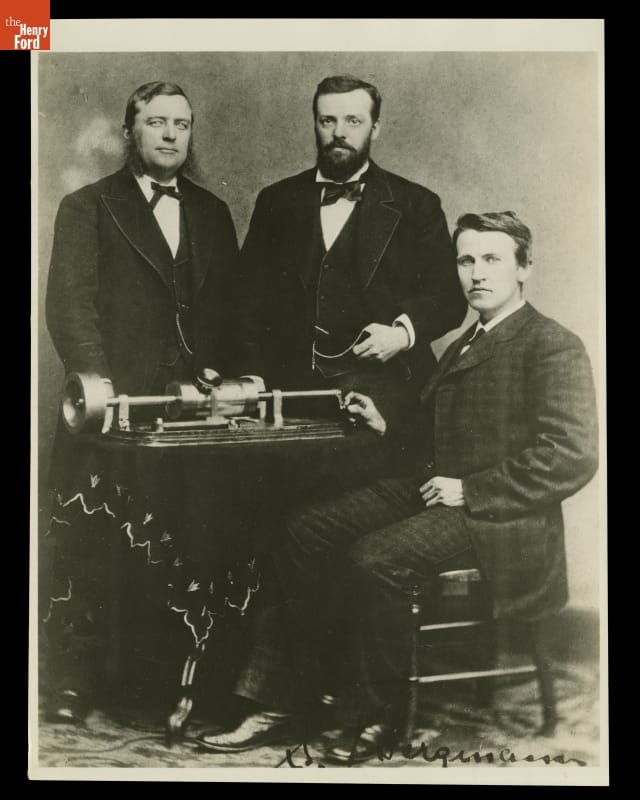
- Thomas Edison, Charles Batchelor, and Uriah Painter with Edison's Phonograph, April 18, 1878 - While in Washington, D.C., for an 1878 presentation to the National Academy of Sciences, inventor Thomas Edison, his lab assistant Charles Batchelor, and Philadelphia Inquirer correspondent Uriah Painter sat for famed Civil War photographer Mathew Brady. They posed with Edison's phonograph, a new invention that could, for the first time, record and reproduce sound. The machine made Edison an overnight celebrity.
- April 18, 1878
- Collections - Artifact
Thomas Edison, Charles Batchelor, and Uriah Painter with Edison's Phonograph, April 18, 1878
While in Washington, D.C., for an 1878 presentation to the National Academy of Sciences, inventor Thomas Edison, his lab assistant Charles Batchelor, and Philadelphia Inquirer correspondent Uriah Painter sat for famed Civil War photographer Mathew Brady. They posed with Edison's phonograph, a new invention that could, for the first time, record and reproduce sound. The machine made Edison an overnight celebrity.
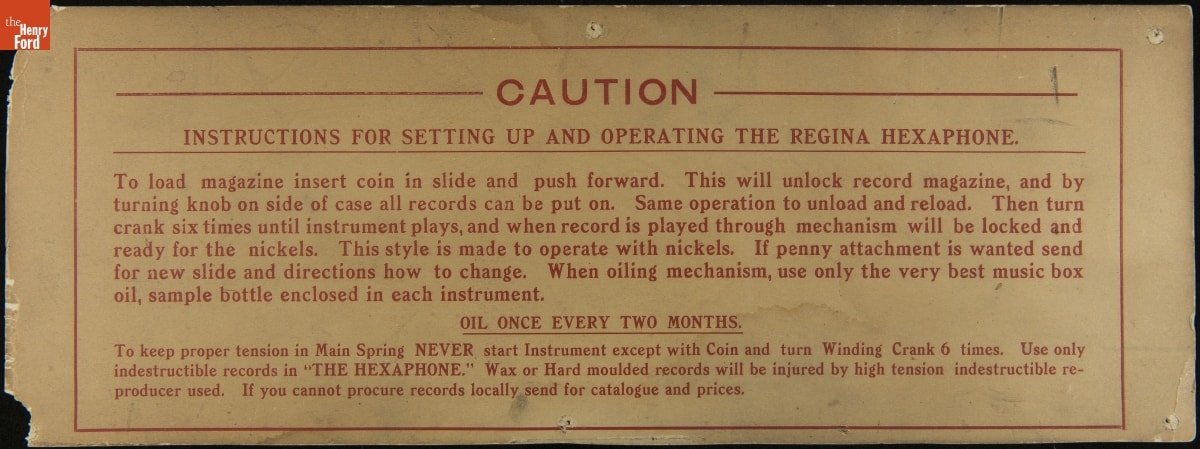
- Instructions for Setting Up and Operating the Regina Hexaphone, circa 1912 -
- circa 1912
- Collections - Artifact
Instructions for Setting Up and Operating the Regina Hexaphone, circa 1912
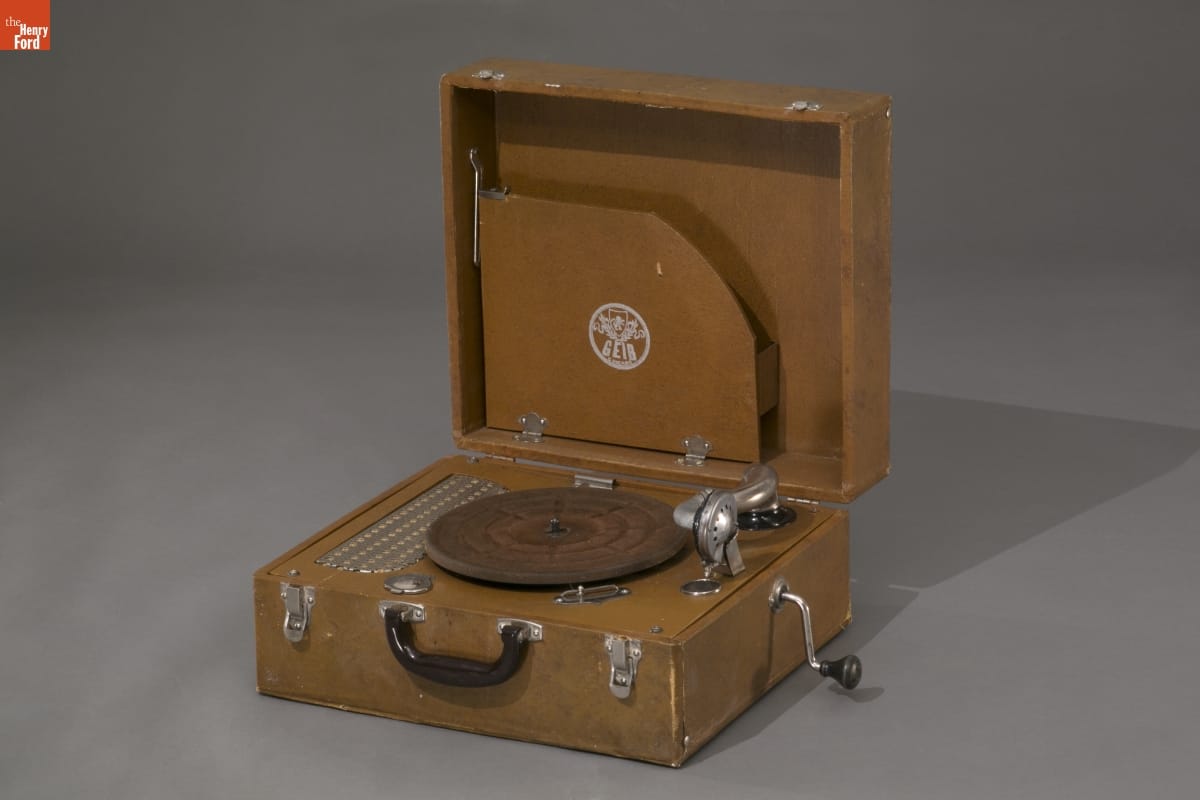
- Phonograph, circa 1935, Used by the Hunter Family -
- circa 1935
- Collections - Artifact
Phonograph, circa 1935, Used by the Hunter Family
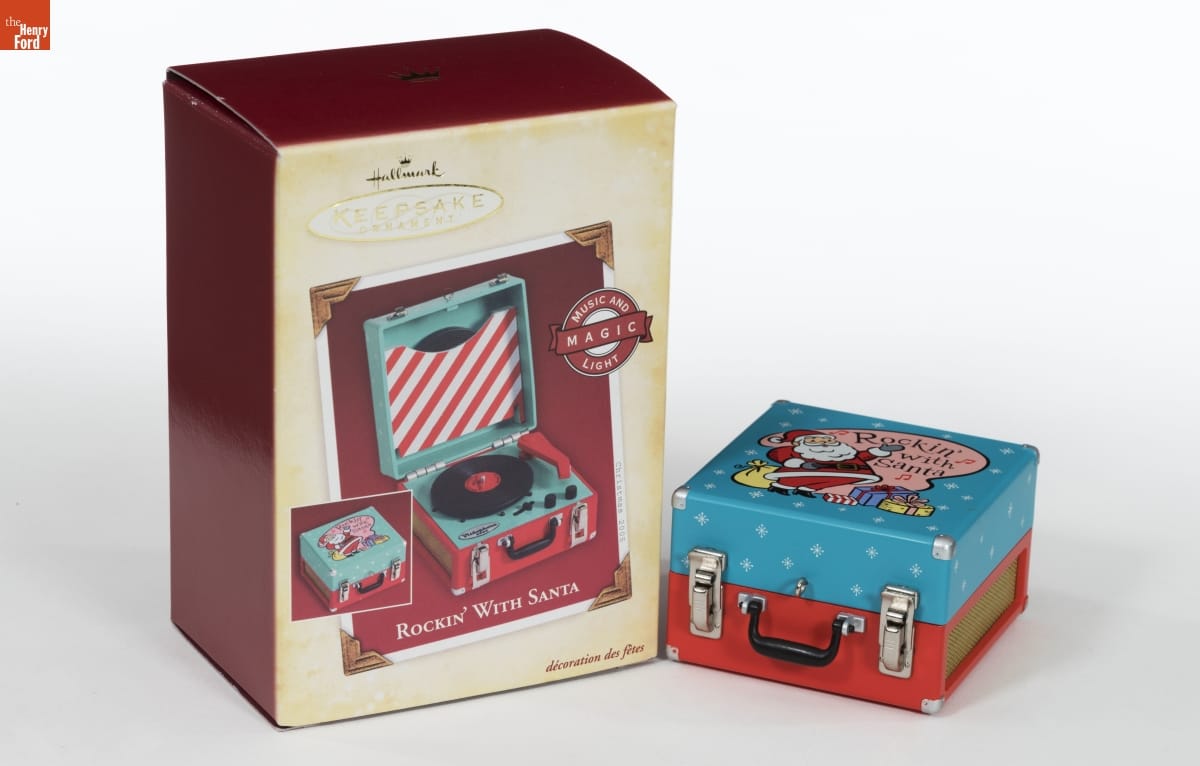
- Hallmark "Rockin' With Santa" Christmas Ornament, 2005 - Already known for greeting cards, Hallmark introduced a line of Christmas ornaments in 1973. The company's annual release of an increasing array of ornaments appealed to customers' interest in marking memories and milestones as well as expressing one's personality and unique tastes. Three records play Christmas songs on this retro record player, while flashing lights simulate a spinning motion.
- 2005
- Collections - Artifact
Hallmark "Rockin' With Santa" Christmas Ornament, 2005
Already known for greeting cards, Hallmark introduced a line of Christmas ornaments in 1973. The company's annual release of an increasing array of ornaments appealed to customers' interest in marking memories and milestones as well as expressing one's personality and unique tastes. Three records play Christmas songs on this retro record player, while flashing lights simulate a spinning motion.
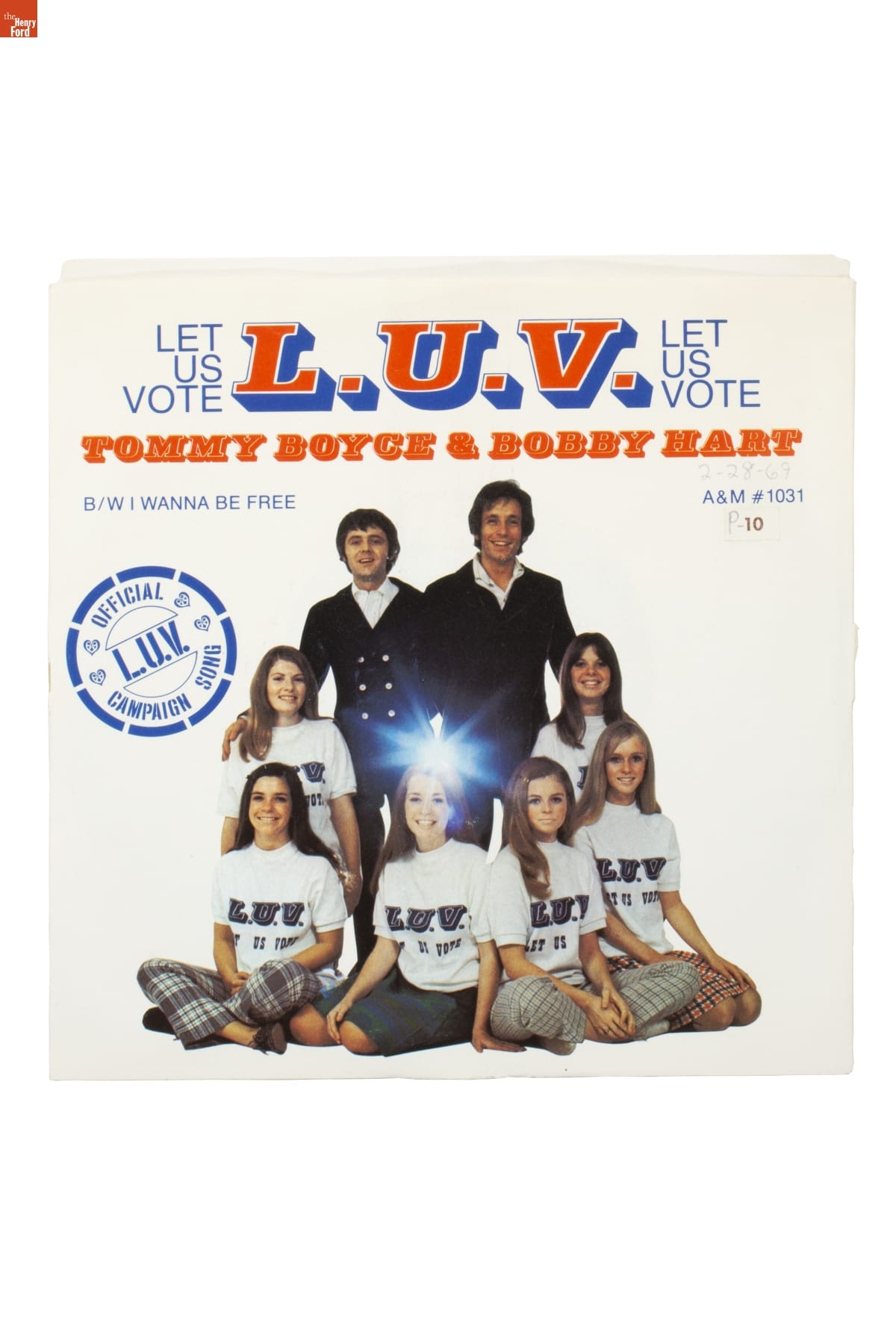
- Record Album, "L.U.V (Let Us Vote)," 1969 - During the height of the Vietnam War in the 1960s, America's youth fought to lower the voting age from 21. At the time, most draft-aged 18-year-olds could not vote. Student-led organizations, such as Let Us Vote (L.U.V.), lobbied for change. In late 1969, the singer-songwriting duo "Tommy" Boyce and Bobby Hart composed "L.U.V. (Let Us Vote)," which became the organization's official campaign song.
- 1969
- Collections - Artifact
Record Album, "L.U.V (Let Us Vote)," 1969
During the height of the Vietnam War in the 1960s, America's youth fought to lower the voting age from 21. At the time, most draft-aged 18-year-olds could not vote. Student-led organizations, such as Let Us Vote (L.U.V.), lobbied for change. In late 1969, the singer-songwriting duo "Tommy" Boyce and Bobby Hart composed "L.U.V. (Let Us Vote)," which became the organization's official campaign song.
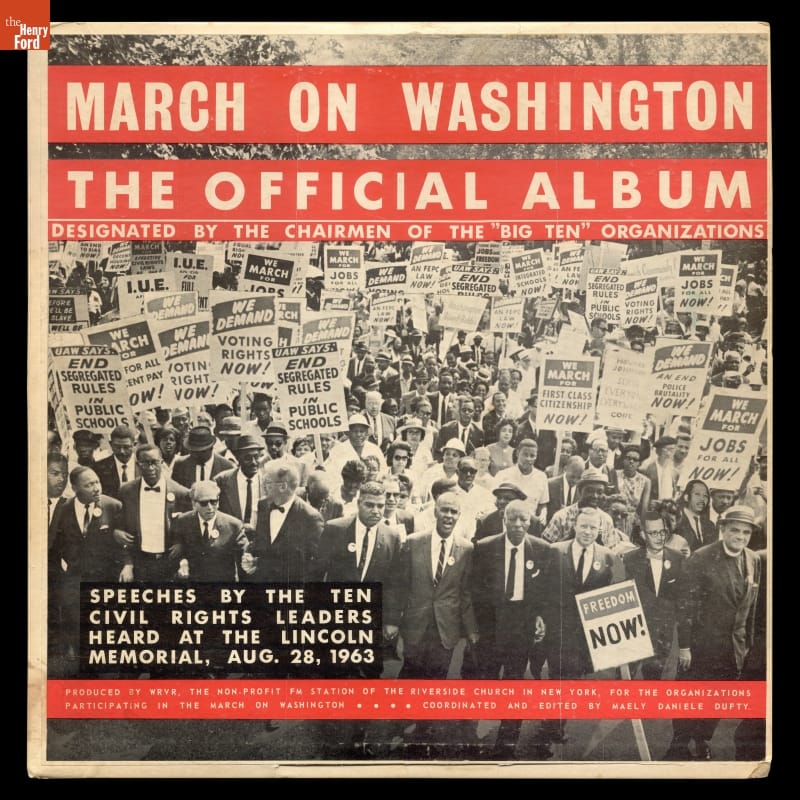
- Record Album, "March on Washington: The Official Album," 1963 - More than 250,000 civil rights advocates -- both African American and white -- showed up at this peaceful march on August 28, 1963, to support unity, jobs, and a new Civil Rights bill being proposed by President Kennedy. This LP record includes speeches by ten Civil Rights leaders heard at the Lincoln Memorial that day.
- August 28, 1963
- Collections - Artifact
Record Album, "March on Washington: The Official Album," 1963
More than 250,000 civil rights advocates -- both African American and white -- showed up at this peaceful march on August 28, 1963, to support unity, jobs, and a new Civil Rights bill being proposed by President Kennedy. This LP record includes speeches by ten Civil Rights leaders heard at the Lincoln Memorial that day.
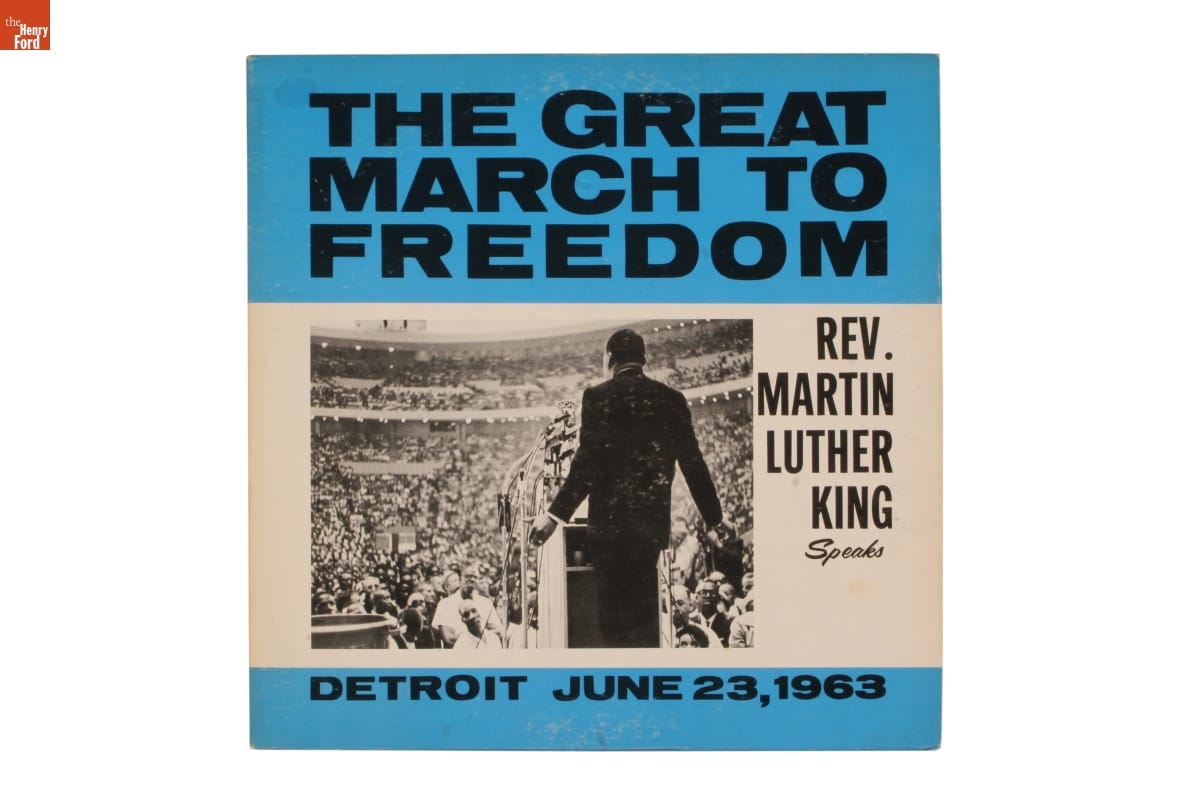
- Record Album, "The Great March to Freedom: Rev. Martin Luther King Speaks," June 23, 1963 - Detroit's 1963 Walk to Freedom--a protest that grew to a national event attracting some 125,000 people--helped move the civil rights struggle to a new focus on the urban North. Dr. Martin Luther King, Jr., presented a prelude to his famous "I Have a Dream" speech here. Berry Gordy, the founder of the Motown Record Corporation, produced this record album documenting the event.
- June 23, 1963
- Collections - Artifact
Record Album, "The Great March to Freedom: Rev. Martin Luther King Speaks," June 23, 1963
Detroit's 1963 Walk to Freedom--a protest that grew to a national event attracting some 125,000 people--helped move the civil rights struggle to a new focus on the urban North. Dr. Martin Luther King, Jr., presented a prelude to his famous "I Have a Dream" speech here. Berry Gordy, the founder of the Motown Record Corporation, produced this record album documenting the event.
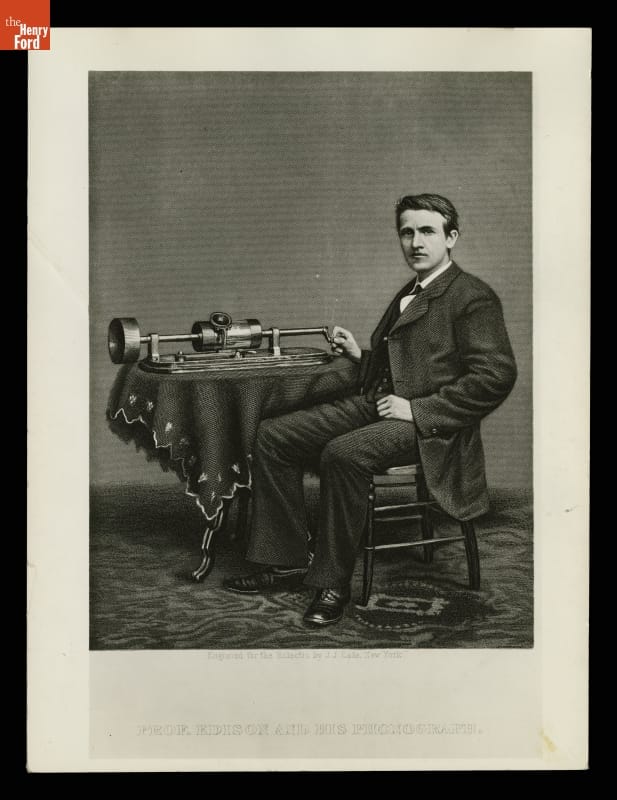
- Thomas Edison and His Phonograph, 1878 - In 1877, Thomas Edison and his laboratory assistants created a machine that could - for the first time - record and reproduce sound. Called the phonograph, it made Edison an overnight celebrity. While in Washington, D.C., to present to the National Academy of Sciences in 1878, Edison sat with his phonograph for well-known Civil War photographer Mathew Brady.
- April 01, 1878
- Collections - Artifact
Thomas Edison and His Phonograph, 1878
In 1877, Thomas Edison and his laboratory assistants created a machine that could - for the first time - record and reproduce sound. Called the phonograph, it made Edison an overnight celebrity. While in Washington, D.C., to present to the National Academy of Sciences in 1878, Edison sat with his phonograph for well-known Civil War photographer Mathew Brady.
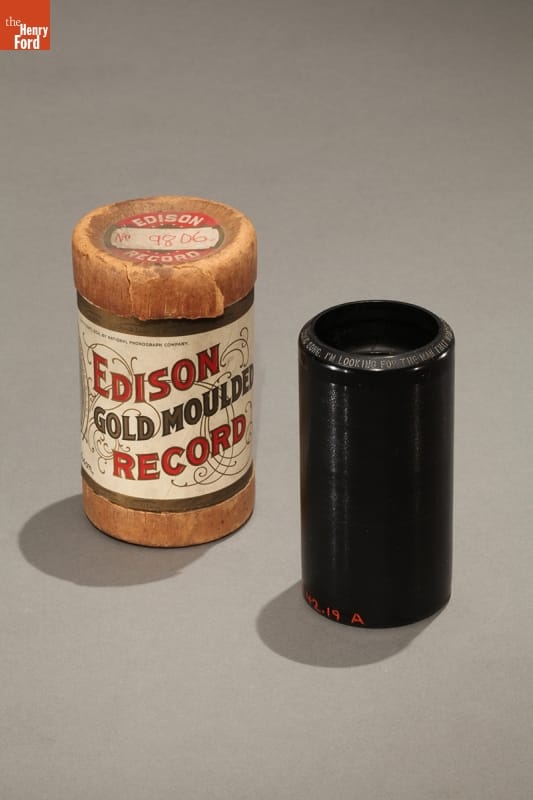
- Edison Gold Moulded Cylinder Record, "I'm Looking for the Man that Wrote the Merry Widow Waltz," 1908 - Edward M. Favor, a performer in Broadway musicals in the mid-1890s, had a clear, crisp voice that recorded well. "The Merry Widow Waltz" is from the extremely popular 1905 Franz Lehar operetta "The Merry Widow." In this song parody, a young man laments that this tune "oozes from cellars, and all the flat dwellers," -- and that his girl can't stop dancing to it!
- 1908
- Collections - Artifact
Edison Gold Moulded Cylinder Record, "I'm Looking for the Man that Wrote the Merry Widow Waltz," 1908
Edward M. Favor, a performer in Broadway musicals in the mid-1890s, had a clear, crisp voice that recorded well. "The Merry Widow Waltz" is from the extremely popular 1905 Franz Lehar operetta "The Merry Widow." In this song parody, a young man laments that this tune "oozes from cellars, and all the flat dwellers," -- and that his girl can't stop dancing to it!