
Search
- Los Angeles Times Grand Prix, Riverside, California, October 1966 - Dave Friedman captured and preserved auto racing history through his photography. His work -- and his collection of works by other photographers -- documents key races, cars, and teams. The 1966 <em>Los Angeles Times</em> Grand Prix was held at Riverside International Raceway. John Surtees bested Jim Hall in this Canadian-American (Can-Am) Challenge Cup event. The win helped Surtees capture the first Can-Am Championship.
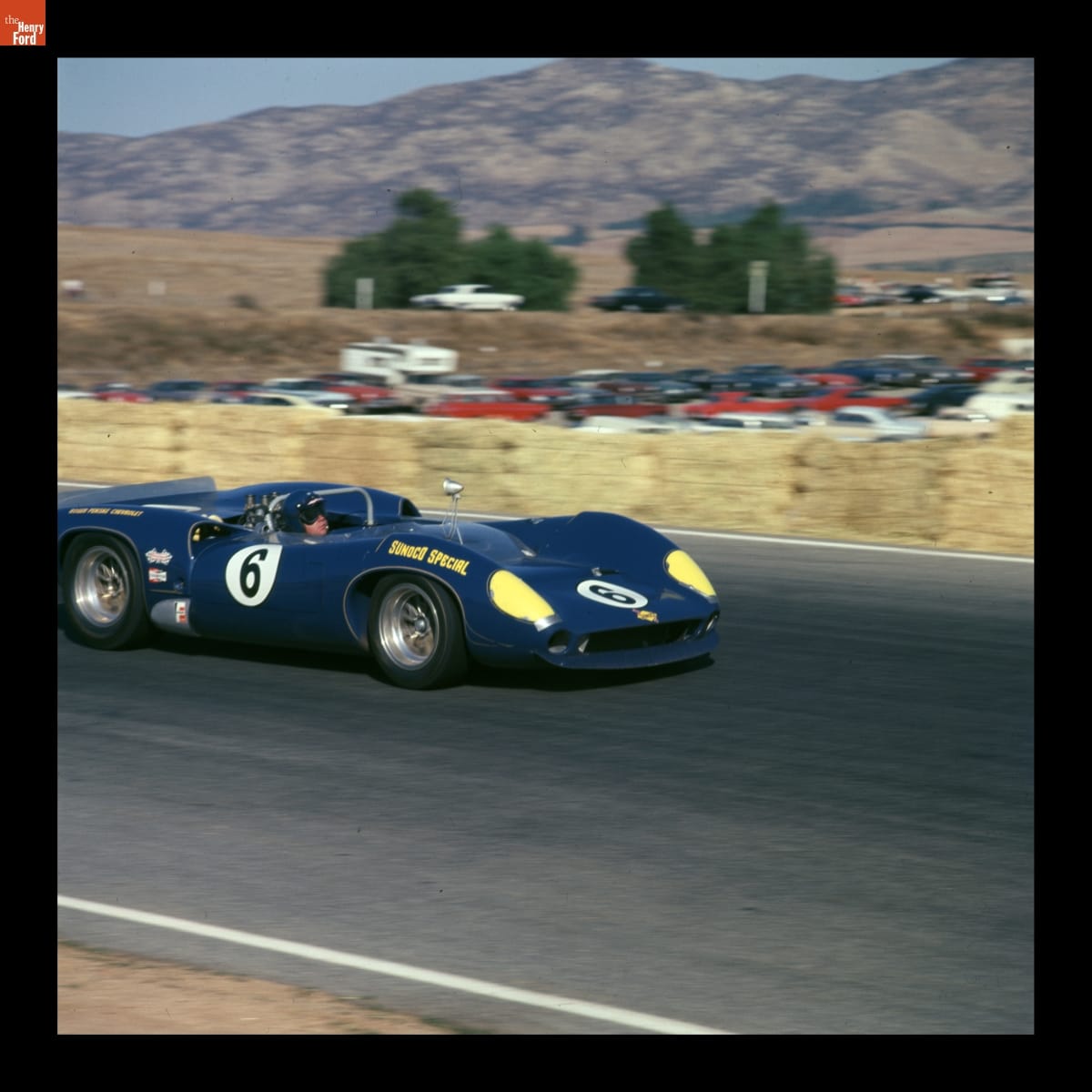
- 27 October 1966 - 30 October 1966
- Collections - Artifact
Los Angeles Times Grand Prix, Riverside, California, October 1966
Dave Friedman captured and preserved auto racing history through his photography. His work -- and his collection of works by other photographers -- documents key races, cars, and teams. The 1966 Los Angeles Times Grand Prix was held at Riverside International Raceway. John Surtees bested Jim Hall in this Canadian-American (Can-Am) Challenge Cup event. The win helped Surtees capture the first Can-Am Championship.
- Los Angeles Times Grand Prix, Riverside, California, October 1966 - Dave Friedman captured and preserved auto racing history through his photography. His work -- and his collection of works by other photographers -- documents key races, cars, and teams. The 1966 <em>Los Angeles Times</em> Grand Prix was held at Riverside International Raceway. John Surtees bested Jim Hall in this Canadian-American (Can-Am) Challenge Cup event. The win helped Surtees capture the first Can-Am Championship.
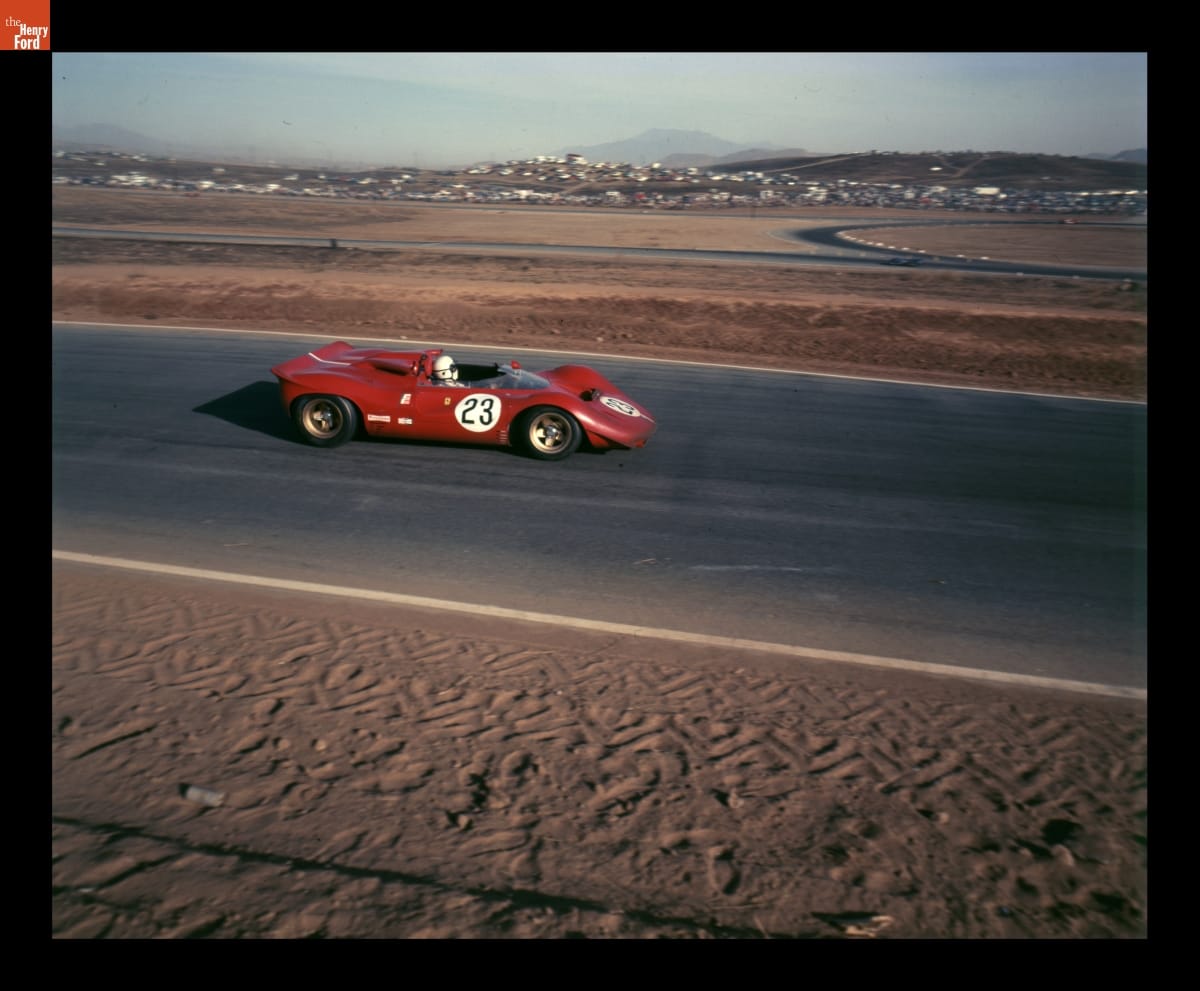
- 27 October 1966 - 30 October 1966
- Collections - Artifact
Los Angeles Times Grand Prix, Riverside, California, October 1966
Dave Friedman captured and preserved auto racing history through his photography. His work -- and his collection of works by other photographers -- documents key races, cars, and teams. The 1966 Los Angeles Times Grand Prix was held at Riverside International Raceway. John Surtees bested Jim Hall in this Canadian-American (Can-Am) Challenge Cup event. The win helped Surtees capture the first Can-Am Championship.
- Los Angeles Times Grand Prix, Riverside, California, October 1966 - Dave Friedman captured and preserved auto racing history through his photography. His work -- and his collection of works by other photographers -- documents key races, cars, and teams. The 1966 <em>Los Angeles Times</em> Grand Prix was held at Riverside International Raceway. John Surtees bested Jim Hall in this Canadian-American (Can-Am) Challenge Cup event. The win helped Surtees capture the first Can-Am Championship.
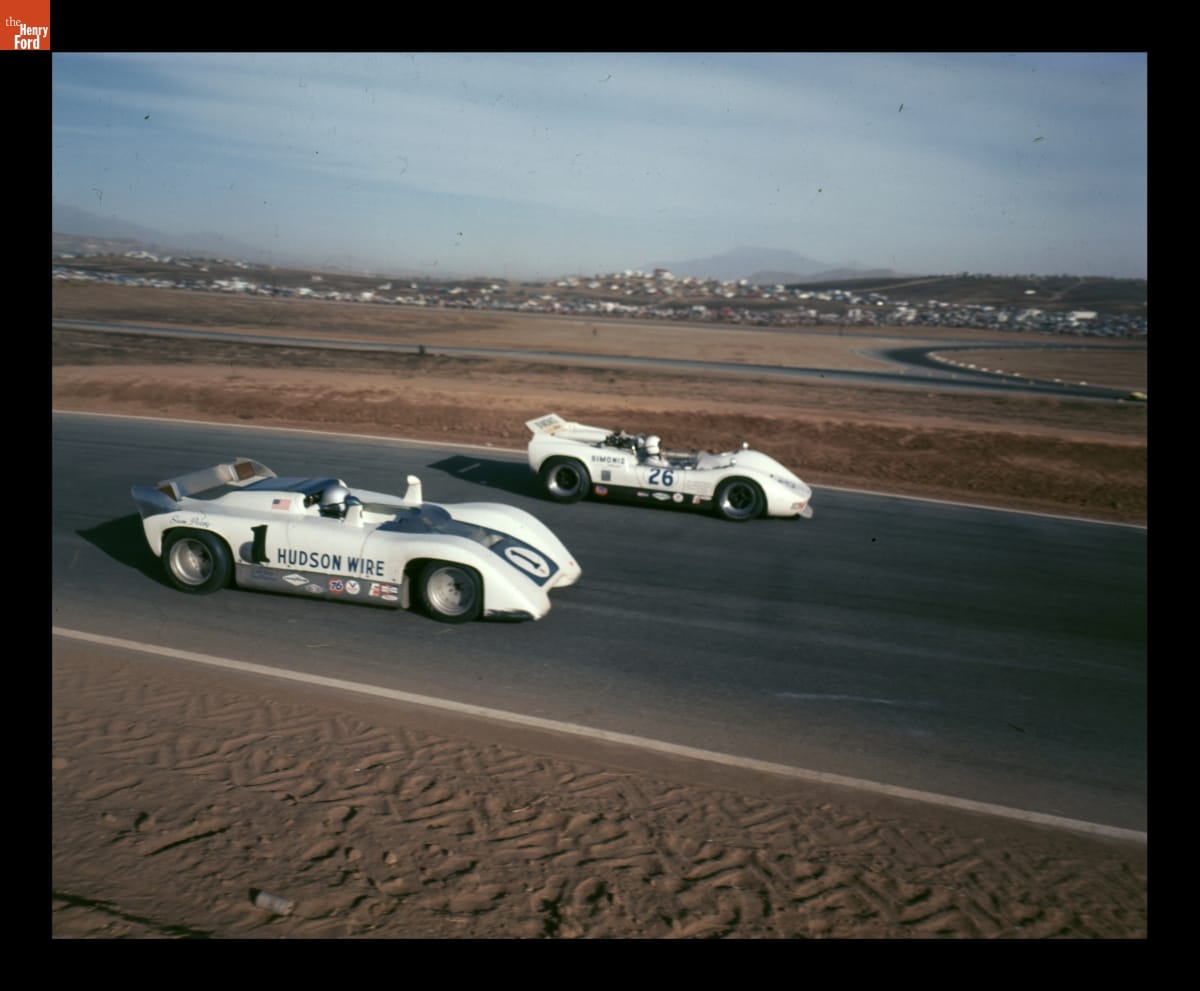
- 27 October 1966 - 30 October 1966
- Collections - Artifact
Los Angeles Times Grand Prix, Riverside, California, October 1966
Dave Friedman captured and preserved auto racing history through his photography. His work -- and his collection of works by other photographers -- documents key races, cars, and teams. The 1966 Los Angeles Times Grand Prix was held at Riverside International Raceway. John Surtees bested Jim Hall in this Canadian-American (Can-Am) Challenge Cup event. The win helped Surtees capture the first Can-Am Championship.
- Susquehanna Plantation in Greenfield Village, August 1989 - Henry Carroll owned this southern Maryland house (pictured here at Greenfield Village) in the decades before and after the Civil War. Its form -- one room deep with porches -- invited cooling breezes in the warm, humid climate. In 1860, the Carrolls raised tobacco and wheat on their 700-acre plantation. Seventy-five enslaved African Americans provided the skill and labor that supported the Carroll family's comfortable life.
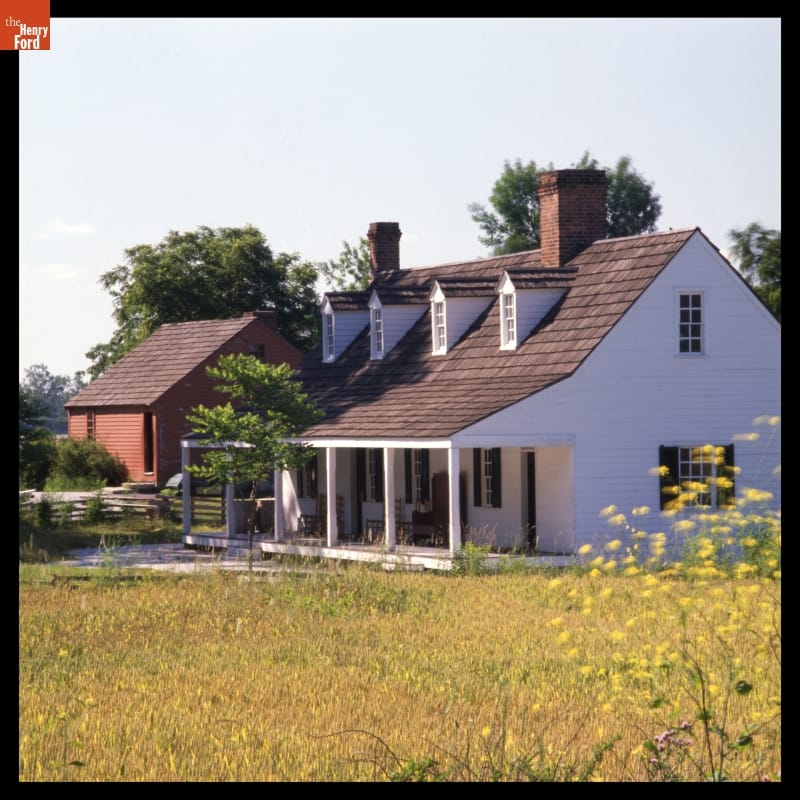
- August 01, 1989
- Collections - Artifact
Susquehanna Plantation in Greenfield Village, August 1989
Henry Carroll owned this southern Maryland house (pictured here at Greenfield Village) in the decades before and after the Civil War. Its form -- one room deep with porches -- invited cooling breezes in the warm, humid climate. In 1860, the Carrolls raised tobacco and wheat on their 700-acre plantation. Seventy-five enslaved African Americans provided the skill and labor that supported the Carroll family's comfortable life.
- Paul Revere Silver in the "Made in America" Exhibit, Henry Ford Museum, 1992 -
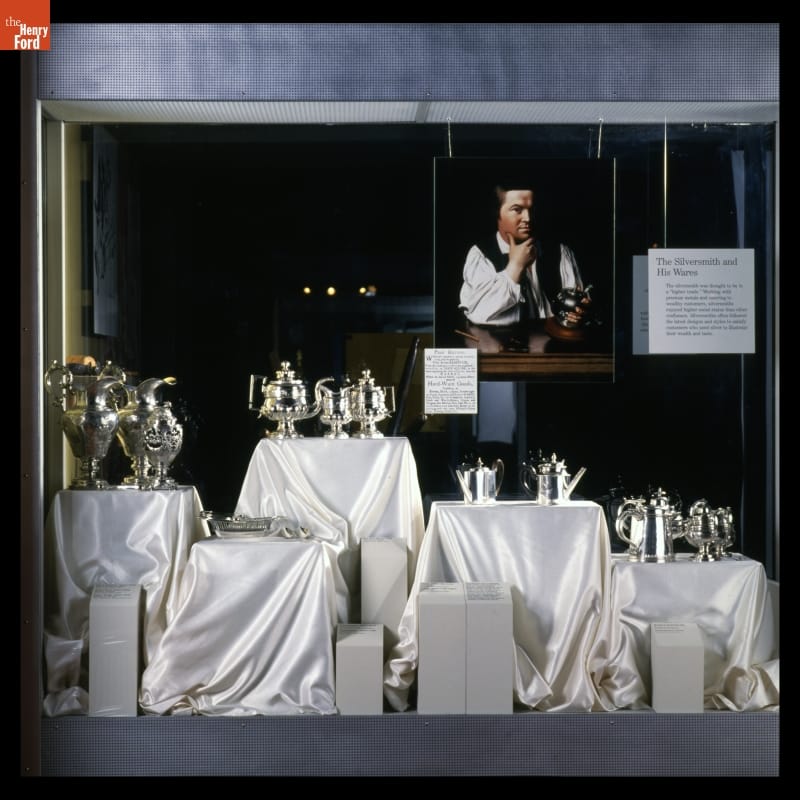
- 1992
- Collections - Artifact
Paul Revere Silver in the "Made in America" Exhibit, Henry Ford Museum, 1992
- Historical Presenter and Visitors in the General Store, Greenfield Village, 1965 -
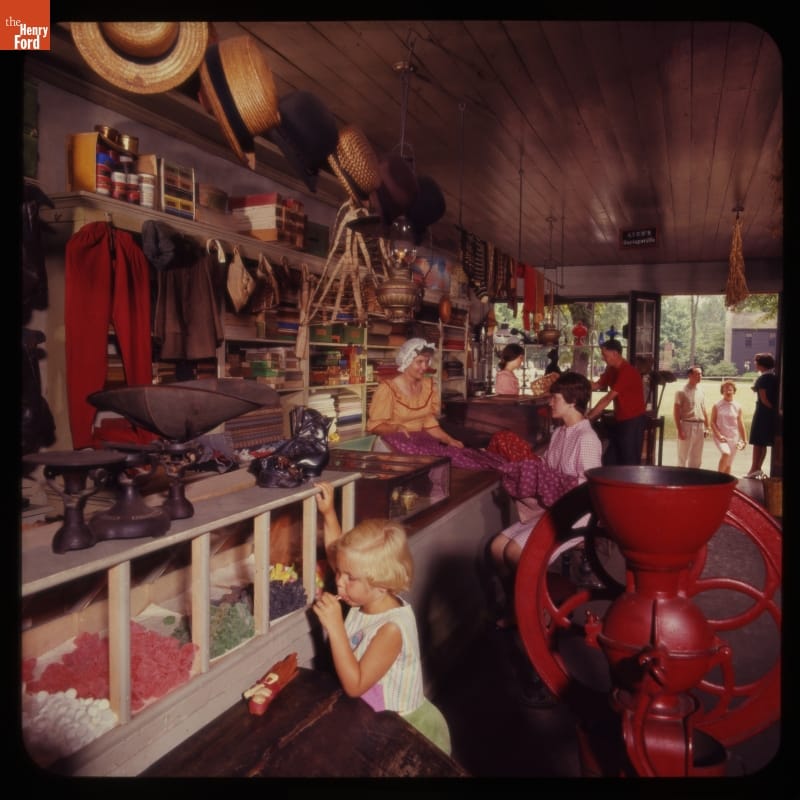
- 1965
- Collections - Artifact
Historical Presenter and Visitors in the General Store, Greenfield Village, 1965
- American Decorative Arts Gallery, Henry Ford Museum Promenade, December 1958 -
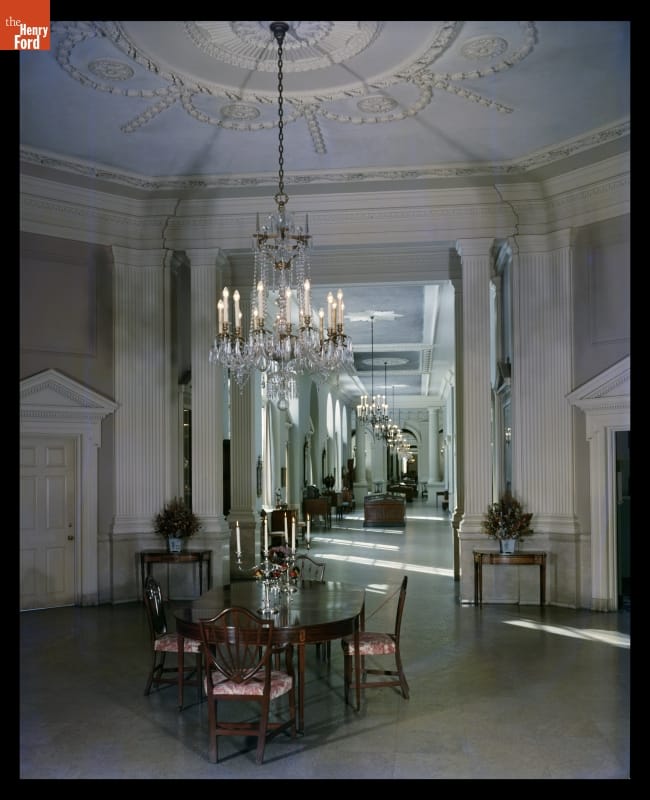
- December 01, 1958
- Collections - Artifact
American Decorative Arts Gallery, Henry Ford Museum Promenade, December 1958
- "Allegheny," "DeWitt Clinton," and "Sam Hill" Locomotives alongside New York Central Diesel Aerotrain, circa 1956 - Three historic locomotives from The Henry Ford -- the <EM>DeWitt Clinton</EM> (replica of the 1831 original), <EM>Sam Hill</EM> (1858) and Allegheny (1941) -- pose alongside the Aerotrain in 1956. Railroads hoped that the streamlined Aerotrain, designed by General Motors, might lure travelers back onto trains. But its lightweight coaches gave a rough ride and Aerotrain failed to catch on with passengers.
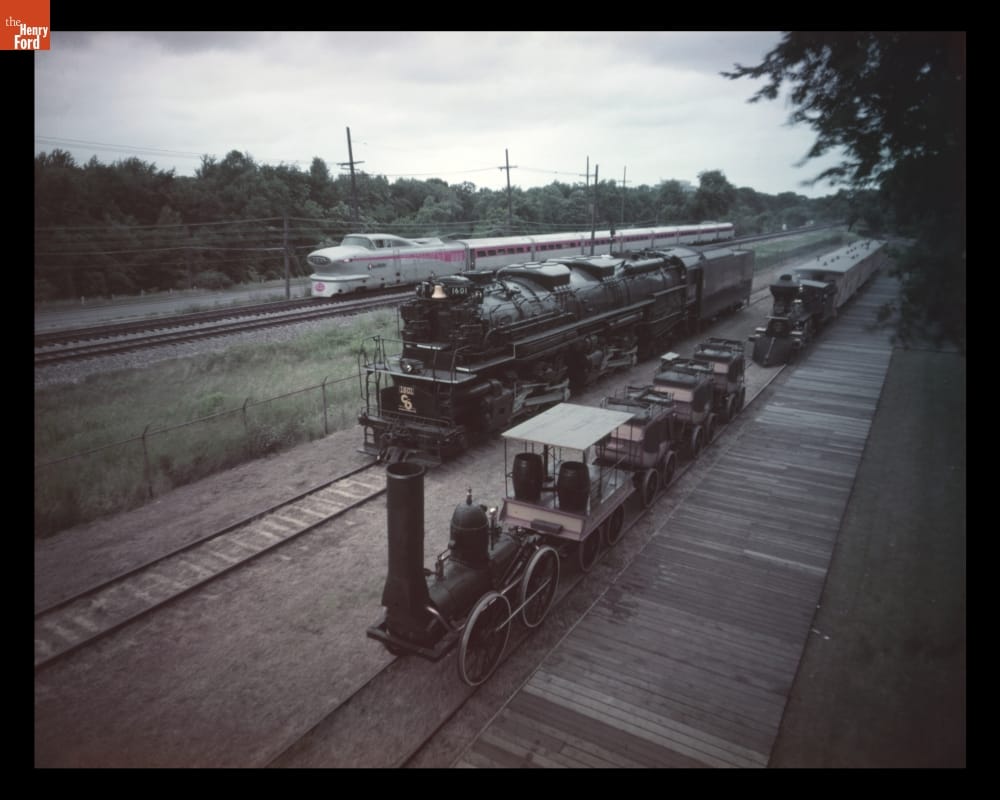
- circa 1956
- Collections - Artifact
"Allegheny," "DeWitt Clinton," and "Sam Hill" Locomotives alongside New York Central Diesel Aerotrain, circa 1956
Three historic locomotives from The Henry Ford -- the DeWitt Clinton (replica of the 1831 original), Sam Hill (1858) and Allegheny (1941) -- pose alongside the Aerotrain in 1956. Railroads hoped that the streamlined Aerotrain, designed by General Motors, might lure travelers back onto trains. But its lightweight coaches gave a rough ride and Aerotrain failed to catch on with passengers.
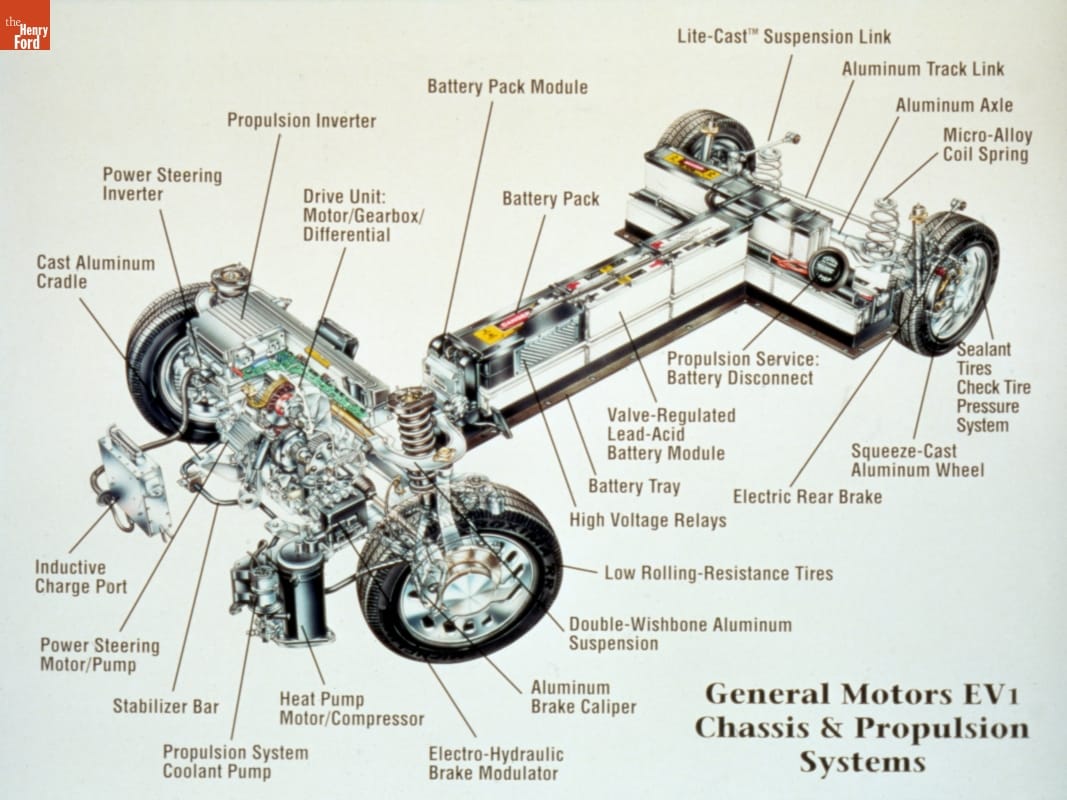
- Diagram of a General Motors EV1 Car Chassis, 1997-2002 - This diagram shows the layout of the General Motors' EV1. Heavy batteries were well distributed to even out the weight, helping the car's handling. The vehicle's range was 70 to 90 miles with special lead-acid batteries exclusive to the EV1. In 1998, GM switched to longer range nickel-metal-hydride batteries.
- 1997-2002
- Collections - Artifact
Diagram of a General Motors EV1 Car Chassis, 1997-2002
This diagram shows the layout of the General Motors' EV1. Heavy batteries were well distributed to even out the weight, helping the car's handling. The vehicle's range was 70 to 90 miles with special lead-acid batteries exclusive to the EV1. In 1998, GM switched to longer range nickel-metal-hydride batteries.
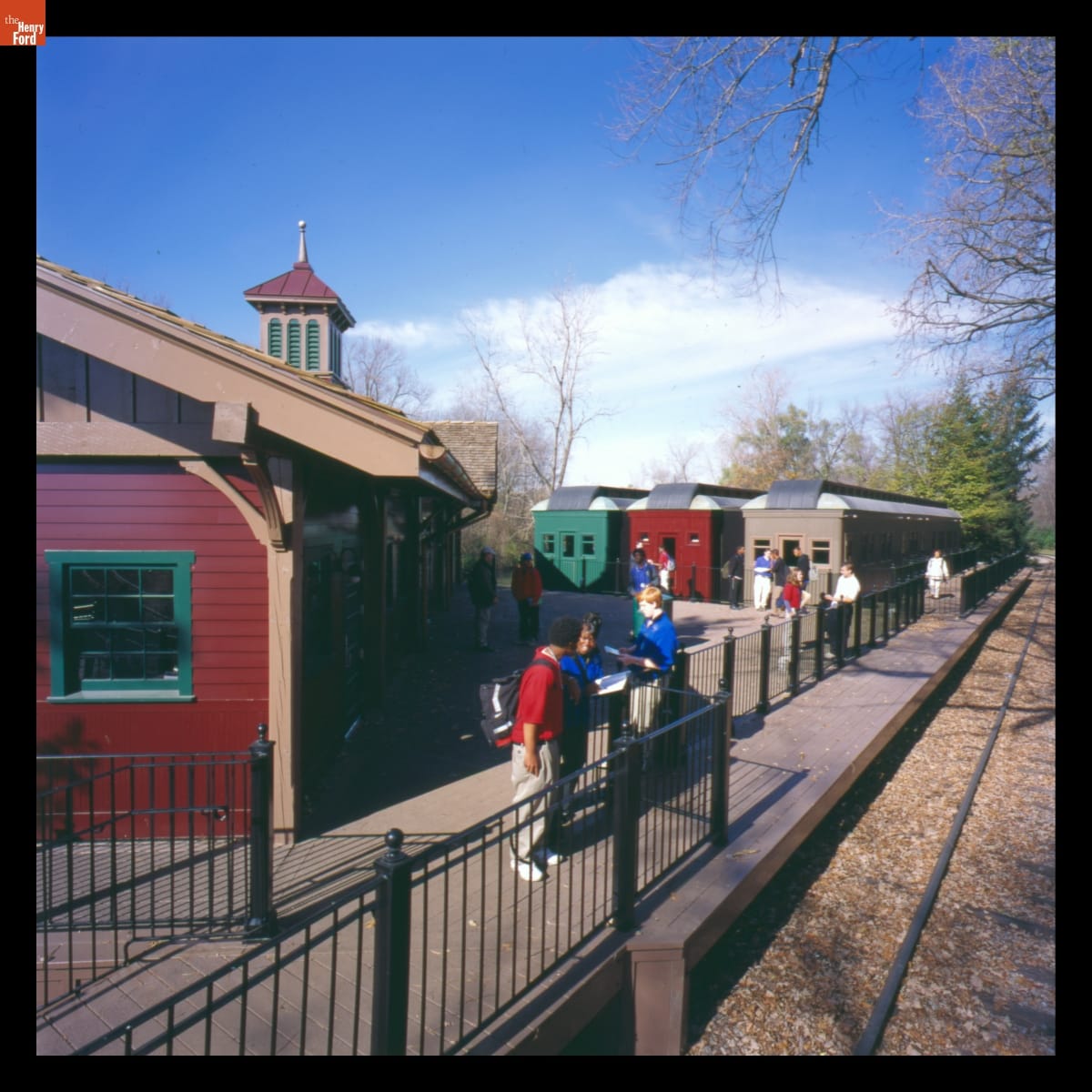
- Henry Ford Academy Classrooms at the Former Suwanee Park Train Station in Greenfield Village, 2000 - Henry Ford Academy opened in 1997. The former Suwanee Park train station, three vintage railroad cars, and other Greenfield Village buildings were transformed into modern classrooms for students in the academy's tenth through twelfth grades.
- November 06, 2000
- Collections - Artifact
Henry Ford Academy Classrooms at the Former Suwanee Park Train Station in Greenfield Village, 2000
Henry Ford Academy opened in 1997. The former Suwanee Park train station, three vintage railroad cars, and other Greenfield Village buildings were transformed into modern classrooms for students in the academy's tenth through twelfth grades.