
Search
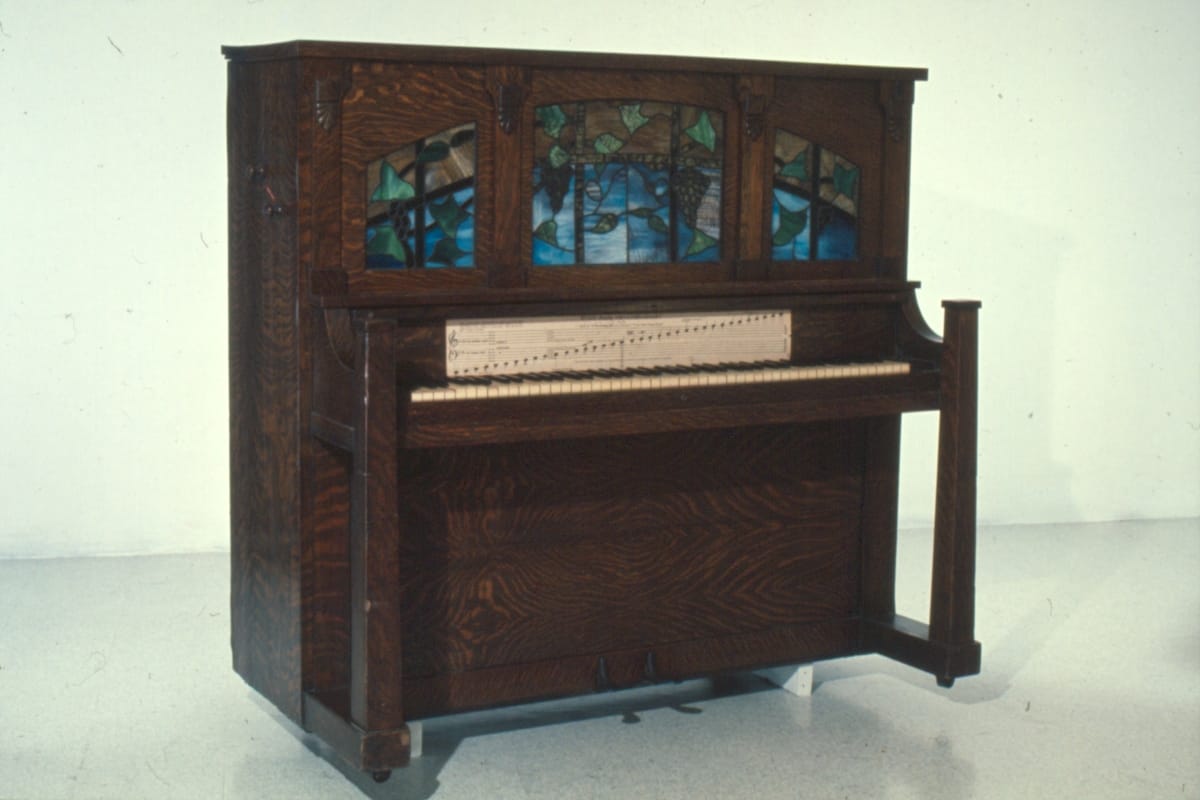
- Player Piano, 1910-1920 - Player pianos enjoyed enormous success from the 1890s through the 1920s. During this time, over 2 1/2 million were sold to Americans eager to have piano music at home -- without having to spend many hours in practice. Coin-operated versions, like this Seeburg Company model, provided patrons with the latest music in public establishments during the early 20th century.
- 1910-1920
- Collections - Artifact
Player Piano, 1910-1920
Player pianos enjoyed enormous success from the 1890s through the 1920s. During this time, over 2 1/2 million were sold to Americans eager to have piano music at home -- without having to spend many hours in practice. Coin-operated versions, like this Seeburg Company model, provided patrons with the latest music in public establishments during the early 20th century.
- Piano Stool -
- Collections - Artifact
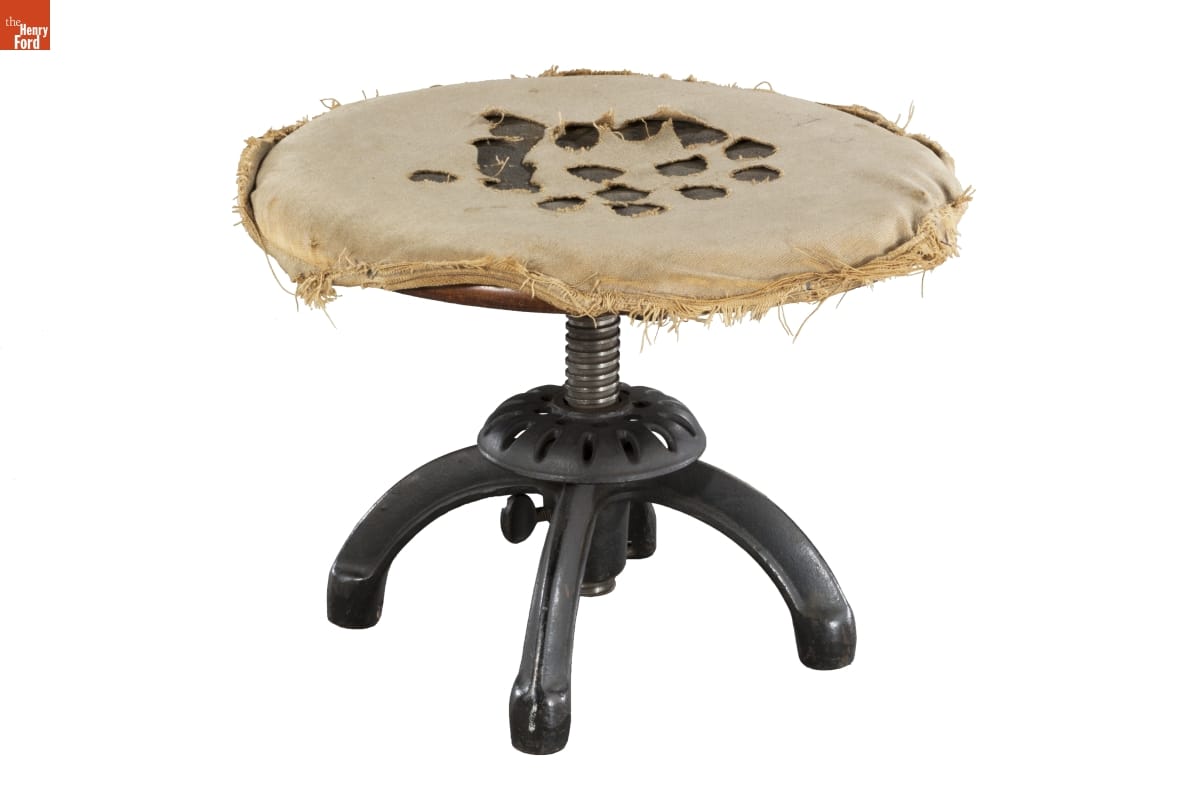
Piano Stool
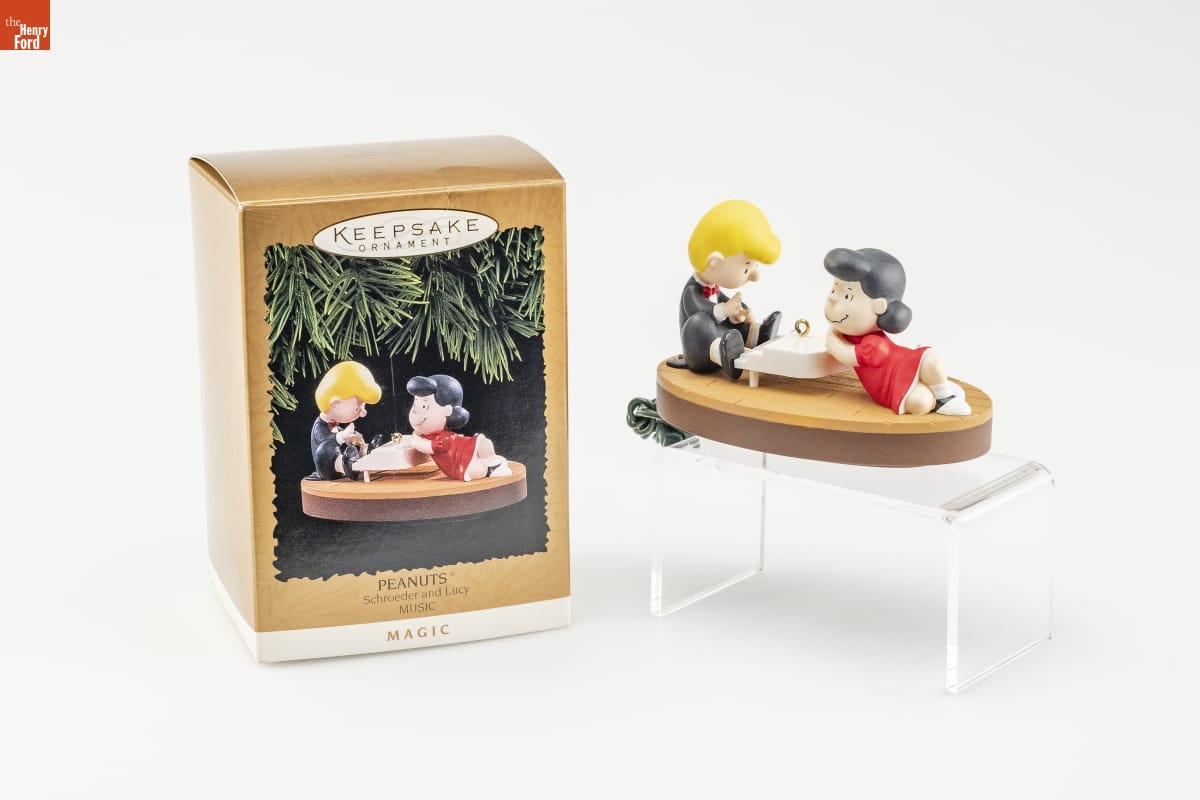
- Hallmark "PEANUTS: Schroeder and Lucy" Christmas Ornament, 1996 - Already known for greeting cards, Hallmark introduced a line of Christmas ornaments in 1973. The company's annual release of an increasing array of ornaments revolutionized Christmas decorating, appealing to customers' interest in marking memories and milestones as well as expressing one's personality and unique tastes.
- 1996
- Collections - Artifact
Hallmark "PEANUTS: Schroeder and Lucy" Christmas Ornament, 1996
Already known for greeting cards, Hallmark introduced a line of Christmas ornaments in 1973. The company's annual release of an increasing array of ornaments revolutionized Christmas decorating, appealing to customers' interest in marking memories and milestones as well as expressing one's personality and unique tastes.
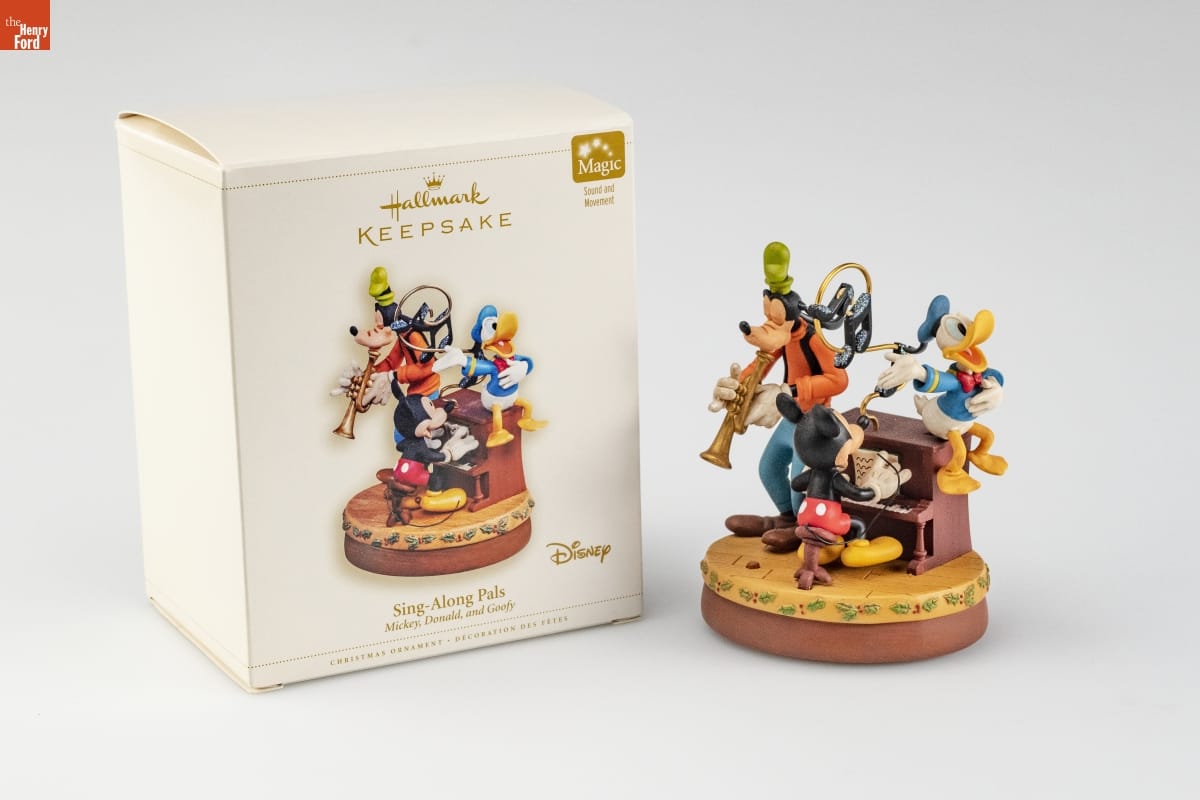
- Hallmark "Mickey, Donald and Goofy: Sing-Along Pals" Christmas Ornament, 2006 - Already known for greeting cards, Hallmark introduced a line of Christmas ornaments in 1973. The company's annual release of an increasing array of ornaments revolutionized Christmas decorating, appealing to customers' interest in marking memories and milestones as well as expressing one's personality and unique tastes.
- 2006
- Collections - Artifact
Hallmark "Mickey, Donald and Goofy: Sing-Along Pals" Christmas Ornament, 2006
Already known for greeting cards, Hallmark introduced a line of Christmas ornaments in 1973. The company's annual release of an increasing array of ornaments revolutionized Christmas decorating, appealing to customers' interest in marking memories and milestones as well as expressing one's personality and unique tastes.
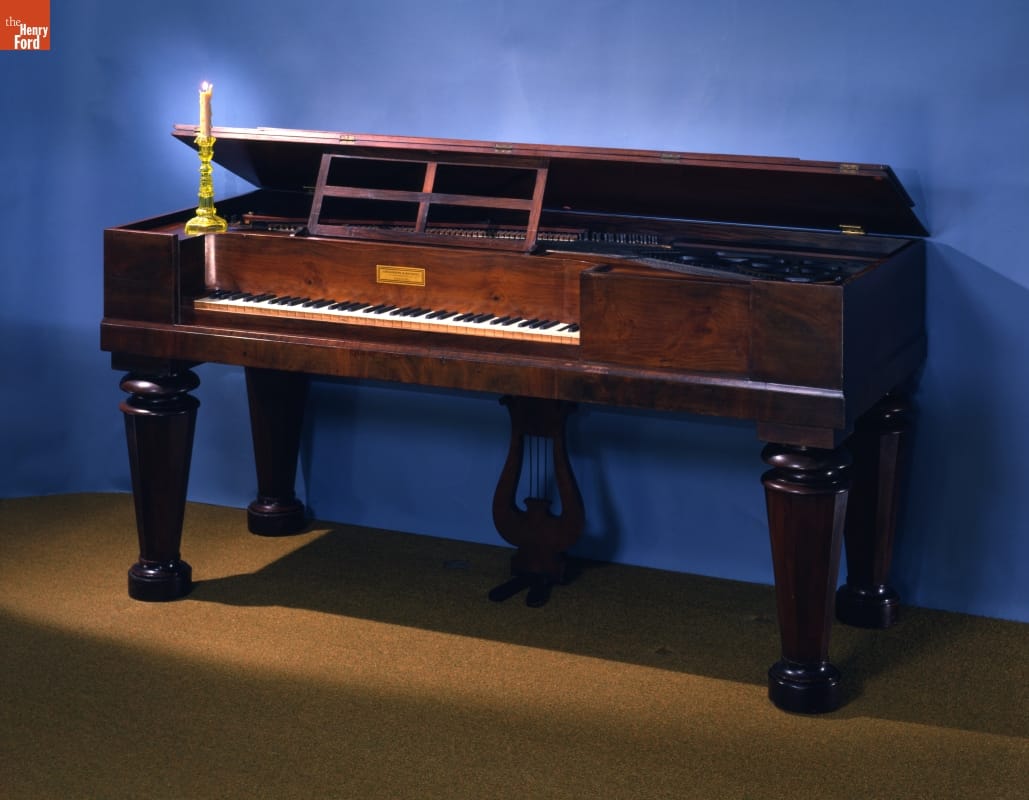
- Square Piano, 1841 - Henry Ford collected many Lincoln-related artifacts, including this piano acquired as a relic from Abraham Lincoln's White House. Research since indicates that it was made by the Chickering Company of Boston, Massachusetts, in 1841 and had a history in the Boston area. There is no evidence that this object ever graced the White House, although it was chronologically possible.
- 1841
- Collections - Artifact
Square Piano, 1841
Henry Ford collected many Lincoln-related artifacts, including this piano acquired as a relic from Abraham Lincoln's White House. Research since indicates that it was made by the Chickering Company of Boston, Massachusetts, in 1841 and had a history in the Boston area. There is no evidence that this object ever graced the White House, although it was chronologically possible.
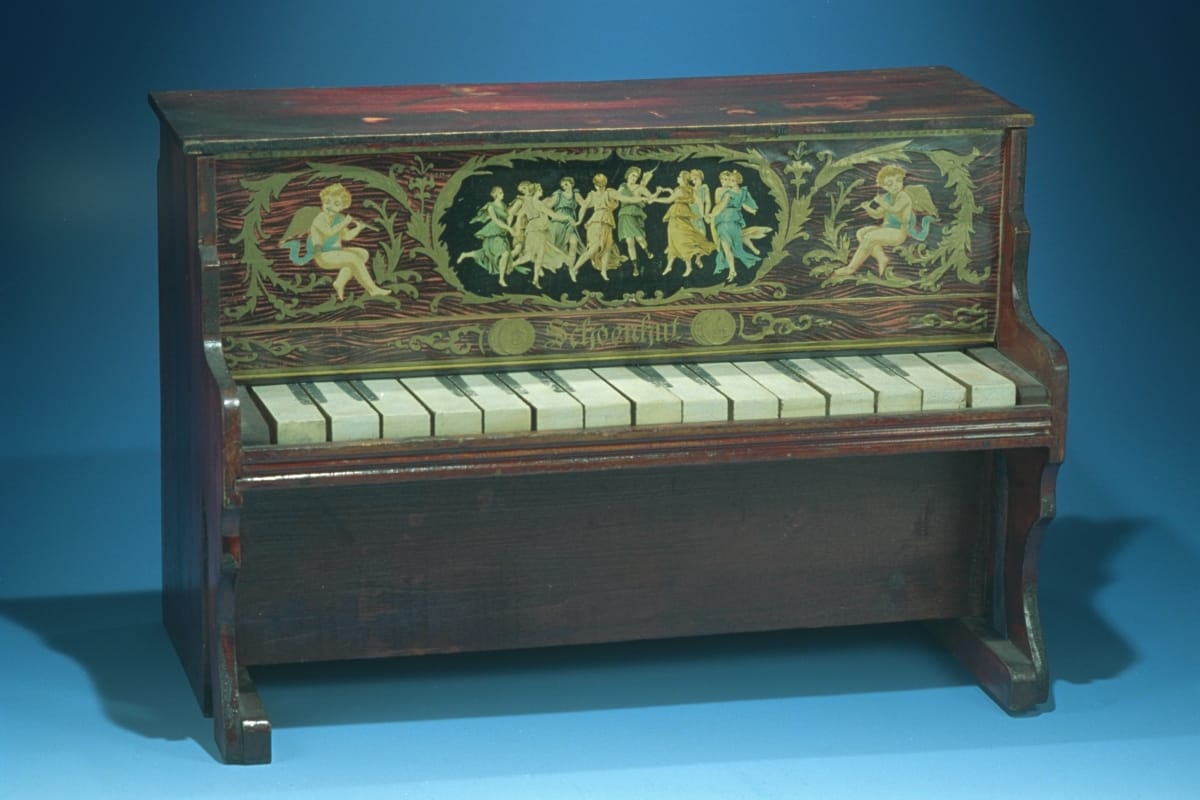
- Toy Piano, 1900-1915 - German immigrant Albert Schoenhut began producing pianos in 1872. The metal sounding bars inside the piano were designed to withstand children's rough handling of the keys, while the piano itself was marketed to parents as an educational tool for their children.
- 1900-1915
- Collections - Artifact
Toy Piano, 1900-1915
German immigrant Albert Schoenhut began producing pianos in 1872. The metal sounding bars inside the piano were designed to withstand children's rough handling of the keys, while the piano itself was marketed to parents as an educational tool for their children.
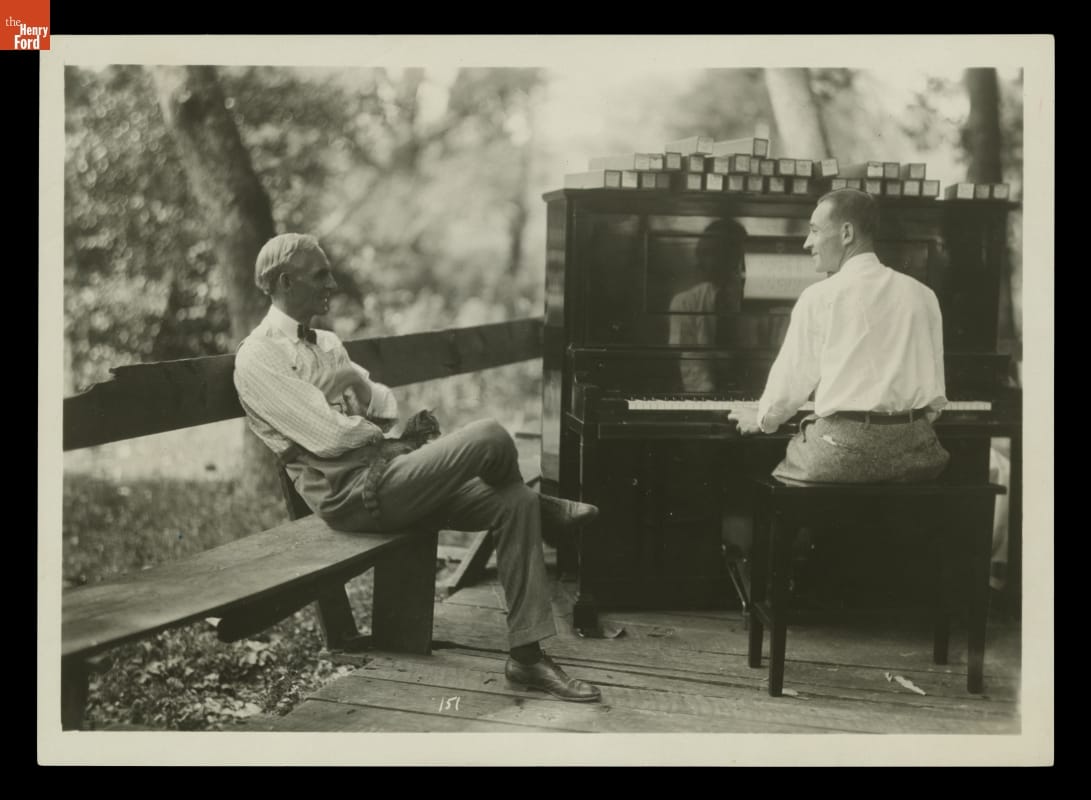
- Henry Ford and Edsel Ford with Player Piano on a "Vagabonds" Camping Trip, July 1921 - The Vagabonds (Henry Ford, Thomas Edison, Harvey Firestone, and John Burroughs) camped in style. In 1921, the famous men and their families vacationed comfortably at a remote campsite in Maryland. They were accompanied by a caravan of vehicles, full service staff, specially designed cooking and electrical equipment, and a player piano brought from nearby Hagerstown to enliven evening festivities.
- July 01, 1921
- Collections - Artifact
Henry Ford and Edsel Ford with Player Piano on a "Vagabonds" Camping Trip, July 1921
The Vagabonds (Henry Ford, Thomas Edison, Harvey Firestone, and John Burroughs) camped in style. In 1921, the famous men and their families vacationed comfortably at a remote campsite in Maryland. They were accompanied by a caravan of vehicles, full service staff, specially designed cooking and electrical equipment, and a player piano brought from nearby Hagerstown to enliven evening festivities.
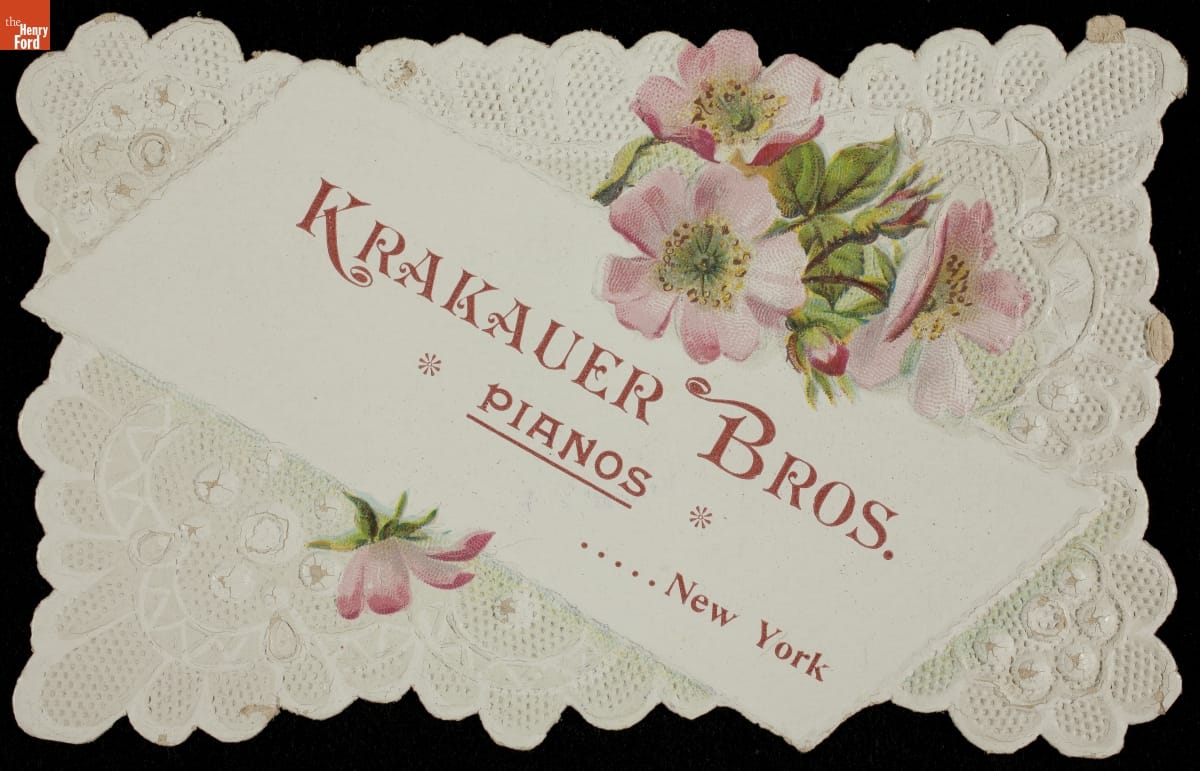
- Trade Card for Krakauer Bros. Pianos Sold by Grinnell Bros., Detroit, Michigan, 1870-1900 - In the last third of the nineteenth century, an unprecedented variety of consumer goods and services flooded the American market. Advertisers, armed with new methods of color printing, bombarded potential customers with trade cards. Americans enjoyed and often saved the vibrant little advertisements found in product packages or distributed by local merchants. Many survive as historical records of commercialism in the United States.
- 1870-1900
- Collections - Artifact
Trade Card for Krakauer Bros. Pianos Sold by Grinnell Bros., Detroit, Michigan, 1870-1900
In the last third of the nineteenth century, an unprecedented variety of consumer goods and services flooded the American market. Advertisers, armed with new methods of color printing, bombarded potential customers with trade cards. Americans enjoyed and often saved the vibrant little advertisements found in product packages or distributed by local merchants. Many survive as historical records of commercialism in the United States.
- Trade Card for Starr Pianos, 1880-1900 - In the last third of the nineteenth century, an unprecedented variety of consumer goods and services flooded the American market. Advertisers, armed with new methods of color printing, bombarded potential customers with trade cards. Americans enjoyed and often saved the vibrant little advertisements found in product packages or distributed by local merchants. Many survive as historical records of commercialism in the United States.
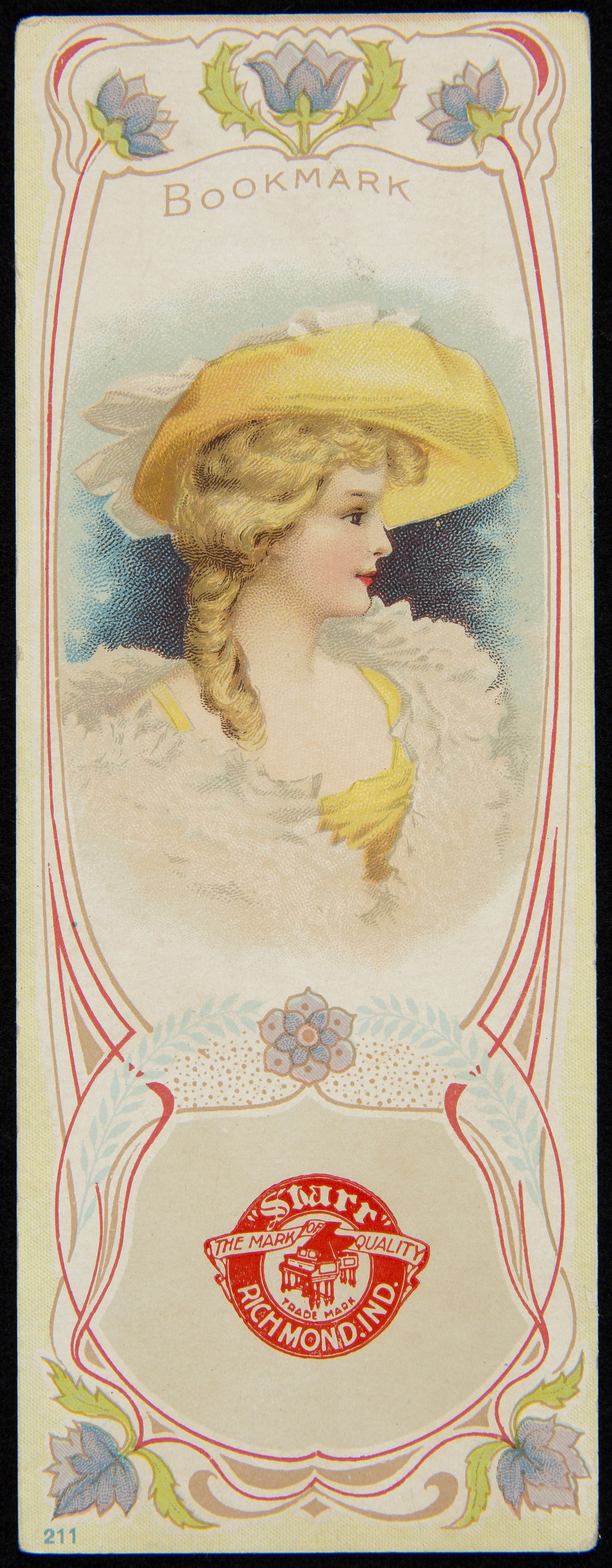
- 1880-1900
- Collections - Artifact
Trade Card for Starr Pianos, 1880-1900
In the last third of the nineteenth century, an unprecedented variety of consumer goods and services flooded the American market. Advertisers, armed with new methods of color printing, bombarded potential customers with trade cards. Americans enjoyed and often saved the vibrant little advertisements found in product packages or distributed by local merchants. Many survive as historical records of commercialism in the United States.
- Trade Card for Sterling Pianos, 1880-1900 - In the last third of the nineteenth century, an unprecedented variety of consumer goods and services flooded the American market. Advertisers, armed with new methods of color printing, bombarded potential customers with trade cards. Americans enjoyed and often saved the vibrant little advertisements found in product packages or distributed by local merchants. Many survive as historical records of commercialism in the United States.
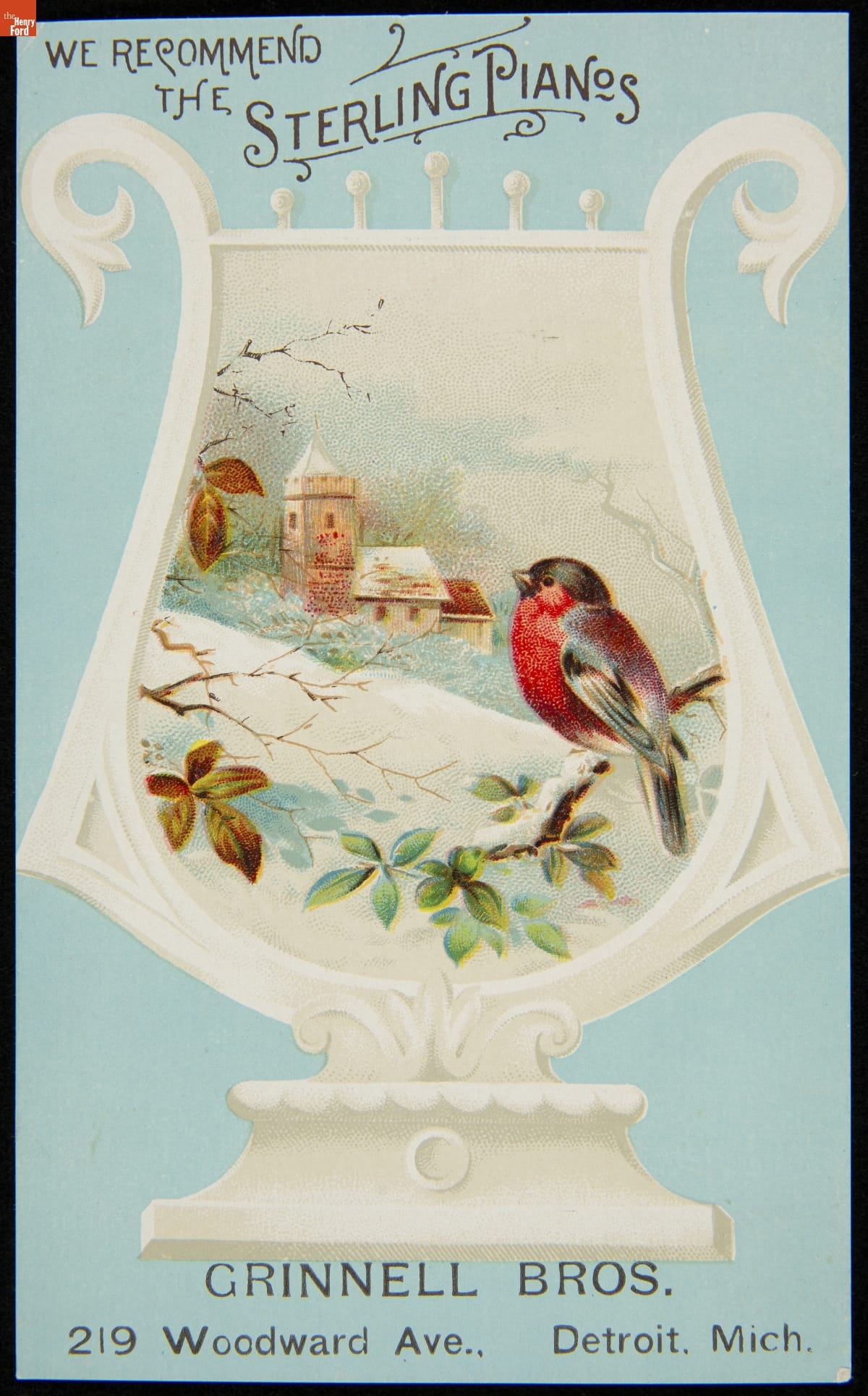
- 1880-1900
- Collections - Artifact
Trade Card for Sterling Pianos, 1880-1900
In the last third of the nineteenth century, an unprecedented variety of consumer goods and services flooded the American market. Advertisers, armed with new methods of color printing, bombarded potential customers with trade cards. Americans enjoyed and often saved the vibrant little advertisements found in product packages or distributed by local merchants. Many survive as historical records of commercialism in the United States.