
Search
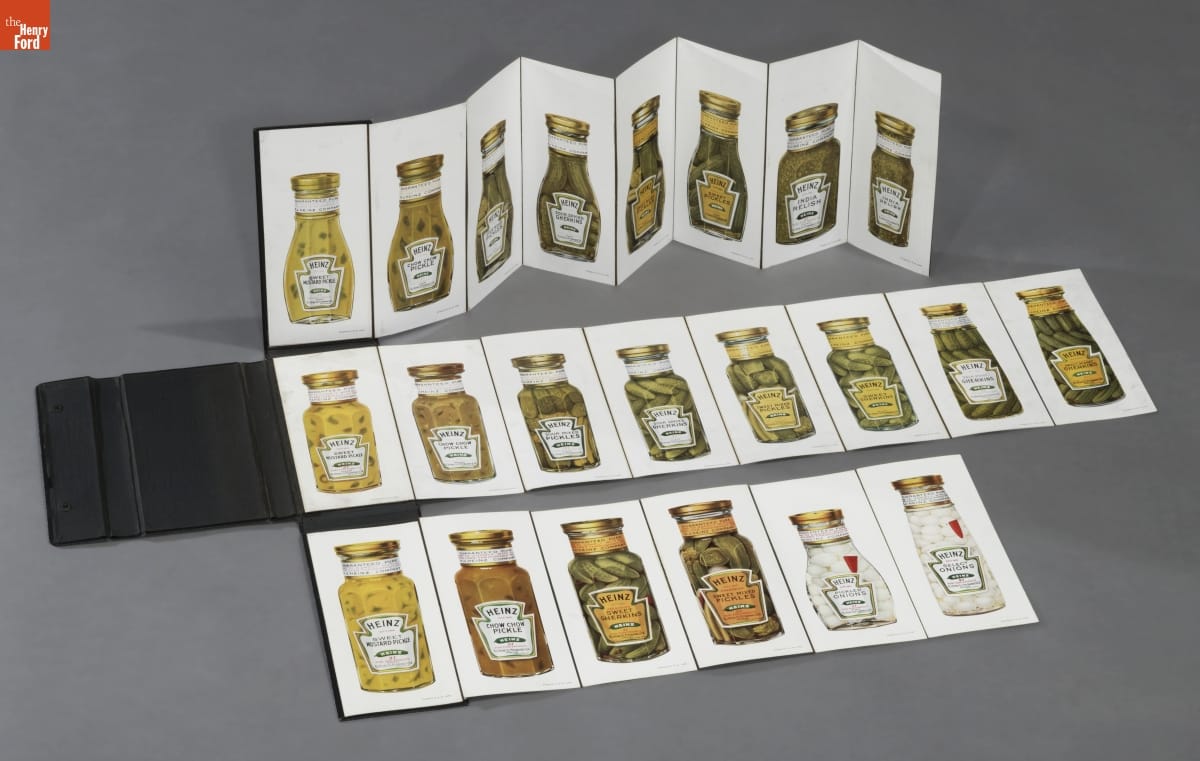
- Heinz "Pickled Products" Salesman Kit, circa 1918 - With many varieties of pickles and condiments that the company sold, a Heinz salesperson relied on a kit with fold-out cards to present the products to potential customers. Whether selling to store owners or peddling to residents in their homes, the kit allowed salespeople to show a variety of products without physically carrying them.
- circa 1918
- Collections - Artifact
Heinz "Pickled Products" Salesman Kit, circa 1918
With many varieties of pickles and condiments that the company sold, a Heinz salesperson relied on a kit with fold-out cards to present the products to potential customers. Whether selling to store owners or peddling to residents in their homes, the kit allowed salespeople to show a variety of products without physically carrying them.
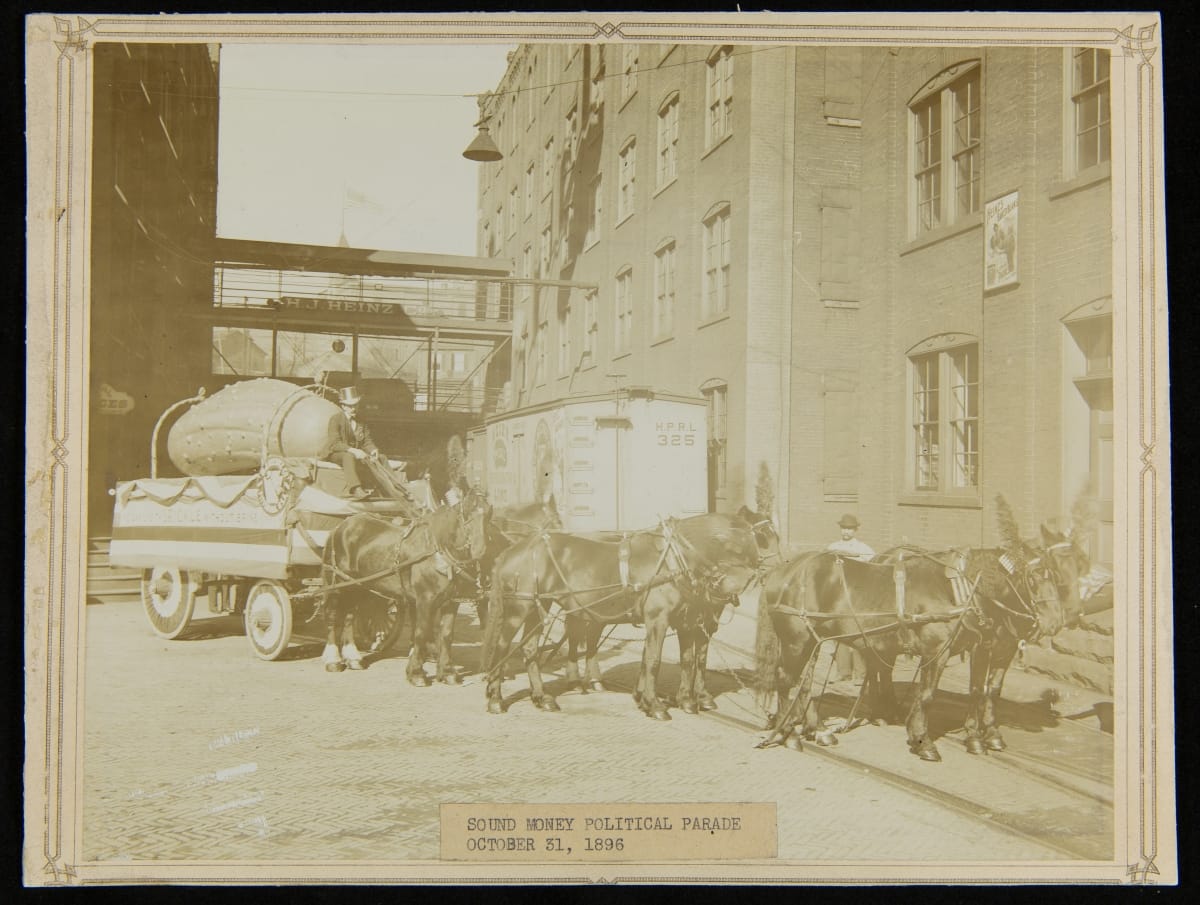
- Heinz Float for the Sound Money Political Parade in Pittsburgh, Pennsylvania, October 31, 1896 - During the 1896 election campaign, "Sound Money" political parades were held in San Francisco and New York City in support of presidential candidate William McKinley. The H.J. Heinz Company participated in the parade held in New York with this float featuring a giant pickle. McKinley would go on to defeat candidate William Jennings Bryan to become President.
- October 31, 1896
- Collections - Artifact
Heinz Float for the Sound Money Political Parade in Pittsburgh, Pennsylvania, October 31, 1896
During the 1896 election campaign, "Sound Money" political parades were held in San Francisco and New York City in support of presidential candidate William McKinley. The H.J. Heinz Company participated in the parade held in New York with this float featuring a giant pickle. McKinley would go on to defeat candidate William Jennings Bryan to become President.
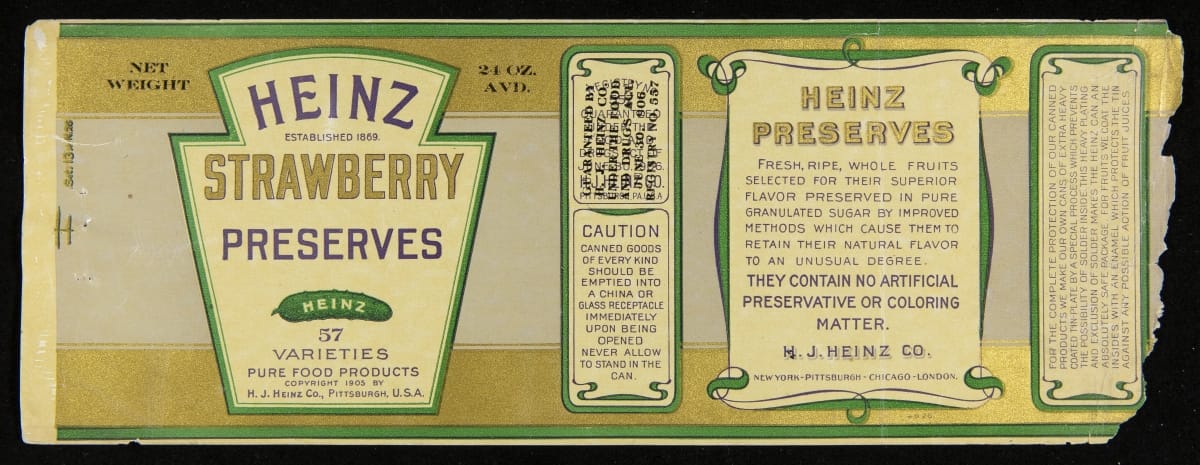
- Can Label, "Heinz Brand Strawberry Preserves," 1906-1910 - Manufacturers of similar products sought ways to make their companies' goods stand out on store shelves. Some companies established a uniform label design for their multi-product offerings -- a strategy which helped customers distinguish one brand over another. H.J. Heinz products were identified by the famous Heinz pickle and signature "keystone" logo. These design features are still found on Heinz products today.
- 1906-1910
- Collections - Artifact
Can Label, "Heinz Brand Strawberry Preserves," 1906-1910
Manufacturers of similar products sought ways to make their companies' goods stand out on store shelves. Some companies established a uniform label design for their multi-product offerings -- a strategy which helped customers distinguish one brand over another. H.J. Heinz products were identified by the famous Heinz pickle and signature "keystone" logo. These design features are still found on Heinz products today.
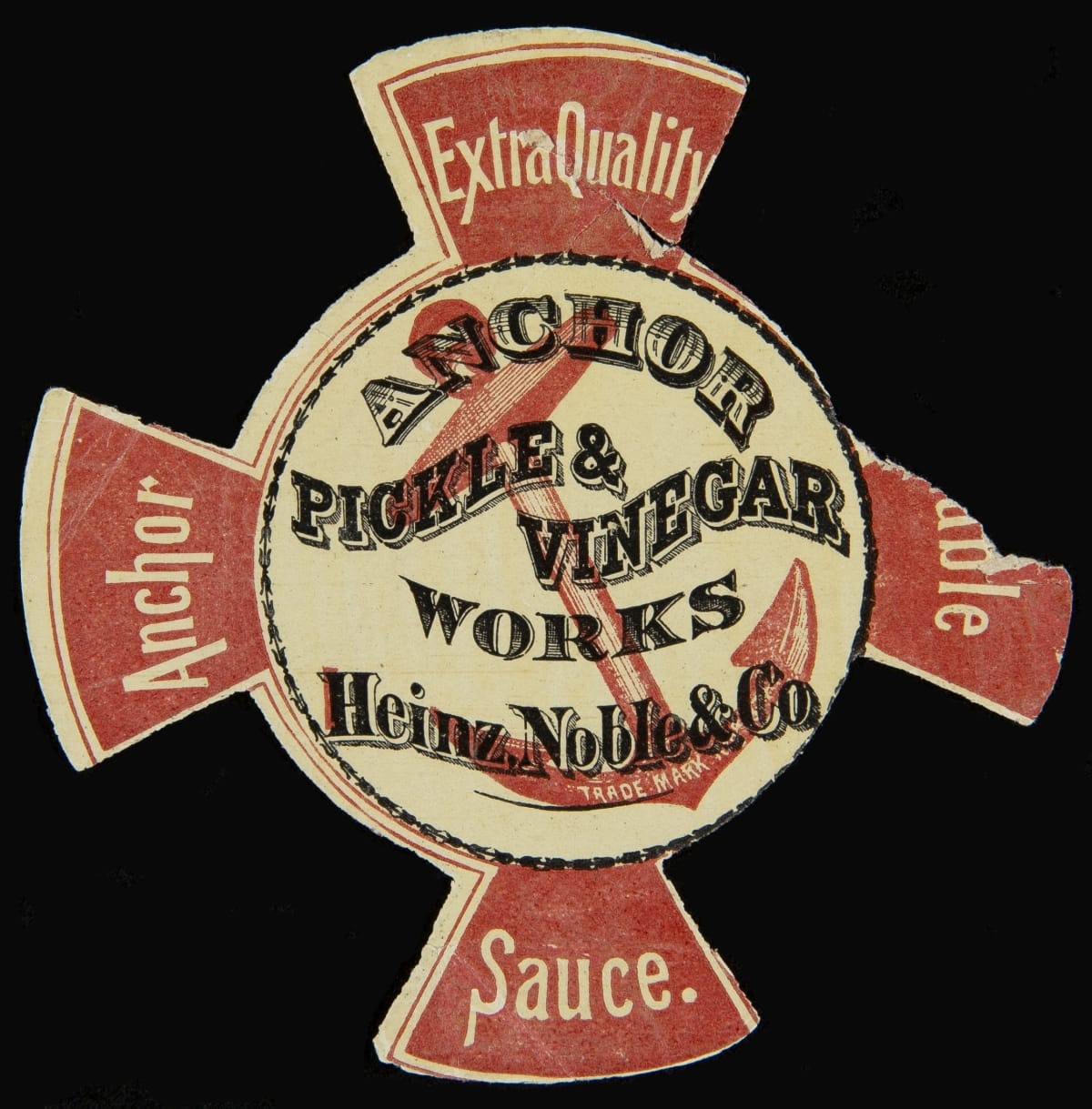
- Label, "Heinz, Noble & Company Brand Sauce Product," circa 1875 - In 1869, entrepreneur H.J. Heinz entered the processed food business with L.C. Noble selling products under the Anchor Brand. Horseradish was their first product, quickly followed by celery sauce and pickled cucumbers (pickles today) among other pickled foods and condiments. In 1872, L.C. Noble's brother joined the partnership and the company's name officially became Heinz, Noble & Co. until it went bankrupt in 1875.
- circa 1875
- Collections - Artifact
Label, "Heinz, Noble & Company Brand Sauce Product," circa 1875
In 1869, entrepreneur H.J. Heinz entered the processed food business with L.C. Noble selling products under the Anchor Brand. Horseradish was their first product, quickly followed by celery sauce and pickled cucumbers (pickles today) among other pickled foods and condiments. In 1872, L.C. Noble's brother joined the partnership and the company's name officially became Heinz, Noble & Co. until it went bankrupt in 1875.
- Label, "H. J. Heinz Brand Distilled White Vinegar," 1888-1940 - Manufacturers of similar products sought ways to make their companies' goods stand out on store shelves. Some companies established a uniform label design for their multi-product offerings -- a strategy which helped customers distinguish one brand over another. H.J. Heinz products were identified by the famous Heinz pickle and signature "keystone" logo. These design features are still found on Heinz products today.
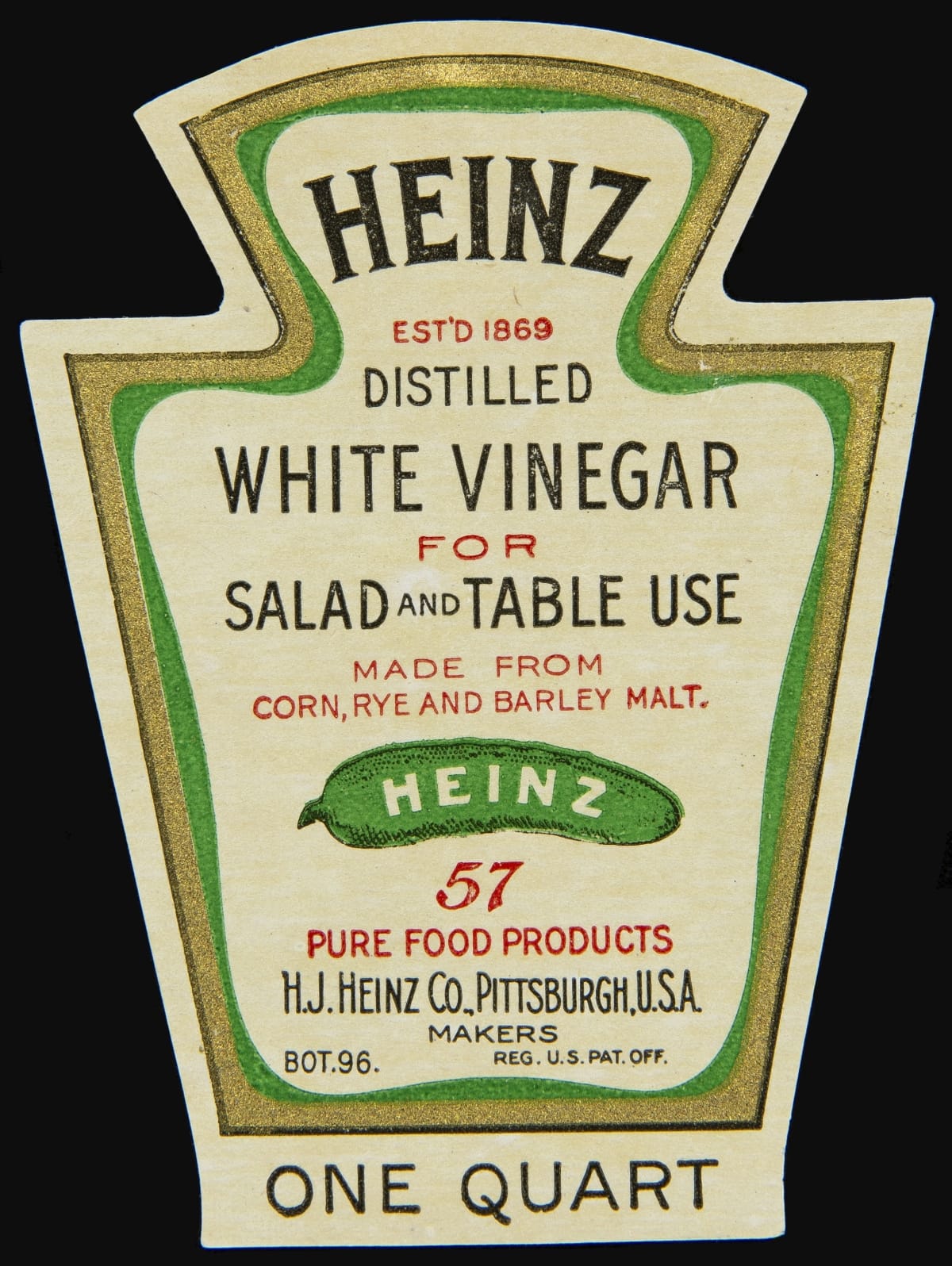
- 1888-1940
- Collections - Artifact
Label, "H. J. Heinz Brand Distilled White Vinegar," 1888-1940
Manufacturers of similar products sought ways to make their companies' goods stand out on store shelves. Some companies established a uniform label design for their multi-product offerings -- a strategy which helped customers distinguish one brand over another. H.J. Heinz products were identified by the famous Heinz pickle and signature "keystone" logo. These design features are still found on Heinz products today.
- Label, "H. J. Heinz Brand Distilled White Vinegar," 1888-1940 - Manufacturers of similar products sought ways to make their companies' goods stand out on store shelves. Some companies established a uniform label design for their multi-product offerings -- a strategy which helped customers distinguish one brand over another. H.J. Heinz products were identified by the famous Heinz pickle and signature "keystone" logo. These design features are still found on Heinz products today.
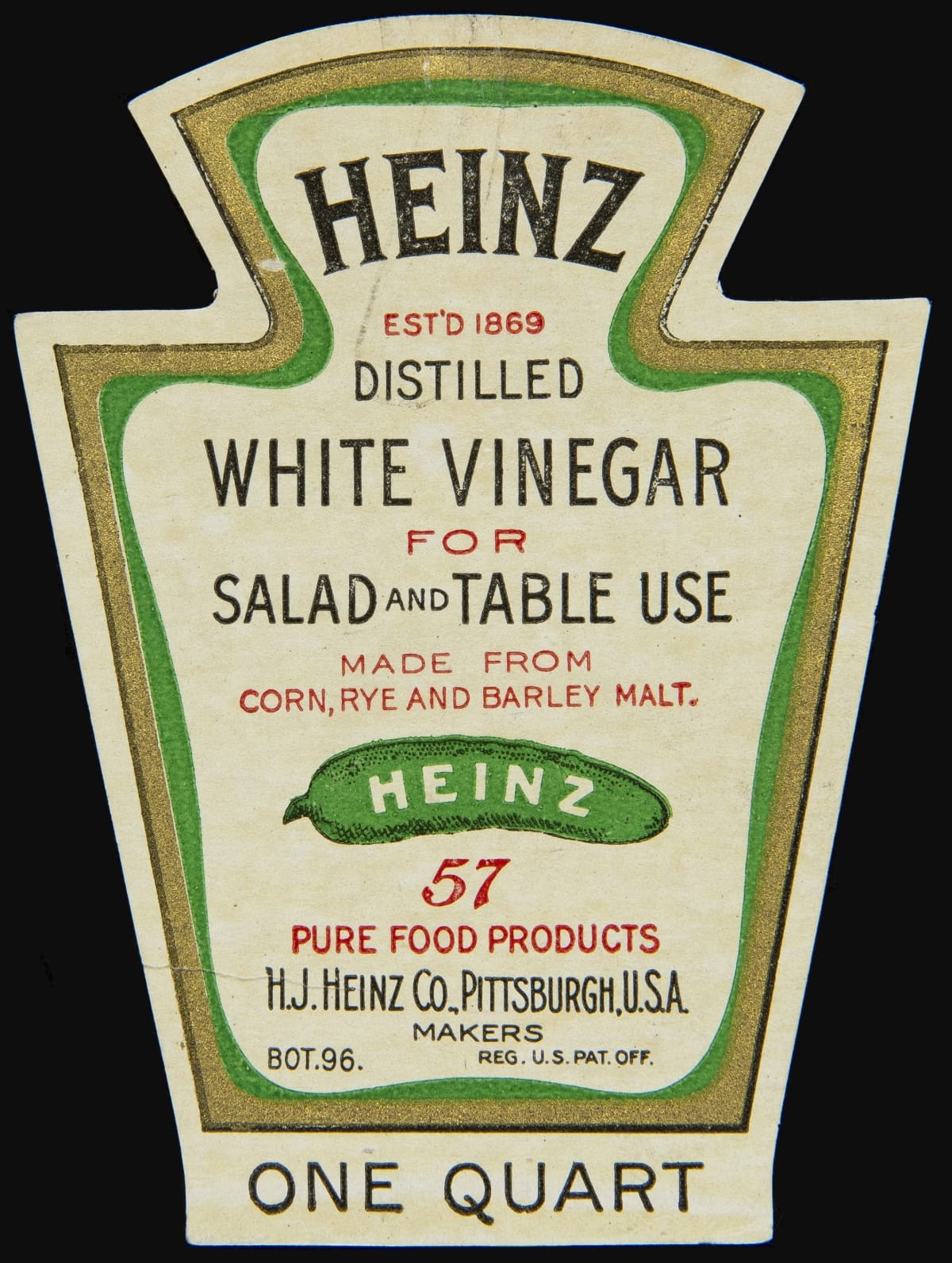
- 1888-1940
- Collections - Artifact
Label, "H. J. Heinz Brand Distilled White Vinegar," 1888-1940
Manufacturers of similar products sought ways to make their companies' goods stand out on store shelves. Some companies established a uniform label design for their multi-product offerings -- a strategy which helped customers distinguish one brand over another. H.J. Heinz products were identified by the famous Heinz pickle and signature "keystone" logo. These design features are still found on Heinz products today.
- Label, "H. J. Heinz Brand Distilled White Vinegar," 1888-1940 - Manufacturers of similar products sought ways to make their companies' goods stand out on store shelves. Some companies established a uniform label design for their multi-product offerings -- a strategy which helped customers distinguish one brand over another. H.J. Heinz products were identified by the famous Heinz pickle and signature "keystone" logo. These design features are still found on Heinz products today.
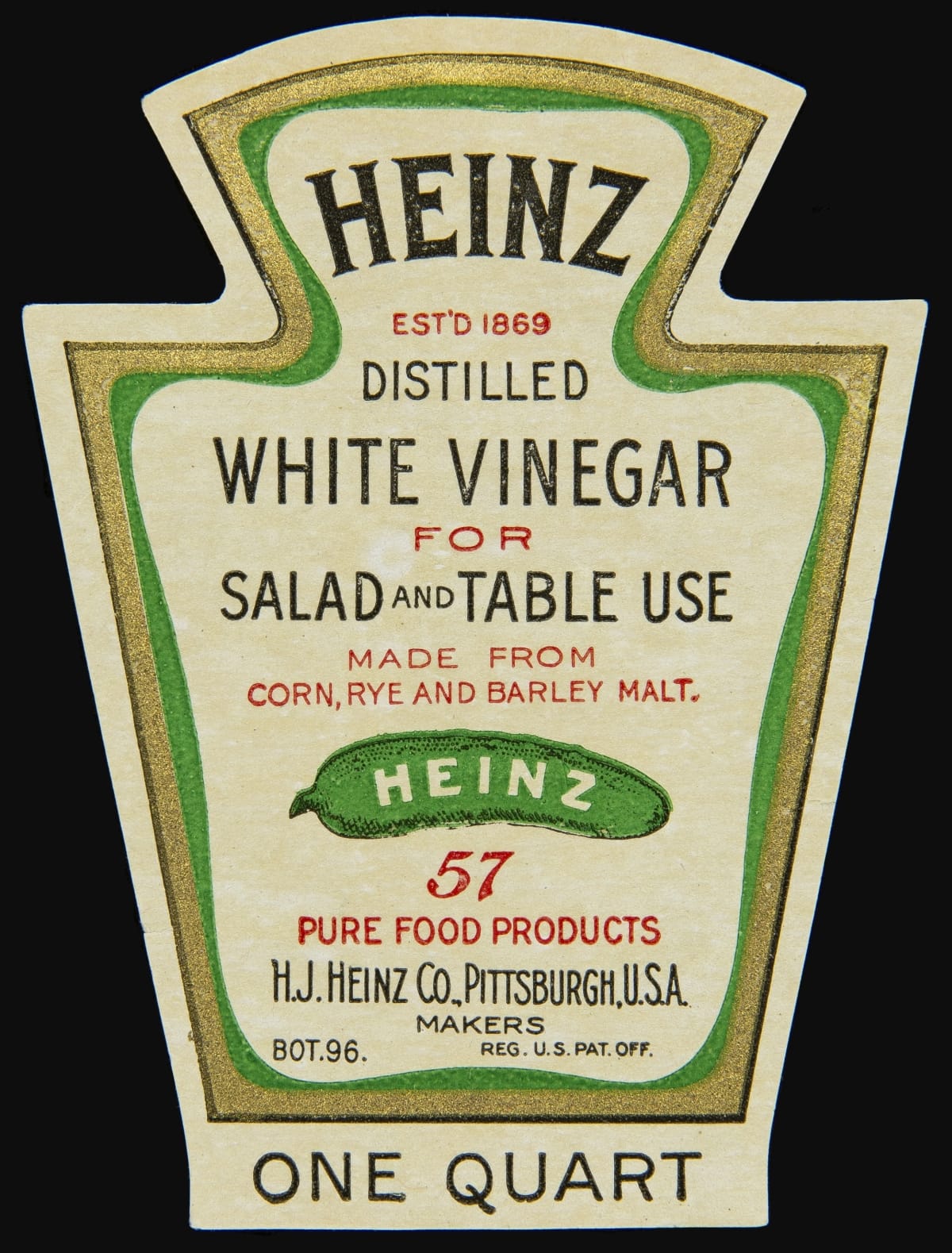
- 1888-1940
- Collections - Artifact
Label, "H. J. Heinz Brand Distilled White Vinegar," 1888-1940
Manufacturers of similar products sought ways to make their companies' goods stand out on store shelves. Some companies established a uniform label design for their multi-product offerings -- a strategy which helped customers distinguish one brand over another. H.J. Heinz products were identified by the famous Heinz pickle and signature "keystone" logo. These design features are still found on Heinz products today.
- Label, "H. J. Heinz Brand Tarragon Flavored Vinegar," 1888-1940 - Manufacturers of similar products sought ways to make their companies' goods stand out on store shelves. Some companies established a uniform label design for their multi-product offerings -- a strategy which helped customers distinguish one brand over another. H.J. Heinz products were identified by the famous Heinz pickle and signature "keystone" logo. These design features are still found on Heinz products today.
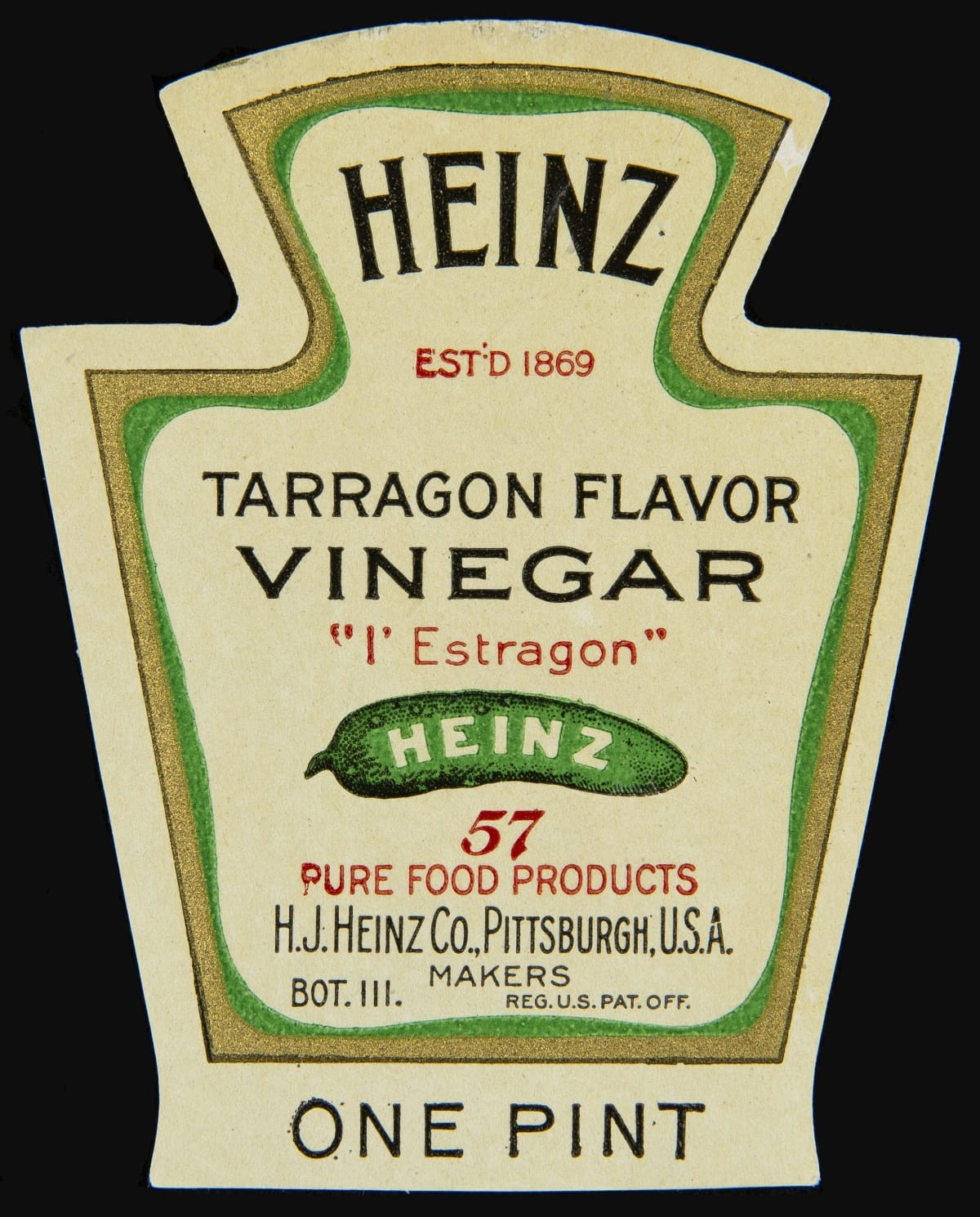
- 1888-1940
- Collections - Artifact
Label, "H. J. Heinz Brand Tarragon Flavored Vinegar," 1888-1940
Manufacturers of similar products sought ways to make their companies' goods stand out on store shelves. Some companies established a uniform label design for their multi-product offerings -- a strategy which helped customers distinguish one brand over another. H.J. Heinz products were identified by the famous Heinz pickle and signature "keystone" logo. These design features are still found on Heinz products today.
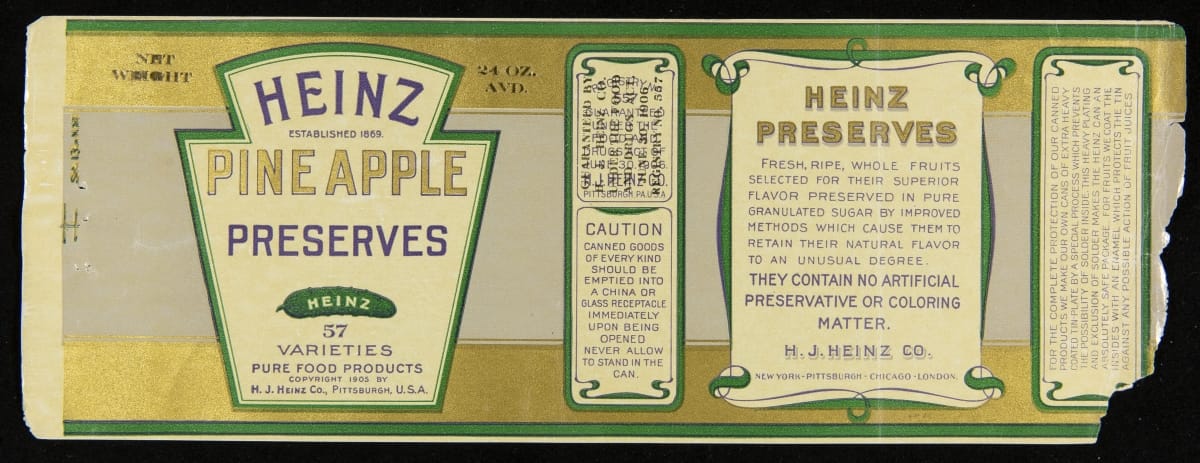
- Can Label, "Heinz Brand Pineapple Preserves," 1906-1910 - Manufacturers of similar products sought ways to make their companies' goods stand out on store shelves. Some companies established a uniform label design for their multi-product offerings -- a strategy which helped customers distinguish one brand over another. H.J. Heinz products were identified by the famous Heinz pickle and signature "keystone" logo. These design features are still found on Heinz products today.
- 1906-1910
- Collections - Artifact
Can Label, "Heinz Brand Pineapple Preserves," 1906-1910
Manufacturers of similar products sought ways to make their companies' goods stand out on store shelves. Some companies established a uniform label design for their multi-product offerings -- a strategy which helped customers distinguish one brand over another. H.J. Heinz products were identified by the famous Heinz pickle and signature "keystone" logo. These design features are still found on Heinz products today.
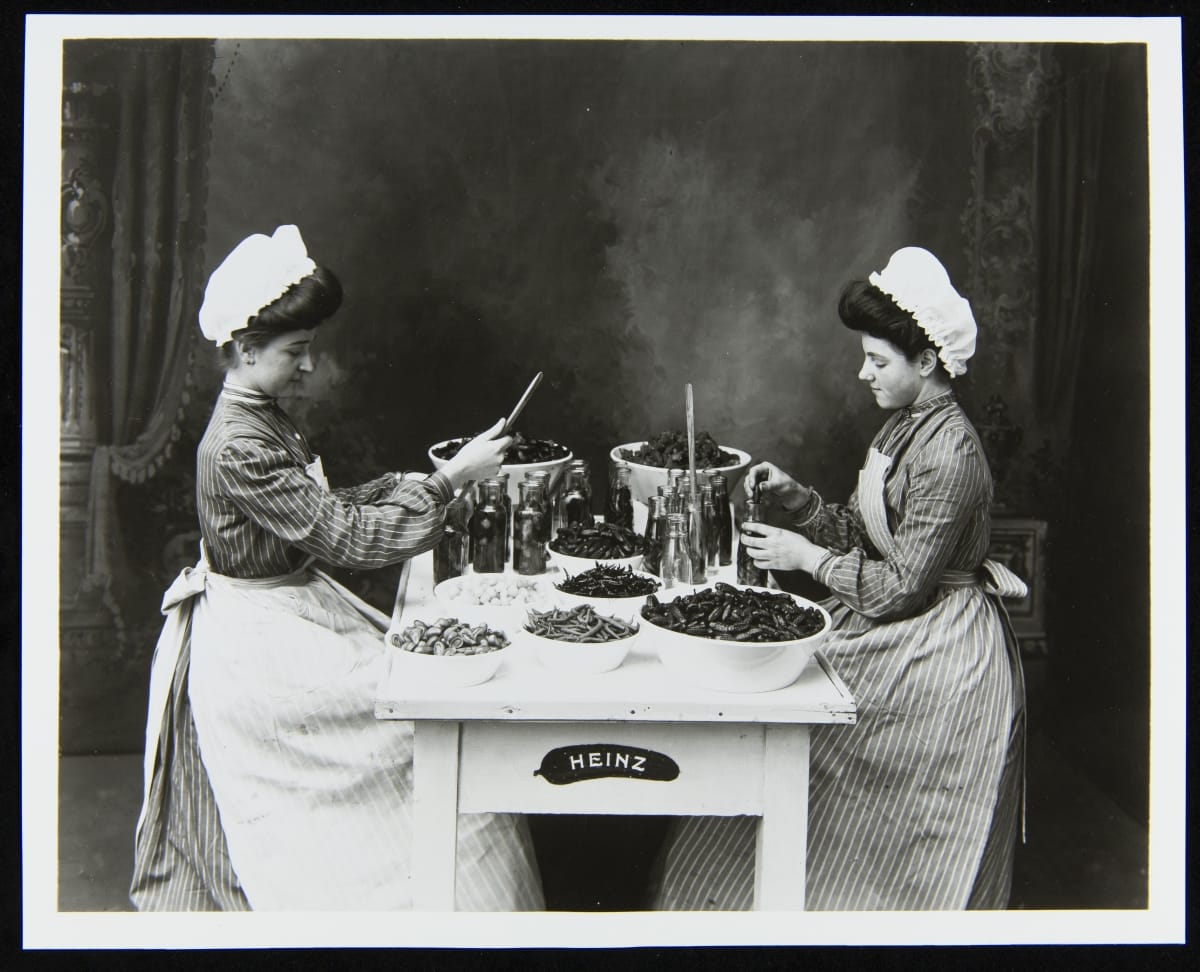
- "Heinz Girls" Filling Pickle Jars by Hand, H. J. Heinz Company, circa 1900 - Before the Heinz name was synonymous with ketchup, the H. J. Heinz Company was known for its many varieties of pickles. Every day Heinz's team of female employees, referred to as "Heinz Girls," meticulously packed pickle jars. Different sized pickles were placed in uniquely sized jars which required fluted wands to accurately pack the pickles into their specific arrangements.
- circa 1900
- Collections - Artifact
"Heinz Girls" Filling Pickle Jars by Hand, H. J. Heinz Company, circa 1900
Before the Heinz name was synonymous with ketchup, the H. J. Heinz Company was known for its many varieties of pickles. Every day Heinz's team of female employees, referred to as "Heinz Girls," meticulously packed pickle jars. Different sized pickles were placed in uniquely sized jars which required fluted wands to accurately pack the pickles into their specific arrangements.