
Search
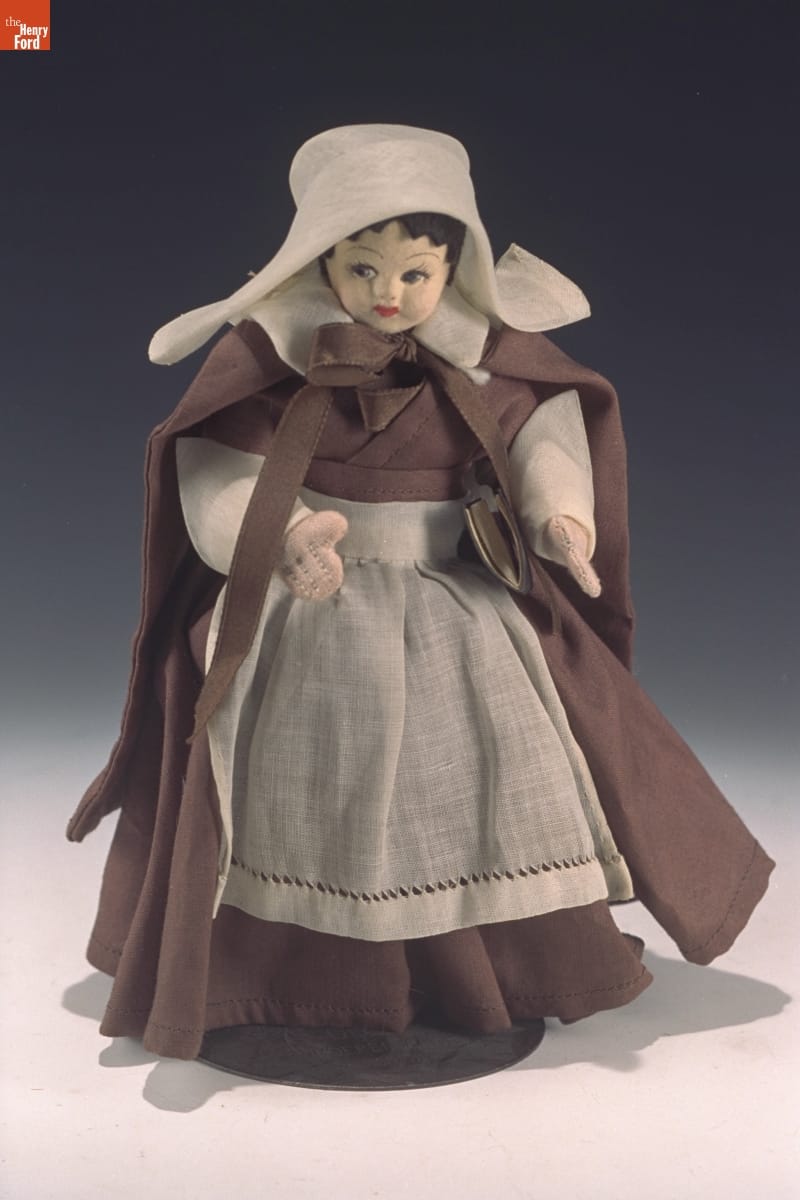
- Character Doll, Priscilla Mullins Alden, 1938 -
- 1938
- Collections - Artifact
Character Doll, Priscilla Mullins Alden, 1938
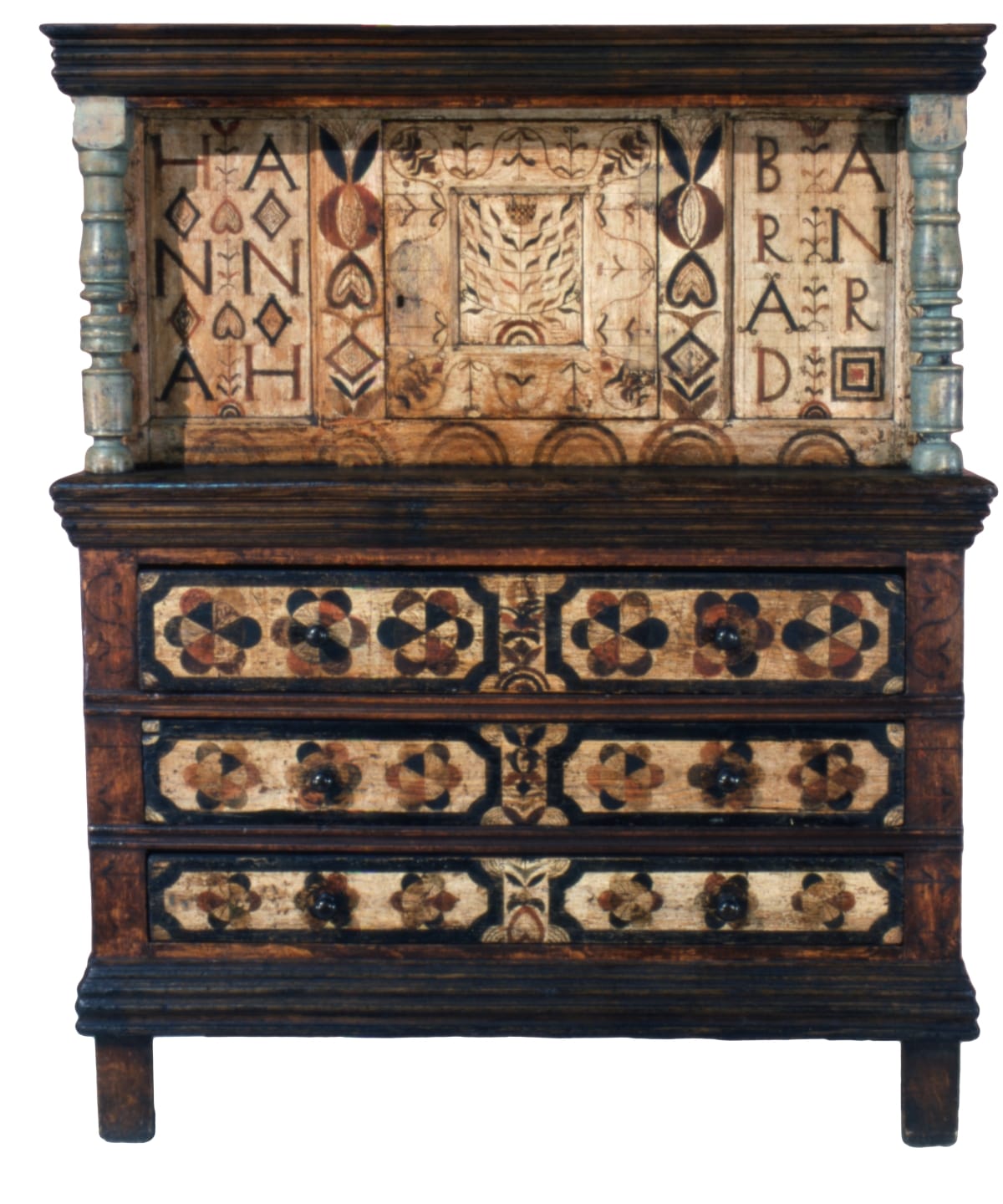
- Court Cupboard, Owned by Hannah Barnard, 1710-1720 - This court cupboard is remarkable because it was made for a woman and prominently features her name. It held newlywed Hannah Barnard's precious household belongings -- silver or pewter, ceramics, and linens. In addition to providing storage space, the gloriously decorated cupboard symbolized Hannah's wealth and status and served as a vibrant work of art in her Hadley, Massachusetts, home.
- 1710-1720
- Collections - Artifact
Court Cupboard, Owned by Hannah Barnard, 1710-1720
This court cupboard is remarkable because it was made for a woman and prominently features her name. It held newlywed Hannah Barnard's precious household belongings -- silver or pewter, ceramics, and linens. In addition to providing storage space, the gloriously decorated cupboard symbolized Hannah's wealth and status and served as a vibrant work of art in her Hadley, Massachusetts, home.
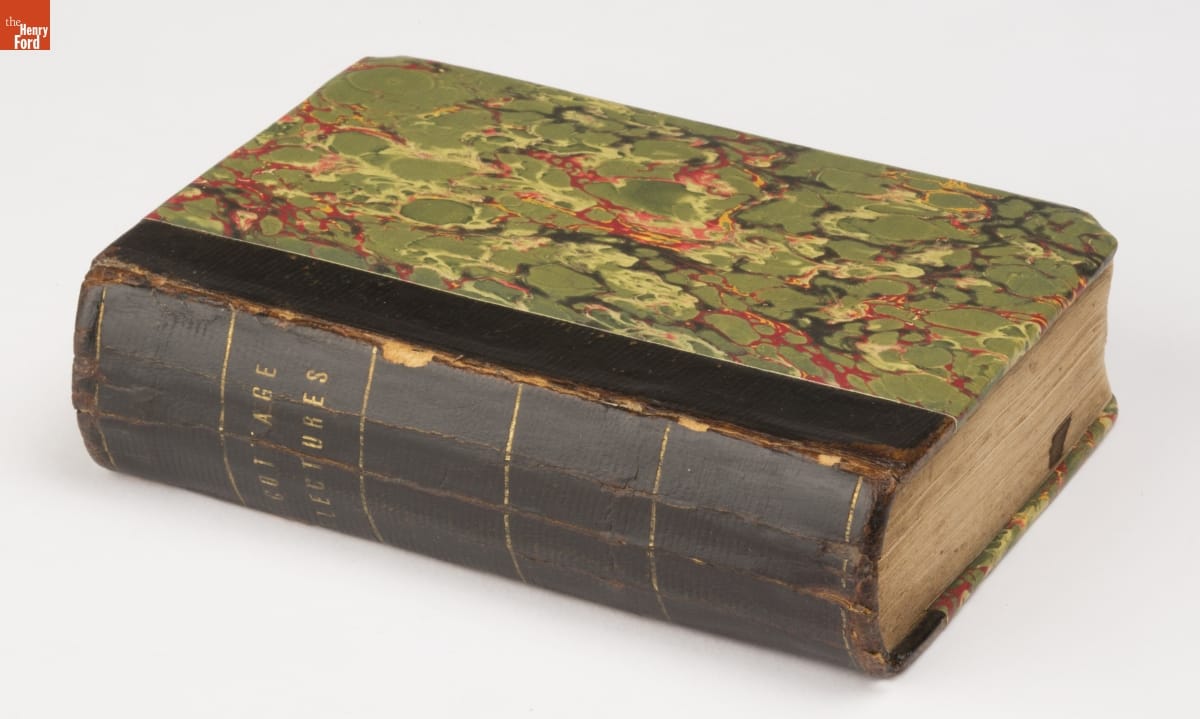
- "Cottage Lectures, or, The Pilgrim's Progress Practically Explained," 1849 -
- 1849
- Collections - Artifact
"Cottage Lectures, or, The Pilgrim's Progress Practically Explained," 1849
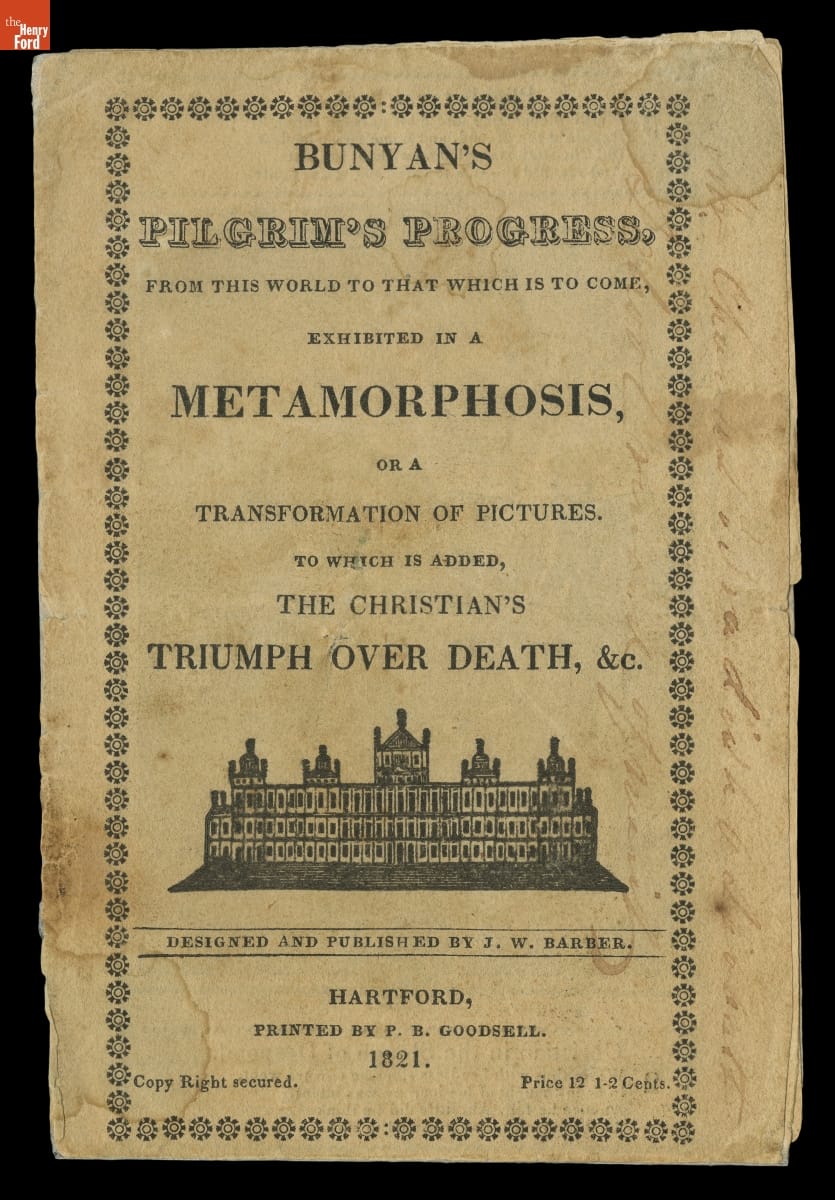
- "Bunyan's Pilgrim's Progress, from This World to That Which is to Come, Exhibited in a Metamorphosis...," 1821 - John Bunyan, an English writer and Puritan preacher, published <em>The Pilgrim's Progress</em> in 1678. The Christian allegorical story has remained in print ever since. In the early 1800s, John Warner Barber designed and created illustrations for this "metamorphosis" version published by P. B. Goodsell. Images and text change when readers flip panels up or down.
- 1821
- Collections - Artifact
"Bunyan's Pilgrim's Progress, from This World to That Which is to Come, Exhibited in a Metamorphosis...," 1821
John Bunyan, an English writer and Puritan preacher, published The Pilgrim's Progress in 1678. The Christian allegorical story has remained in print ever since. In the early 1800s, John Warner Barber designed and created illustrations for this "metamorphosis" version published by P. B. Goodsell. Images and text change when readers flip panels up or down.
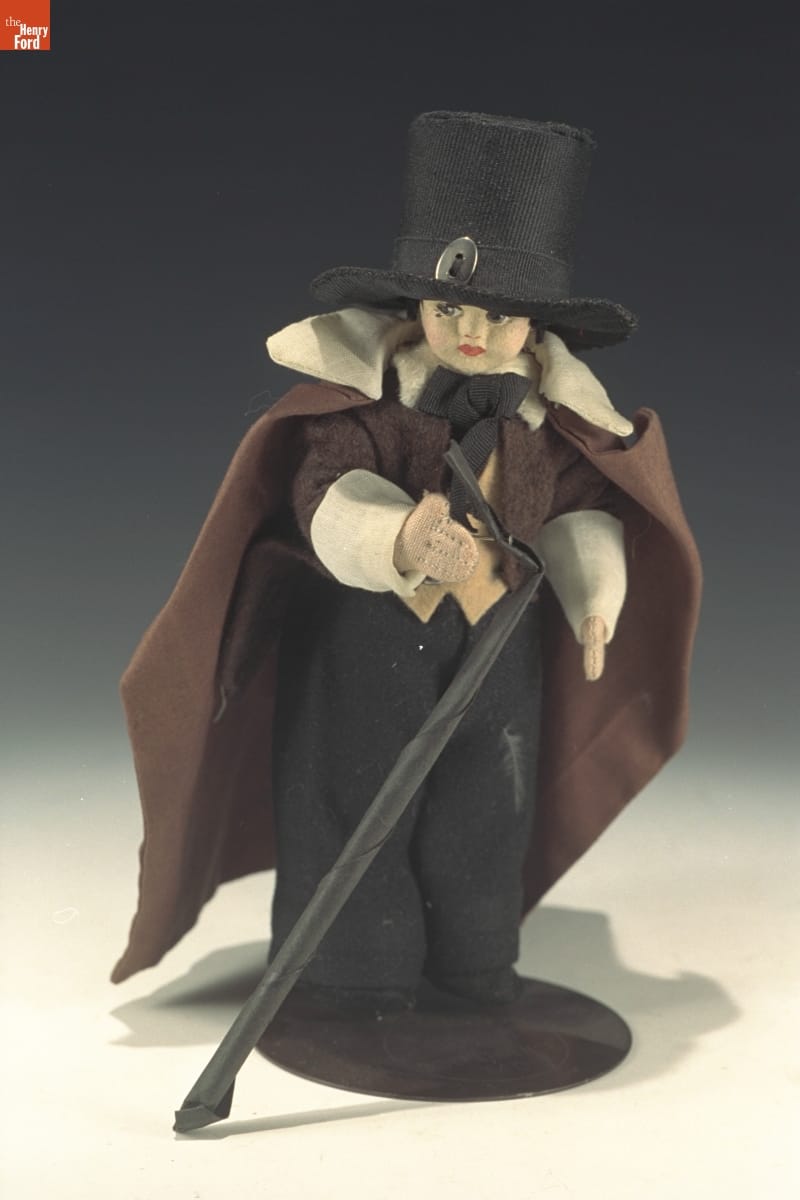
- John Alden Doll, 1938 -
- 1938
- Collections - Artifact
John Alden Doll, 1938