
Search
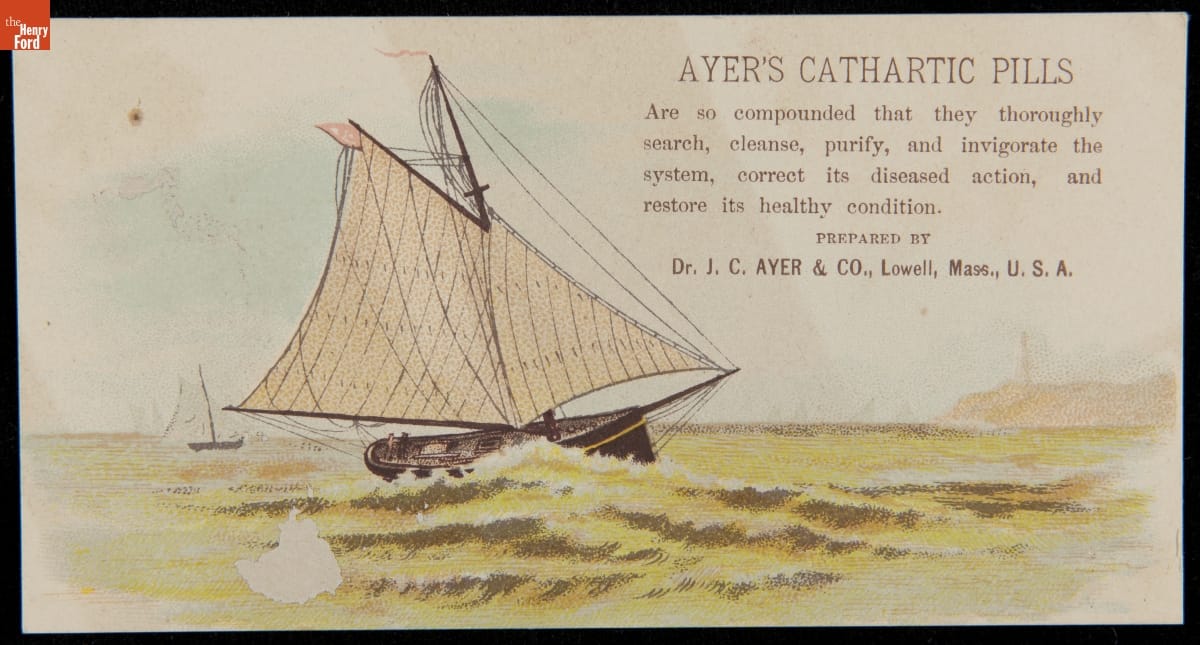
- Trade Card for Ayer's Cathartic Pills, 1880-1900 - In the last third of the nineteenth century, an unprecedented variety of consumer goods and services flooded the American market. Advertisers, armed with new methods of color printing, bombarded potential customers with trade cards. Americans enjoyed and often saved the vibrant little advertisements found in product packages or distributed by local merchants. Many survive as historical records of commercialism in the United States.
- 1880-1900
- Collections - Artifact
Trade Card for Ayer's Cathartic Pills, 1880-1900
In the last third of the nineteenth century, an unprecedented variety of consumer goods and services flooded the American market. Advertisers, armed with new methods of color printing, bombarded potential customers with trade cards. Americans enjoyed and often saved the vibrant little advertisements found in product packages or distributed by local merchants. Many survive as historical records of commercialism in the United States.
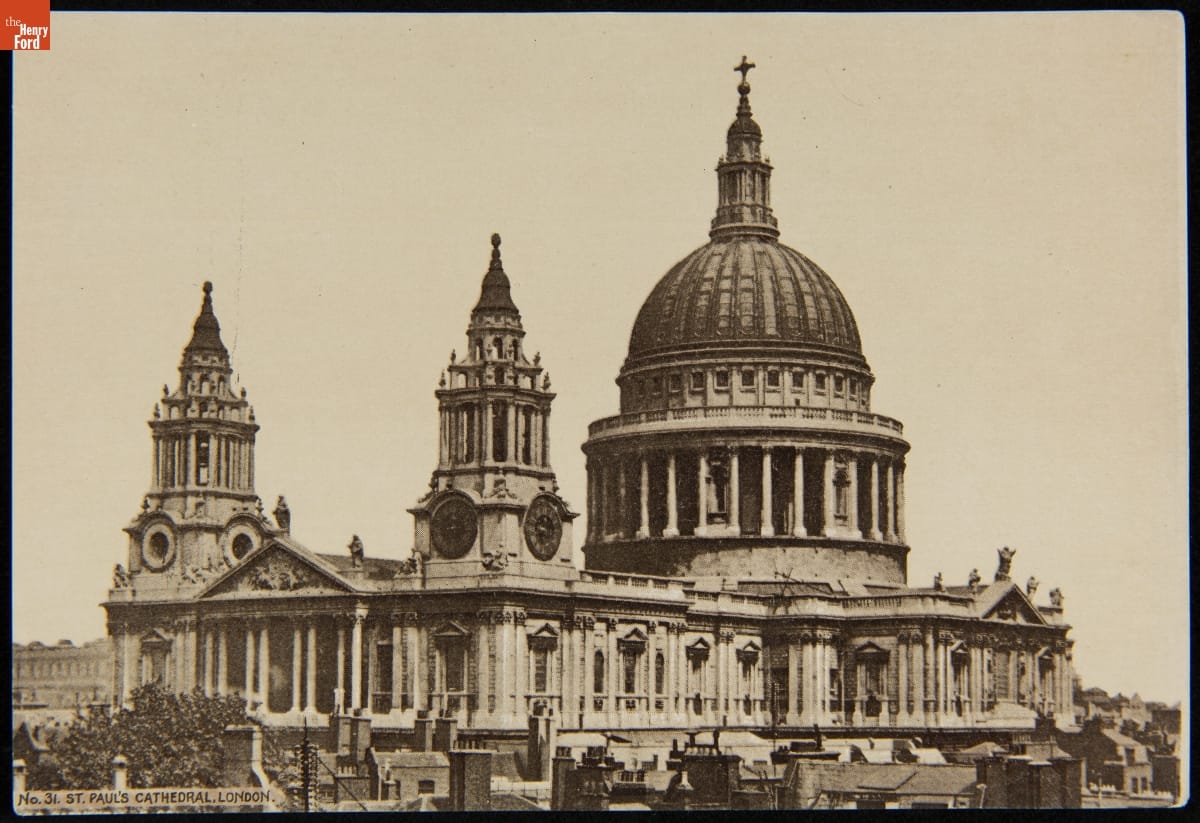
- Trade Card for C.I. Hood & Co. with Hood's Photos of the World, "St. Paul's Cathedral, London, England," 1890-1910 - In the late 19th century, trade cards were a major means of advertising goods and services. Patent medicine producer, C.I. Hood & Co., had its own advertising department, creating cookbooks, calendars, and, most abundantly, trade cards. The trade card series, "Hood's Photos of the World," became popular among consumers, as it offered views of far-away places, providing a window to the broader world.
- 1890-1910
- Collections - Artifact
Trade Card for C.I. Hood & Co. with Hood's Photos of the World, "St. Paul's Cathedral, London, England," 1890-1910
In the late 19th century, trade cards were a major means of advertising goods and services. Patent medicine producer, C.I. Hood & Co., had its own advertising department, creating cookbooks, calendars, and, most abundantly, trade cards. The trade card series, "Hood's Photos of the World," became popular among consumers, as it offered views of far-away places, providing a window to the broader world.
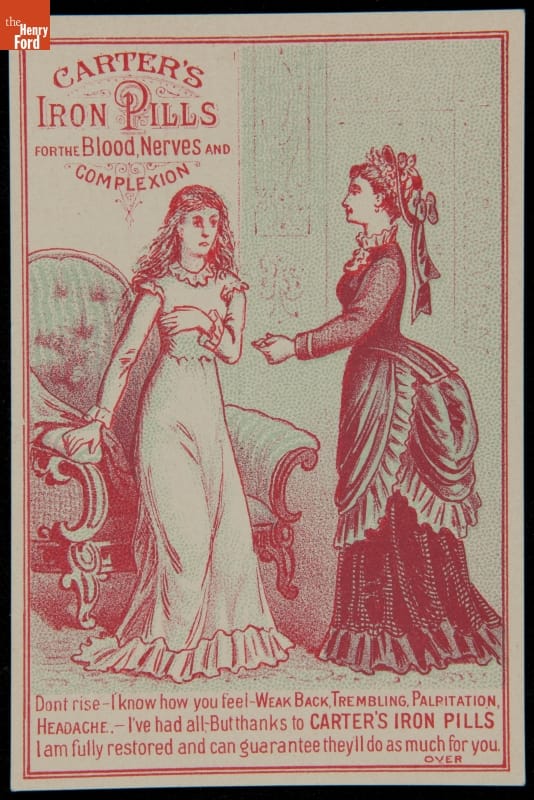
- Trade Card for Carter's Iron Pills, Carter Medicine Co., 1880-1890 - In the last third of the nineteenth century, an unprecedented variety of consumer goods and services flooded the American market. Advertisers, armed with new methods of color printing, bombarded potential customers with trade cards. Americans enjoyed and often saved the vibrant little advertisements found in product packages or distributed by local merchants. Many survive as historical records of commercialism in the United States.
- 1880-1890
- Collections - Artifact
Trade Card for Carter's Iron Pills, Carter Medicine Co., 1880-1890
In the last third of the nineteenth century, an unprecedented variety of consumer goods and services flooded the American market. Advertisers, armed with new methods of color printing, bombarded potential customers with trade cards. Americans enjoyed and often saved the vibrant little advertisements found in product packages or distributed by local merchants. Many survive as historical records of commercialism in the United States.
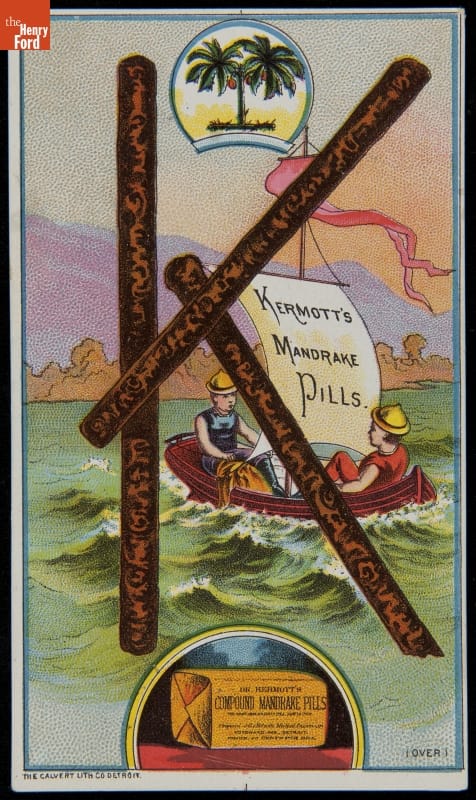
- Trade Card for Kermott's Compound Mandrake Pills, 1880-1900 - In the last third of the nineteenth century, an unprecedented variety of consumer goods and services flooded the American market. Advertisers, armed with new methods of color printing, bombarded potential customers with trade cards. Americans enjoyed and often saved the vibrant little advertisements found in product packages or distributed by local merchants. Many survive as historical records of commercialism in the United States.
- 1880-1900
- Collections - Artifact
Trade Card for Kermott's Compound Mandrake Pills, 1880-1900
In the last third of the nineteenth century, an unprecedented variety of consumer goods and services flooded the American market. Advertisers, armed with new methods of color printing, bombarded potential customers with trade cards. Americans enjoyed and often saved the vibrant little advertisements found in product packages or distributed by local merchants. Many survive as historical records of commercialism in the United States.
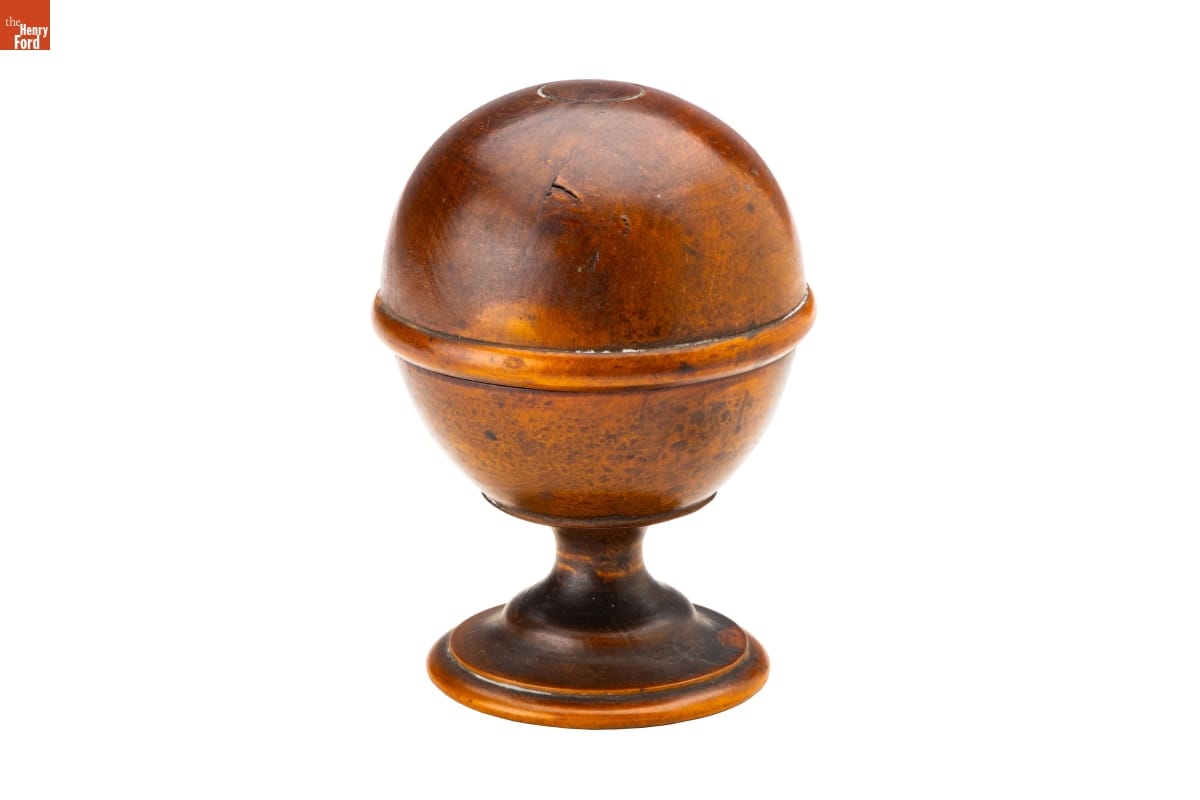
- Pill Silverer - Early apothecaries or pharmacists mixed medicinal herbs, minerals, and other ingredients into pills for patients. They sometimes coated pills in gold or silver leaf with a pill silverer, gently rolling moistened pills in the container's gold- or silver-leafed interior. The coating may have enhanced the pill's appearance, making it seem more palatable, but the hard-to-digest coating also may have made the pill ineffective.
- Collections - Artifact
Pill Silverer
Early apothecaries or pharmacists mixed medicinal herbs, minerals, and other ingredients into pills for patients. They sometimes coated pills in gold or silver leaf with a pill silverer, gently rolling moistened pills in the container's gold- or silver-leafed interior. The coating may have enhanced the pill's appearance, making it seem more palatable, but the hard-to-digest coating also may have made the pill ineffective.
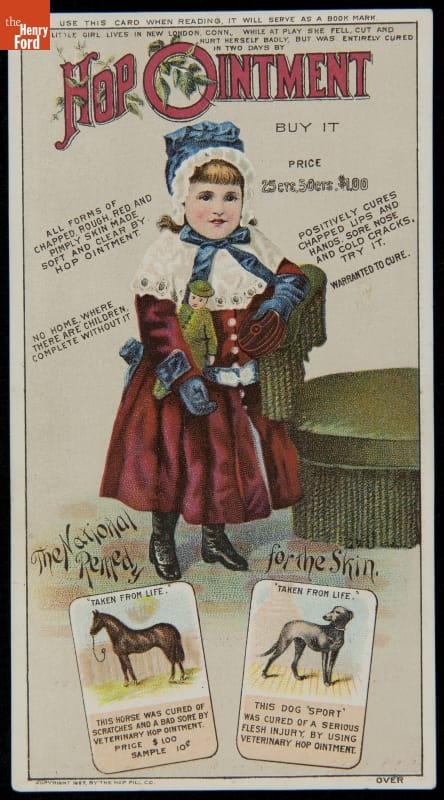
- Trade Card for Hop Ointment, "The National Remedy for the Skin," Hop Pill Co., 1887 - In the last third of the nineteenth century, an unprecedented variety of consumer goods flooded the American market. Some enterprising advertisers sought to distinguish their products from the competition, distributing trade cards that doubled as a bookmark. Americans enjoyed and often saved the popular little advertisements, which survive as historical records of consumerism in the United States.
- 1887
- Collections - Artifact
Trade Card for Hop Ointment, "The National Remedy for the Skin," Hop Pill Co., 1887
In the last third of the nineteenth century, an unprecedented variety of consumer goods flooded the American market. Some enterprising advertisers sought to distinguish their products from the competition, distributing trade cards that doubled as a bookmark. Americans enjoyed and often saved the popular little advertisements, which survive as historical records of consumerism in the United States.
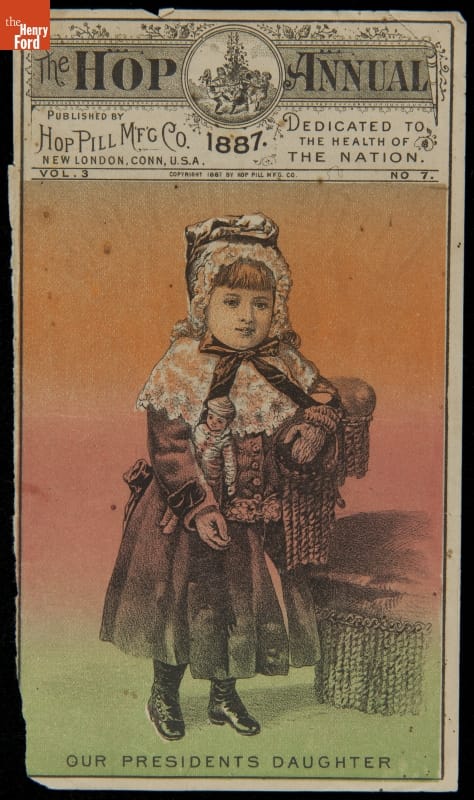
- Trade Card for Little Hop Pills, "Our President's Daughter," Hop Pill Manufacturing Co., 1887 - In the last third of the nineteenth century, an unprecedented variety of consumer goods and services flooded the American market. Advertisers, armed with new methods of color printing, bombarded potential customers with trade cards. Americans enjoyed and often saved the vibrant little advertisements found in product packages or distributed by local merchants. Many survive as historical records of commercialism in the United States.
- 1887
- Collections - Artifact
Trade Card for Little Hop Pills, "Our President's Daughter," Hop Pill Manufacturing Co., 1887
In the last third of the nineteenth century, an unprecedented variety of consumer goods and services flooded the American market. Advertisers, armed with new methods of color printing, bombarded potential customers with trade cards. Americans enjoyed and often saved the vibrant little advertisements found in product packages or distributed by local merchants. Many survive as historical records of commercialism in the United States.
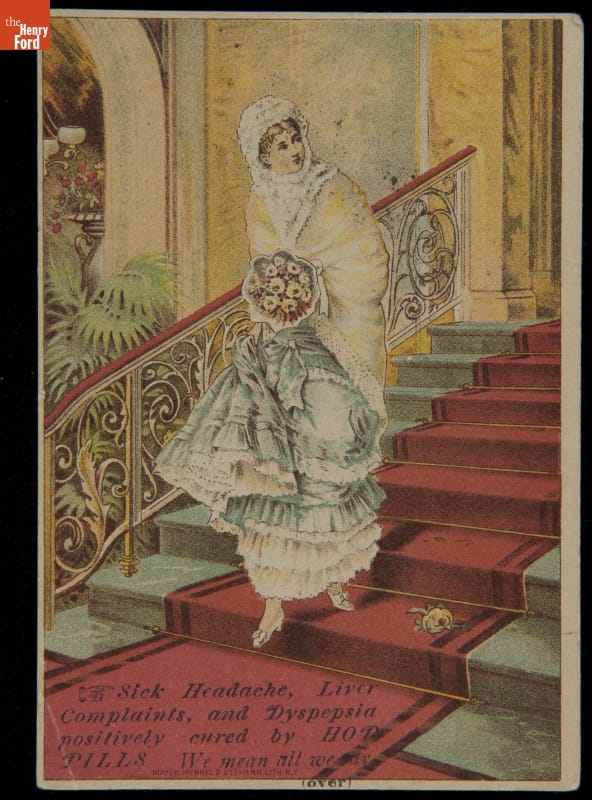
- Trade Card for Hop Pills, Hop Pill Manufacturing Co., 1880-1890 - In the last third of the nineteenth century, an unprecedented variety of consumer goods and services flooded the American market. Advertisers, armed with new methods of color printing, bombarded potential customers with trade cards. Americans enjoyed and often saved the vibrant little advertisements found in product packages or distributed by local merchants. Many survive as historical records of commercialism in the United States.
- 1880-1890
- Collections - Artifact
Trade Card for Hop Pills, Hop Pill Manufacturing Co., 1880-1890
In the last third of the nineteenth century, an unprecedented variety of consumer goods and services flooded the American market. Advertisers, armed with new methods of color printing, bombarded potential customers with trade cards. Americans enjoyed and often saved the vibrant little advertisements found in product packages or distributed by local merchants. Many survive as historical records of commercialism in the United States.
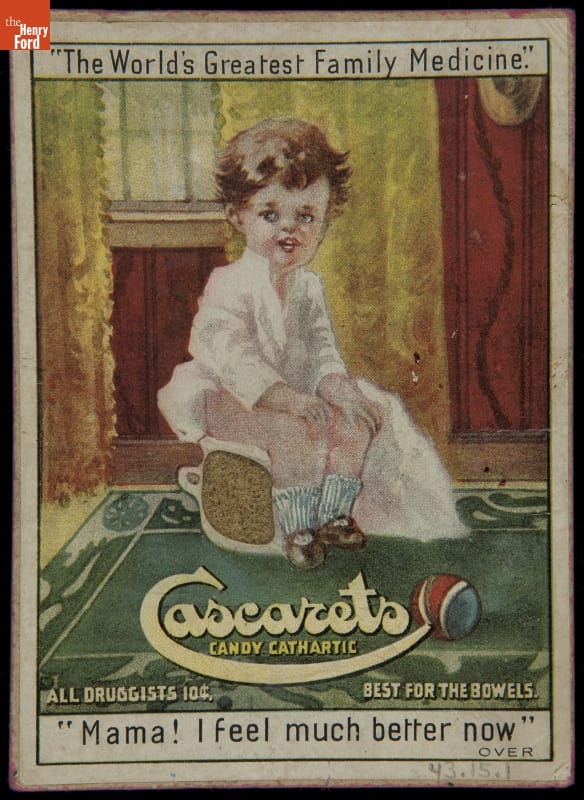
- Trade Card for Cascarets Candy Cathartic, Sterling Remedy Co., circa 1900 - In the last third of the nineteenth century, an unprecedented variety of consumer goods and services flooded the American market. Advertisers, armed with new methods of color printing, bombarded potential customers with trade cards. Americans enjoyed and often saved the vibrant little advertisements found in product packages or distributed by local merchants. Many survive as historical records of commercialism in the United States.
- circa 1900
- Collections - Artifact
Trade Card for Cascarets Candy Cathartic, Sterling Remedy Co., circa 1900
In the last third of the nineteenth century, an unprecedented variety of consumer goods and services flooded the American market. Advertisers, armed with new methods of color printing, bombarded potential customers with trade cards. Americans enjoyed and often saved the vibrant little advertisements found in product packages or distributed by local merchants. Many survive as historical records of commercialism in the United States.
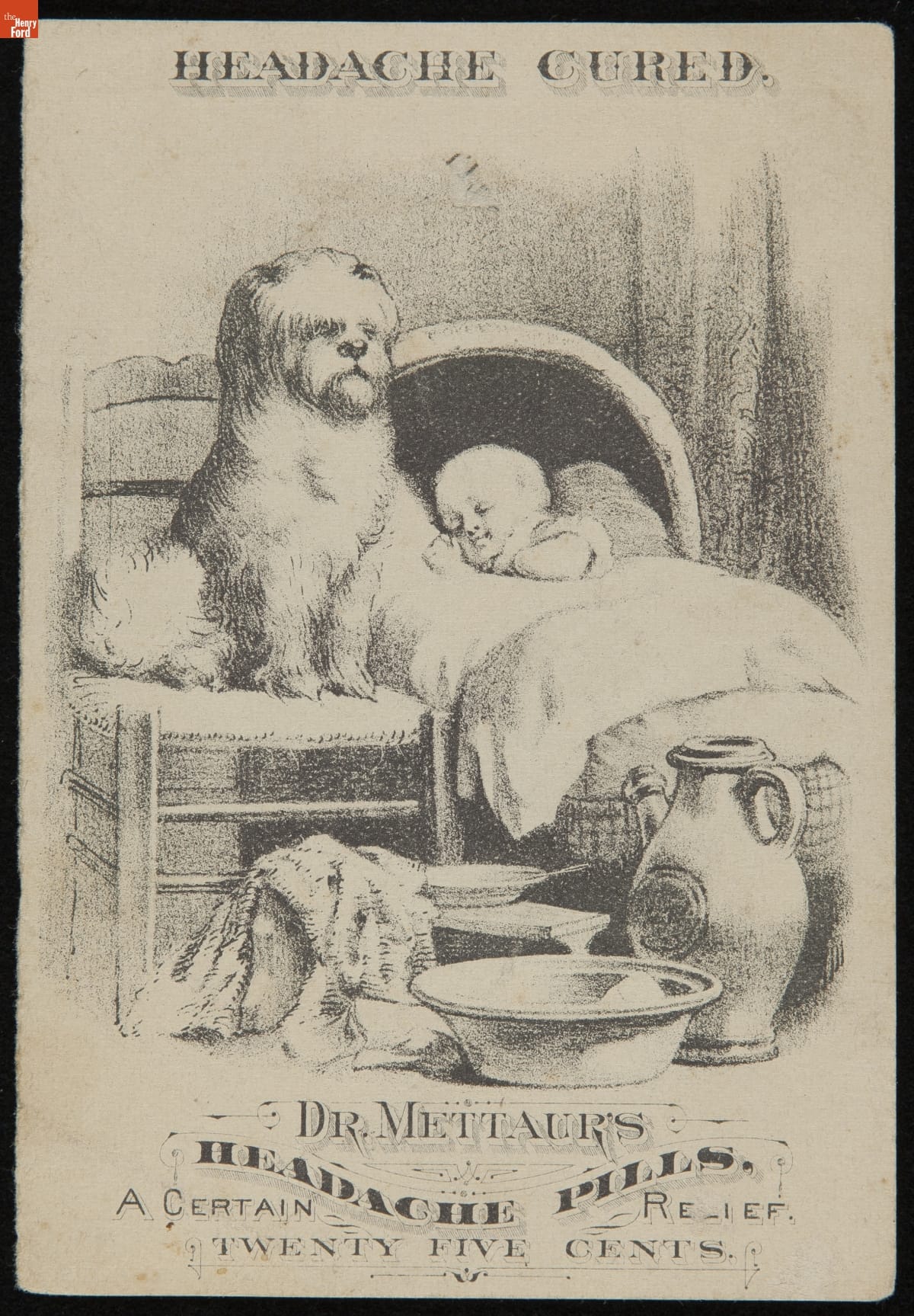
- Trade Card for Dr. Mettaur's Headache Pills, Brown Chemical Co., 1880-1900 - In the last third of the nineteenth century, an unprecedented variety of consumer goods and services flooded the American market. Advertisers bombarded potential customers with trade cards. Americans enjoyed and saved the often illustrated little advertisements found in product packages or distributed by local merchants. Many survive as historical records of commercialism in the United States.
- 1880-1900
- Collections - Artifact
Trade Card for Dr. Mettaur's Headache Pills, Brown Chemical Co., 1880-1900
In the last third of the nineteenth century, an unprecedented variety of consumer goods and services flooded the American market. Advertisers bombarded potential customers with trade cards. Americans enjoyed and saved the often illustrated little advertisements found in product packages or distributed by local merchants. Many survive as historical records of commercialism in the United States.