
Search
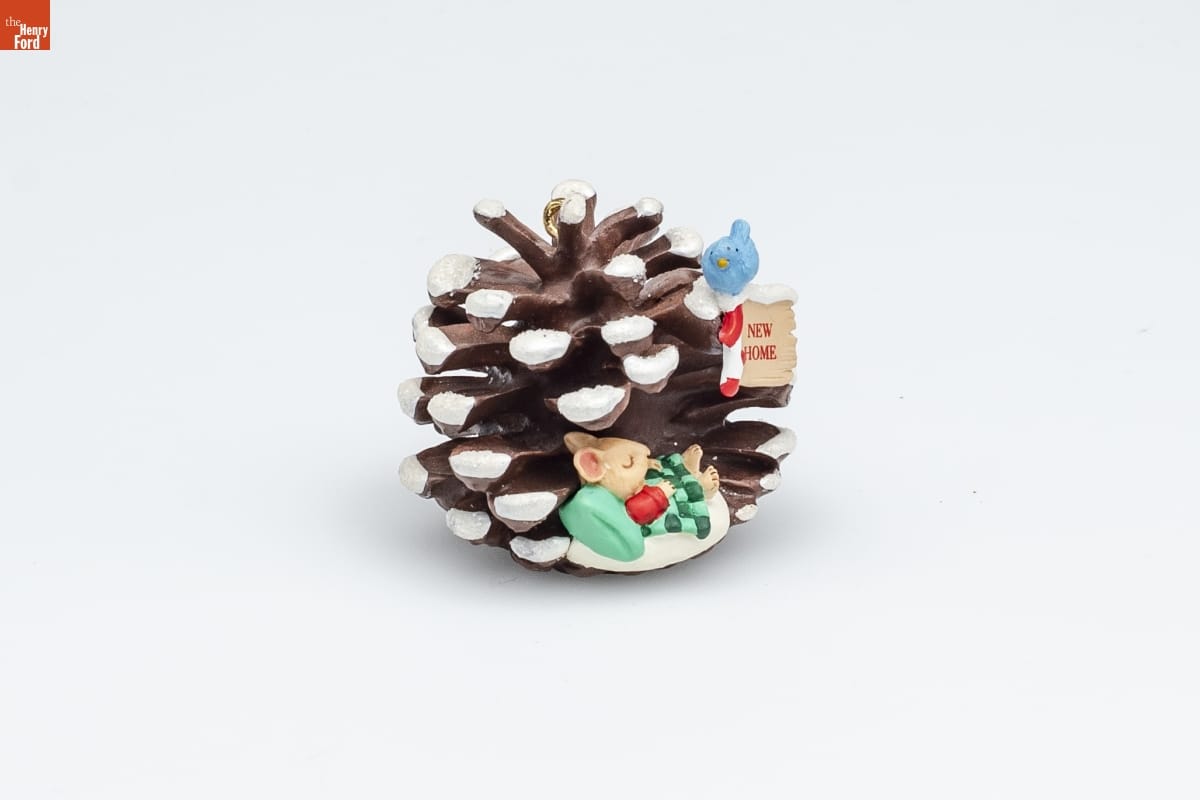
- Hallmark "New Home" Christmas Ornament, 2000 - Already known for greeting cards, Hallmark introduced a line of Christmas ornaments in 1973. The company's annual release of an increasing array of ornaments revolutionized Christmas decorating, appealing to customers' interest in marking memories and milestones as well as expressing one's personality and unique tastes.
- 2000
- Collections - Artifact
Hallmark "New Home" Christmas Ornament, 2000
Already known for greeting cards, Hallmark introduced a line of Christmas ornaments in 1973. The company's annual release of an increasing array of ornaments revolutionized Christmas decorating, appealing to customers' interest in marking memories and milestones as well as expressing one's personality and unique tastes.
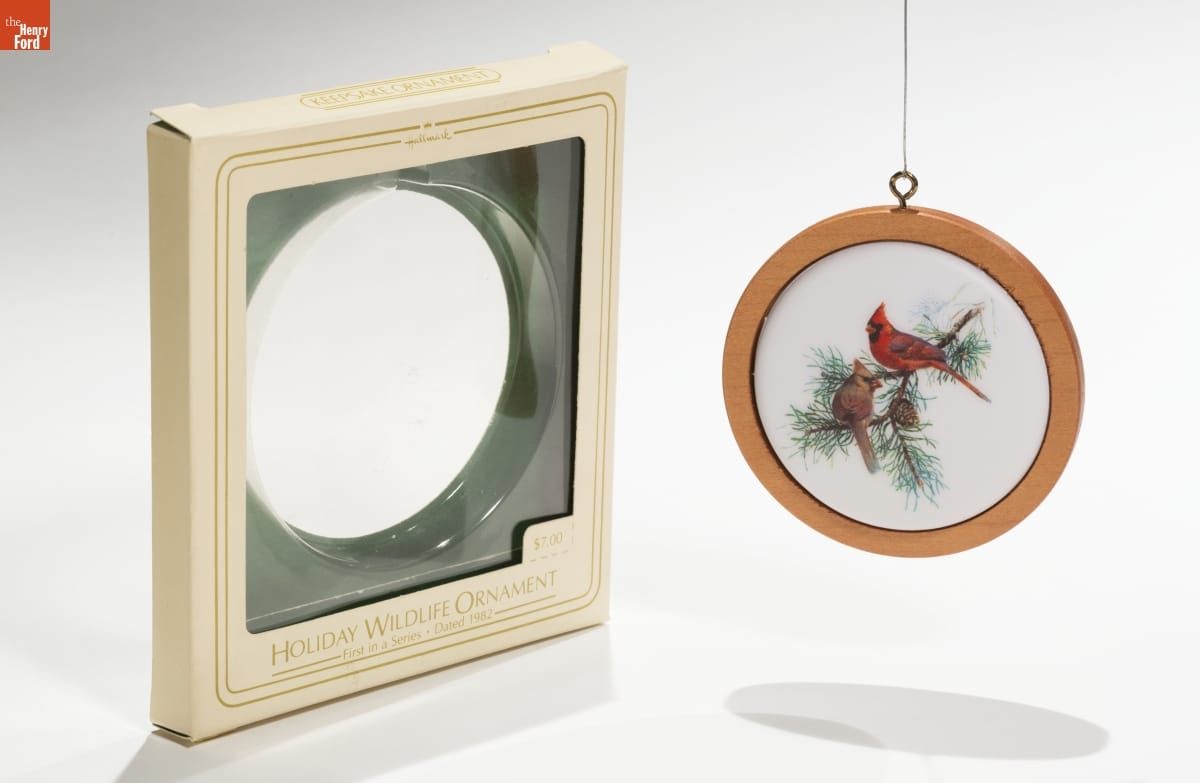
- Hallmark "Holiday Wildlife Series: Cardinals" Christmas Ornament, 1982 - Already known for greeting cards, Hallmark introduced a line of Christmas ornaments in 1973. The company's annual release of an increasing array of ornaments revolutionized Christmas decorating, appealing to customers' interest in marking memories and milestones as well as expressing one's personality and unique tastes.
- 1982
- Collections - Artifact
Hallmark "Holiday Wildlife Series: Cardinals" Christmas Ornament, 1982
Already known for greeting cards, Hallmark introduced a line of Christmas ornaments in 1973. The company's annual release of an increasing array of ornaments revolutionized Christmas decorating, appealing to customers' interest in marking memories and milestones as well as expressing one's personality and unique tastes.
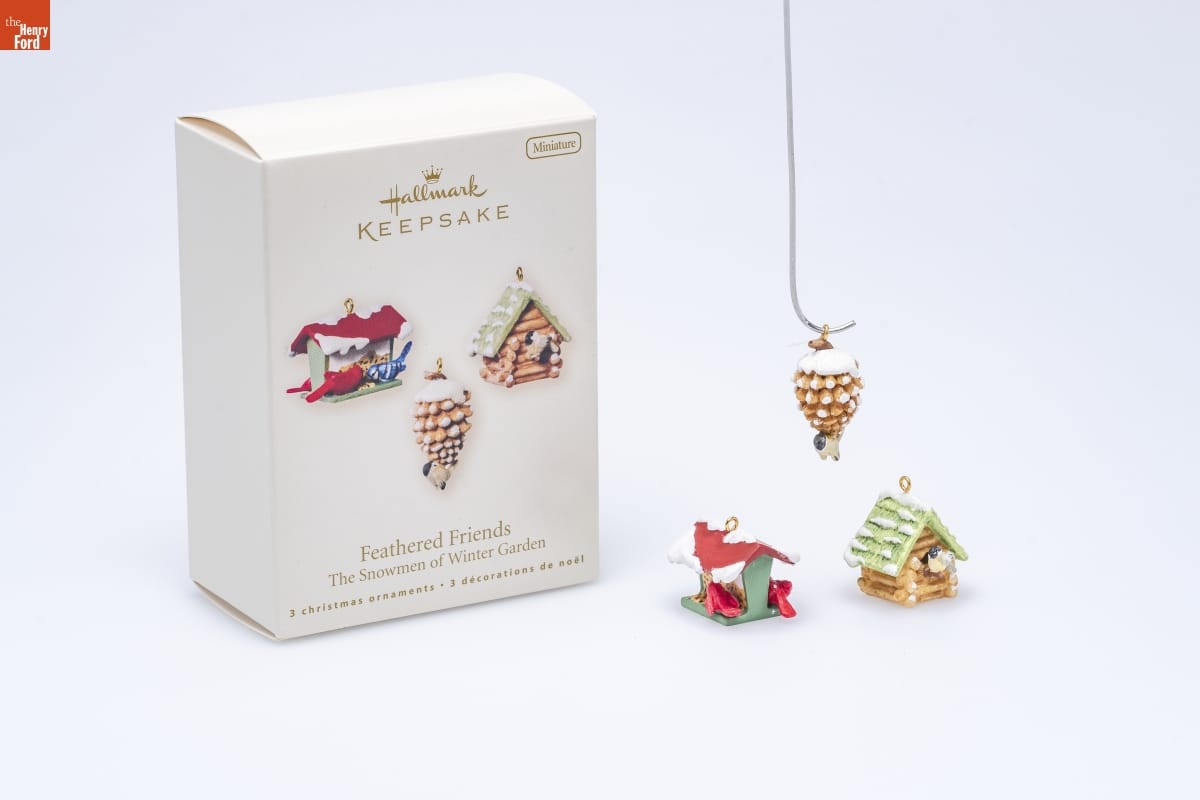
- Hallmark "The Snowmen of Winter Garden: Feathered Friends" Miniature Christmas Ornaments, 2007 - Already known for greeting cards, Hallmark introduced a line of Christmas ornaments in 1973. The company's annual release of an increasing array of ornaments revolutionized Christmas decorating, appealing to customers' interest in marking memories and milestones as well as expressing one's personality and unique tastes.
- 2007
- Collections - Artifact
Hallmark "The Snowmen of Winter Garden: Feathered Friends" Miniature Christmas Ornaments, 2007
Already known for greeting cards, Hallmark introduced a line of Christmas ornaments in 1973. The company's annual release of an increasing array of ornaments revolutionized Christmas decorating, appealing to customers' interest in marking memories and milestones as well as expressing one's personality and unique tastes.
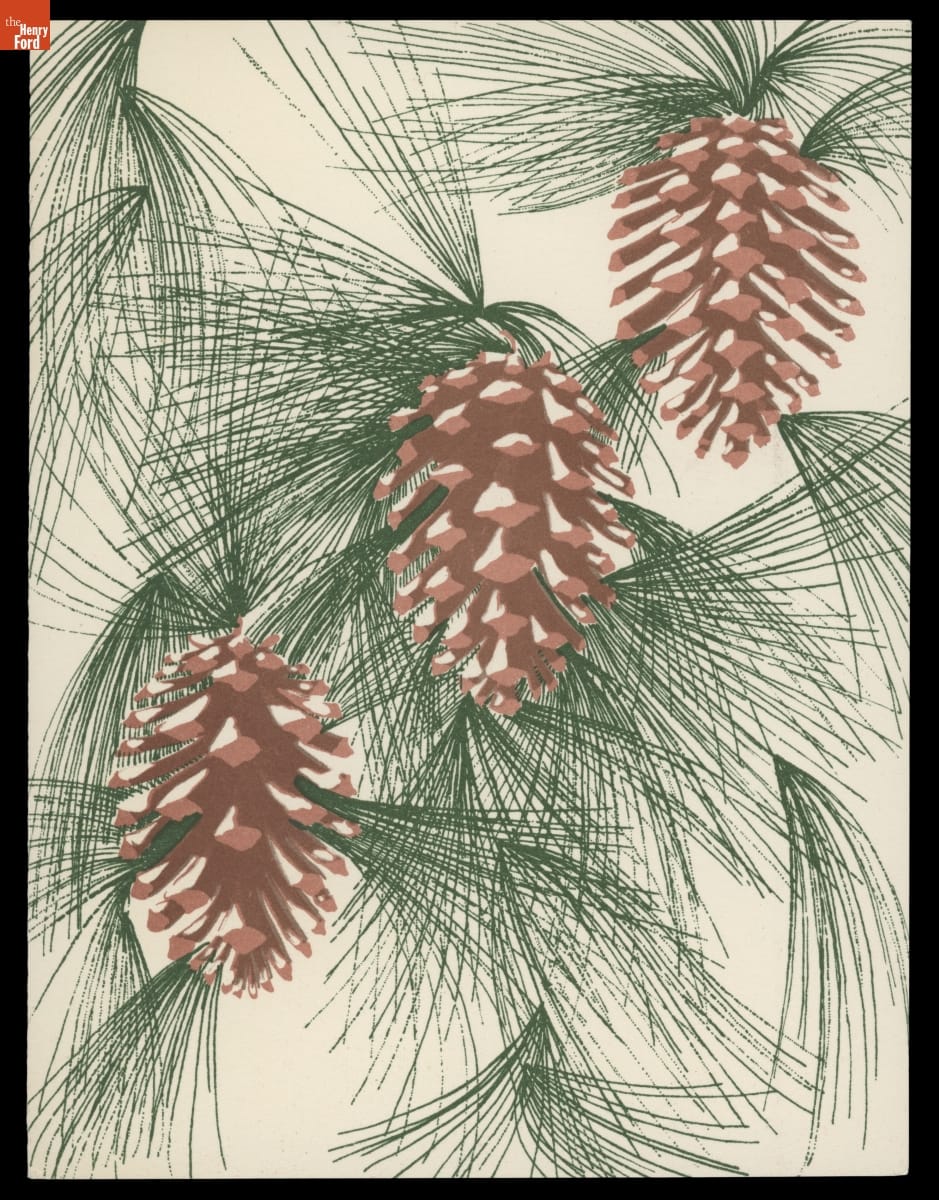
- Evergreen Branches and Pine Cones, 1949 - The artist Eyvind Earle (1916-2000) is best known for his work on the 1959 Walt Disney Studios animated film <em>Sleeping Beauty</em>, but he also designed Christmas cards. Earle began producing cards in his early twenties, selling them through his own company. Later, Earle joined the American Artists Group and continued designing Christmas cards. He would produce more than 800 designs throughout his career.
- 1949
- Collections - Artifact
Evergreen Branches and Pine Cones, 1949
The artist Eyvind Earle (1916-2000) is best known for his work on the 1959 Walt Disney Studios animated film Sleeping Beauty, but he also designed Christmas cards. Earle began producing cards in his early twenties, selling them through his own company. Later, Earle joined the American Artists Group and continued designing Christmas cards. He would produce more than 800 designs throughout his career.
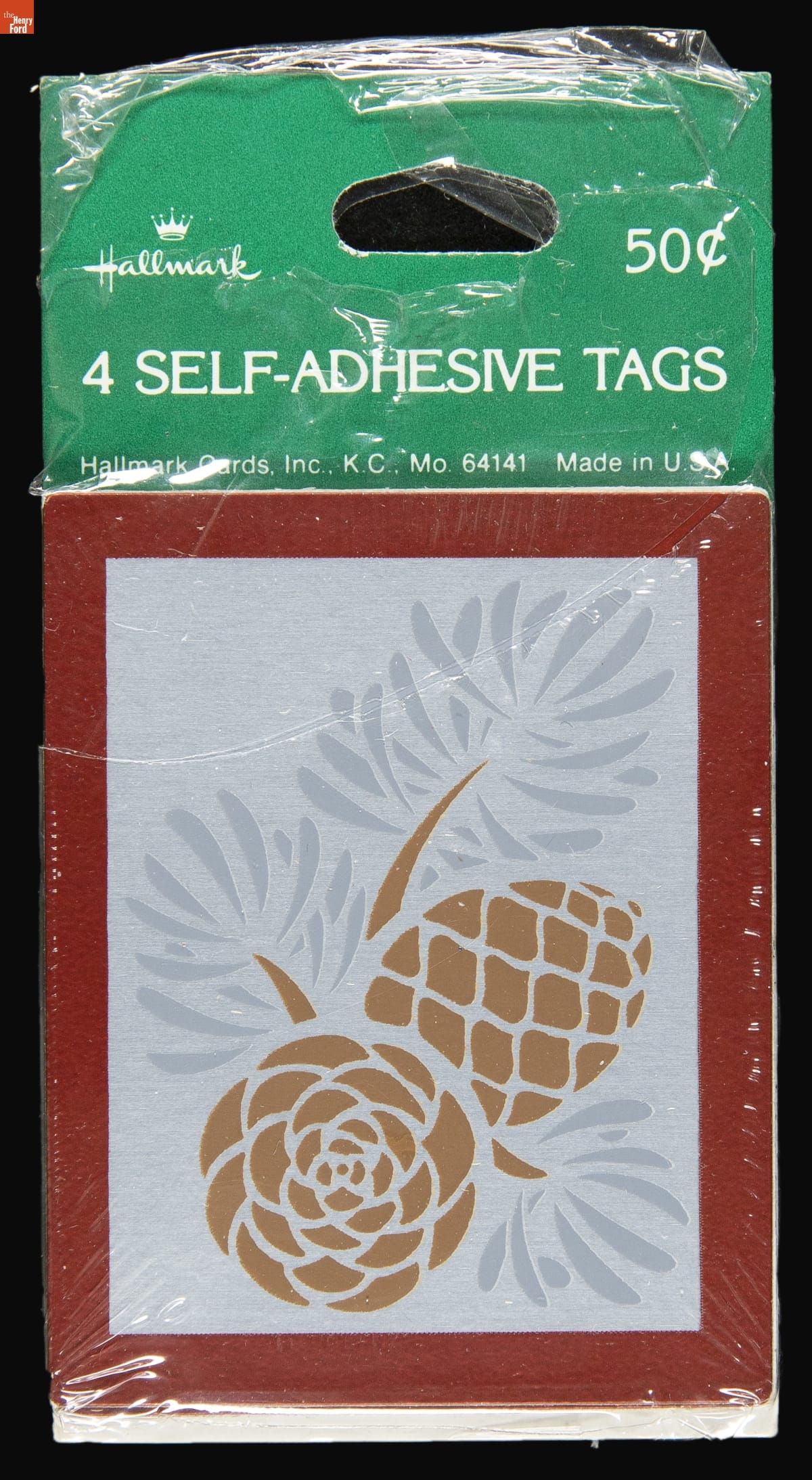
- Hallmark Self-Adhesive Gift Tags, 1977-1982 - Hallmark began selling postcards and greeting cards in the early 1900s--but the company did not stop there. Hallmark introduced gift wrap in the late 1910s, tested an adhesive ribbon in the 1930s, and started selling Christmas ornaments in 1973. Although cards were--and still are--a core product, the company increasingly created a variety of high-quality holiday and party goods.
- 1977-1982
- Collections - Artifact
Hallmark Self-Adhesive Gift Tags, 1977-1982
Hallmark began selling postcards and greeting cards in the early 1900s--but the company did not stop there. Hallmark introduced gift wrap in the late 1910s, tested an adhesive ribbon in the 1930s, and started selling Christmas ornaments in 1973. Although cards were--and still are--a core product, the company increasingly created a variety of high-quality holiday and party goods.
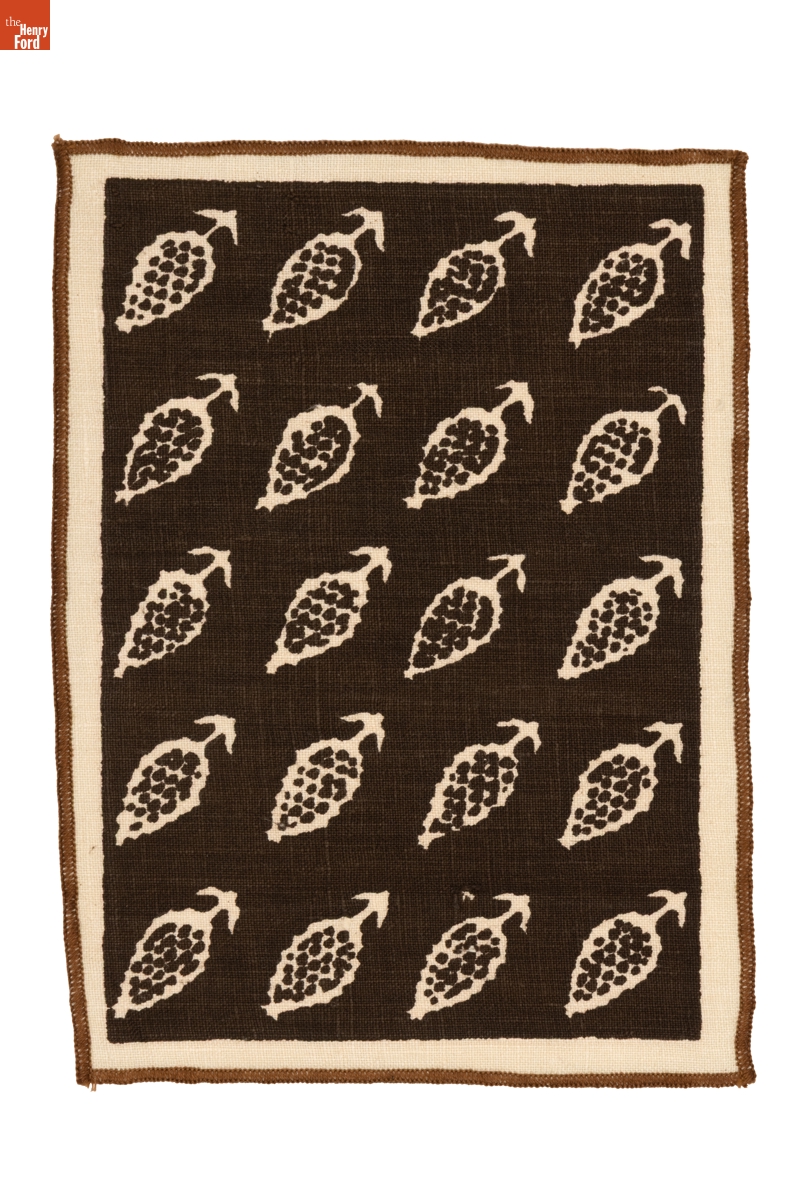
- "Brown Pinecone" Cocktail Napkin, 1936 - Marguerita Mergentime (1894-1941) was a self-taught New York City-based textile designer who used Manhattan's museums as her education and, in some cases, her inspiration. She became well-known for her signature text-forward printed table linens, which she hoped would spark lively mealtime conversations. The linens she designed were boldly colorful and frequently referenced American culture and society, or featured native flora and fauna.
- 1936
- Collections - Artifact
"Brown Pinecone" Cocktail Napkin, 1936
Marguerita Mergentime (1894-1941) was a self-taught New York City-based textile designer who used Manhattan's museums as her education and, in some cases, her inspiration. She became well-known for her signature text-forward printed table linens, which she hoped would spark lively mealtime conversations. The linens she designed were boldly colorful and frequently referenced American culture and society, or featured native flora and fauna.
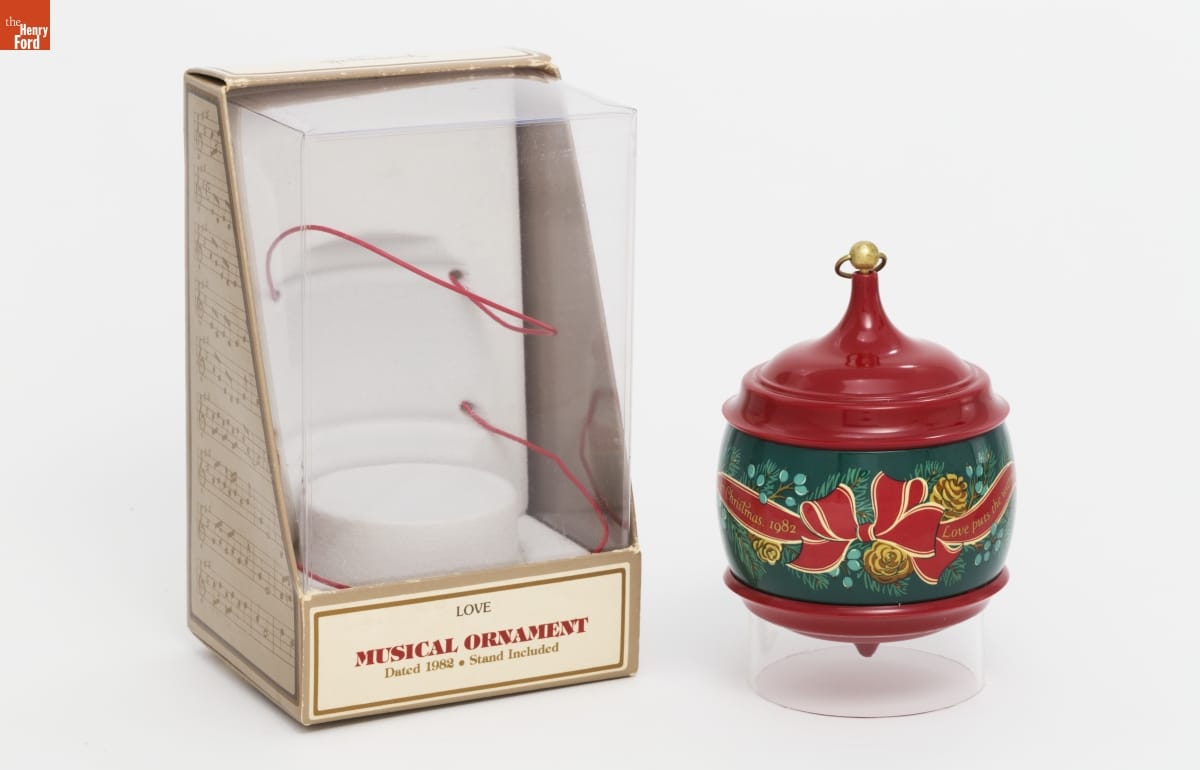
- Hallmark "Love" Christmas Ornament, 1982 - Already known for greeting cards, Hallmark introduced a line of Christmas ornaments in 1973. The company's annual release of an increasing array of ornaments revolutionized Christmas decorating, appealing to customers' interest in marking memories and milestones as well as expressing one's personality and unique tastes.
- 1982
- Collections - Artifact
Hallmark "Love" Christmas Ornament, 1982
Already known for greeting cards, Hallmark introduced a line of Christmas ornaments in 1973. The company's annual release of an increasing array of ornaments revolutionized Christmas decorating, appealing to customers' interest in marking memories and milestones as well as expressing one's personality and unique tastes.
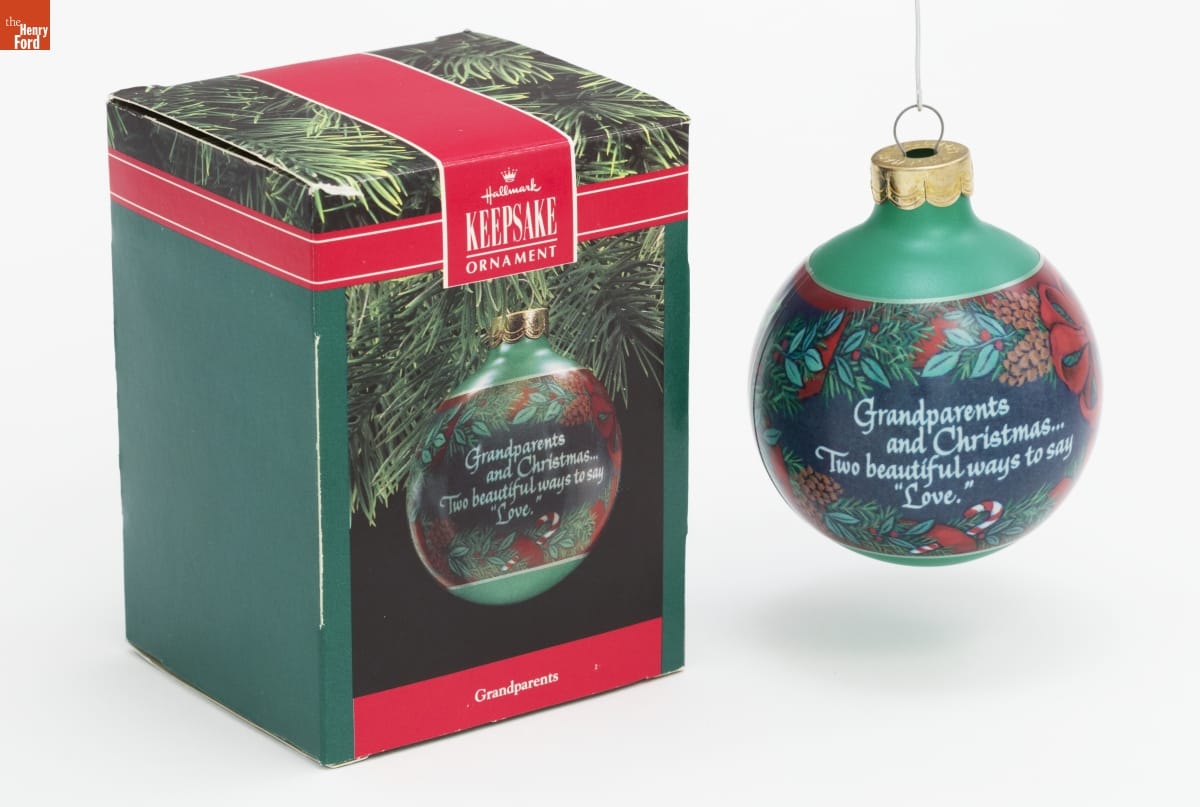
- Hallmark "Grandparents" Christmas Ornament, 1990 - Already known for greeting cards, Hallmark introduced a line of Christmas ornaments in 1973. The company's annual release of an increasing array of ornaments revolutionized Christmas decorating, appealing to customers' interest in marking memories and milestones as well as expressing one's personality and unique tastes.
- 1990
- Collections - Artifact
Hallmark "Grandparents" Christmas Ornament, 1990
Already known for greeting cards, Hallmark introduced a line of Christmas ornaments in 1973. The company's annual release of an increasing array of ornaments revolutionized Christmas decorating, appealing to customers' interest in marking memories and milestones as well as expressing one's personality and unique tastes.
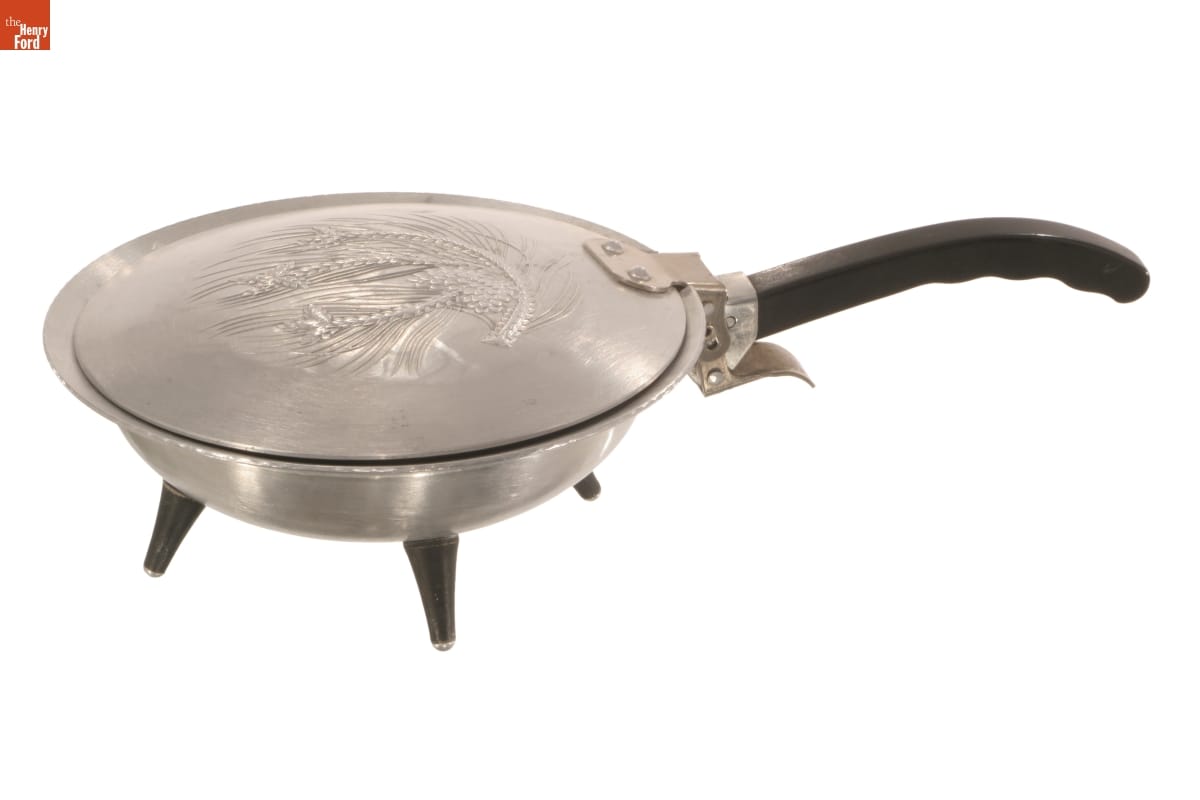
- Everlast "Modern Pine" Silent Butler, 1953-1955 - In 1932, Louis Schnitzer and Nathan Gelfman formed Everlast Metal Products Corporation, producing high-quality, hand-forged aluminum giftware. In an era of growing uniformity via factory production, the "made by hand" aspect of these products held an aesthetic appeal for consumers. As interest in aluminum wares waned after World War II, Everlast attempted to reinvent its products introducing a contemporary line in 1953 called, "Everlast Modern."
- 1953-1955
- Collections - Artifact
Everlast "Modern Pine" Silent Butler, 1953-1955
In 1932, Louis Schnitzer and Nathan Gelfman formed Everlast Metal Products Corporation, producing high-quality, hand-forged aluminum giftware. In an era of growing uniformity via factory production, the "made by hand" aspect of these products held an aesthetic appeal for consumers. As interest in aluminum wares waned after World War II, Everlast attempted to reinvent its products introducing a contemporary line in 1953 called, "Everlast Modern."
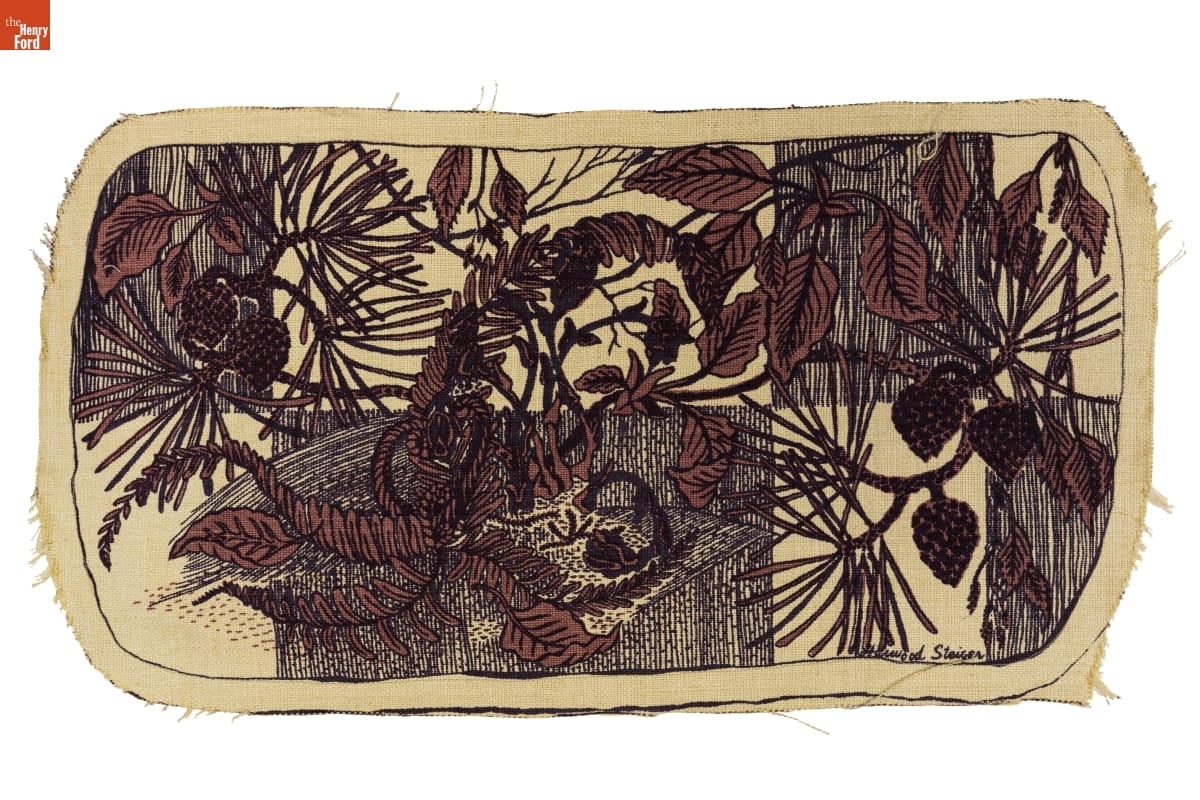
- Harwood Steiger Placemat - The screen-printed fabrics produced by the studio of Harwood Steiger, Inc. are replete with motifs from the American Southwest. Although husband-and-wife proprietors Harwood and Sophie Steiger were born in the Northeast, the Sonoran Desert became their home. Its flora, fauna, and wildlife were a constant inspiration in their enduring partnership, which saw Harwood as the primary artist, and Sophie as the expert botanist and businesswoman.
- 1956-1980
- Collections - Artifact
Harwood Steiger Placemat
The screen-printed fabrics produced by the studio of Harwood Steiger, Inc. are replete with motifs from the American Southwest. Although husband-and-wife proprietors Harwood and Sophie Steiger were born in the Northeast, the Sonoran Desert became their home. Its flora, fauna, and wildlife were a constant inspiration in their enduring partnership, which saw Harwood as the primary artist, and Sophie as the expert botanist and businesswoman.