
Search
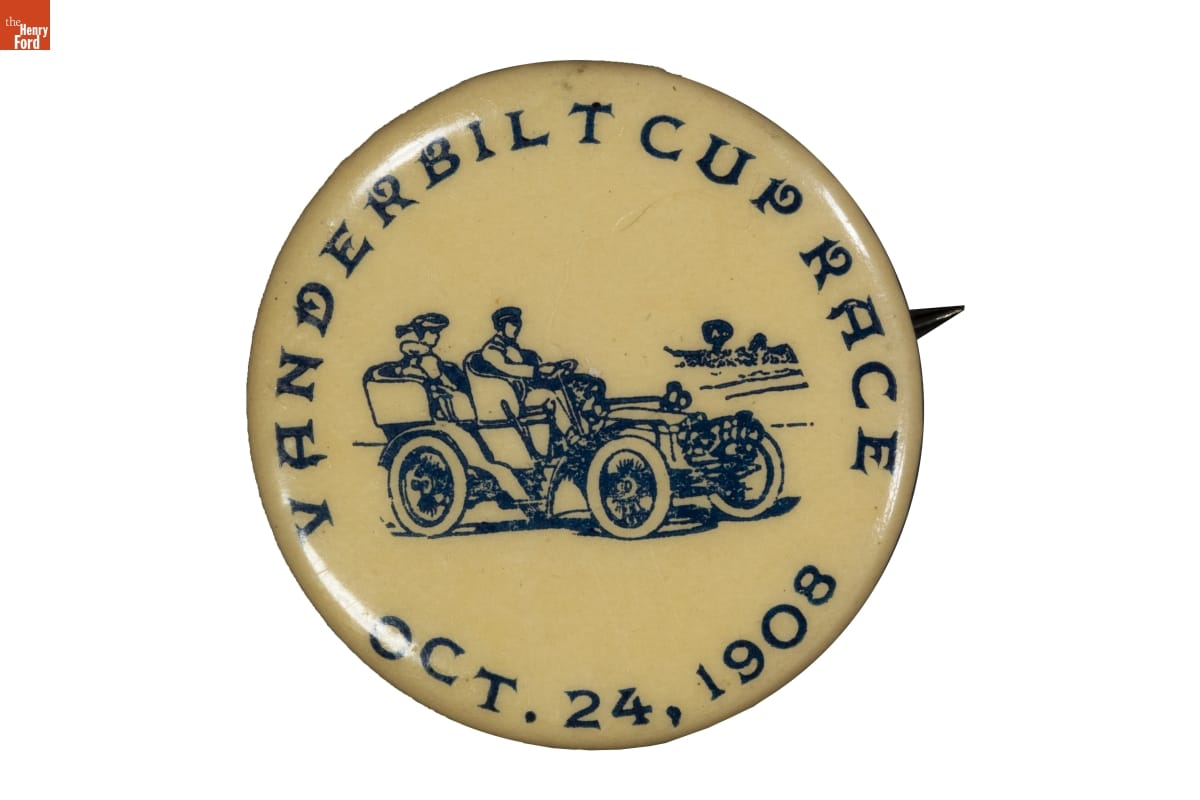
- Vanderbilt Cup Race Lapel Pin, 1908 - William K. Vanderbilt, Jr., launched America's first great automobile race, the Vanderbilt Cup, in 1904. Top American and European drivers and cars came to Long Island, New York, for the annual event. After three consecutive victories by French cars, an American-built Locomobile won in 1908. Driver George Robertson and mechanician Glenn Ethridge earned the prize with their car "Old 16."
- October 24, 1908
- Collections - Artifact
Vanderbilt Cup Race Lapel Pin, 1908
William K. Vanderbilt, Jr., launched America's first great automobile race, the Vanderbilt Cup, in 1904. Top American and European drivers and cars came to Long Island, New York, for the annual event. After three consecutive victories by French cars, an American-built Locomobile won in 1908. Driver George Robertson and mechanician Glenn Ethridge earned the prize with their car "Old 16."
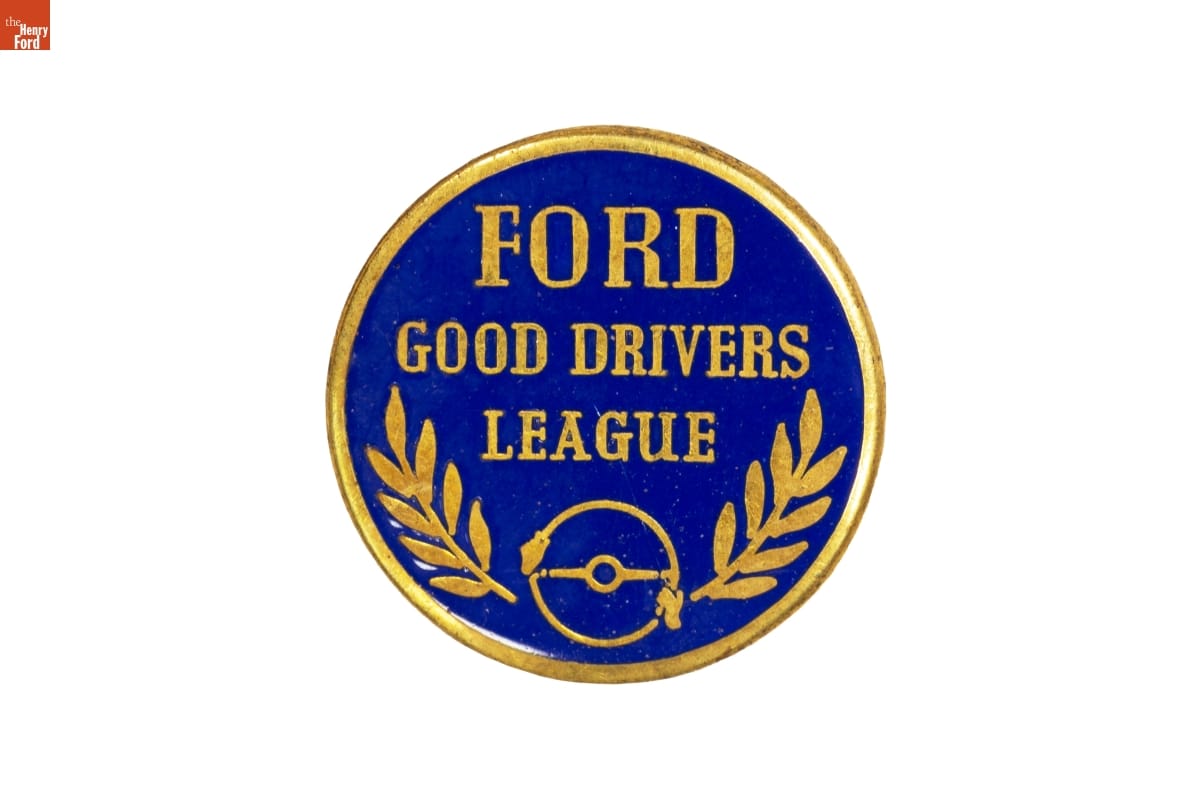
- "Ford Good Drivers League" Pin, 1940-1942 - Ford Motor Company created the Good Drivers League in 1940. Headed by Edsel Ford, the League promoted safe driving habits among high school students. The League initially invited boys to compete in state and national championships--girls would join in 1941. Contestants wrote essays and participated in driving tests. National champions won trophies and scholarships. America's entry into World War II ended the program.
- 1940-1942
- Collections - Artifact
"Ford Good Drivers League" Pin, 1940-1942
Ford Motor Company created the Good Drivers League in 1940. Headed by Edsel Ford, the League promoted safe driving habits among high school students. The League initially invited boys to compete in state and national championships--girls would join in 1941. Contestants wrote essays and participated in driving tests. National champions won trophies and scholarships. America's entry into World War II ended the program.
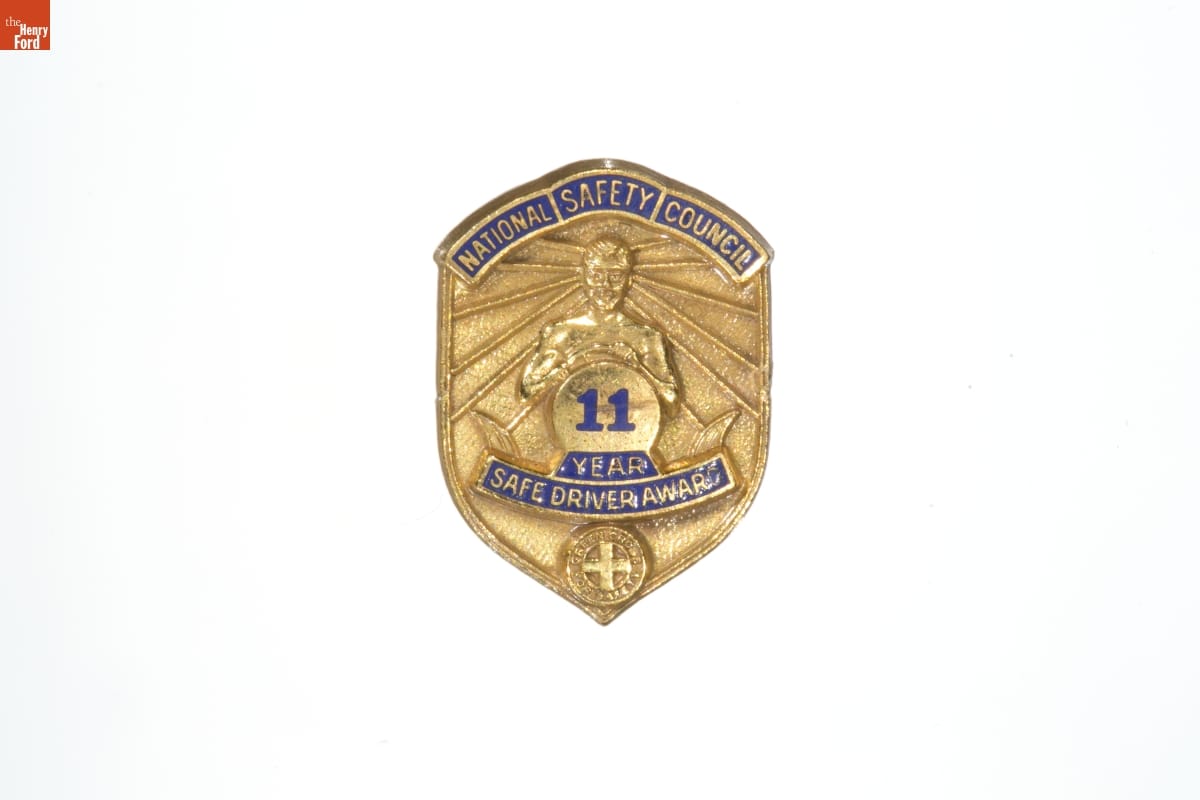
- Safe Driver Award Given by the National Safety Council, circa 1967 -
- circa 1967
- Collections - Artifact
Safe Driver Award Given by the National Safety Council, circa 1967
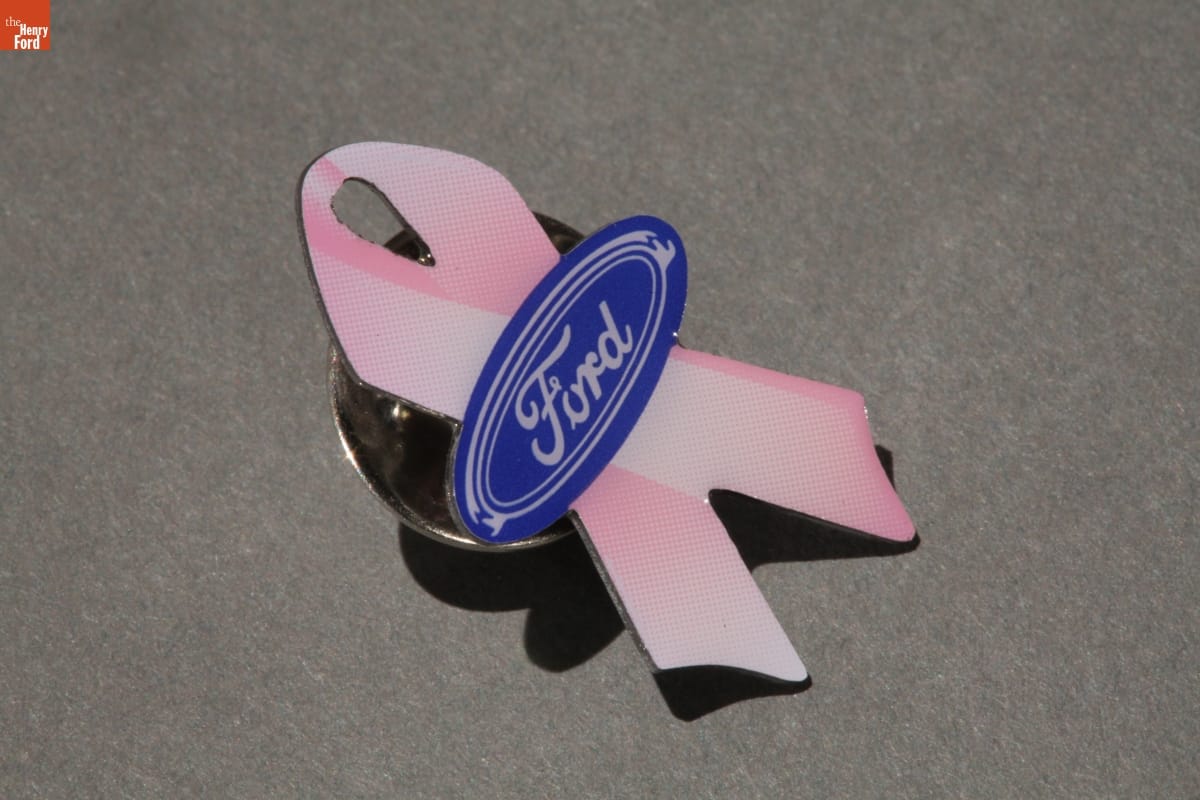
- Ford Breast Cancer Awareness Pin, 1999-2004 - One of Ford Motor Company's philanthropic ventures was Race Fans for a Cure, which supported the Susan G. Komen Breast Cancer Foundation's efforts to raise awareness of breast cancer and fund the search for a cure. Some supporters of Race Fans for a Cure received this promotional lapel pin.
- 1999-2004
- Collections - Artifact
Ford Breast Cancer Awareness Pin, 1999-2004
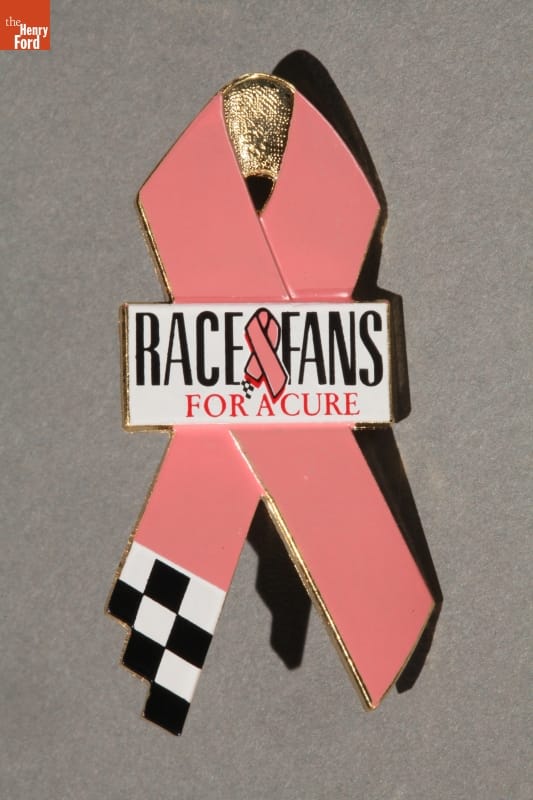
One of Ford Motor Company's philanthropic ventures was Race Fans for a Cure, which supported the Susan G. Komen Breast Cancer Foundation's efforts to raise awareness of breast cancer and fund the search for a cure. Some supporters of Race Fans for a Cure received this promotional lapel pin.
- Race Fans For a Cure Breast Cancer Awareness Pin, 1999-2004 - One of Ford Motor Company's philanthropic ventures was Race Fans for a Cure, which supported the Susan G. Komen Breast Cancer Foundation's efforts to raise awareness of breast cancer and fund the search for a cure. Some supporters of Race Fans for a Cure received this promotional lapel pin.
- 1999-2004
- Collections - Artifact
Race Fans For a Cure Breast Cancer Awareness Pin, 1999-2004
One of Ford Motor Company's philanthropic ventures was Race Fans for a Cure, which supported the Susan G. Komen Breast Cancer Foundation's efforts to raise awareness of breast cancer and fund the search for a cure. Some supporters of Race Fans for a Cure received this promotional lapel pin.
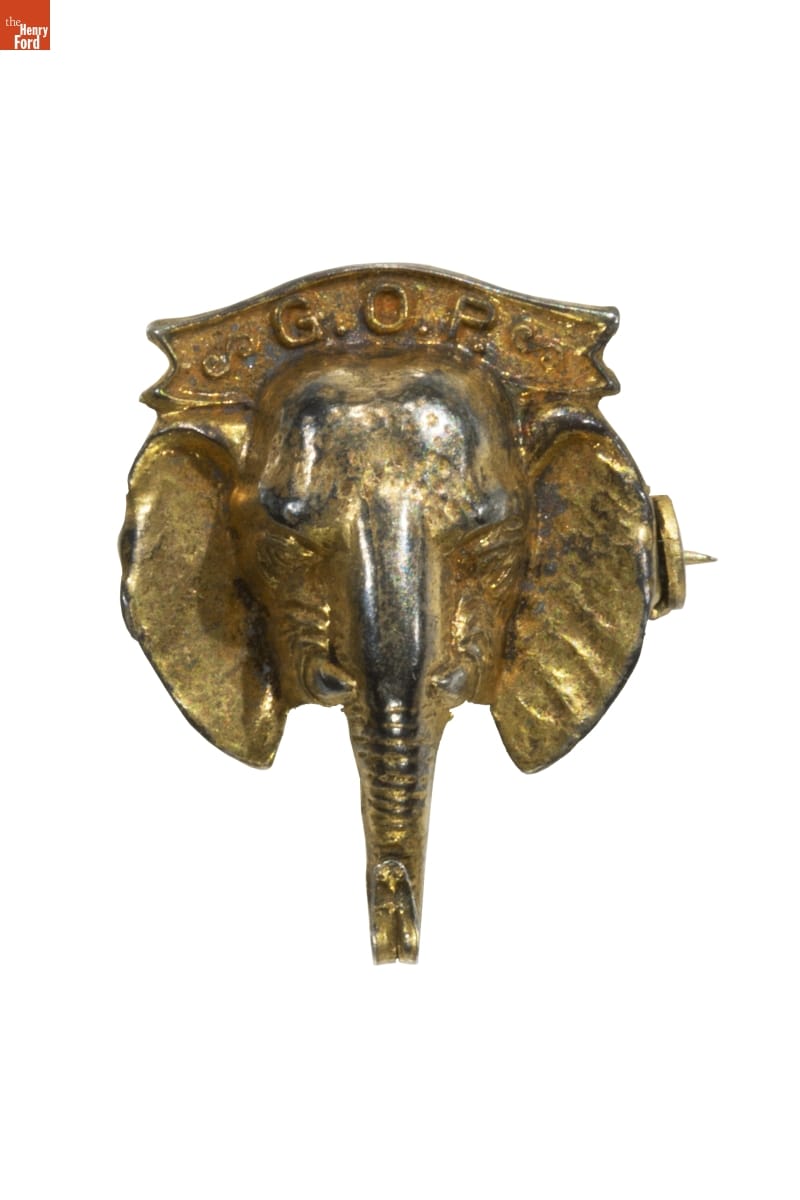
- G.O.P. Lapel Pin, 1940 - The Republican Party nominated Wendell Willkie to run against President Franklin Roosevelt in 1940. It was an unconventional choice: Willkie supported much of Roosevelt's New Deal legislation, he had voted for Roosevelt in 1932, and he was an internationalist -- controversial positions in the anti-New Deal, isolationist Republican Party. Willkie fared better than Alf Landon, the Republican's 1936 presidential candidate, but still lost.
- 1940
- Collections - Artifact
G.O.P. Lapel Pin, 1940
The Republican Party nominated Wendell Willkie to run against President Franklin Roosevelt in 1940. It was an unconventional choice: Willkie supported much of Roosevelt's New Deal legislation, he had voted for Roosevelt in 1932, and he was an internationalist -- controversial positions in the anti-New Deal, isolationist Republican Party. Willkie fared better than Alf Landon, the Republican's 1936 presidential candidate, but still lost.
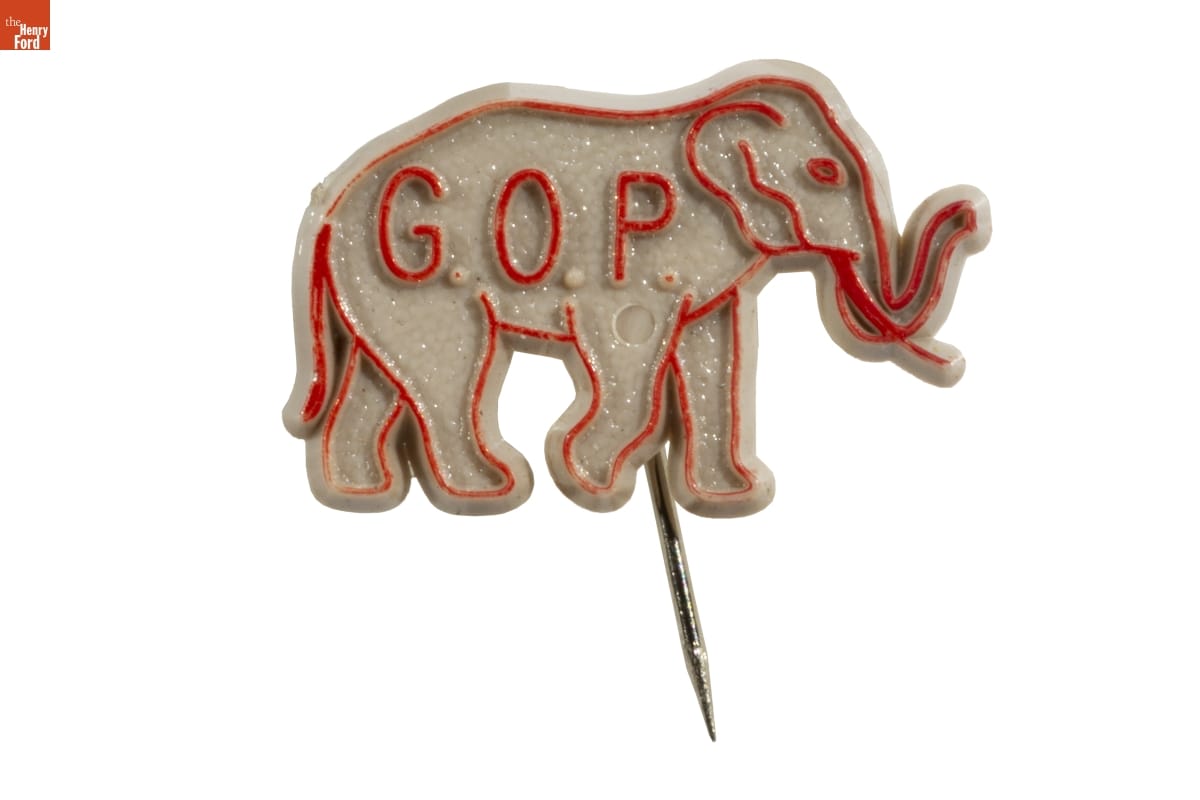
- G.O.P. Pin - The Republican Party took on the moniker Grand Old Party (or G.O.P.) in the late 1800s, around the same time the elephant became its symbol. Since then, Republican politicians and their supporters have proudly placed the party's pachyderm and acronym on a variety of campaign materials.
- Collections - Artifact
G.O.P. Pin
The Republican Party took on the moniker Grand Old Party (or G.O.P.) in the late 1800s, around the same time the elephant became its symbol. Since then, Republican politicians and their supporters have proudly placed the party's pachyderm and acronym on a variety of campaign materials.
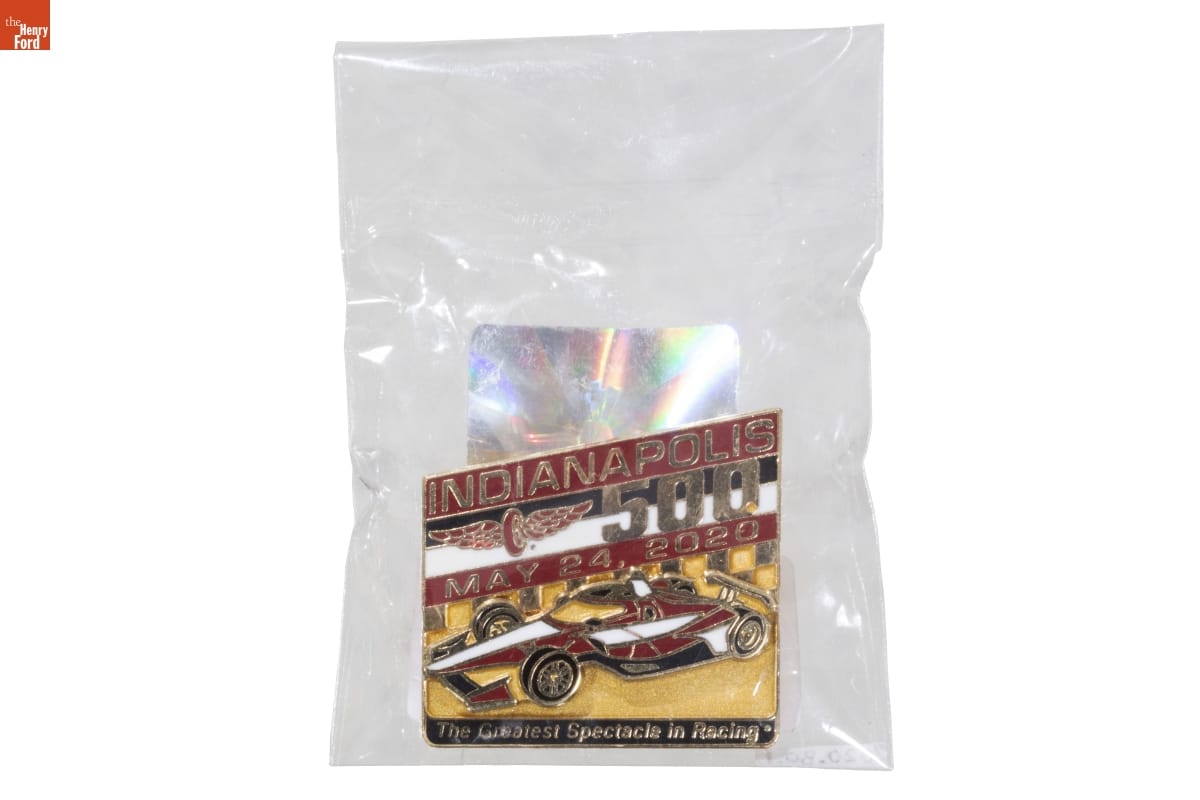
- "Indianapolis 500" Pin, 2020 - The COVID-19 pandemic upset plans to hold the 2020 Indianapolis 500 as scheduled on May 24 -- but not before many souvenirs were already manufactured. Officials postponed the race until August 23 and ran it without spectators in attendance. Japanese driver Takuma Sato took the checkered flag for his second Indy 500 victory, following his win in 2017.
- May 24, 2020
- Collections - Artifact
"Indianapolis 500" Pin, 2020
The COVID-19 pandemic upset plans to hold the 2020 Indianapolis 500 as scheduled on May 24 -- but not before many souvenirs were already manufactured. Officials postponed the race until August 23 and ran it without spectators in attendance. Japanese driver Takuma Sato took the checkered flag for his second Indy 500 victory, following his win in 2017.
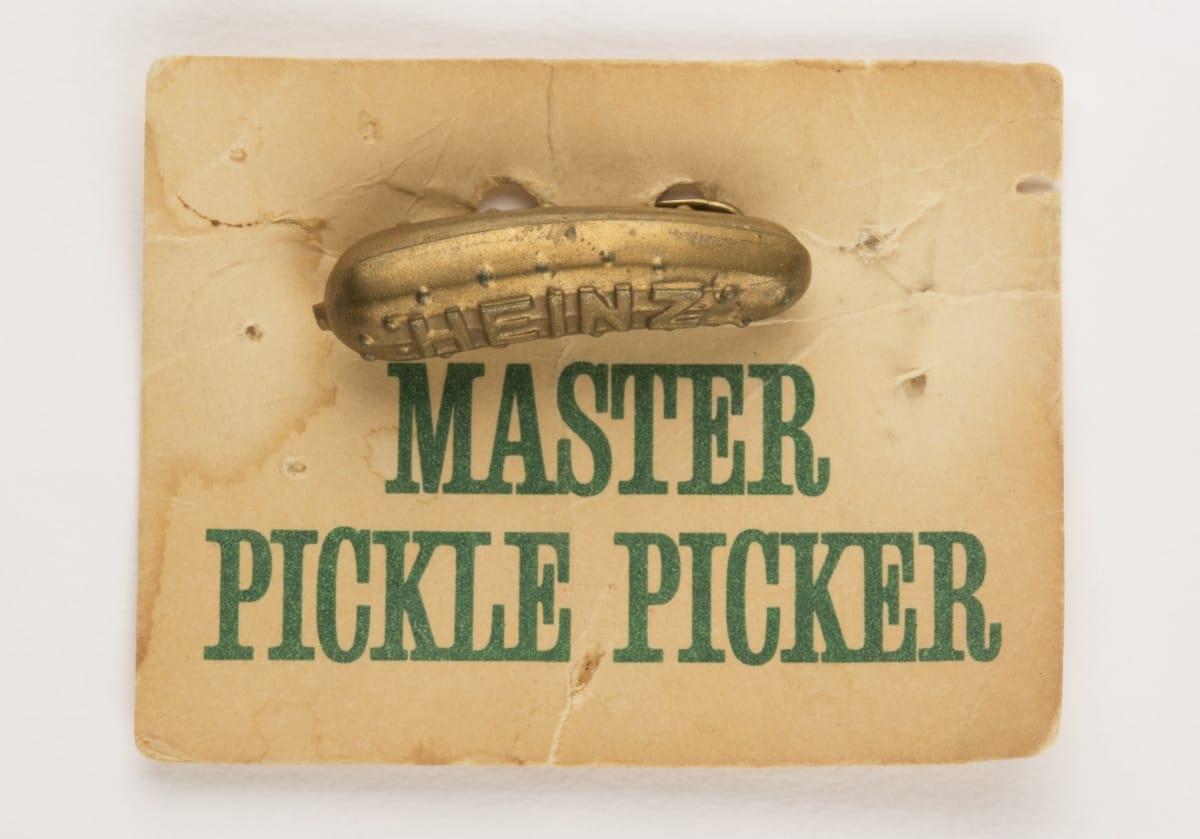
- Heinz Master Pickle Picker Pin, 1965-1970 - The pickle charm was H.J. Heinz's most successful promotion and giveaway. The charm eventually evolved into a lapel pin, allowing customers to wear their souvenirs in public -- a simple, yet extremely effective marketing strategy. This golden pickle pin giveaway was possibly created to commemorate the company's centennial in 1969.
- 1965-1970
- Collections - Artifact
Heinz Master Pickle Picker Pin, 1965-1970
The pickle charm was H.J. Heinz's most successful promotion and giveaway. The charm eventually evolved into a lapel pin, allowing customers to wear their souvenirs in public -- a simple, yet extremely effective marketing strategy. This golden pickle pin giveaway was possibly created to commemorate the company's centennial in 1969.
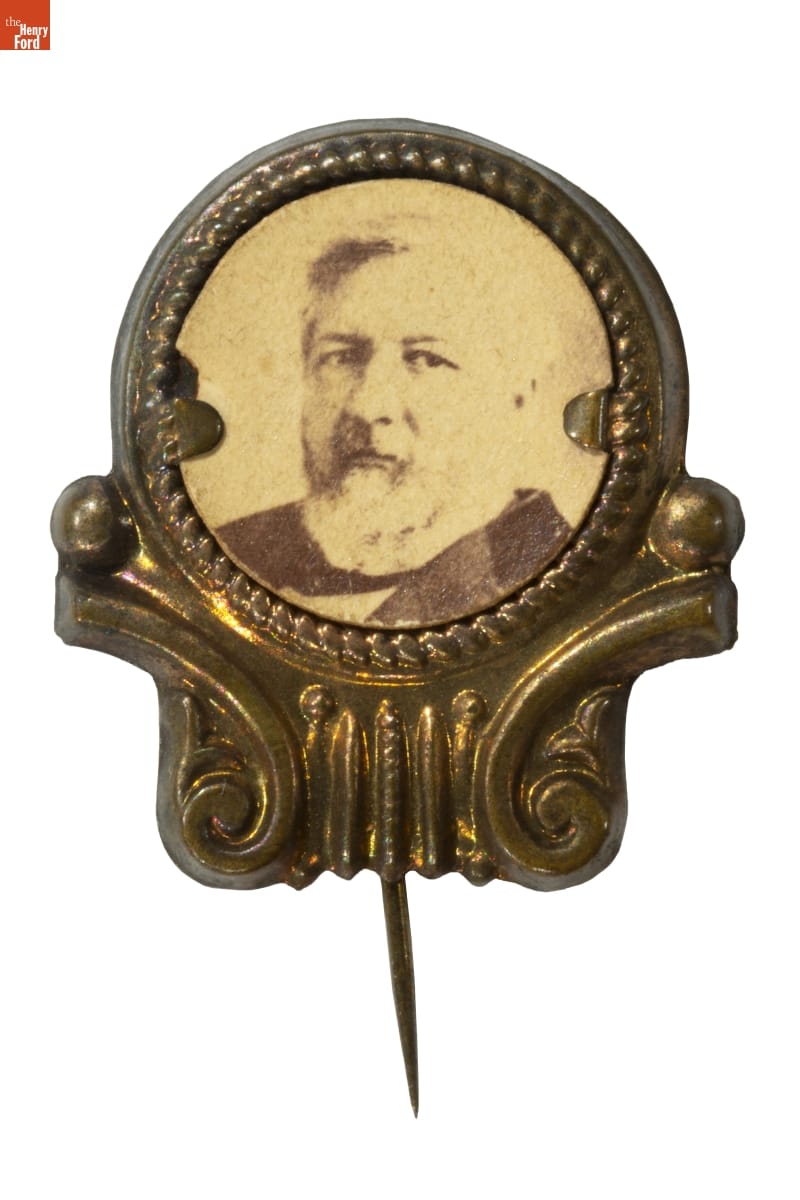
- James Blaine Campaign Pin, 1884 - Republican James G. Blaine, who served as Speaker of the House, U.S. Senator, and Secretary of State, was a prominent politician in the late 1800s. He was also tainted by scandal, which his political enemies used against him. Blaine and his running mate John Logan narrowly lost the 1884 presidential election to Democrat Grover Cleveland, viewed by many as an honest and pragmatic reformer.
- 1884
- Collections - Artifact
James Blaine Campaign Pin, 1884
Republican James G. Blaine, who served as Speaker of the House, U.S. Senator, and Secretary of State, was a prominent politician in the late 1800s. He was also tainted by scandal, which his political enemies used against him. Blaine and his running mate John Logan narrowly lost the 1884 presidential election to Democrat Grover Cleveland, viewed by many as an honest and pragmatic reformer.