
Search
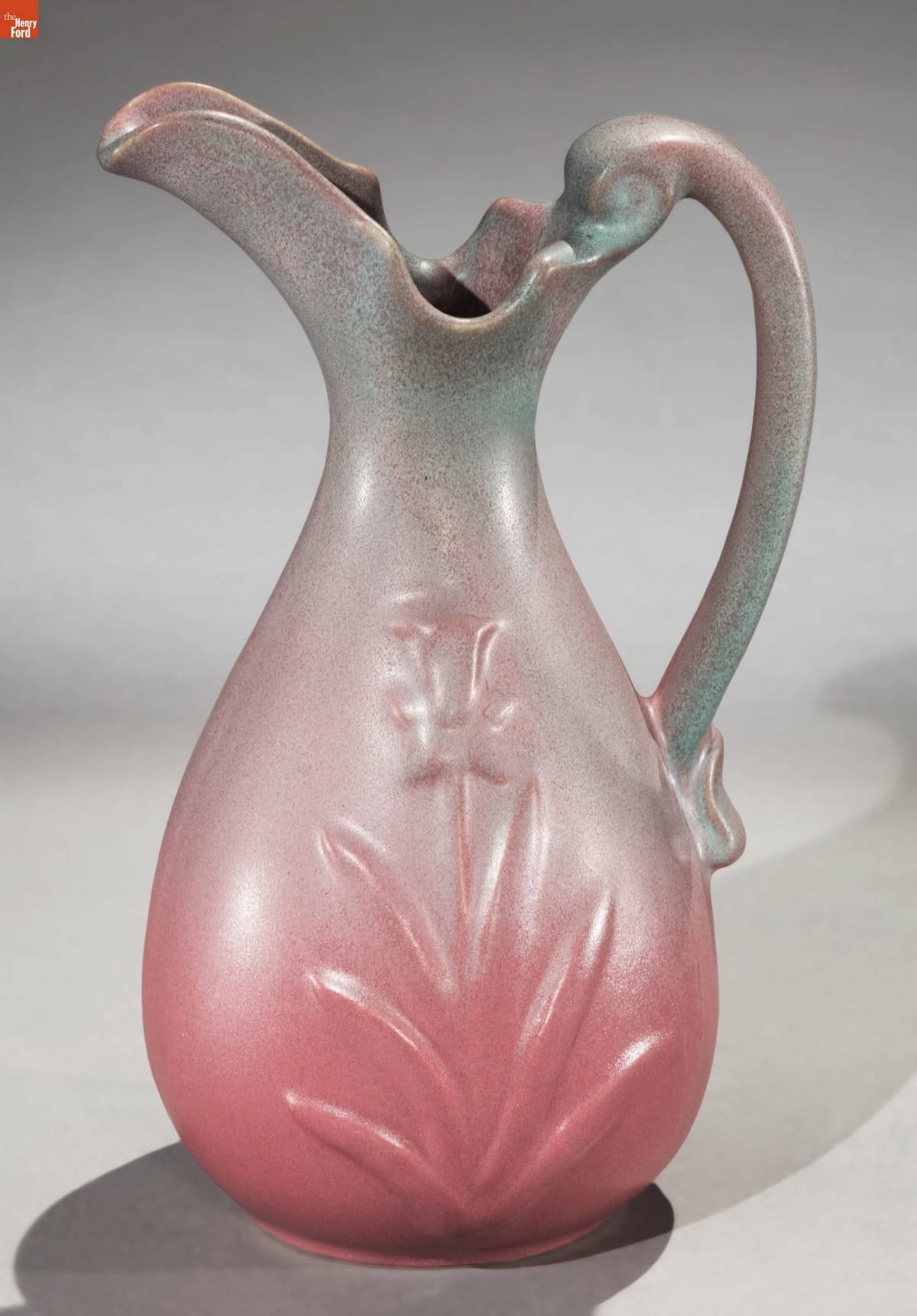
- Ewer, 1936-1940 - During the Great Depression of the 1930s, American art potteries produced inexpensive wares to boost waning sales. The Niloak Pottery Company of Benton, Arkansas, made this ewer (a pitcher or jug, usually decorative, with a wide mouth) as part of a low-cost line introduced in 1931. It features Niloak's matte pink and green-gray glaze combination known as Ozark Dawn.
- 1936-1940
- Collections - Artifact
Ewer, 1936-1940
During the Great Depression of the 1930s, American art potteries produced inexpensive wares to boost waning sales. The Niloak Pottery Company of Benton, Arkansas, made this ewer (a pitcher or jug, usually decorative, with a wide mouth) as part of a low-cost line introduced in 1931. It features Niloak's matte pink and green-gray glaze combination known as Ozark Dawn.
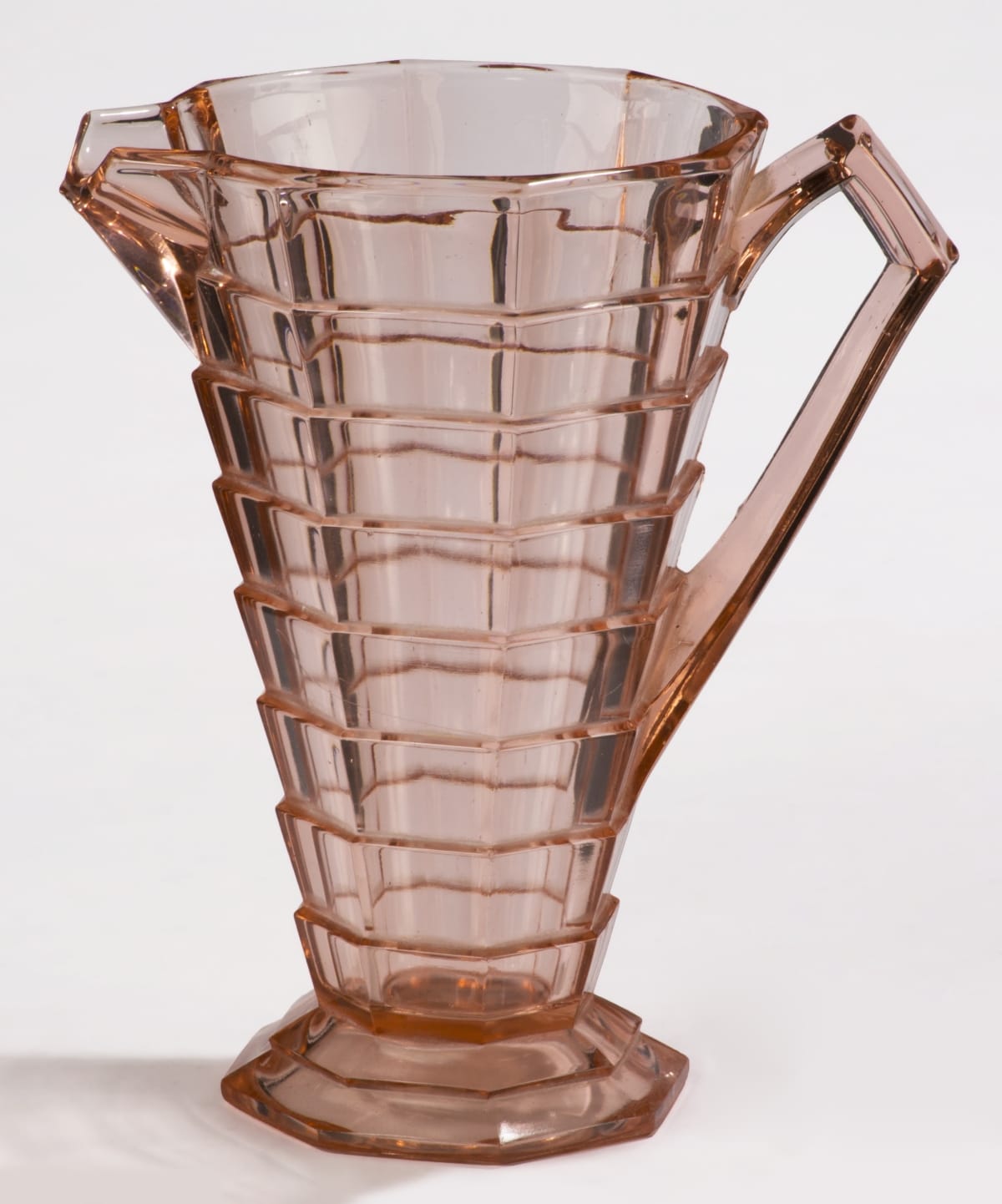
- Pitcher, 1926-1931 - This footed pitcher is part of a larger dinnerware service produced by the Indiana Glass Company of Dunkirk, Indiana. Known as "Depression Glass" these wares were distributed free, or at low cost, in the United States around the time of the Great Depression of the 1930s. The stepped or zig-zag design is the epitome of the Art Deco style, popular at that time.
- 1926-1931
- Collections - Artifact
Pitcher, 1926-1931
This footed pitcher is part of a larger dinnerware service produced by the Indiana Glass Company of Dunkirk, Indiana. Known as "Depression Glass" these wares were distributed free, or at low cost, in the United States around the time of the Great Depression of the 1930s. The stepped or zig-zag design is the epitome of the Art Deco style, popular at that time.
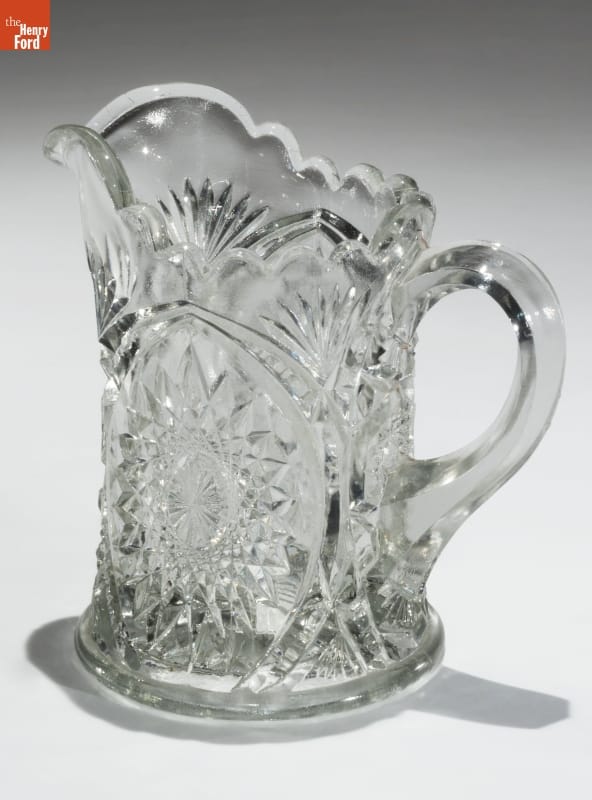
- Indiana Glass Company "Oval Star" Toy Pitcher, circa 1920 -
- circa 1920
- Collections - Artifact
Indiana Glass Company "Oval Star" Toy Pitcher, circa 1920
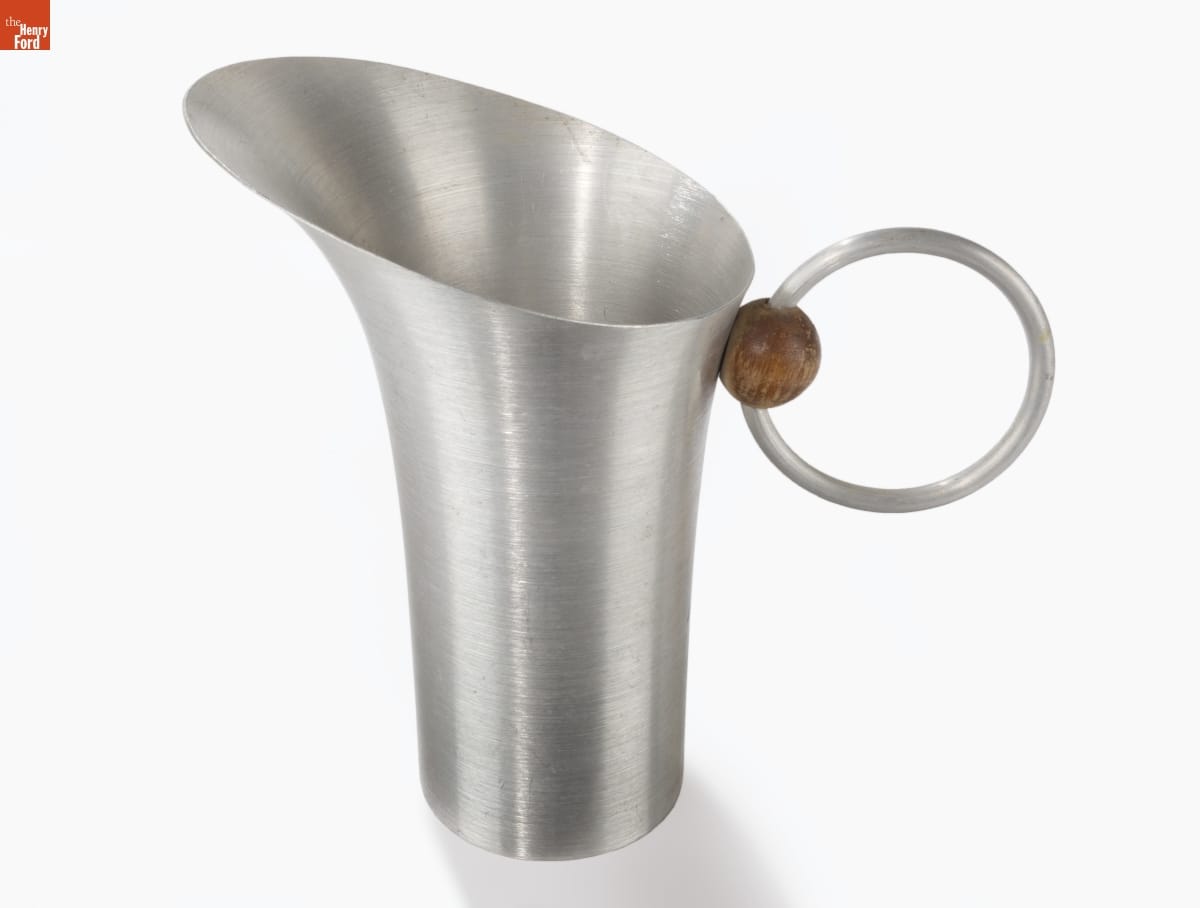
- Aluminum Russell Wright Pitcher, circa 1932 -
- circa 1932
- Collections - Artifact
Aluminum Russell Wright Pitcher, circa 1932
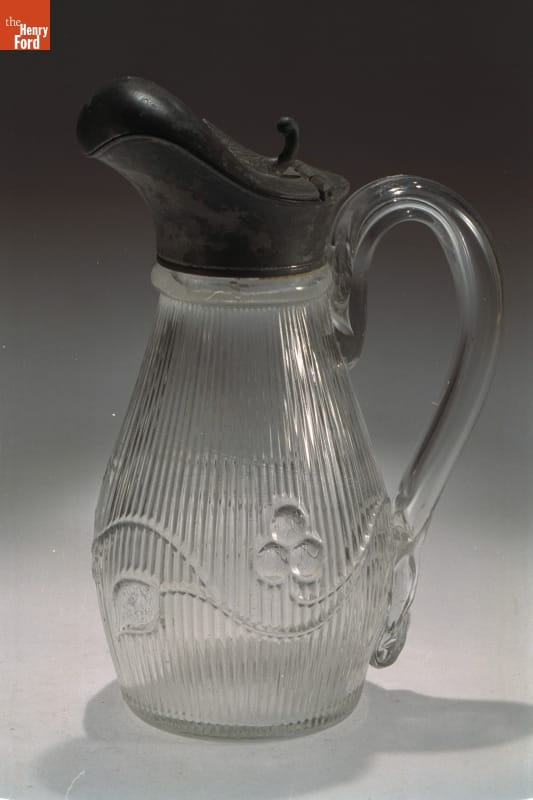
- Syrup Pitcher, 1855-1870 - Nineteenth-century Americans who could not afford refined white sugar found a sweet alternative with molasses or maple syrup. Syrup jugs or pitchers with their dripless metal pouring spouts held the slow-pouring, sugary liquid. These pressed or mold-blown glass containers became a common fixture on many middle-class Victorian Americans' tables.
- 1855-1870
- Collections - Artifact
Syrup Pitcher, 1855-1870
Nineteenth-century Americans who could not afford refined white sugar found a sweet alternative with molasses or maple syrup. Syrup jugs or pitchers with their dripless metal pouring spouts held the slow-pouring, sugary liquid. These pressed or mold-blown glass containers became a common fixture on many middle-class Victorian Americans' tables.
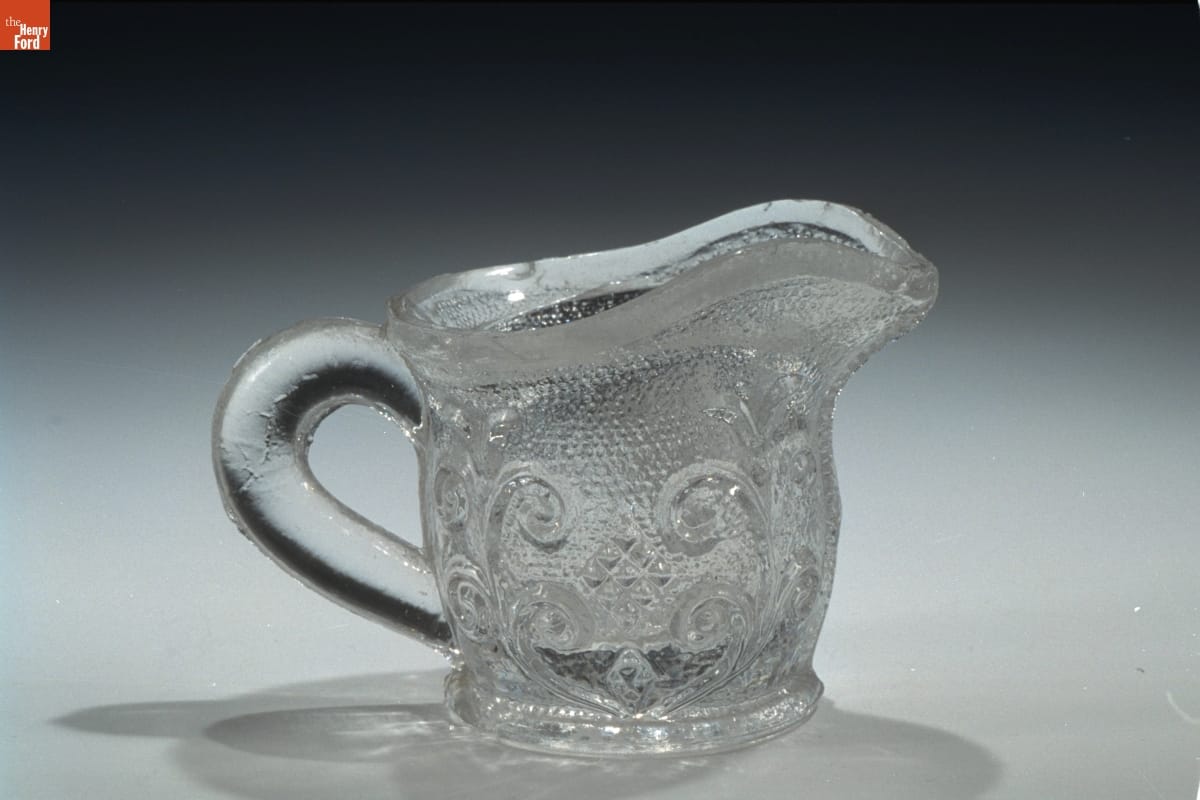
- Miniature Pitcher, 1830-1845 -
- 1830-1845
- Collections - Artifact
Miniature Pitcher, 1830-1845
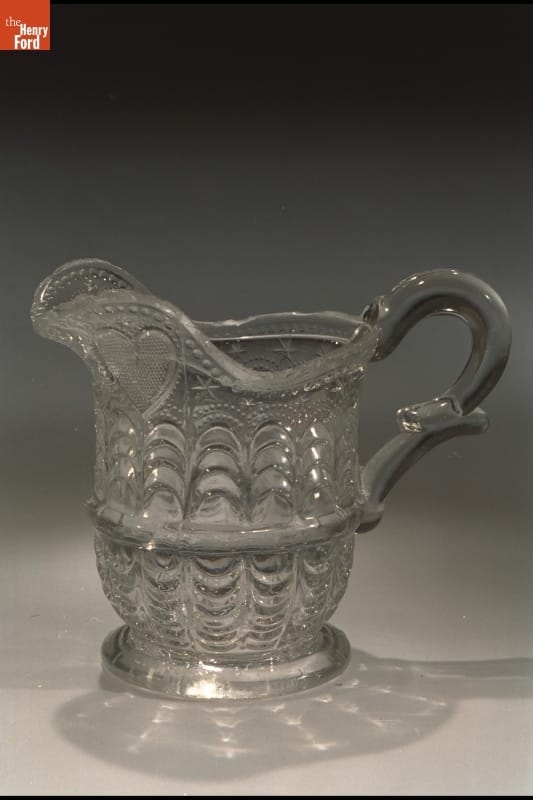
- Creamer, 1830-1845 - Mechanically pressed glass was an innovation in glass history, making decorative, "patterned" glass available to a broad audience. One of the earliest types of pressed glass, dating to the 1830s is known as "Lacy Glass". Complex stippled patterns were developed to help hide technical defects caused by early presses, when the glass gather was cut off and dropped into a mold.
- 1830-1845
- Collections - Artifact
Creamer, 1830-1845
Mechanically pressed glass was an innovation in glass history, making decorative, "patterned" glass available to a broad audience. One of the earliest types of pressed glass, dating to the 1830s is known as "Lacy Glass". Complex stippled patterns were developed to help hide technical defects caused by early presses, when the glass gather was cut off and dropped into a mold.
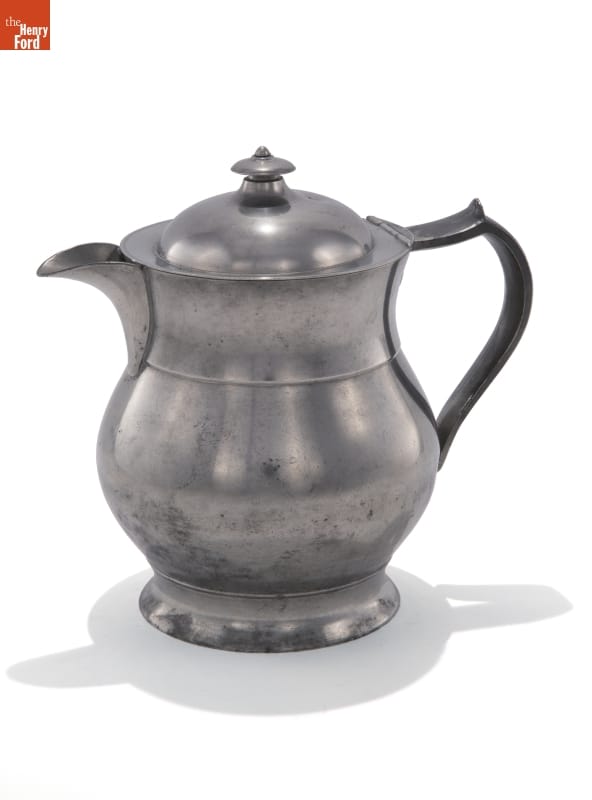
- Pitcher, 1837-1861 - Pewter goods could be found in many American homes and public buildings in the late 18th and early 19th centuries. Most Americans of modest means could afford to have pewter spoons, tankards, dishes, plates or other items, such as this covered pitcher.
- 1837-1861
- Collections - Artifact
Pitcher, 1837-1861
Pewter goods could be found in many American homes and public buildings in the late 18th and early 19th centuries. Most Americans of modest means could afford to have pewter spoons, tankards, dishes, plates or other items, such as this covered pitcher.
- Pitcher, 1890-1910 - China painting was an important pastime for many American women. They painted over the glaze of fired, undecorated pieces of white porcelain called "blanks." China painters learned and shared decorating techniques through manuals, classes, and regional and national associations. China painting peaked around 1900, but it remained a major feature of some women's lives through the first World War.
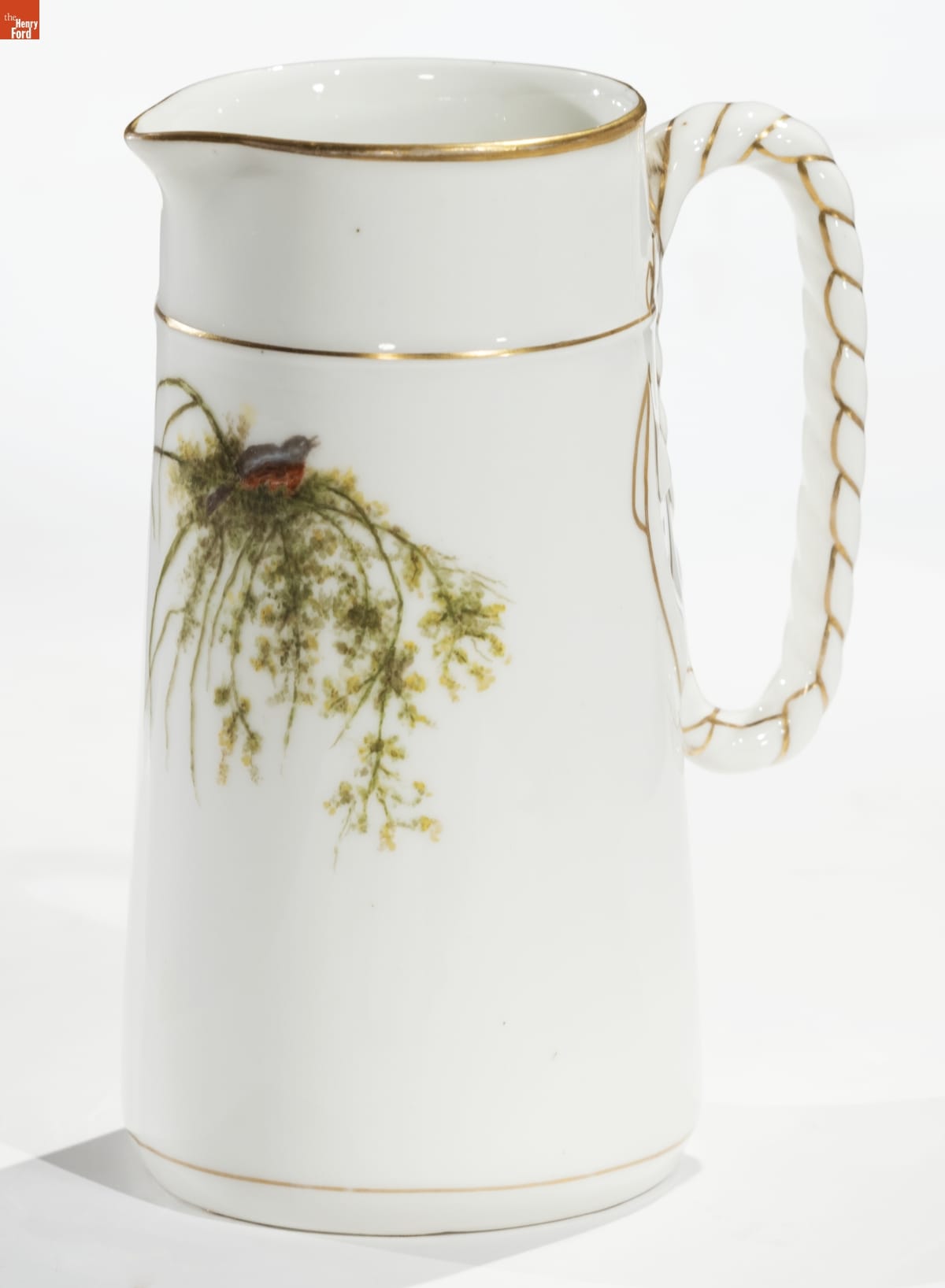
- 1890-1910
- Collections - Artifact
Pitcher, 1890-1910
China painting was an important pastime for many American women. They painted over the glaze of fired, undecorated pieces of white porcelain called "blanks." China painters learned and shared decorating techniques through manuals, classes, and regional and national associations. China painting peaked around 1900, but it remained a major feature of some women's lives through the first World War.
- Miniature Pitcher, 1830-1845 -
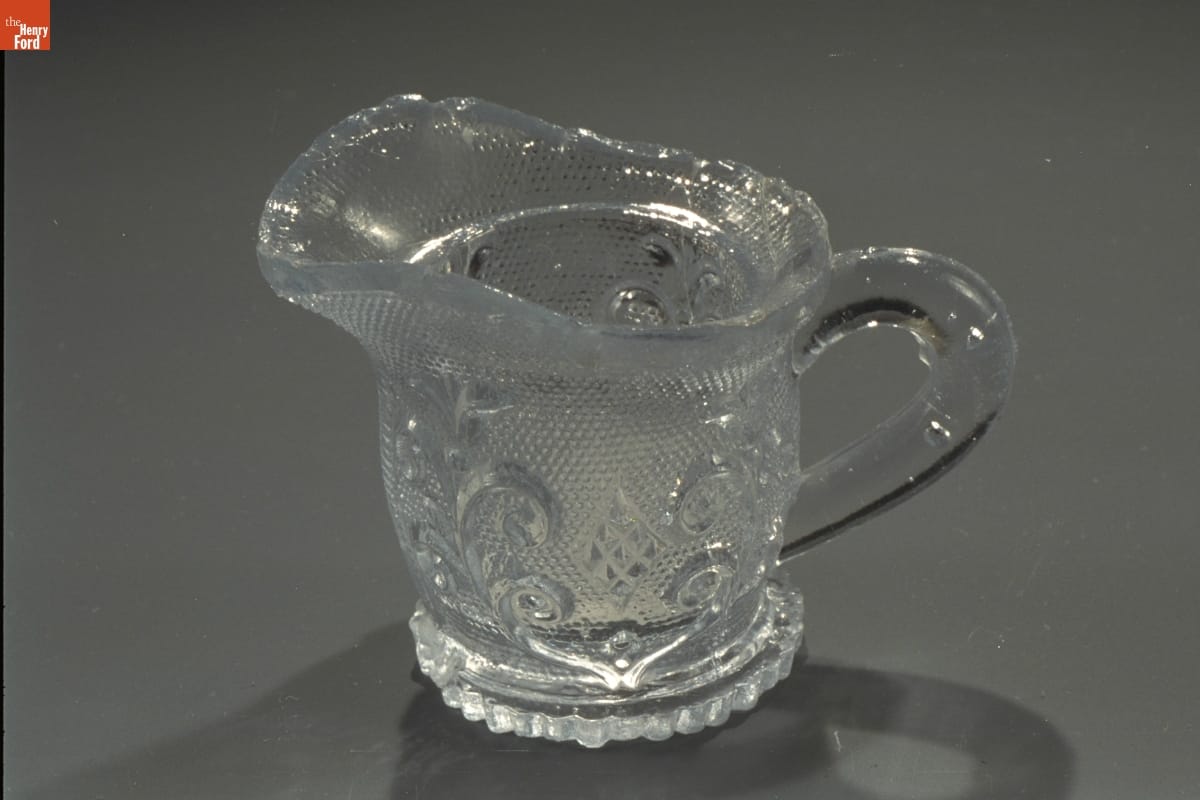
- 1830-1845
- Collections - Artifact
Miniature Pitcher, 1830-1845