
Search
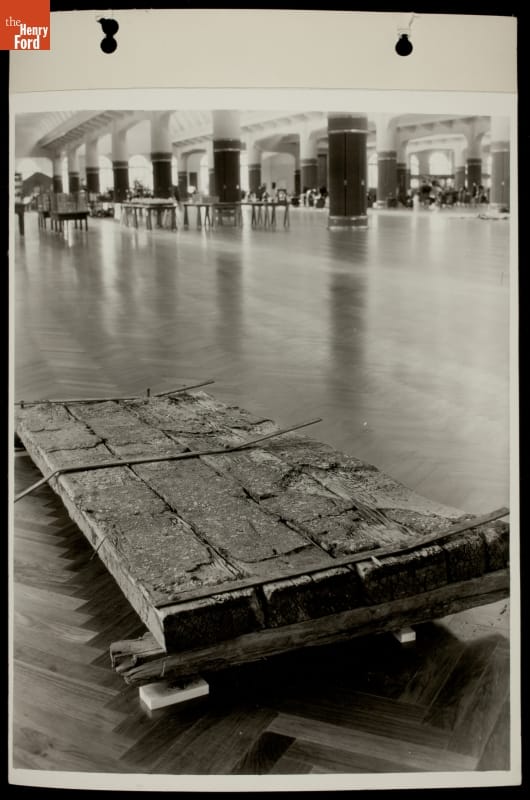
- Section of 19th Century Plank Road in Henry Ford Museum, Dearborn, Michigan, 1934 - In favor of a paved highway in 1926, California's Department of Public Works disassembled the Old Plank Road - eight miles of wooden planks spanning a vast sand dune field. A section of the historic thoroughfare was presented to Henry Ford Museum with a caveat: "use caution in unloading…poisonous insects such as scorpions, centipedes etc. may be encountered."
- August 01, 1934
- Collections - Artifact
Section of 19th Century Plank Road in Henry Ford Museum, Dearborn, Michigan, 1934
In favor of a paved highway in 1926, California's Department of Public Works disassembled the Old Plank Road - eight miles of wooden planks spanning a vast sand dune field. A section of the historic thoroughfare was presented to Henry Ford Museum with a caveat: "use caution in unloading…poisonous insects such as scorpions, centipedes etc. may be encountered."
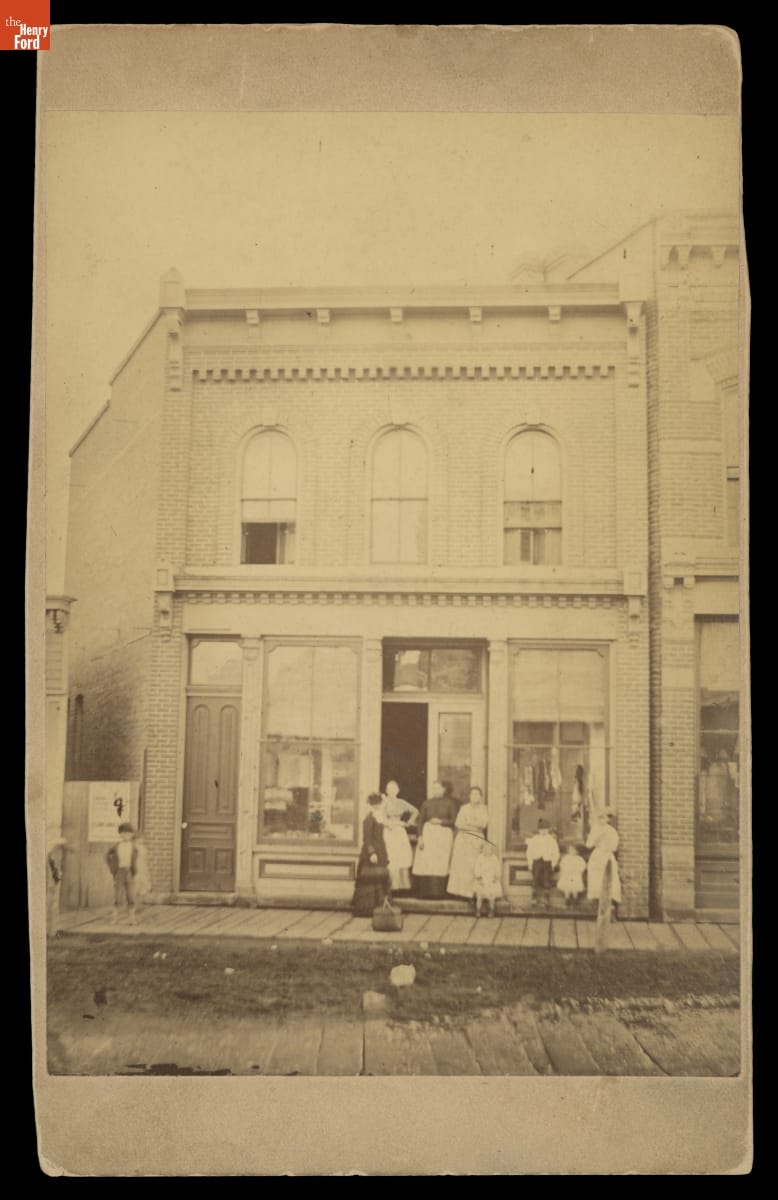
- Women and Children outside a Store on Michigan Avenue, Detroit, Michigan, 1890-1905 -
- 1890-1905
- Collections - Artifact
Women and Children outside a Store on Michigan Avenue, Detroit, Michigan, 1890-1905
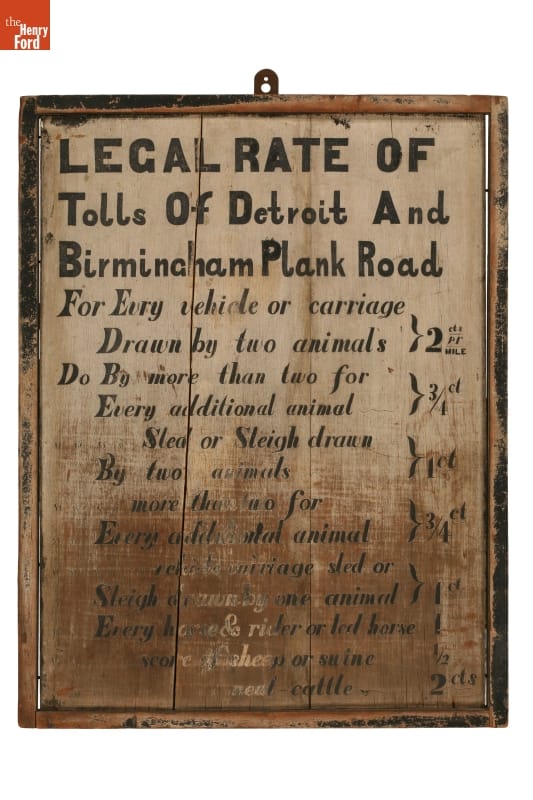
- Sign Noting Toll Rates for the Detroit and Birmingham Plank Road, 1844-1850 - In the mid-19th century, road builders experimented with "plank roads" consisting of wood planks laid across longitudinal wood beams. Wood provided a smoother surface than dirt or gravel, especially in wet weather, but it deteriorated quickly. Maintenance costs, financed by user tolls, were prohibitively expensive and most plank roads were gradually resurfaced with gravel.
- 1844-1850
- Collections - Artifact
Sign Noting Toll Rates for the Detroit and Birmingham Plank Road, 1844-1850
In the mid-19th century, road builders experimented with "plank roads" consisting of wood planks laid across longitudinal wood beams. Wood provided a smoother surface than dirt or gravel, especially in wet weather, but it deteriorated quickly. Maintenance costs, financed by user tolls, were prohibitively expensive and most plank roads were gradually resurfaced with gravel.
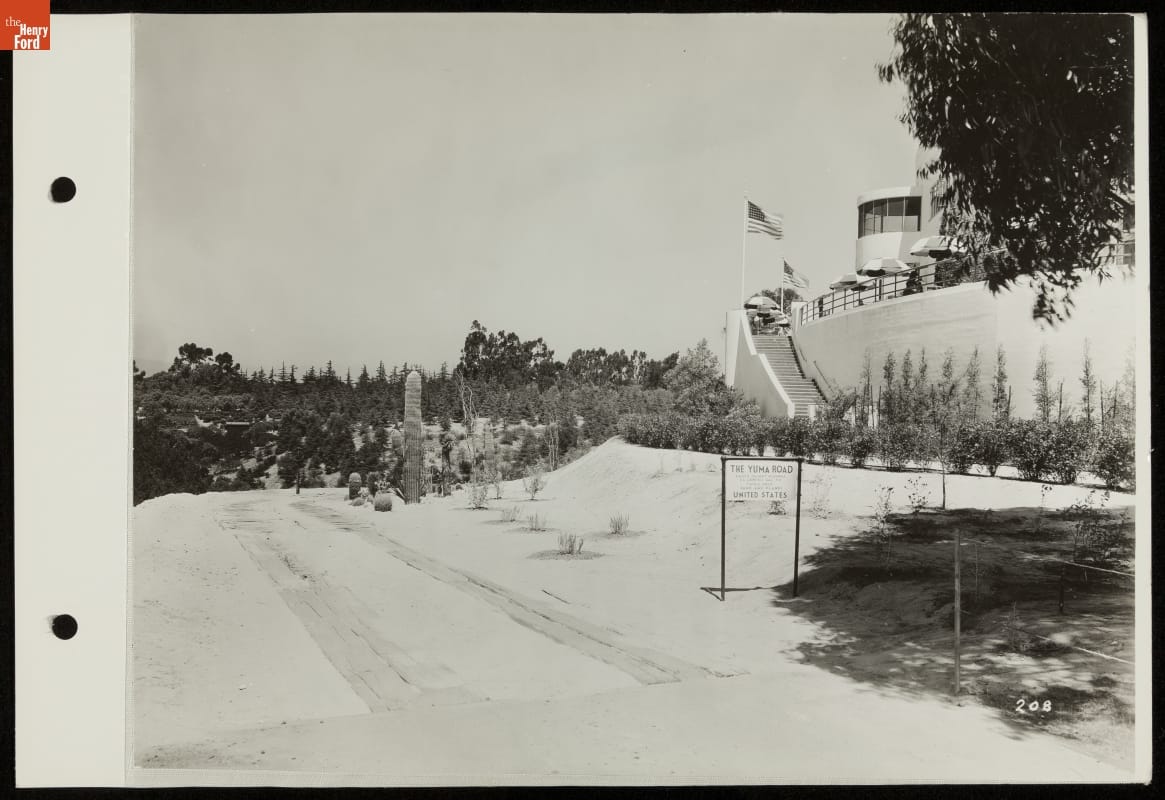
- The Yuma Road, Part of the Ford Motor Company's Exhibit, 'Roads of the Pacific,' California Pacific International Exposition, 1935 - "Roads of the Pacific" was part of the Ford Exhibit, the most popular attraction at the 1935 California Pacific International Exposition. Visitors rode in brand new Ford V-8s over 14 reproductions of famous roads. This section representing a plank road that negotiated sand dunes between Yuma, Arizona, and San Diego, California, contributed to the immersive "Roads of the Pacific" experience.
- 1935
- Collections - Artifact
The Yuma Road, Part of the Ford Motor Company's Exhibit, 'Roads of the Pacific,' California Pacific International Exposition, 1935
"Roads of the Pacific" was part of the Ford Exhibit, the most popular attraction at the 1935 California Pacific International Exposition. Visitors rode in brand new Ford V-8s over 14 reproductions of famous roads. This section representing a plank road that negotiated sand dunes between Yuma, Arizona, and San Diego, California, contributed to the immersive "Roads of the Pacific" experience.