
Search
- European Recovery Program Poster, circa 1950 -
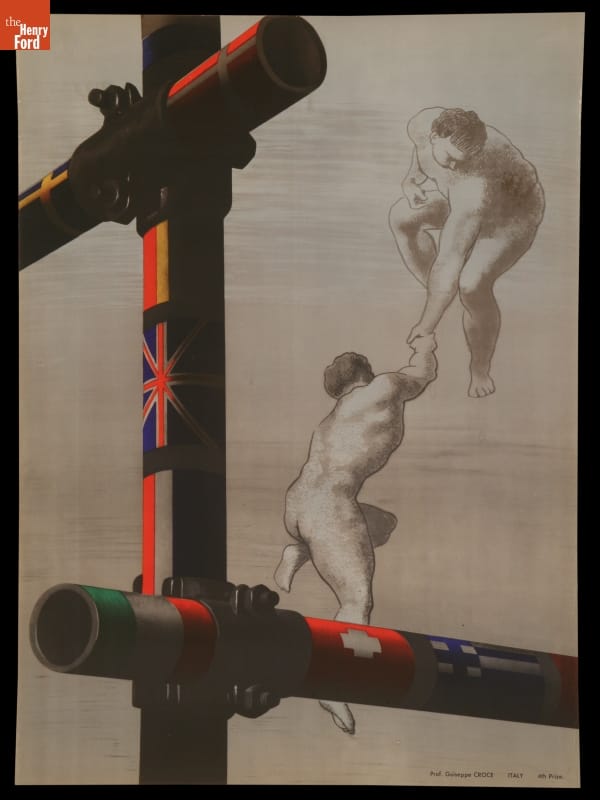
- circa 1950
- Collections - Artifact
European Recovery Program Poster, circa 1950
- European Recovery Program Poster, "La Cooperation Inter-europeenne pour un Niveau de Vie plus Eleve," circa 1950 -
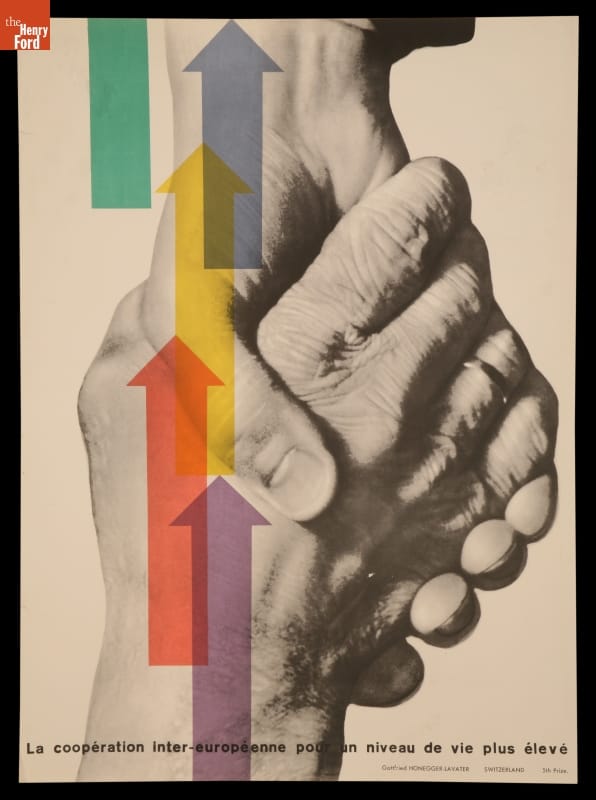
- circa 1950
- Collections - Artifact
European Recovery Program Poster, "La Cooperation Inter-europeenne pour un Niveau de Vie plus Eleve," circa 1950
- Drawing, "Chimney, M. Wells House Union Conn." (now Daggett Farmhouse), June 26, 1977 -
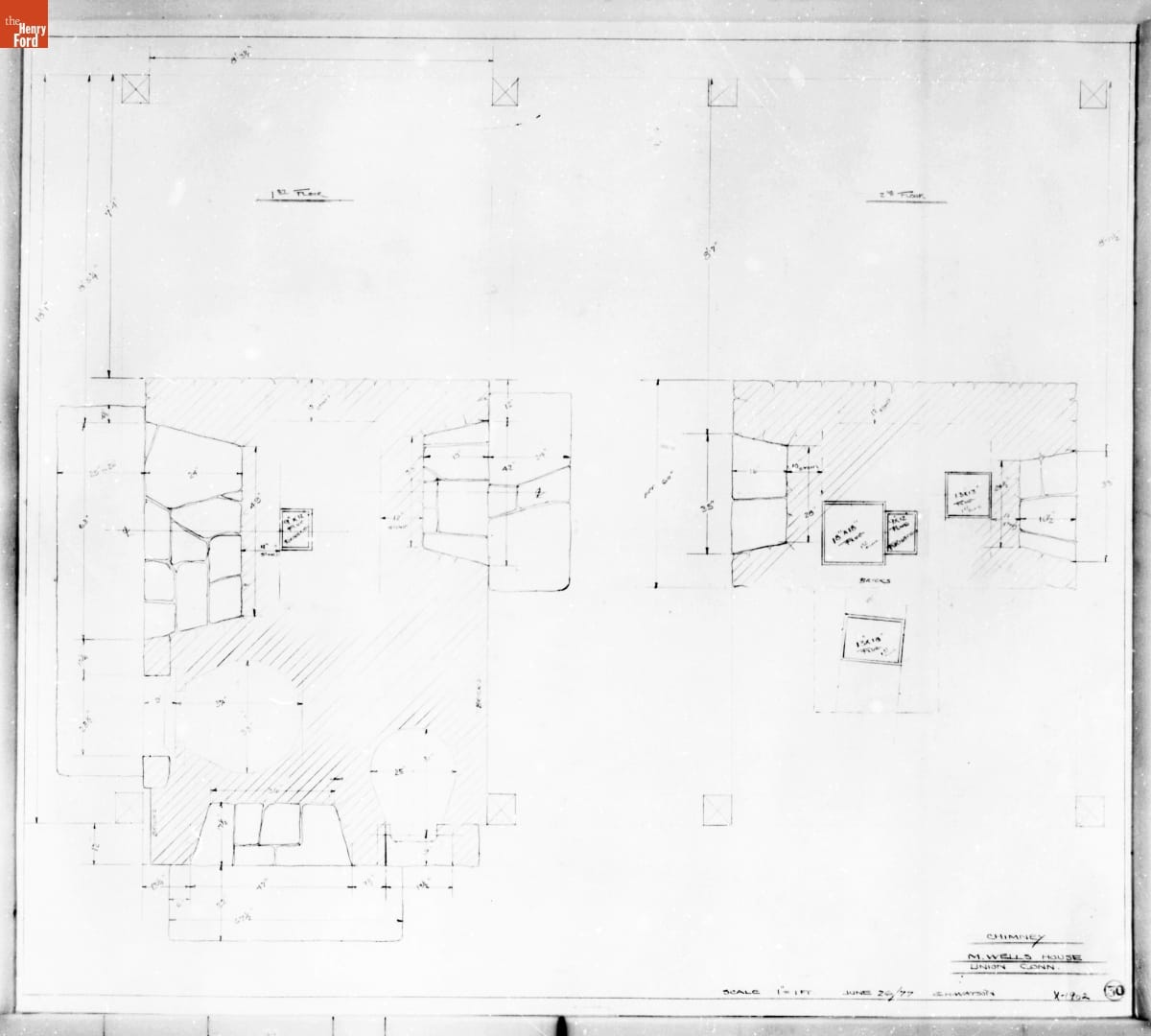
- June 26, 1977
- Collections - Artifact
Drawing, "Chimney, M. Wells House Union Conn." (now Daggett Farmhouse), June 26, 1977
- Drawing, "Liv. Rm Fire Place and Kitchen Fire Place Mrs. Wells House Union Conn" (now Daggett Farmhouse), April 5, 1977 -
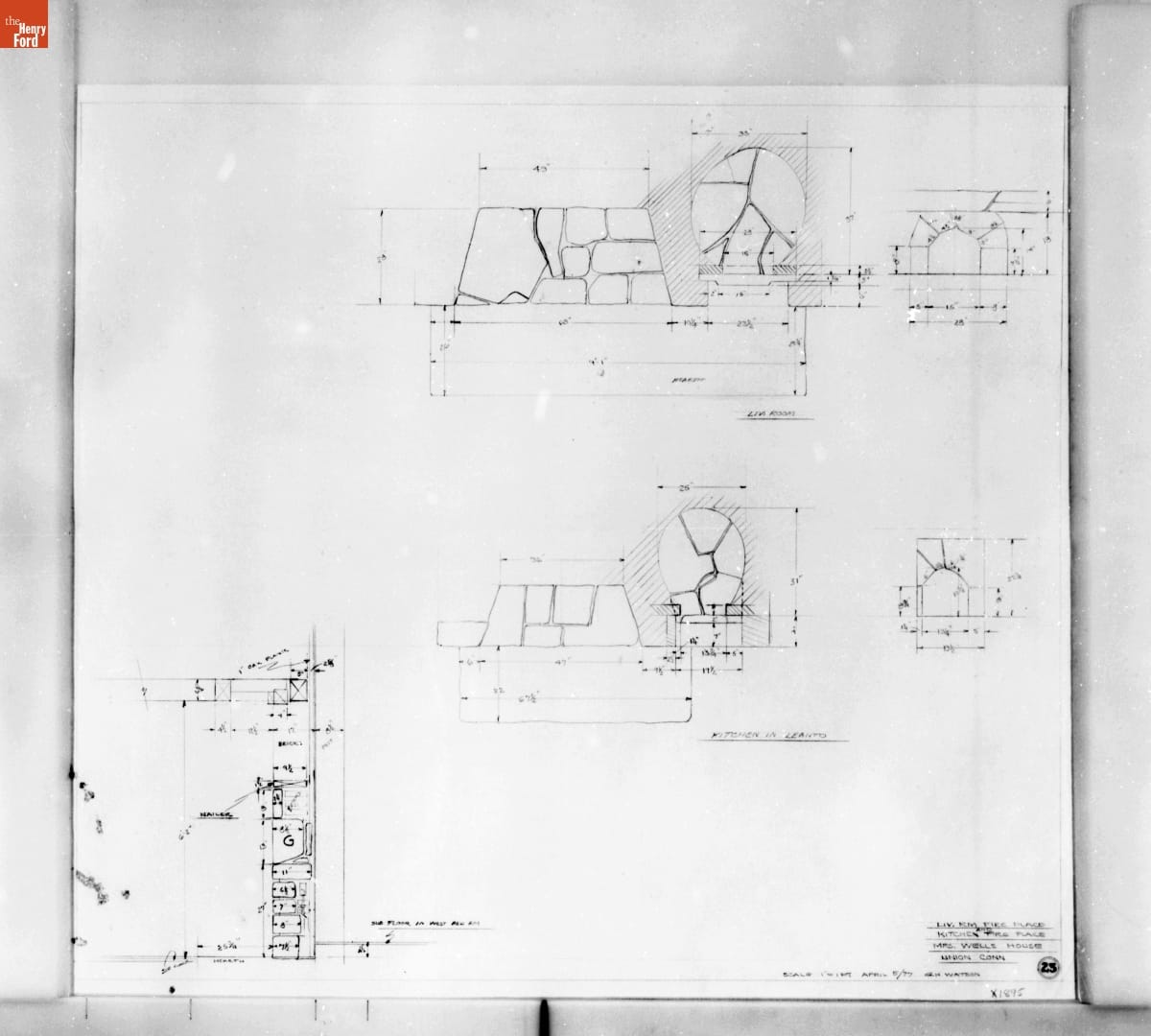
- April 05, 1977
- Collections - Artifact
Drawing, "Liv. Rm Fire Place and Kitchen Fire Place Mrs. Wells House Union Conn" (now Daggett Farmhouse), April 5, 1977
- Drawing, "S.E. Bed Room 2nd and Living Room Fire Places M. Wells House Union Conn." (now Daggett Farmhouse), April 2, 1977 -
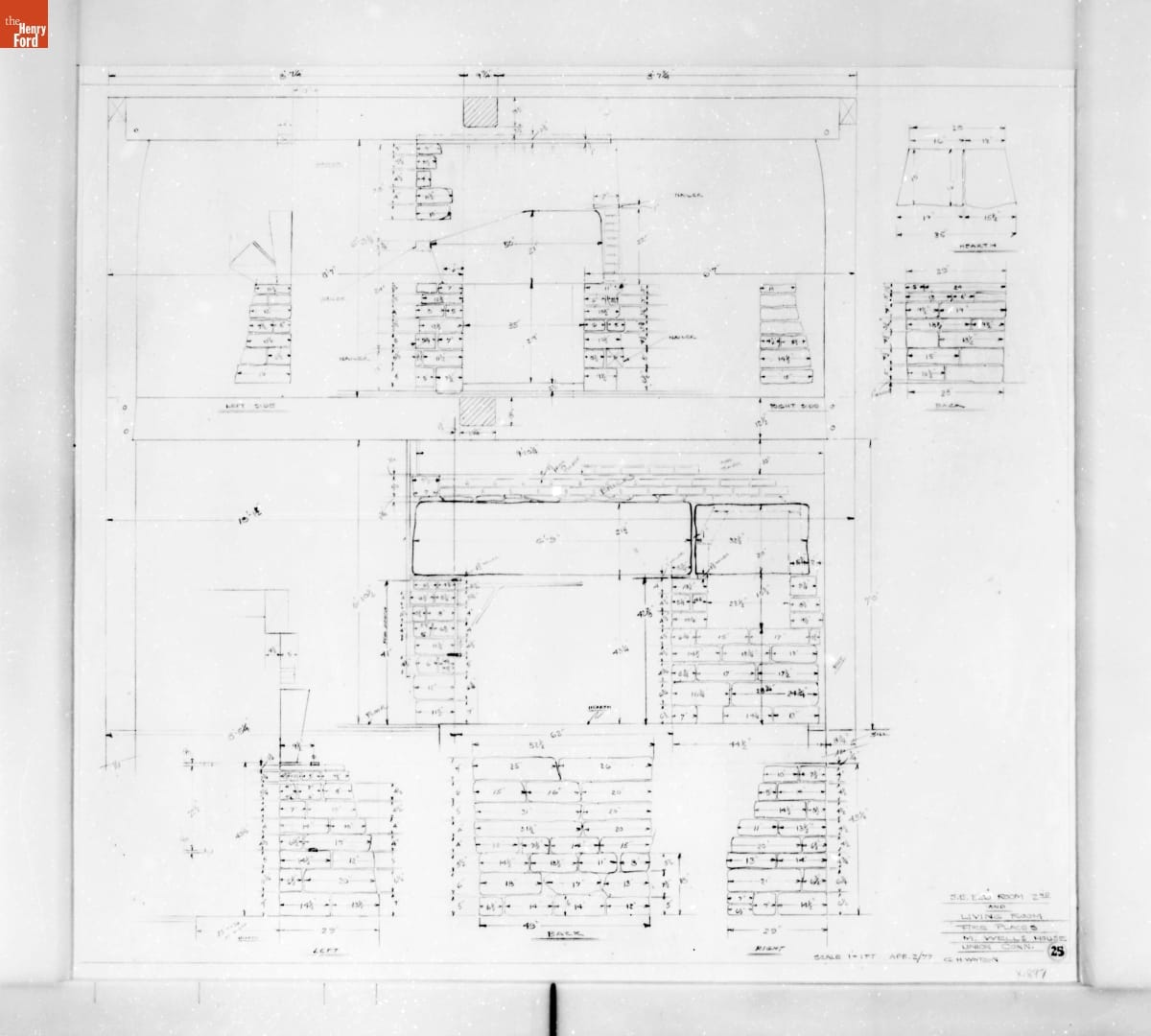
- April 02, 1977
- Collections - Artifact
Drawing, "S.E. Bed Room 2nd and Living Room Fire Places M. Wells House Union Conn." (now Daggett Farmhouse), April 2, 1977
- Technical Drawing for the "TOWTMTEWP" Computer, December 1971 - In 1936, Alan Turing wrote about a theoretical universal computer now referred to as a "Turing Machine." In 1972, Washington University professors Wesley Clark and Bob Arnzen likely made the first physical version of Turing's machine. Clark used the TOWTMTEWP ("The Only Working Turing Machine There Ever Was Probably") as an educational tool, demonstrating basic computer theory for his students.
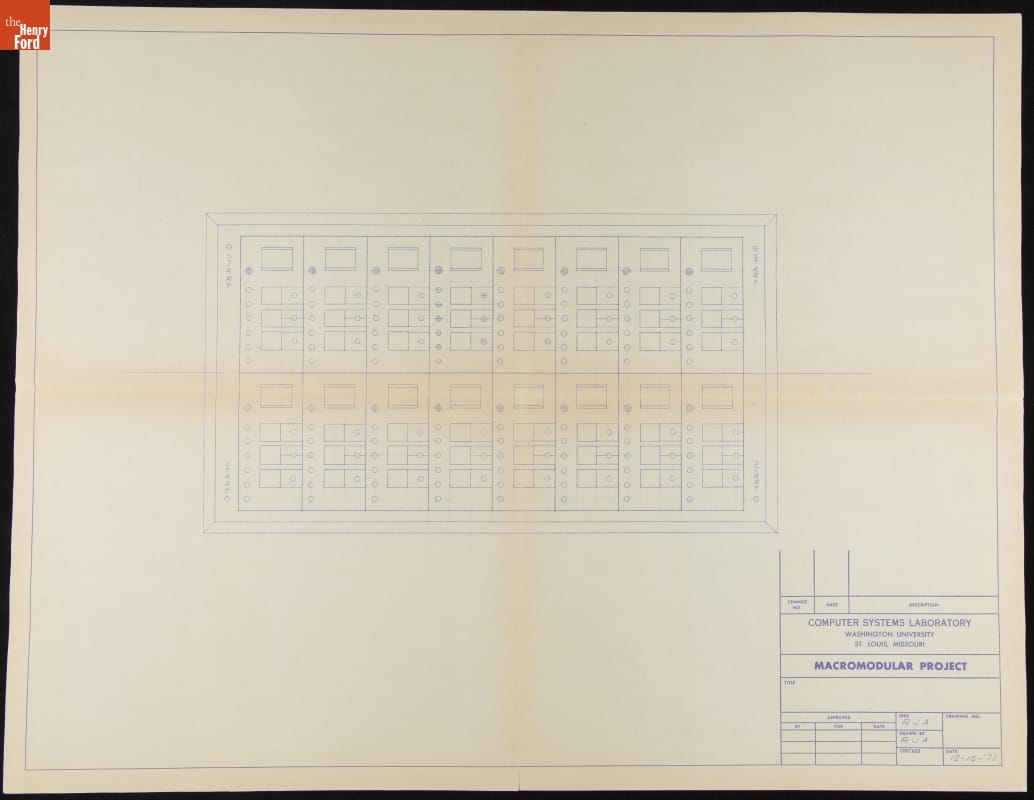
- December 15, 1971
- Collections - Artifact
Technical Drawing for the "TOWTMTEWP" Computer, December 1971
In 1936, Alan Turing wrote about a theoretical universal computer now referred to as a "Turing Machine." In 1972, Washington University professors Wesley Clark and Bob Arnzen likely made the first physical version of Turing's machine. Clark used the TOWTMTEWP ("The Only Working Turing Machine There Ever Was Probably") as an educational tool, demonstrating basic computer theory for his students.
- Plot Plan Showing Layout of Sanitary Sewer, Colonial Village Development for Dearborn Inn, January 1937 - By the mid-1930s, the Dearborn Inn, a popular luxury hotel, required additional accommodations to service travelers and visitors to the Edison Institute (later renamed The Henry Ford). The L.G. Treadway Service Corporation consulted with Edsel Ford about proposed upgrades that included a swimming pool, pool house, landscaping, and a "Colonial Village" of guest houses (replicas of homes famous in American history).
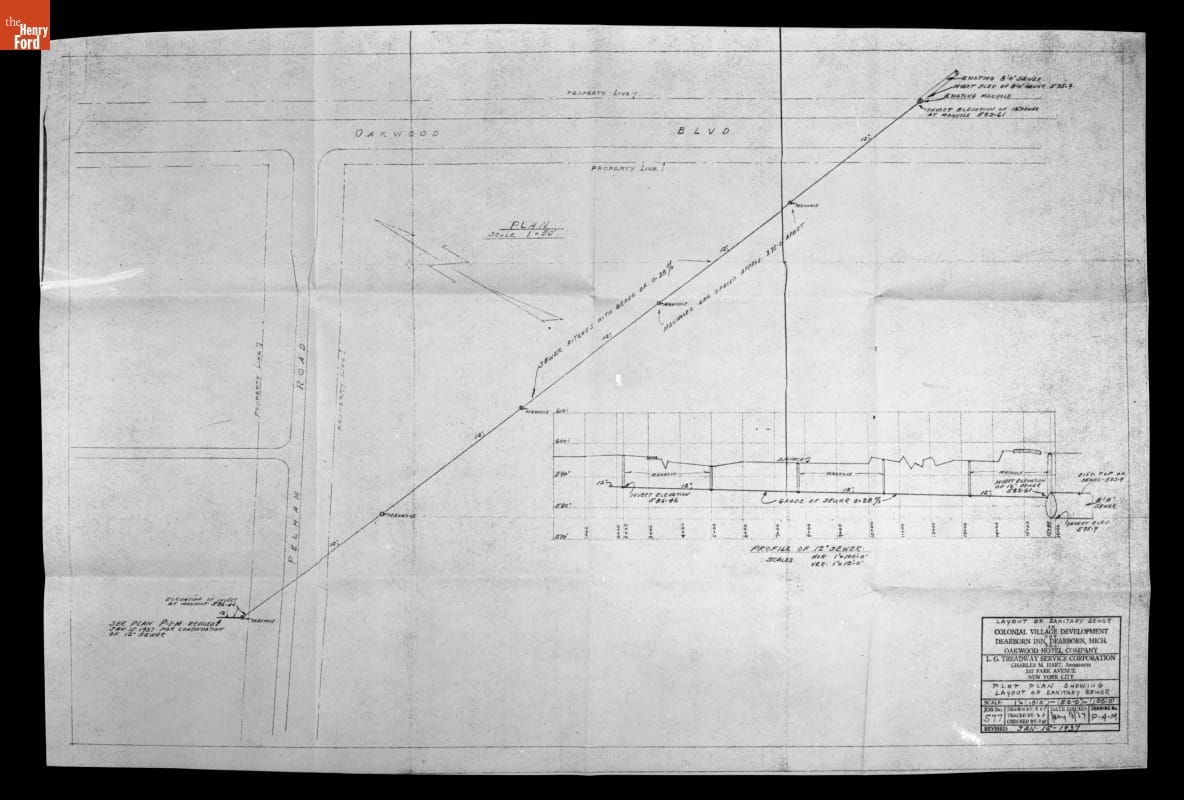
- January 15, 1937
- Collections - Artifact
Plot Plan Showing Layout of Sanitary Sewer, Colonial Village Development for Dearborn Inn, January 1937
By the mid-1930s, the Dearborn Inn, a popular luxury hotel, required additional accommodations to service travelers and visitors to the Edison Institute (later renamed The Henry Ford). The L.G. Treadway Service Corporation consulted with Edsel Ford about proposed upgrades that included a swimming pool, pool house, landscaping, and a "Colonial Village" of guest houses (replicas of homes famous in American history).
- Plan for Second Floor of Pools and Bath House in the Colonial Village Development for Dearborn Inn, April 1936 - By the mid-1930s, the Dearborn Inn, a popular luxury hotel, required additional accommodations to service travelers and visitors to the Edison Institute (later renamed The Henry Ford). The L.G. Treadway Service Corporation consulted with Edsel Ford about proposed upgrades that included a swimming pool, pool house, landscaping, and a "Colonial Village" of guest houses (replicas of homes famous in American history).
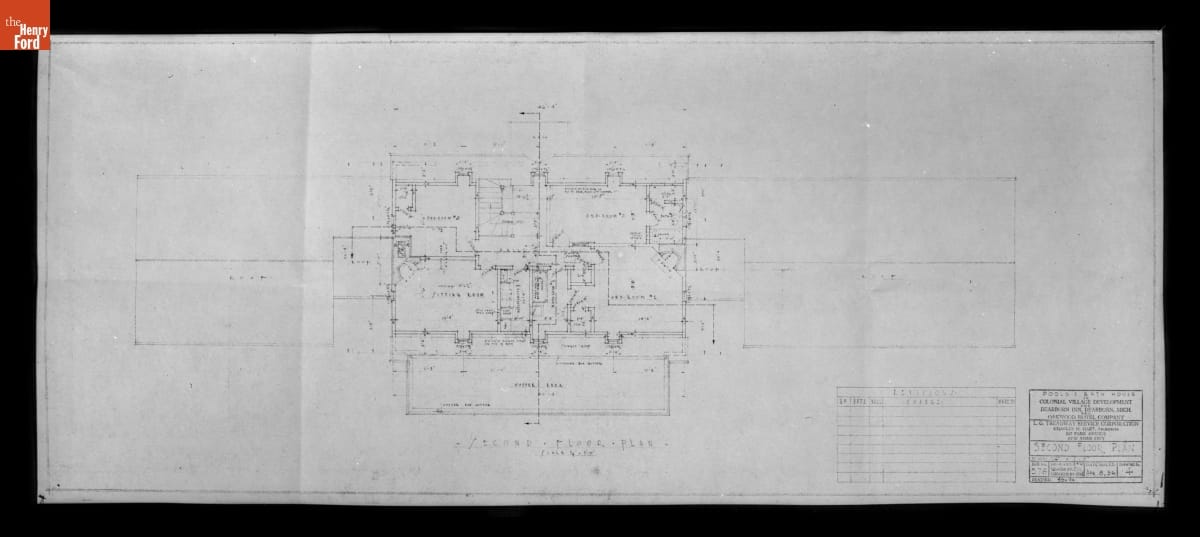
- April 20, 1936
- Collections - Artifact
Plan for Second Floor of Pools and Bath House in the Colonial Village Development for Dearborn Inn, April 1936
By the mid-1930s, the Dearborn Inn, a popular luxury hotel, required additional accommodations to service travelers and visitors to the Edison Institute (later renamed The Henry Ford). The L.G. Treadway Service Corporation consulted with Edsel Ford about proposed upgrades that included a swimming pool, pool house, landscaping, and a "Colonial Village" of guest houses (replicas of homes famous in American history).
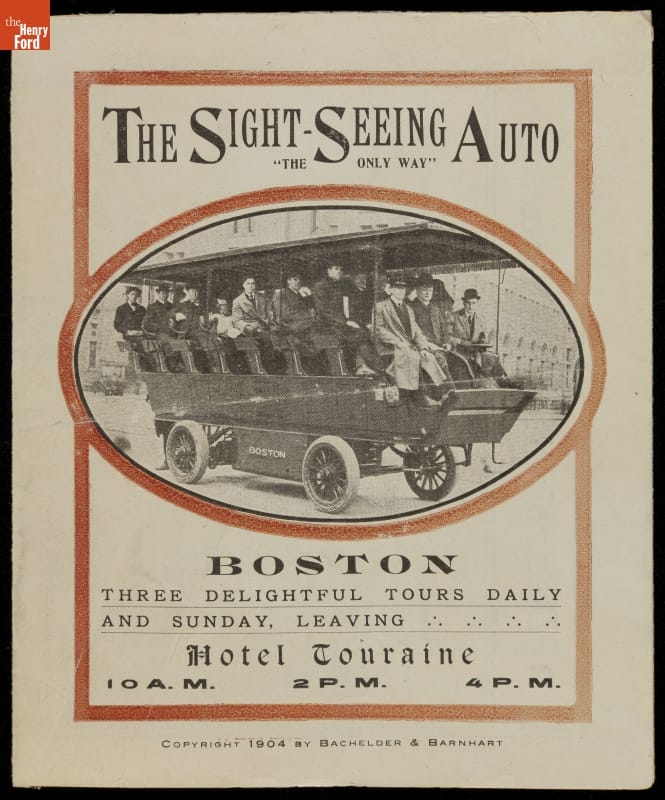
- "The Sight-Seeing Auto" Touring Guide to Boston, Massachusetts, 1904 - Cities became a more popular vacation destination around the turn of the 20th century, delighting tourists with the latest modern technology, artistic and scientific curiosities, and live entertainment. Commercial sightseeing tours helped simplify attractions, districts, and landmarks for city tourists. This 1904 brochure proclaimed "The Only Way" to see the sights of Boston, Massachusetts, was on a 40-person automobile.
- 1904
- Collections - Artifact
"The Sight-Seeing Auto" Touring Guide to Boston, Massachusetts, 1904
Cities became a more popular vacation destination around the turn of the 20th century, delighting tourists with the latest modern technology, artistic and scientific curiosities, and live entertainment. Commercial sightseeing tours helped simplify attractions, districts, and landmarks for city tourists. This 1904 brochure proclaimed "The Only Way" to see the sights of Boston, Massachusetts, was on a 40-person automobile.
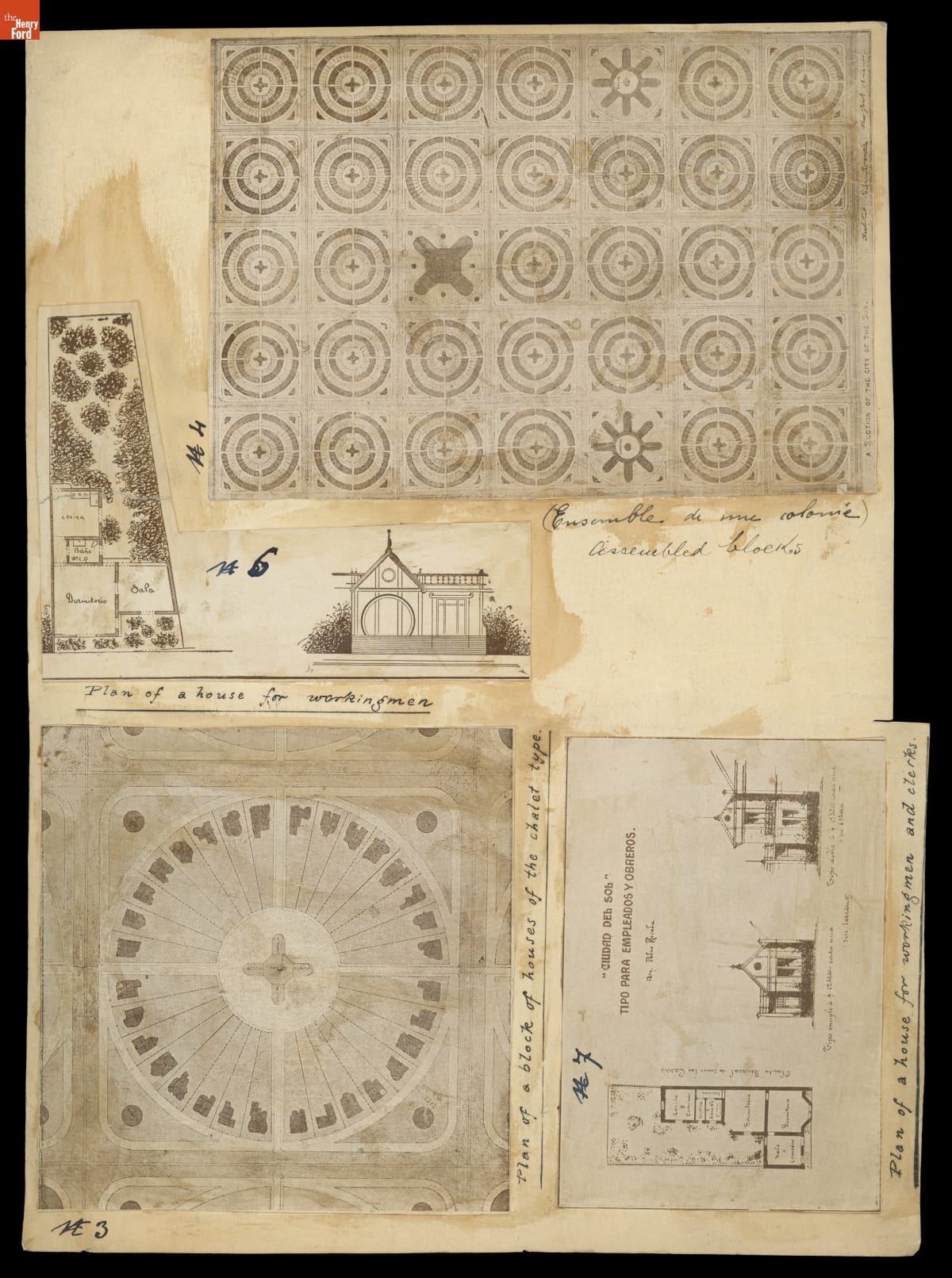
- Proposed "City of the Sun" Housing Project, circa 1916 -
- circa 1916
- Collections - Artifact
Proposed "City of the Sun" Housing Project, circa 1916