
Search
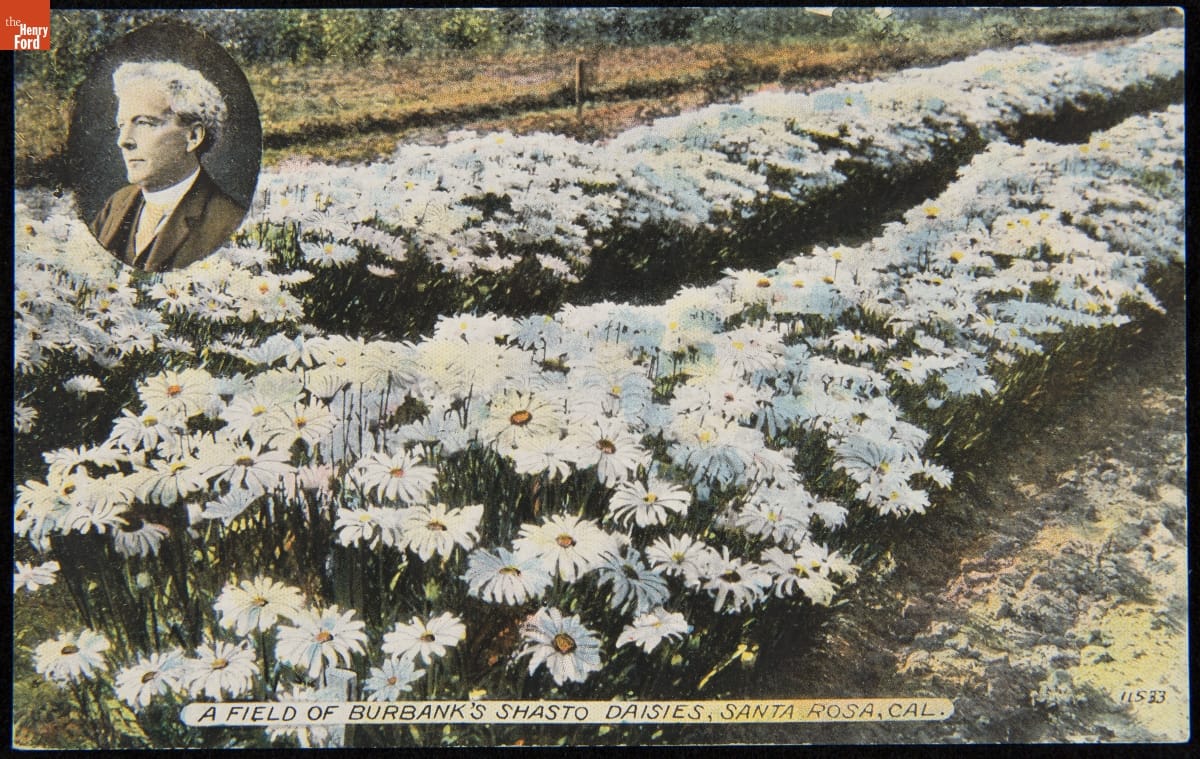
- "A Field of Burbank's Shasto Daisies, Santa Rosa, Cal.," circa 1915 - Luther Burbank (1849-1926), an American horticulturalist, gained a reputation for selective breeding that yielded more than 800 new fruits, vegetables, flowers, and other plants. One of his most enduring inventions, the Shasta daisy, released in 1901, took him 17 years to perfect. He praised its grace, beauty, abundance of bloom, hardiness, and persistence, even as he released three "new" Shasta daisy varieties in 1904.
- circa 1915
- Collections - Artifact
"A Field of Burbank's Shasto Daisies, Santa Rosa, Cal.," circa 1915
Luther Burbank (1849-1926), an American horticulturalist, gained a reputation for selective breeding that yielded more than 800 new fruits, vegetables, flowers, and other plants. One of his most enduring inventions, the Shasta daisy, released in 1901, took him 17 years to perfect. He praised its grace, beauty, abundance of bloom, hardiness, and persistence, even as he released three "new" Shasta daisy varieties in 1904.
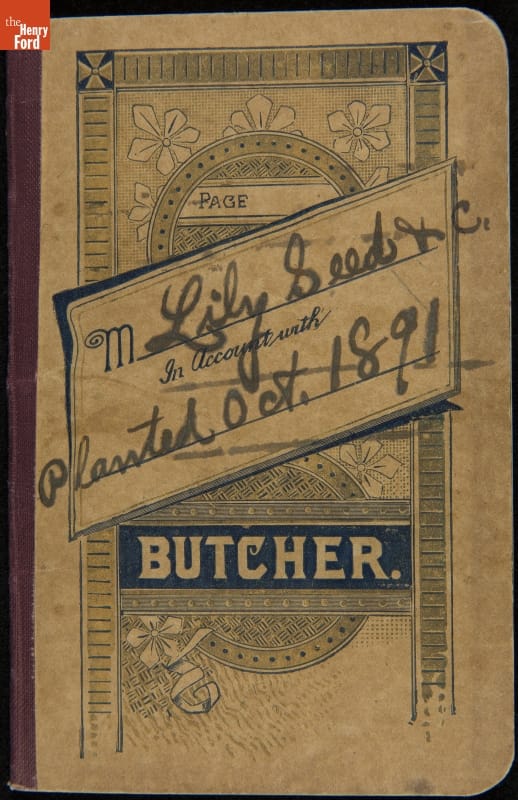
- Luther Burbank Notebook, "Lily Seeds &c., Planted Oct. 1891" - Luther Burbank (1849-1926), an American plant breeder, naturalist, and author, was especially noted for his experiments with plants, fruits, and vegetables. After developing the influential Russet Burbank potato in his native Massachusetts, Burbank established a large experimental garden in Santa Rosa, California. When not working outdoors, Burbank spent time carrying on his nursery business, keeping accounts, researching, and writing.
- 1891-1892
- Collections - Artifact
Luther Burbank Notebook, "Lily Seeds &c., Planted Oct. 1891"
Luther Burbank (1849-1926), an American plant breeder, naturalist, and author, was especially noted for his experiments with plants, fruits, and vegetables. After developing the influential Russet Burbank potato in his native Massachusetts, Burbank established a large experimental garden in Santa Rosa, California. When not working outdoors, Burbank spent time carrying on his nursery business, keeping accounts, researching, and writing.
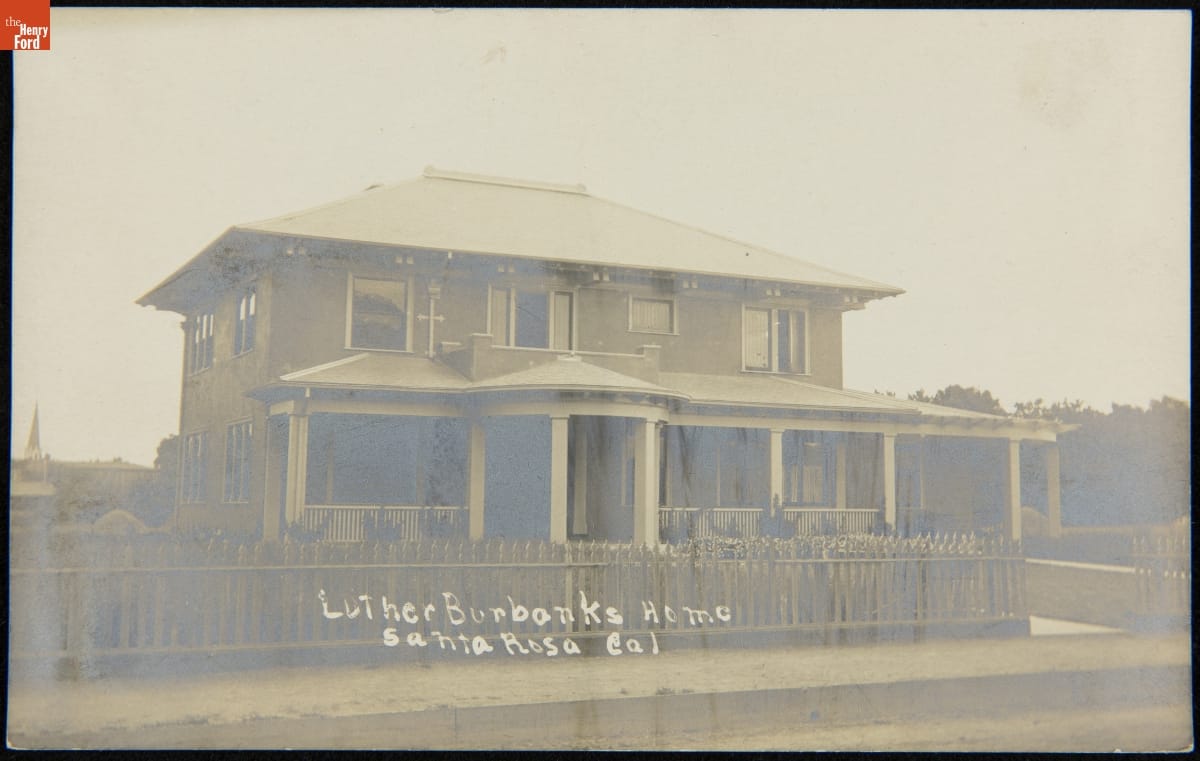
- "Luther Burbank's Home, Santa Rosa, Cal.," circa 1915 - Luther Burbank moved into his new and spacious 12-room home in December 1906, just months after the San Francisco earthquake. The Mission and Colonial Revival design suited popular tastes at the times, while the furnishings ensured Burbank's comfort. His private den opened onto the balcony above the porch which offered a breath of air and a view of staff at work in his experimental gardens.
- circa 1915
- Collections - Artifact
"Luther Burbank's Home, Santa Rosa, Cal.," circa 1915
Luther Burbank moved into his new and spacious 12-room home in December 1906, just months after the San Francisco earthquake. The Mission and Colonial Revival design suited popular tastes at the times, while the furnishings ensured Burbank's comfort. His private den opened onto the balcony above the porch which offered a breath of air and a view of staff at work in his experimental gardens.
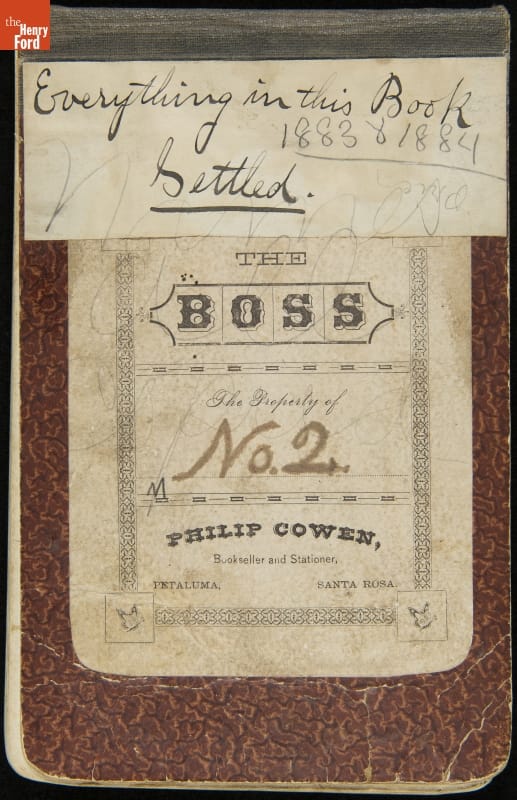
- Luther Burbank Notebook Listing Plant Orders Filled, 1883-1884 - Luther Burbank (1849-1926), an American plant breeder, naturalist, and author, was especially noted for his experiments with plants, fruits, and vegetables. After developing the influential Russet Burbank potato in his native Massachusetts, Burbank established a large experimental garden in Santa Rosa, California. When not working outdoors, Burbank spent time carrying on his nursery business, keeping accounts, researching, and writing.
- 1883-1884
- Collections - Artifact
Luther Burbank Notebook Listing Plant Orders Filled, 1883-1884
Luther Burbank (1849-1926), an American plant breeder, naturalist, and author, was especially noted for his experiments with plants, fruits, and vegetables. After developing the influential Russet Burbank potato in his native Massachusetts, Burbank established a large experimental garden in Santa Rosa, California. When not working outdoors, Burbank spent time carrying on his nursery business, keeping accounts, researching, and writing.
- "Burbank's New Residence, Santa Rosa, California," circa 1915 - Luther Burbank moved into his new and spacious 12-room home in December 1906, just months after the San Francisco earthquake. The Mission and Colonial Revival design suited popular tastes at the times, while the furnishings ensured Burbank's comfort. His private den opened onto the balcony above the porch which offered a breath of air and a view of staff at work in his experimental gardens.
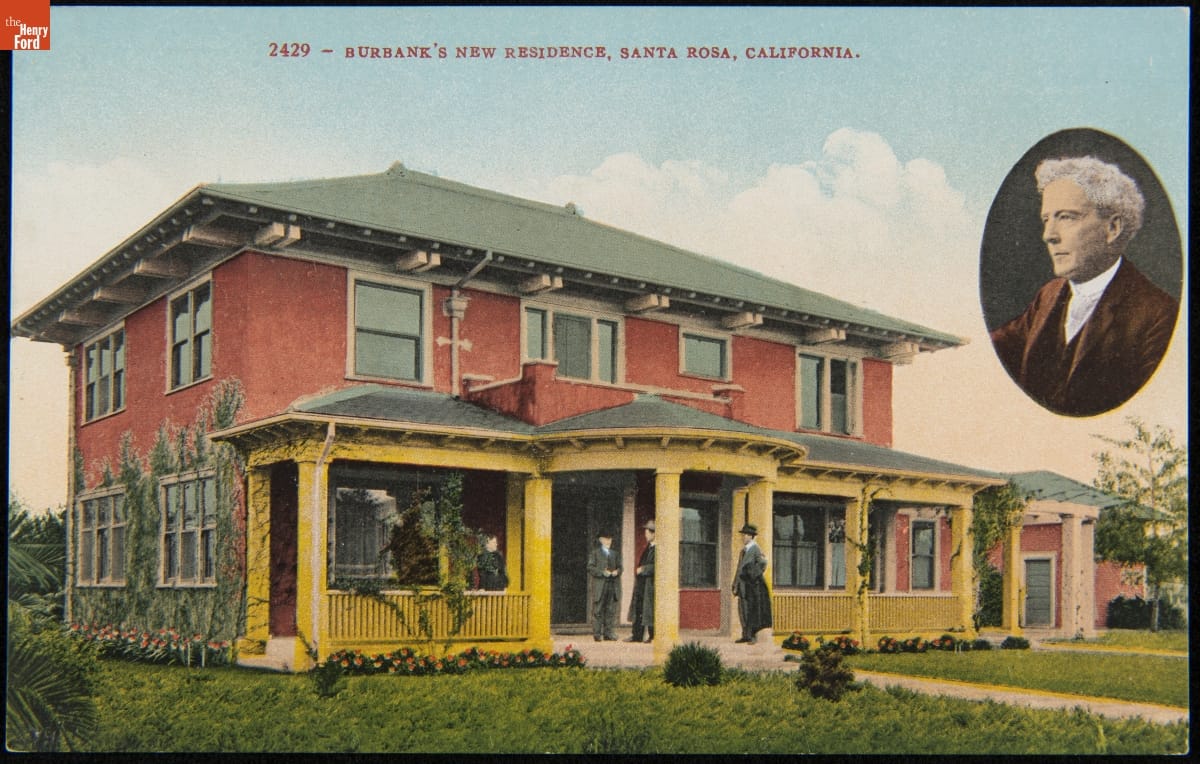
- circa 1915
- Collections - Artifact
"Burbank's New Residence, Santa Rosa, California," circa 1915
Luther Burbank moved into his new and spacious 12-room home in December 1906, just months after the San Francisco earthquake. The Mission and Colonial Revival design suited popular tastes at the times, while the furnishings ensured Burbank's comfort. His private den opened onto the balcony above the porch which offered a breath of air and a view of staff at work in his experimental gardens.
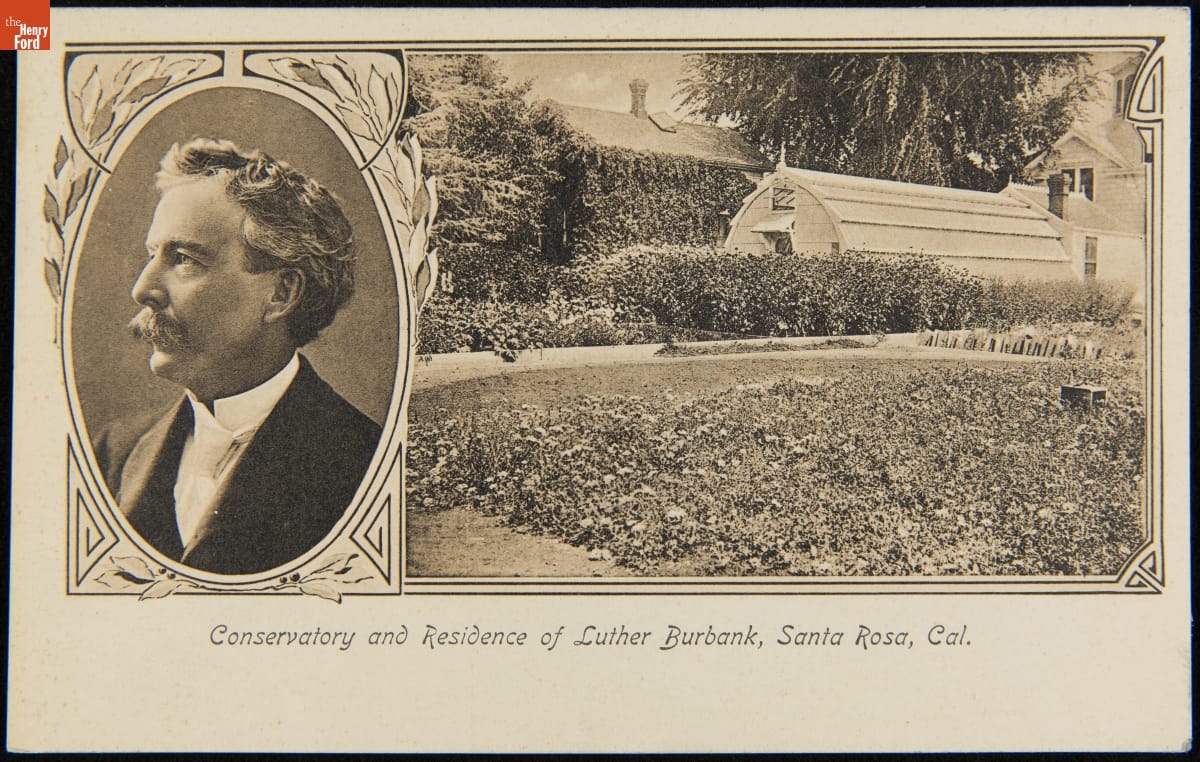
- "Conservatory and Residence of Luther Burbank, Santa Rosa, Cal.," circa 1915 - Luther Burbank (1849-1926), an American horticulturalist and author, gained a reputation for selective breeding that yielded more than 800 new fruits, vegetables, flowers, and other plants. In 1875, Burbank followed family from Massachusetts to Santa Rosa, California, attracted by a longer growing season. By 1881, Burbank's modest success with raising and selling plants allowed him to purchase the home depicted here.
- circa 1915
- Collections - Artifact
"Conservatory and Residence of Luther Burbank, Santa Rosa, Cal.," circa 1915
Luther Burbank (1849-1926), an American horticulturalist and author, gained a reputation for selective breeding that yielded more than 800 new fruits, vegetables, flowers, and other plants. In 1875, Burbank followed family from Massachusetts to Santa Rosa, California, attracted by a longer growing season. By 1881, Burbank's modest success with raising and selling plants allowed him to purchase the home depicted here.
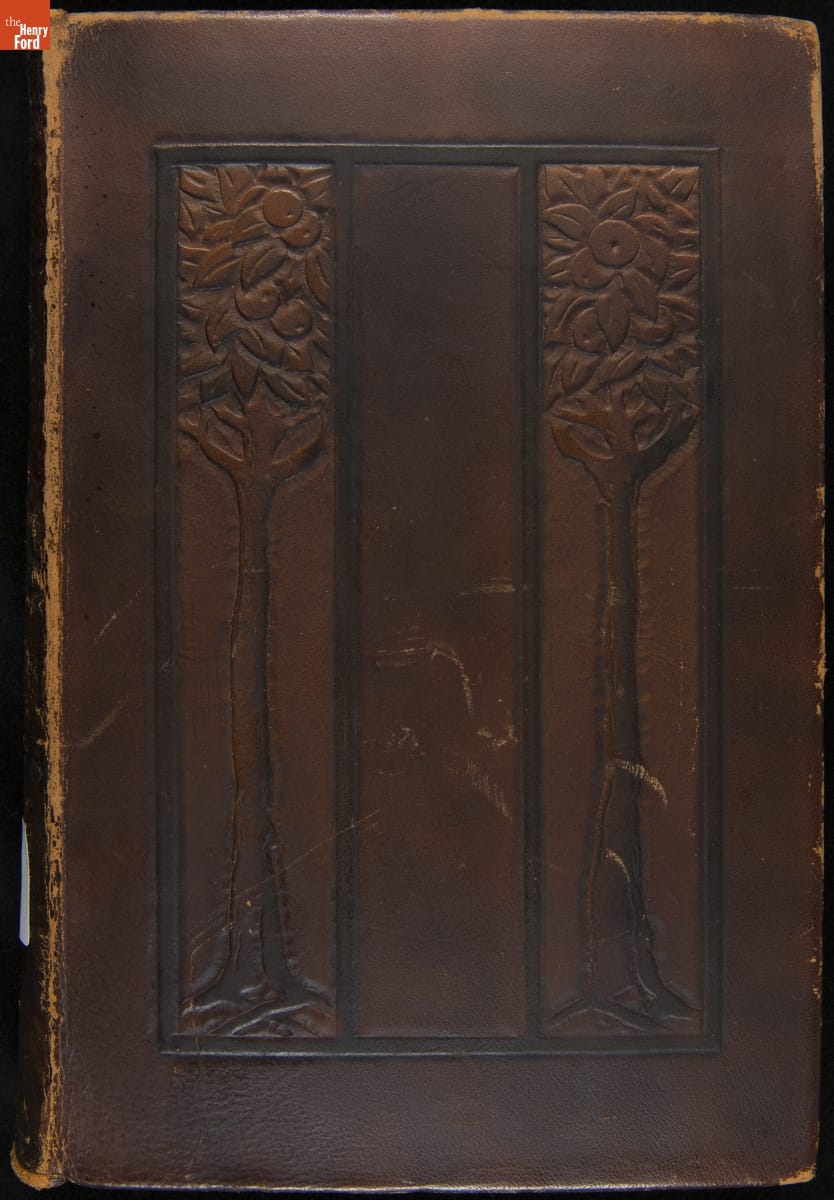
- "Luther Burbank, His Methods and Discoveries and Their Practical Application," 1914-1915 -
- 1914-1915
- Collections - Artifact
"Luther Burbank, His Methods and Discoveries and Their Practical Application," 1914-1915
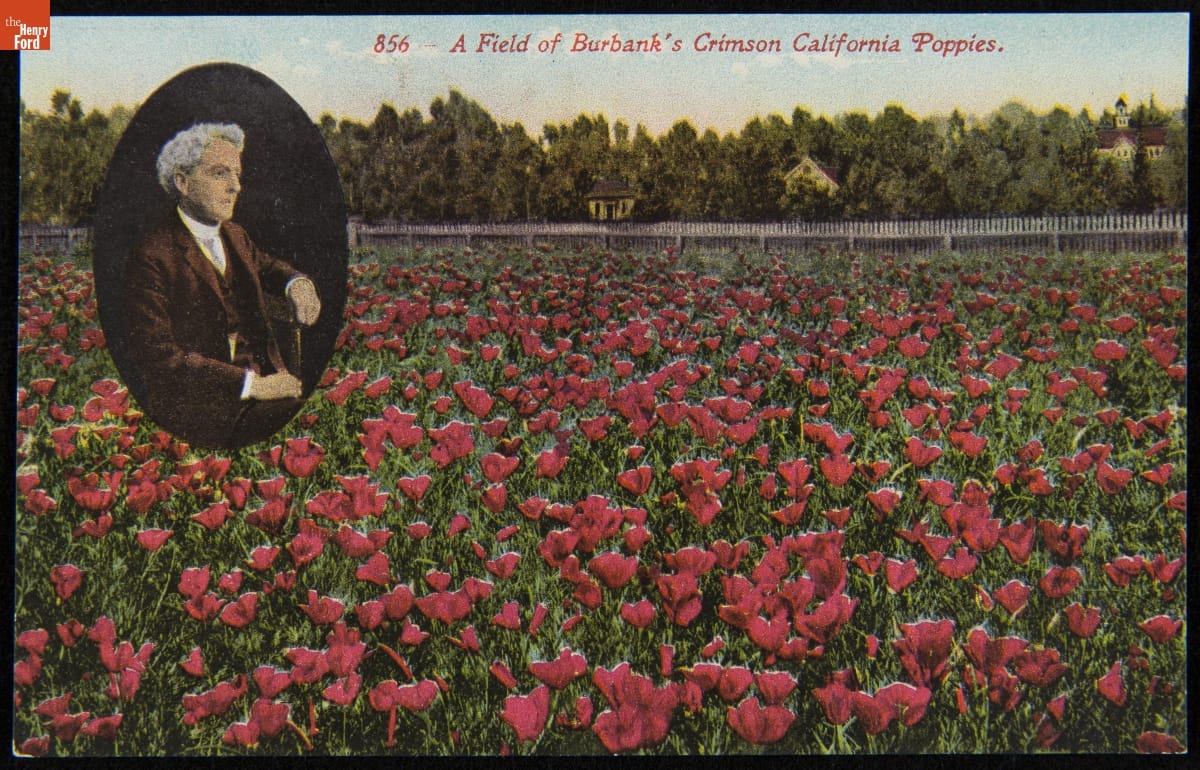
- "A Field of Burbank's Crimson California Poppies," circa 1915 - California legislators named Eschscholzia californica (the California poppy) as the state flower in 1903. Luther Burbank, an American horticulturalist who gained a reputation for his commercially successful plant creations, believed he could improve on the state flower. He selectively bred the California Native Yellow Variety and created not a vivid yellow, but a consistently crimson, poppy.
- circa 1915
- Collections - Artifact
"A Field of Burbank's Crimson California Poppies," circa 1915
California legislators named Eschscholzia californica (the California poppy) as the state flower in 1903. Luther Burbank, an American horticulturalist who gained a reputation for his commercially successful plant creations, believed he could improve on the state flower. He selectively bred the California Native Yellow Variety and created not a vivid yellow, but a consistently crimson, poppy.
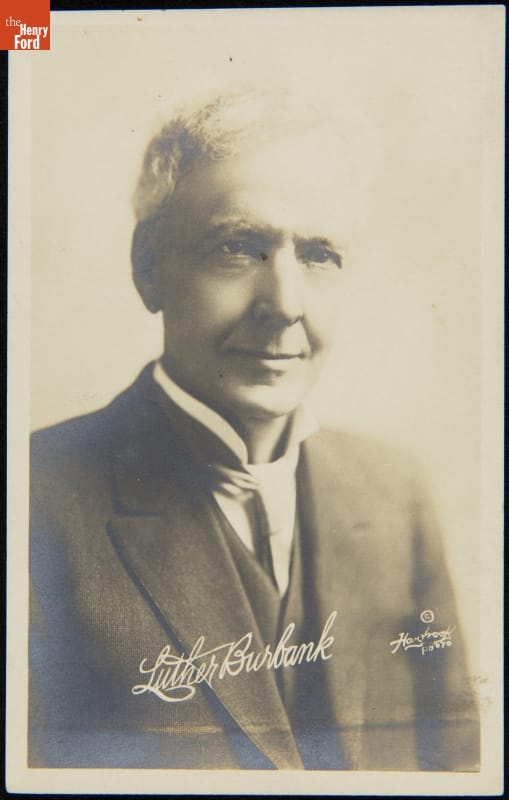
- Portrait of Luther Burbank, circa 1915 - Luther Burbank (1849-1926), an American plant breeder, naturalist, and author, was especially noted for his experiments with plants, fruits, and vegetables. After developing the influential Russet Burbank potato in his native Massachusetts, Burbank established a large experimental garden in Santa Rosa, California. When not working outdoors, Burbank spent time carrying on his nursery business, keeping accounts, researching, and writing.
- circa 1915
- Collections - Artifact
Portrait of Luther Burbank, circa 1915
Luther Burbank (1849-1926), an American plant breeder, naturalist, and author, was especially noted for his experiments with plants, fruits, and vegetables. After developing the influential Russet Burbank potato in his native Massachusetts, Burbank established a large experimental garden in Santa Rosa, California. When not working outdoors, Burbank spent time carrying on his nursery business, keeping accounts, researching, and writing.
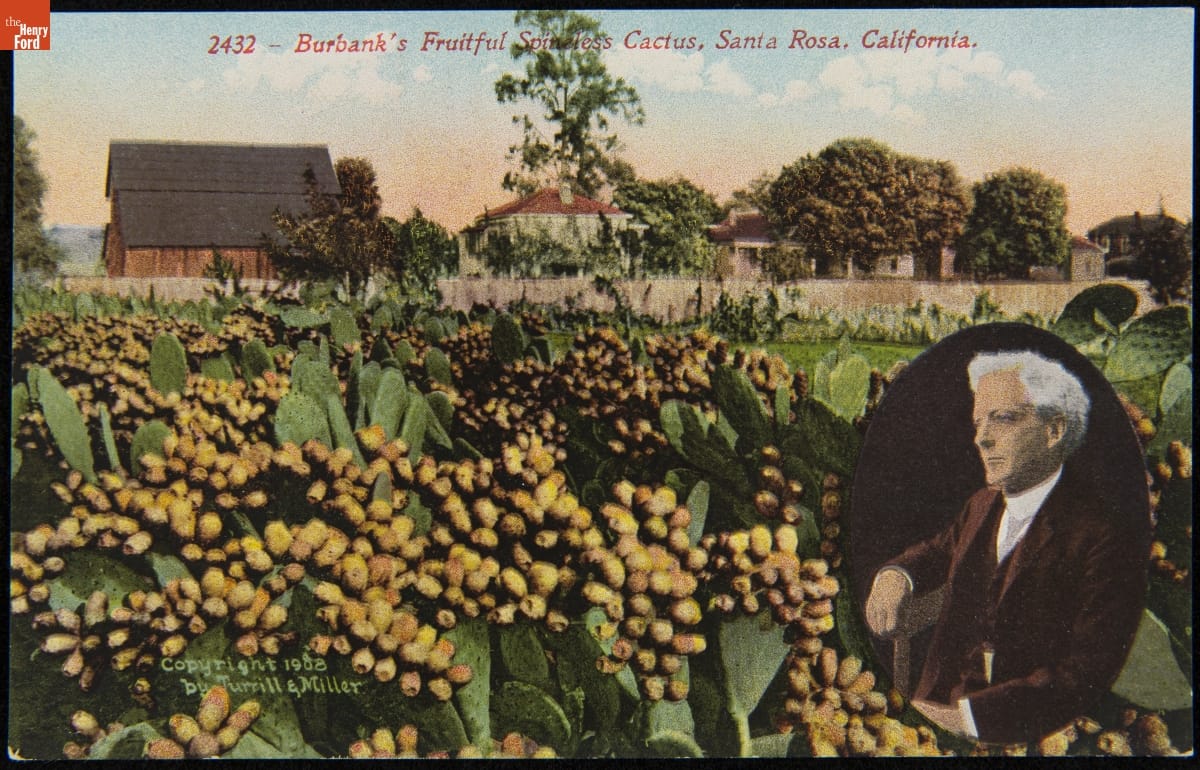
- "Burbank's Fruitful Spineless Cactus, Santa Rosa, California," circa 1908 - Luther Burbank (1849-1926), an American horticulturalist, devoted years of research to perfect spineless cacti as a new livestock feed that could free acreage for crops to feed humans. Others sought new sources of livestock feed to sustain arid range land and the American ranching tradition. Fraudulent distribution of cactus purported to be Burbank's invention caused him to retreat from public engagement and recommit himself to research.
- circa 1908
- Collections - Artifact
"Burbank's Fruitful Spineless Cactus, Santa Rosa, California," circa 1908
Luther Burbank (1849-1926), an American horticulturalist, devoted years of research to perfect spineless cacti as a new livestock feed that could free acreage for crops to feed humans. Others sought new sources of livestock feed to sustain arid range land and the American ranching tradition. Fraudulent distribution of cactus purported to be Burbank's invention caused him to retreat from public engagement and recommit himself to research.