
Search
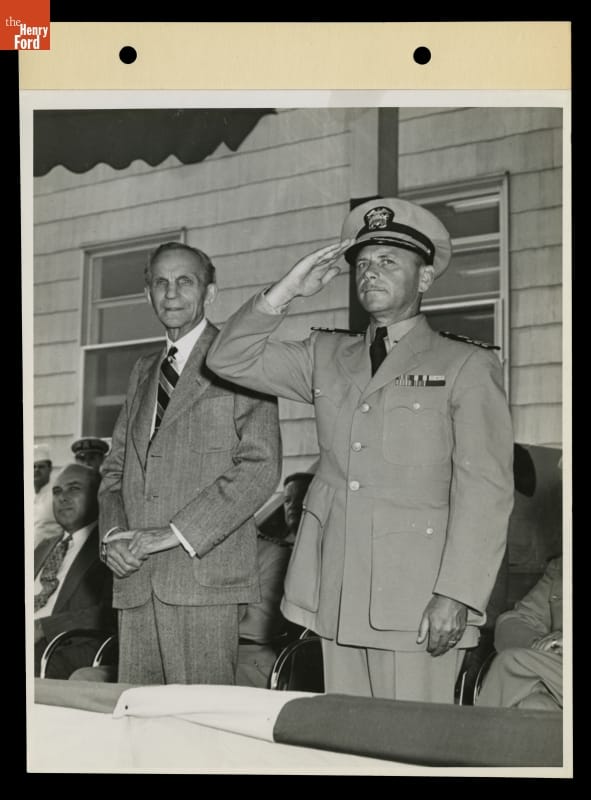
- Henry Ford on His 80th Birthday, U. S. Naval Training School at the Ford Rouge Plant, July 1943 - Personnel at the United States Naval Training School in Dearborn, Michigan, invited Henry Ford to celebrate his 80th birthday at the base. Ford was feted with gifts, a military drill, and a large cake modeled after the school buildings. The school -- built on land at Ford's Rouge Plant and leased to the Navy -- trained thousands of recruits in various skilled trades during World War II.
- July 28, 1943
- Collections - Artifact
Henry Ford on His 80th Birthday, U. S. Naval Training School at the Ford Rouge Plant, July 1943
Personnel at the United States Naval Training School in Dearborn, Michigan, invited Henry Ford to celebrate his 80th birthday at the base. Ford was feted with gifts, a military drill, and a large cake modeled after the school buildings. The school -- built on land at Ford's Rouge Plant and leased to the Navy -- trained thousands of recruits in various skilled trades during World War II.
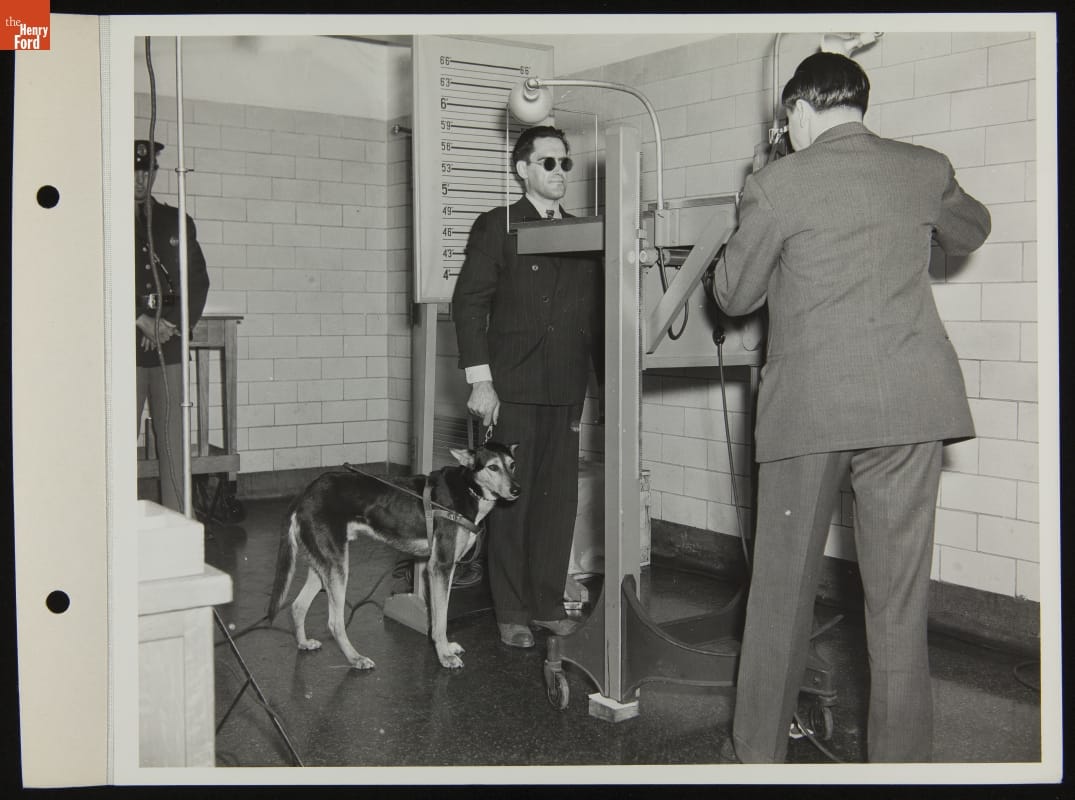
- Ford Employee Sylvester Rypkowski with Service Dog "Blackie," Being Photographed for ID Badge, October 1942 - Henry Ford believed in providing equal employment opportunities to people with disabilities -- a practice he began in the early years of his company. During World War II, Ford employed thousands of workers with disabilities. In October 1942, Ford Motor Company photographed Sylvester Rypkowski and his service dog, Blackie, as they became members of the Rouge plant's workforce.
- October 05, 1942
- Collections - Artifact
Ford Employee Sylvester Rypkowski with Service Dog "Blackie," Being Photographed for ID Badge, October 1942
Henry Ford believed in providing equal employment opportunities to people with disabilities -- a practice he began in the early years of his company. During World War II, Ford employed thousands of workers with disabilities. In October 1942, Ford Motor Company photographed Sylvester Rypkowski and his service dog, Blackie, as they became members of the Rouge plant's workforce.
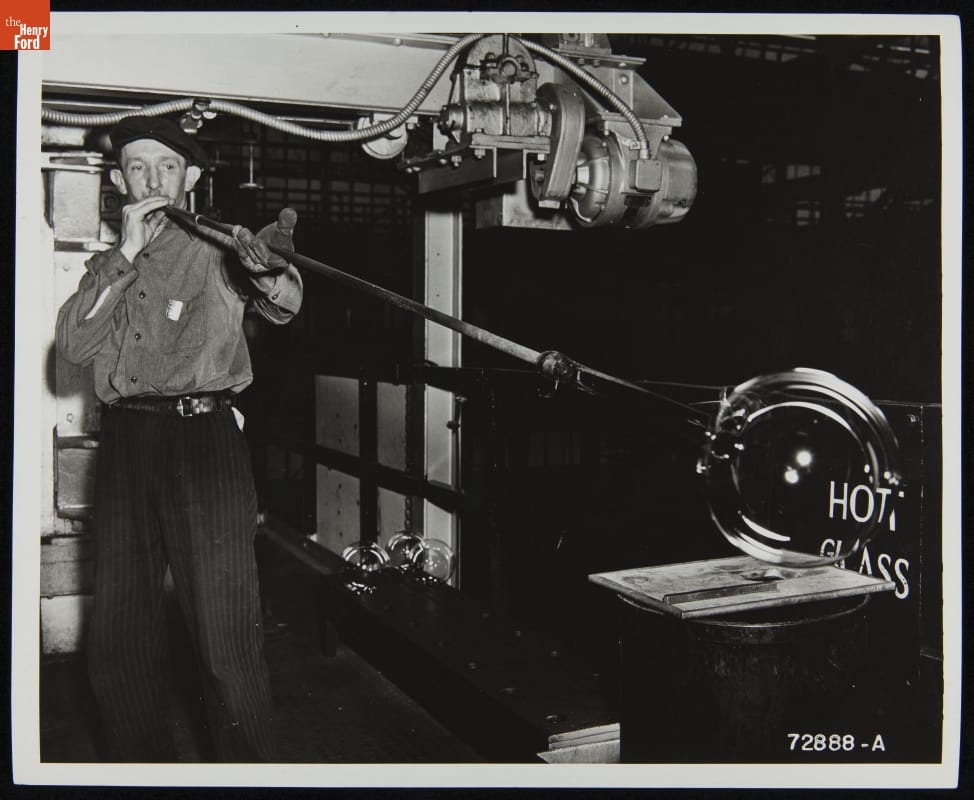
- Testing Batches of Glass at the Ford Rouge Glass Plant, 1940 - Unsatisfied with glass from outside suppliers, Ford Motor Company established its own glass plant at the Rouge in 1923. Furnaces produced molten glass, while overhead grinders and polishers worked the material to a perfectly smooth and clear finish. Two other Ford glass plants, in Pennsylvania and Minnesota, combined with the Rouge to manufacture 20 million feet of glass each year.
- January 03, 1940
- Collections - Artifact
Testing Batches of Glass at the Ford Rouge Glass Plant, 1940
Unsatisfied with glass from outside suppliers, Ford Motor Company established its own glass plant at the Rouge in 1923. Furnaces produced molten glass, while overhead grinders and polishers worked the material to a perfectly smooth and clear finish. Two other Ford glass plants, in Pennsylvania and Minnesota, combined with the Rouge to manufacture 20 million feet of glass each year.
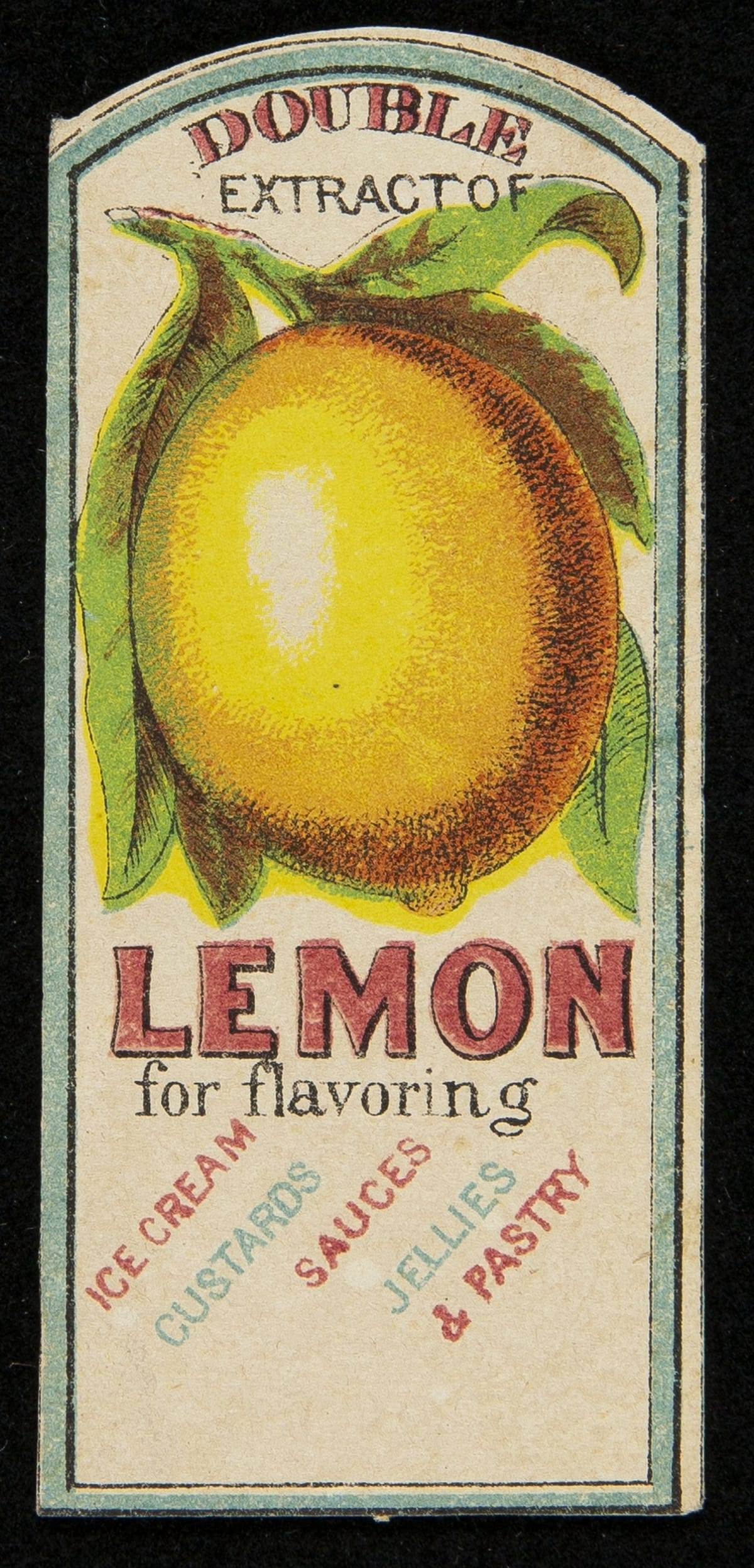
- Label for Double Extract of Lemon, 1880-1910 -
- 1880-1910
- Collections - Artifact
Label for Double Extract of Lemon, 1880-1910
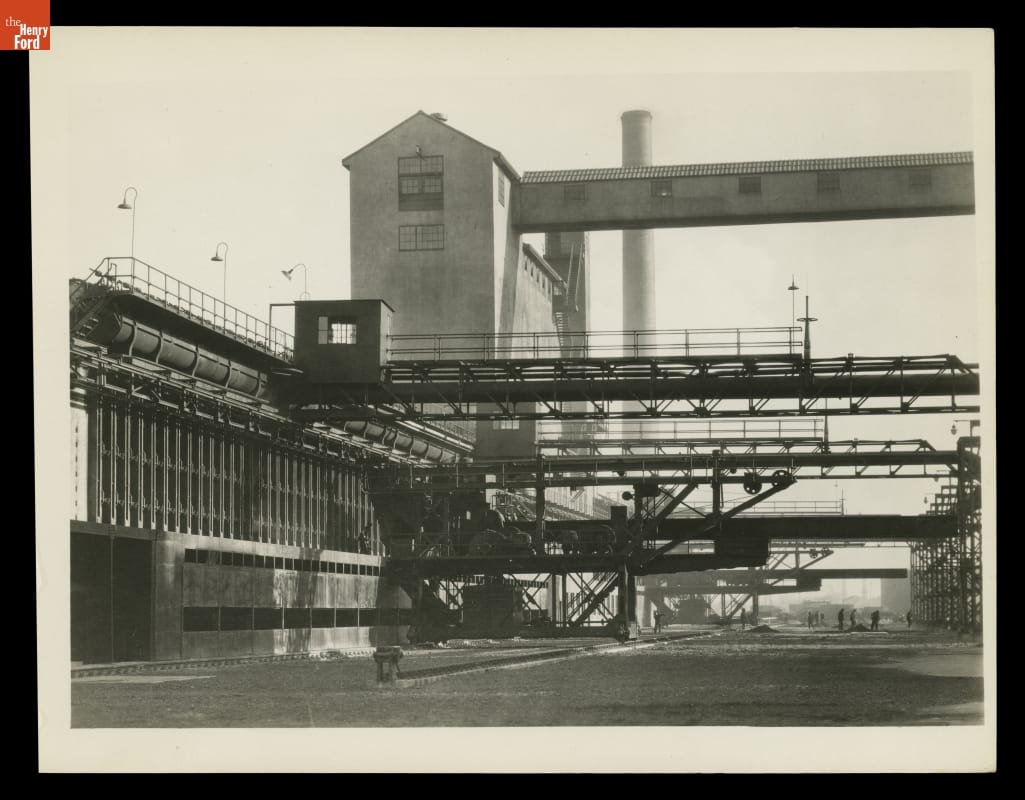
- Ford Motor Company Rouge Plant Coke Ovens, 1927 - Coke ovens at Ford Motor Company's Rouge plant converted coal into high-carbon coke, used in the factory's blast furnaces to produce iron. In 1921, the Rouge's ovens could produce up to 3,600 tons of coke daily. New, more efficient coke ovens opened in 1937. The coking process also produced gas used to heat some of the factory's other furnaces.
- 1927
- Collections - Artifact
Ford Motor Company Rouge Plant Coke Ovens, 1927
Coke ovens at Ford Motor Company's Rouge plant converted coal into high-carbon coke, used in the factory's blast furnaces to produce iron. In 1921, the Rouge's ovens could produce up to 3,600 tons of coke daily. New, more efficient coke ovens opened in 1937. The coking process also produced gas used to heat some of the factory's other furnaces.
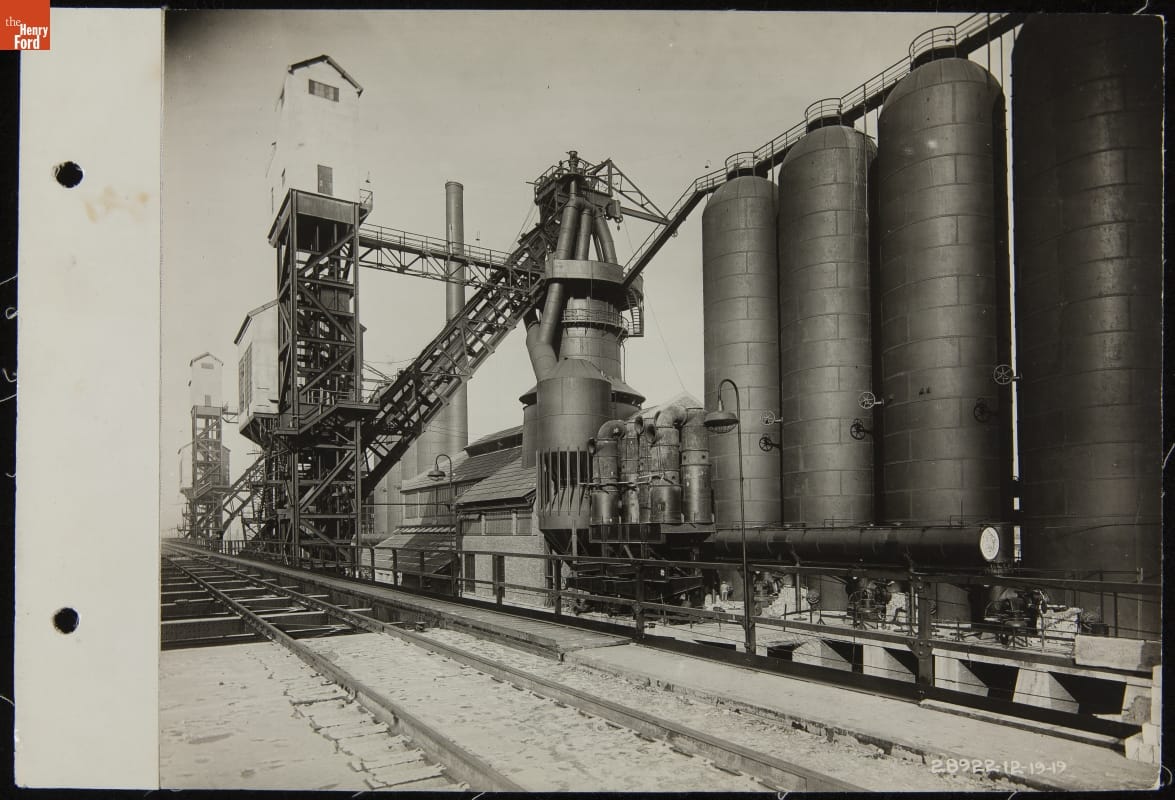
- Ford Motor Company Rouge Plant, December 1919 - Three blast furnaces at Ford's Rouge plant converted raw iron oxide ore into metallic iron. The furnaces were named for Henry Ford's grandsons. Blast Furnace A, the "Henry Ford II," opened in May 1920, while the identical Blast Furnace B, the "Benson Ford," followed in October 1922. The larger Blast Furnace C, the "William Clay Ford," opened in November 1948.
- December 19, 2019
- Collections - Artifact
Ford Motor Company Rouge Plant, December 1919
Three blast furnaces at Ford's Rouge plant converted raw iron oxide ore into metallic iron. The furnaces were named for Henry Ford's grandsons. Blast Furnace A, the "Henry Ford II," opened in May 1920, while the identical Blast Furnace B, the "Benson Ford," followed in October 1922. The larger Blast Furnace C, the "William Clay Ford," opened in November 1948.
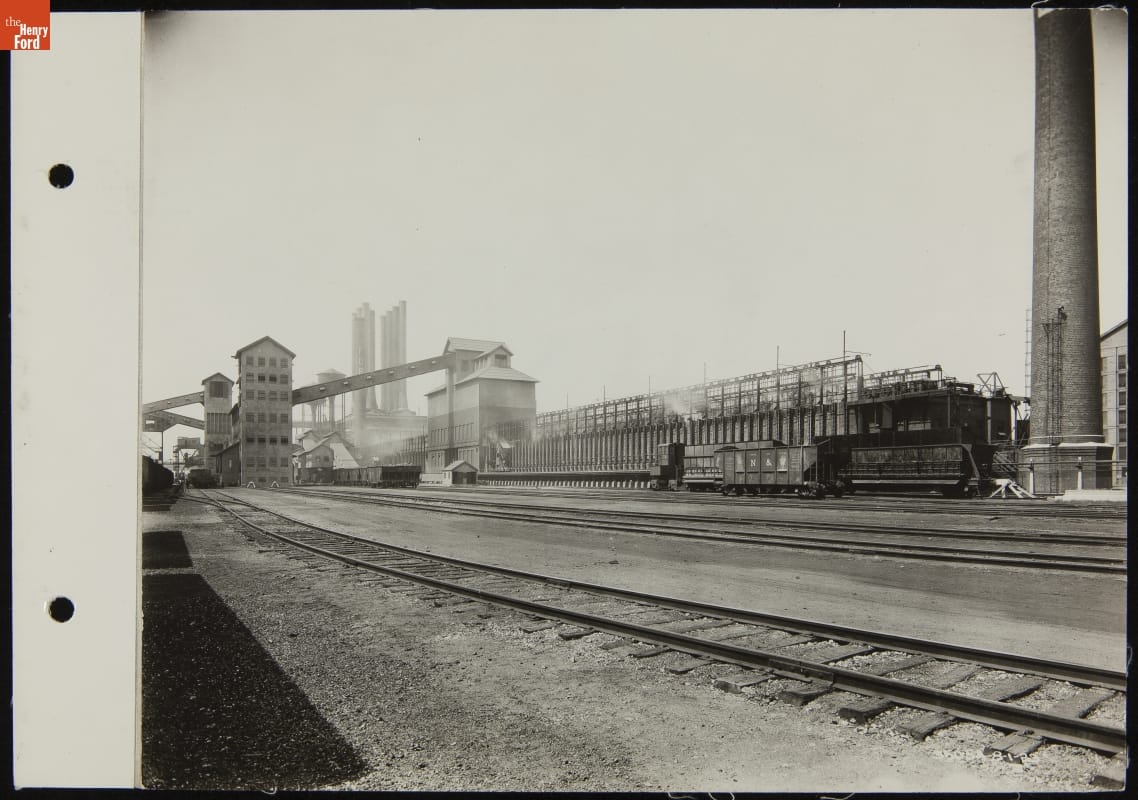
- Ford Motor Company Rouge Plant Coke Ovens from Southwest Corner, August 1923 - Coke ovens at Ford Motor Company's Rouge plant converted coal into high-carbon coke, used in the factory's blast furnaces to produce iron. In 1921, the Rouge's ovens could produce up to 3,600 tons of coke daily. New, more efficient coke ovens opened in 1937. The coking process also produced gas used to heat some of the factory's other furnaces.
- August 01, 1923
- Collections - Artifact
Ford Motor Company Rouge Plant Coke Ovens from Southwest Corner, August 1923
Coke ovens at Ford Motor Company's Rouge plant converted coal into high-carbon coke, used in the factory's blast furnaces to produce iron. In 1921, the Rouge's ovens could produce up to 3,600 tons of coke daily. New, more efficient coke ovens opened in 1937. The coking process also produced gas used to heat some of the factory's other furnaces.
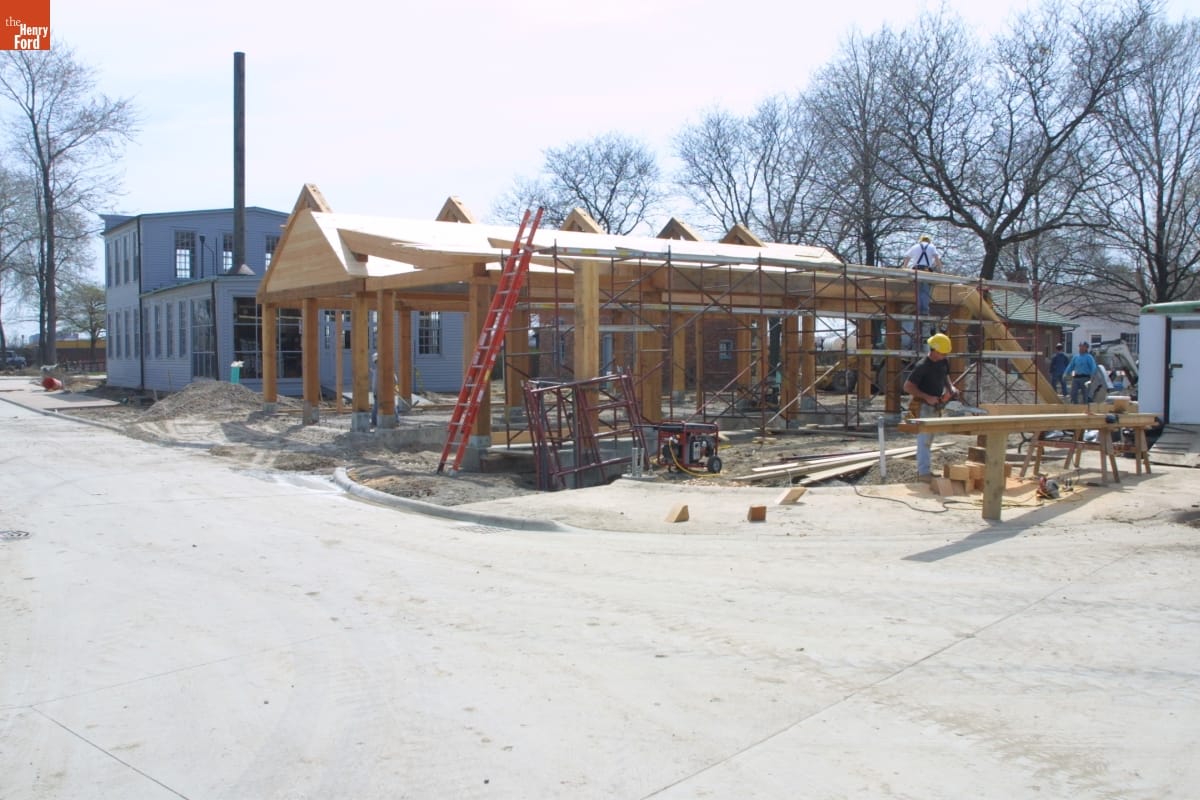
- Model T Loading Dock Construction, Greenfield Village Restoration Project, April 2003 - By 2000, Greenfield Village began showing its age. Buildings and crumbling infrastructure desperately needed repair. Museum planners envisioned a revitalized village. They relocated and refurbished the historic structures into themed "Historic Districts" and added new support buildings--shops, restaurants, and a special-event venue. In June 2003, nine months after restoration began, visitors passed through a new entrance into a reborn Greenfield Village.
- April 01, 2003
- Collections - Artifact
Model T Loading Dock Construction, Greenfield Village Restoration Project, April 2003
By 2000, Greenfield Village began showing its age. Buildings and crumbling infrastructure desperately needed repair. Museum planners envisioned a revitalized village. They relocated and refurbished the historic structures into themed "Historic Districts" and added new support buildings--shops, restaurants, and a special-event venue. In June 2003, nine months after restoration began, visitors passed through a new entrance into a reborn Greenfield Village.
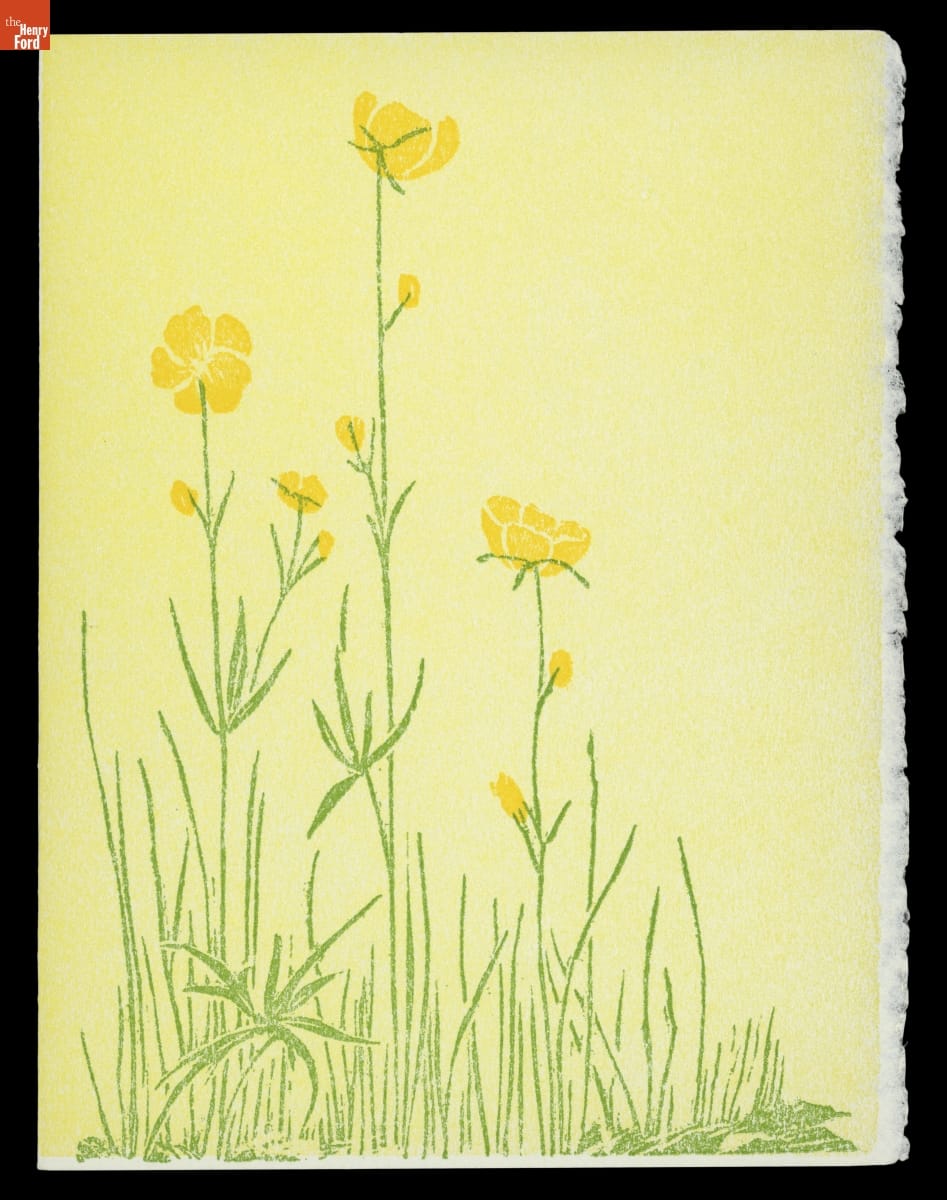
- "Hi! - and a Happy Birthday to You!," circa 1980 - Gwen Frostic (1906-2001) was an artist, author, poet, entrepreneur, and nature lover. In the 1940s, Frostic bought a printing press and started a printing business doing commercial jobs, but most notably, she carefully carved linoleum blocks to create nature-inspired works of art. Frostic created block prints for the next fifty years that graced her books, note cards, and greeting cards.
- circa 1980
- Collections - Artifact
"Hi! - and a Happy Birthday to You!," circa 1980
Gwen Frostic (1906-2001) was an artist, author, poet, entrepreneur, and nature lover. In the 1940s, Frostic bought a printing press and started a printing business doing commercial jobs, but most notably, she carefully carved linoleum blocks to create nature-inspired works of art. Frostic created block prints for the next fifty years that graced her books, note cards, and greeting cards.
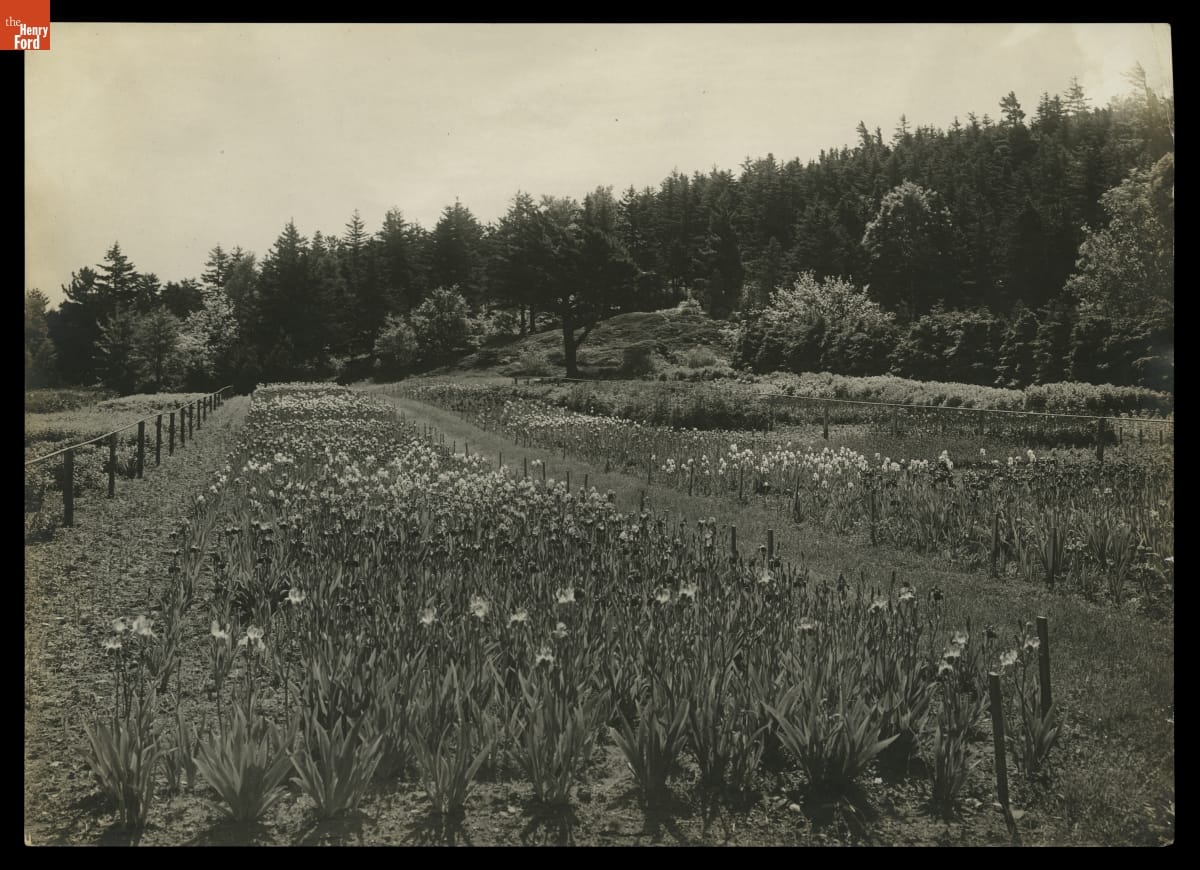
- German Irises Growing in a Nursery, circa 1923 -
- circa 1923
- Collections - Artifact
German Irises Growing in a Nursery, circa 1923