
Search
- Pearl Press, 1906-1918 - The job press was used for short runs of small items like business cards, handbills, and envelopes. Type was set by hand and inked; the flat platen applied pressure between type and paper to produce an impression. A foot-operated treadle made printing efficient—typical operators produced 1000 prints per hour. Today, letterpress continues to be a popular specialty printing method.
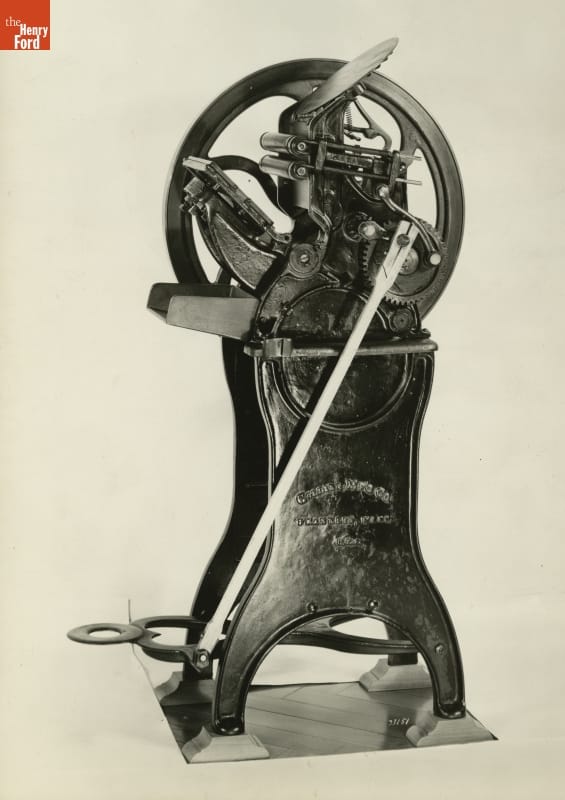
- 1906-1918
- Collections - Artifact
Pearl Press, 1906-1918
The job press was used for short runs of small items like business cards, handbills, and envelopes. Type was set by hand and inked; the flat platen applied pressure between type and paper to produce an impression. A foot-operated treadle made printing efficient—typical operators produced 1000 prints per hour. Today, letterpress continues to be a popular specialty printing method.
- Model Press, 1874-1895 - This press was first manufactured in 1874 by the Daughaday Co. of Philadelphia, as an amateur press. Four sizes were available, from 3 by 5-inches to 7 by 11-inches--perfect for producing small items like business cards and handbills. Type was set by hand and inked; the flat platen applied pressure between type and paper to produce an impression.
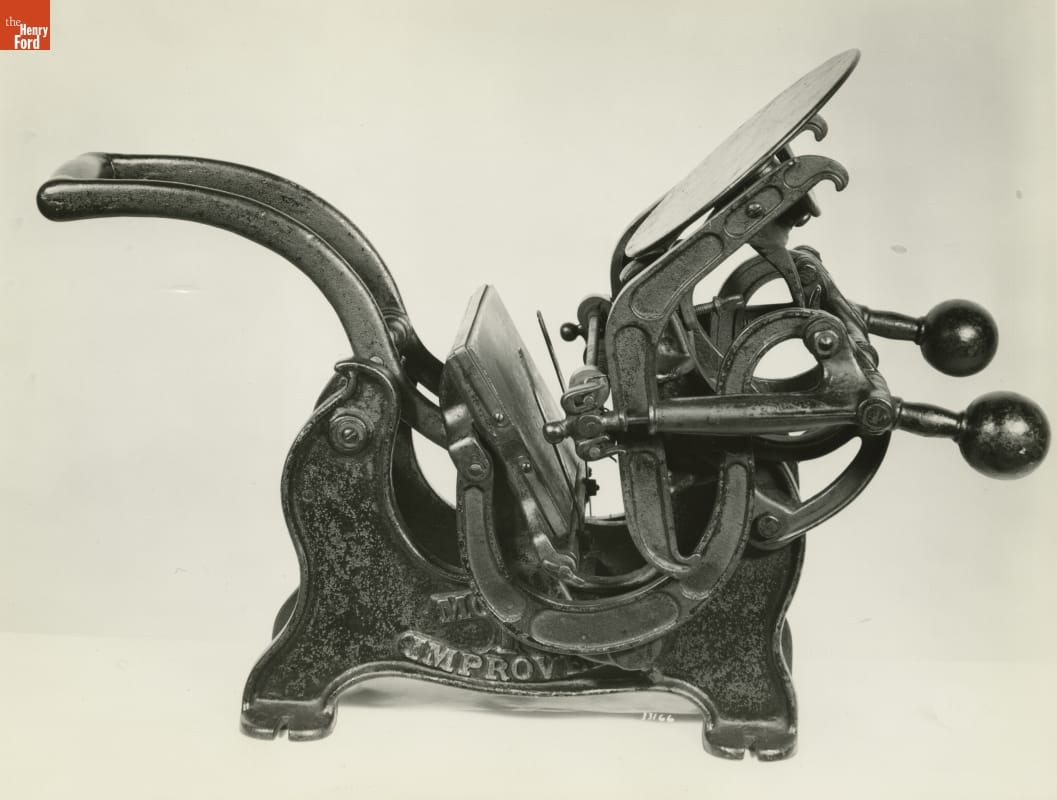
- 1874-1895
- Collections - Artifact
Model Press, 1874-1895
This press was first manufactured in 1874 by the Daughaday Co. of Philadelphia, as an amateur press. Four sizes were available, from 3 by 5-inches to 7 by 11-inches--perfect for producing small items like business cards and handbills. Type was set by hand and inked; the flat platen applied pressure between type and paper to produce an impression.
- Gordon Job Press, circa 1865 - The Gordon Franklin was a popular platen job press in the 19th century, celebrated for its innovative ink distribution. Its inventor, George P. Gordon, a Spiritualist, claimed that Benjamin Franklin described the press to him in a dream. J.H. Crouse of Chicago used this press for small jobs, printing patent medicine labels and church bulletins to cover college expenses.
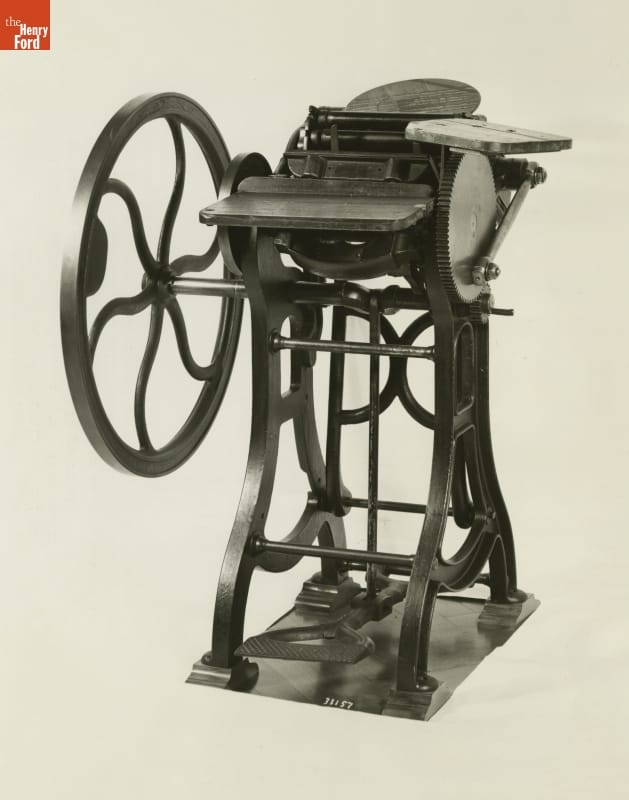
- circa 1865
- Collections - Artifact
Gordon Job Press, circa 1865
The Gordon Franklin was a popular platen job press in the 19th century, celebrated for its innovative ink distribution. Its inventor, George P. Gordon, a Spiritualist, claimed that Benjamin Franklin described the press to him in a dream. J.H. Crouse of Chicago used this press for small jobs, printing patent medicine labels and church bulletins to cover college expenses.
- Diamond Card Press, circa 1872 - This press was invented in 1851 by Stephen P. Ruggles of Boston. Part of a new breed of jobbing presses, the bed and platen were nearly vertical, allowing for the efficient printing of small cards measuring approximately 4 by 5-inches. Ruggles also created the "Engine Press"--the first treadle job press to be manufactured in the United States.
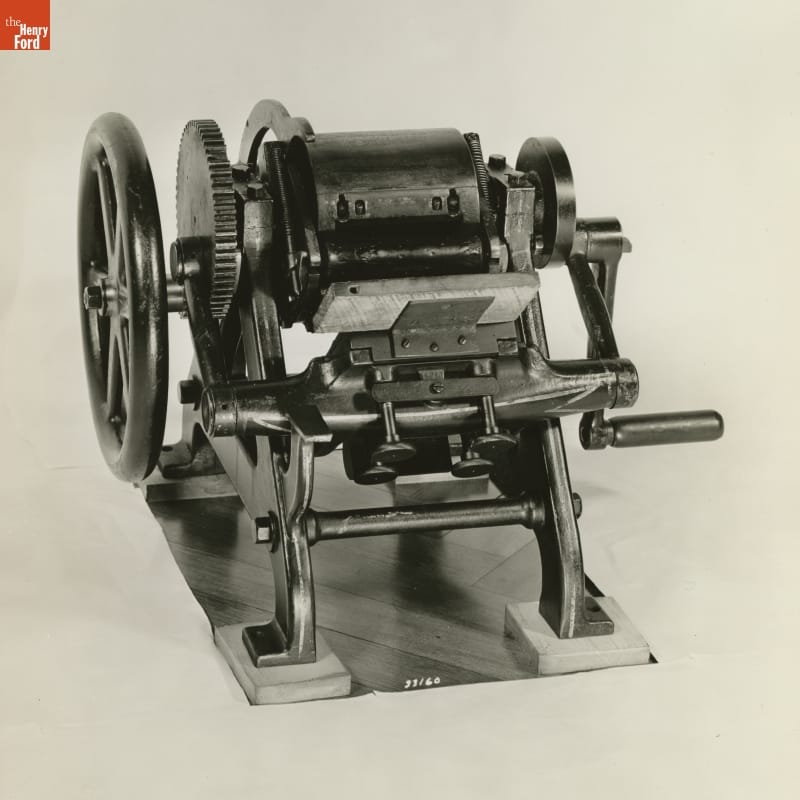
- circa 1872
- Collections - Artifact
Diamond Card Press, circa 1872
This press was invented in 1851 by Stephen P. Ruggles of Boston. Part of a new breed of jobbing presses, the bed and platen were nearly vertical, allowing for the efficient printing of small cards measuring approximately 4 by 5-inches. Ruggles also created the "Engine Press"--the first treadle job press to be manufactured in the United States.
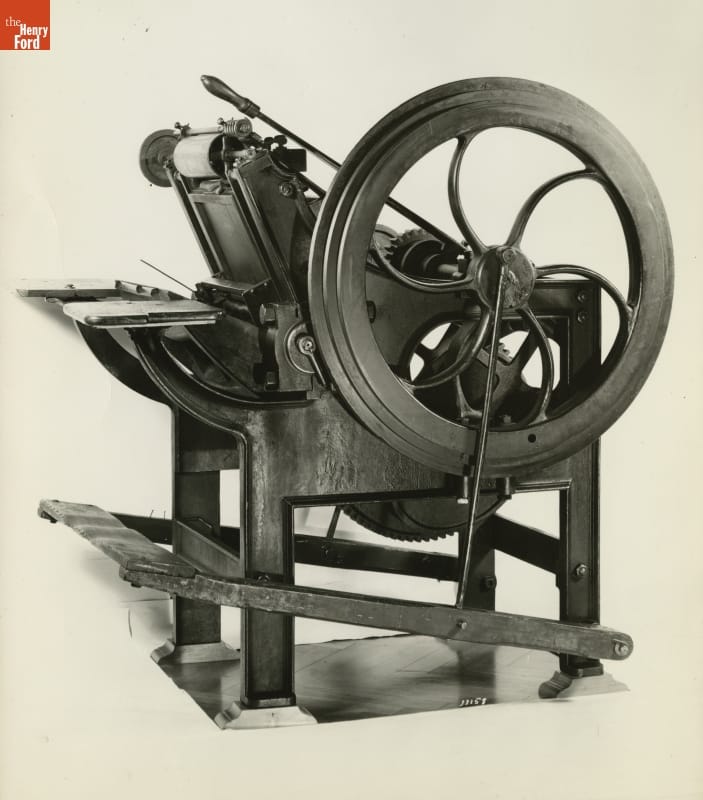
- Adams Bed and Platen Job Press, 1859-1868 - The job press was used for short runs of small items like business cards, handbills, and small books. Its foot-operated treadle made printing efficient--typical operators could produce 1000 prints per hour. This job press could also be adapted to run on steam power, allowing the print process to become mechanized for even greater output.
- 1859-1868
- Collections - Artifact
Adams Bed and Platen Job Press, 1859-1868
The job press was used for short runs of small items like business cards, handbills, and small books. Its foot-operated treadle made printing efficient--typical operators could produce 1000 prints per hour. This job press could also be adapted to run on steam power, allowing the print process to become mechanized for even greater output.