
Search
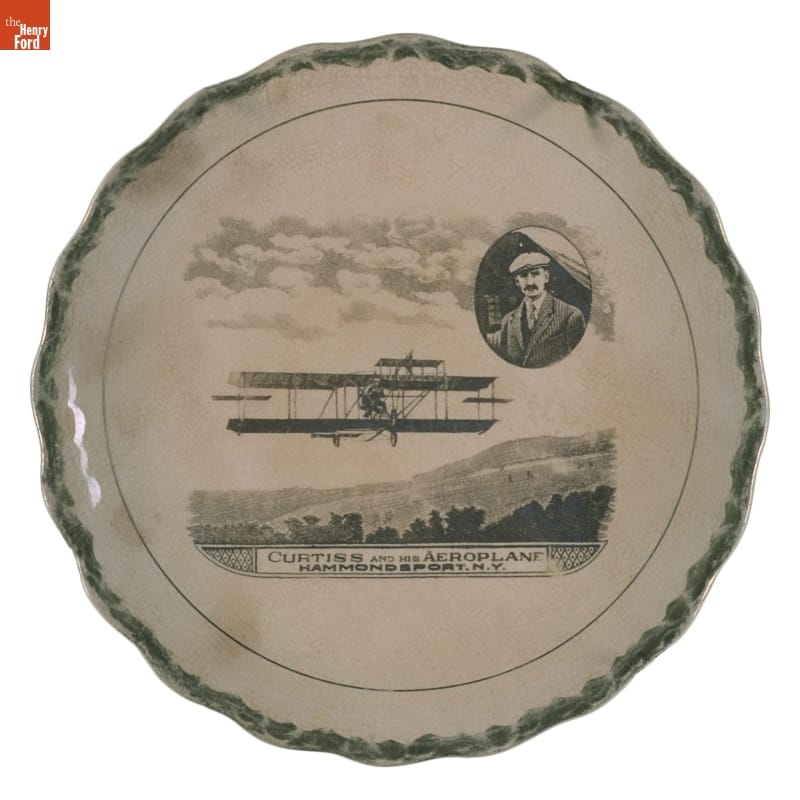
- Commemorative Plate, Featuring Glenn Curtiss, circa 1910 - Glenn Curtiss pioneered aileron control systems and designed some of the first successful seaplanes. He formed an exhibition flying team, and he set several flight records of his own. Starting in 1909, Curtiss was involved in a bitter patent dispute with the Wright brothers. It wasn't resolved until 1917, when World War I forced the creation of a patent pool.
- circa 1910
- Collections - Artifact
Commemorative Plate, Featuring Glenn Curtiss, circa 1910
Glenn Curtiss pioneered aileron control systems and designed some of the first successful seaplanes. He formed an exhibition flying team, and he set several flight records of his own. Starting in 1909, Curtiss was involved in a bitter patent dispute with the Wright brothers. It wasn't resolved until 1917, when World War I forced the creation of a patent pool.
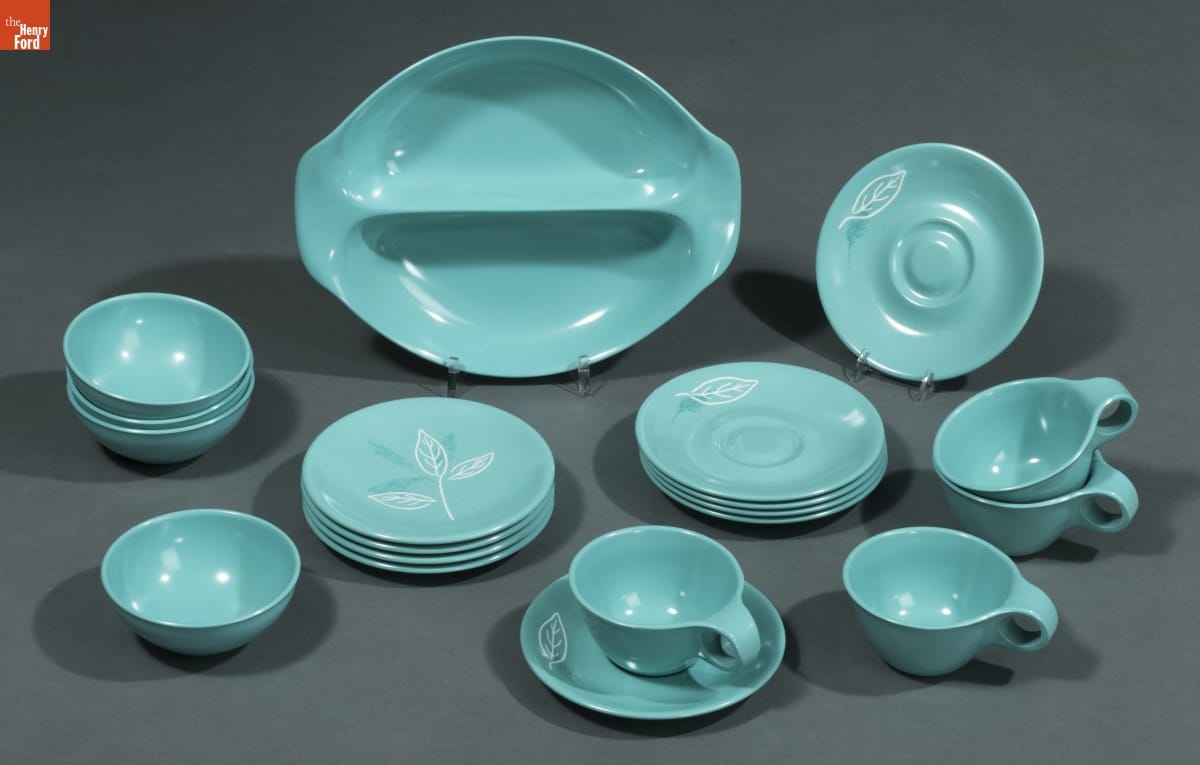
- Set of Melamine Tableware, 1950-1960 - During the early 1950s, plastic dinnerware in the form of melamine was introduced to the American market. By 1956, twenty-five percent of Americans owned at least a pair of these plates. Industrial designers Russel and Mary Wright were famous for producing aesthetically pleasing ceramic dinnerware as early as the 1930s. This set, in fashionable turquoise, was the Wrights' first design in plastic.
- 1950-1960
- Collections - Artifact
Set of Melamine Tableware, 1950-1960
During the early 1950s, plastic dinnerware in the form of melamine was introduced to the American market. By 1956, twenty-five percent of Americans owned at least a pair of these plates. Industrial designers Russel and Mary Wright were famous for producing aesthetically pleasing ceramic dinnerware as early as the 1930s. This set, in fashionable turquoise, was the Wrights' first design in plastic.
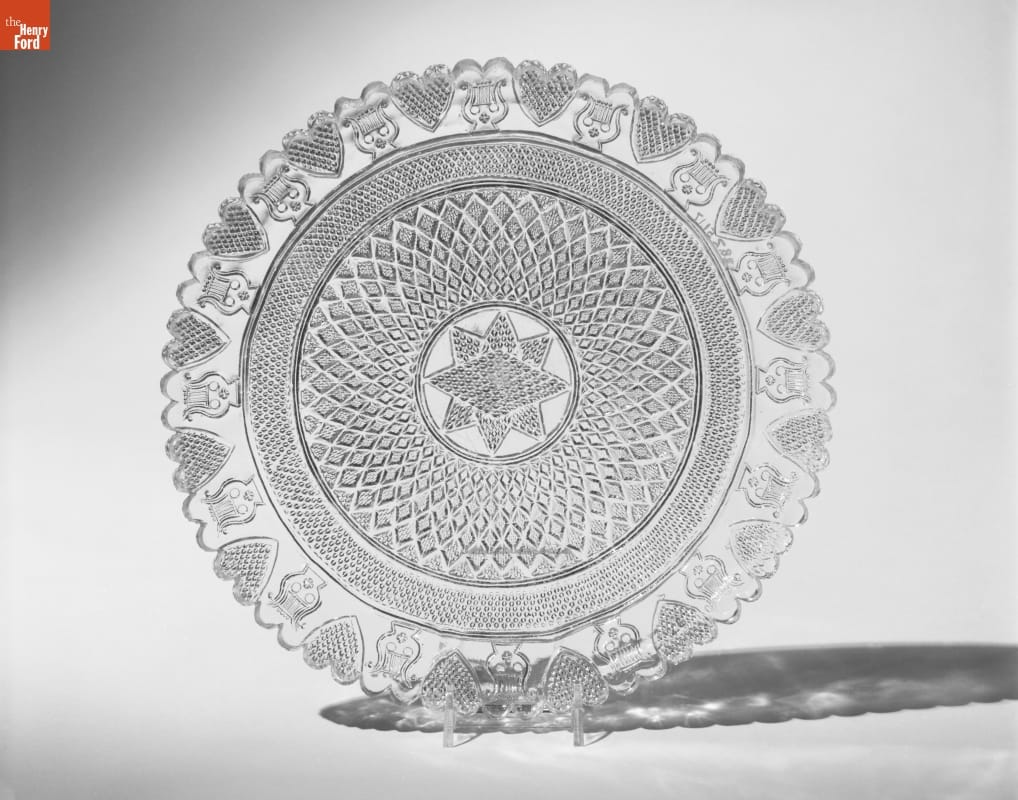
- Dish, 1825-1845 - Mechanically pressed glass was an innovation in glass history, making decorative, "patterned" glass available to a broad audience. One of the earliest types of pressed glass, dating to the 1830s is known as "Lacy Glass". Complex stippled patterns were developed to help hide technical defects caused by early presses, when the glass gather was cut off and dropped into a mold.
- 1825-1845
- Collections - Artifact
Dish, 1825-1845
Mechanically pressed glass was an innovation in glass history, making decorative, "patterned" glass available to a broad audience. One of the earliest types of pressed glass, dating to the 1830s is known as "Lacy Glass". Complex stippled patterns were developed to help hide technical defects caused by early presses, when the glass gather was cut off and dropped into a mold.
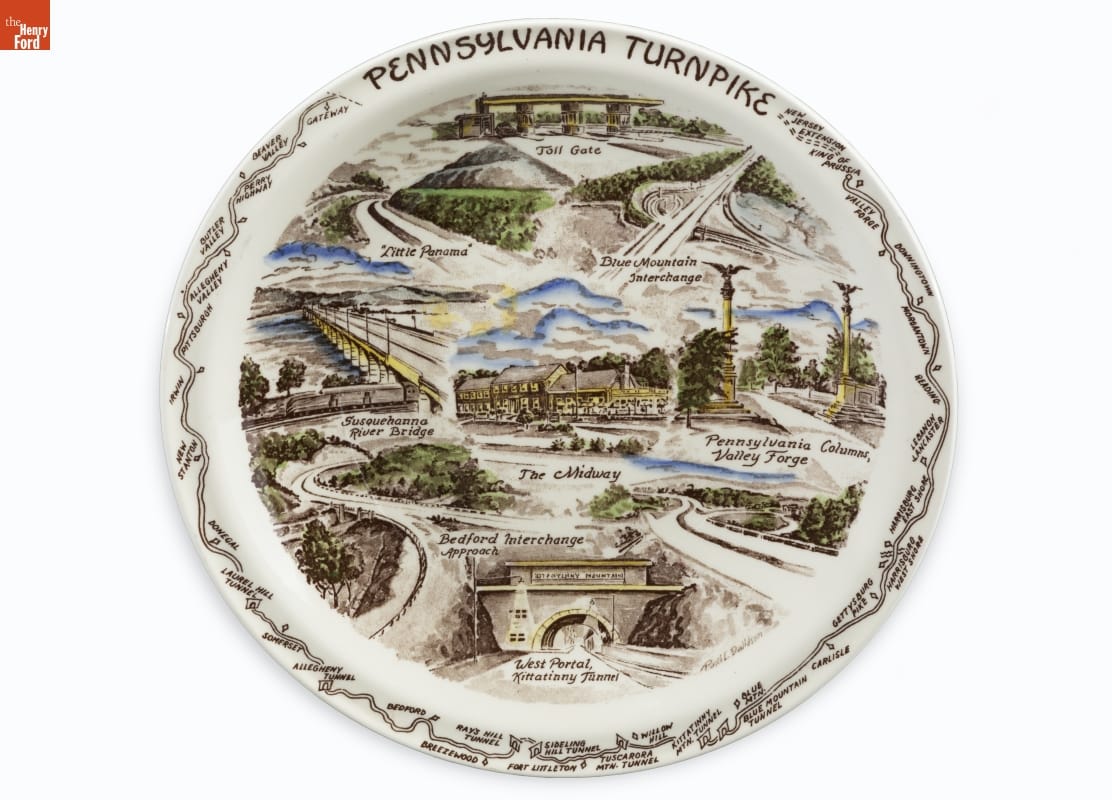
- "Pennsylvania Turnpike" Souvenir Plate, 1946-1958 - When the first segment of the Pennsylvania Turnpike opened in 1940, drivers appreciated its smooth pavement, gentle curves, and absence of stoplights. The toll road became the prototype for modern limited-access highways. It also became something of a tourist attraction, and drivers purchased souvenirs to commemorate their journeys along the route.
- 1946-1958
- Collections - Artifact
"Pennsylvania Turnpike" Souvenir Plate, 1946-1958
When the first segment of the Pennsylvania Turnpike opened in 1940, drivers appreciated its smooth pavement, gentle curves, and absence of stoplights. The toll road became the prototype for modern limited-access highways. It also became something of a tourist attraction, and drivers purchased souvenirs to commemorate their journeys along the route.
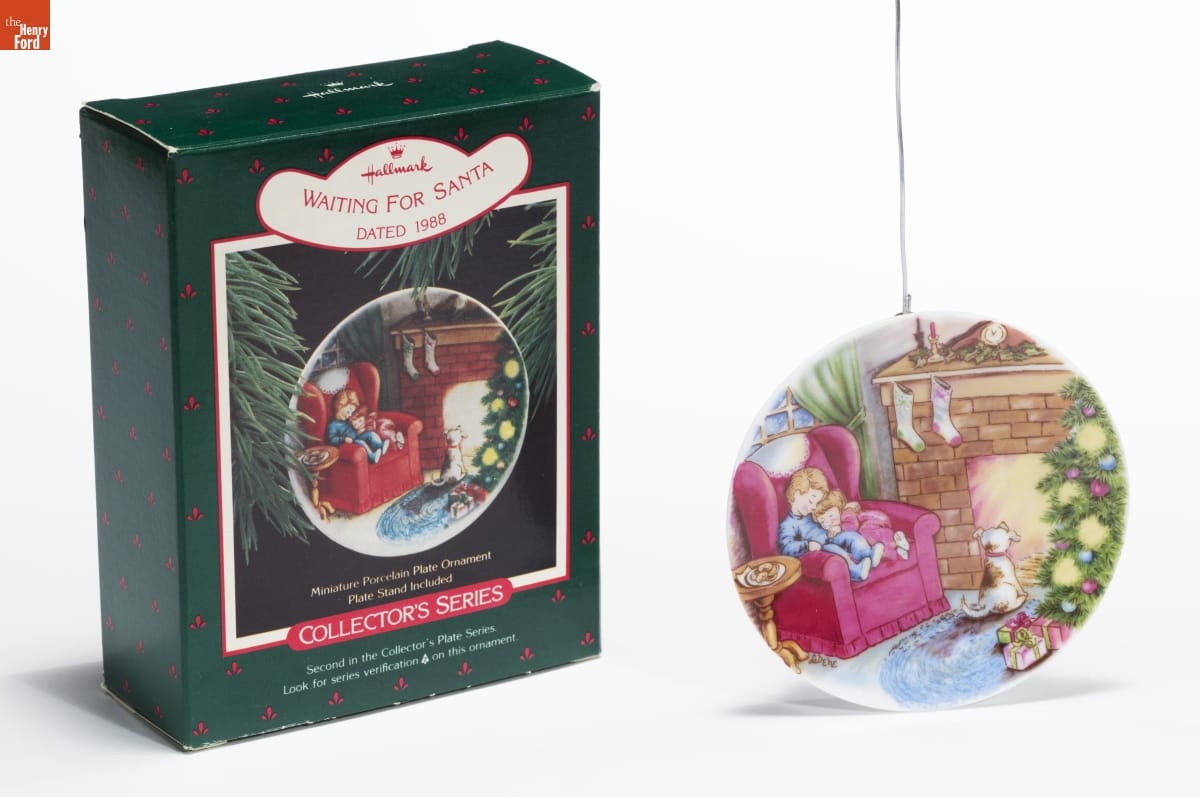
- Hallmark "Collector's Plate Series: Waiting For Santa" Christmas Ornament, 1988 - Already known for greeting cards, Hallmark introduced a line of Christmas ornaments in 1973. The company's annual release of an increasing array of ornaments revolutionized Christmas decorating, appealing to customers' interest in marking memories and milestones as well as expressing one's personality and unique tastes.
- 1988
- Collections - Artifact
Hallmark "Collector's Plate Series: Waiting For Santa" Christmas Ornament, 1988
Already known for greeting cards, Hallmark introduced a line of Christmas ornaments in 1973. The company's annual release of an increasing array of ornaments revolutionized Christmas decorating, appealing to customers' interest in marking memories and milestones as well as expressing one's personality and unique tastes.
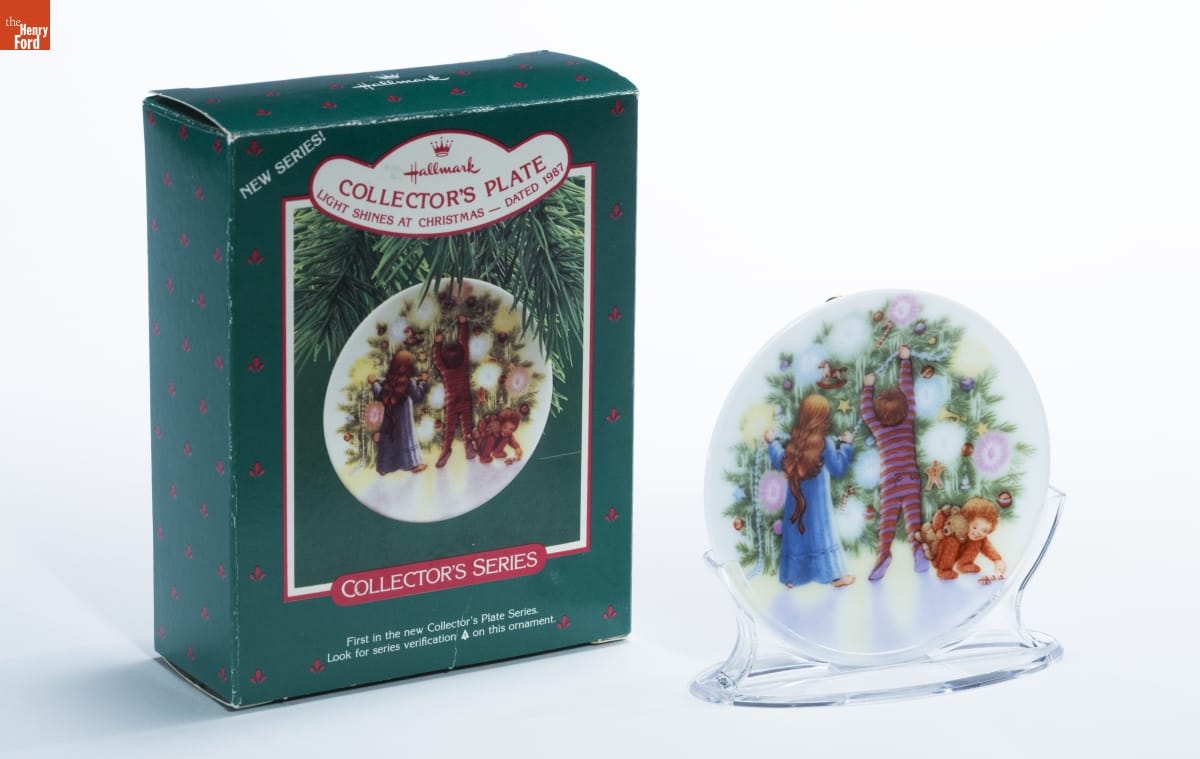
- Hallmark "Collector's Plate Series: Light Shines At Christmas" Christmas Ornament, 1987 - Already known for greeting cards, Hallmark introduced a line of Christmas ornaments in 1973. The company's annual release of an increasing array of ornaments revolutionized Christmas decorating, appealing to customers' interest in marking memories and milestones as well as expressing one's personality and unique tastes.
- 1987
- Collections - Artifact
Hallmark "Collector's Plate Series: Light Shines At Christmas" Christmas Ornament, 1987
Already known for greeting cards, Hallmark introduced a line of Christmas ornaments in 1973. The company's annual release of an increasing array of ornaments revolutionized Christmas decorating, appealing to customers' interest in marking memories and milestones as well as expressing one's personality and unique tastes.
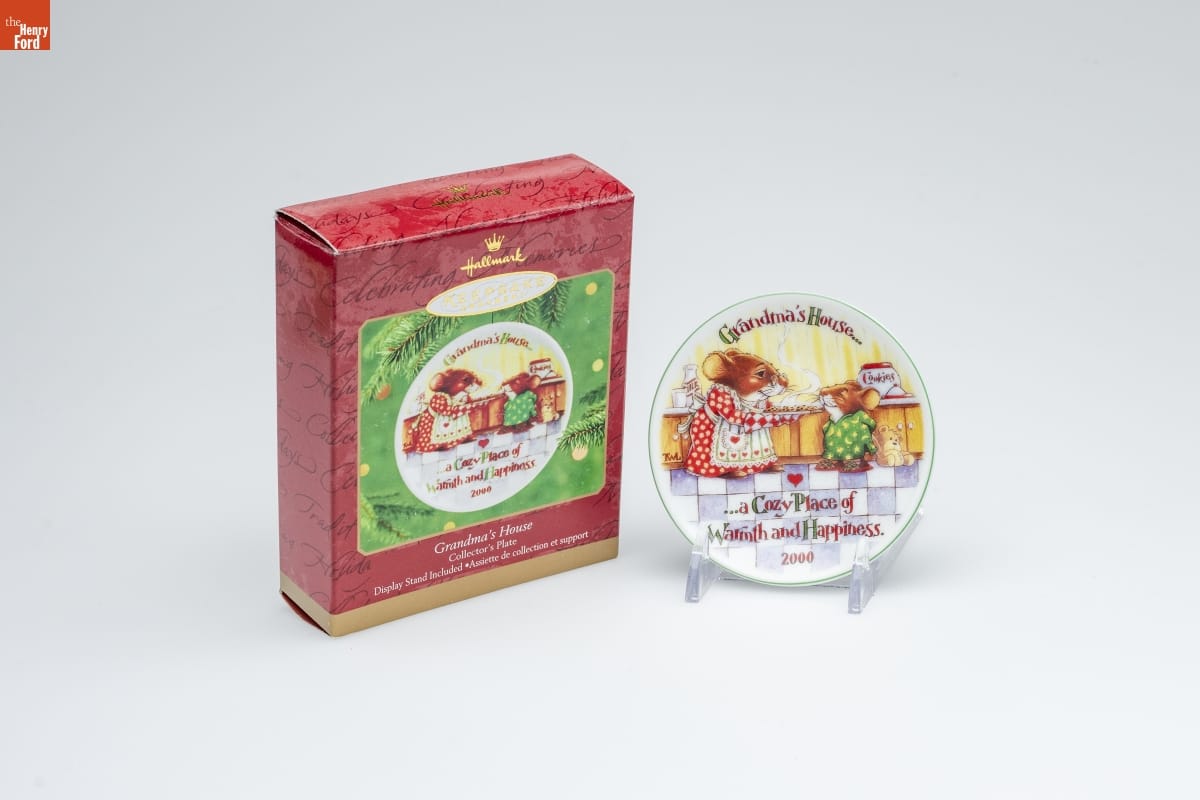
- Hallmark "Grandma's House Collector's Plate" Christmas Ornament, 2000 - Already known for greeting cards, Hallmark introduced a line of Christmas ornaments in 1973. The company's annual release of an increasing array of ornaments revolutionized Christmas decorating, appealing to customers' interest in marking memories and milestones as well as expressing one's personality and unique tastes.
- 2000
- Collections - Artifact
Hallmark "Grandma's House Collector's Plate" Christmas Ornament, 2000
Already known for greeting cards, Hallmark introduced a line of Christmas ornaments in 1973. The company's annual release of an increasing array of ornaments revolutionized Christmas decorating, appealing to customers' interest in marking memories and milestones as well as expressing one's personality and unique tastes.
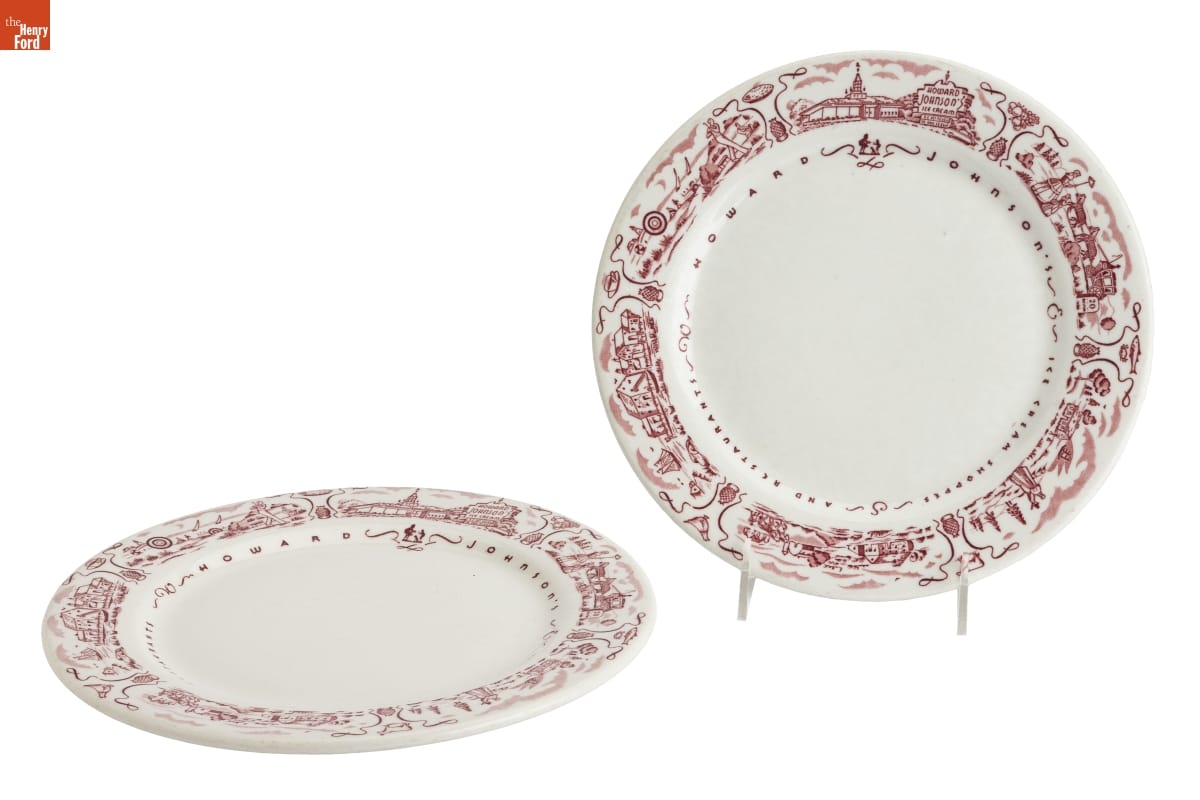
- Howard Johnson's Plates, 1951-1954 - In the 1920s, Howard Deering Johnson began selling ice cream from food stands around Boston, Massachusetts. Johnson later expanded his business to full-service restaurants. He franchised these orange-roofed establishments across America, locating them along highways to cater to the traveling public. This plate celebrates America's growth with idyllic scenes on the rim, including one of a Howard Johnson's restaurant.
- 1951-1954
- Collections - Artifact
Howard Johnson's Plates, 1951-1954
In the 1920s, Howard Deering Johnson began selling ice cream from food stands around Boston, Massachusetts. Johnson later expanded his business to full-service restaurants. He franchised these orange-roofed establishments across America, locating them along highways to cater to the traveling public. This plate celebrates America's growth with idyllic scenes on the rim, including one of a Howard Johnson's restaurant.
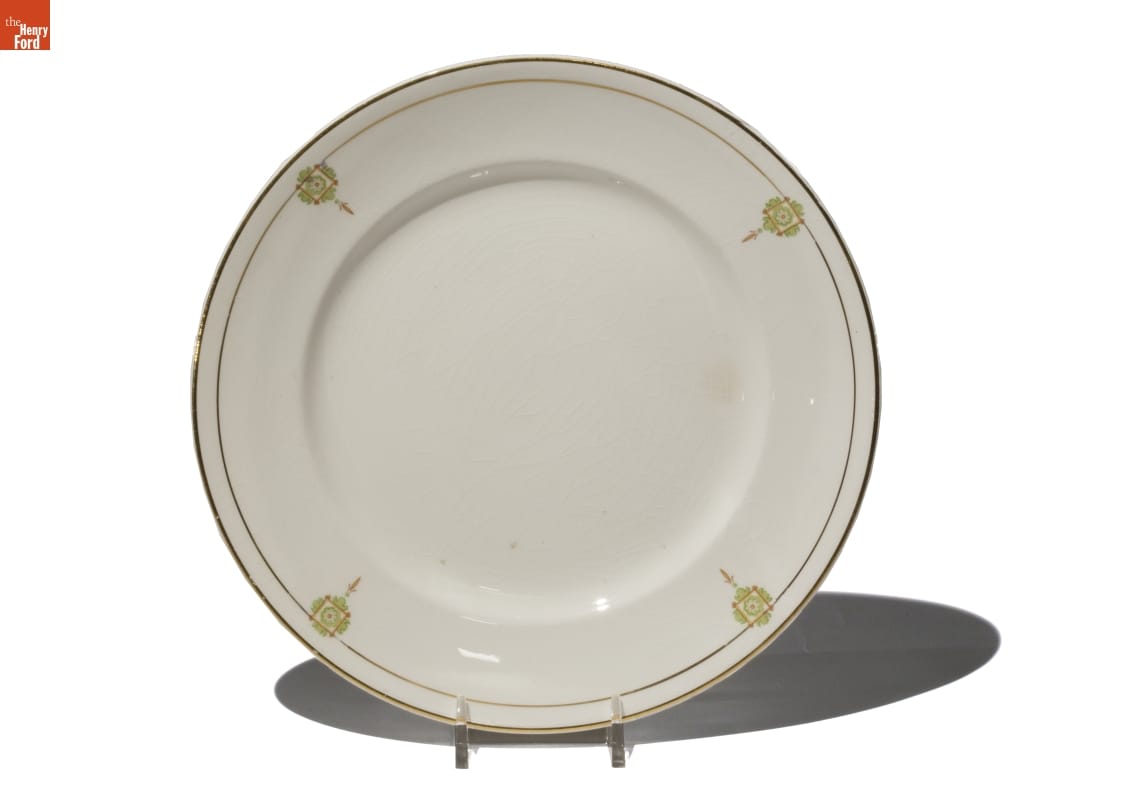
- Luncheon Plate, 1923 - Henry Ford, Thomas Edison, Harvey Firestone and naturalist John Burroughs embarked on a series of camping trips between 1916 and 1924. These self-proclaimed Vagabonds loved to explore nature and the pre-industrial landscape, but they also camped in style. This group of well-to-do adventurers brought along service staff and all needed amenities including a set of durable, Art and Crafts-patterned china.
- 1923
- Collections - Artifact
Luncheon Plate, 1923
Henry Ford, Thomas Edison, Harvey Firestone and naturalist John Burroughs embarked on a series of camping trips between 1916 and 1924. These self-proclaimed Vagabonds loved to explore nature and the pre-industrial landscape, but they also camped in style. This group of well-to-do adventurers brought along service staff and all needed amenities including a set of durable, Art and Crafts-patterned china.
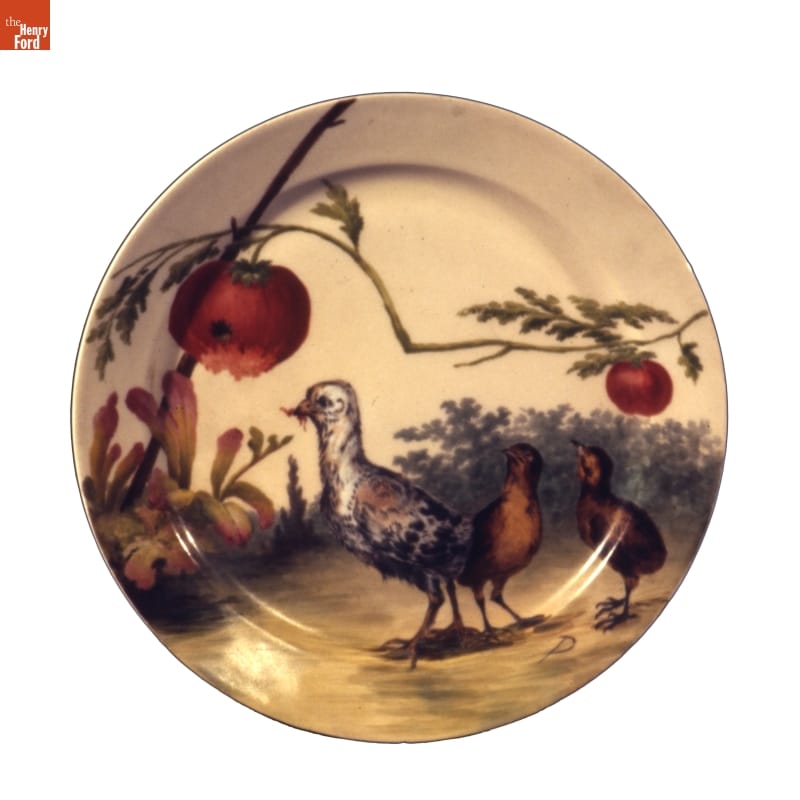
- Plate, circa 1880 - Ever since the White House became the President's official home, dinnerware for state occasions was purchased in great quantities. Usually, the china was the choice of the President or his wife. The next administration sometimes added to the set or in many cases, disposed of the remnants and ordered new. This plate came from the service used by President Rutherford B. Hayes.
- circa 1880
- Collections - Artifact
Plate, circa 1880
Ever since the White House became the President's official home, dinnerware for state occasions was purchased in great quantities. Usually, the china was the choice of the President or his wife. The next administration sometimes added to the set or in many cases, disposed of the remnants and ordered new. This plate came from the service used by President Rutherford B. Hayes.