
Search
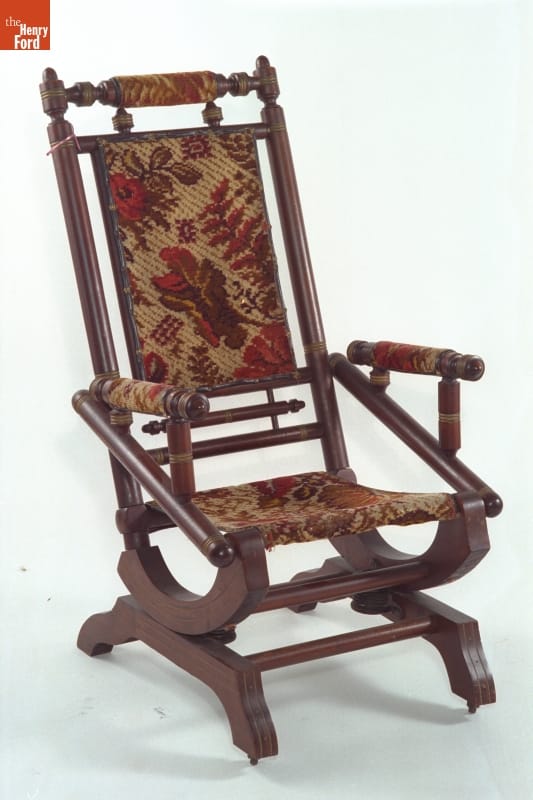
- Platform Rocker, 1870-1900 - During the mid-to-late 1800s, innovative American designers sought to improve the rocking chair. A platform rocker "rocked" by concealed springs or other mechanisms attached to a stationary base -- this saved expensive carpets from wear and tear. And with the conspicuous rockers eliminated, manufacturers could create platform rockers as part of a matching suite ready for any middle-class parlor.
- 1870-1900
- Collections - Artifact
Platform Rocker, 1870-1900
During the mid-to-late 1800s, innovative American designers sought to improve the rocking chair. A platform rocker "rocked" by concealed springs or other mechanisms attached to a stationary base -- this saved expensive carpets from wear and tear. And with the conspicuous rockers eliminated, manufacturers could create platform rockers as part of a matching suite ready for any middle-class parlor.
- Platform Rocker, 1890-1915 -
- 1890-1915
- Collections - Artifact
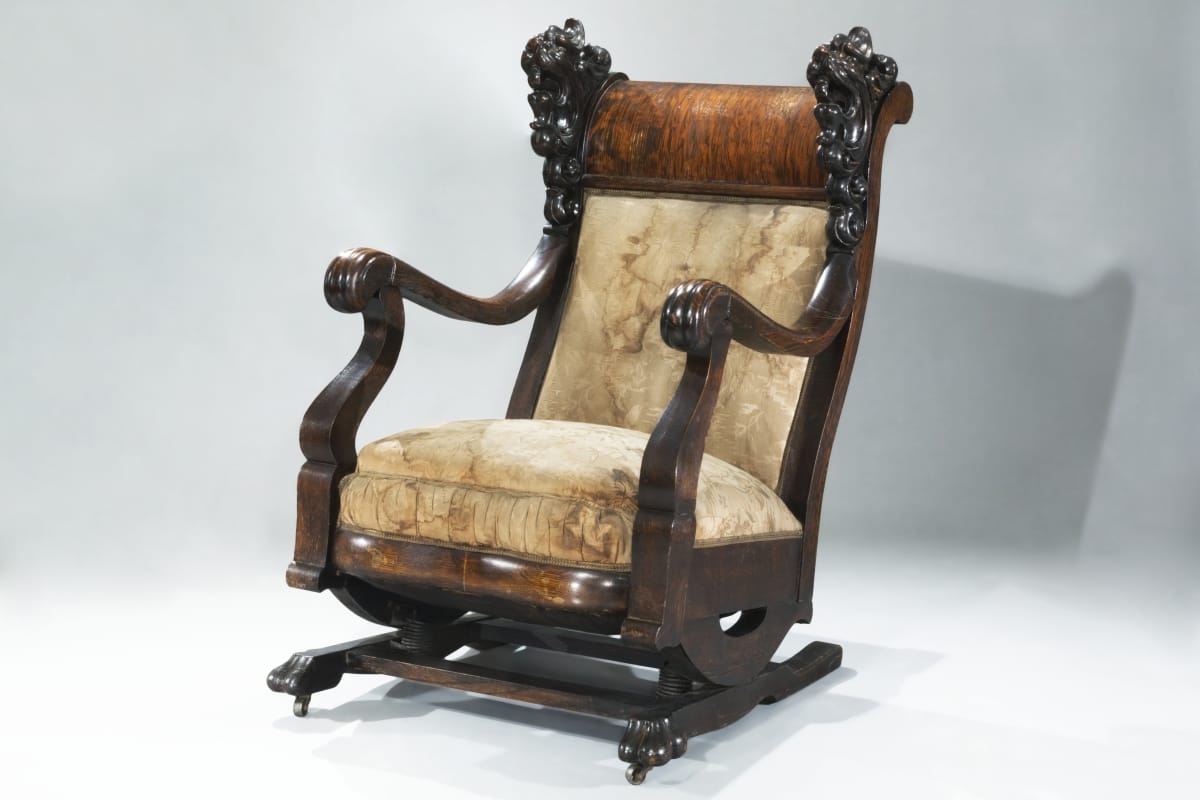
Platform Rocker, 1890-1915
- Wicker Rocking Chair, 1885-1910 -
- 1895-1910
- Collections - Artifact
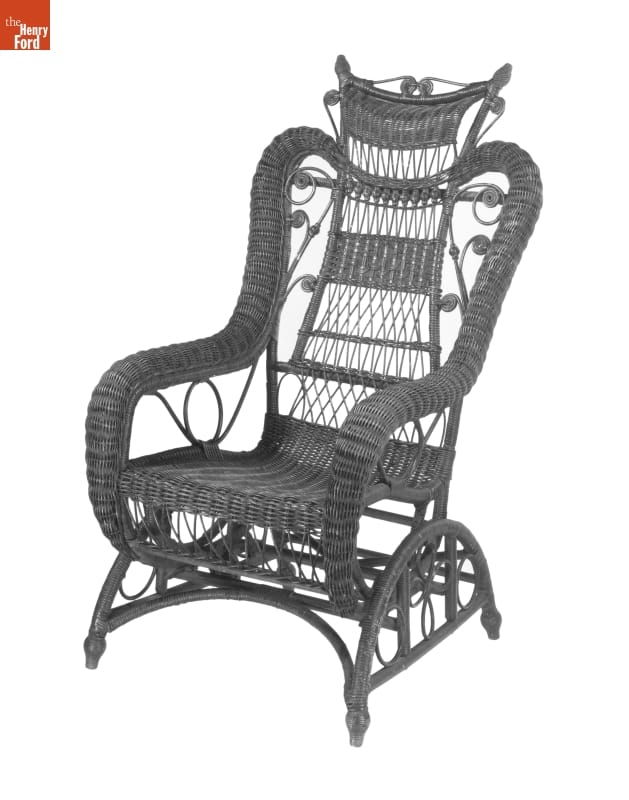
Wicker Rocking Chair, 1885-1910
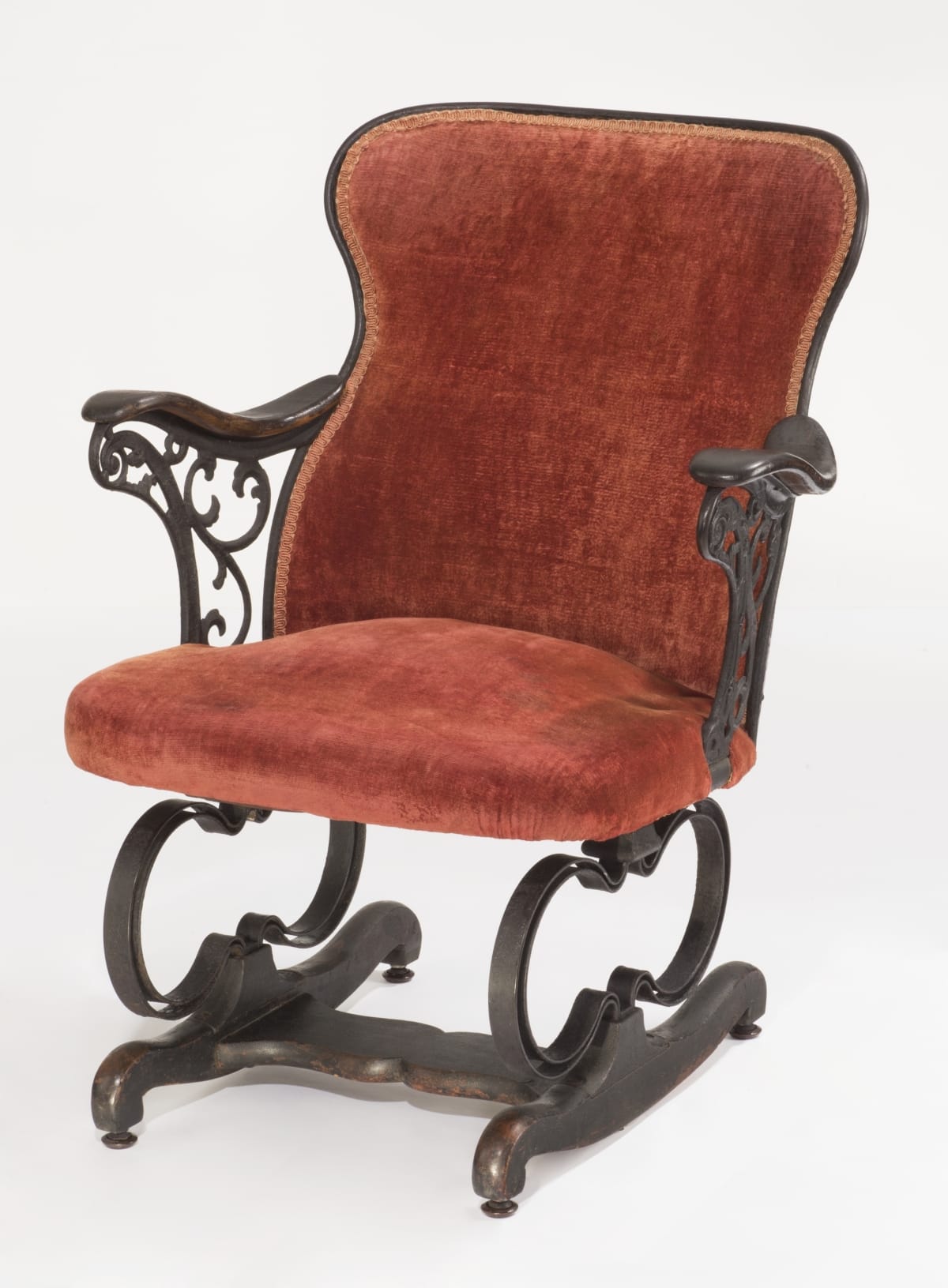
- Centripetal Spring Chair from a Pullman Train Car, 1860-1880 - Seating in most American railroad passenger coaches meant a basic, two-person bench. But a Pullman parlor car offered greater amenities in return for its higher fare. Individual seats provided softer cushioning, richer upholstery, and more comfortable armrests. The ride in this chair was further smoothed by the centripetal metal springs underneath it.
- 1860-1880
- Collections - Artifact
Centripetal Spring Chair from a Pullman Train Car, 1860-1880
Seating in most American railroad passenger coaches meant a basic, two-person bench. But a Pullman parlor car offered greater amenities in return for its higher fare. Individual seats provided softer cushioning, richer upholstery, and more comfortable armrests. The ride in this chair was further smoothed by the centripetal metal springs underneath it.
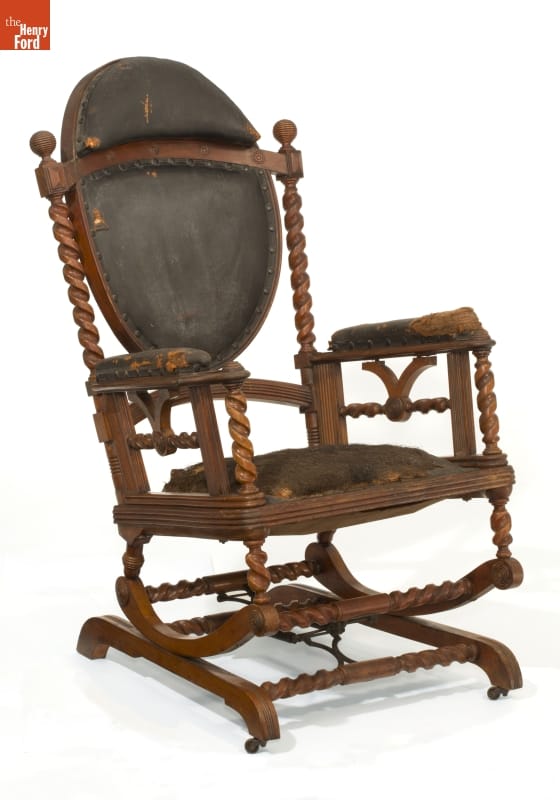
- Platform Rocker, 1882-1900 - In 1882, German immigrant and furniture maker George Hunzinger patented a torsion bar system to keep rockers from moving across the floor while the sitter rocked. A major innovation in furniture technology, these platform rockers revolutionized American parlors. Hunzinger's line of rockers were imitated by competitors, but were made using springs and other technologies to avoid infringing on Hunzinger's patent.
- 1882-1900
- Collections - Artifact
Platform Rocker, 1882-1900
In 1882, German immigrant and furniture maker George Hunzinger patented a torsion bar system to keep rockers from moving across the floor while the sitter rocked. A major innovation in furniture technology, these platform rockers revolutionized American parlors. Hunzinger's line of rockers were imitated by competitors, but were made using springs and other technologies to avoid infringing on Hunzinger's patent.
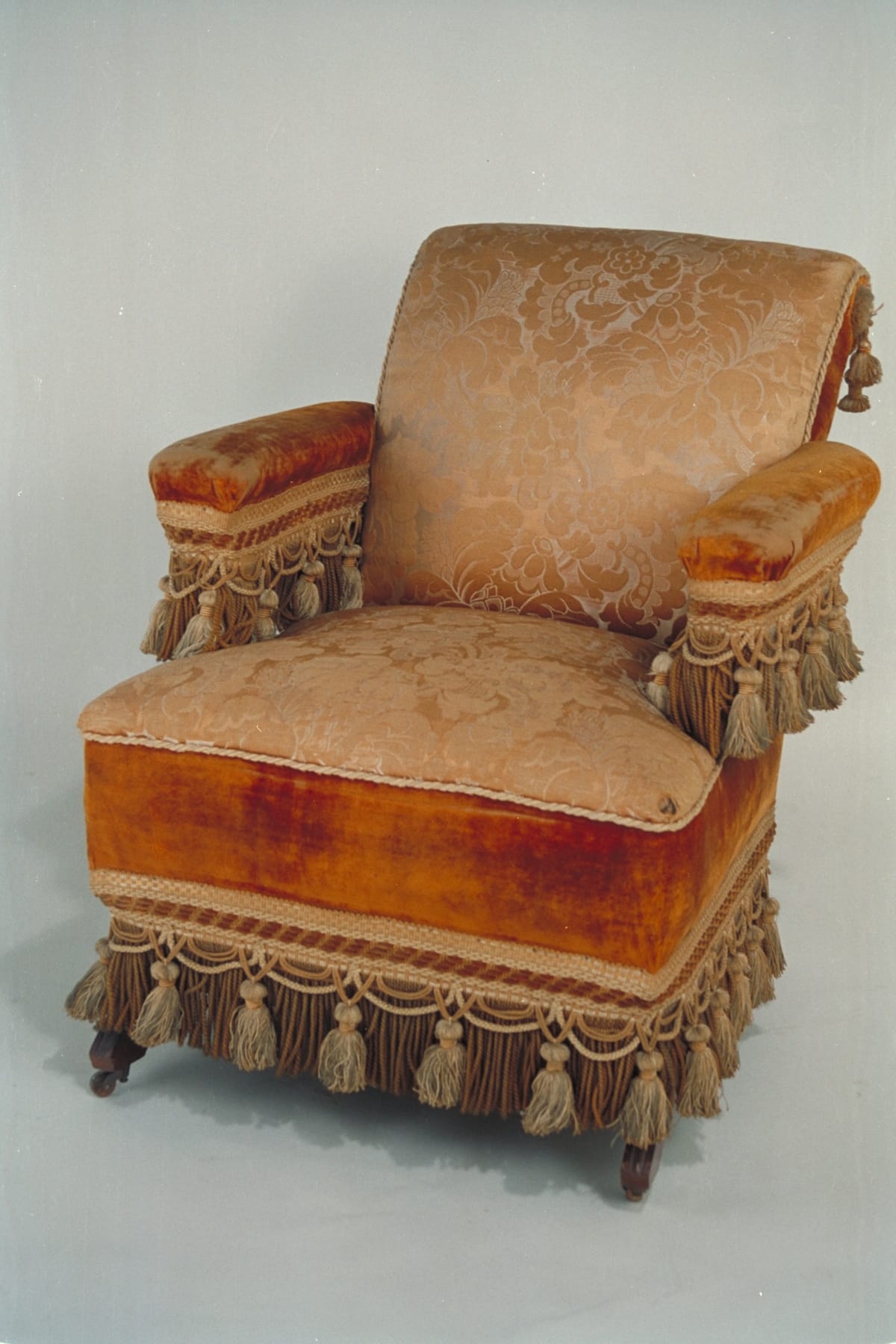
- Platform Rocker from "Turkish" Parlor Set, 1885-1895 - By the late 19th century, people could afford to buy a roomful of factory-made, designed-to-match furniture. This was reassuring for those uncertain of their decorating skills. Owning such pieces helped confirm one's social standing. This platform rocker, part of a "Turkish" parlor set, reflects Americans' fascination with the exotic, especially the near and far east, although sets of this type were never made there.
- 1885-1895
- Collections - Artifact
Platform Rocker from "Turkish" Parlor Set, 1885-1895
By the late 19th century, people could afford to buy a roomful of factory-made, designed-to-match furniture. This was reassuring for those uncertain of their decorating skills. Owning such pieces helped confirm one's social standing. This platform rocker, part of a "Turkish" parlor set, reflects Americans' fascination with the exotic, especially the near and far east, although sets of this type were never made there.