
Search
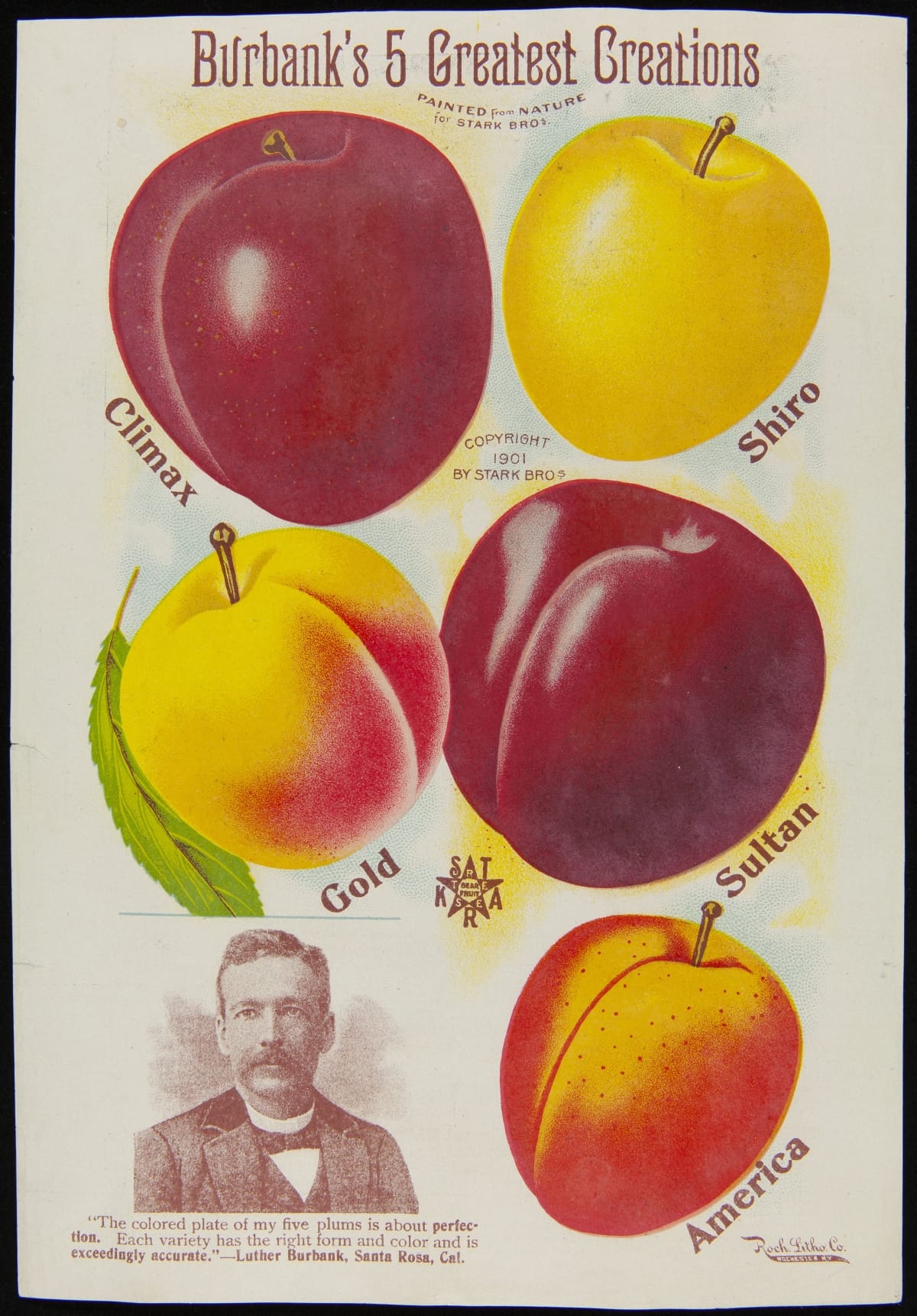
- Stark Bro's Nurseries & Orchards Company Trade Card, "Burbank's 5 Greatest Creations," 1901 - Luther Burbank's 1893 catalog, <em>New Creations in Fruits and Flowers</em>, captured the attention of established nursery businesses, including Stark Brothers Nurseries in Missouri. Clarence Stark traveled to California to see Burbank's creations for himself and purchased the rights to sell some of Burbank's plum varieties. This began an exclusive distribution partnership that continued after Burbank's death.
- 1901
- Collections - Artifact
Stark Bro's Nurseries & Orchards Company Trade Card, "Burbank's 5 Greatest Creations," 1901
Luther Burbank's 1893 catalog, New Creations in Fruits and Flowers, captured the attention of established nursery businesses, including Stark Brothers Nurseries in Missouri. Clarence Stark traveled to California to see Burbank's creations for himself and purchased the rights to sell some of Burbank's plum varieties. This began an exclusive distribution partnership that continued after Burbank's death.
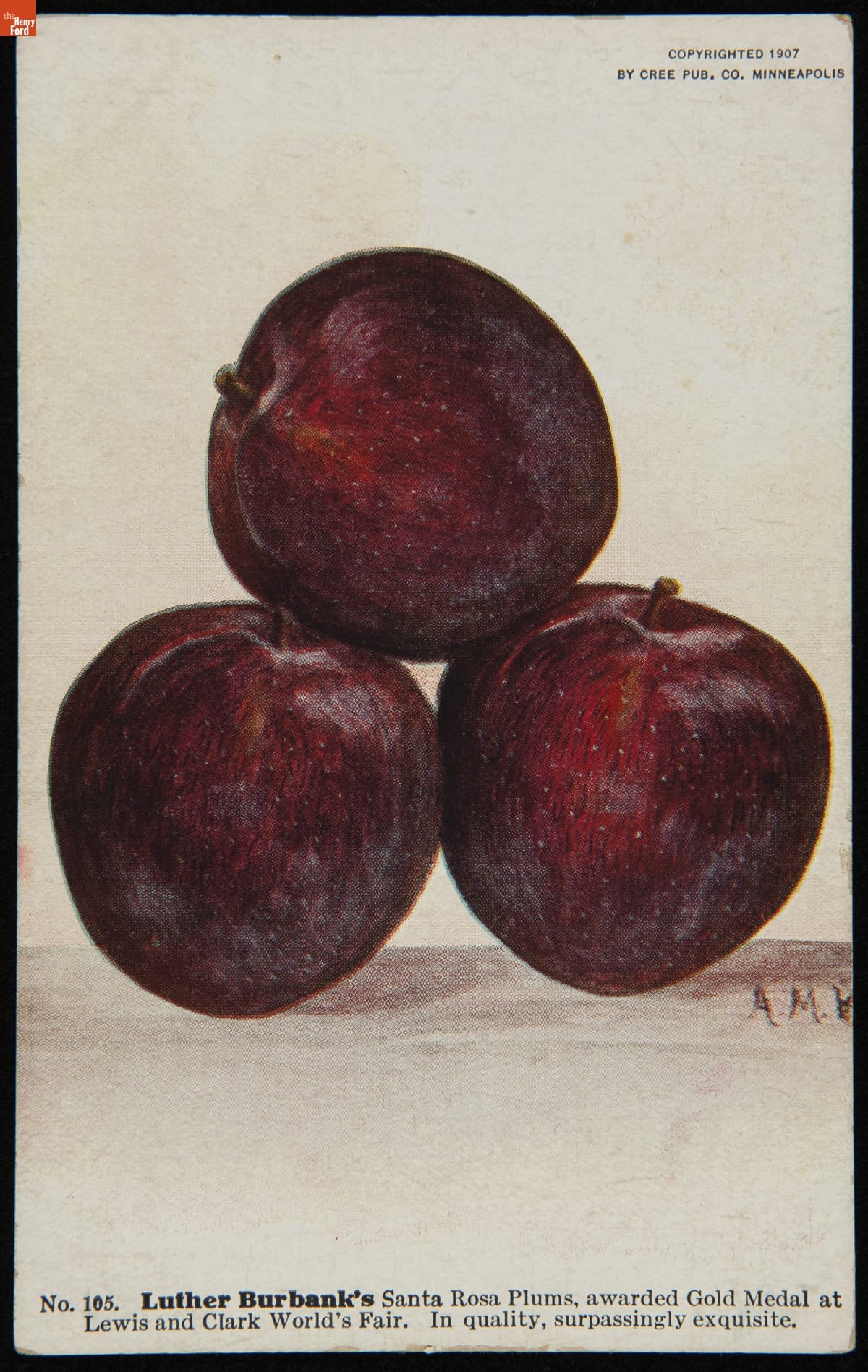
- Luther Burbanks's Santa Rosa Plums, 1907 - Luther Burbank (1849-1926), an American horticulturalist and author, gained a reputation for selective breeding that yielded more than 800 new fruits, vegetables, flowers, and other plants. By 1906, Burbank's international fame had brought multiple solicitors to his home in Santa Rosa, California, interested in documenting his work. A deal with Minneapolis publisher Dugal Cree resulted in this promotional postcard.
- 1907
- Collections - Artifact
Luther Burbanks's Santa Rosa Plums, 1907
Luther Burbank (1849-1926), an American horticulturalist and author, gained a reputation for selective breeding that yielded more than 800 new fruits, vegetables, flowers, and other plants. By 1906, Burbank's international fame had brought multiple solicitors to his home in Santa Rosa, California, interested in documenting his work. A deal with Minneapolis publisher Dugal Cree resulted in this promotional postcard.
- "Plum Goblet" by Joey Kirkpatrick and Flora Mace -
- 1991
- Collections - Artifact
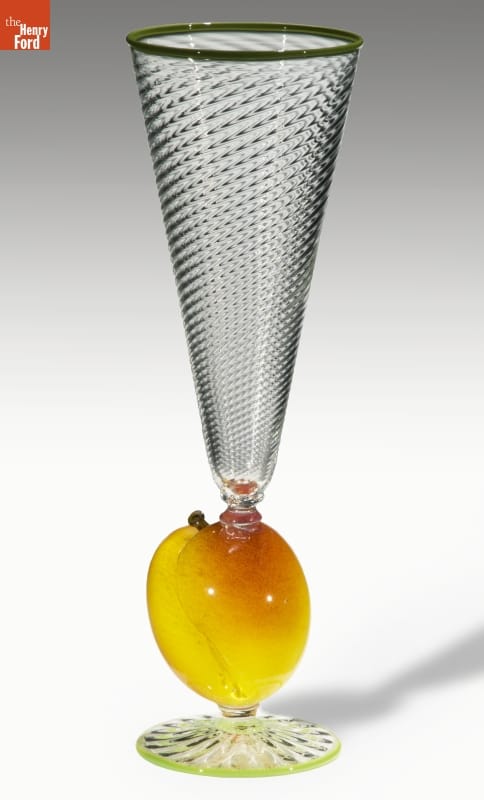
"Plum Goblet" by Joey Kirkpatrick and Flora Mace
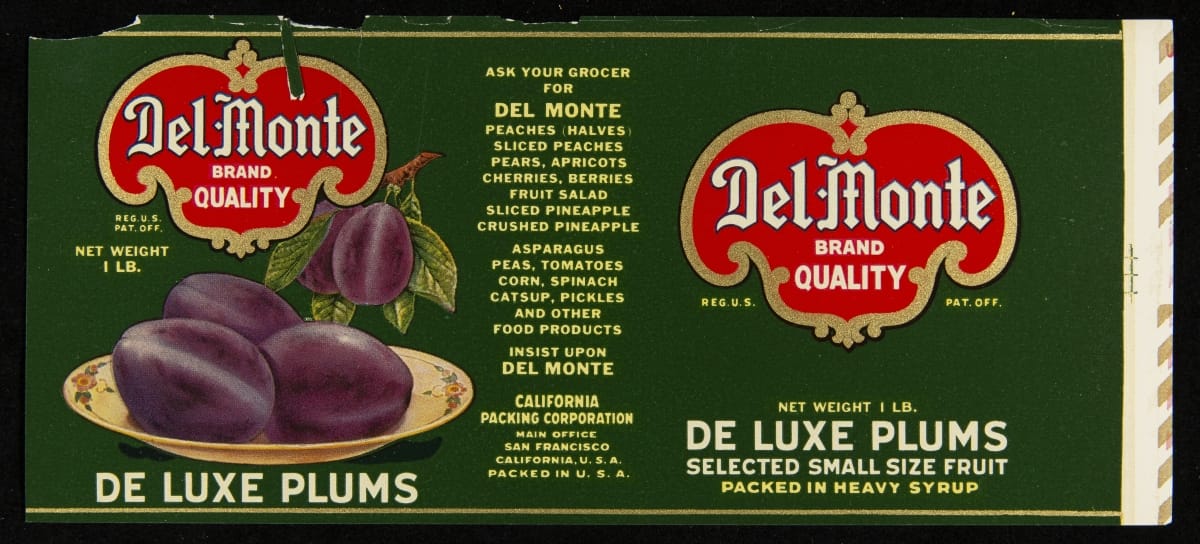
- Can Label, "Del Monte Brand De Luxe Plums," circa 1930 - Manufacturers of similar products sought ways to make their companies' goods stand out on store shelves. Some companies established a uniform label design for their multi-product offerings -- a strategy which helped customers distinguish one brand over another. Del Monte Brand products were identified by the company's characteristic green label and its signature "shield" logo. These design features are still found on Del Monte products today.
- circa 1930
- Collections - Artifact
Can Label, "Del Monte Brand De Luxe Plums," circa 1930
Manufacturers of similar products sought ways to make their companies' goods stand out on store shelves. Some companies established a uniform label design for their multi-product offerings -- a strategy which helped customers distinguish one brand over another. Del Monte Brand products were identified by the company's characteristic green label and its signature "shield" logo. These design features are still found on Del Monte products today.
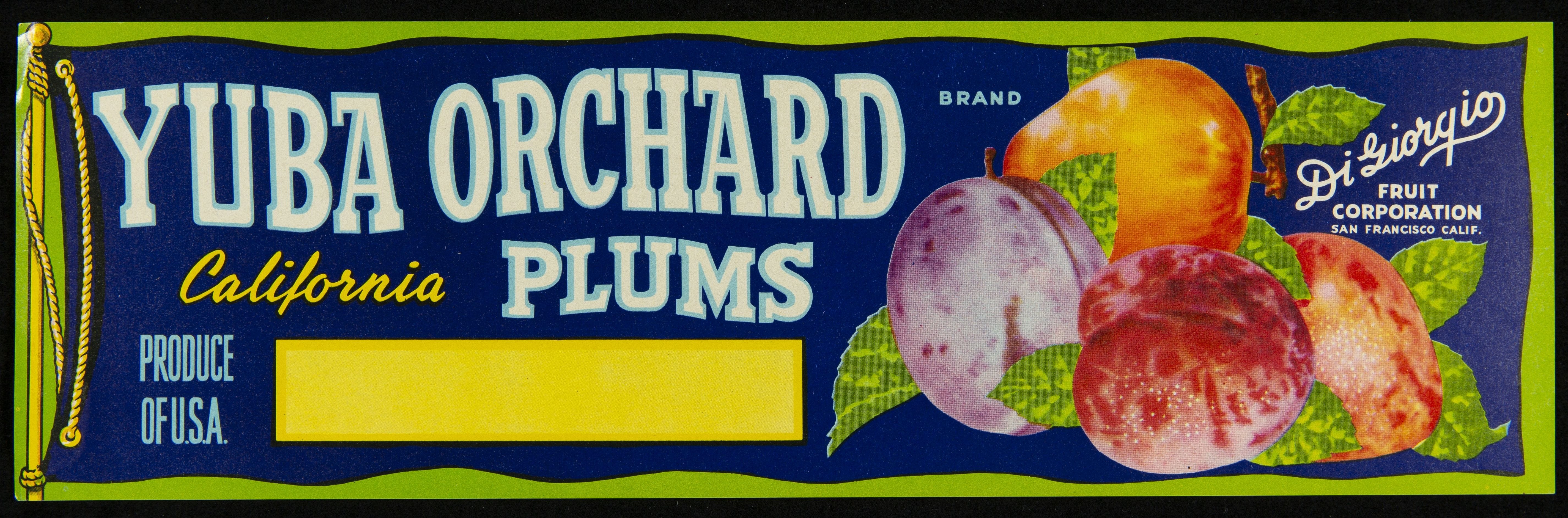
- Crate Label, "Yuba Orchard Brand Plums," 1920-1970 - In 1869, the transcontinental railroad opened eastern markets to the West Coast produce industry for the first time. As produce companies shipped crates of fruits and vegetables across the country, they needed a way to distinguish their goods from their competitors'. Colorful, eye-catching labels, like this one for Yuba Orchard Brand Plums, were created to attract grocers purchasing goods from wholesale markets.
- 1920-1970
- Collections - Artifact
Crate Label, "Yuba Orchard Brand Plums," 1920-1970
In 1869, the transcontinental railroad opened eastern markets to the West Coast produce industry for the first time. As produce companies shipped crates of fruits and vegetables across the country, they needed a way to distinguish their goods from their competitors'. Colorful, eye-catching labels, like this one for Yuba Orchard Brand Plums, were created to attract grocers purchasing goods from wholesale markets.
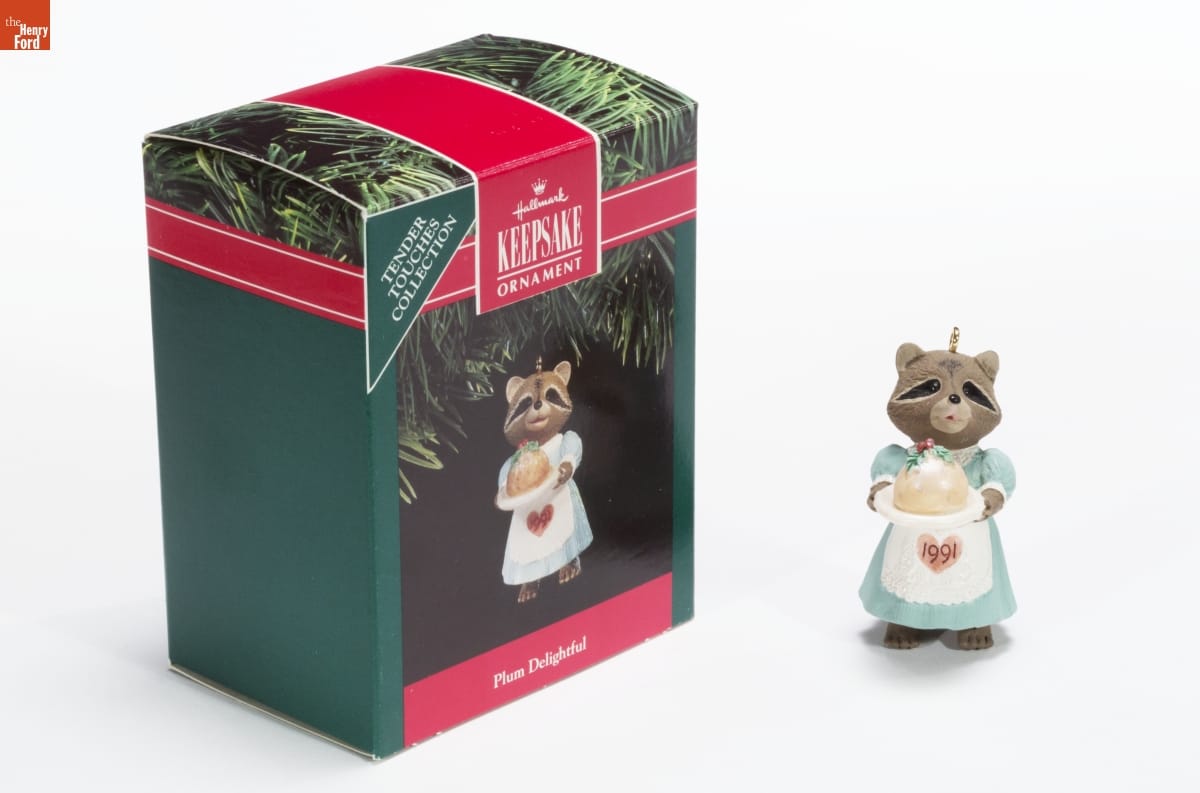
- Hallmark "Tender Touches: Plum Delightful" Christmas Ornament, 1991 - Already known for greeting cards, Hallmark introduced a line of Christmas ornaments in 1973. The company's annual release of an increasing array of ornaments revolutionized Christmas decorating, appealing to customers' interest in marking memories and milestones as well as expressing one's personality and unique tastes.
- 1991
- Collections - Artifact
Hallmark "Tender Touches: Plum Delightful" Christmas Ornament, 1991
Already known for greeting cards, Hallmark introduced a line of Christmas ornaments in 1973. The company's annual release of an increasing array of ornaments revolutionized Christmas decorating, appealing to customers' interest in marking memories and milestones as well as expressing one's personality and unique tastes.
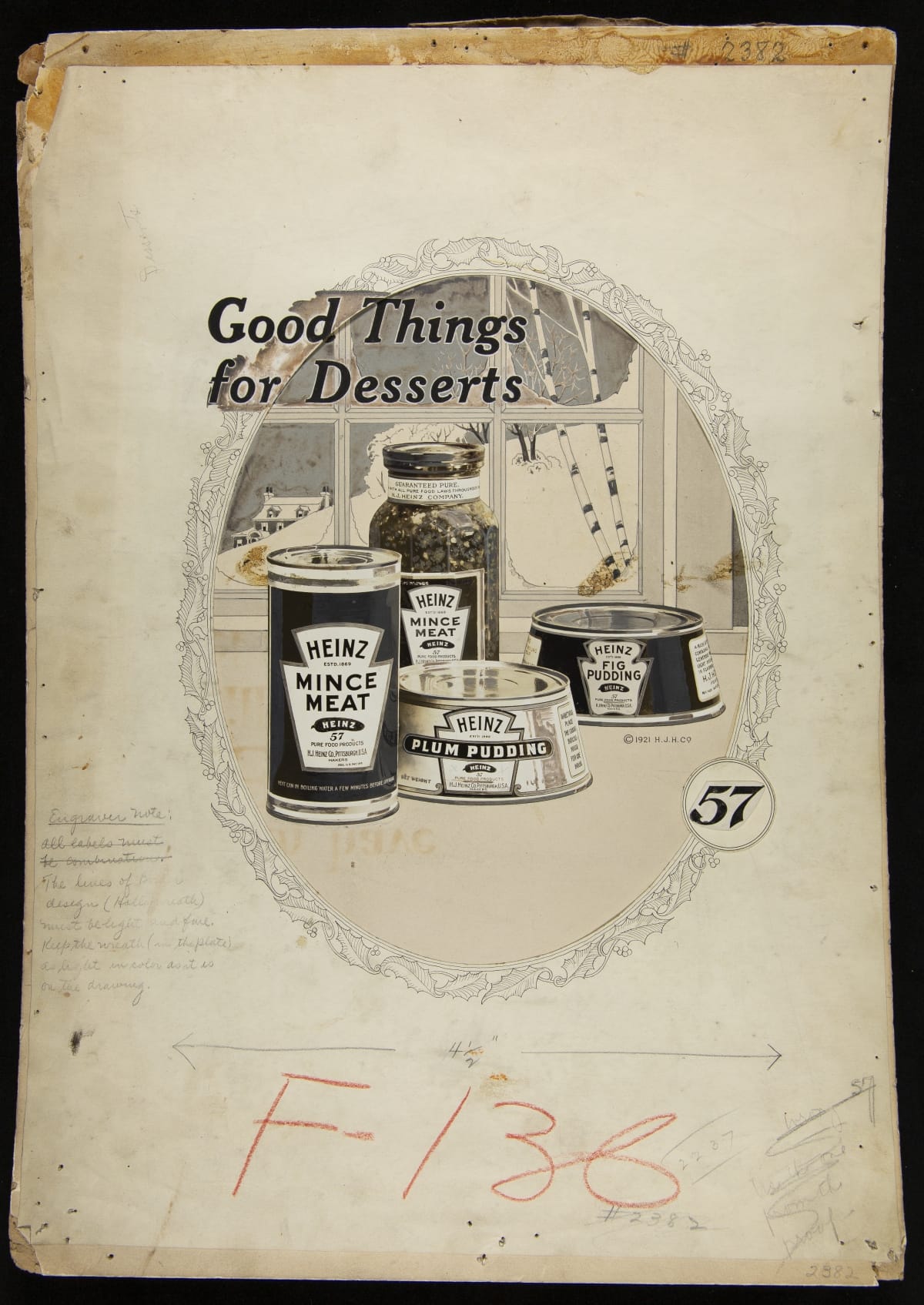
- Heinz Advertising Layout, "Good Things for Desserts," 1921 - The H.J. Heinz Company employed ambitious and comprehensive advertising strategies to meet consumers at home, in stores, and everywhere in between. Drawings, illustrations and modified photographs of Heinz products were often used for advertising and in publications. This advertising layout represents a step in the marketing process where the size and arrangement are taken into consideration before the final advertisement is created.
- 1921
- Collections - Artifact
Heinz Advertising Layout, "Good Things for Desserts," 1921
The H.J. Heinz Company employed ambitious and comprehensive advertising strategies to meet consumers at home, in stores, and everywhere in between. Drawings, illustrations and modified photographs of Heinz products were often used for advertising and in publications. This advertising layout represents a step in the marketing process where the size and arrangement are taken into consideration before the final advertisement is created.
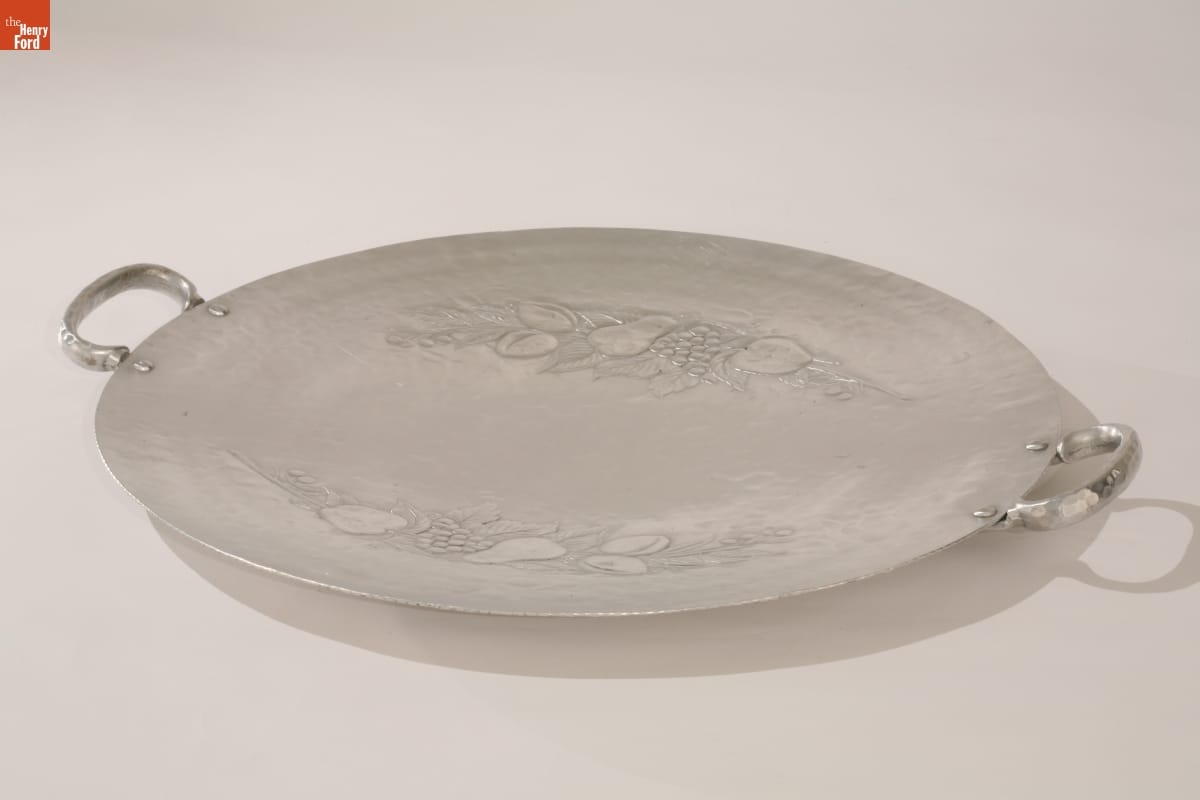
- Everlast "Forged Fruit" Tray, 1938-1950 - In 1932, Louis Schnitzer and Nathan Gelfman formed Everlast Metal Products Corporation, producing high-quality, hand-forged aluminum giftware. In an era of growing uniformity via factory production, the "made by hand" aspect of these products held an aesthetic appeal for consumers. In 1933, Everlast introduced its first product line, "Forged Giftware" featuring Colonial Revival inspired designs.
- 1938-1950
- Collections - Artifact
Everlast "Forged Fruit" Tray, 1938-1950
In 1932, Louis Schnitzer and Nathan Gelfman formed Everlast Metal Products Corporation, producing high-quality, hand-forged aluminum giftware. In an era of growing uniformity via factory production, the "made by hand" aspect of these products held an aesthetic appeal for consumers. In 1933, Everlast introduced its first product line, "Forged Giftware" featuring Colonial Revival inspired designs.
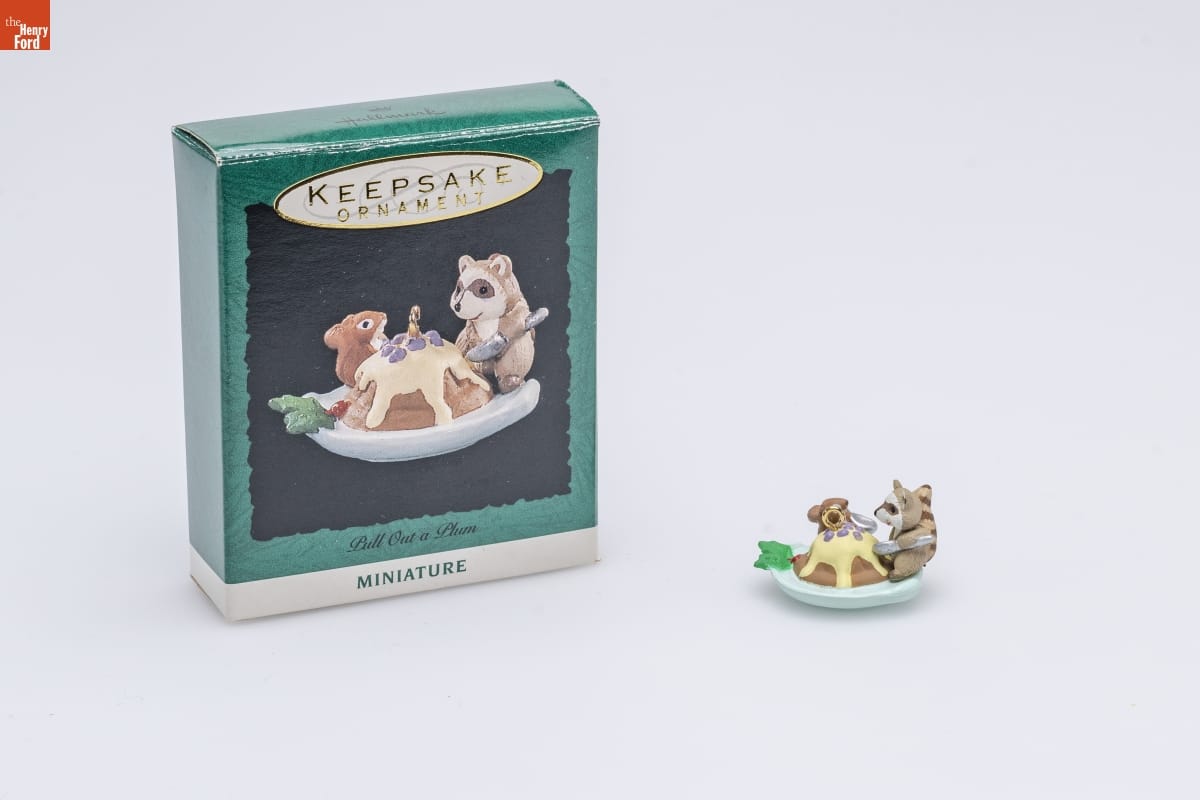
- Hallmark "Pull Out a Plum" Miniature Christmas Ornament, 1993 - Already known for greeting cards, Hallmark introduced a line of Christmas ornaments in 1973. The company's annual release of an increasing array of ornaments revolutionized Christmas decorating, appealing to customers' interest in marking memories and milestones as well as expressing one's personality and unique tastes.
- 1993
- Collections - Artifact
Hallmark "Pull Out a Plum" Miniature Christmas Ornament, 1993
Already known for greeting cards, Hallmark introduced a line of Christmas ornaments in 1973. The company's annual release of an increasing array of ornaments revolutionized Christmas decorating, appealing to customers' interest in marking memories and milestones as well as expressing one's personality and unique tastes.
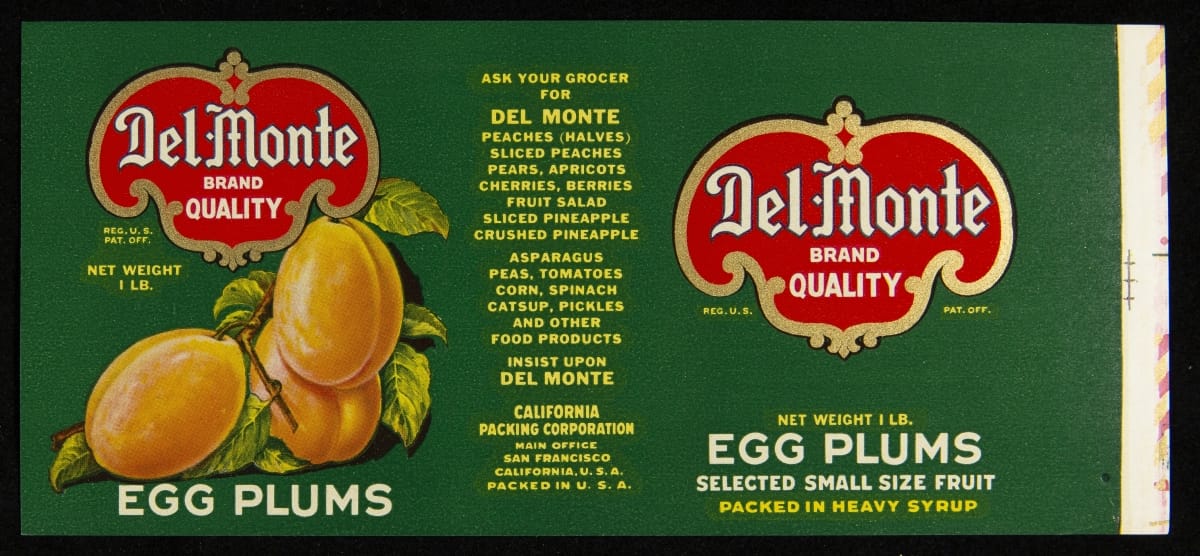
- Can Label, "Del Monte Brand Egg Plums," 1920-1930 - Manufacturers of similar products sought ways to make their companies' goods stand out on store shelves. Some companies established a uniform label design for their multi-product offerings -- a strategy which helped customers distinguish one brand over another. Del Monte Brand products were identified by the company's characteristic green label and its signature "shield" logo. These design features are still found on Del Monte products today.
- 1920-1930
- Collections - Artifact
Can Label, "Del Monte Brand Egg Plums," 1920-1930
Manufacturers of similar products sought ways to make their companies' goods stand out on store shelves. Some companies established a uniform label design for their multi-product offerings -- a strategy which helped customers distinguish one brand over another. Del Monte Brand products were identified by the company's characteristic green label and its signature "shield" logo. These design features are still found on Del Monte products today.