
Search
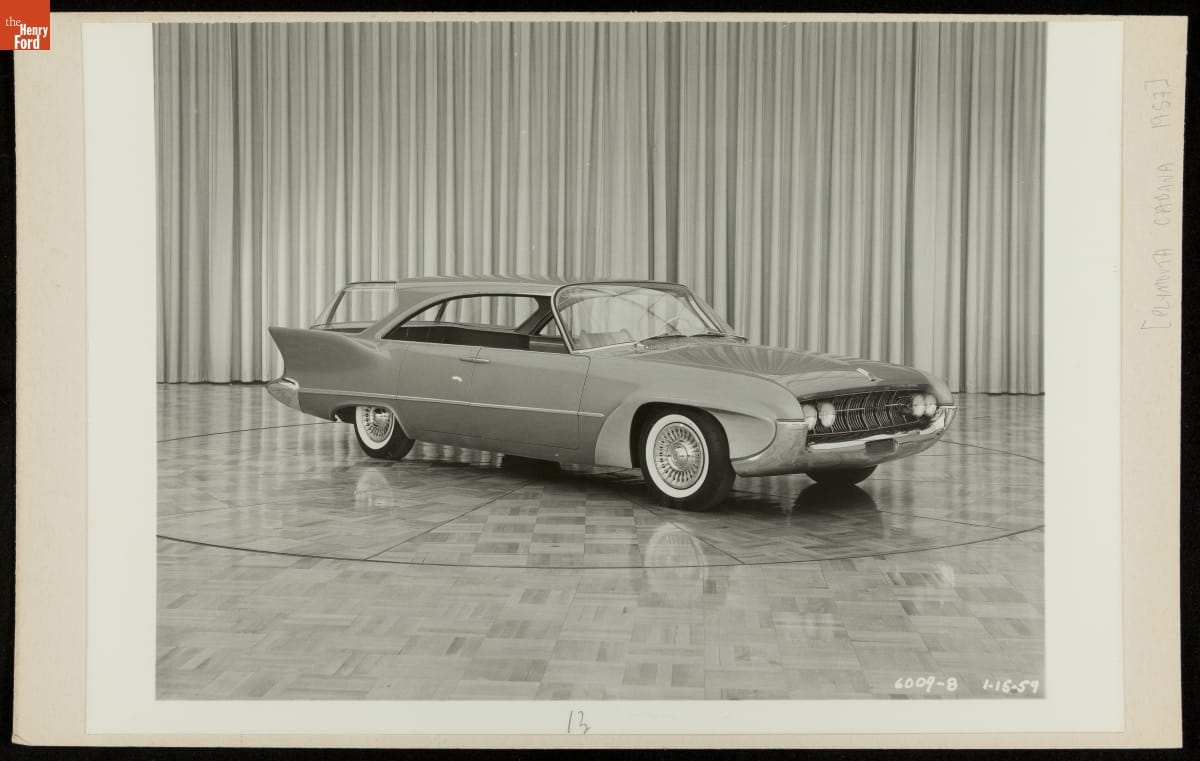
- 1958 Plymouth Cabana Station Wagon - Built by Ghia, the Plymouth Cabana concept car debuted in 1958. The four-door wagon had room for nine passengers. Cabana's hardtop styling, without a B pillar between the doors, provided easier access to the interior -- advantageous for use as an ambulance or a hearse. Cabana was purely for show and lacked a functional powertrain.
- January 15, 1959
- Collections - Artifact
1958 Plymouth Cabana Station Wagon
Built by Ghia, the Plymouth Cabana concept car debuted in 1958. The four-door wagon had room for nine passengers. Cabana's hardtop styling, without a B pillar between the doors, provided easier access to the interior -- advantageous for use as an ambulance or a hearse. Cabana was purely for show and lacked a functional powertrain.
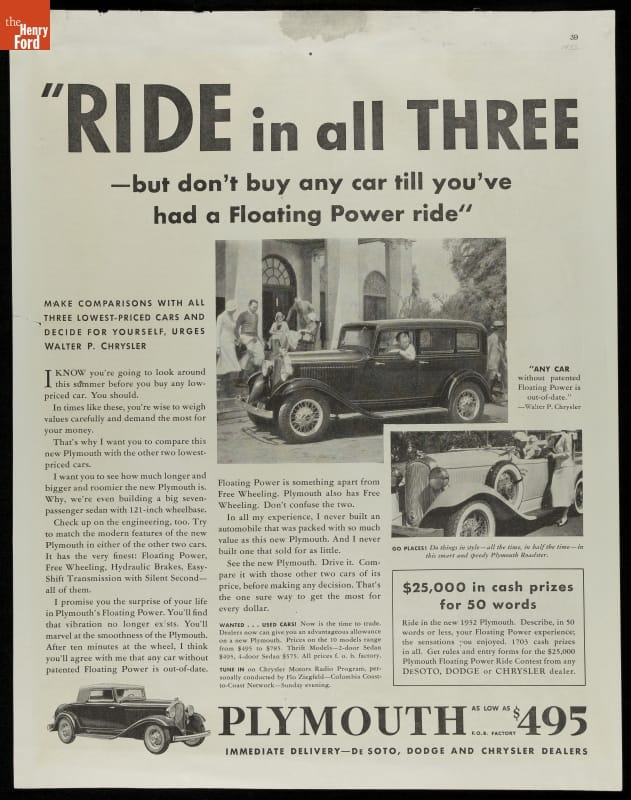
- Advertisement for Plymouth Automobiles with "Floating Power Ride," 1932 - Chrysler established its Plymouth line of automobiles in 1928. The low-priced brand competed directly with Chevrolet and Ford. Plymouth introduced its "Floating Power" engine-mounting system in 1931. Unlike competitors, who bolted engines directly to frames, Plymouth placed its engine on rubber mounts and stabilized it with a rubber-encased spring. The system reduced engine vibration and noise.
- 1932
- Collections - Artifact
Advertisement for Plymouth Automobiles with "Floating Power Ride," 1932
Chrysler established its Plymouth line of automobiles in 1928. The low-priced brand competed directly with Chevrolet and Ford. Plymouth introduced its "Floating Power" engine-mounting system in 1931. Unlike competitors, who bolted engines directly to frames, Plymouth placed its engine on rubber mounts and stabilized it with a rubber-encased spring. The system reduced engine vibration and noise.
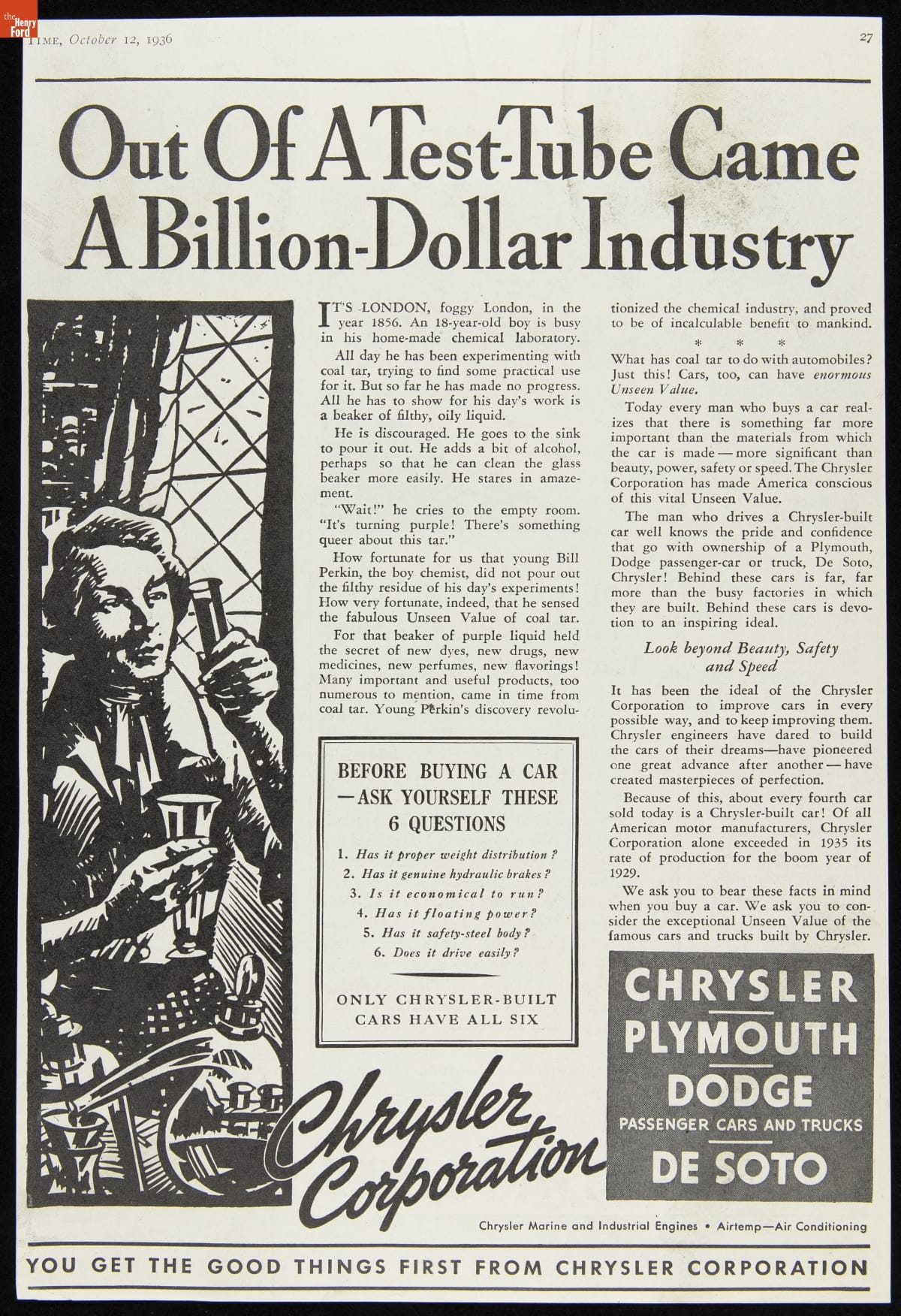
- Chrysler Corporation Advertisement, "Out of a Test-Tube Came a Billion-Dollar Industry," October 1936 - In this 1936 advertisement, Chrysler Corporation suggested that behind each of its vehicles was "something far more important than the materials from which the car is made." The ad made a comparison to British chemist William Henry Perkin who, in 1856, discovered a synthetic dye. Perkin recognized something special in his dye, just as Chrysler drivers did in their automobiles.
- October 12, 1936
- Collections - Artifact
Chrysler Corporation Advertisement, "Out of a Test-Tube Came a Billion-Dollar Industry," October 1936
In this 1936 advertisement, Chrysler Corporation suggested that behind each of its vehicles was "something far more important than the materials from which the car is made." The ad made a comparison to British chemist William Henry Perkin who, in 1856, discovered a synthetic dye. Perkin recognized something special in his dye, just as Chrysler drivers did in their automobiles.
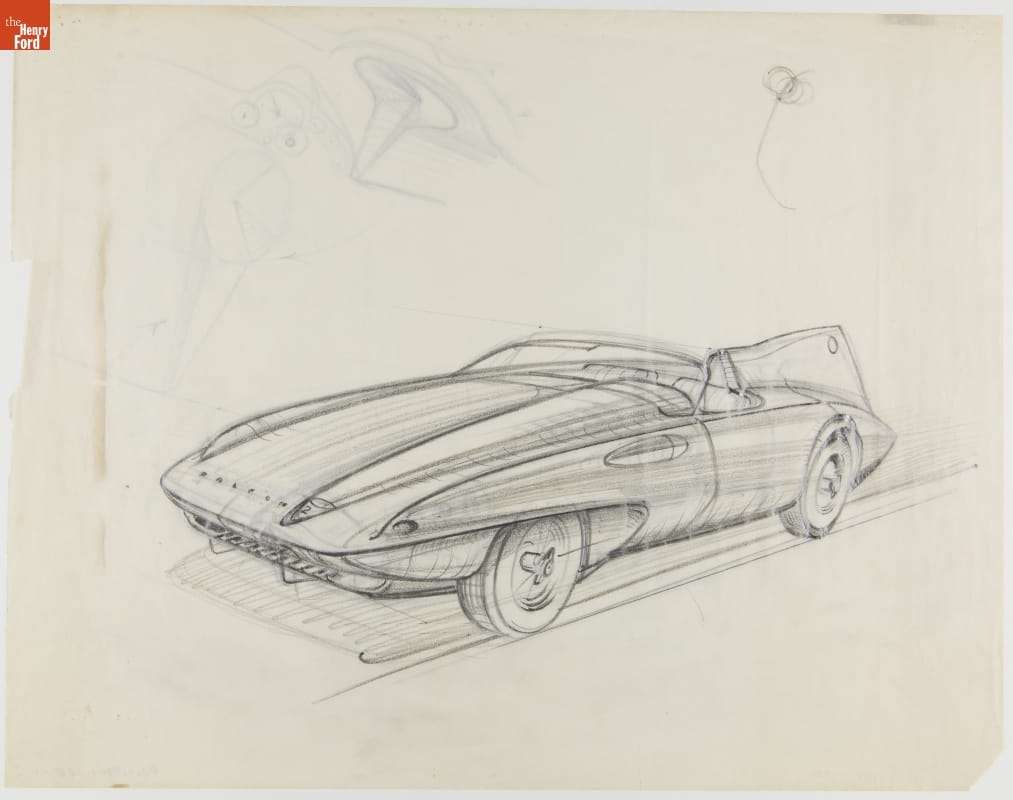
- Early Design Drawing for 1960 Plymouth XNR Concept Car by Virgil M. Exner - Virgil Exner, head of Chrysler Corporation's styling department, designed a concept car to rival Chevrolet's popular Corvette. Exner liked his sleek, asymmetrical "idea car" so much that he named it after himself. This early design drawing highlights one of the Plymouth XNR's most striking features: a vertical fin running from the hood to the tail.
- circa 1959
- Collections - Artifact
Early Design Drawing for 1960 Plymouth XNR Concept Car by Virgil M. Exner
Virgil Exner, head of Chrysler Corporation's styling department, designed a concept car to rival Chevrolet's popular Corvette. Exner liked his sleek, asymmetrical "idea car" so much that he named it after himself. This early design drawing highlights one of the Plymouth XNR's most striking features: a vertical fin running from the hood to the tail.
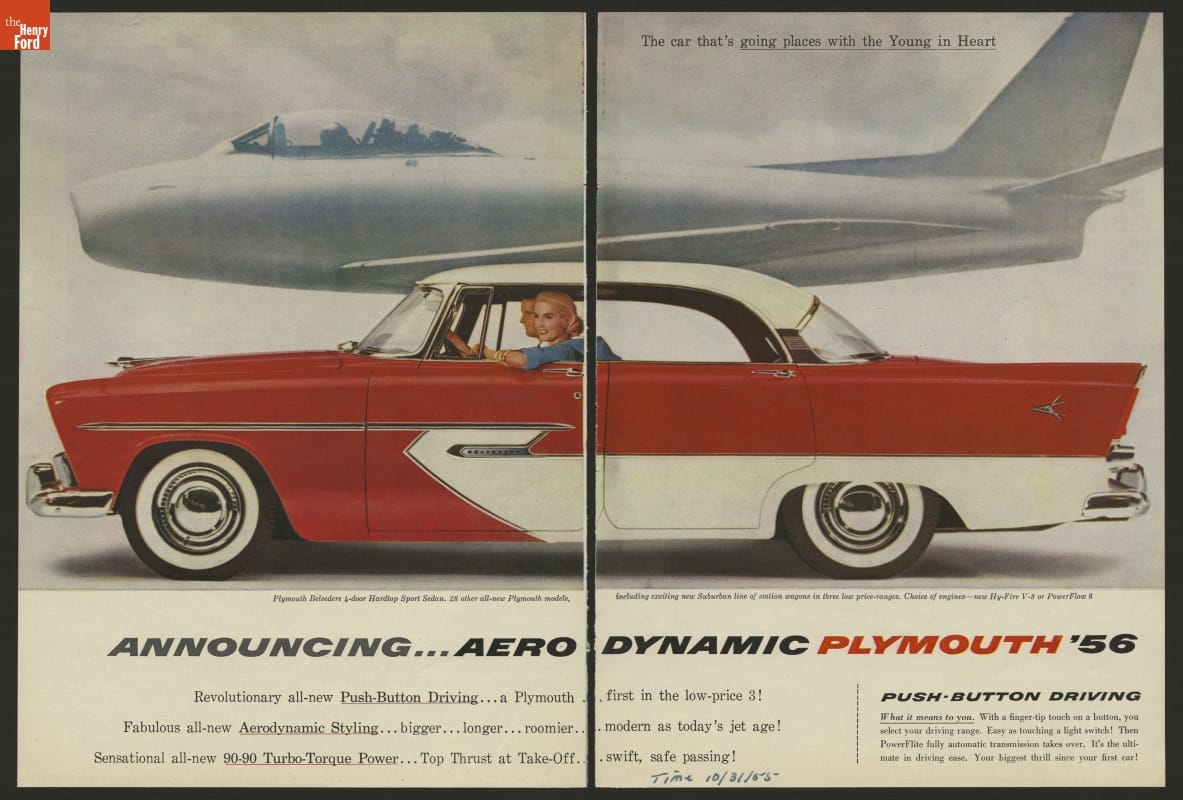
- 1956 Plymouth Belvedere Ad, "Announcing- Aero Dynamic Plymouth '56" - In case customers might have missed it, this ad from the 1950s shows how designers of the 1956 Plymouth took visual styling cues from jet aircraft.
- October 31, 1955
- Collections - Artifact
1956 Plymouth Belvedere Ad, "Announcing- Aero Dynamic Plymouth '56"
In case customers might have missed it, this ad from the 1950s shows how designers of the 1956 Plymouth took visual styling cues from jet aircraft.
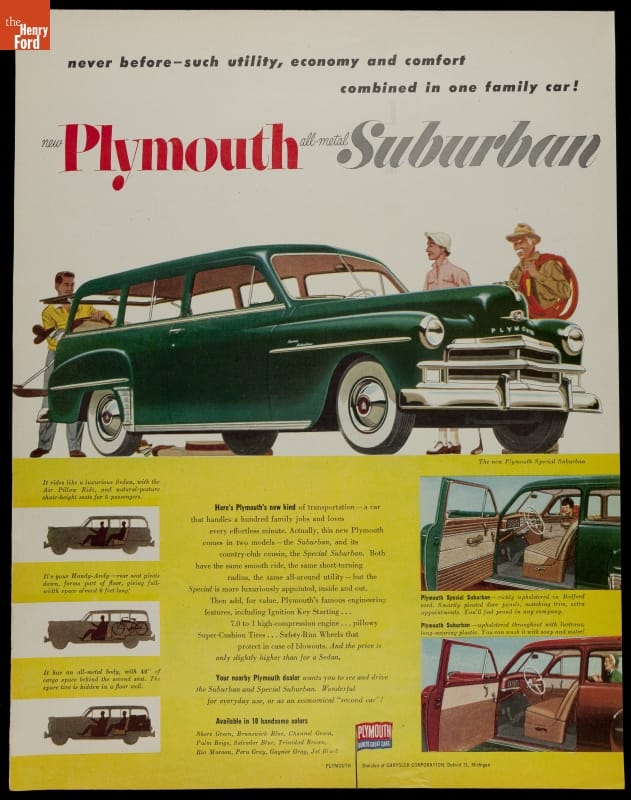
- 1950 Plymouth Suburban Advertisement, "New Plymouth All-Metal Suburban" - The automobile is a paradox -- a practical tool that plays host to both human needs and fantasies. Like car consumers, automotive ads seem to land somewhere between fantasy and reality, emotions and rationality. Many ads incorporate apparent opposites: fantasy can sell practicality, and vice versa. Sometimes the car has disappeared completely -- an emotional appeal prompts us to complete the ad.
- 1950
- Collections - Artifact
1950 Plymouth Suburban Advertisement, "New Plymouth All-Metal Suburban"
The automobile is a paradox -- a practical tool that plays host to both human needs and fantasies. Like car consumers, automotive ads seem to land somewhere between fantasy and reality, emotions and rationality. Many ads incorporate apparent opposites: fantasy can sell practicality, and vice versa. Sometimes the car has disappeared completely -- an emotional appeal prompts us to complete the ad.
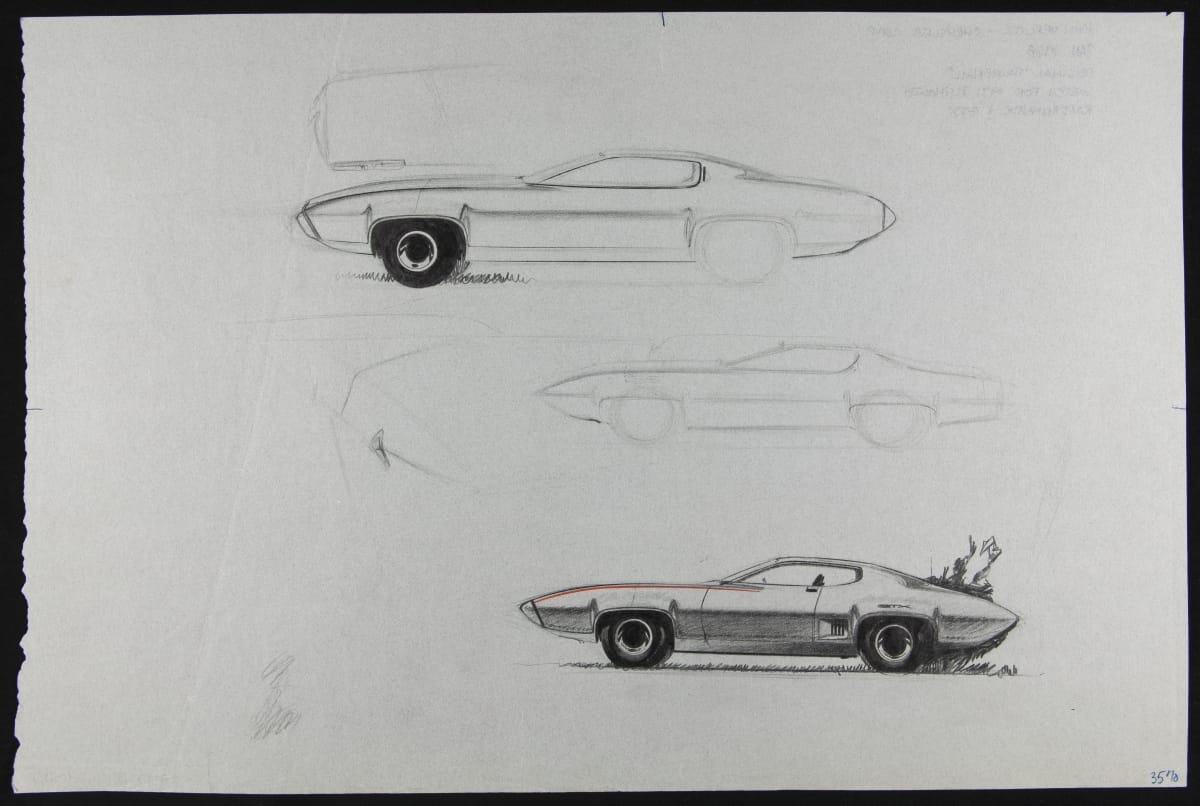
- Original Design Sketch of 1971 Plymouth Road Runner and GTX by John Herlitz, January 1968 - After earning his degree from the Pratt Institute, John Herlitz joined Plymouth's design studio in 1964. He led styling efforts on several striking models from the muscle car era including the 1970 Plymouth Barracuda, the 1971 Plymouth GTX, and the 1971 Plymouth Road Runner. Herlitz retired as Chrysler's senior vice-president for product design in 2001.
- January 01, 1968
- Collections - Artifact
Original Design Sketch of 1971 Plymouth Road Runner and GTX by John Herlitz, January 1968
After earning his degree from the Pratt Institute, John Herlitz joined Plymouth's design studio in 1964. He led styling efforts on several striking models from the muscle car era including the 1970 Plymouth Barracuda, the 1971 Plymouth GTX, and the 1971 Plymouth Road Runner. Herlitz retired as Chrysler's senior vice-president for product design in 2001.
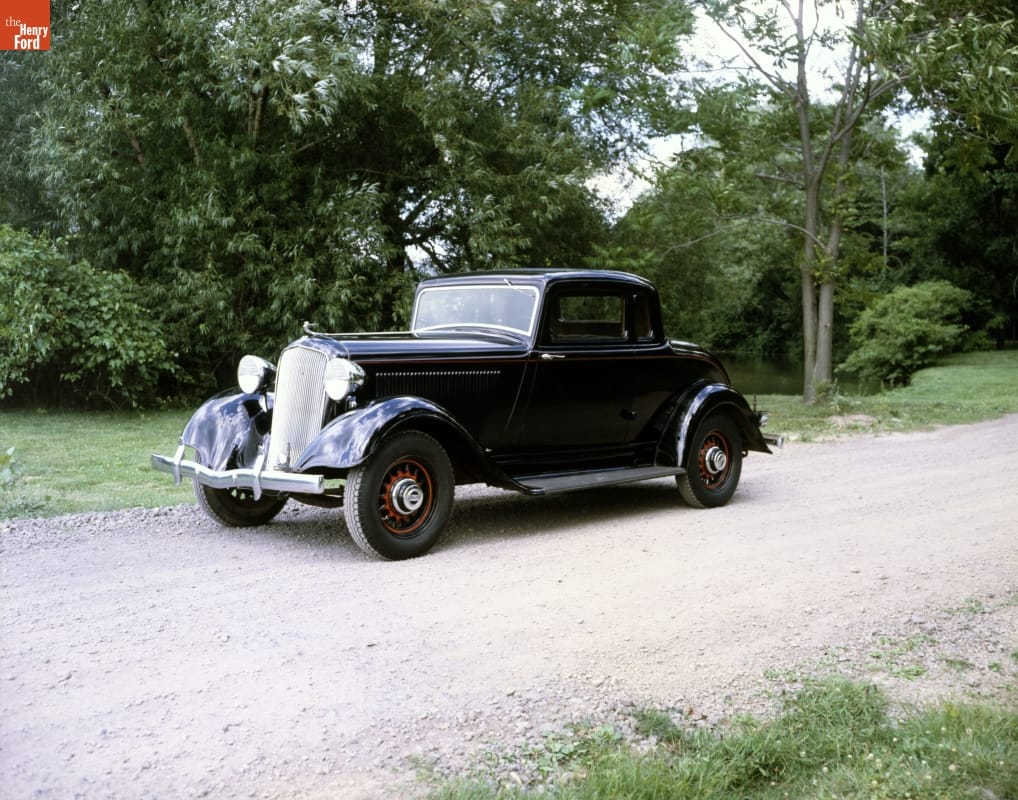
- 1933 Plymouth Model PD Coupe - Almost overnight, Walter Chrysler turned his company into a full-line automaker when he acquired Dodge Brothers and formed DeSoto and Plymouth in 1928. As Chrysler's low-priced brand, Plymouth competed directly with Ford and Chevrolet. The 1933 Model PD featured a six-cylinder engine and a rakish look that sold well despite the Depression. Plymouth's success helped Chrysler survive the economic crisis.
- 1933
- Collections - Artifact
1933 Plymouth Model PD Coupe
Almost overnight, Walter Chrysler turned his company into a full-line automaker when he acquired Dodge Brothers and formed DeSoto and Plymouth in 1928. As Chrysler's low-priced brand, Plymouth competed directly with Ford and Chevrolet. The 1933 Model PD featured a six-cylinder engine and a rakish look that sold well despite the Depression. Plymouth's success helped Chrysler survive the economic crisis.
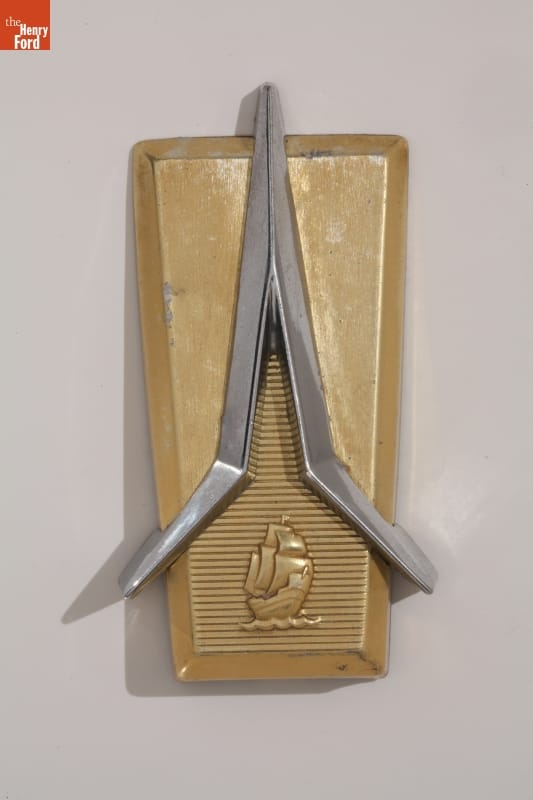
- Plymouth Front Grille Emblem, 1959 - An automobile manufacturer's badge is fundamental to the company's brand identity -- just as the maker's name is often important to <EM>our</EM> identity as consumers and drivers. Early automobile badges tended to be small and often discreetly located; today they have evolved into enlarged, prominently placed, and frequently symmetrical logos -- easy to recognize, even at a glance in a rear-view mirror.
- 1959
- Collections - Artifact
Plymouth Front Grille Emblem, 1959
An automobile manufacturer's badge is fundamental to the company's brand identity -- just as the maker's name is often important to our identity as consumers and drivers. Early automobile badges tended to be small and often discreetly located; today they have evolved into enlarged, prominently placed, and frequently symmetrical logos -- easy to recognize, even at a glance in a rear-view mirror.
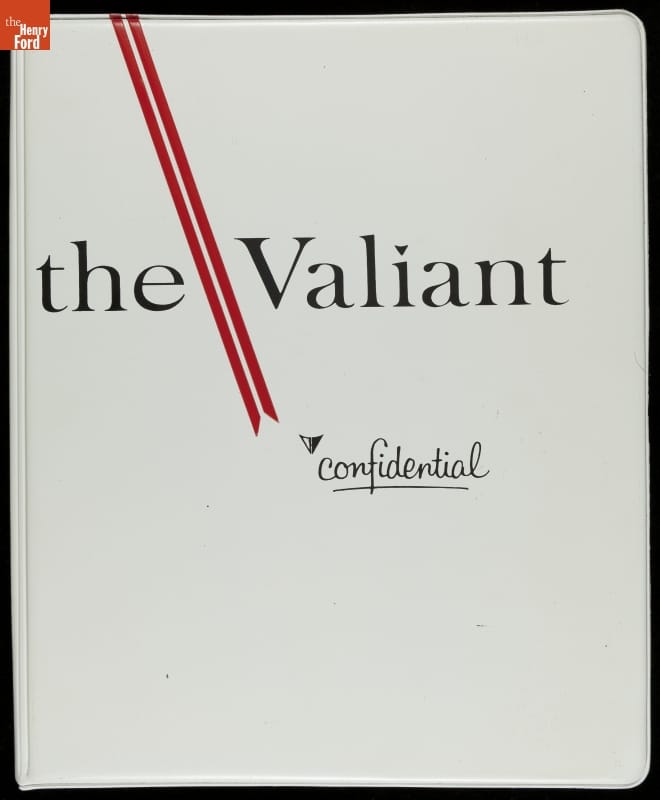
- "The Valiant Confidential" Sales Catalog for the 1960 Plymouth Valiant, 1959 - After watching Volkswagen, American Motors, and Studebaker win customers with small cars, the Big Three -- Chrysler, Ford, and General Motors -- introduced their own compacts for 1960. This brochure for Chrysler's Valiant compares the car point by point with Chevrolet's Corvair and Ford's Falcon. Chrysler initially marketed the Valiant as its own marque, though the car later joined the Plymouth line.
- 1960
- Collections - Artifact
"The Valiant Confidential" Sales Catalog for the 1960 Plymouth Valiant, 1959
After watching Volkswagen, American Motors, and Studebaker win customers with small cars, the Big Three -- Chrysler, Ford, and General Motors -- introduced their own compacts for 1960. This brochure for Chrysler's Valiant compares the car point by point with Chevrolet's Corvair and Ford's Falcon. Chrysler initially marketed the Valiant as its own marque, though the car later joined the Plymouth line.