
Search
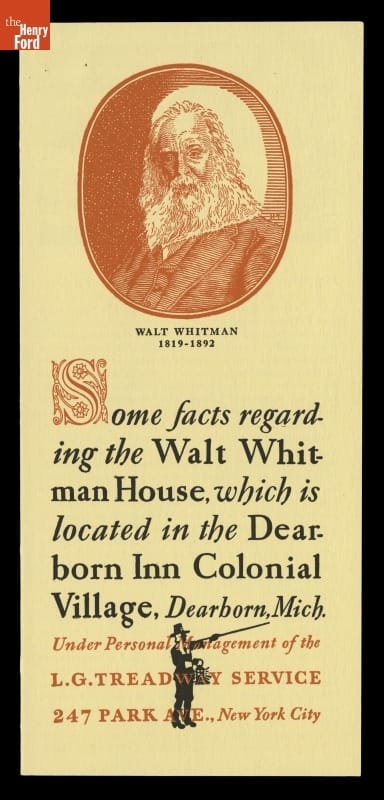
- Brochure, "Some Facts regarding the Walt Whitman House," Dearborn Inn Colonial Village, 1937 - By the mid-1930s, the Dearborn Inn, a popular luxury hotel, required additional accommodations to service travelers and visitors to the Edison Institute (later renamed The Henry Ford). The L.G. Treadway Service Corporation consulted with Edsel Ford and had five reproduction houses constructed behind the Inn. The exteriors were exact replicas of homes famous in American history, but guests found modern amenities inside.
- 1937
- Collections - Artifact
Brochure, "Some Facts regarding the Walt Whitman House," Dearborn Inn Colonial Village, 1937
By the mid-1930s, the Dearborn Inn, a popular luxury hotel, required additional accommodations to service travelers and visitors to the Edison Institute (later renamed The Henry Ford). The L.G. Treadway Service Corporation consulted with Edsel Ford and had five reproduction houses constructed behind the Inn. The exteriors were exact replicas of homes famous in American history, but guests found modern amenities inside.
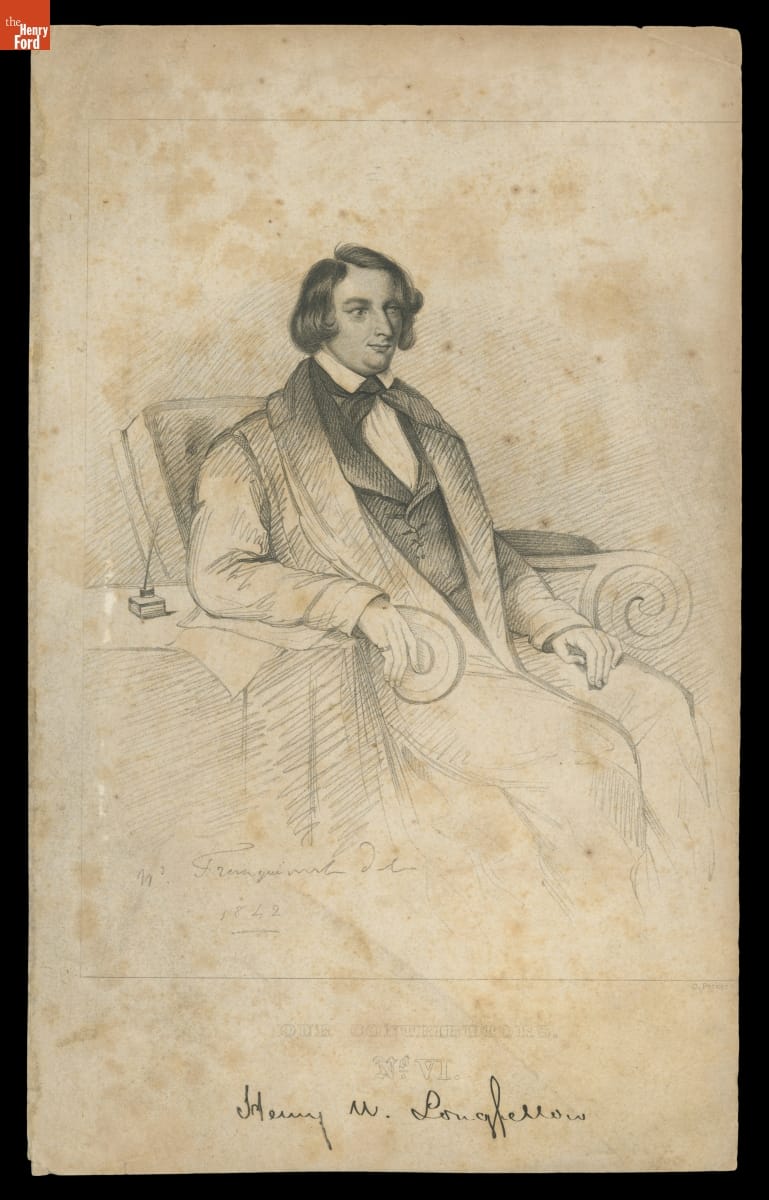
- Henry Wadsworth Longfellow Seated in Chair, 1825-1835 - Henry Wadsworth Longfellow (1807-1882) was the most beloved American poet of the 19th century. Longfellow's poems appealed to mid-19th-century Americans from all classes. Many of his poems centered around American themes and topics--though he often took poetic license to depart from the facts to create an effect. Years after Longfellow's death, his poetry--recited at civic celebrations and studied in school rooms--continued to inspire.
- 1825-1835
- Collections - Artifact
Henry Wadsworth Longfellow Seated in Chair, 1825-1835
Henry Wadsworth Longfellow (1807-1882) was the most beloved American poet of the 19th century. Longfellow's poems appealed to mid-19th-century Americans from all classes. Many of his poems centered around American themes and topics--though he often took poetic license to depart from the facts to create an effect. Years after Longfellow's death, his poetry--recited at civic celebrations and studied in school rooms--continued to inspire.
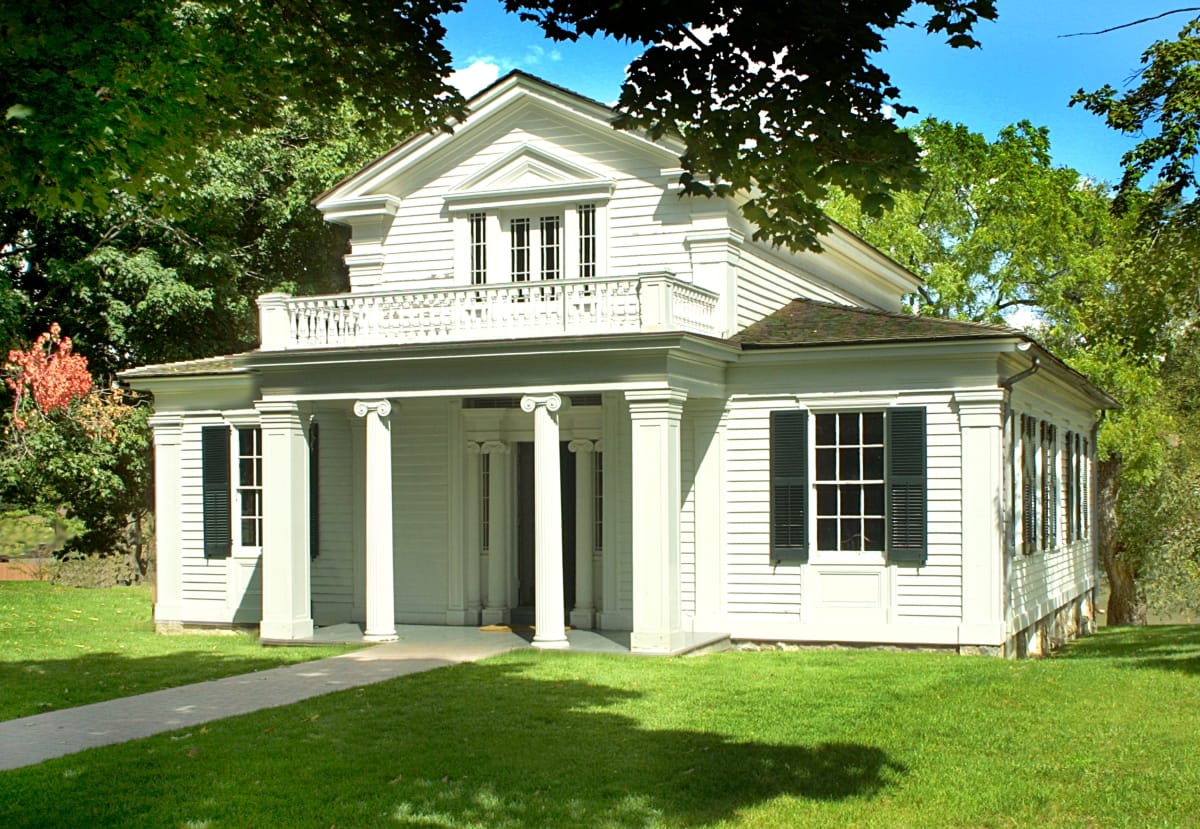
- Robert Frost Home - Robert Frost, one of America's greatest poets, had an extraordinary ability to put complex and deeply insightful ideas into everyday language. In the mid-1920s, Frost lived in this house while he was the University of Michigan's first poet-in-residence. Here, located away from the bustle of the Ann Arbor campus, his creative spirit and imagination soared as he wrote poetry and met with students.
- circa 1840
- Collections - Artifact
Robert Frost Home
Robert Frost, one of America's greatest poets, had an extraordinary ability to put complex and deeply insightful ideas into everyday language. In the mid-1920s, Frost lived in this house while he was the University of Michigan's first poet-in-residence. Here, located away from the bustle of the Ann Arbor campus, his creative spirit and imagination soared as he wrote poetry and met with students.
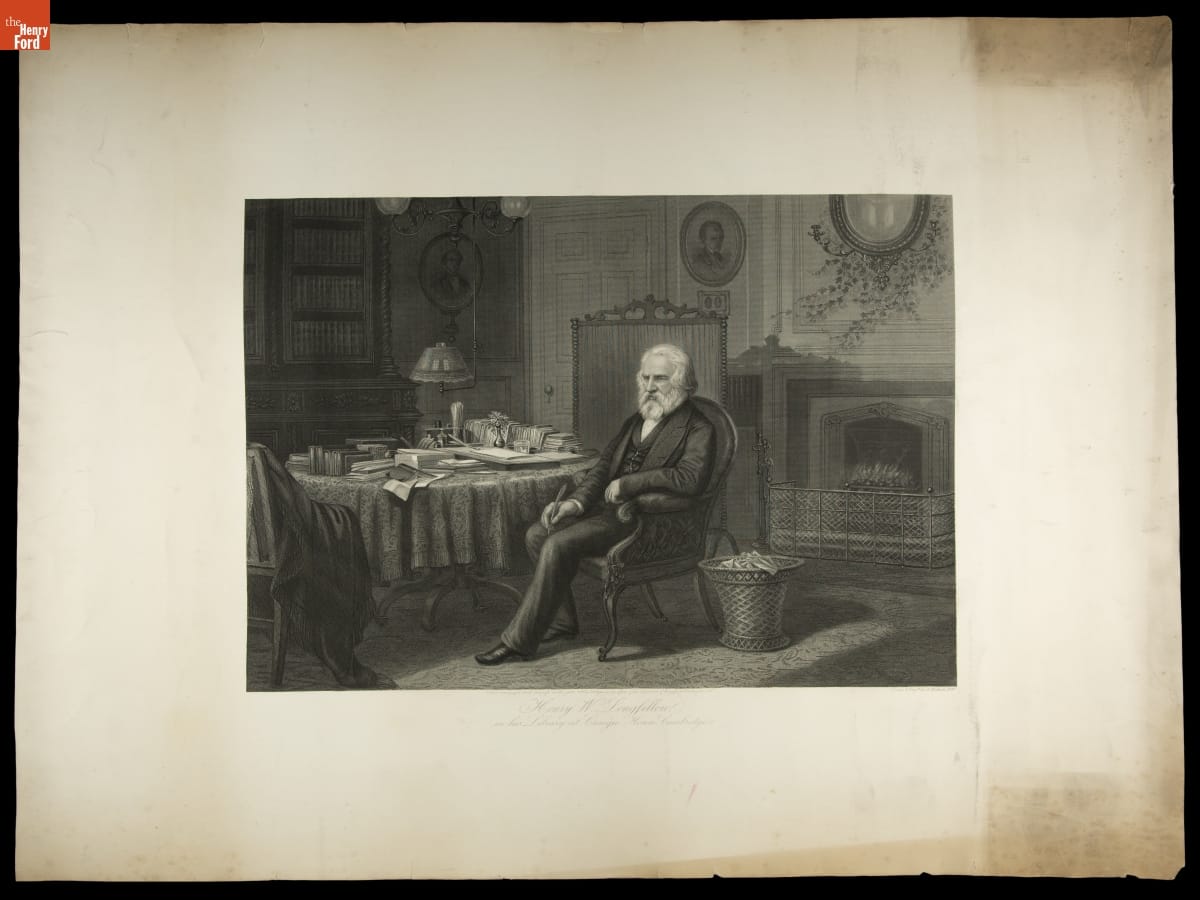
- Engraving, "Henry W. Longfellow in His Library at Craigie House, Cambridge," 1882 - Henry Wadsworth Longfellow (1807-1882) was the most beloved American poet of the 19th century. Longfellow's poems appealed to mid-19th-century Americans from all classes. Many of his poems centered around American themes and topics--though he often took poetic license to depart from the facts to create an effect. Years after Longfellow's death, his poetry--recited at civic celebrations and studied in school rooms--continued to inspire.
- 1882
- Collections - Artifact
Engraving, "Henry W. Longfellow in His Library at Craigie House, Cambridge," 1882
Henry Wadsworth Longfellow (1807-1882) was the most beloved American poet of the 19th century. Longfellow's poems appealed to mid-19th-century Americans from all classes. Many of his poems centered around American themes and topics--though he often took poetic license to depart from the facts to create an effect. Years after Longfellow's death, his poetry--recited at civic celebrations and studied in school rooms--continued to inspire.
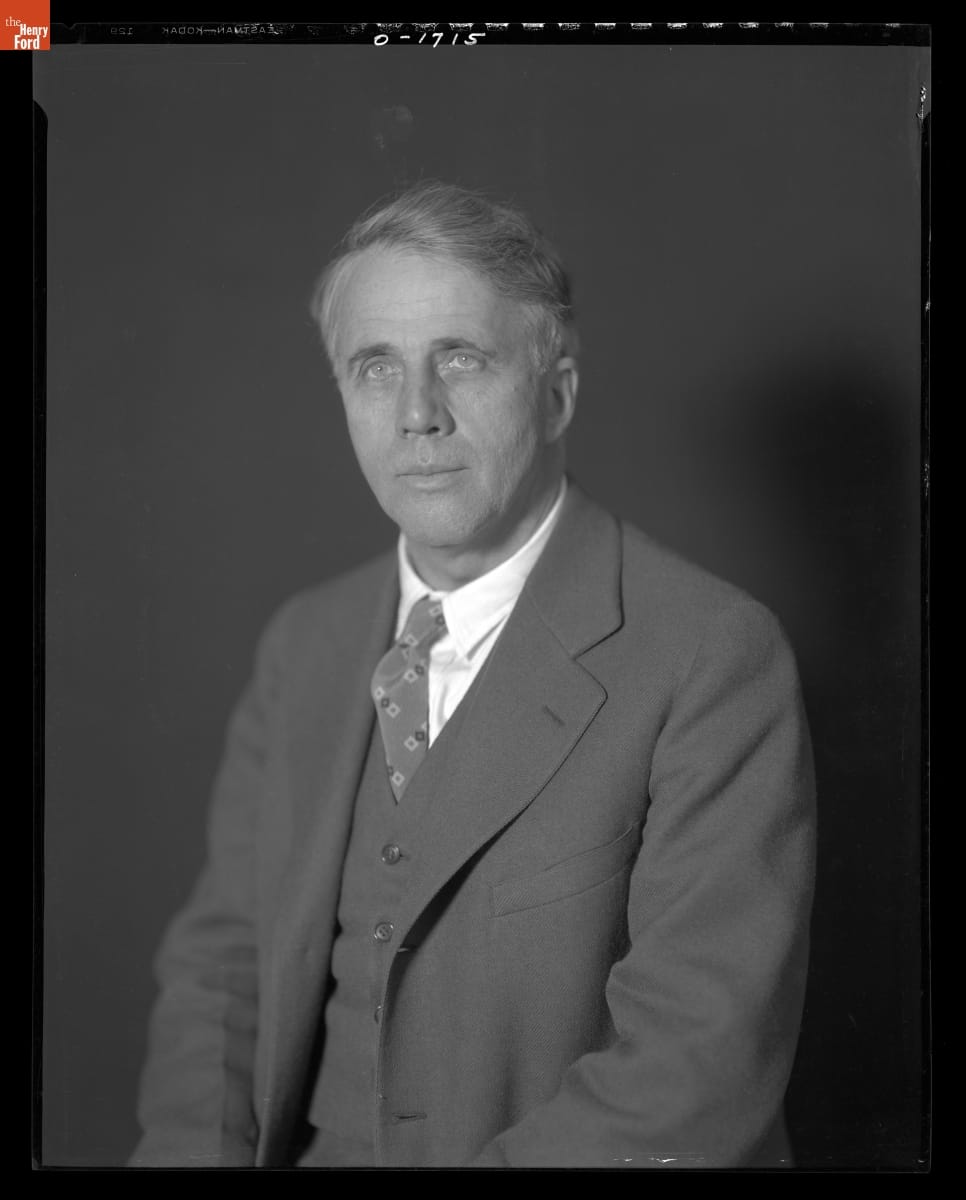
- Portrait of Robert Frost, 1927 - Robert Frost modernized American poetry for the 20th century, becoming one of its greatest exponents. He invoked stirring imagery of rural New England life to examine complex philosophical themes and had an extraordinary ability to express deeply insightful ideas in everyday language. Frost won four Pulitzer Prizes for his work and spoke at President John F. Kennedy’s 1961 inauguration.
- April 12, 1927
- Collections - Artifact
Portrait of Robert Frost, 1927
Robert Frost modernized American poetry for the 20th century, becoming one of its greatest exponents. He invoked stirring imagery of rural New England life to examine complex philosophical themes and had an extraordinary ability to express deeply insightful ideas in everyday language. Frost won four Pulitzer Prizes for his work and spoke at President John F. Kennedy’s 1961 inauguration.
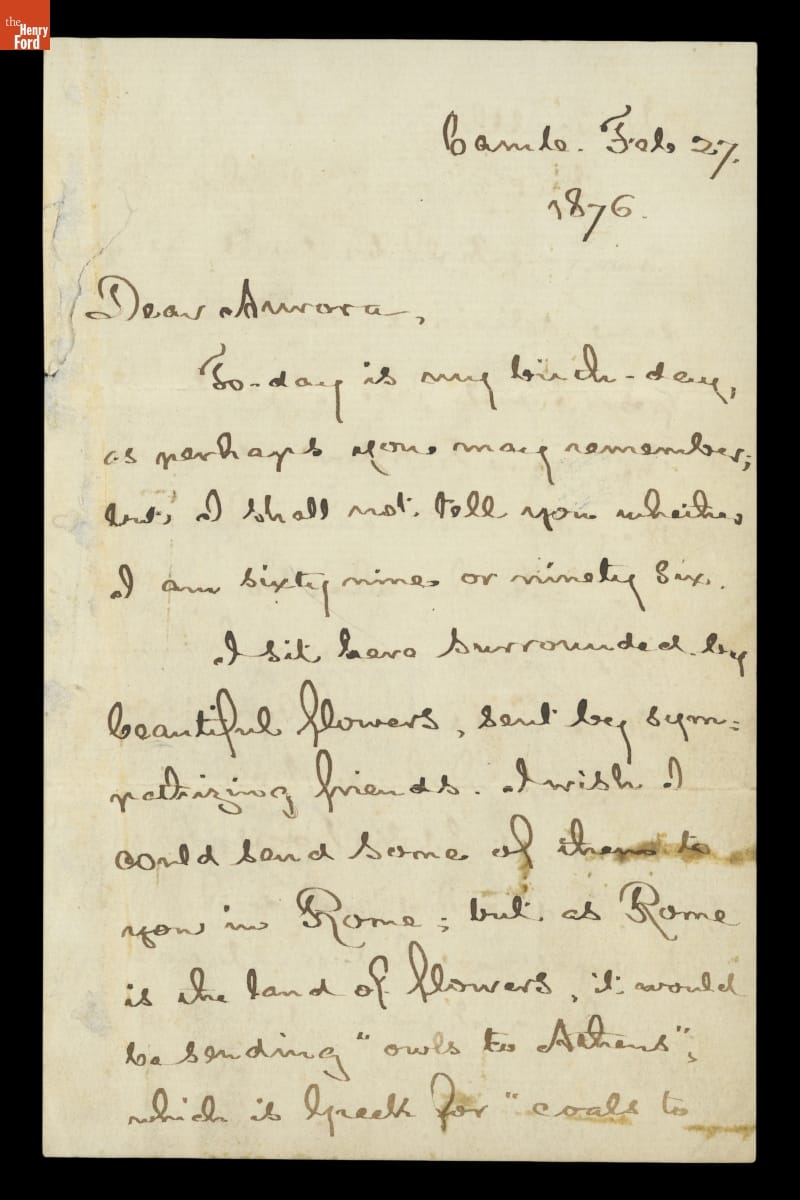
- Letter from Henry Wadsworth Longfellow, February 27, 1876 -
- February 27, 1876
- Collections - Artifact
Letter from Henry Wadsworth Longfellow, February 27, 1876
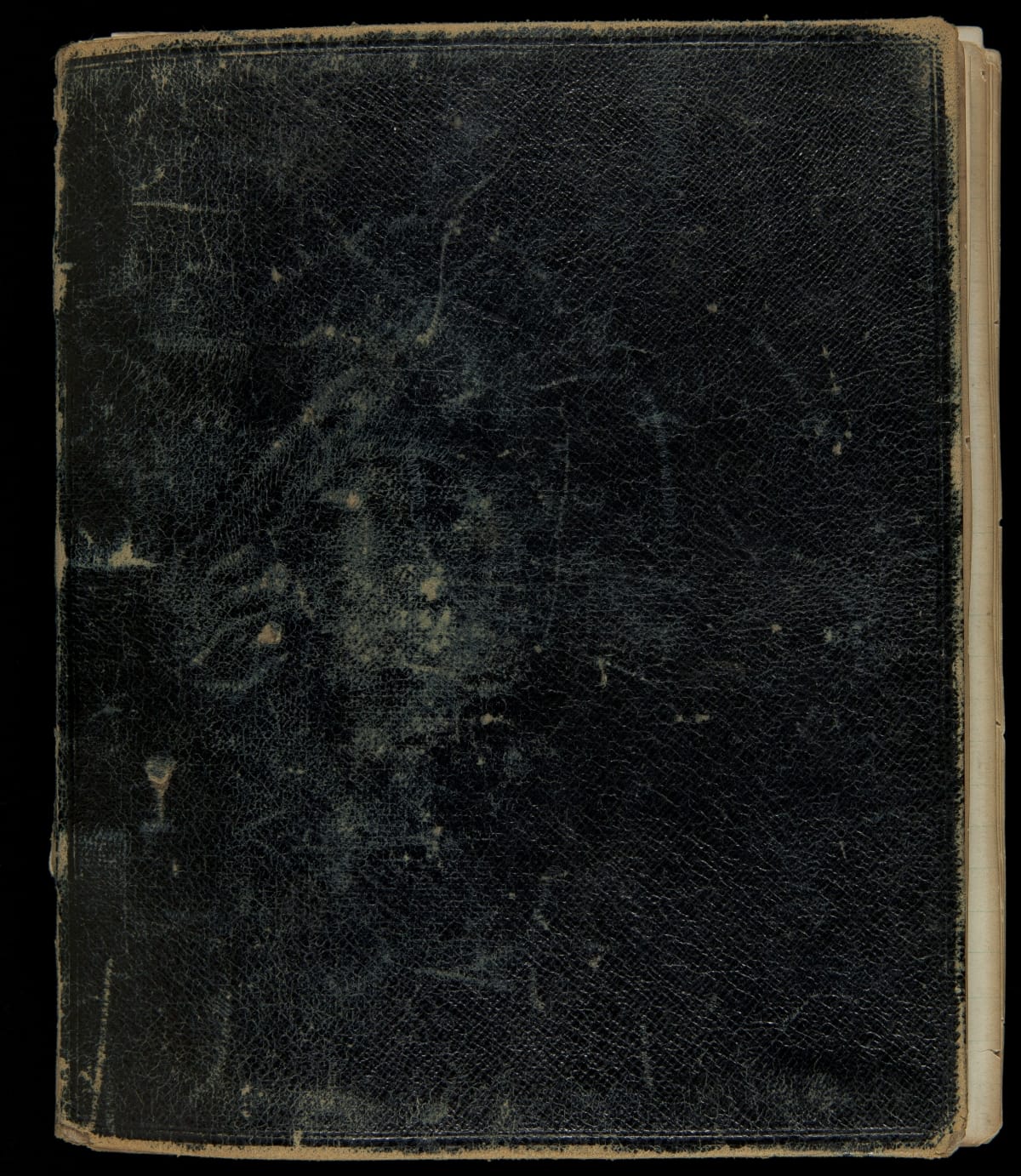
- Ada Dewey Autograph Album, 1874-1875 - In 1874, Ada Dewey of Kalamazoo, Michigan, wrote to famous individuals of the day asking for their autographs. She contacted writers, artists, politicians, military officers, and advocates for social movements such as abolition, temperance, and women's and civil rights, among others. Dewey compiled their replies, some of which include carte de visite photographs, in the pages of this album.
- 1874-1875
- Collections - Artifact
Ada Dewey Autograph Album, 1874-1875
In 1874, Ada Dewey of Kalamazoo, Michigan, wrote to famous individuals of the day asking for their autographs. She contacted writers, artists, politicians, military officers, and advocates for social movements such as abolition, temperance, and women's and civil rights, among others. Dewey compiled their replies, some of which include carte de visite photographs, in the pages of this album.
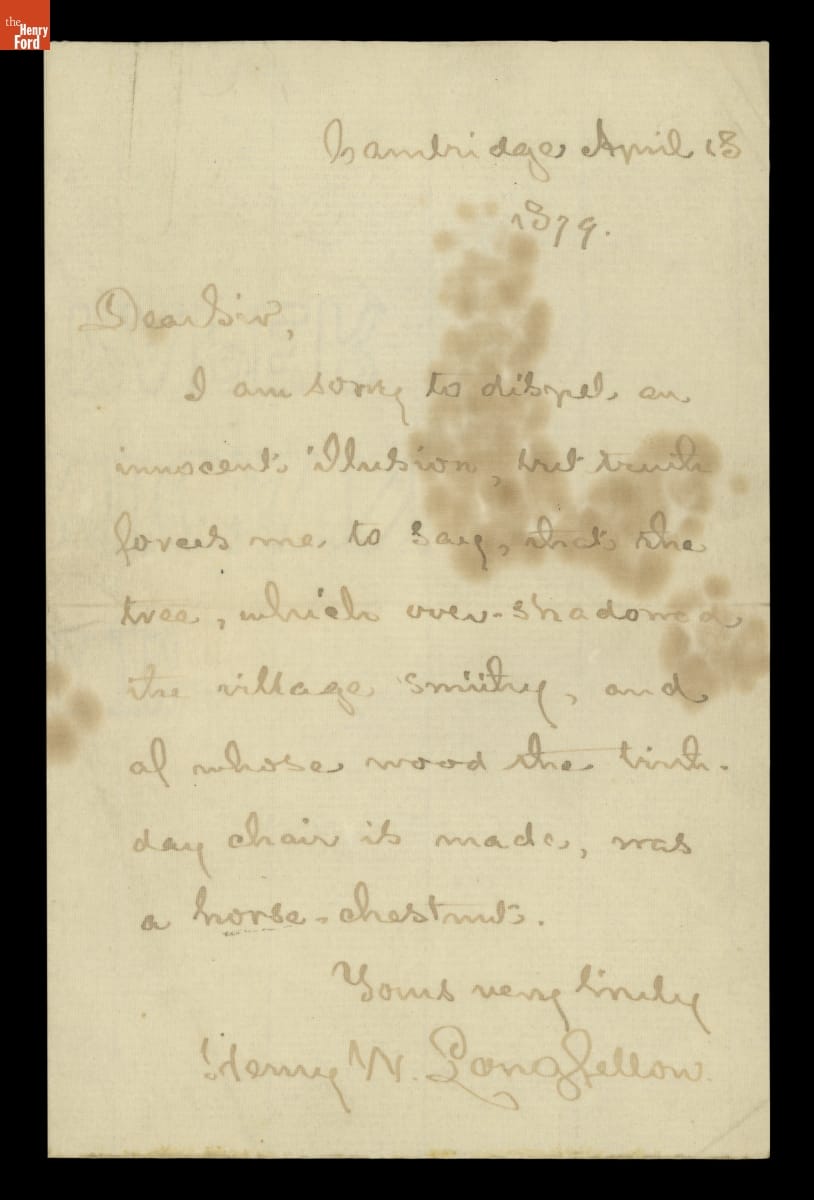
- Letter from Henry Wadsworth Longfellow, April 18, 1879 - Henry Wadsworth Longfellow (1807-1882) was the most beloved American poet of the 19th century. His poems appealed to mid-19th-century Americans from all classes, and he made every effort to make his works available. One admirer had written to ask him about the tree mentioned in his poem "The Village Blacksmith." Longfellow replied that the tree was a horse chestnut.
- April 18, 1879
- Collections - Artifact
Letter from Henry Wadsworth Longfellow, April 18, 1879
Henry Wadsworth Longfellow (1807-1882) was the most beloved American poet of the 19th century. His poems appealed to mid-19th-century Americans from all classes, and he made every effort to make his works available. One admirer had written to ask him about the tree mentioned in his poem "The Village Blacksmith." Longfellow replied that the tree was a horse chestnut.
- Robert Frost Home at Its Original Site, Ann Arbor, Michigan, circa 1923 -
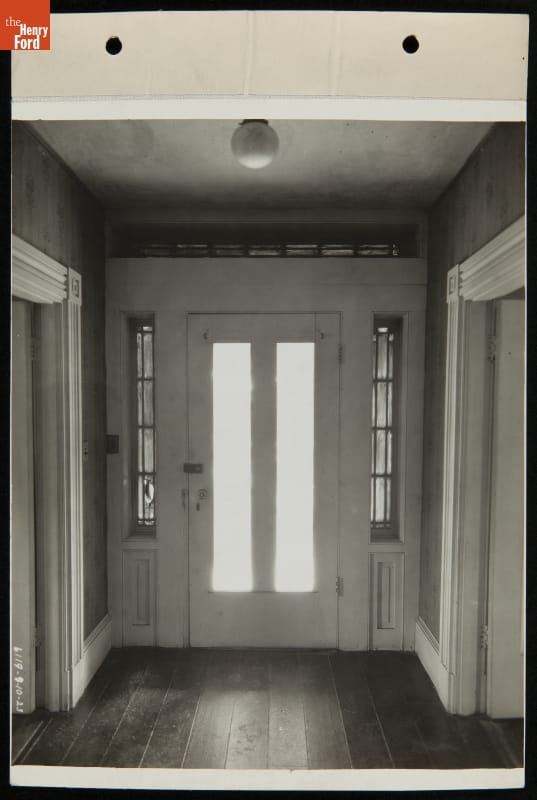
- September 10, 1923
- Collections - Artifact
Robert Frost Home at Its Original Site, Ann Arbor, Michigan, circa 1923
- Henry Wadsworth Longfellow Manuscript, "Stay at Home," 1878 - Henry Wadsworth Longfellow (1807-1882) was the most beloved American poet of the 19th century. His poems appealed to mid-19th-century Americans from all classes. Many of Longfellow's admirers wrote to him or came to his home in Cambridge, Massachusetts, to ask for his autograph. Longfellow--not wanting to disappoint--made every effort to grant those requests, even having a ready supply on hand to distribute.
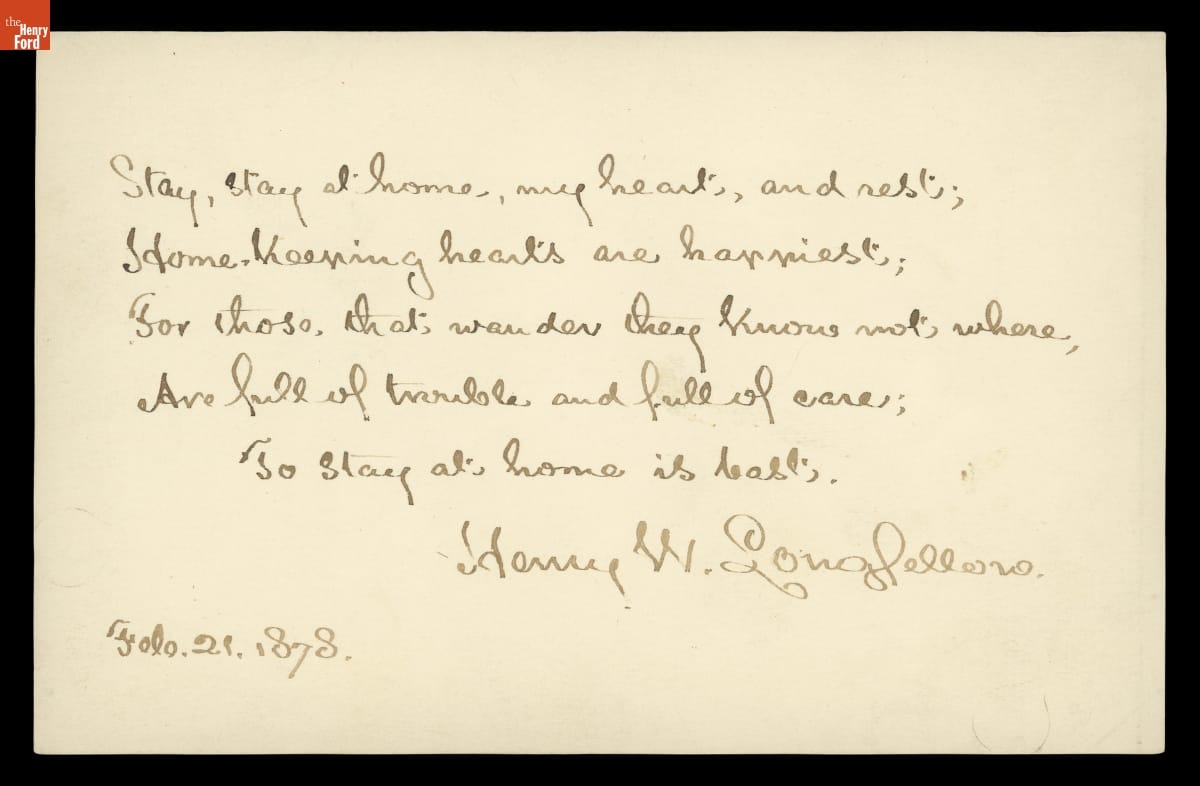
- February 21, 1878
- Collections - Artifact
Henry Wadsworth Longfellow Manuscript, "Stay at Home," 1878
Henry Wadsworth Longfellow (1807-1882) was the most beloved American poet of the 19th century. His poems appealed to mid-19th-century Americans from all classes. Many of Longfellow's admirers wrote to him or came to his home in Cambridge, Massachusetts, to ask for his autograph. Longfellow--not wanting to disappoint--made every effort to grant those requests, even having a ready supply on hand to distribute.