
Search
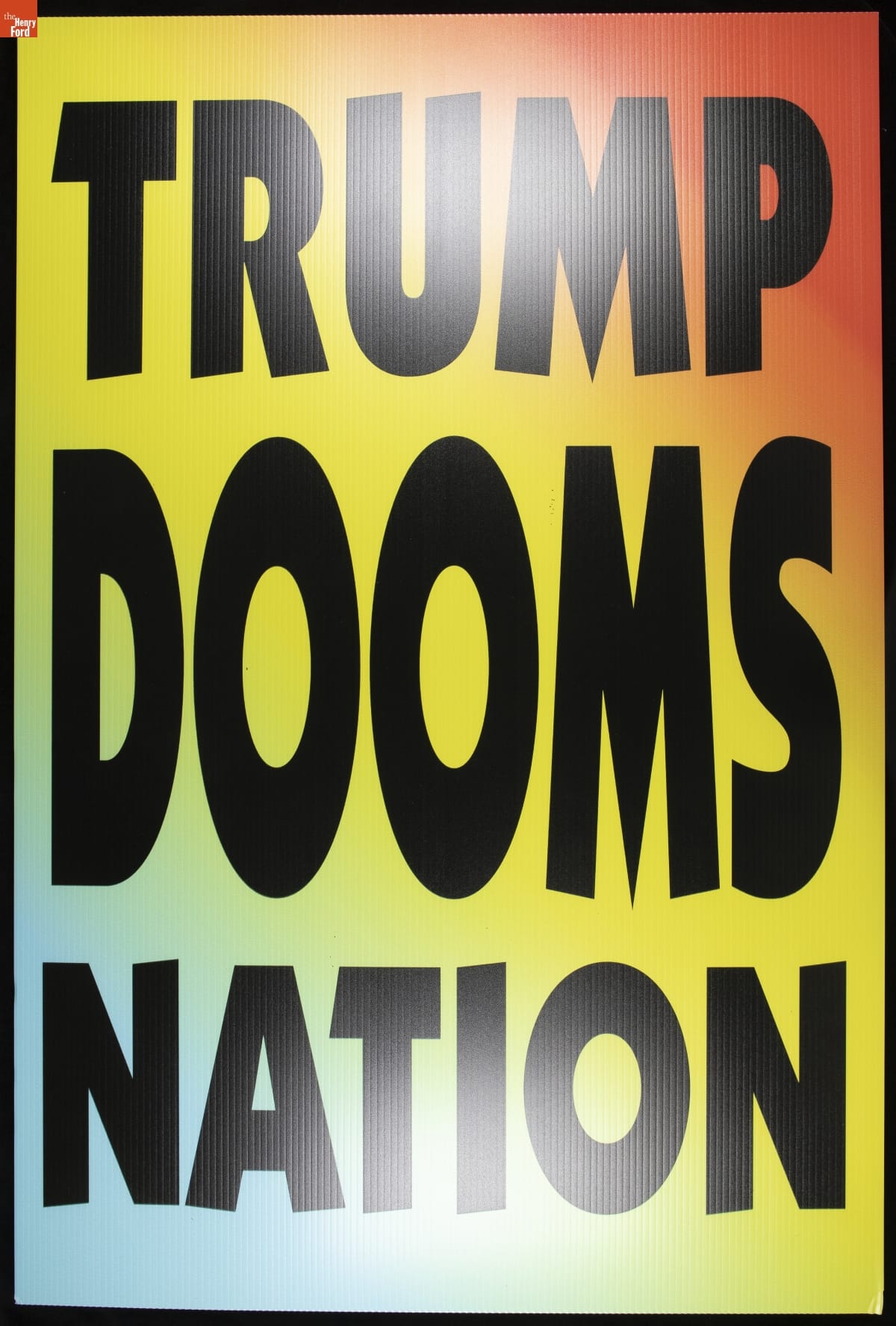
- "Trump Dooms Nation" Poster, 2017-2020 - Paul Chan blends art with political activism through multimedia work, performances, and sculpture. This protest sign is part of his "New Proverbs" series, whose aesthetics are inspired by the infamous Westboro Baptist Church posters. Chan's signs premiered at the Washington and NYC Women's Marches in 2017 and continued to be a presence at protests throughout the Trump presidency.
- 2017-2020
- Collections - Artifact
"Trump Dooms Nation" Poster, 2017-2020
Paul Chan blends art with political activism through multimedia work, performances, and sculpture. This protest sign is part of his "New Proverbs" series, whose aesthetics are inspired by the infamous Westboro Baptist Church posters. Chan's signs premiered at the Washington and NYC Women's Marches in 2017 and continued to be a presence at protests throughout the Trump presidency.
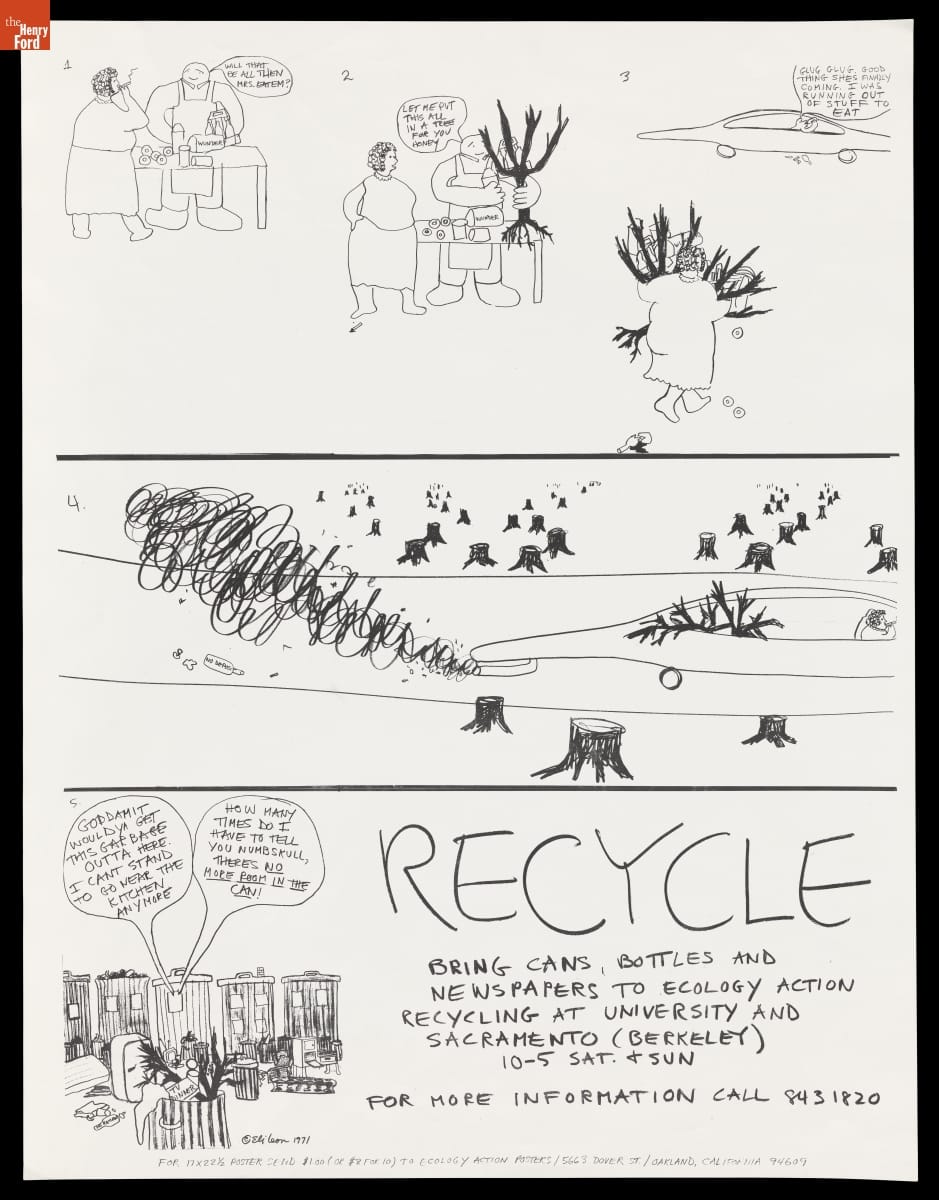
- Poster by Eli Leon for Ecology Action, "Recycle," 1971 - Recycling emerged as a natural outgrowth of Earth Day activities, but mobilizing recycling programs required proactive measures. Environmentalists used various print media to encourage action. In this poster, Eli Leon alerted Berkeley, California, residents to the profound positive effect recycling used bottles and cans at pre-determined locations could have on the environment.
- 1971
- Collections - Artifact
Poster by Eli Leon for Ecology Action, "Recycle," 1971
Recycling emerged as a natural outgrowth of Earth Day activities, but mobilizing recycling programs required proactive measures. Environmentalists used various print media to encourage action. In this poster, Eli Leon alerted Berkeley, California, residents to the profound positive effect recycling used bottles and cans at pre-determined locations could have on the environment.
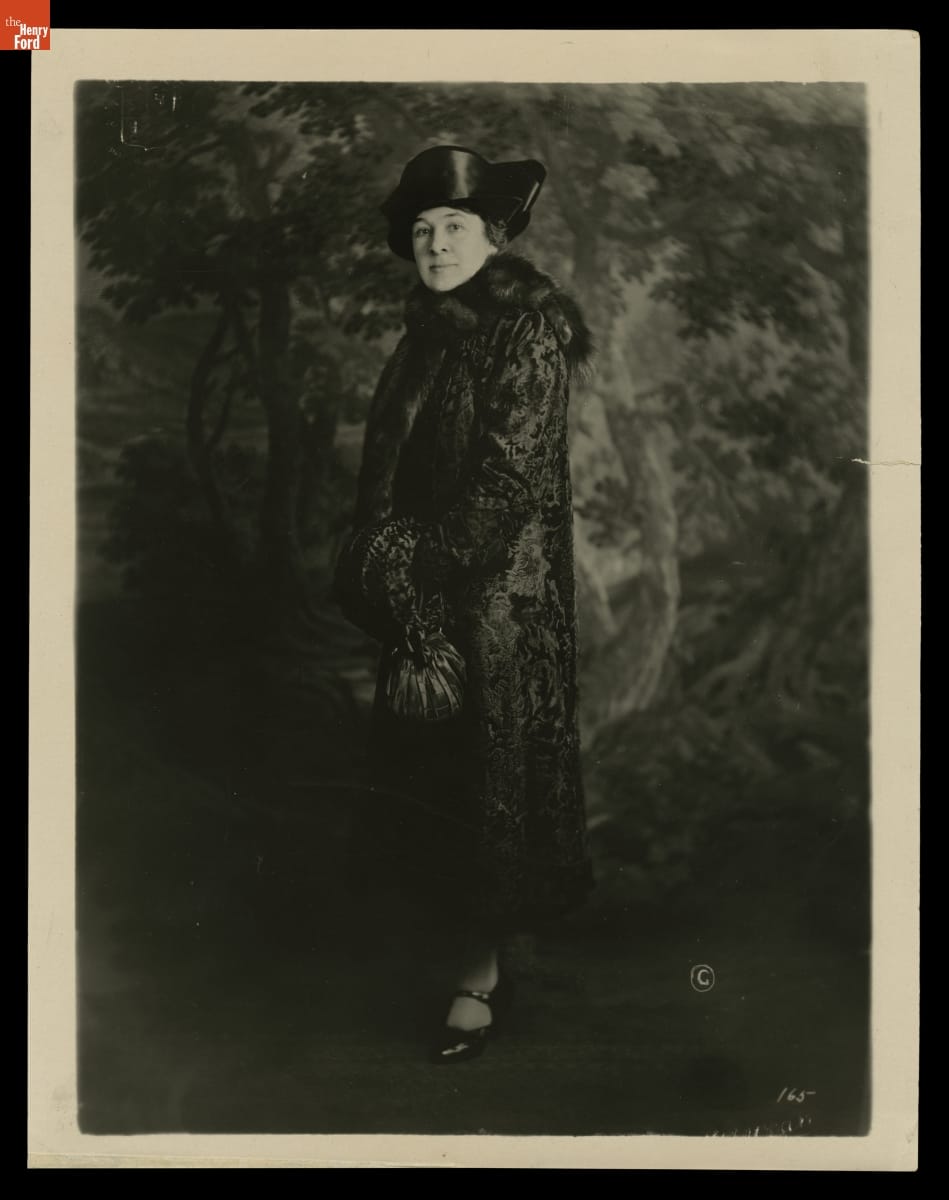
- Portrait of Clara Ford, October 1928 - For Clara Ford, one of the highlights of 1928 was the trip she and her husband, Henry, took to the United Kingdom that spring. While there, the couple toured Warwick, England, which had been home to some of Clara's ancestors. The Fords met numerous dignitaries while in Britain, including King George and Queen Mary, and Edward, the Prince of Wales.
- October 01, 1928
- Collections - Artifact
Portrait of Clara Ford, October 1928
For Clara Ford, one of the highlights of 1928 was the trip she and her husband, Henry, took to the United Kingdom that spring. While there, the couple toured Warwick, England, which had been home to some of Clara's ancestors. The Fords met numerous dignitaries while in Britain, including King George and Queen Mary, and Edward, the Prince of Wales.
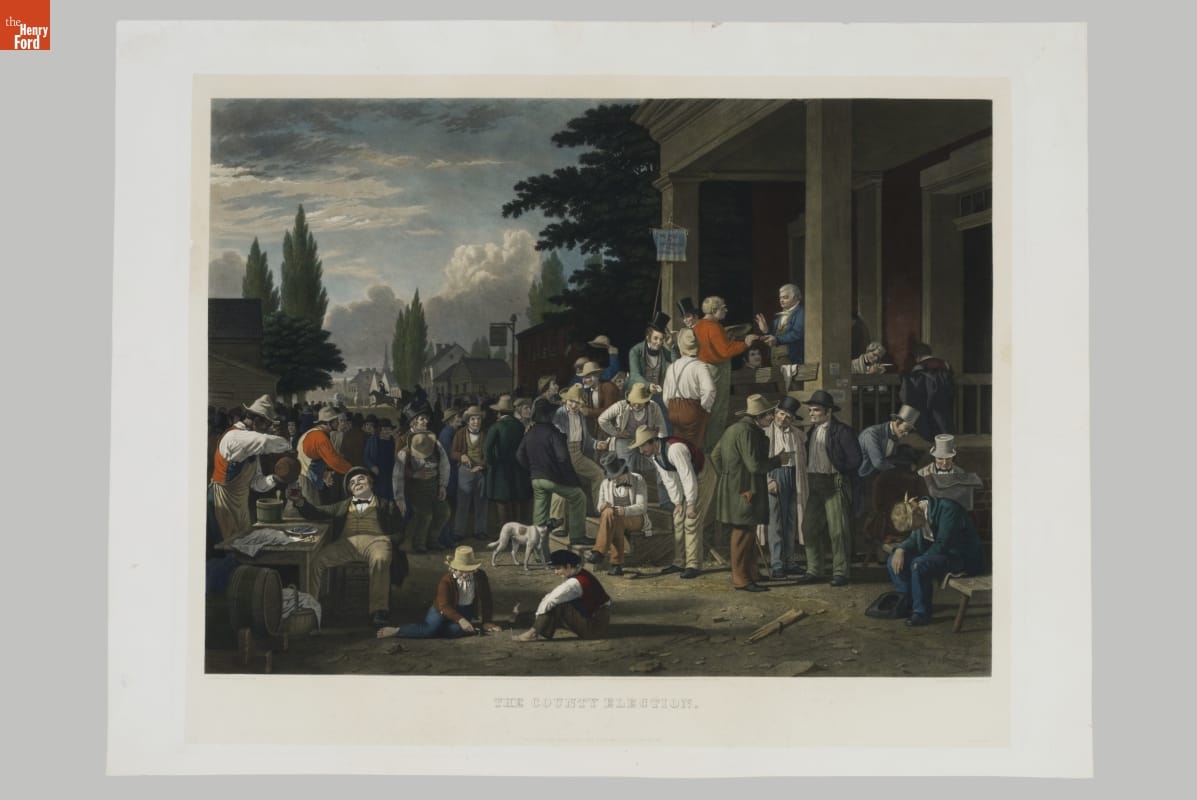
- "The County Election," 1854 - Reforms in most states expanded the American electorate in the mid-nineteenth century. By 1840, nearly 80 percent of adult white males headed eagerly to the polls. Election day could be an unruly affair, with candidates and campaigners soliciting support at polling locations. Votes were often cast by voice or paper ballot and recorded -- in public -- by local officials.
- 1850-1854
- Collections - Artifact
"The County Election," 1854
Reforms in most states expanded the American electorate in the mid-nineteenth century. By 1840, nearly 80 percent of adult white males headed eagerly to the polls. Election day could be an unruly affair, with candidates and campaigners soliciting support at polling locations. Votes were often cast by voice or paper ballot and recorded -- in public -- by local officials.
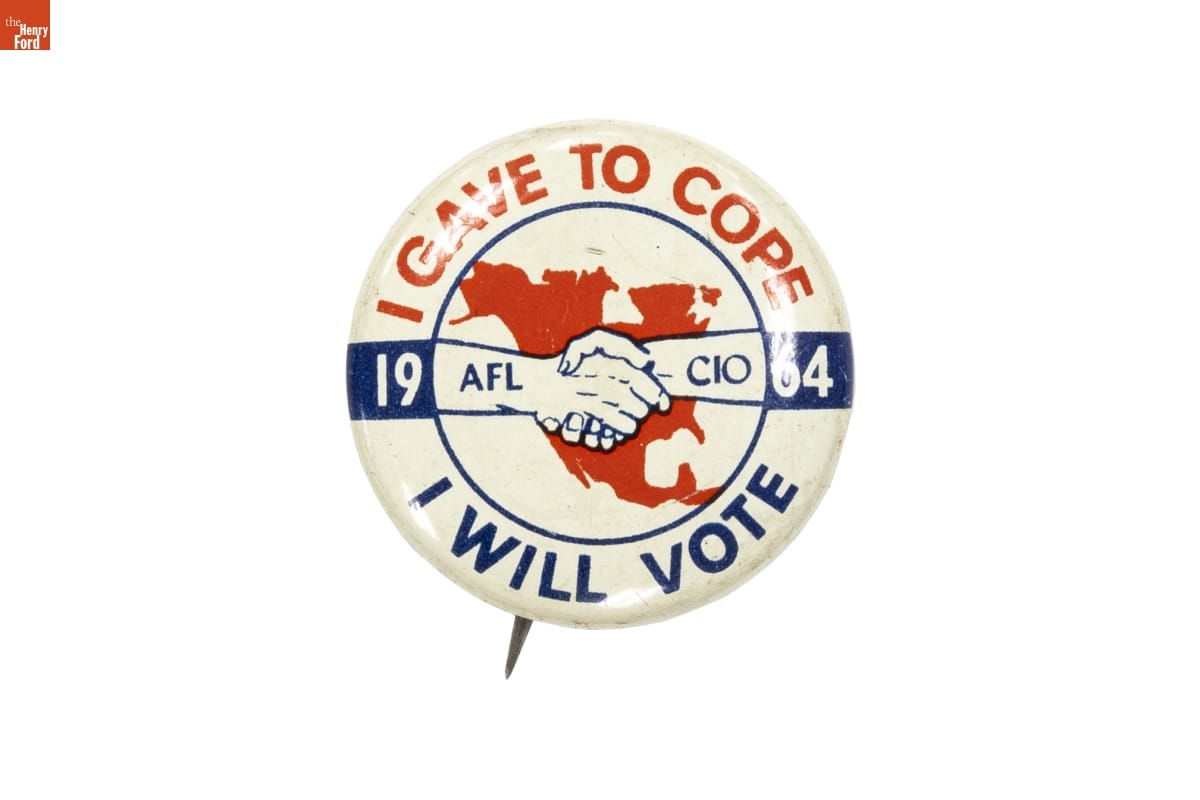
- "I Gave To COPE I Will Vote, AFL-CIO" Button, 1964 -
- 1964
- Collections - Artifact
"I Gave To COPE I Will Vote, AFL-CIO" Button, 1964
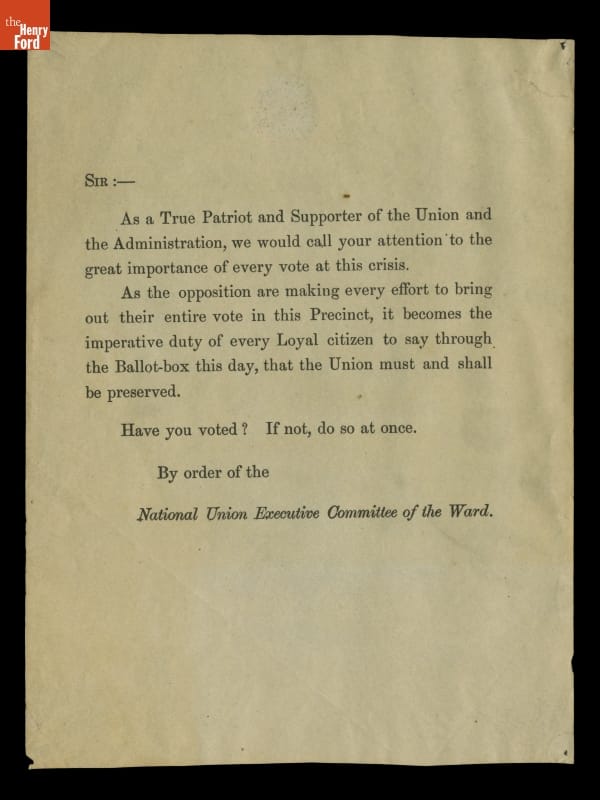
- National Union Party Election Day Handbill, November 8, 1864 - In 1864, incumbent President Lincoln and former Democrat Andrew Johnson ran on the National Union Party ticket--so named to attract War Democrats and Border State Unionists who would not vote Republican. After a gloomy summer of Union defeats and casualty lists, Lincoln's re-election hopes seemed slim. But, finally, several Union victories gave him enough support to win the election.
- November 08, 1864
- Collections - Artifact
National Union Party Election Day Handbill, November 8, 1864
In 1864, incumbent President Lincoln and former Democrat Andrew Johnson ran on the National Union Party ticket--so named to attract War Democrats and Border State Unionists who would not vote Republican. After a gloomy summer of Union defeats and casualty lists, Lincoln's re-election hopes seemed slim. But, finally, several Union victories gave him enough support to win the election.
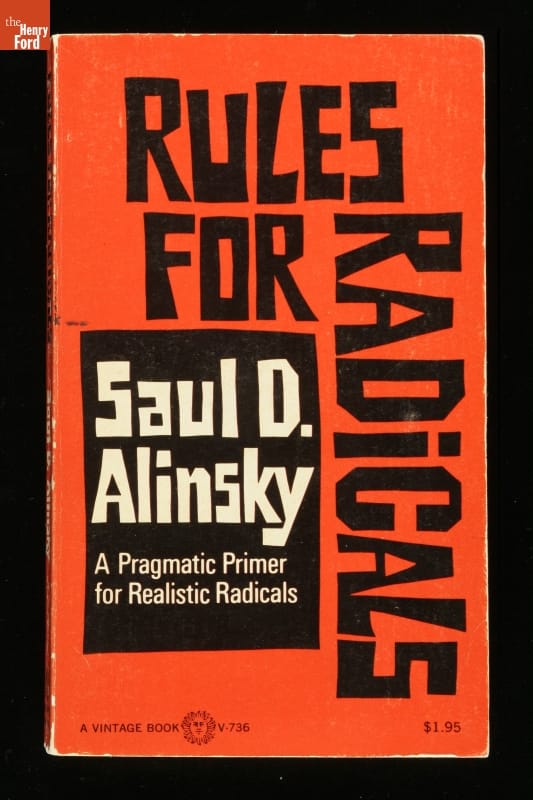
- Book, "Rules for Radicals," 1972 - <EM>Rules for Radicals</EM>, written by Saul Alinsky a community organizer from Chicago, Illinois, instructs local activists on how to agitate for social change. The book became the Bible for community organizers and influenced other groups -- many who would not be considered radical -- on how to mobilize public opinion.
- 1972
- Collections - Artifact
Book, "Rules for Radicals," 1972
Rules for Radicals, written by Saul Alinsky a community organizer from Chicago, Illinois, instructs local activists on how to agitate for social change. The book became the Bible for community organizers and influenced other groups -- many who would not be considered radical -- on how to mobilize public opinion.
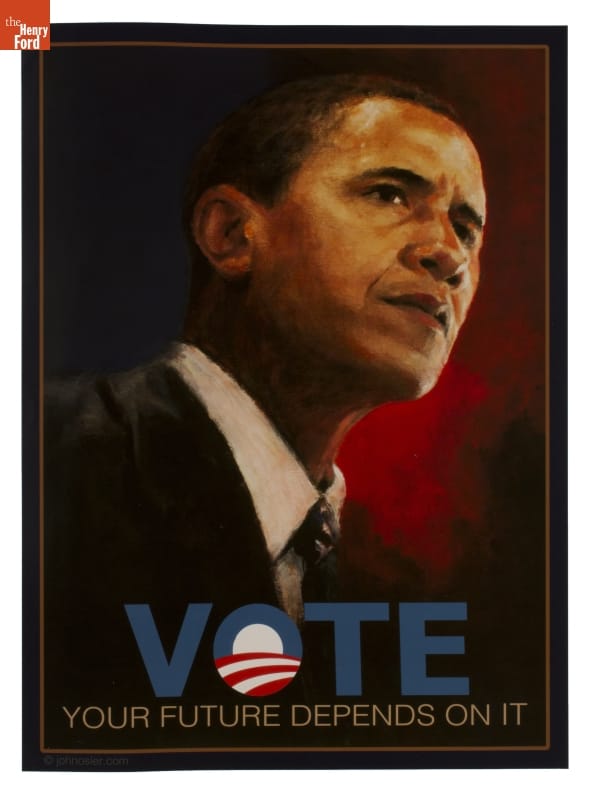
- "Vote. Your Future Depends on It," 2012 - Every election cycle, The Henry Ford collects objects that represent the candidates, the central issues debated, and any major events. Traditionally, this has meant collecting things like lawn signs, buttons, and bumper stickers. In recent years it has also included t-shirts, flags, and objects that incorporate online culture. This collecting encompasses a wide range of viewpoints.
- 2012
- Collections - Artifact
"Vote. Your Future Depends on It," 2012
Every election cycle, The Henry Ford collects objects that represent the candidates, the central issues debated, and any major events. Traditionally, this has meant collecting things like lawn signs, buttons, and bumper stickers. In recent years it has also included t-shirts, flags, and objects that incorporate online culture. This collecting encompasses a wide range of viewpoints.
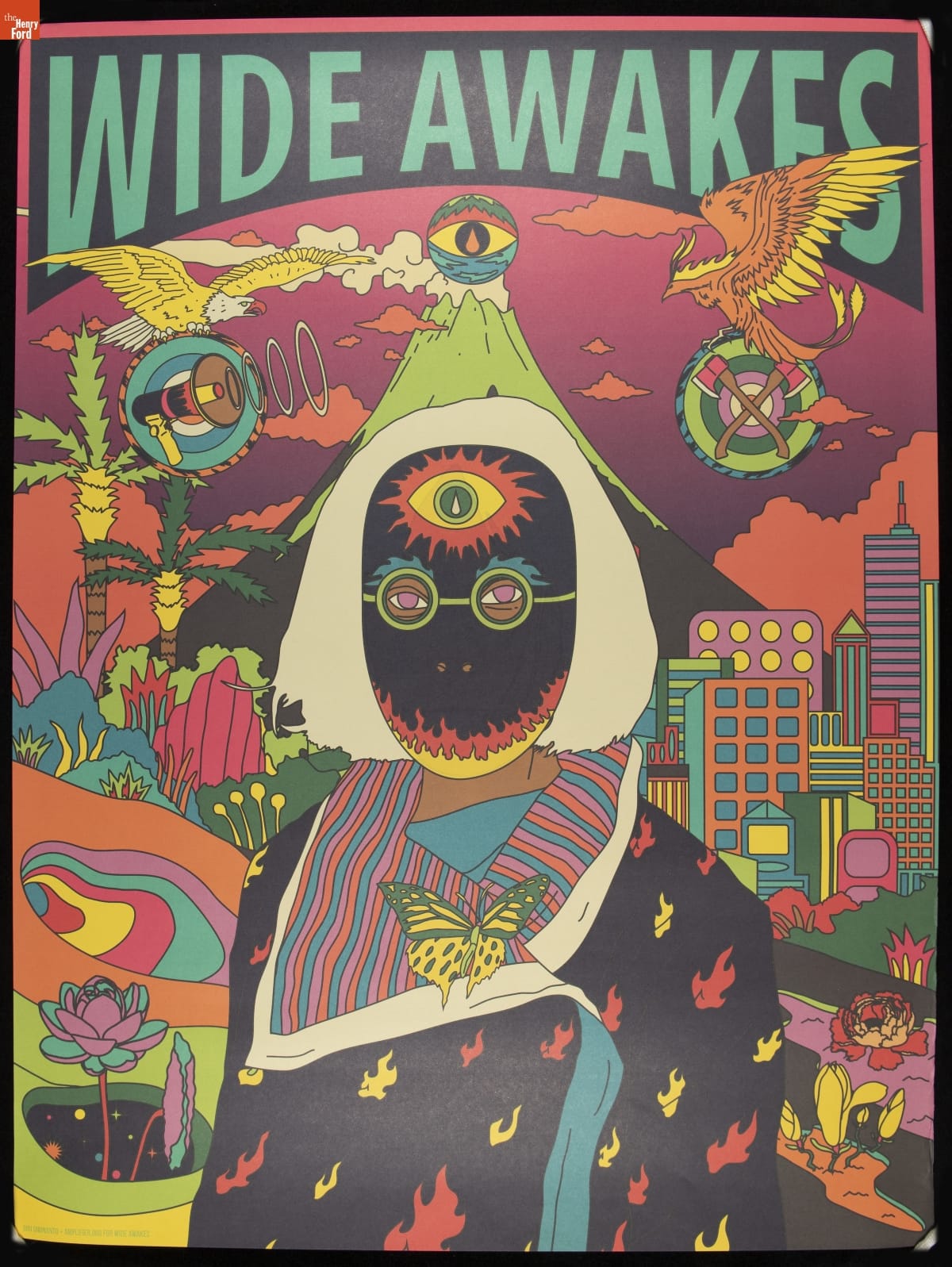
- Wide Awakes Poster, 2020 -
- 2020
- Collections - Artifact
Wide Awakes Poster, 2020
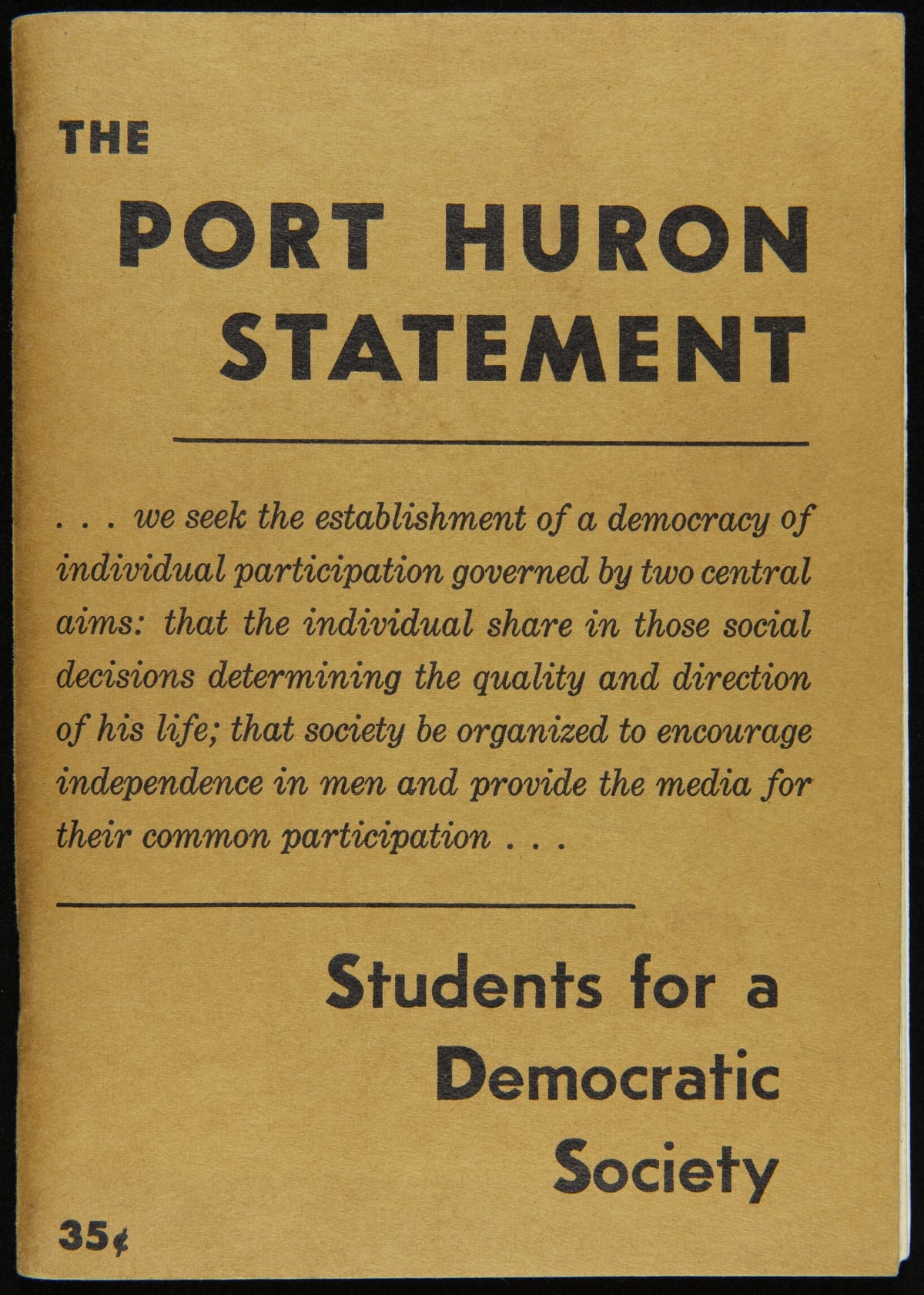
- The Port Huron Statement, 1964 - The Port Huron Statement was created Spring 1962, at a lakeside camp by members of Students for a Democratic Society. Political activist Tom Hayden was its driving force and chief author. The statement reflected the dissatisfaction and disillusionment of many young people. It radicalized many college students toward social and political change, including laying the foundation for anti-Vietnam War protests.
- 1964
- Collections - Artifact
The Port Huron Statement, 1964
The Port Huron Statement was created Spring 1962, at a lakeside camp by members of Students for a Democratic Society. Political activist Tom Hayden was its driving force and chief author. The statement reflected the dissatisfaction and disillusionment of many young people. It radicalized many college students toward social and political change, including laying the foundation for anti-Vietnam War protests.