
Search
- Political Cartoon, "Progressive Democracy, Prospect of a Smash Up," 1860 -
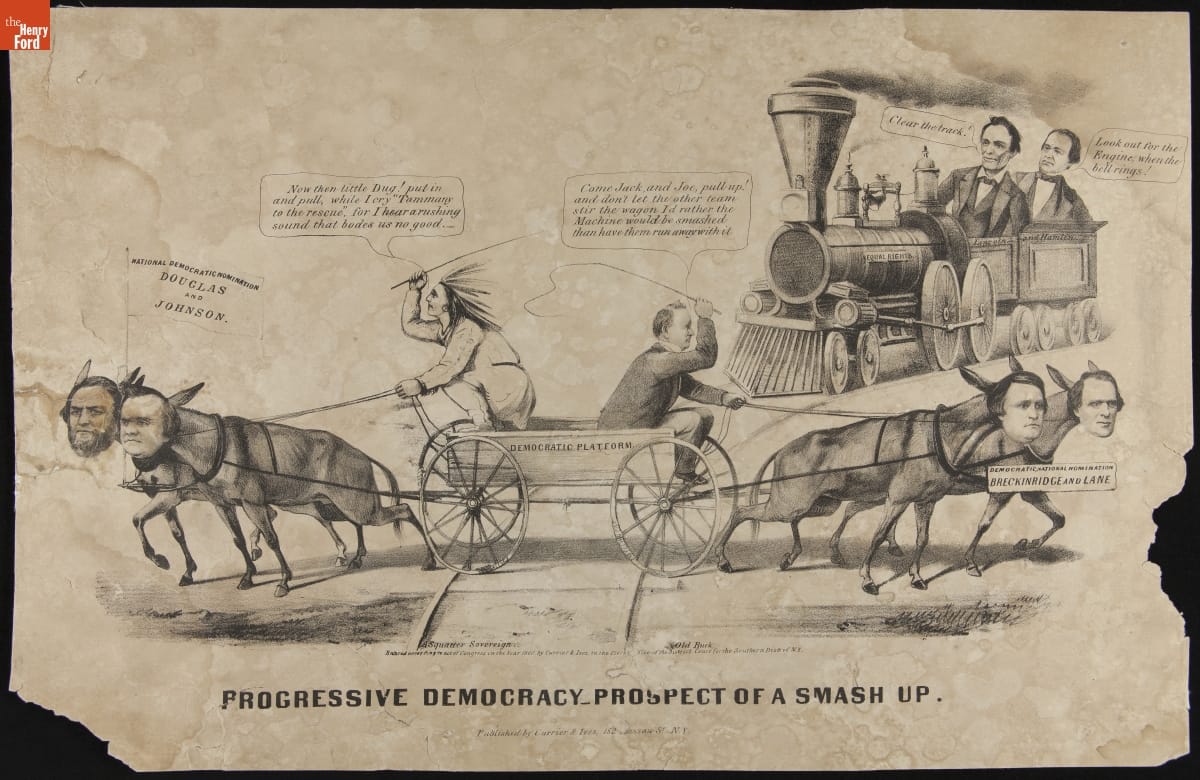
- 1860
- Collections - Artifact
Political Cartoon, "Progressive Democracy, Prospect of a Smash Up," 1860
- Etching Proof, Political Cartoon by Thomas Nast, "Marriage a la Mode," 1871 - Thomas Nast (1840-1902) was an influential illustrator and political cartoonist. His illustrations -- especially those created during his 25-year career working for Harper & Brothers -- impacted American political and social life. Nast's works lampooned governmental officials and attacked corruption. He popularized characters like the Republican elephant and Democratic donkey. But his most enduring legacy is the creation of our modern image of Santa Claus.
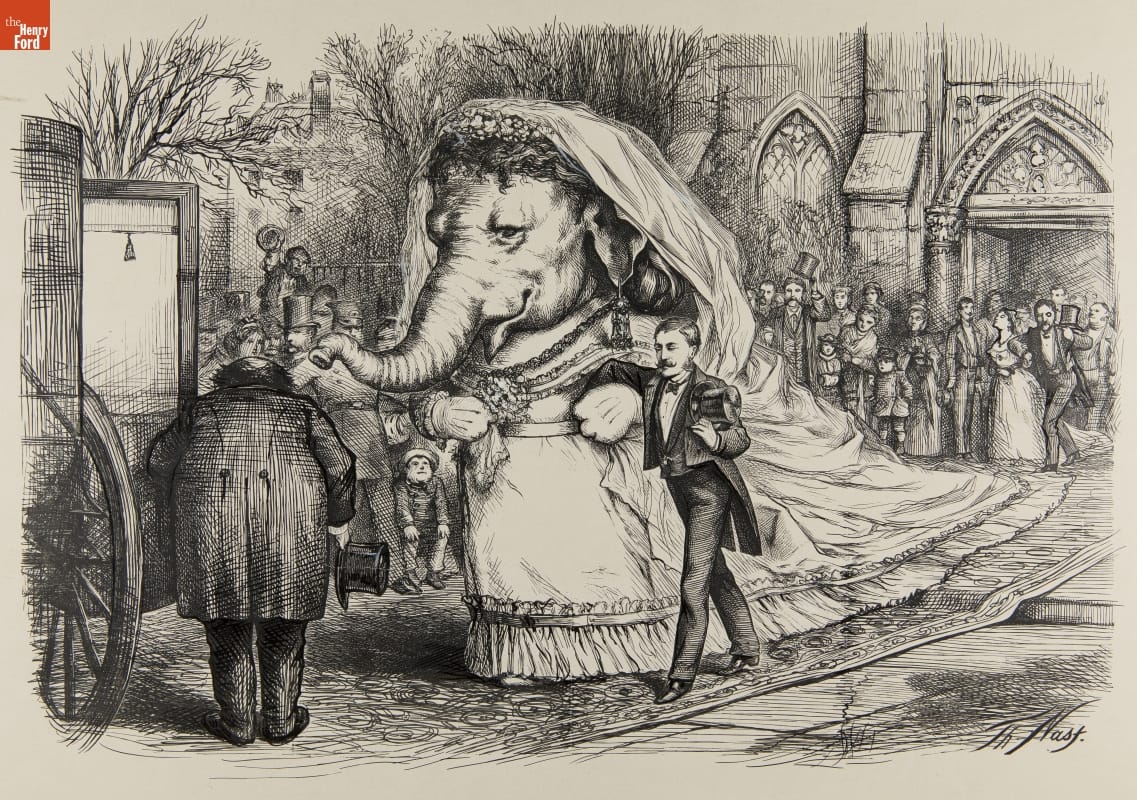
- April 01, 1871
- Collections - Artifact
Etching Proof, Political Cartoon by Thomas Nast, "Marriage a la Mode," 1871
Thomas Nast (1840-1902) was an influential illustrator and political cartoonist. His illustrations -- especially those created during his 25-year career working for Harper & Brothers -- impacted American political and social life. Nast's works lampooned governmental officials and attacked corruption. He popularized characters like the Republican elephant and Democratic donkey. But his most enduring legacy is the creation of our modern image of Santa Claus.
- Button, "spa," 1960-1972 -
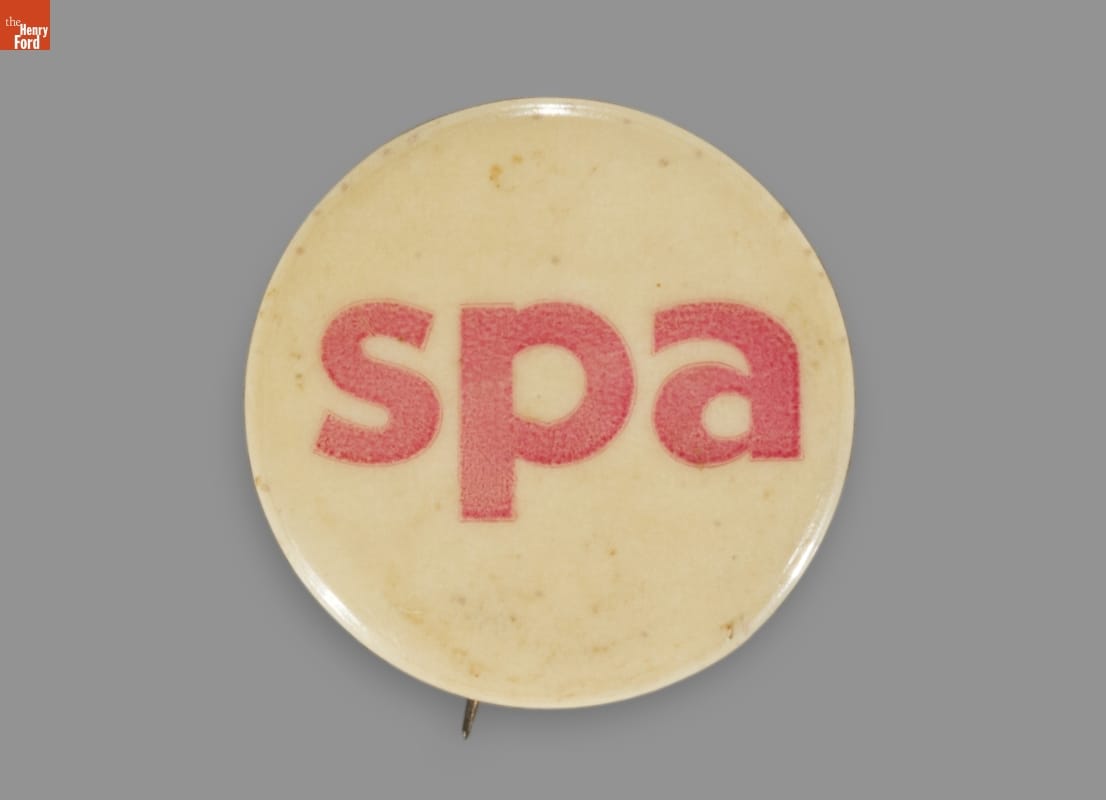
- 1960-1972
- Collections - Artifact
Button, "spa," 1960-1972
- Greenback Labor Party Buttons, 1868-1888 -
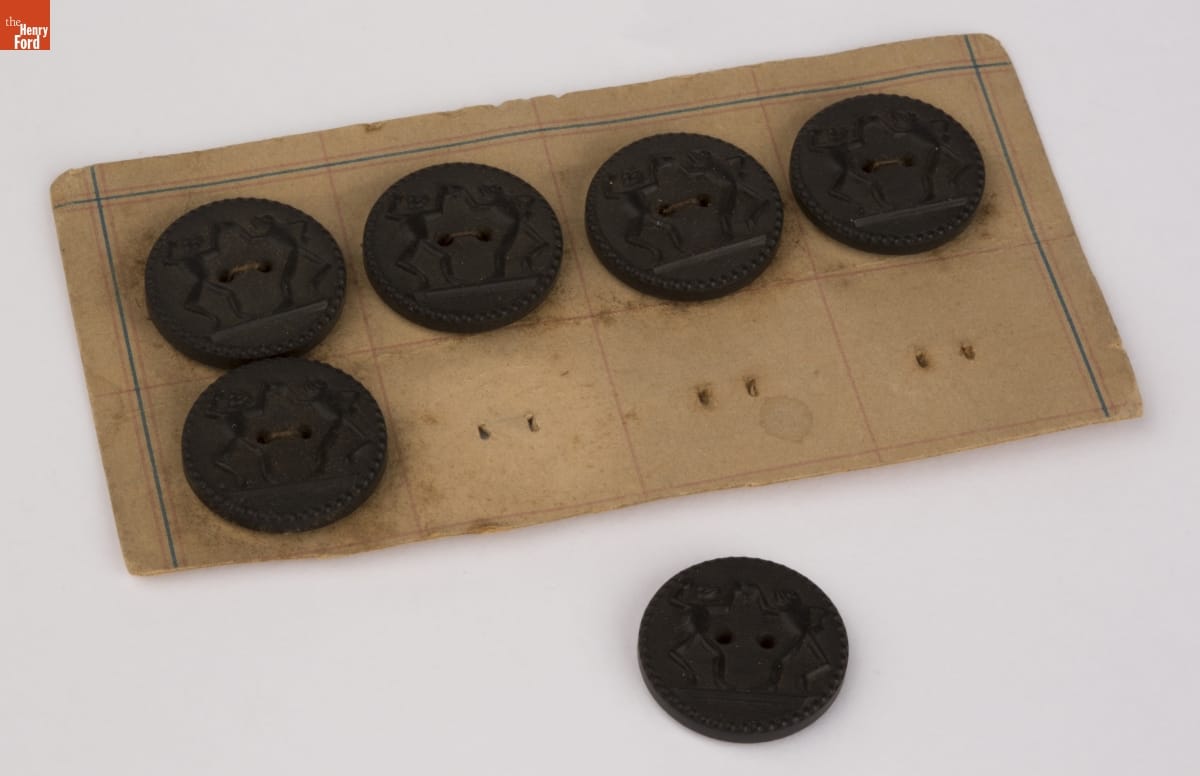
- 1868-1888
- Collections - Artifact
Greenback Labor Party Buttons, 1868-1888
- Political Cartoon, "Uncle Sam Making New Arrangements," 1860 -
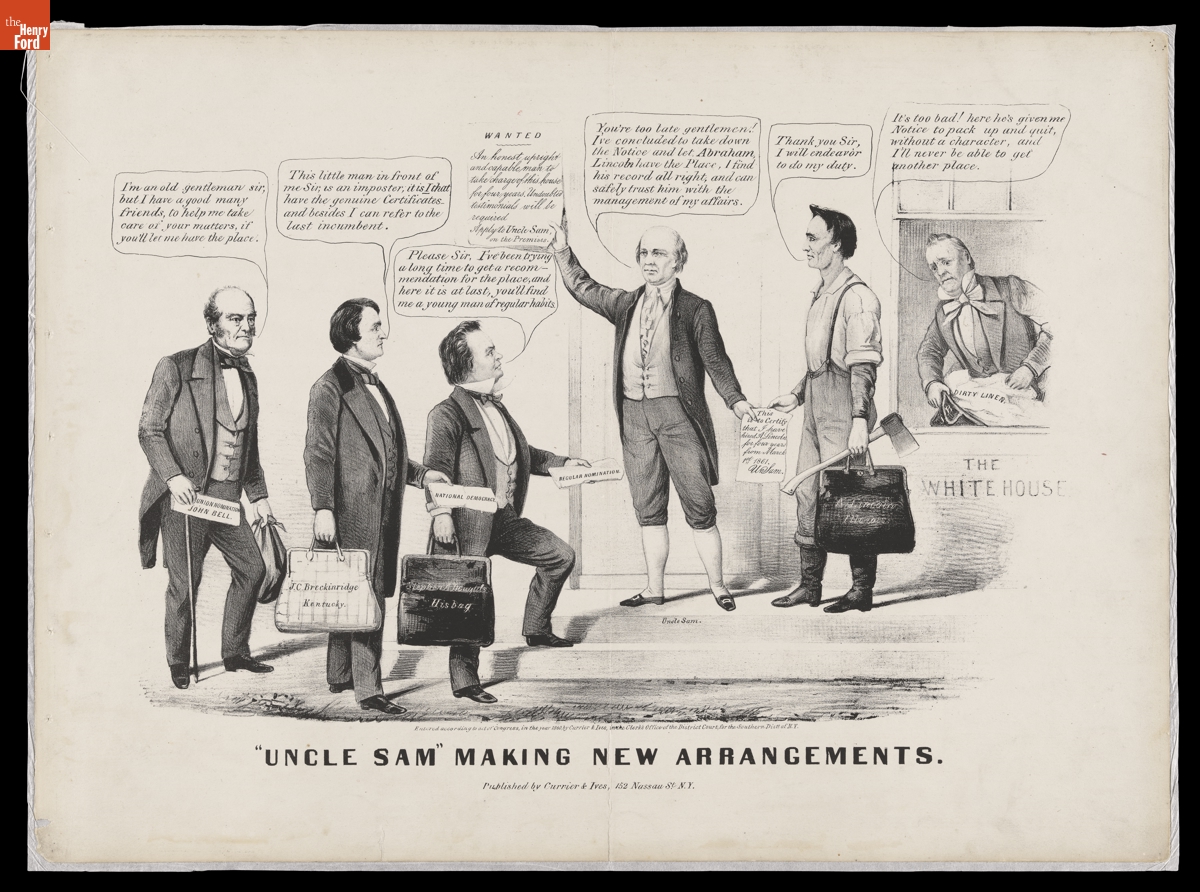
- 1860
- Collections - Artifact
Political Cartoon, "Uncle Sam Making New Arrangements," 1860
- Button, "RIP Vote Radical," 1970-1971 -
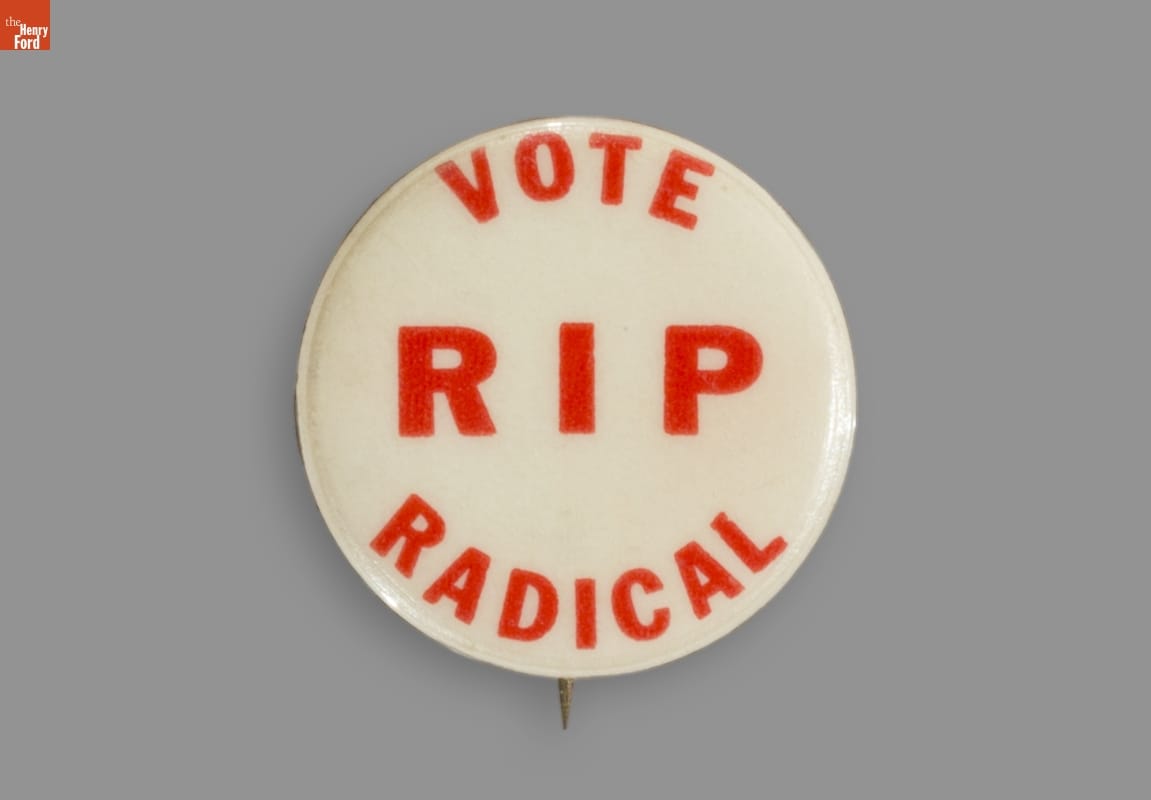
- 1970-1971
- Collections - Artifact
Button, "RIP Vote Radical," 1970-1971
- Guest Tickets for the 1888 Republican National Convention -
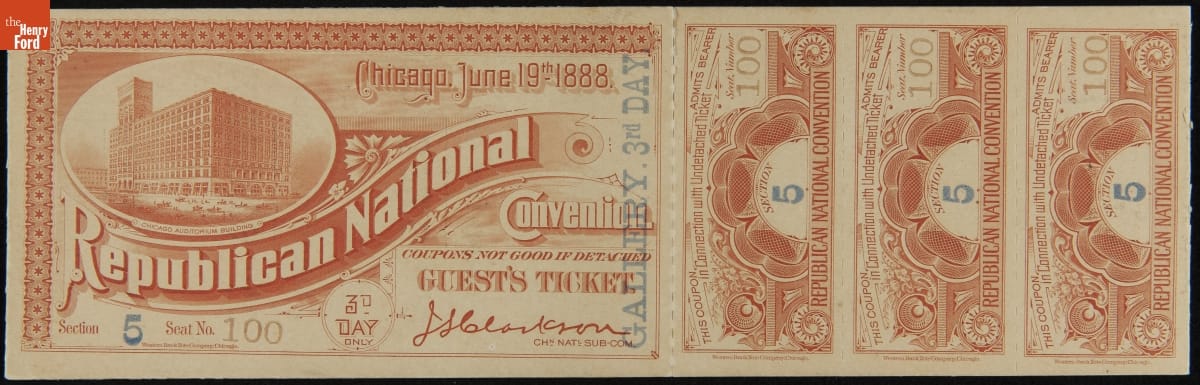
- June 19, 1888
- Collections - Artifact
Guest Tickets for the 1888 Republican National Convention
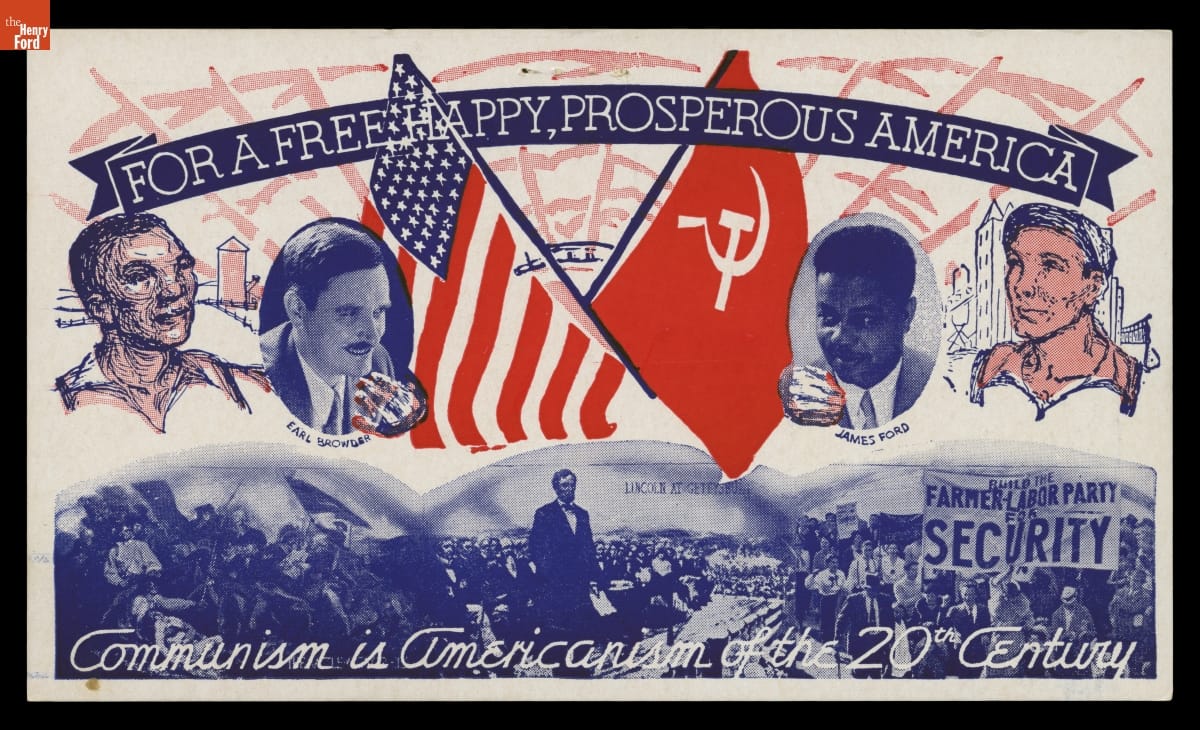
- 1936 Political Postcard, "Communism is Americanism of the 20th Century" - America's Communist Party selected Earl Russell Browder and James W. Ford as its presidential ticket for 1936. This postcard, sent by the party's election campaign committee, pointed out eight key party policies and asked for contributions to help reach millions of voters. Though party membership grew during the economic hard times of the early 1930s, the candidates received less than 80,000 votes.
- 1936
- Collections - Artifact
1936 Political Postcard, "Communism is Americanism of the 20th Century"
America's Communist Party selected Earl Russell Browder and James W. Ford as its presidential ticket for 1936. This postcard, sent by the party's election campaign committee, pointed out eight key party policies and asked for contributions to help reach millions of voters. Though party membership grew during the economic hard times of the early 1930s, the candidates received less than 80,000 votes.
- Election Ballot Printing Plate, circa 1920 -
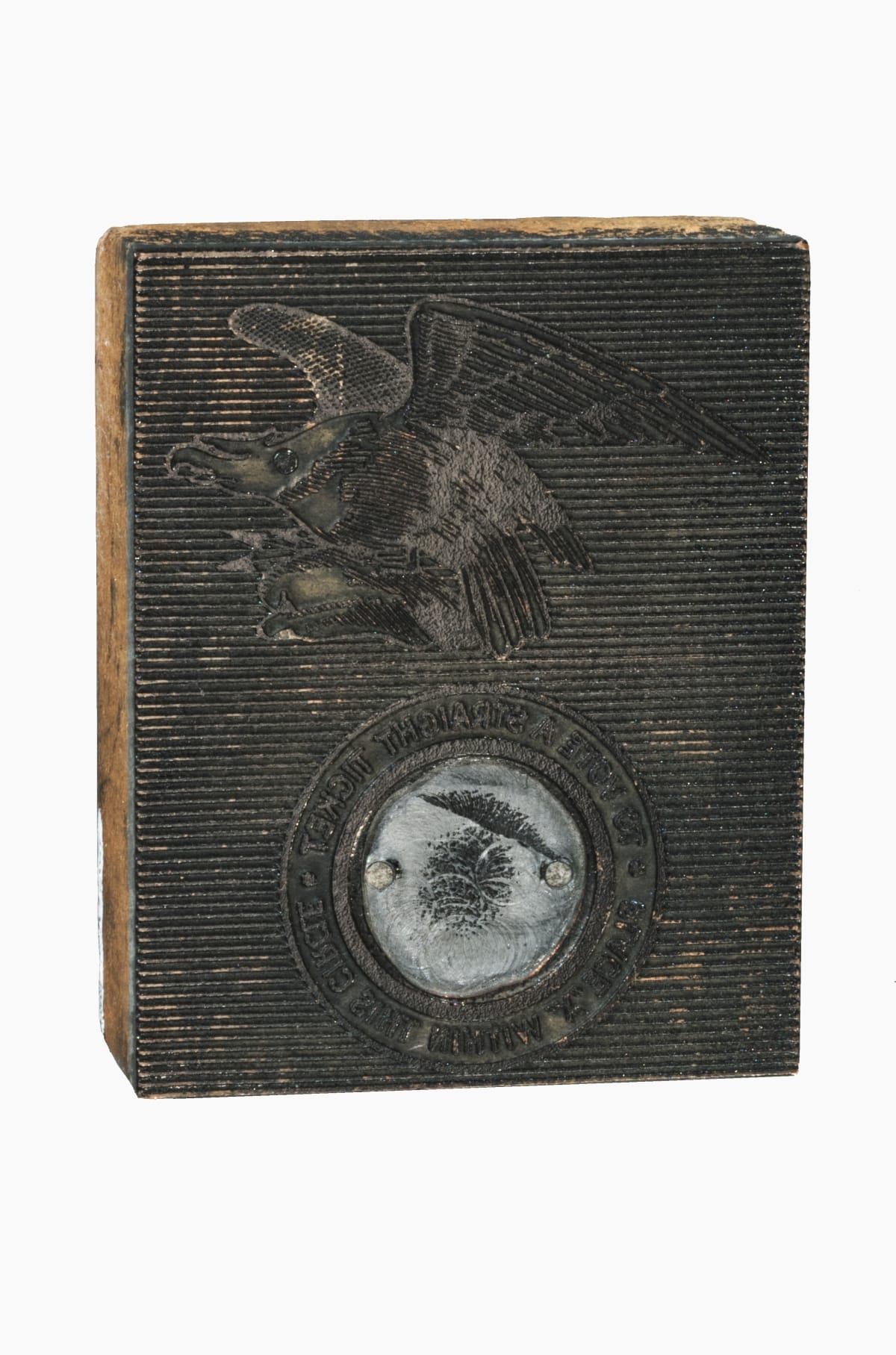
- circa 1920
- Collections - Artifact
Election Ballot Printing Plate, circa 1920
- "Food for Thought" Tablecloth, 1936-1940 - Marguerita Mergentime (1894-1941) created table linens that she hoped would provoke conversations; her "Food for Thought" tablecloth, sold at Lord & Taylor department store, featured common phrases and political slogans to do just that. Mergentime was known for her bold and colorful Modernist textiles, which were often inspired by American culture.
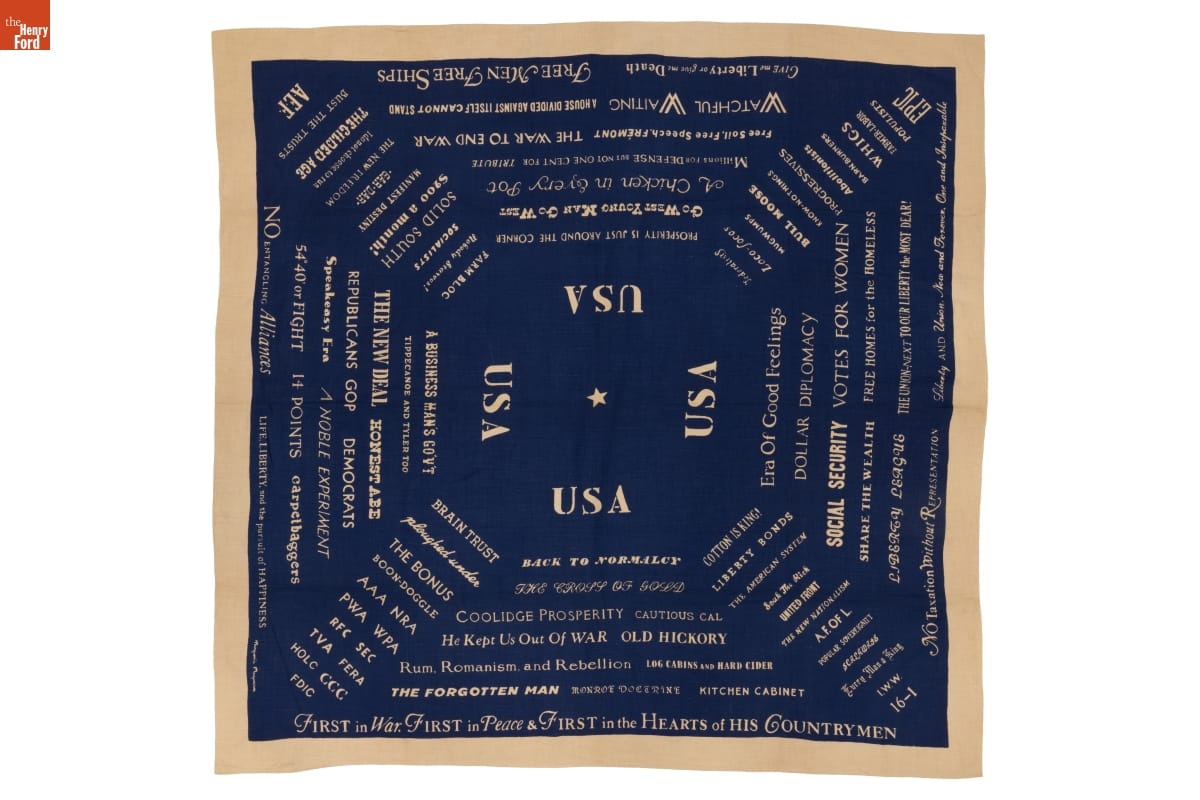
- 1936-1940
- Collections - Artifact
"Food for Thought" Tablecloth, 1936-1940
Marguerita Mergentime (1894-1941) created table linens that she hoped would provoke conversations; her "Food for Thought" tablecloth, sold at Lord & Taylor department store, featured common phrases and political slogans to do just that. Mergentime was known for her bold and colorful Modernist textiles, which were often inspired by American culture.