
Search
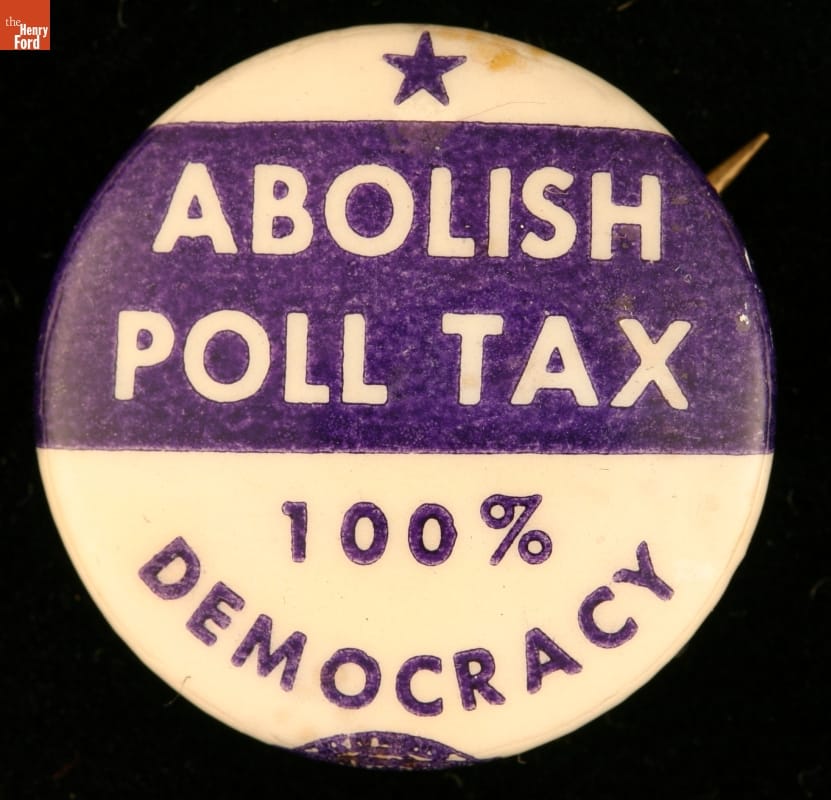
- Button, "Abolish Poll Tax: 100% Democracy," circa 1950 - By 1900, most southern states required citizens to pay a tax to vote. Poll taxes were one way to keep Blacks and many poor whites from voting. Though some states repealed their poll tax laws by 1950, five still clung to them. The passage of the 24th Amendment to the U. S. Constitution in 1964 and subsequent court rulings abolished the discriminatory practice.
- circa 1950
- Collections - Artifact
Button, "Abolish Poll Tax: 100% Democracy," circa 1950
By 1900, most southern states required citizens to pay a tax to vote. Poll taxes were one way to keep Blacks and many poor whites from voting. Though some states repealed their poll tax laws by 1950, five still clung to them. The passage of the 24th Amendment to the U. S. Constitution in 1964 and subsequent court rulings abolished the discriminatory practice.
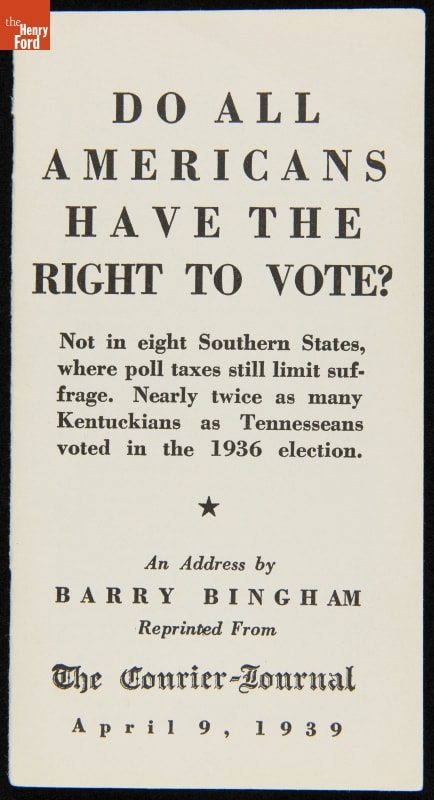
- "Do All Americans Have the Right to Vote?," an Address by Barry Bingham, April 13, 1939 - By 1900, most southern states required citizens to pay a tax to vote. Poll taxes were one way to keep Blacks and many poor whites from voting. Though some states repealed their poll tax laws by 1950, five still clung to them. The passage of the 24th Amendment to the U. S. Constitution in 1964 and subsequent court rulings abolished the discriminatory practice.
- April 13, 1939
- Collections - Artifact
"Do All Americans Have the Right to Vote?," an Address by Barry Bingham, April 13, 1939
By 1900, most southern states required citizens to pay a tax to vote. Poll taxes were one way to keep Blacks and many poor whites from voting. Though some states repealed their poll tax laws by 1950, five still clung to them. The passage of the 24th Amendment to the U. S. Constitution in 1964 and subsequent court rulings abolished the discriminatory practice.
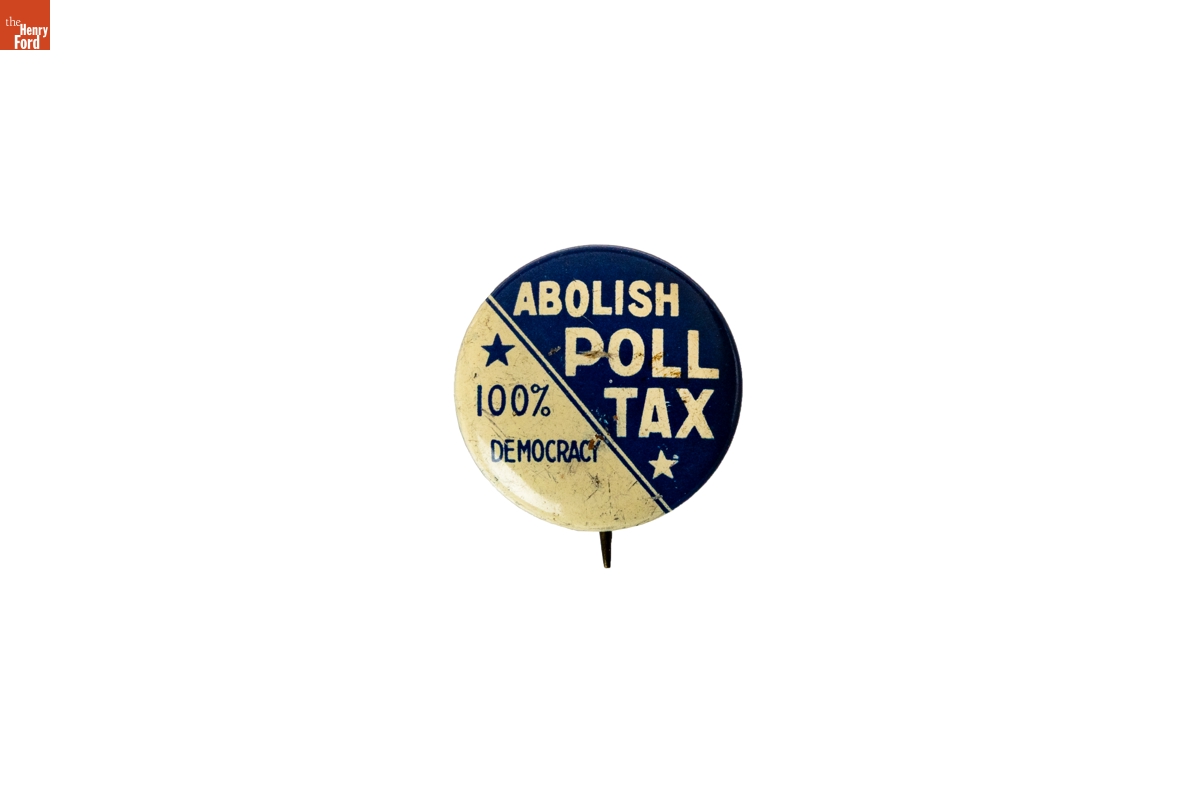
- Button, Abolish Poll Tax: 100% Democracy, circa 1940 - By 1900, most southern states required citizens to pay a tax to vote. Poll taxes were one way to keep Blacks and many poor whites from voting. Though some states repealed their poll tax laws by 1950, five still clung to them. The passage of the 24th Amendment to the U. S. Constitution in 1964 and subsequent court rulings abolished the discriminatory practice.
- circa 1940
- Collections - Artifact
Button, Abolish Poll Tax: 100% Democracy, circa 1940
By 1900, most southern states required citizens to pay a tax to vote. Poll taxes were one way to keep Blacks and many poor whites from voting. Though some states repealed their poll tax laws by 1950, five still clung to them. The passage of the 24th Amendment to the U. S. Constitution in 1964 and subsequent court rulings abolished the discriminatory practice.