
Search
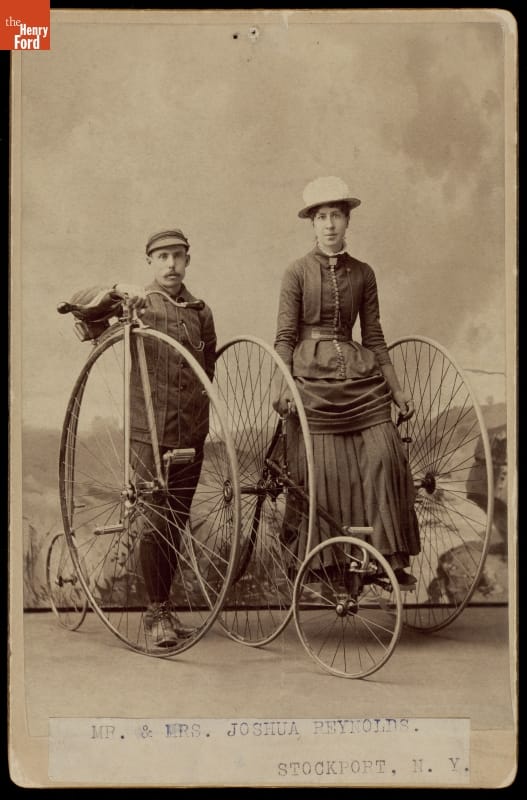
- Husband and Wife with a High-Wheel Bicycle and Tricycle, 1887 - Mr. and Mrs. Joshua Reynolds posed with their vehicles in this 1887 photograph. Mr. Reynolds' high-wheel bicycle was difficult to mount especially if one dressed like Mrs. Reynolds. Women, however, did not concede the benefits of cycling to men; tricycles were available, women donned less restrictive clothing to mount high-wheelers, and low-mount "safety" bikes were becoming more popular.
- January 11, 1887
- Collections - Artifact
Husband and Wife with a High-Wheel Bicycle and Tricycle, 1887
Mr. and Mrs. Joshua Reynolds posed with their vehicles in this 1887 photograph. Mr. Reynolds' high-wheel bicycle was difficult to mount especially if one dressed like Mrs. Reynolds. Women, however, did not concede the benefits of cycling to men; tricycles were available, women donned less restrictive clothing to mount high-wheelers, and low-mount "safety" bikes were becoming more popular.
- The Bicycling World and L.A.W. Bulletin, Volume 25, 1892-1893 - Established in 1880, the League of American Wheelmen lobbied for the rights and interests of its more than 100,000 bicyclist members. The League published maps and guidebooks for riders, it organized meets and parades to promote its work, and it published magazines like the <em>L.A.W. Bulletin</em>. The <em>Bulletin</em> included cycling news and advertisements, as well as results from bicycle competitions.

- 09 September 1892-03 March 1893
- Collections - Artifact
The Bicycling World and L.A.W. Bulletin, Volume 25, 1892-1893
Established in 1880, the League of American Wheelmen lobbied for the rights and interests of its more than 100,000 bicyclist members. The League published maps and guidebooks for riders, it organized meets and parades to promote its work, and it published magazines like the L.A.W. Bulletin. The Bulletin included cycling news and advertisements, as well as results from bicycle competitions.
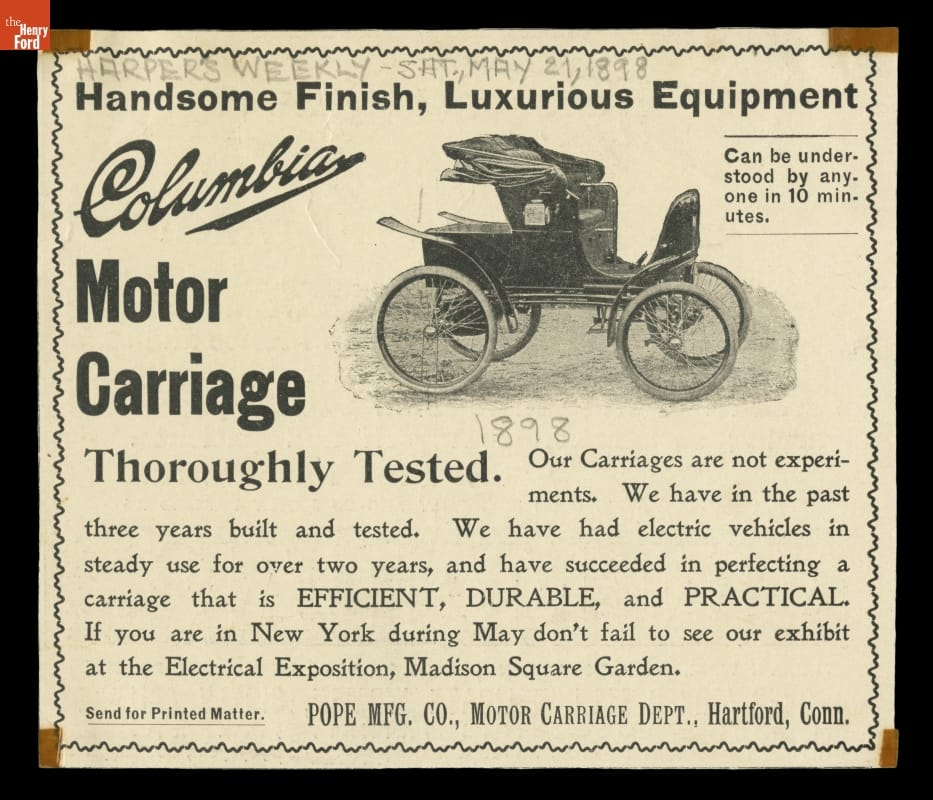
- Advertisement for Pope Manufacturing Company's Columbia Motor Carriage, 1898 - Albert Augustus Pope formed Pope Manufacturing Company in 1876. Two years later, it began producing bicycles. Pope kept up with the times, introducing electric automobiles in 1897 and motorcycles in 1902. When electric-car sales declined, so too did Pope's fortunes. The company filed for bankruptcy in 1915.
- May 21, 1898
- Collections - Artifact
Advertisement for Pope Manufacturing Company's Columbia Motor Carriage, 1898
Albert Augustus Pope formed Pope Manufacturing Company in 1876. Two years later, it began producing bicycles. Pope kept up with the times, introducing electric automobiles in 1897 and motorcycles in 1902. When electric-car sales declined, so too did Pope's fortunes. The company filed for bankruptcy in 1915.
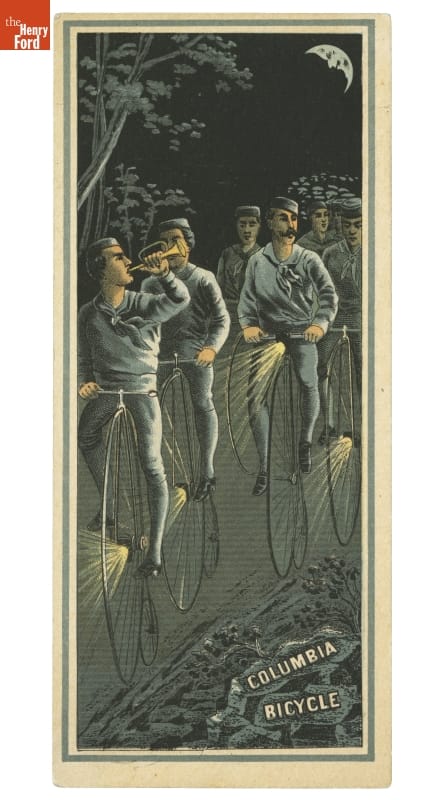
- Trade Card for the Pope Manufacturing Company, "Columbia Bicycle," circa 1887 - The Pope Manufacturing Company handed out this trade card depicting a nighttime parade of bicycle club members on Columbia bicycles. Trade cards, like this one, usually had colorful and interesting scenes on the front and product information on the back.
- circa 1880
- Collections - Artifact
Trade Card for the Pope Manufacturing Company, "Columbia Bicycle," circa 1887
The Pope Manufacturing Company handed out this trade card depicting a nighttime parade of bicycle club members on Columbia bicycles. Trade cards, like this one, usually had colorful and interesting scenes on the front and product information on the back.
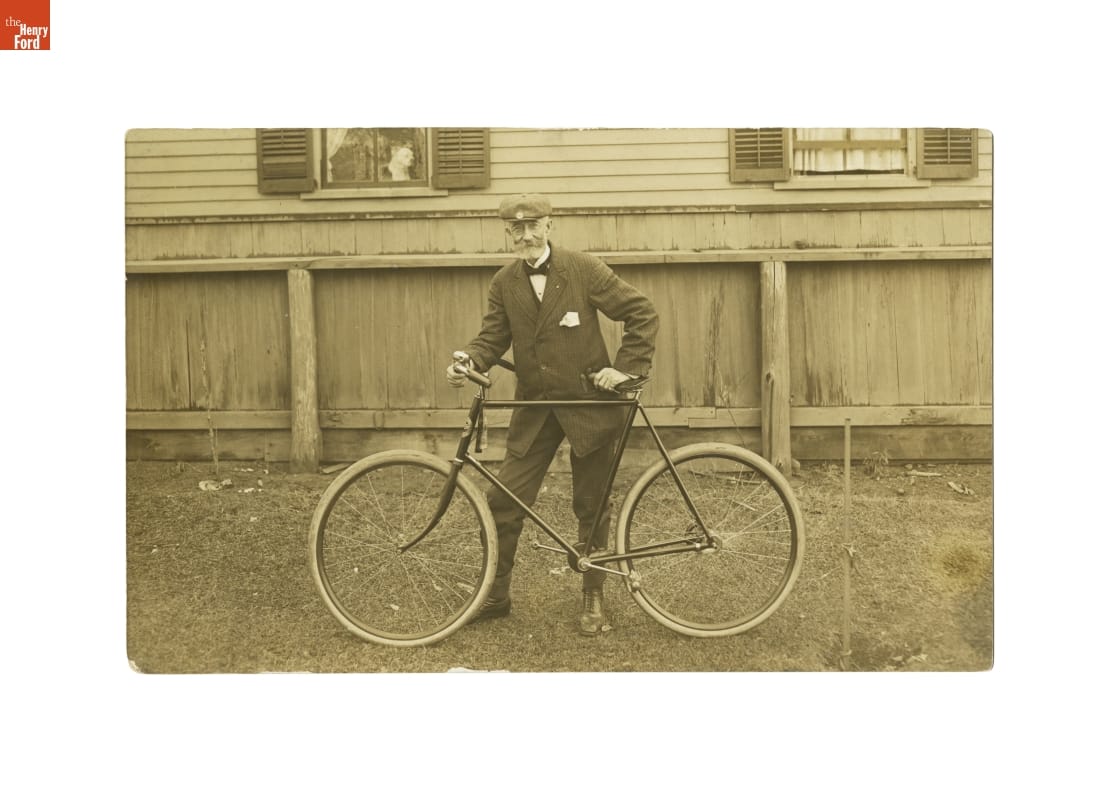
- Cyclist Posing with a Pope Safety Bicycle, circa 1897 - In 1897 the Pope Manufacturing Company introduced its shaft-driven "chainless" -- like the one seen in this photograph. The company hoped the chainless would revive demand and boost lagging sales. However, the promises of a chainless bicycle -- greater efficiency, a smoother ride, and clothing free from chain-oil stains -- never materialized or were not enough to compel cyclists to purchase this expensive innovation.
- circa 1897
- Collections - Artifact
Cyclist Posing with a Pope Safety Bicycle, circa 1897
In 1897 the Pope Manufacturing Company introduced its shaft-driven "chainless" -- like the one seen in this photograph. The company hoped the chainless would revive demand and boost lagging sales. However, the promises of a chainless bicycle -- greater efficiency, a smoother ride, and clothing free from chain-oil stains -- never materialized or were not enough to compel cyclists to purchase this expensive innovation.
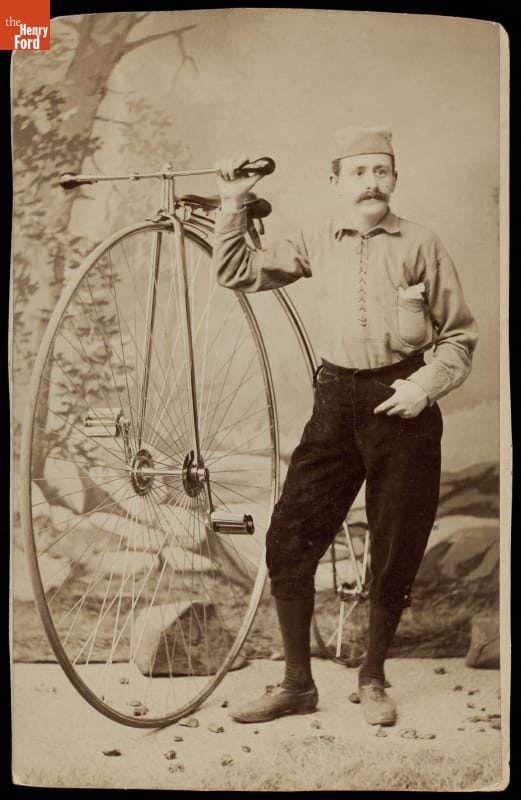
- Man with a Columbia High-Wheel Bicycle, 1883 - An unidentified cyclist poses with an 1883 Expert Columbia high wheeler. The machine was made by the Pope Manufacturing Company of Boston, Massachusetts -- America's leading bicycle manufacturer at the time. Their bicycles incorporated many innovations such as steel-tube-frame construction, ball bearings, and wire wheels with rubber tires. These improvements made the bicycle a popular recreational and sporting machine -- especially among athletic young men.
- 1883
- Collections - Artifact
Man with a Columbia High-Wheel Bicycle, 1883
An unidentified cyclist poses with an 1883 Expert Columbia high wheeler. The machine was made by the Pope Manufacturing Company of Boston, Massachusetts -- America's leading bicycle manufacturer at the time. Their bicycles incorporated many innovations such as steel-tube-frame construction, ball bearings, and wire wheels with rubber tires. These improvements made the bicycle a popular recreational and sporting machine -- especially among athletic young men.
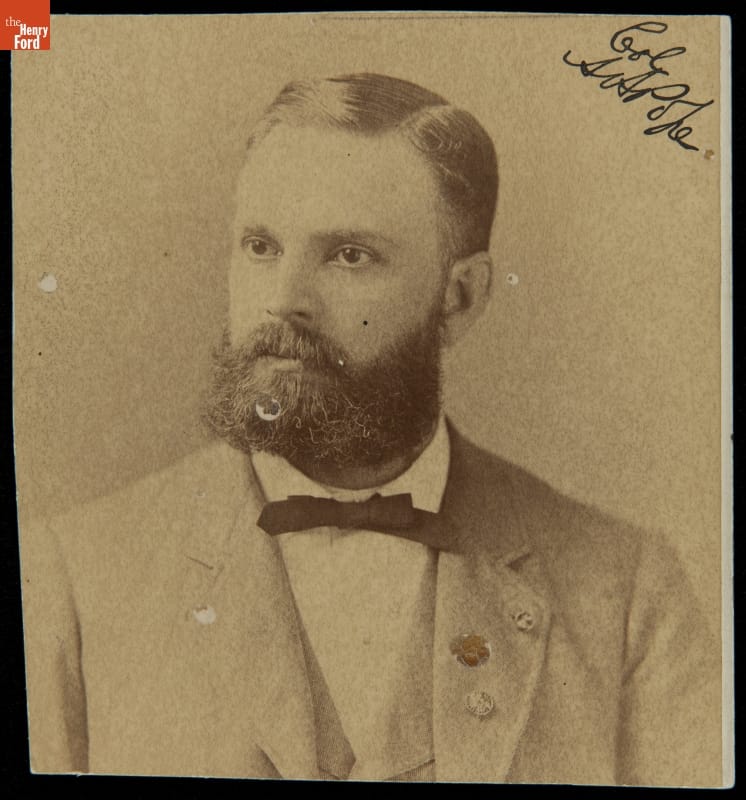
- Portrait of Colonel Albert A. Pope, circa 1883 - Albert Pope began manufacturing bicycles after seeing a high-wheel ordinary at the Centennial Exhibition in Philadelphia. In 1877, he formed Pope Manufacturing Company and churned out thousands of bicycles each year. The Civil-War-officer-turned-entrepreneur also helped sponsor the League of American Wheelmen to advocate for good roads -- something every cyclist (and bicycle maker) desired.
- circa 1883
- Collections - Artifact
Portrait of Colonel Albert A. Pope, circa 1883
Albert Pope began manufacturing bicycles after seeing a high-wheel ordinary at the Centennial Exhibition in Philadelphia. In 1877, he formed Pope Manufacturing Company and churned out thousands of bicycles each year. The Civil-War-officer-turned-entrepreneur also helped sponsor the League of American Wheelmen to advocate for good roads -- something every cyclist (and bicycle maker) desired.
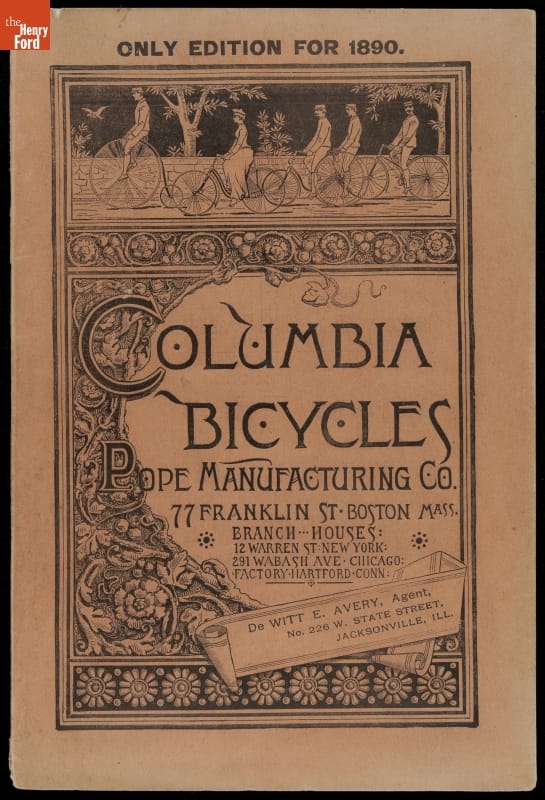
- Catalog, "Columbia Bicycles, Pope Manufacturing Company, Only Edition for 1890" - In 1890 cyclists had choices. High-wheels were popular, especially among the young athletic set. The new "safety," with its same-sized wheels and easy mount, was gaining popularity among the general public. And tricycles had a following -- a favorite among wealthy women and the well-to-do. The Pope Manufacturing Company -- America's leading bicycle producer -- offered all these options in this catalog.
- 1890
- Collections - Artifact
Catalog, "Columbia Bicycles, Pope Manufacturing Company, Only Edition for 1890"
In 1890 cyclists had choices. High-wheels were popular, especially among the young athletic set. The new "safety," with its same-sized wheels and easy mount, was gaining popularity among the general public. And tricycles had a following -- a favorite among wealthy women and the well-to-do. The Pope Manufacturing Company -- America's leading bicycle producer -- offered all these options in this catalog.