
Search
- Port Huron Engine & Thresher Company Drawing, "Engine No. Plate," January 16, 1901 - The Port Huron Engine & Thresher Company began manufacturing agricultural machinery and steam engines in the last quarter of the 19th century. By 1920, it had produced more than 6,000 engines to run threshers, sawmills, and other equipment. The Henry Ford houses more than sixty technical drawings that specify engineering requirements of various parts and components for the company's steam engines.
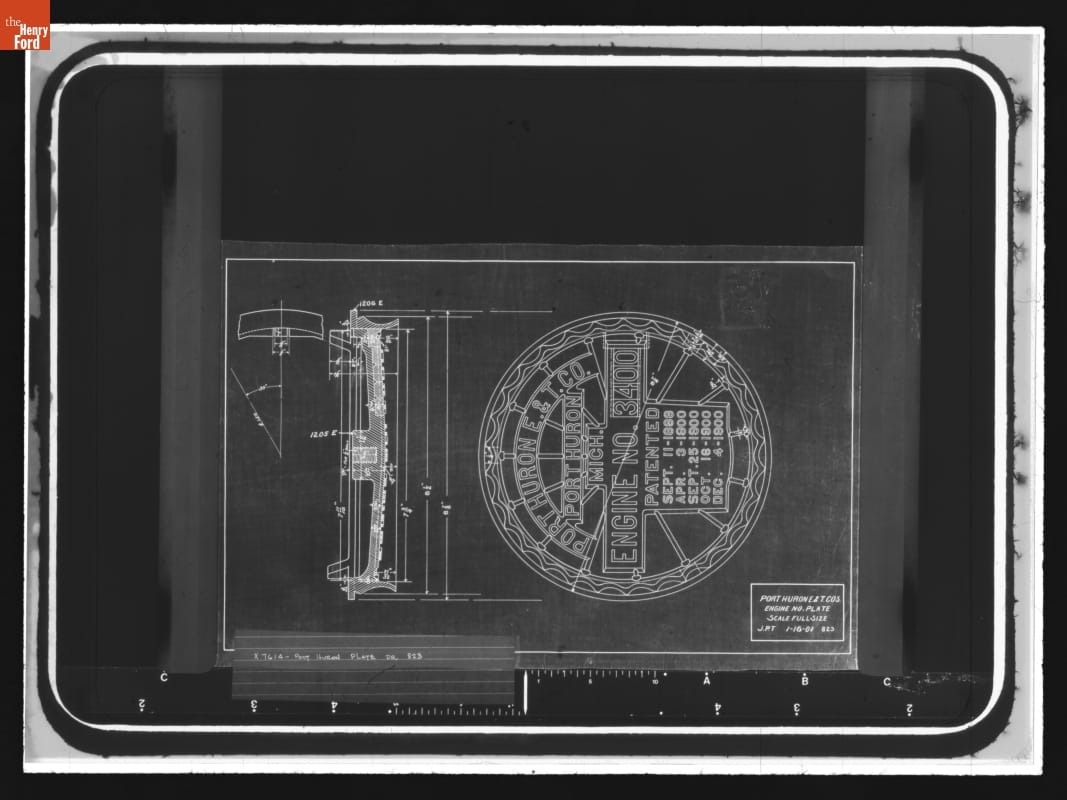
- January 16, 1901
- Collections - Artifact
Port Huron Engine & Thresher Company Drawing, "Engine No. Plate," January 16, 1901
The Port Huron Engine & Thresher Company began manufacturing agricultural machinery and steam engines in the last quarter of the 19th century. By 1920, it had produced more than 6,000 engines to run threshers, sawmills, and other equipment. The Henry Ford houses more than sixty technical drawings that specify engineering requirements of various parts and components for the company's steam engines.
- Port Huron Engine & Thresher Company Drawing, "30 H.P. Traction Engine Ladder Details," April 11, 1902 - The Port Huron Engine & Thresher Company began manufacturing agricultural machinery and steam engines in the last quarter of the 19th century. By 1920, it had produced more than 6,000 engines to run threshers, sawmills, and other equipment. The Henry Ford houses more than sixty technical drawings that specify engineering requirements of various parts and components for the company's steam engines.
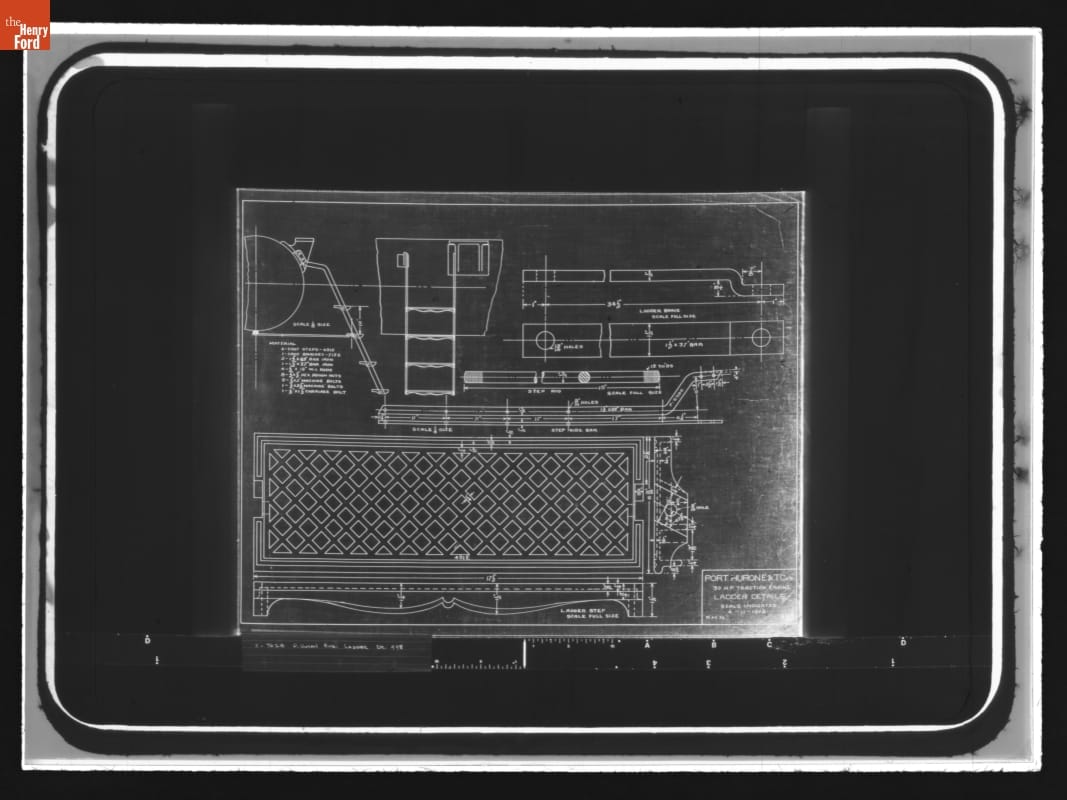
- April 11, 1902
- Collections - Artifact
Port Huron Engine & Thresher Company Drawing, "30 H.P. Traction Engine Ladder Details," April 11, 1902
The Port Huron Engine & Thresher Company began manufacturing agricultural machinery and steam engines in the last quarter of the 19th century. By 1920, it had produced more than 6,000 engines to run threshers, sawmills, and other equipment. The Henry Ford houses more than sixty technical drawings that specify engineering requirements of various parts and components for the company's steam engines.
- Port Huron Engine & Thresher Company Drawing, "16 & 19 H.P. Traction Eng. Reverse Gear Details," June 26, 1913 - The Port Huron Engine & Thresher Company began manufacturing agricultural machinery and steam engines in the last quarter of the 19th century. By 1920, it had produced more than 6,000 engines to run threshers, sawmills, and other equipment. The Henry Ford houses more than sixty technical drawings that specify engineering requirements of various parts and components for the company's steam engines.
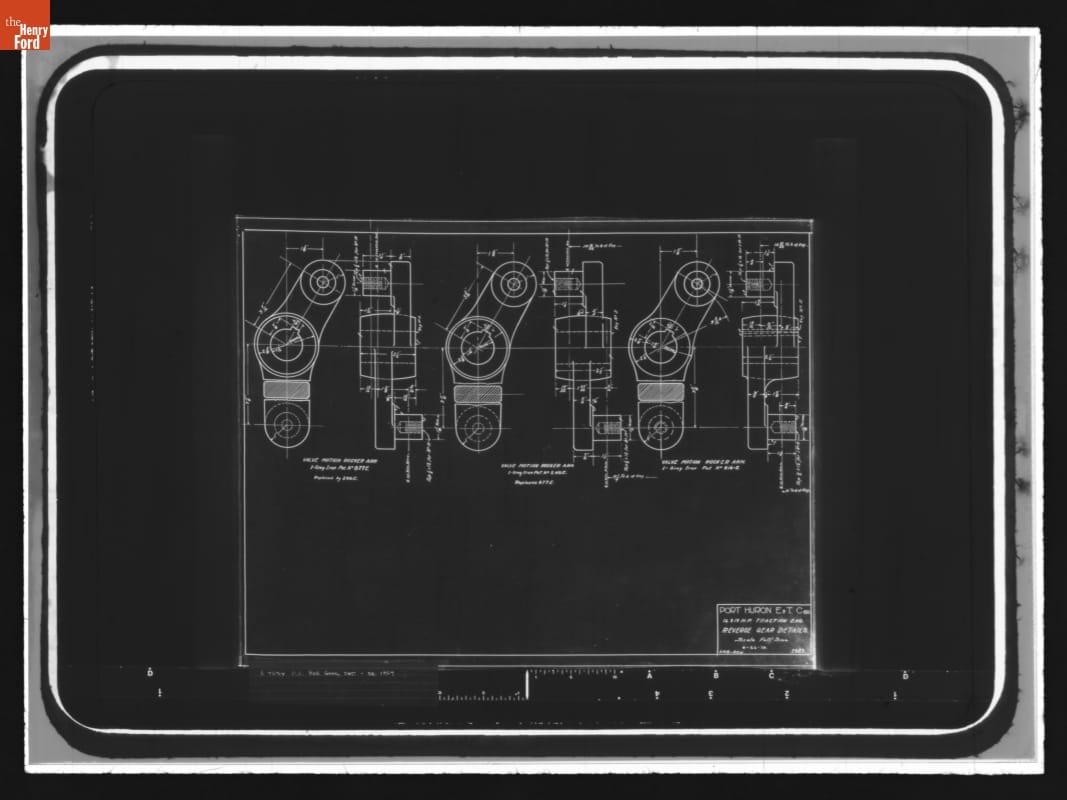
- June 26, 1913
- Collections - Artifact
Port Huron Engine & Thresher Company Drawing, "16 & 19 H.P. Traction Eng. Reverse Gear Details," June 26, 1913
The Port Huron Engine & Thresher Company began manufacturing agricultural machinery and steam engines in the last quarter of the 19th century. By 1920, it had produced more than 6,000 engines to run threshers, sawmills, and other equipment. The Henry Ford houses more than sixty technical drawings that specify engineering requirements of various parts and components for the company's steam engines.
- Port Huron Engine & Thresher Company Drawing, "14 to 20 H.P. Traction Eng. Reverse Gear Details," May 5, 1914 - The Port Huron Engine & Thresher Company began manufacturing agricultural machinery and steam engines in the last quarter of the 19th century. By 1920, it had produced more than 6,000 engines to run threshers, sawmills, and other equipment. The Henry Ford houses more than sixty technical drawings that specify engineering requirements of various parts and components for the company's steam engines.
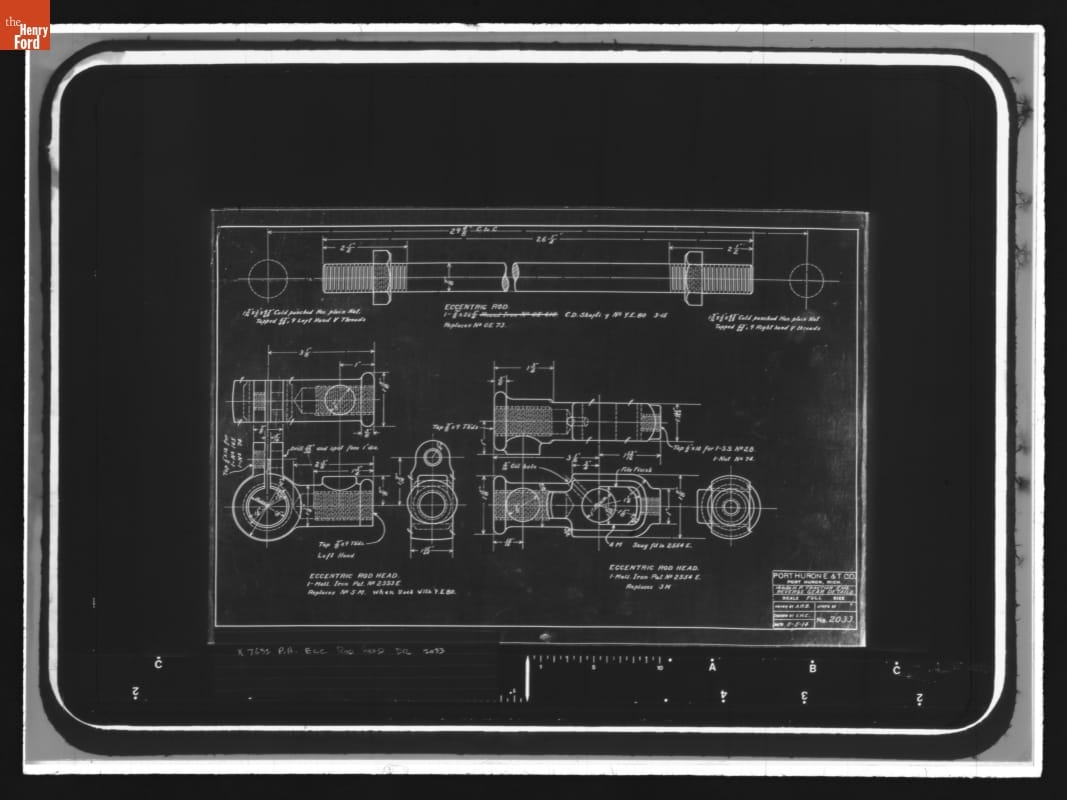
- May 05, 1914
- Collections - Artifact
Port Huron Engine & Thresher Company Drawing, "14 to 20 H.P. Traction Eng. Reverse Gear Details," May 5, 1914
The Port Huron Engine & Thresher Company began manufacturing agricultural machinery and steam engines in the last quarter of the 19th century. By 1920, it had produced more than 6,000 engines to run threshers, sawmills, and other equipment. The Henry Ford houses more than sixty technical drawings that specify engineering requirements of various parts and components for the company's steam engines.
- Port Huron Engine & Thresher Company Drawing, "19-H.P. Piston Details," September 19, 1913 - The Port Huron Engine & Thresher Company began manufacturing agricultural machinery and steam engines in the last quarter of the 19th century. By 1920, it had produced more than 6,000 engines to run threshers, sawmills, and other equipment. The Henry Ford houses more than sixty technical drawings that specify engineering requirements of various parts and components for the company's steam engines.
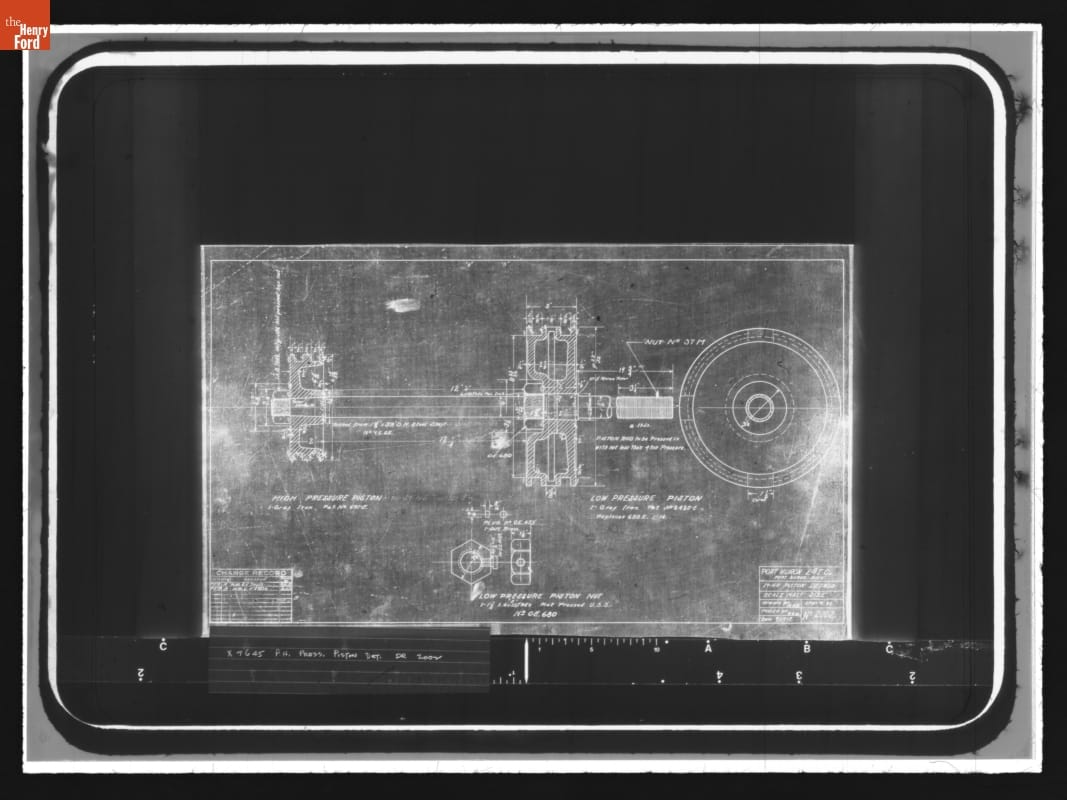
- September 19, 1913
- Collections - Artifact
Port Huron Engine & Thresher Company Drawing, "19-H.P. Piston Details," September 19, 1913
The Port Huron Engine & Thresher Company began manufacturing agricultural machinery and steam engines in the last quarter of the 19th century. By 1920, it had produced more than 6,000 engines to run threshers, sawmills, and other equipment. The Henry Ford houses more than sixty technical drawings that specify engineering requirements of various parts and components for the company's steam engines.
- Port Huron Engine & Thresher Company Drawing, "19 H.P. Traction Engine Cyl. Details," April 16, 1913 - The Port Huron Engine & Thresher Company began manufacturing agricultural machinery and steam engines in the last quarter of the 19th century. By 1920, it had produced more than 6,000 engines to run threshers, sawmills, and other equipment. The Henry Ford houses more than sixty technical drawings that specify engineering requirements of various parts and components for the company's steam engines.
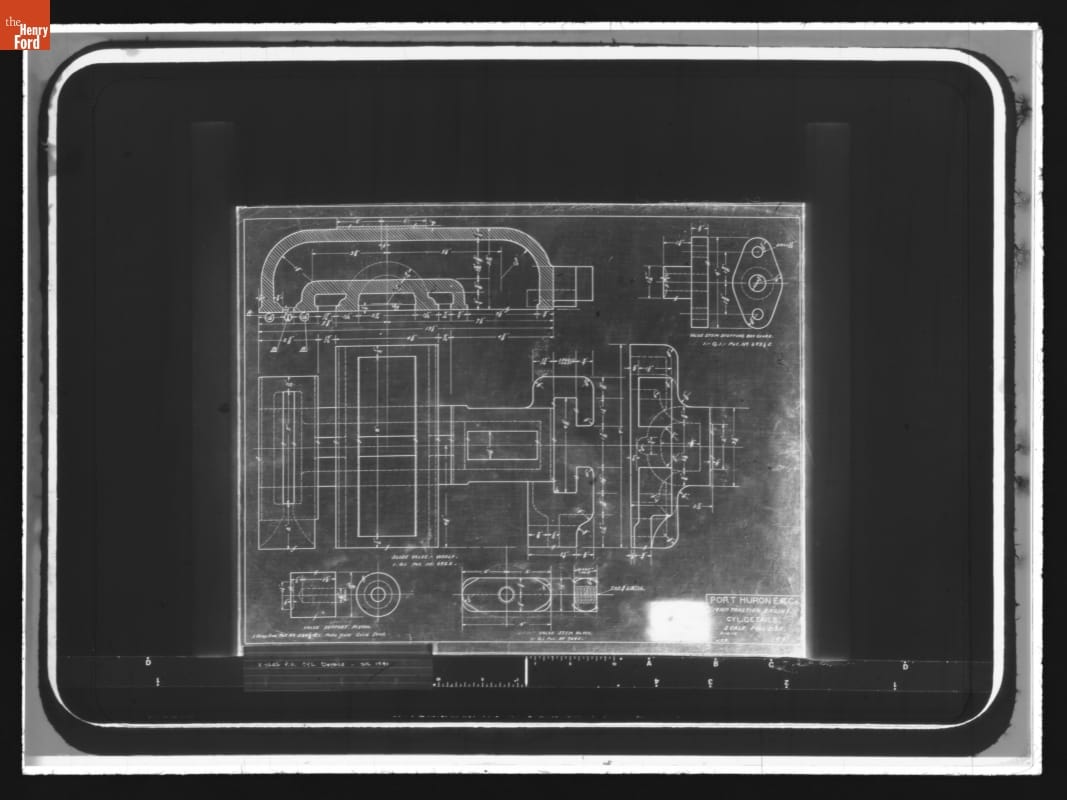
- April 16, 1913
- Collections - Artifact
Port Huron Engine & Thresher Company Drawing, "19 H.P. Traction Engine Cyl. Details," April 16, 1913
The Port Huron Engine & Thresher Company began manufacturing agricultural machinery and steam engines in the last quarter of the 19th century. By 1920, it had produced more than 6,000 engines to run threshers, sawmills, and other equipment. The Henry Ford houses more than sixty technical drawings that specify engineering requirements of various parts and components for the company's steam engines.
- Port Huron Engine & Thresher Company Drawing, "12 & 15 H.P. Traction Engine Ball Bracket & Circles," April 14, 1903 - The Port Huron Engine & Thresher Company began manufacturing agricultural machinery and steam engines in the last quarter of the 19th century. By 1920, it had produced more than 6,000 engines to run threshers, sawmills, and other equipment. The Henry Ford houses more than sixty technical drawings that specify engineering requirements of various parts and components for the company's steam engines.
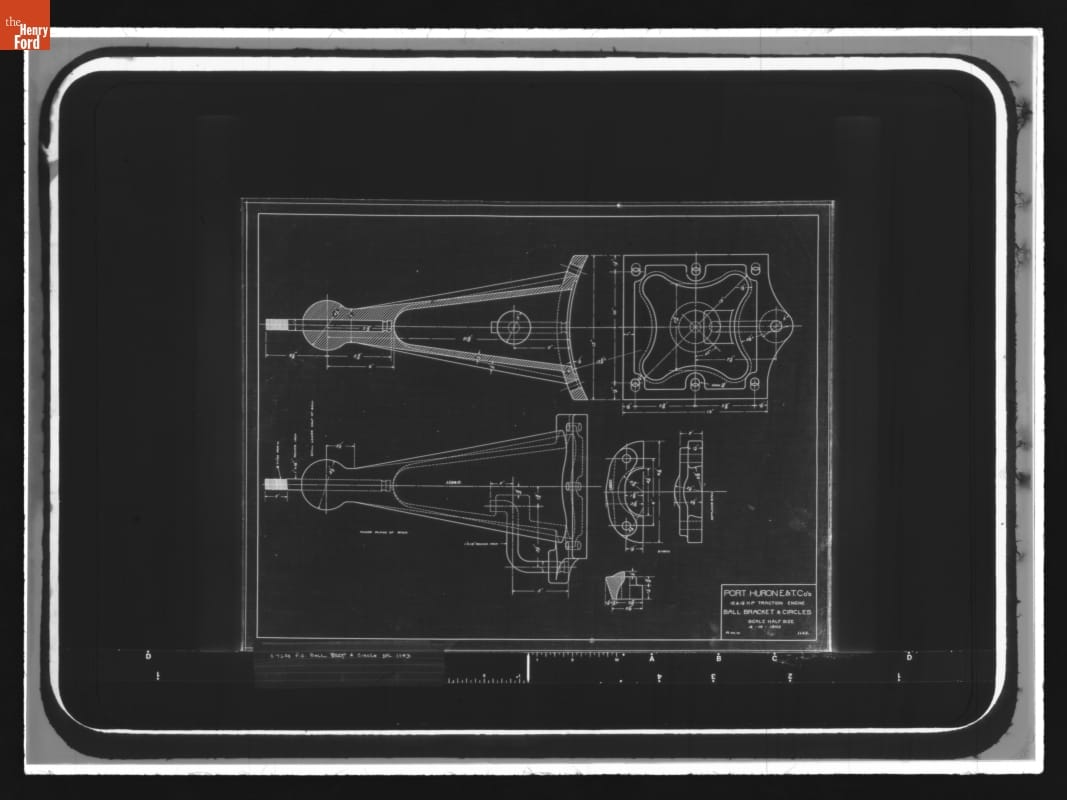
- April 14, 1903
- Collections - Artifact
Port Huron Engine & Thresher Company Drawing, "12 & 15 H.P. Traction Engine Ball Bracket & Circles," April 14, 1903
The Port Huron Engine & Thresher Company began manufacturing agricultural machinery and steam engines in the last quarter of the 19th century. By 1920, it had produced more than 6,000 engines to run threshers, sawmills, and other equipment. The Henry Ford houses more than sixty technical drawings that specify engineering requirements of various parts and components for the company's steam engines.
- Port Huron Engine & Thresher Company Drawing, "20 and 24 H.P. Traction Engine Details," February 16, 1904 - The Port Huron Engine & Thresher Company began manufacturing agricultural machinery and steam engines in the last quarter of the 19th century. By 1920, it had produced more than 6,000 engines to run threshers, sawmills, and other equipment. The Henry Ford houses more than sixty technical drawings that specify engineering requirements of various parts and components for the company's steam engines.
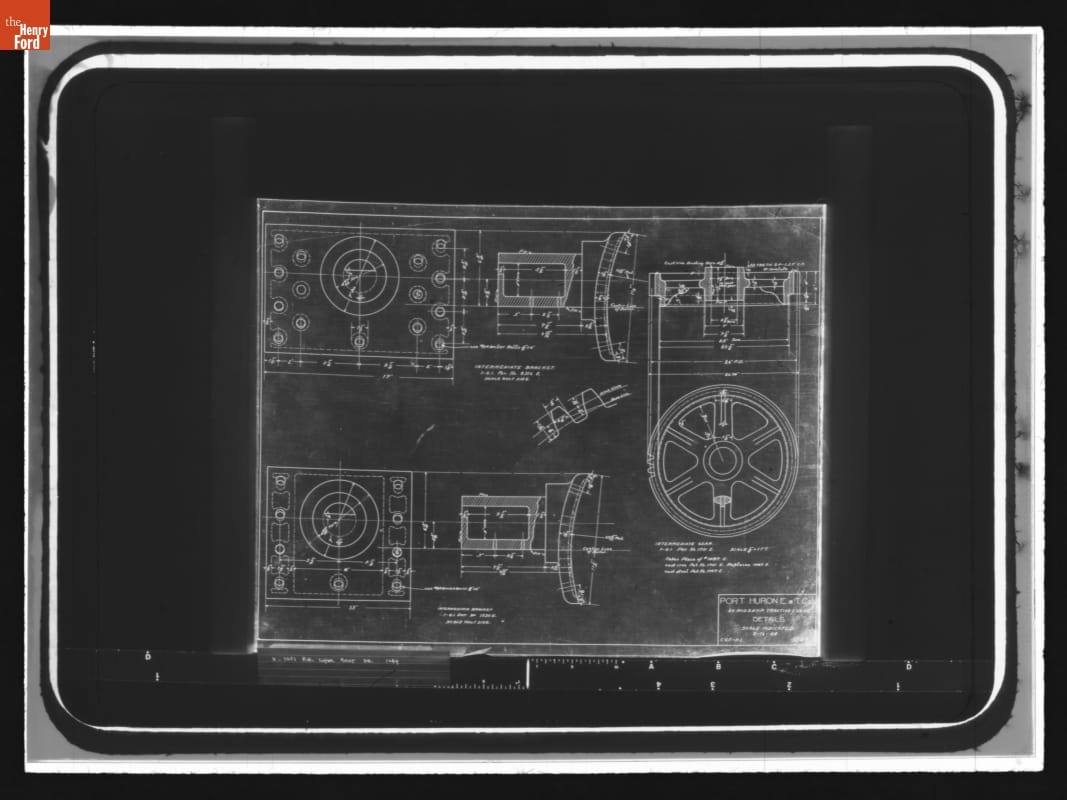
- February 16, 1904
- Collections - Artifact
Port Huron Engine & Thresher Company Drawing, "20 and 24 H.P. Traction Engine Details," February 16, 1904
The Port Huron Engine & Thresher Company began manufacturing agricultural machinery and steam engines in the last quarter of the 19th century. By 1920, it had produced more than 6,000 engines to run threshers, sawmills, and other equipment. The Henry Ford houses more than sixty technical drawings that specify engineering requirements of various parts and components for the company's steam engines.
- Port Huron Engine & Thresher Company Drawing, "100 Gal. Platform Tank," October 14, 1914 - The Port Huron Engine & Thresher Company began manufacturing agricultural machinery and steam engines in the last quarter of the 19th century. By 1920, it had produced more than 6,000 engines to run threshers, sawmills, and other equipment. The Henry Ford houses more than sixty technical drawings that specify engineering requirements of various parts and components for the company's steam engines.
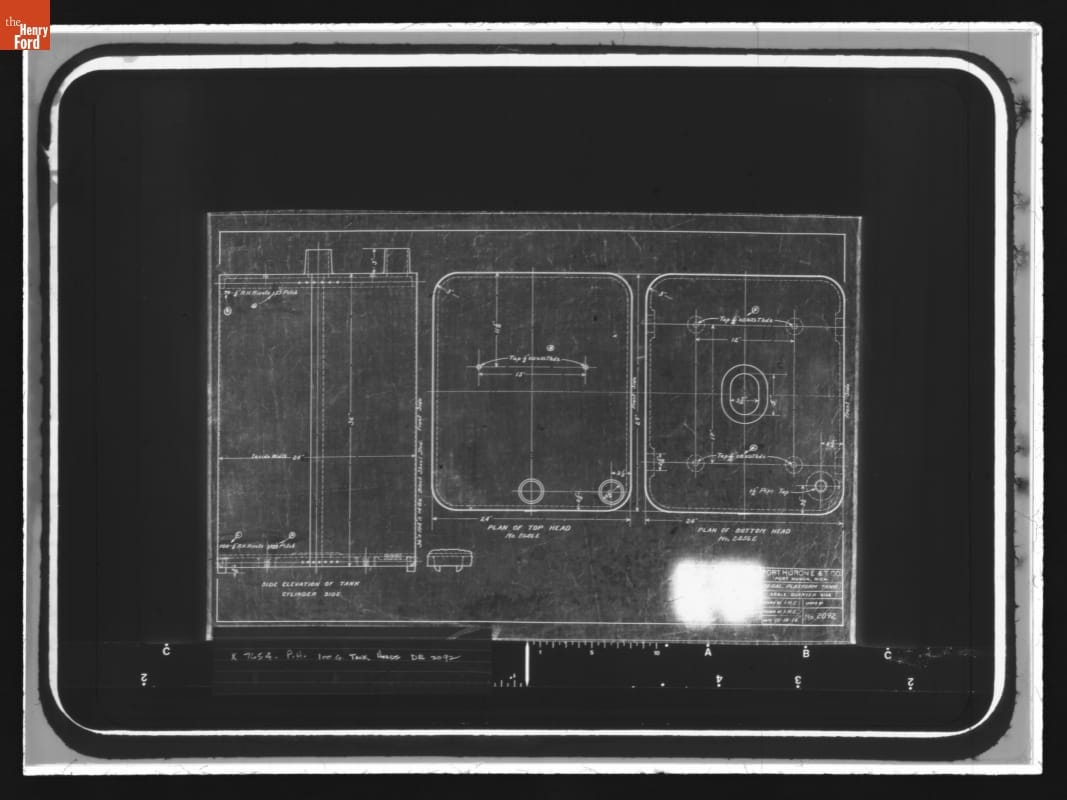
- October 14, 1914
- Collections - Artifact
Port Huron Engine & Thresher Company Drawing, "100 Gal. Platform Tank," October 14, 1914
The Port Huron Engine & Thresher Company began manufacturing agricultural machinery and steam engines in the last quarter of the 19th century. By 1920, it had produced more than 6,000 engines to run threshers, sawmills, and other equipment. The Henry Ford houses more than sixty technical drawings that specify engineering requirements of various parts and components for the company's steam engines.
- Port Huron Engine & Thresher Company Drawing, "All Sized Engines Lubricator Supports and Pipe Brackets," April 7, 1903 - The Port Huron Engine & Thresher Company began manufacturing agricultural machinery and steam engines in the last quarter of the 19th century. By 1920, it had produced more than 6,000 engines to run threshers, sawmills, and other equipment. The Henry Ford houses more than sixty technical drawings that specify engineering requirements of various parts and components for the company's steam engines.
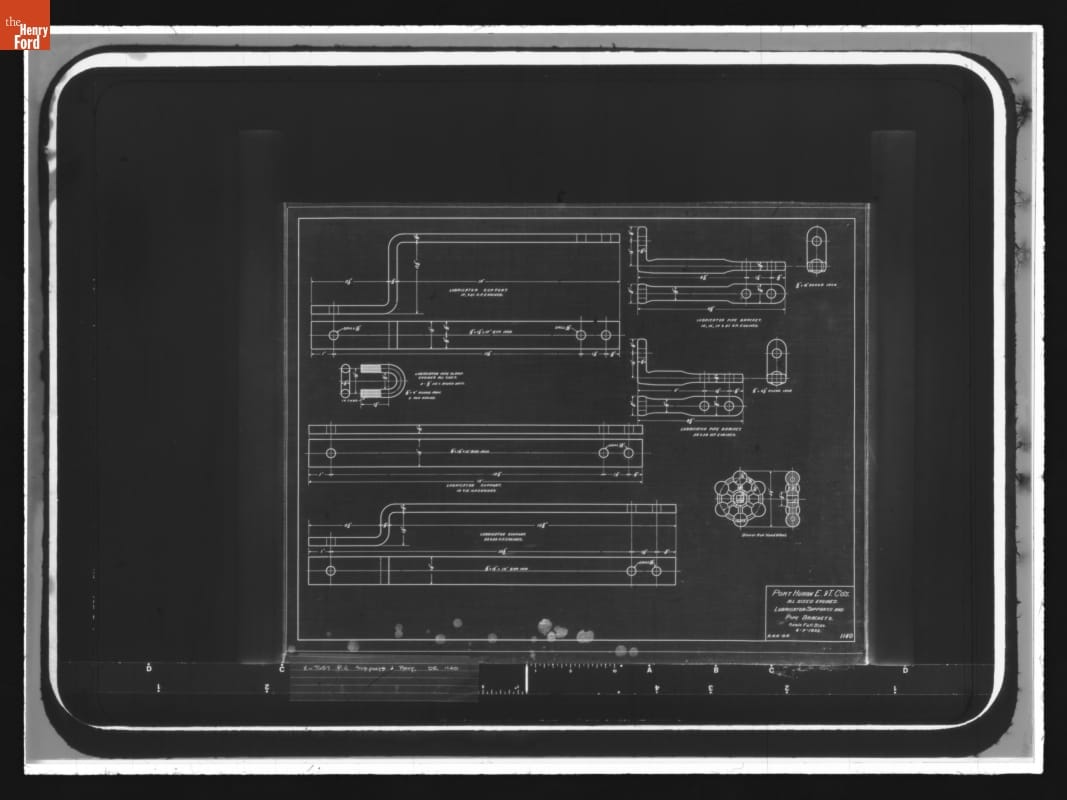
- April 07, 1903
- Collections - Artifact
Port Huron Engine & Thresher Company Drawing, "All Sized Engines Lubricator Supports and Pipe Brackets," April 7, 1903
The Port Huron Engine & Thresher Company began manufacturing agricultural machinery and steam engines in the last quarter of the 19th century. By 1920, it had produced more than 6,000 engines to run threshers, sawmills, and other equipment. The Henry Ford houses more than sixty technical drawings that specify engineering requirements of various parts and components for the company's steam engines.