
Search
- Tattoo Flash Portfolio, circa 1918 - Tattoos communicate stories. Their content ranges from deeply personal and traditional--to regrettable and frivolous. In the early 1900s, "Professor" Waters apprenticed as a tattoo artist in carnivals and New York's Bowery District. He ran a successful supply shop in Detroit (1918-1939), patenting the standard "two-coil" tattoo machine in 1929. Designs from his flash sheets continue to inspire tattooists today.
- circa 1918
- Collections - Artifact
Tattoo Flash Portfolio, circa 1918
Tattoos communicate stories. Their content ranges from deeply personal and traditional--to regrettable and frivolous. In the early 1900s, "Professor" Waters apprenticed as a tattoo artist in carnivals and New York's Bowery District. He ran a successful supply shop in Detroit (1918-1939), patenting the standard "two-coil" tattoo machine in 1929. Designs from his flash sheets continue to inspire tattooists today.
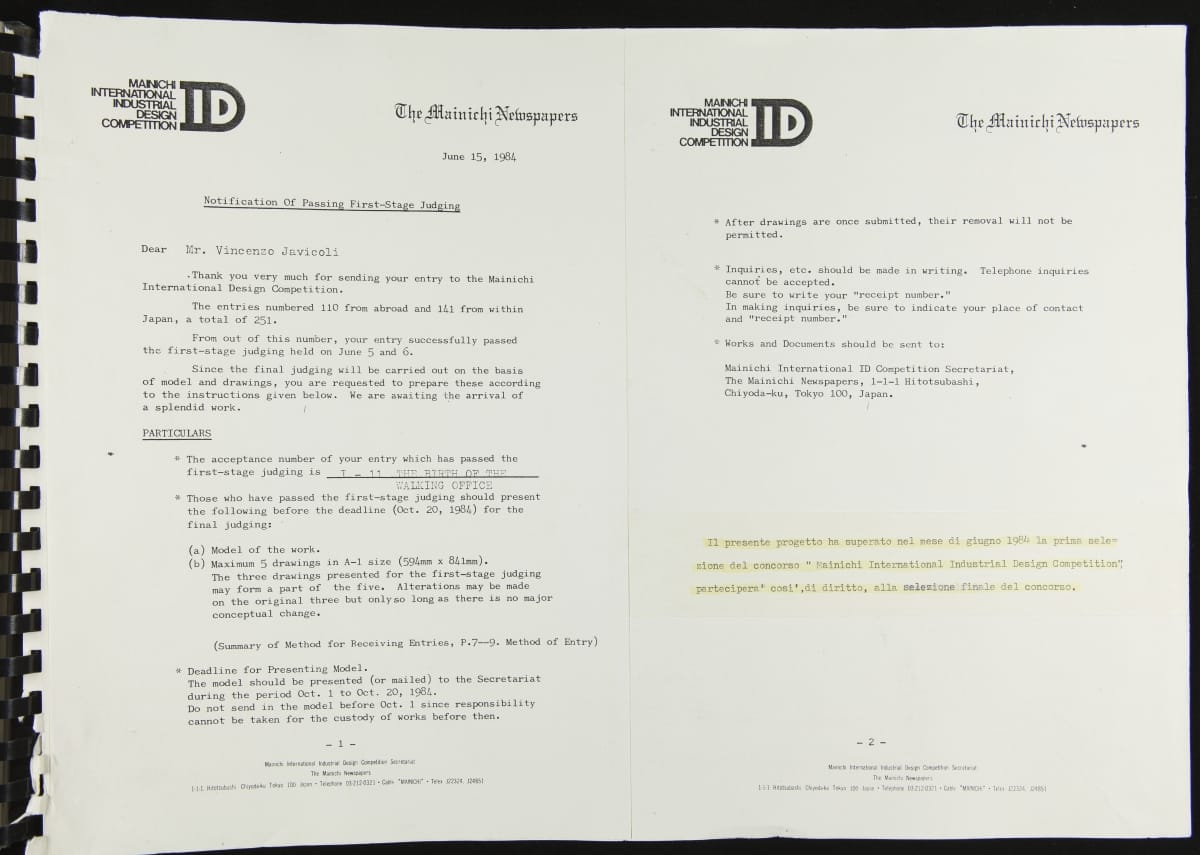
- Clippings Portfolio, "The Walking Office" Winning Entry in the 30th Mainich Industrial Design Competition, 1985 - The Walking Office Wearable Computer is a prototype model created by the design group Salotto Dinamico. This proposed device subverted where (and when) the office could be by turning the human body into a mobile workstation. Combining 1980s Italian design aesthetic with high-tech materials, the Walking Office is unapologetically cyberpunk-chic. It received global attention in design, fashion, and technology publications.
- 1985
- Collections - Artifact
Clippings Portfolio, "The Walking Office" Winning Entry in the 30th Mainich Industrial Design Competition, 1985
The Walking Office Wearable Computer is a prototype model created by the design group Salotto Dinamico. This proposed device subverted where (and when) the office could be by turning the human body into a mobile workstation. Combining 1980s Italian design aesthetic with high-tech materials, the Walking Office is unapologetically cyberpunk-chic. It received global attention in design, fashion, and technology publications.
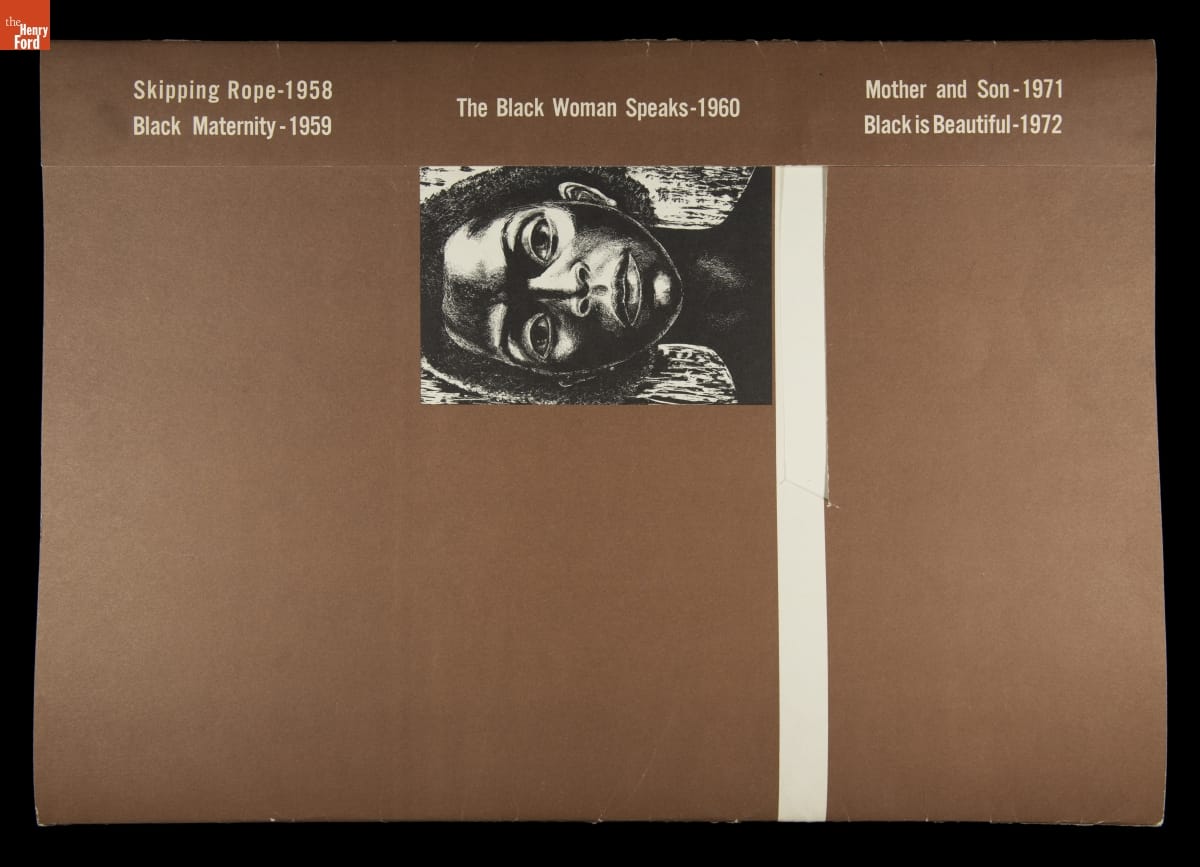
- Portfolio of Lithographs by Elizabeth Catlett, 1958-1972 -
- 1958-1972
- Collections - Artifact
Portfolio of Lithographs by Elizabeth Catlett, 1958-1972
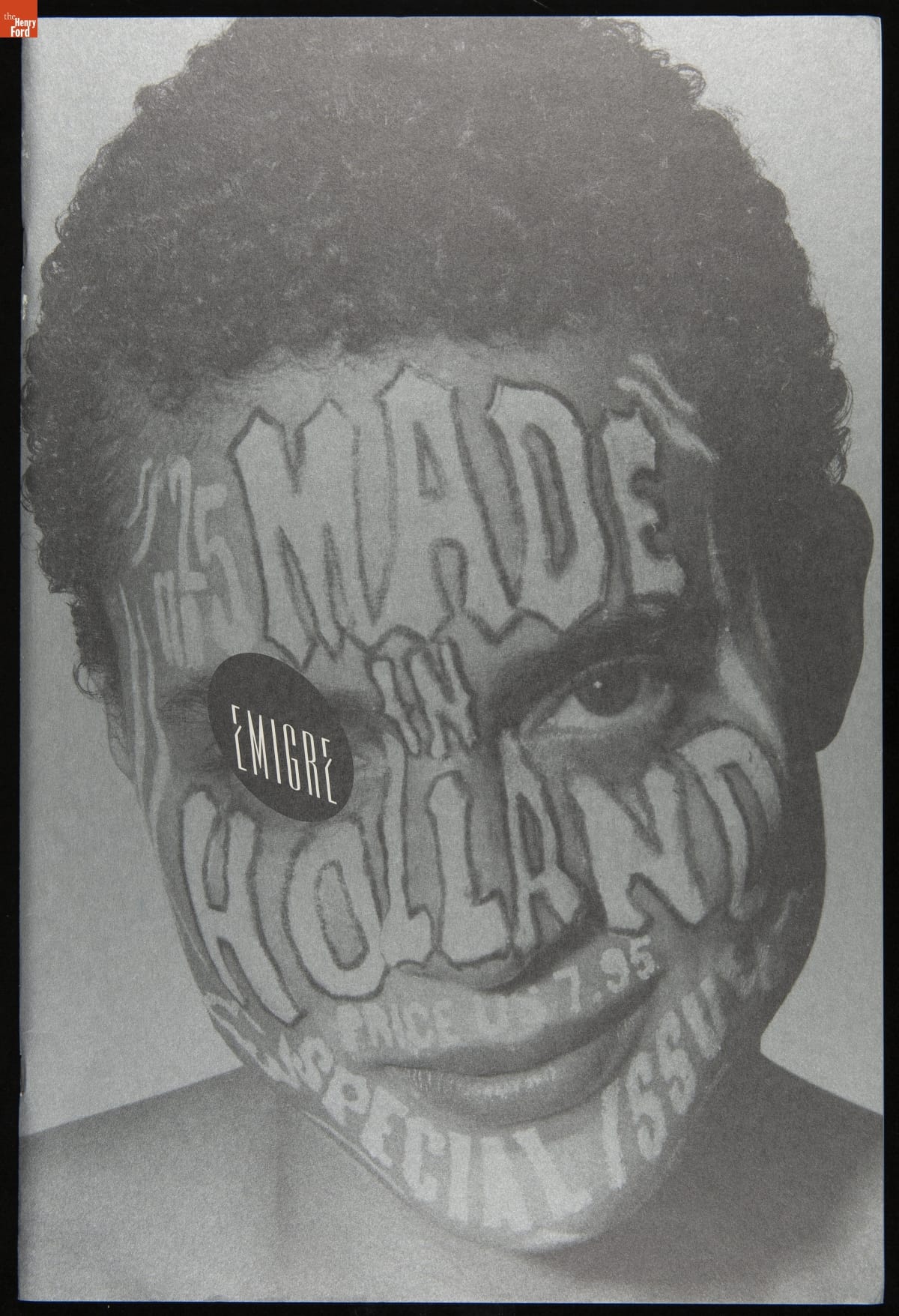
- Magazine, Emigre No. 25, "Made In Holland," 1993 - Emigre is a digital type foundry established by Rudy VanderLans and Zuzana Licko. The company's history is linked with the introduction of the 1984 Macintosh computer, used to design their early bitmapped typefaces. Emigre's digital work gained notoriety -- defying visual communication standards with fractured, layered combinations of text and image. <em>Emigre</em> magazine showcased their fonts and promoted groundbreaking designers.
- 1993
- Collections - Artifact
Magazine, Emigre No. 25, "Made In Holland," 1993
Emigre is a digital type foundry established by Rudy VanderLans and Zuzana Licko. The company's history is linked with the introduction of the 1984 Macintosh computer, used to design their early bitmapped typefaces. Emigre's digital work gained notoriety -- defying visual communication standards with fractured, layered combinations of text and image. Emigre magazine showcased their fonts and promoted groundbreaking designers.
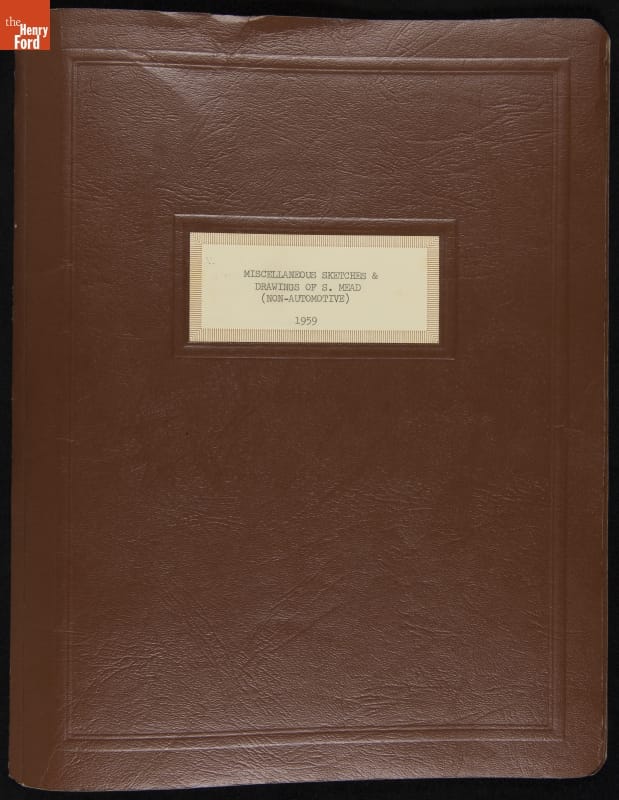
- Portfolio, "Miscellaneous Sketches & Drawings of S. Mead (Non-Automotive) 1959", 1959 - Syd Mead combined his interests in automobiles and science fiction into an influential career in industrial design. He graduated from the Art Center College of Design in 1959 and spent 20 months in Ford Motor Company's advanced studio. He later designed the company's pavilion at the 1964 New York World's Fair. Mead's futuristic work appeared in films like <em>Blade Runner</em>.
- 1959
- Collections - Artifact
Portfolio, "Miscellaneous Sketches & Drawings of S. Mead (Non-Automotive) 1959", 1959
Syd Mead combined his interests in automobiles and science fiction into an influential career in industrial design. He graduated from the Art Center College of Design in 1959 and spent 20 months in Ford Motor Company's advanced studio. He later designed the company's pavilion at the 1964 New York World's Fair. Mead's futuristic work appeared in films like Blade Runner.
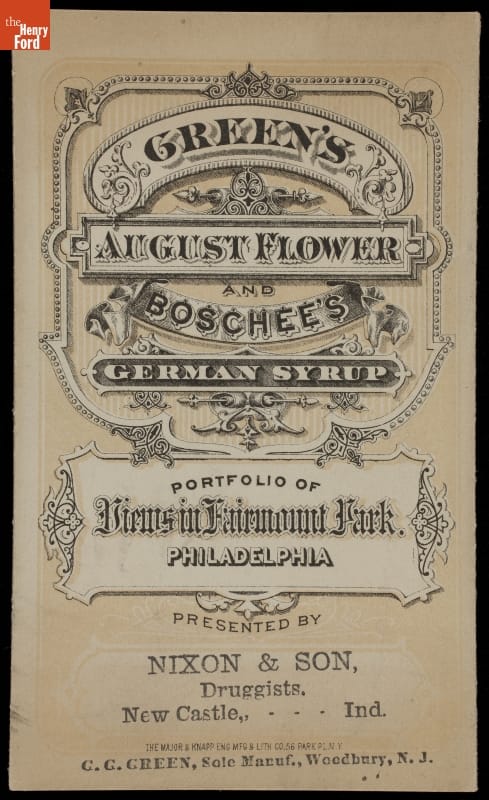
- Trade Card Portfolio for Green's August Flower and Boschee's German Syrup, G.G. Green, circa 1880 - In the last third of the nineteenth century, an unprecedented variety of consumer goods and services flooded the American market. Advertisers bombarded potential customers with trade cards. Americans enjoyed and saved the often illustrated little advertisements found in product packages or distributed by local merchants. Many survive as historical records of commercialism in the United States.
- circa 1880
- Collections - Artifact
Trade Card Portfolio for Green's August Flower and Boschee's German Syrup, G.G. Green, circa 1880
In the last third of the nineteenth century, an unprecedented variety of consumer goods and services flooded the American market. Advertisers bombarded potential customers with trade cards. Americans enjoyed and saved the often illustrated little advertisements found in product packages or distributed by local merchants. Many survive as historical records of commercialism in the United States.
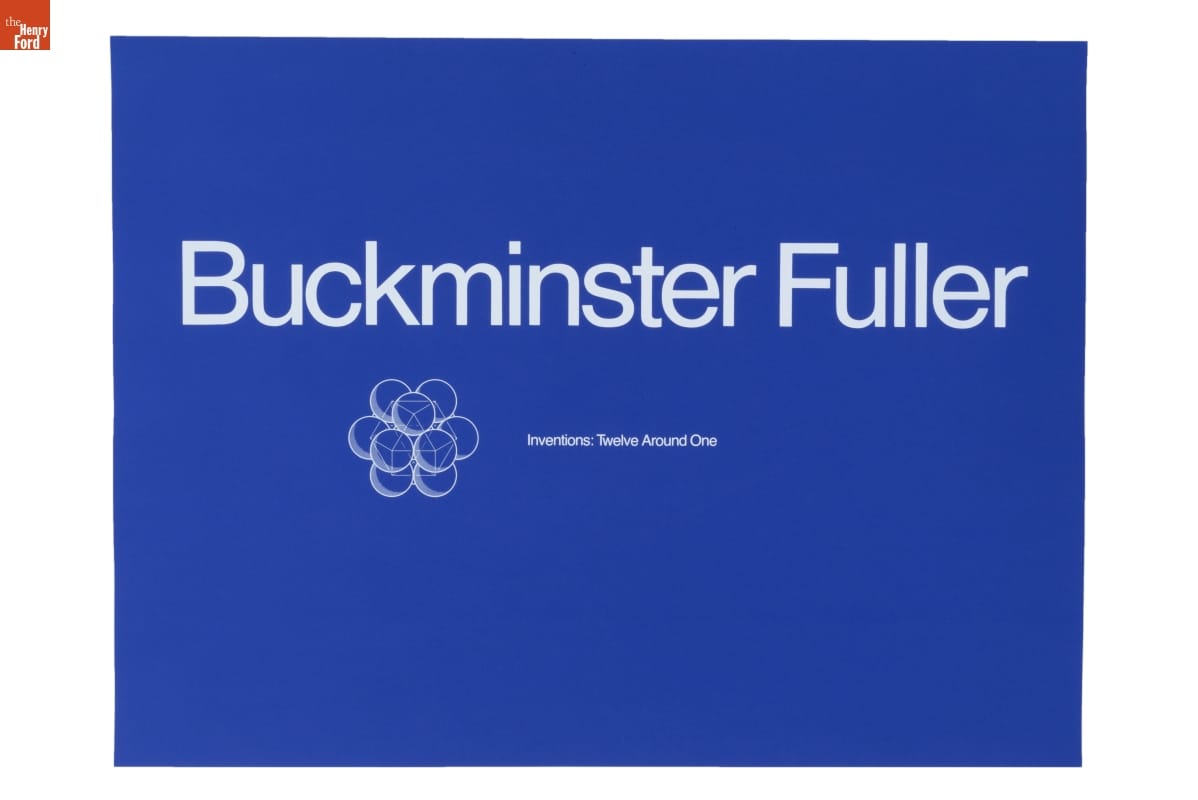
- Buckminster Fuller, "Inventions: Twelve Around One," 1981 -
- 1981
- Collections - Artifact
Buckminster Fuller, "Inventions: Twelve Around One," 1981
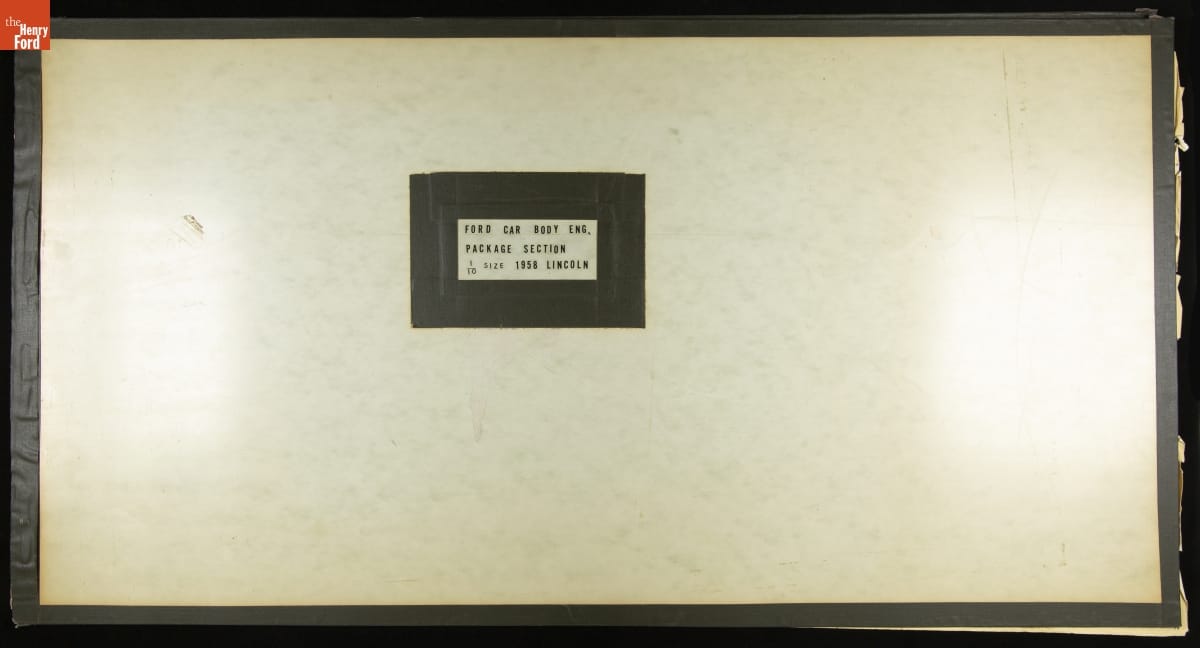
- Design Drawings, 1958 Lincoln - This portfolio contains drawings, with detailed measurements, for the 1958 Lincoln Continental Mark III two-door coupe and four-door sedan. The cars featured an unusual rear window that could be opened when weather permitted. The coupe had a factory price of $5,765 while the sedan sold for $6,012. Including convertibles, Lincoln built more than 12,500 Continentals for 1958.
- 1958
- Collections - Artifact
Design Drawings, 1958 Lincoln
This portfolio contains drawings, with detailed measurements, for the 1958 Lincoln Continental Mark III two-door coupe and four-door sedan. The cars featured an unusual rear window that could be opened when weather permitted. The coupe had a factory price of $5,765 while the sedan sold for $6,012. Including convertibles, Lincoln built more than 12,500 Continentals for 1958.
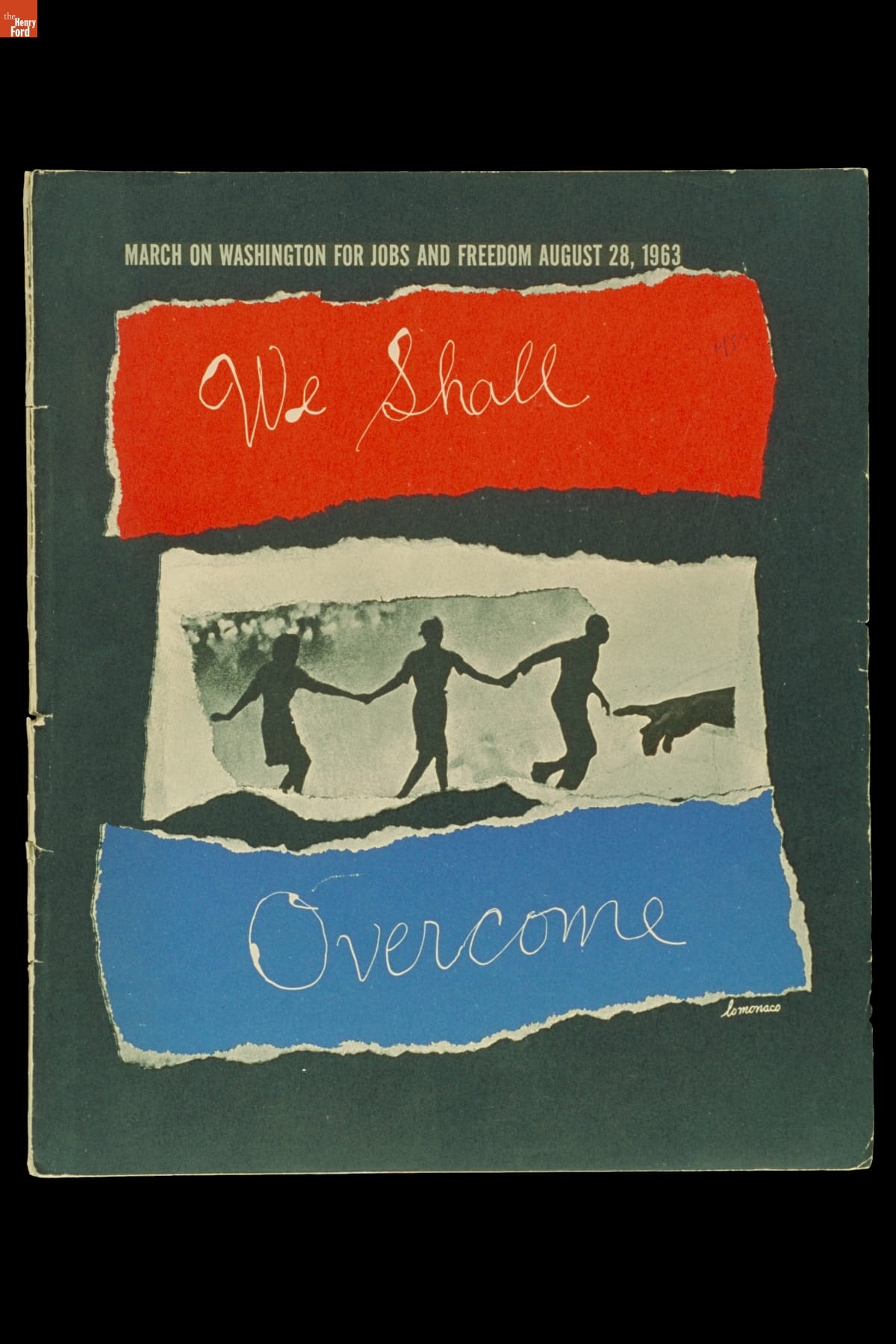
- Print Portfolio, "We Shall Overcome," 1963 - More than 250,000 civil rights advocates showed up at the 1963 March on Washington for Jobs and Freedom. This souvenir portfolio held a group of photo collages, each incorporating fragments of disturbing images from the movement. The artist intended these to symbolize man's inhumanity to his fellow man. Civil Rights activists hoped that they would stir people's emotions and incite action.
- August 28, 1963
- Collections - Artifact
Print Portfolio, "We Shall Overcome," 1963
More than 250,000 civil rights advocates showed up at the 1963 March on Washington for Jobs and Freedom. This souvenir portfolio held a group of photo collages, each incorporating fragments of disturbing images from the movement. The artist intended these to symbolize man's inhumanity to his fellow man. Civil Rights activists hoped that they would stir people's emotions and incite action.
- Tattoo Flash Portfolio, circa 1925 - Tattoos communicate stories. Their content ranges from deeply personal and traditional--to regrettable and frivolous. In the early 1900s, "Professor" Waters apprenticed as a tattoo artist in carnivals and New York's Bowery District. He ran a successful supply shop in Detroit (1918-1939), patenting the standard "two-coil" tattoo machine in 1929. Designs from his flash sheets continue to inspire tattooists today.
- circa 1925
- Collections - Artifact
Tattoo Flash Portfolio, circa 1925
Tattoos communicate stories. Their content ranges from deeply personal and traditional--to regrettable and frivolous. In the early 1900s, "Professor" Waters apprenticed as a tattoo artist in carnivals and New York's Bowery District. He ran a successful supply shop in Detroit (1918-1939), patenting the standard "two-coil" tattoo machine in 1929. Designs from his flash sheets continue to inspire tattooists today.