
Search
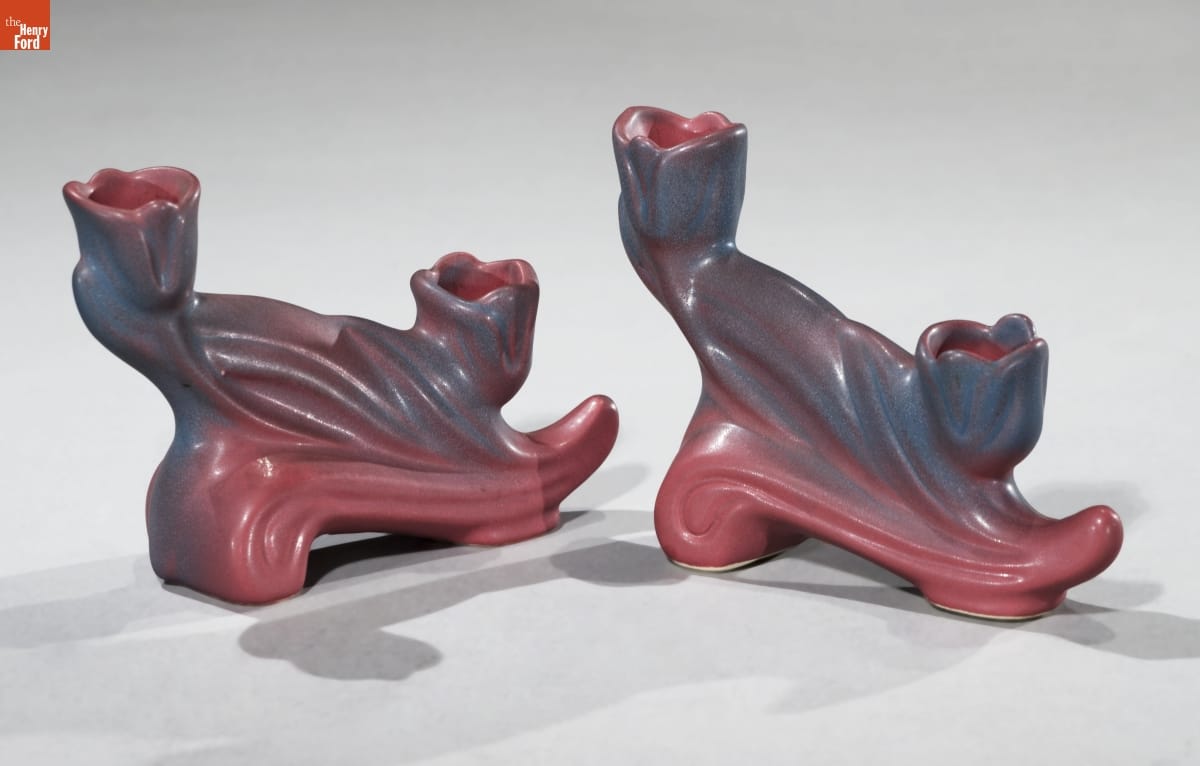
- Candleholder, 1940-1950 - The Van Briggle Pottery was among the most important and longest-lasting art potteries. The pottery, established in 1901 and located in Colorado Springs, Colorado, is known for its satin matte glazes perfected by its founder, Artus Van Briggle. The pottery produced works for more than one hundred years, finally closing its doors in the early 2010s.
- 1940-1950
- Collections - Artifact
Candleholder, 1940-1950
The Van Briggle Pottery was among the most important and longest-lasting art potteries. The pottery, established in 1901 and located in Colorado Springs, Colorado, is known for its satin matte glazes perfected by its founder, Artus Van Briggle. The pottery produced works for more than one hundred years, finally closing its doors in the early 2010s.
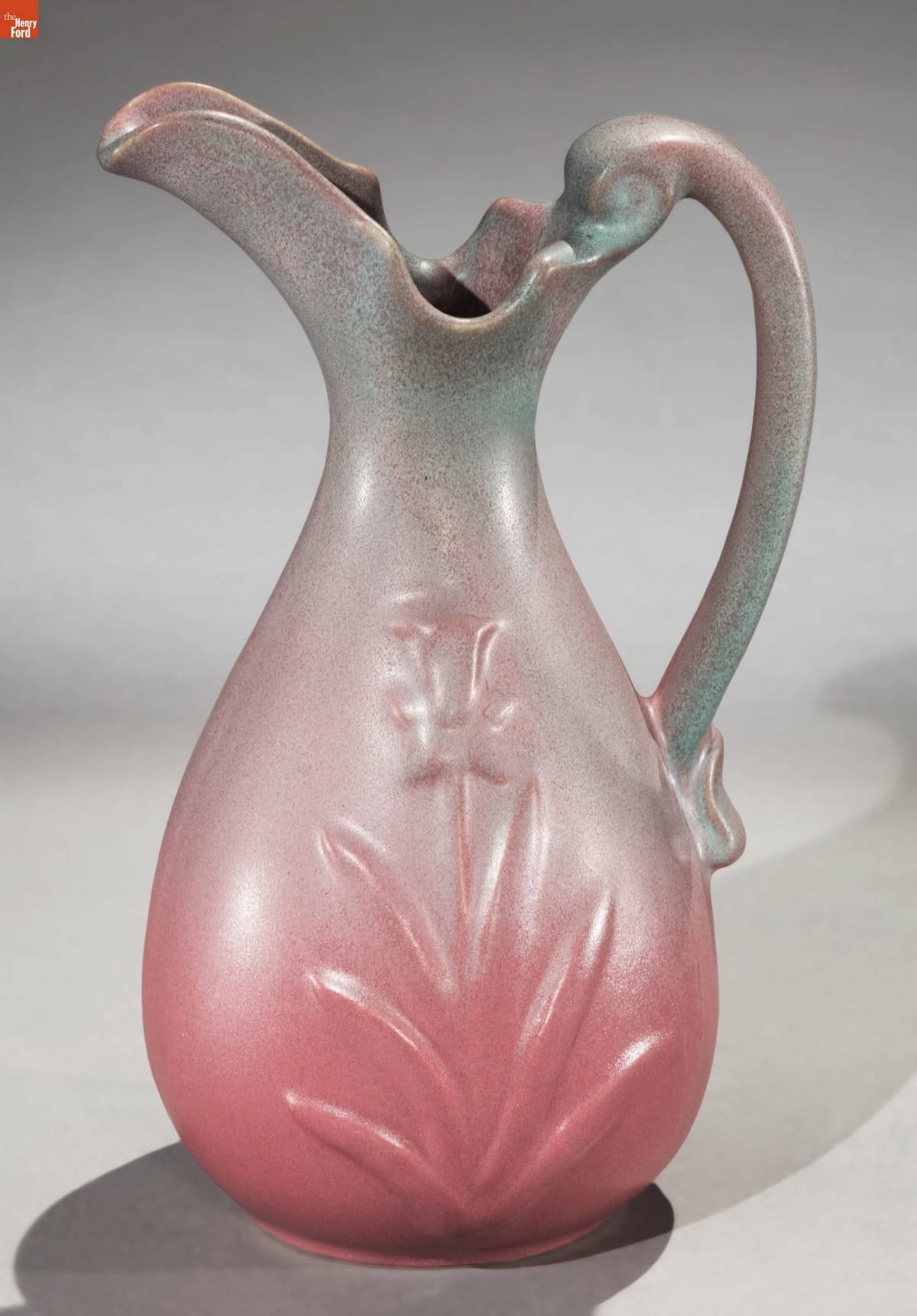
- Ewer, 1936-1940 - During the Great Depression of the 1930s, American art potteries produced inexpensive wares to boost waning sales. The Niloak Pottery Company of Benton, Arkansas, made this ewer (a pitcher or jug, usually decorative, with a wide mouth) as part of a low-cost line introduced in 1931. It features Niloak's matte pink and green-gray glaze combination known as Ozark Dawn.
- 1936-1940
- Collections - Artifact
Ewer, 1936-1940
During the Great Depression of the 1930s, American art potteries produced inexpensive wares to boost waning sales. The Niloak Pottery Company of Benton, Arkansas, made this ewer (a pitcher or jug, usually decorative, with a wide mouth) as part of a low-cost line introduced in 1931. It features Niloak's matte pink and green-gray glaze combination known as Ozark Dawn.
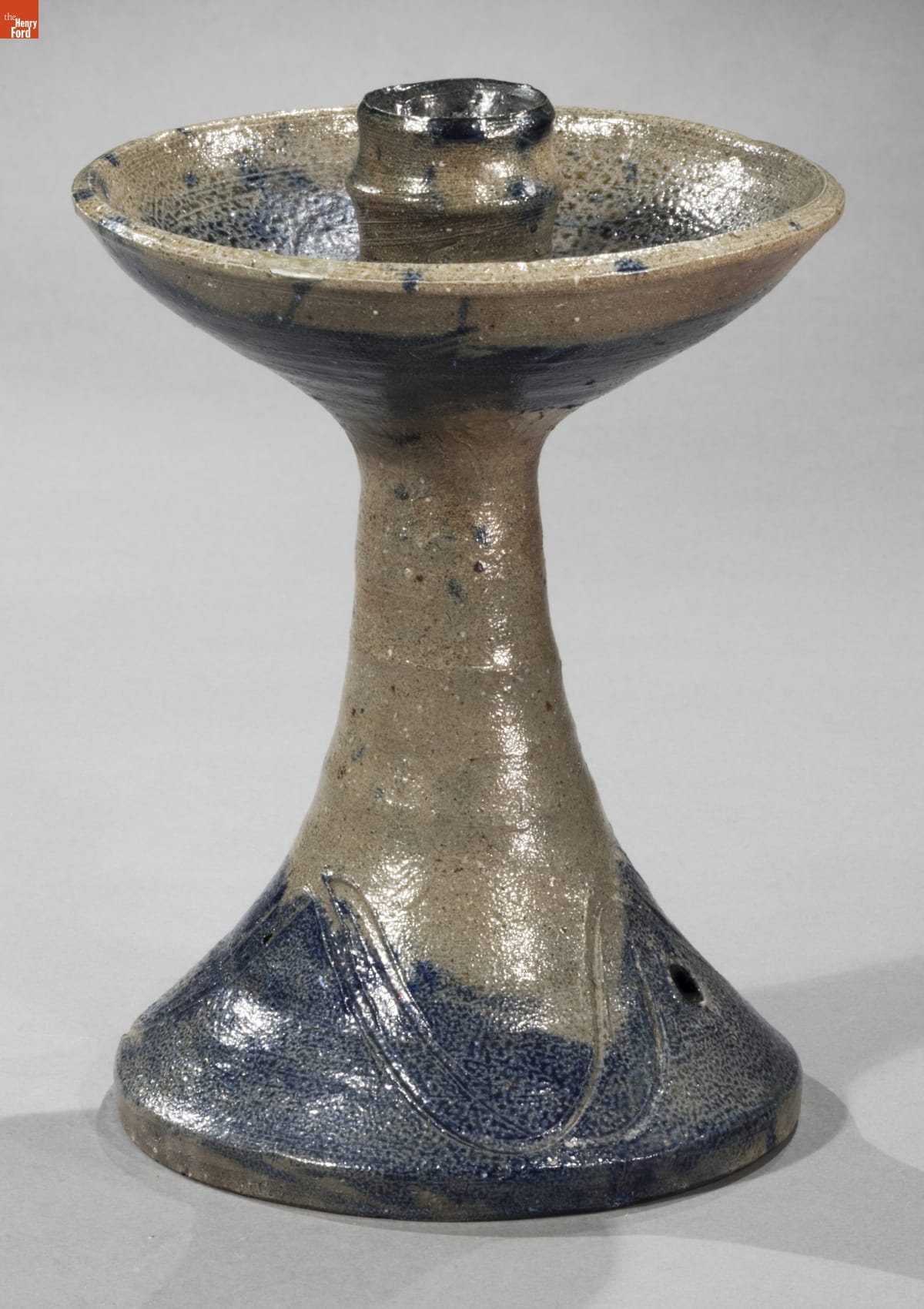
- Candlestick, 1917-1921 - Jugtown Pottery was founded by artists Jacques and Juliana Busbee who attempted to save local craft traditions in North Carolina. The Busbees hired local potters and made the wares available at a shop in Greenwich Village, New York. This rough, salt glaze candlestick is typical of their early pieces, appearing very much like a survivor of the 18th or 19th century.
- 1917-1921
- Collections - Artifact
Candlestick, 1917-1921
Jugtown Pottery was founded by artists Jacques and Juliana Busbee who attempted to save local craft traditions in North Carolina. The Busbees hired local potters and made the wares available at a shop in Greenwich Village, New York. This rough, salt glaze candlestick is typical of their early pieces, appearing very much like a survivor of the 18th or 19th century.
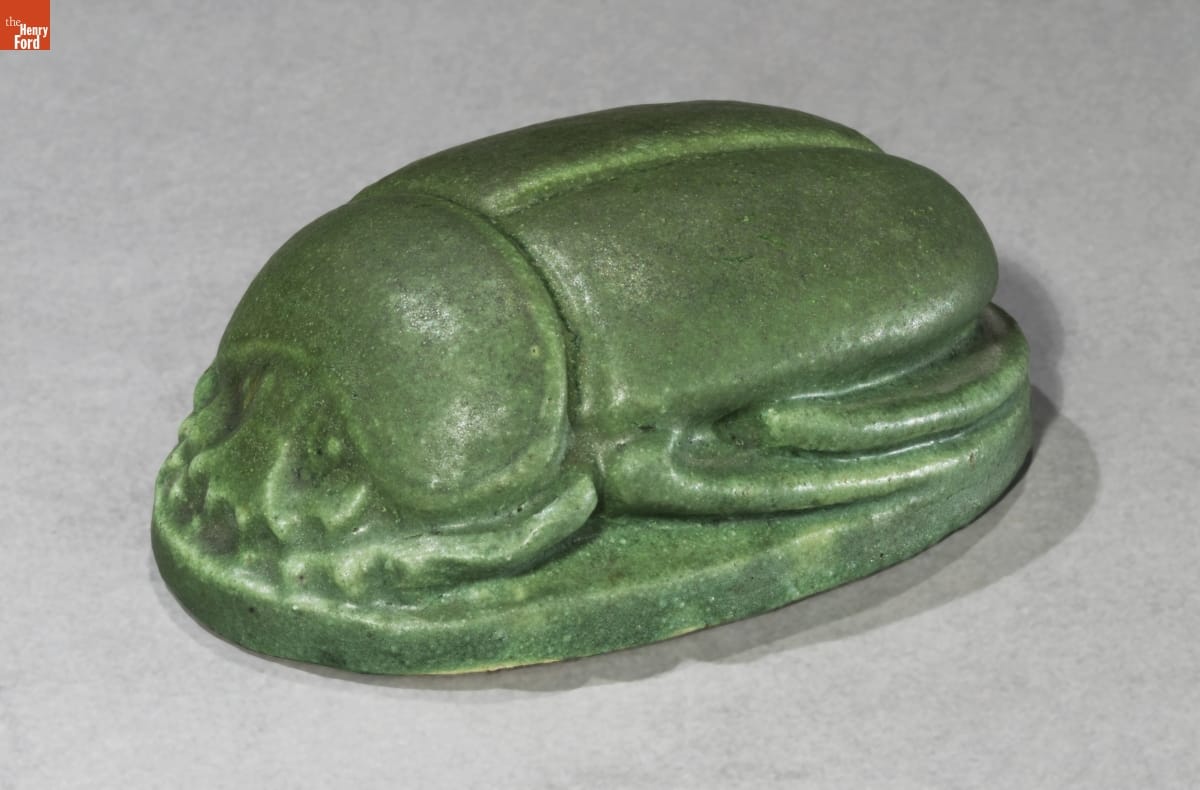
- Scarab Paperweight, 1904-1908 -
- 1904-1908
- Collections - Artifact
Scarab Paperweight, 1904-1908
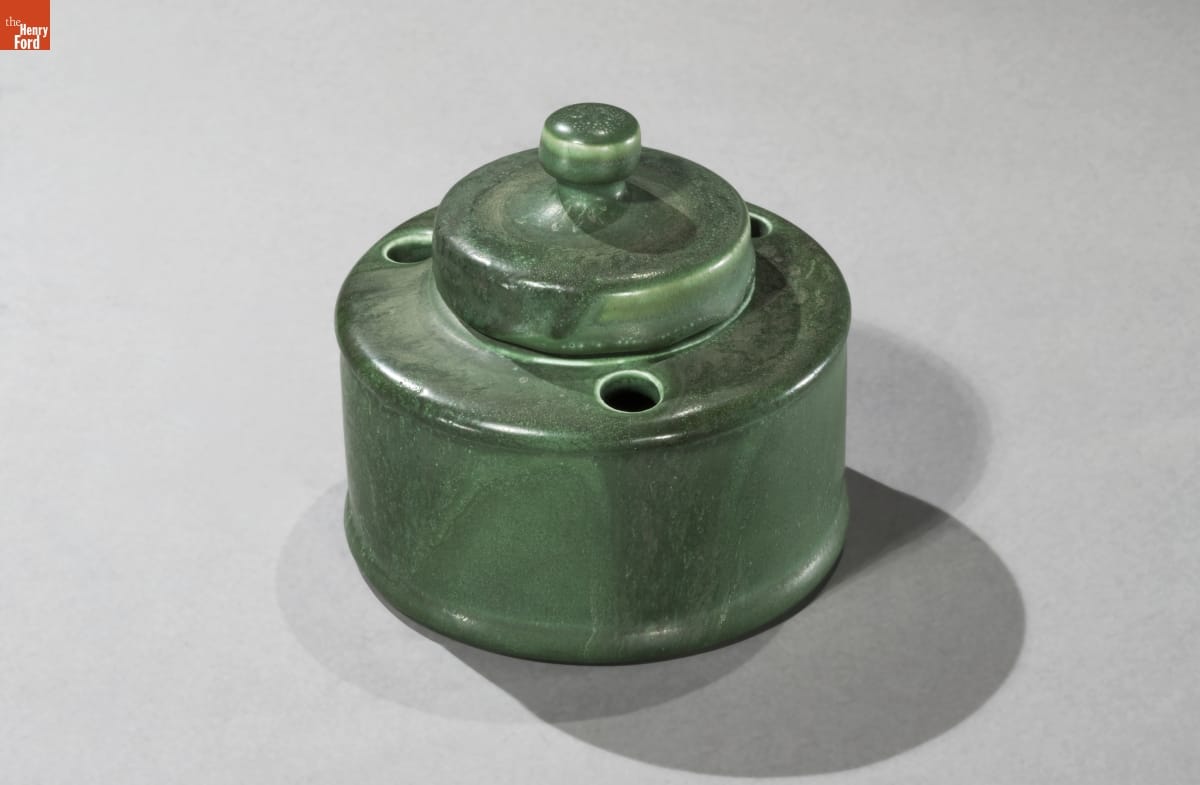
- Inkwell, 1904-1917 - Cadman Robertson joined Hampshire Pottery in 1904 and began developing decorative household items covered with an attractive thick brown, red, blue, or green glaze. The Keene, New Hampshire, company continued to produce similar wares for a few years after Robertson's sudden death in 1914. The company was sold in 1917 and focused on making commercial China for restaurants and hotels. The factory closed in 1923.
- 1904-1917
- Collections - Artifact
Inkwell, 1904-1917
Cadman Robertson joined Hampshire Pottery in 1904 and began developing decorative household items covered with an attractive thick brown, red, blue, or green glaze. The Keene, New Hampshire, company continued to produce similar wares for a few years after Robertson's sudden death in 1914. The company was sold in 1917 and focused on making commercial China for restaurants and hotels. The factory closed in 1923.
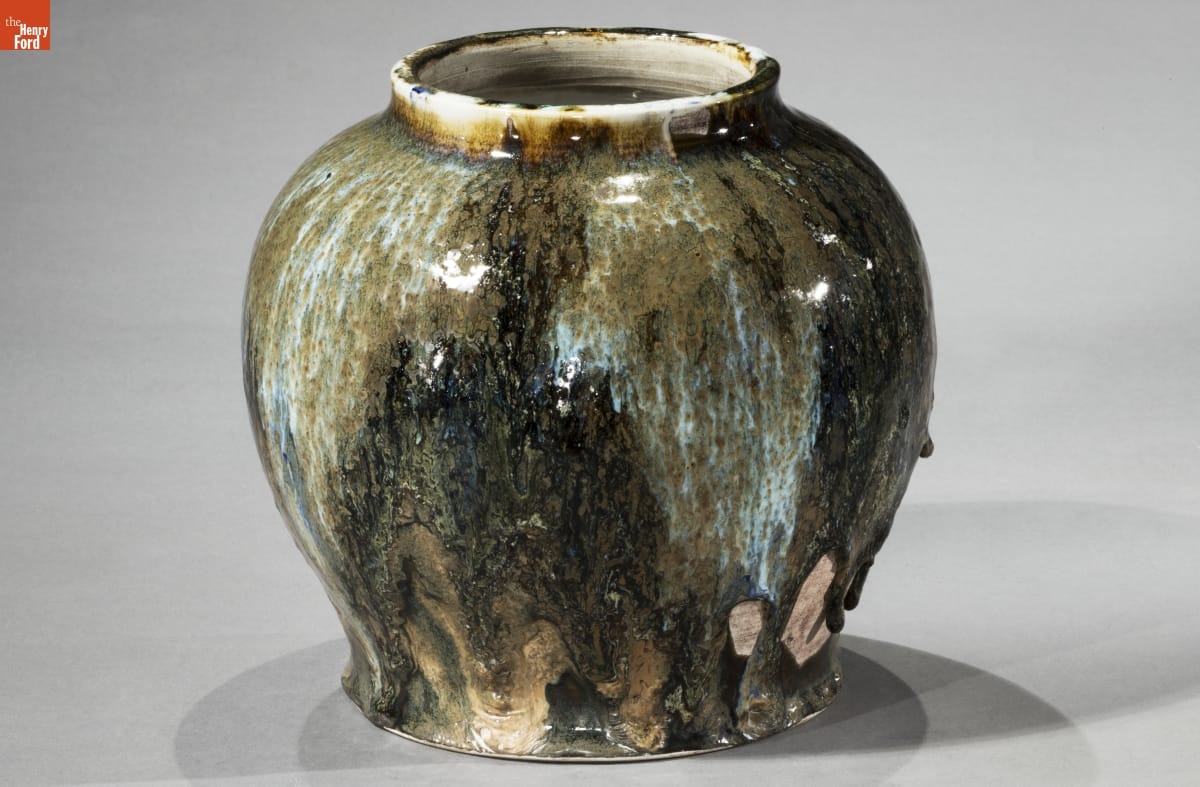
- Jar, 1896-1908 -
- 1896-1908
- Collections - Artifact
Jar, 1896-1908
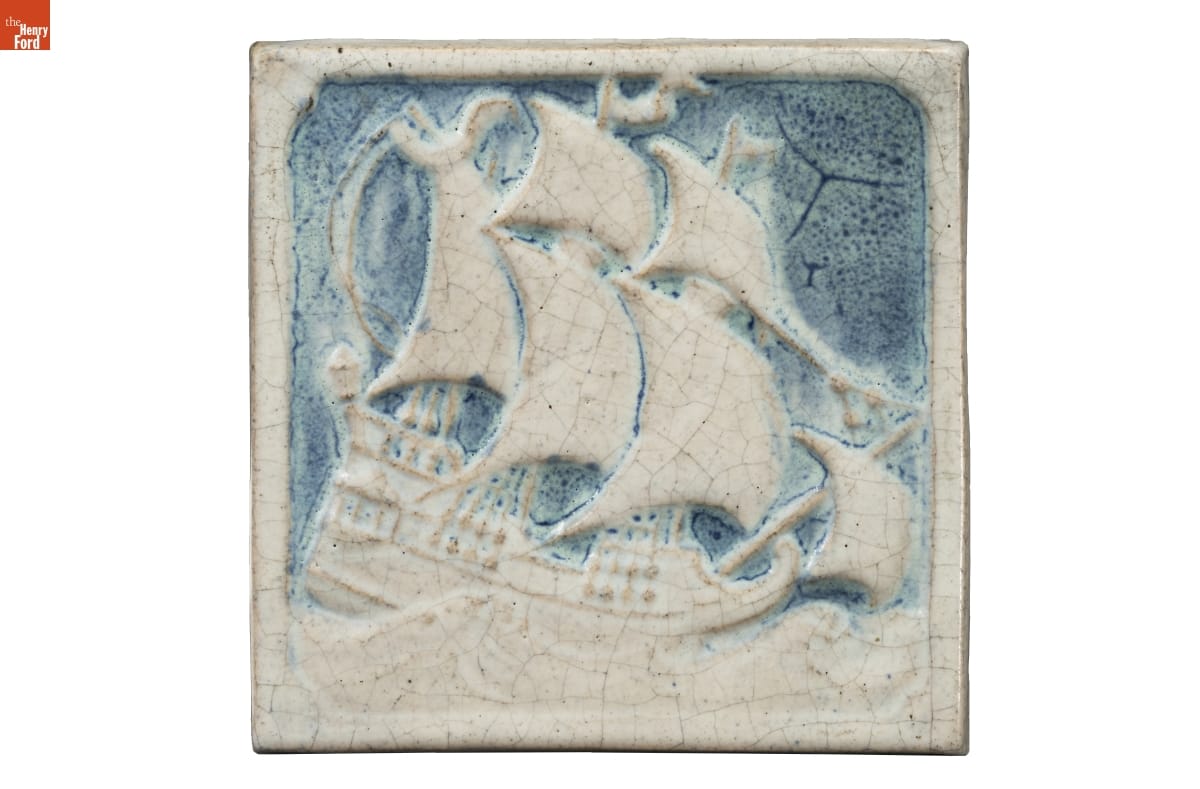
- Tile, 1915-1930 -
- 1915-1930
- Collections - Artifact
Tile, 1915-1930
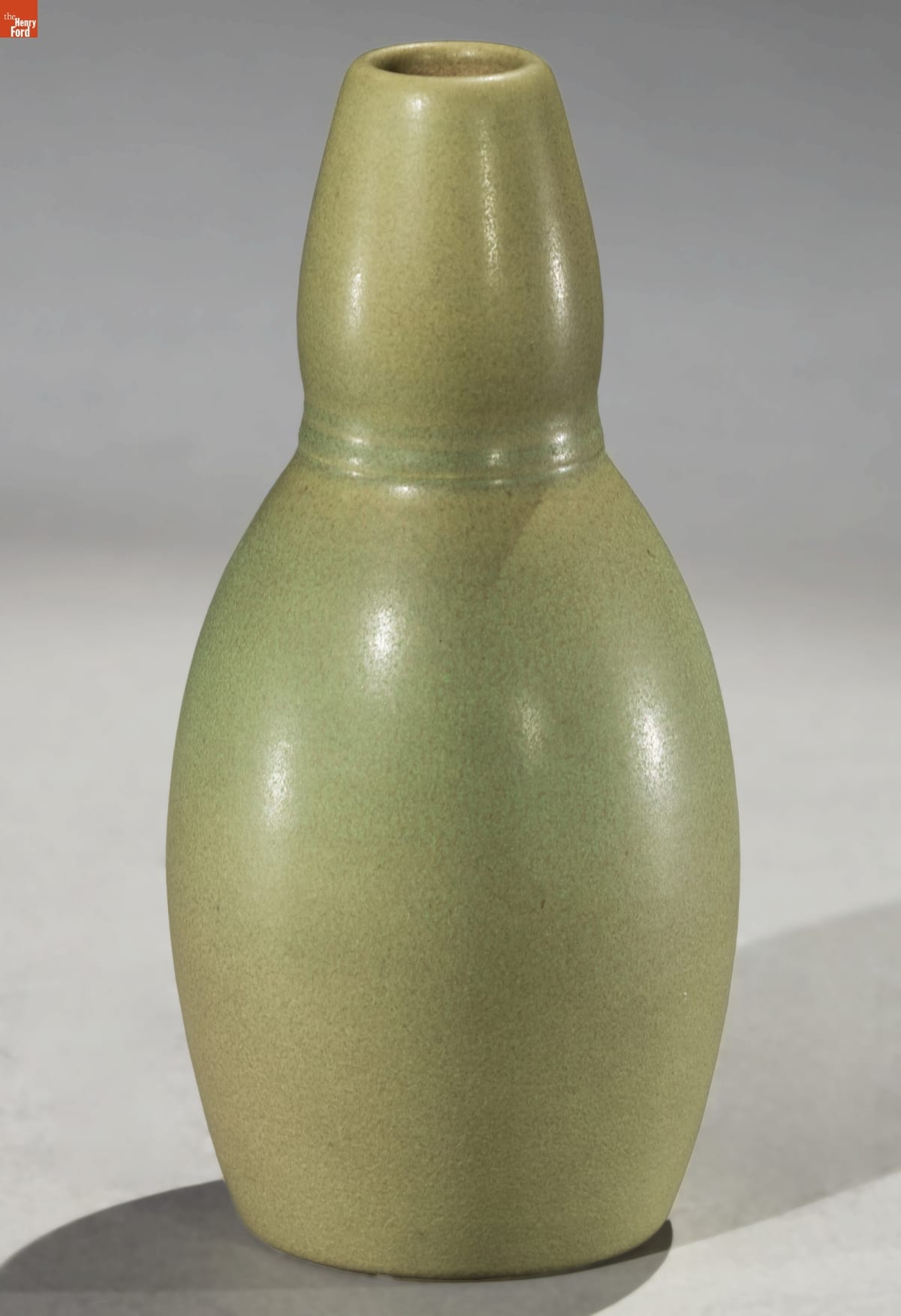
- Vase, 1902 -
- 1902
- Collections - Artifact
Vase, 1902
- Vase, 1921-1941 -
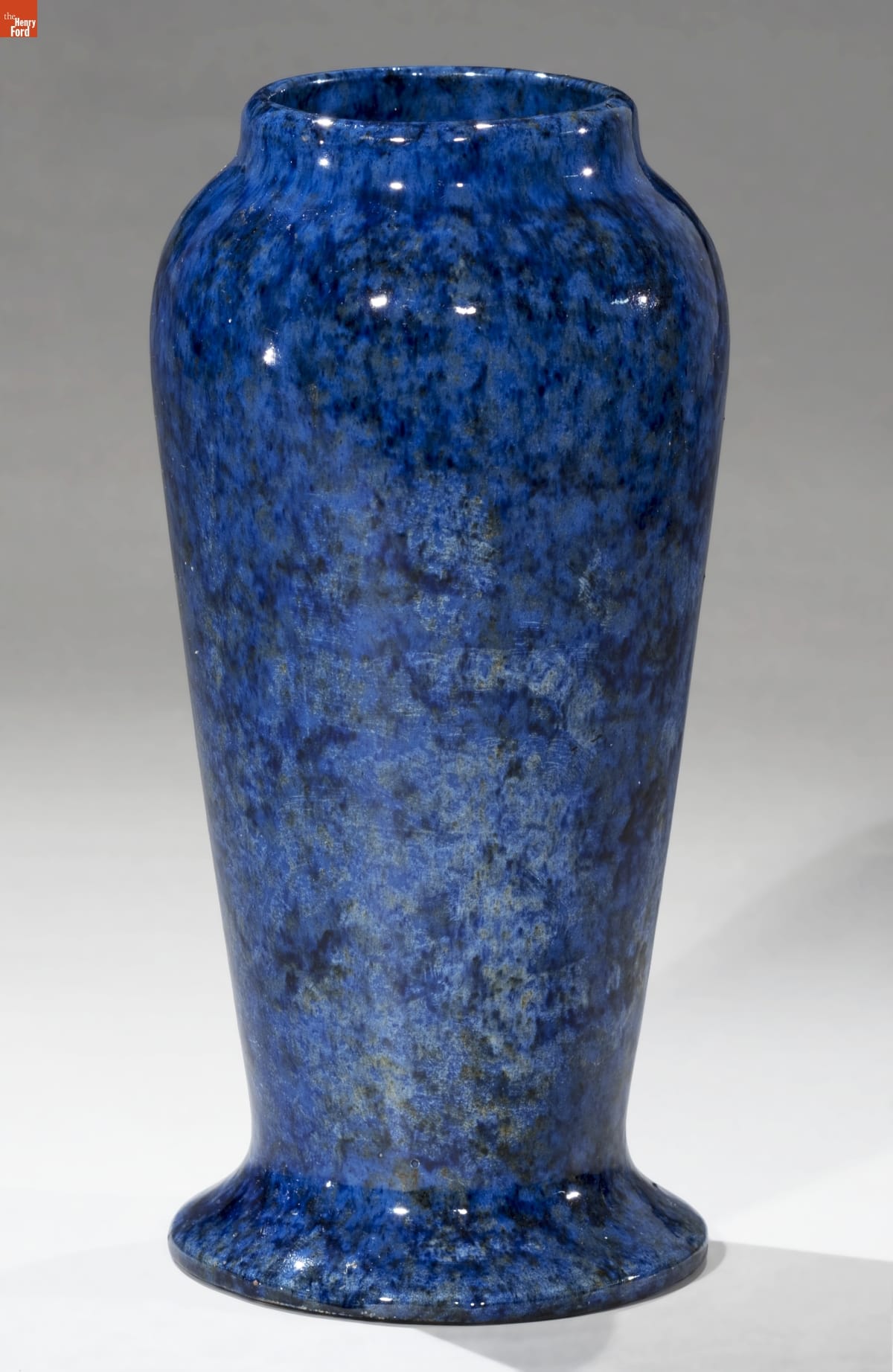
- 1921-1941
- Collections - Artifact
Vase, 1921-1941
- Vase, 1942 -
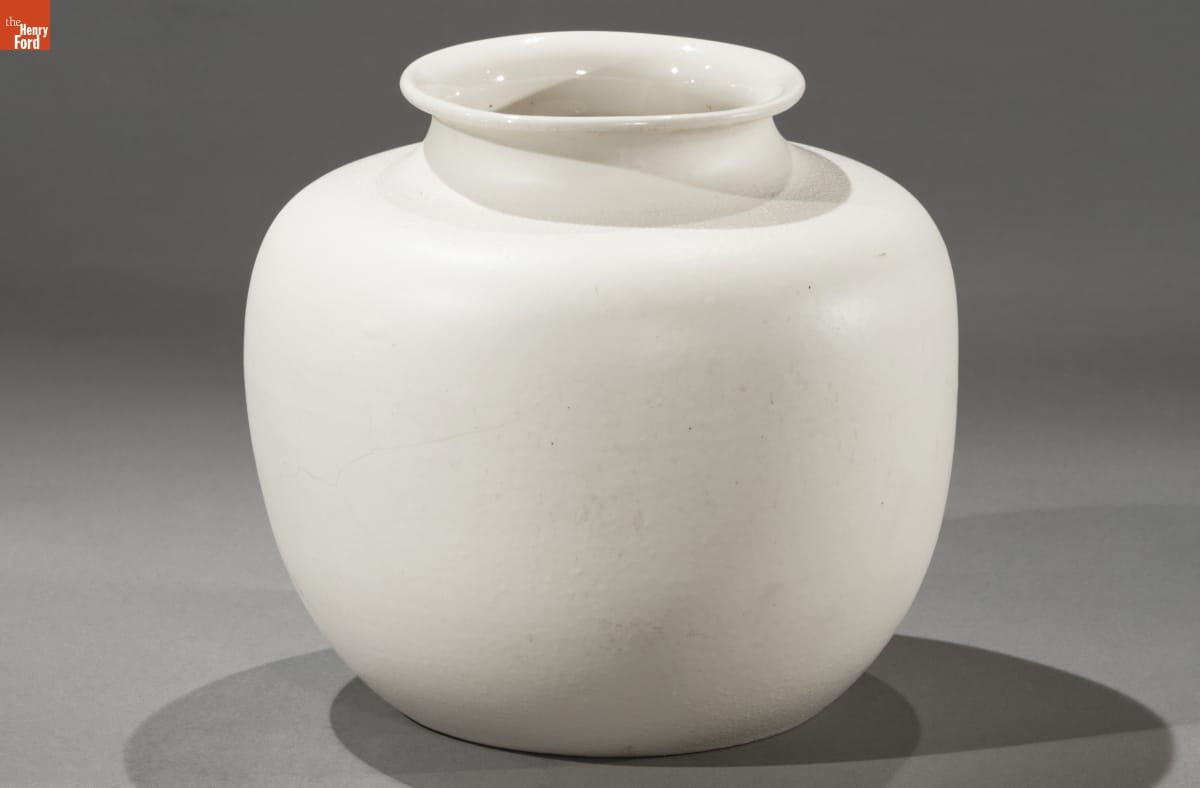
- 1942
- Collections - Artifact
Vase, 1942