
Search
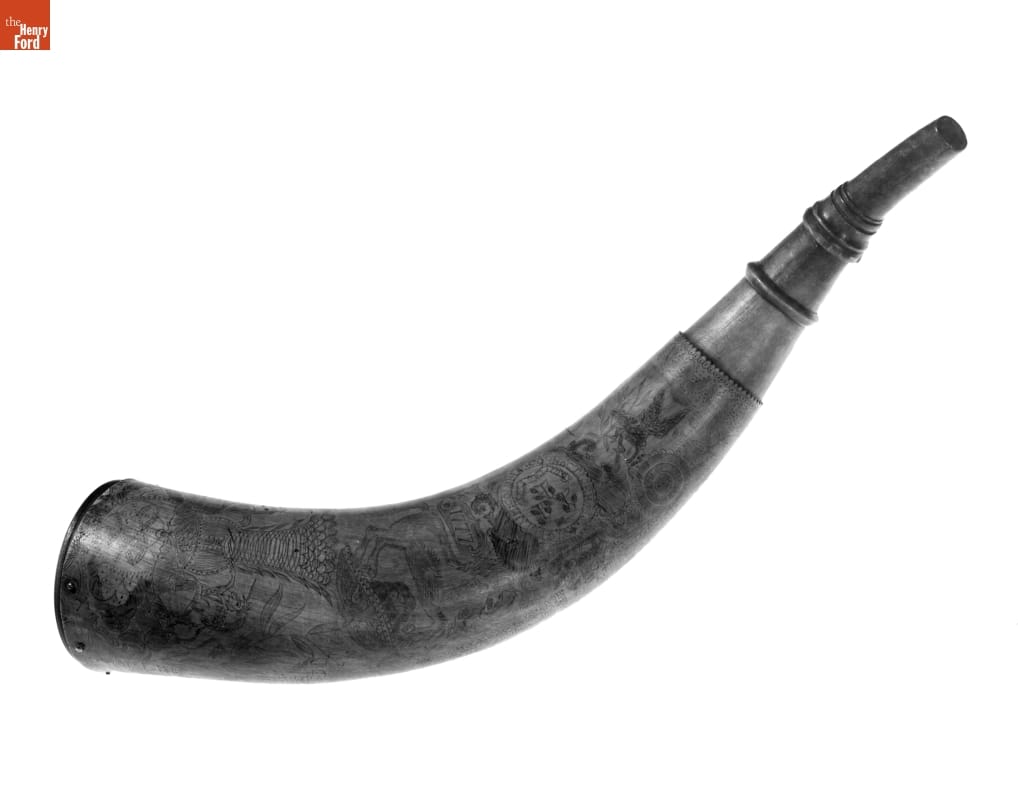
- Powder Horn, 1777 - Lightweight, inexpensive, waterproof, and plentiful, hollowed animal horn was ideal for carrying gunpowder. These functional tools of war also became canvasses for creative expression. Engraved powder horns survive as both documents of their owners' experiences and unique pieces of colonial American art. The patriotic images and lettering on this example were probably copied from a currency note of the time.
- 1777
- Collections - Artifact
Powder Horn, 1777
Lightweight, inexpensive, waterproof, and plentiful, hollowed animal horn was ideal for carrying gunpowder. These functional tools of war also became canvasses for creative expression. Engraved powder horns survive as both documents of their owners' experiences and unique pieces of colonial American art. The patriotic images and lettering on this example were probably copied from a currency note of the time.
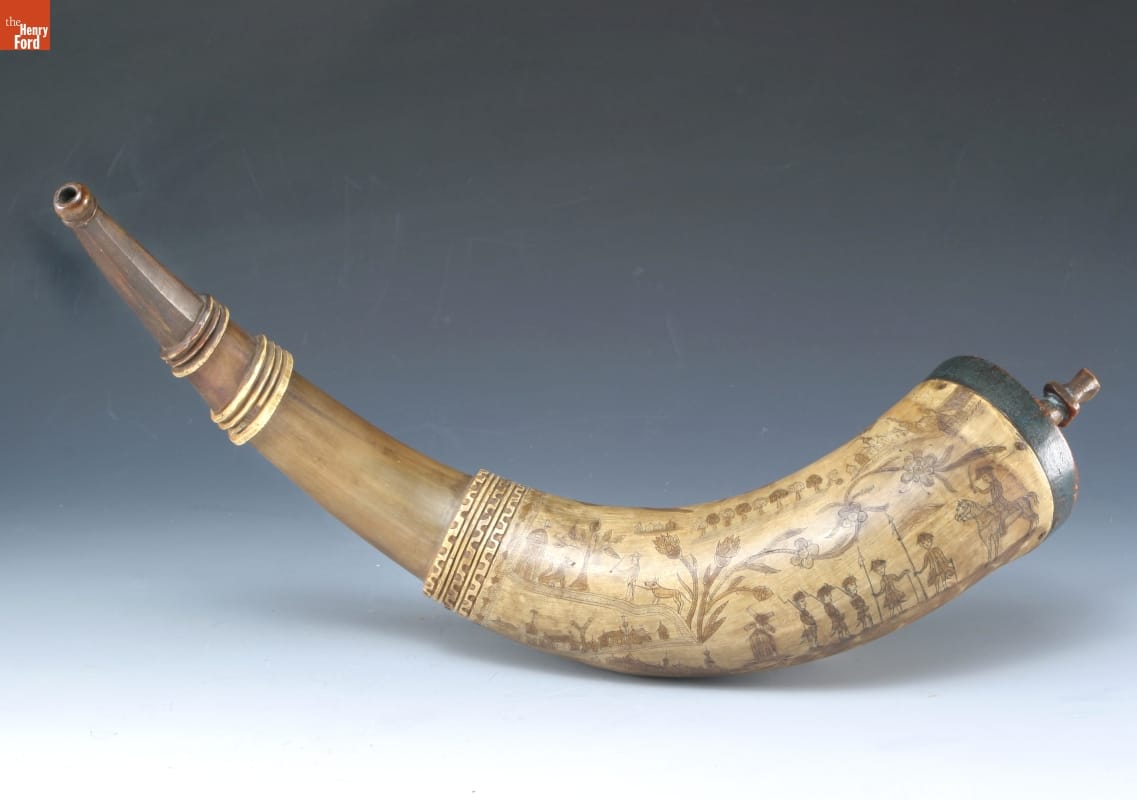
- Powder Horn, 1775-1783 - Lightweight, inexpensive, waterproof, and plentiful, hollowed animal horn was ideal for carrying gunpowder. These functional tools of war also became canvasses for creative expression. Engraved powder horns survive as both documents of their owners' experiences and unique pieces of colonial American art. This example illustrates the beginnings of the Revolutionary War through places, people, and symbolic imagery.
- 1775-1783
- Collections - Artifact
Powder Horn, 1775-1783
Lightweight, inexpensive, waterproof, and plentiful, hollowed animal horn was ideal for carrying gunpowder. These functional tools of war also became canvasses for creative expression. Engraved powder horns survive as both documents of their owners' experiences and unique pieces of colonial American art. This example illustrates the beginnings of the Revolutionary War through places, people, and symbolic imagery.
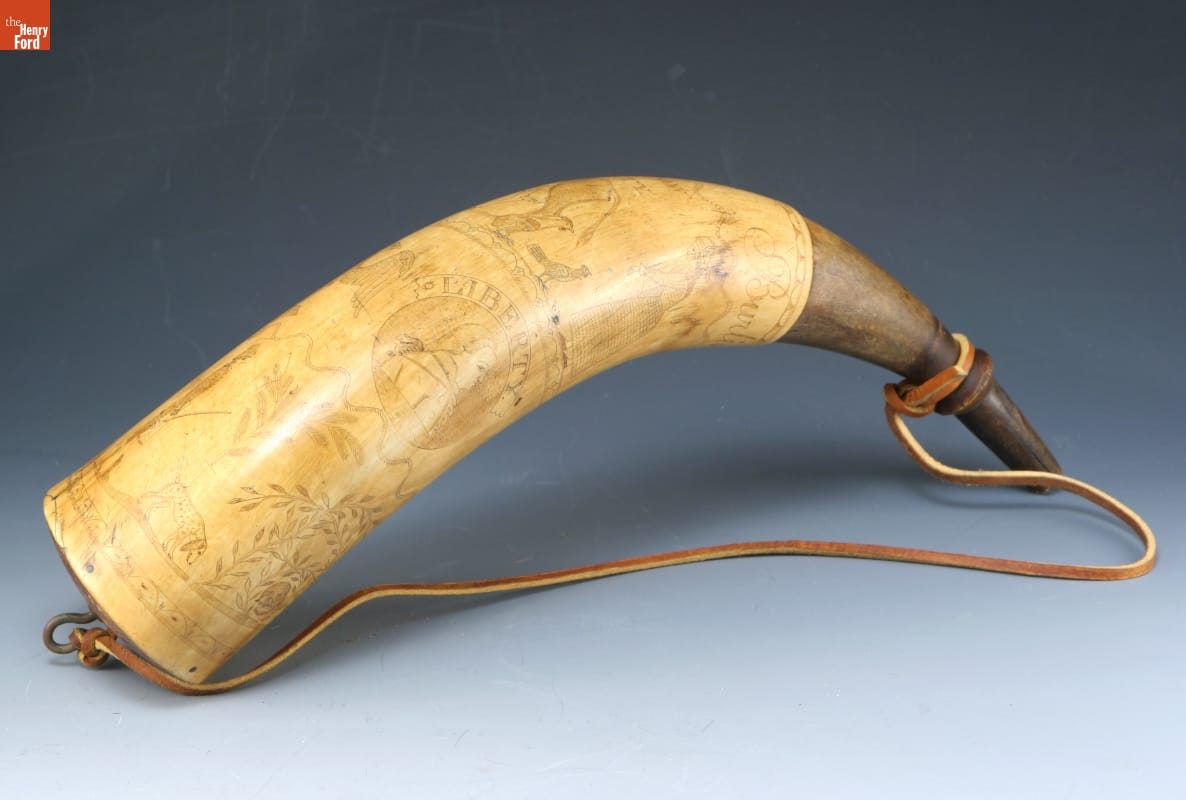
- Powder Horn, 1798 - Lightweight, inexpensive, waterproof, and plentiful, hollowed animal horn was ideal for carrying gunpowder. These functional tools also became canvasses for creative expression. Engraved powder horns survive as both documents of their owners' experiences and unique pieces of early American art. This example features agricultural and patriotic imagery, including a portrait of Revolutionary leader John Adams, who became the nation's second president.
- 1798
- Collections - Artifact
Powder Horn, 1798
Lightweight, inexpensive, waterproof, and plentiful, hollowed animal horn was ideal for carrying gunpowder. These functional tools also became canvasses for creative expression. Engraved powder horns survive as both documents of their owners' experiences and unique pieces of early American art. This example features agricultural and patriotic imagery, including a portrait of Revolutionary leader John Adams, who became the nation's second president.
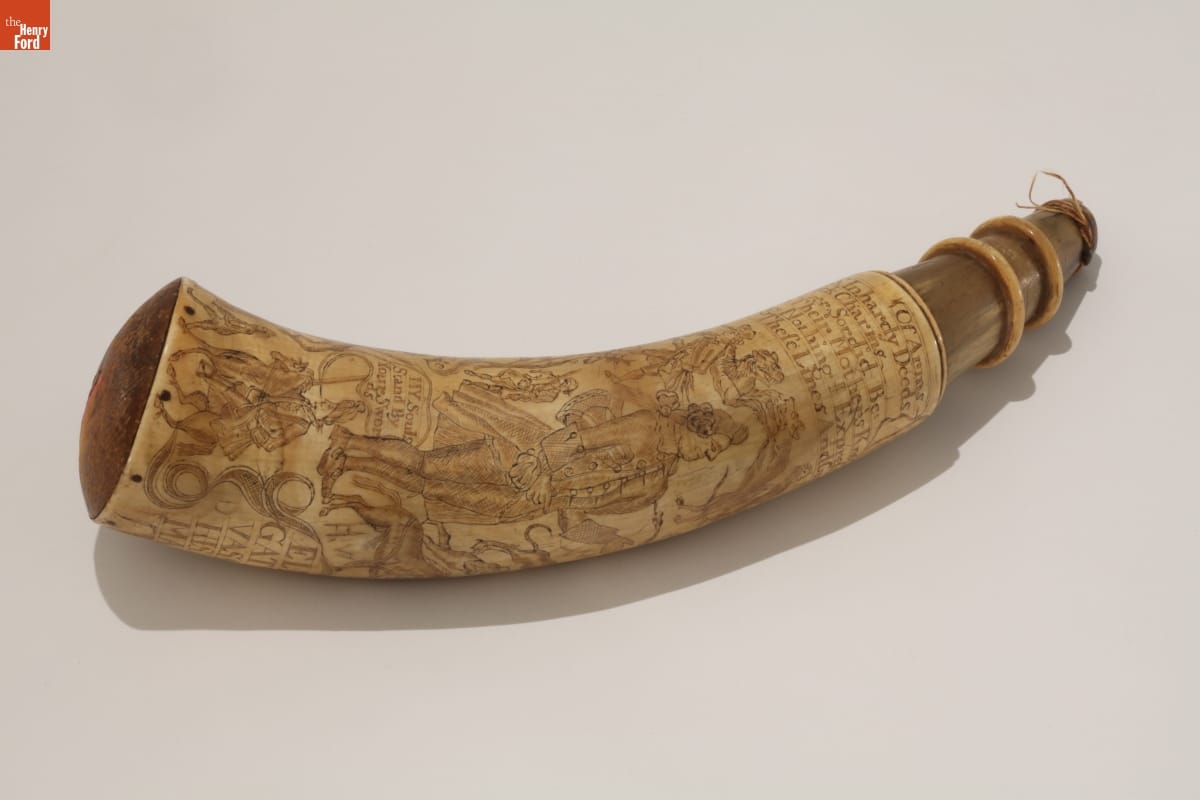
- Powder Horn, 1775 - Powder horns carried gunpowder for muzzle-loading guns. The hollowed-out horn kept the contents dry and was easy to decorate with simple tools. Andrew Clark, a skilled artist from the Kennebec River Valley in present-day Maine, elaborately engraved this powder horn for Elisha Gathel (actually Gatchel) in 1775. This horn is similar to other highly detailed ones made by Clark.
- December 19, 1775
- Collections - Artifact
Powder Horn, 1775
Powder horns carried gunpowder for muzzle-loading guns. The hollowed-out horn kept the contents dry and was easy to decorate with simple tools. Andrew Clark, a skilled artist from the Kennebec River Valley in present-day Maine, elaborately engraved this powder horn for Elisha Gathel (actually Gatchel) in 1775. This horn is similar to other highly detailed ones made by Clark.