
Search
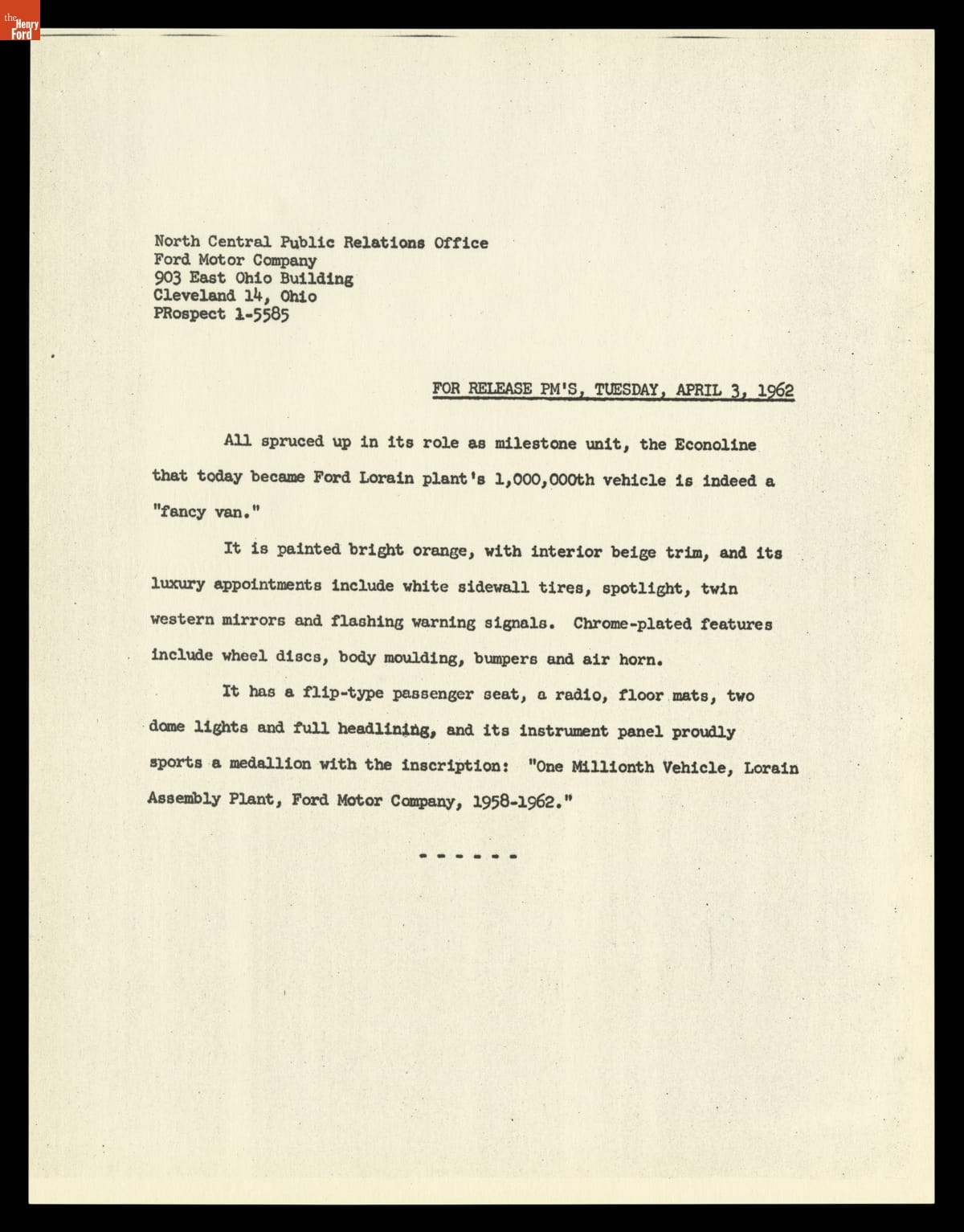
- One Millionth Vehicle Built at Ford Motor Comapany Assembly Plant, Lorain, Ohio, April 3, 1962 - Ford Motor Company opened an assembly plant in Lorain, Ohio, in 1958. Over the years, the factory manufactured various Ford and Mercury models. On April 3, 1962, employees celebrated production of the plant's one millionth vehicle: a Ford Econoline van. Workers at Lorain built another seven million vehicles before the plant closed in 2005.
- April 03, 1962
- Collections - Artifact
One Millionth Vehicle Built at Ford Motor Comapany Assembly Plant, Lorain, Ohio, April 3, 1962
Ford Motor Company opened an assembly plant in Lorain, Ohio, in 1958. Over the years, the factory manufactured various Ford and Mercury models. On April 3, 1962, employees celebrated production of the plant's one millionth vehicle: a Ford Econoline van. Workers at Lorain built another seven million vehicles before the plant closed in 2005.
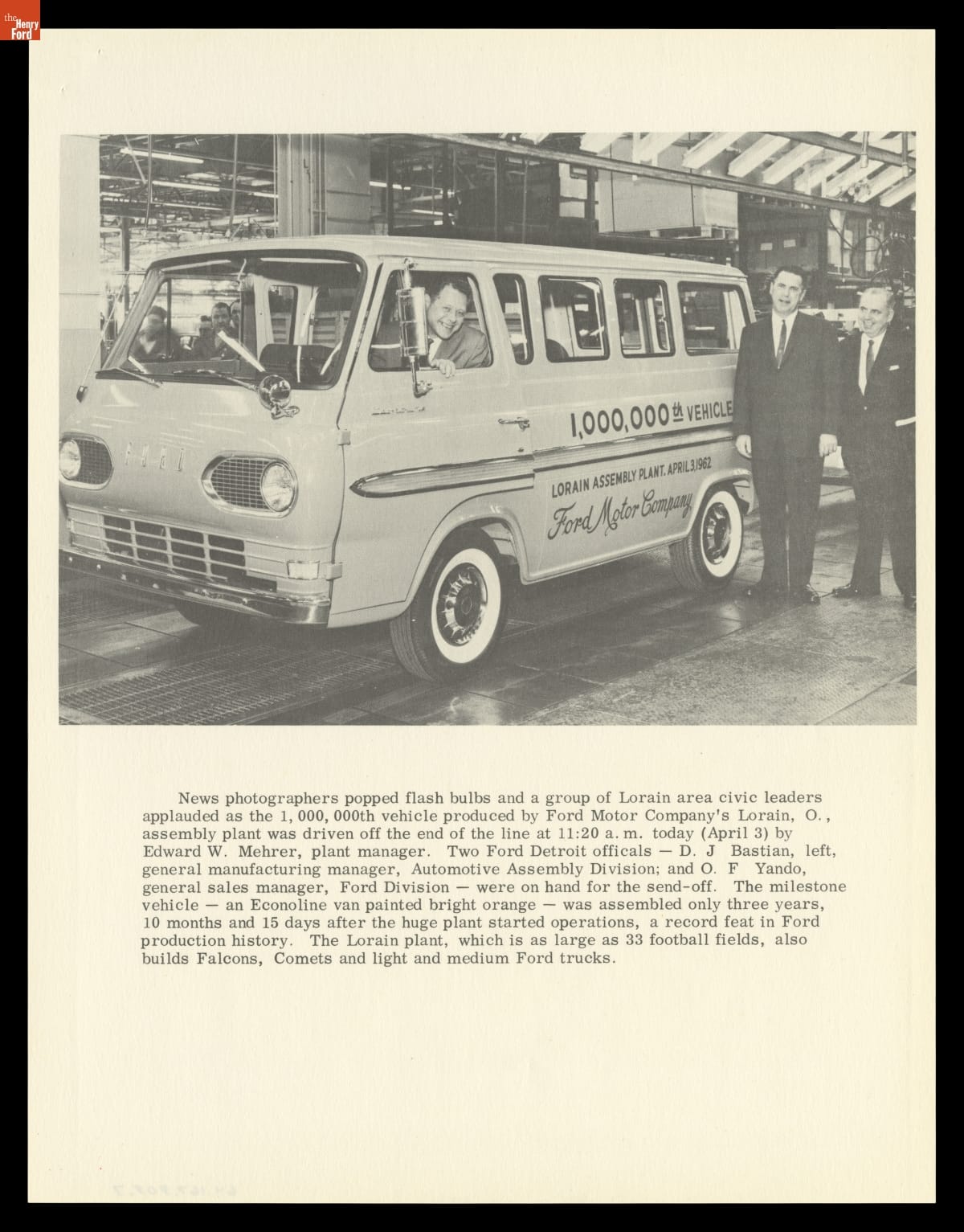
- 1,000,000th Vehicle Built at Ford Motor Company Assembly Plant, Lorain, Ohio, April 3, 1962 - Ford Motor Company opened an assembly plant in Lorain, Ohio, in 1958. Over the years, the factory manufactured various Ford and Mercury models. On April 3, 1962, employees celebrated production of the plant's one millionth vehicle: a Ford Econoline van. Workers at Lorain built another seven million vehicles before the plant closed in 2005.
- April 03, 1962
- Collections - Artifact
1,000,000th Vehicle Built at Ford Motor Company Assembly Plant, Lorain, Ohio, April 3, 1962
Ford Motor Company opened an assembly plant in Lorain, Ohio, in 1958. Over the years, the factory manufactured various Ford and Mercury models. On April 3, 1962, employees celebrated production of the plant's one millionth vehicle: a Ford Econoline van. Workers at Lorain built another seven million vehicles before the plant closed in 2005.
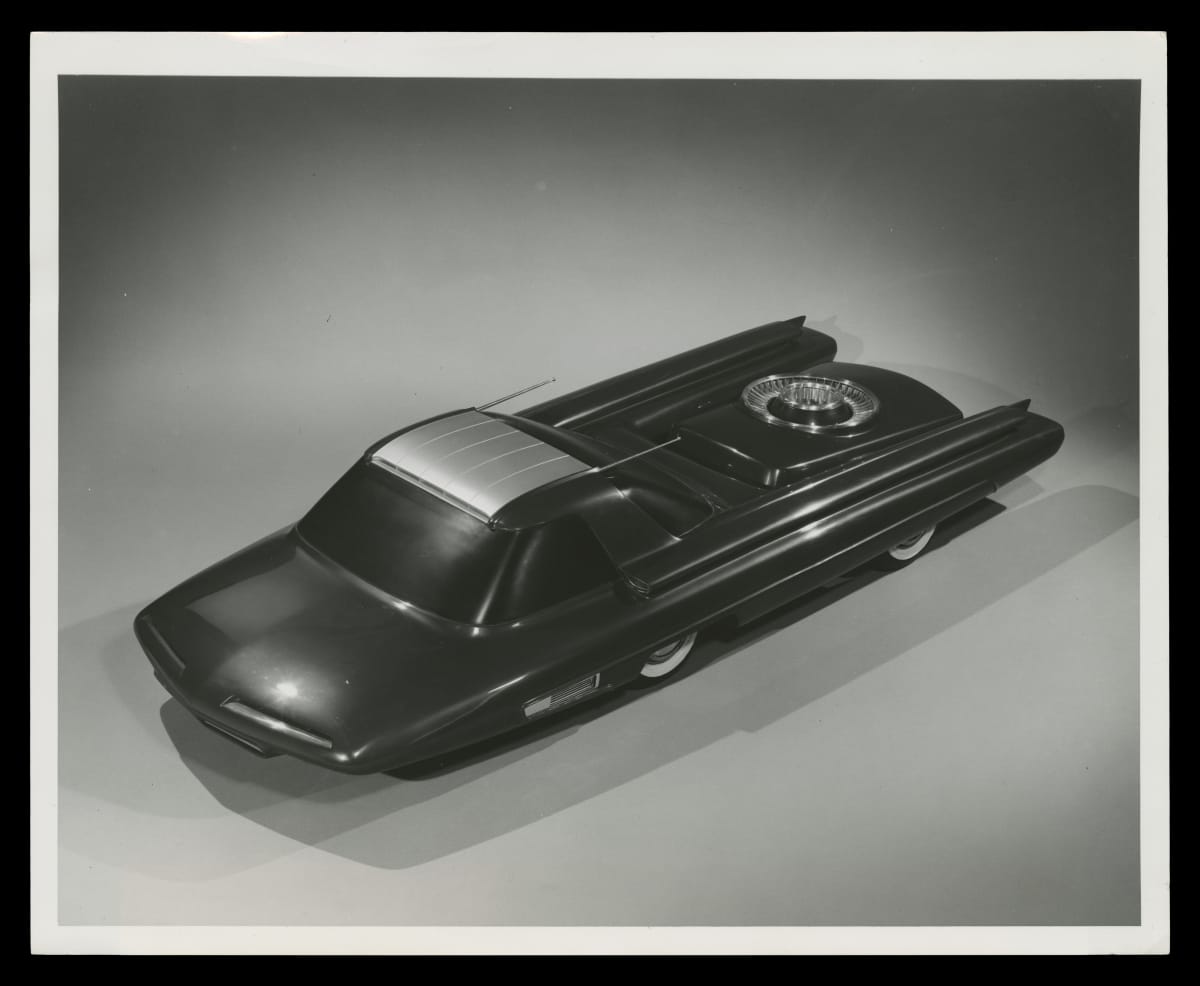
- Scale Model of the Nucleon, a 1958 Ford Motor Company Styling Conception for an Atomic-Powered Car - This 3/8-scale model was built to explore how the future of energy might affect the future of automotive design. The Ford Nucleon would have been powered by a rear-mounted, self-contained nuclear reactor. This atomic-automobile idea assumed, of course, that issues with nuclear safety and the size and weight of nuclear reactors would eventually be resolved. The Nucleon was never produced.
- 1958
- Collections - Artifact
Scale Model of the Nucleon, a 1958 Ford Motor Company Styling Conception for an Atomic-Powered Car
This 3/8-scale model was built to explore how the future of energy might affect the future of automotive design. The Ford Nucleon would have been powered by a rear-mounted, self-contained nuclear reactor. This atomic-automobile idea assumed, of course, that issues with nuclear safety and the size and weight of nuclear reactors would eventually be resolved. The Nucleon was never produced.
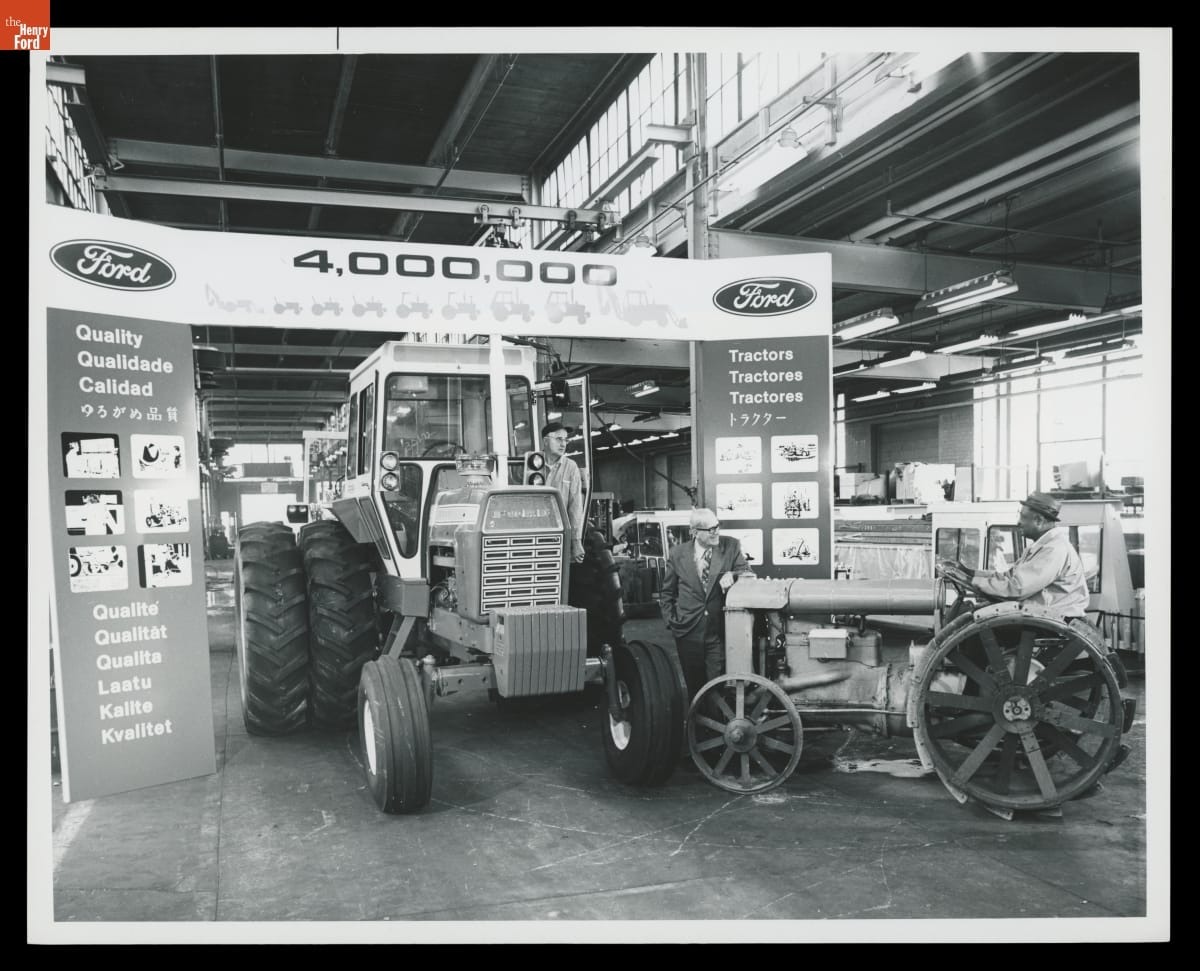
- Employees with the 4,000,000th Ford Tractor and a Fordson Tractor at the Highland Park Plant, 1972 -
- 1972
- Collections - Artifact
Employees with the 4,000,000th Ford Tractor and a Fordson Tractor at the Highland Park Plant, 1972
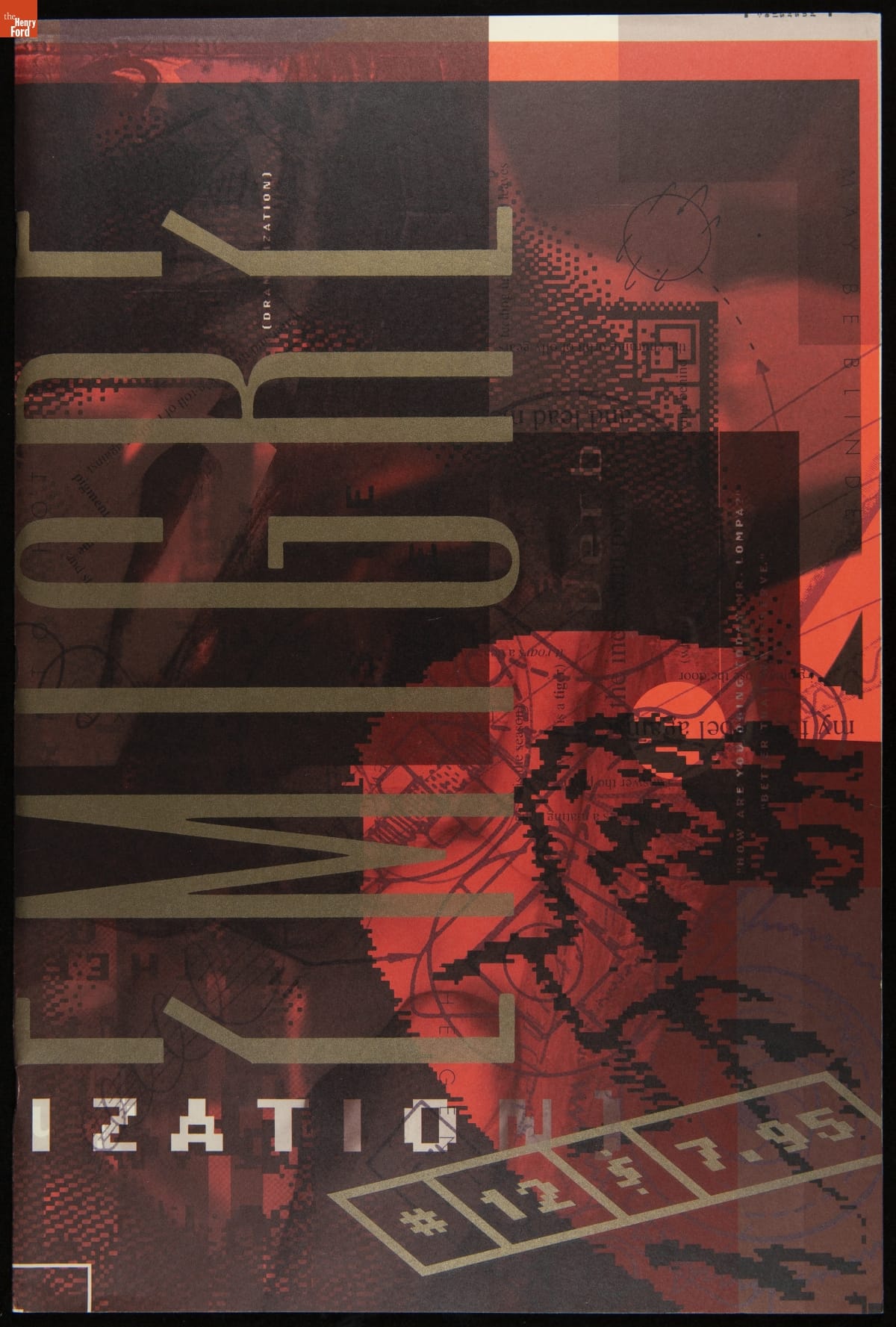
- Magazine, Emigre No. 12, "Press Time!," 1989 - Emigre is a digital type foundry established by Rudy VanderLans and Zuzana Licko. The company's history is linked with the introduction of the 1984 Macintosh computer, used to design their early bitmapped typefaces. Emigre's digital work gained notoriety -- defying visual communication standards with fractured, layered combinations of text and image. <em>Emigre</em> magazine showcased their fonts and promoted groundbreaking designers.
- 1989
- Collections - Artifact
Magazine, Emigre No. 12, "Press Time!," 1989
Emigre is a digital type foundry established by Rudy VanderLans and Zuzana Licko. The company's history is linked with the introduction of the 1984 Macintosh computer, used to design their early bitmapped typefaces. Emigre's digital work gained notoriety -- defying visual communication standards with fractured, layered combinations of text and image. Emigre magazine showcased their fonts and promoted groundbreaking designers.
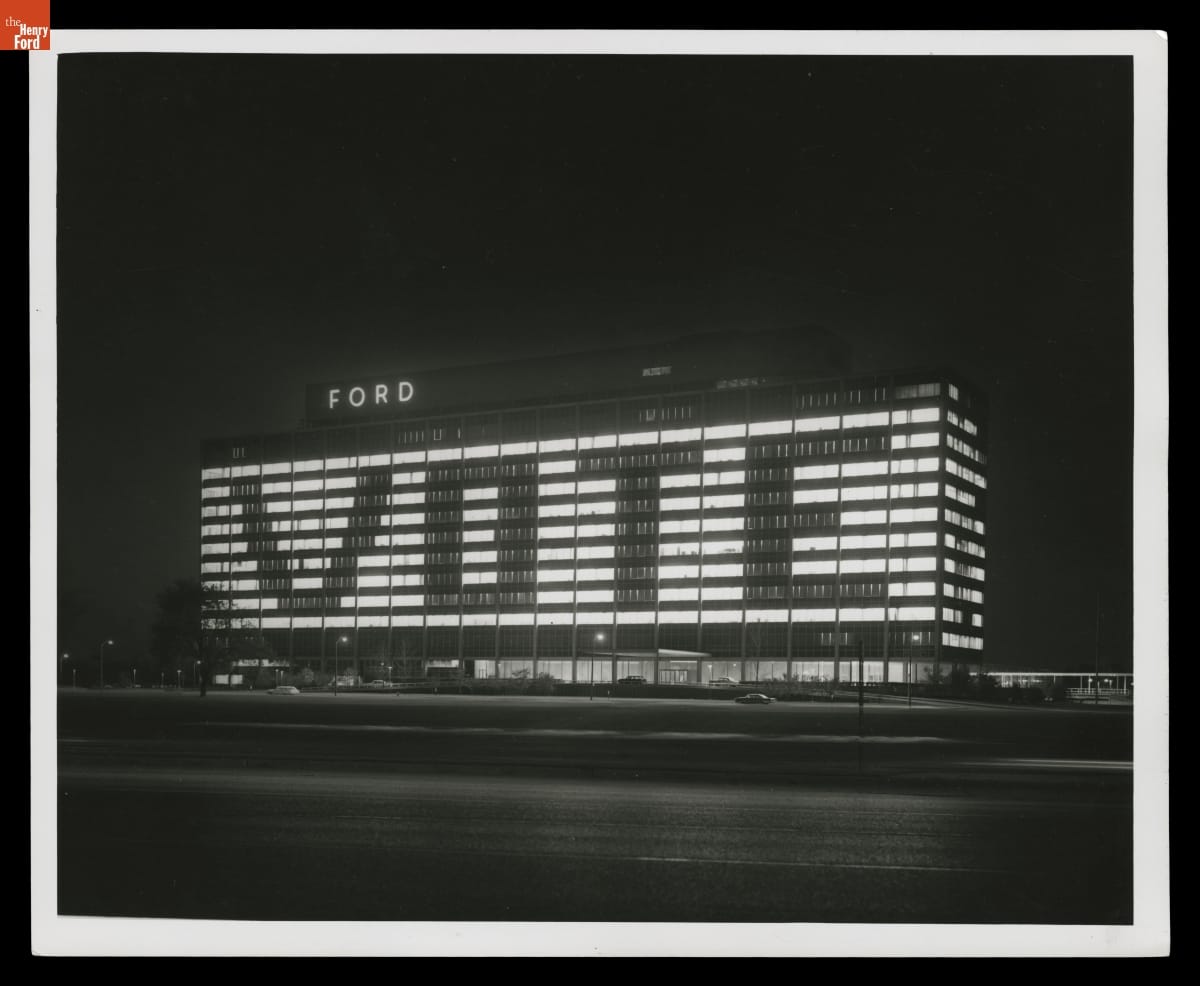
- The Ford Motor Company World Headquarters Displaying "VOTE" Sign, Dearborn, Michigan, 1960 - By strategically lighting the grid pattern formed by windows in Ford Motor Company's Henry Ford II World Center, the automaker created special messages on the building's south face. Over the years, the headquarters building displayed messages commemorating holidays, production milestones, racing victories, and other notable events. This message reminded people to vote on Election Day, November 8, 1960.
- November 01, 1960
- Collections - Artifact
The Ford Motor Company World Headquarters Displaying "VOTE" Sign, Dearborn, Michigan, 1960
By strategically lighting the grid pattern formed by windows in Ford Motor Company's Henry Ford II World Center, the automaker created special messages on the building's south face. Over the years, the headquarters building displayed messages commemorating holidays, production milestones, racing victories, and other notable events. This message reminded people to vote on Election Day, November 8, 1960.
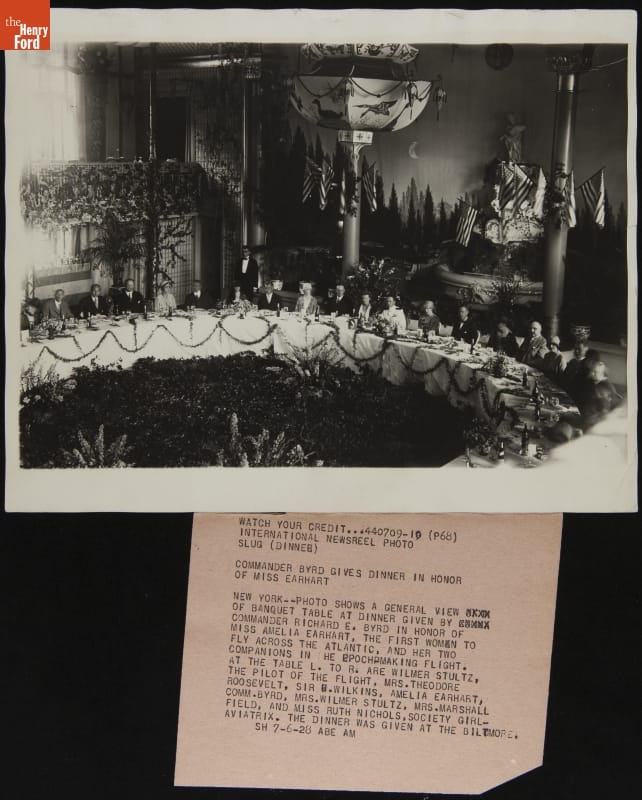
- Banquet Given by Commander Richard Byrd in Honor of Amelia Earhart, New York Biltmore Hotel, July 1928 - Amelia Earhart was congratulated by explorer Richard Byrd for her 1928 flight across the Atlantic Ocean. Earhart, riding as a passenger with pilot Wilmer Stultz and mechanic Louis Gordon, made the crossing in a Fokker F.VII Tri-Motor airplane. Byrd used a similar Fokker on his North Pole flight in 1926.
- July 06, 1928
- Collections - Artifact
Banquet Given by Commander Richard Byrd in Honor of Amelia Earhart, New York Biltmore Hotel, July 1928
Amelia Earhart was congratulated by explorer Richard Byrd for her 1928 flight across the Atlantic Ocean. Earhart, riding as a passenger with pilot Wilmer Stultz and mechanic Louis Gordon, made the crossing in a Fokker F.VII Tri-Motor airplane. Byrd used a similar Fokker on his North Pole flight in 1926.
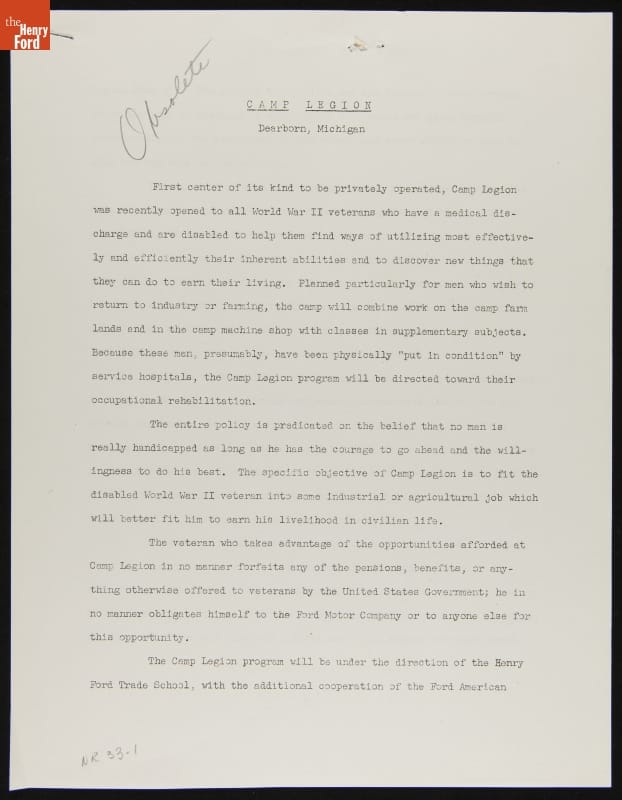
- Camp Legion Opened to Give Occupational Rehabilitation to Disabled Veterans, Ford Press Release, 1944 - Henry Ford opened Camp Legion, near Dearborn, Michigan, in 1938 for sons of dead or disabled World War I veterans. The young men earned steady wages working there seasonally from April-November. The camp's mission was modified in 1944 to include rehabilitation of World War II veterans with disabilities. Veterans learned new skills to help them reenter the workforce.
- 1944
- Collections - Artifact
Camp Legion Opened to Give Occupational Rehabilitation to Disabled Veterans, Ford Press Release, 1944
Henry Ford opened Camp Legion, near Dearborn, Michigan, in 1938 for sons of dead or disabled World War I veterans. The young men earned steady wages working there seasonally from April-November. The camp's mission was modified in 1944 to include rehabilitation of World War II veterans with disabilities. Veterans learned new skills to help them reenter the workforce.
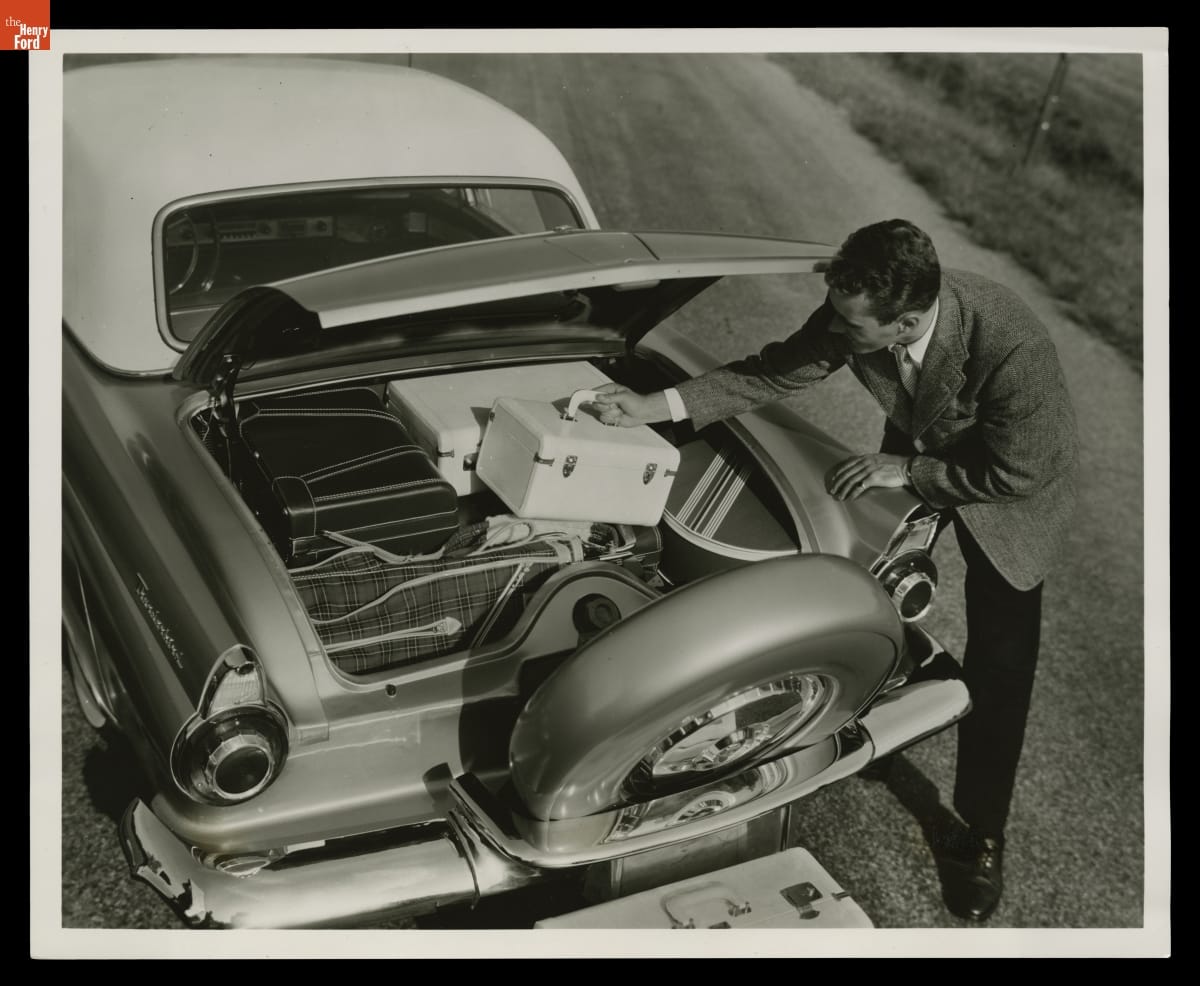
- Man Demonstrating Increased Luggage Space in 1956 Ford Thunderbird, May 1955 - Ford Motor Company introduced the Thunderbird, its two-seat "personal car," for 1955. The next year's model shared the same body, but the spare tire was moved outside to make more room in the trunk. The 1956 Thunderbird's 292-cubic-inch base V-8 produced 200 horsepower, and the car's factory price started at $3,151. Total Thunderbird production for the year was 15,631 units.
- May 31, 1955
- Collections - Artifact
Man Demonstrating Increased Luggage Space in 1956 Ford Thunderbird, May 1955
Ford Motor Company introduced the Thunderbird, its two-seat "personal car," for 1955. The next year's model shared the same body, but the spare tire was moved outside to make more room in the trunk. The 1956 Thunderbird's 292-cubic-inch base V-8 produced 200 horsepower, and the car's factory price started at $3,151. Total Thunderbird production for the year was 15,631 units.
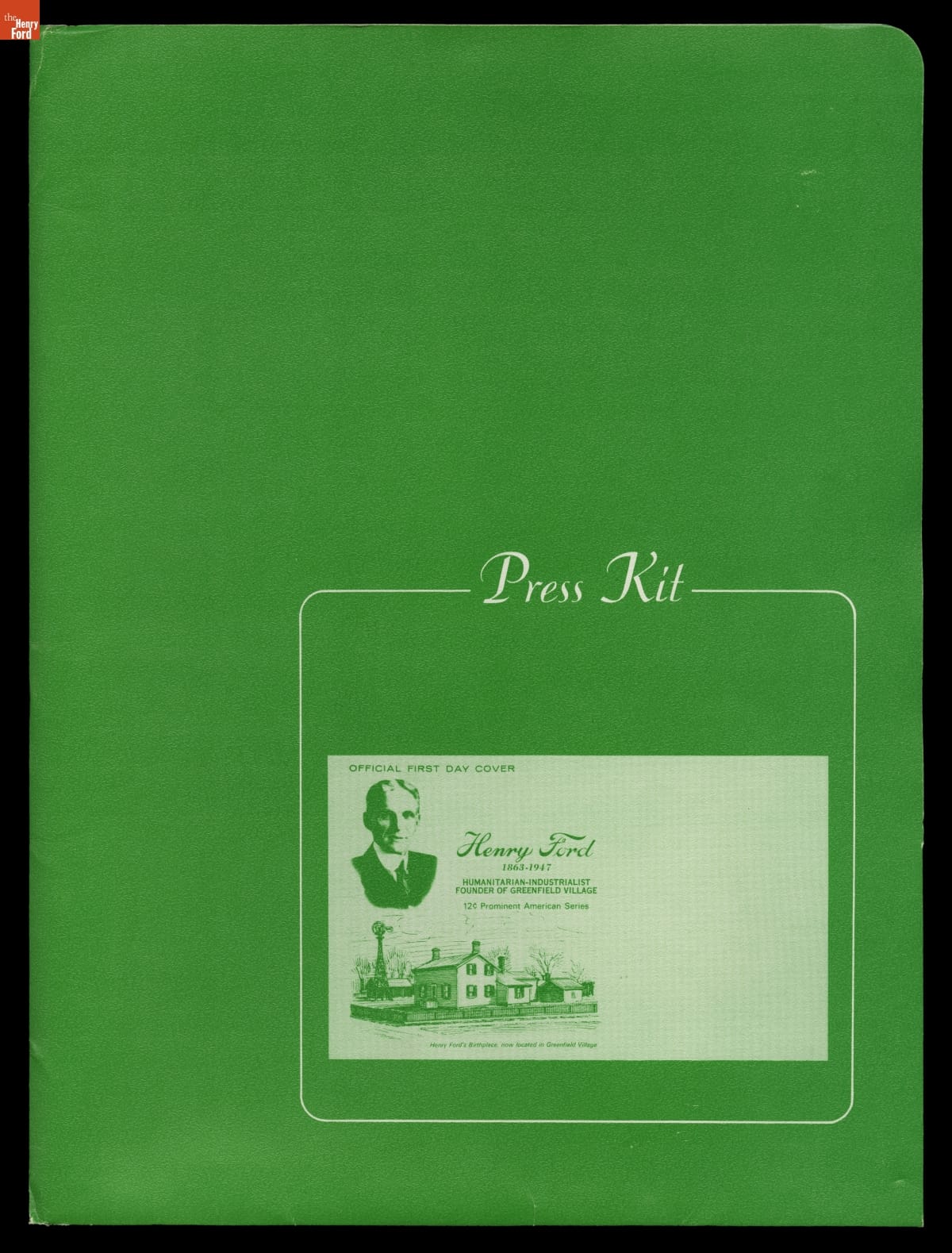
- Press Kit for the Dedication of the Henry Ford Postage Stamp in Greenfield Village, July 30, 1968 - The United States Post Office issued a commemorative postage stamp honoring Henry Ford on July 30, 1968 -- the 105th anniversary of Ford's birth. Speakers at the dedication ceremony, held in Greenfield Village, included Postmaster General Marvin Watson, U.S. Representative John Dingell, and Ford Motor Company Chairman and CEO (and Henry Ford's grandson) Henry Ford II.
- July 30, 1968
- Collections - Artifact
Press Kit for the Dedication of the Henry Ford Postage Stamp in Greenfield Village, July 30, 1968
The United States Post Office issued a commemorative postage stamp honoring Henry Ford on July 30, 1968 -- the 105th anniversary of Ford's birth. Speakers at the dedication ceremony, held in Greenfield Village, included Postmaster General Marvin Watson, U.S. Representative John Dingell, and Ford Motor Company Chairman and CEO (and Henry Ford's grandson) Henry Ford II.