
Search
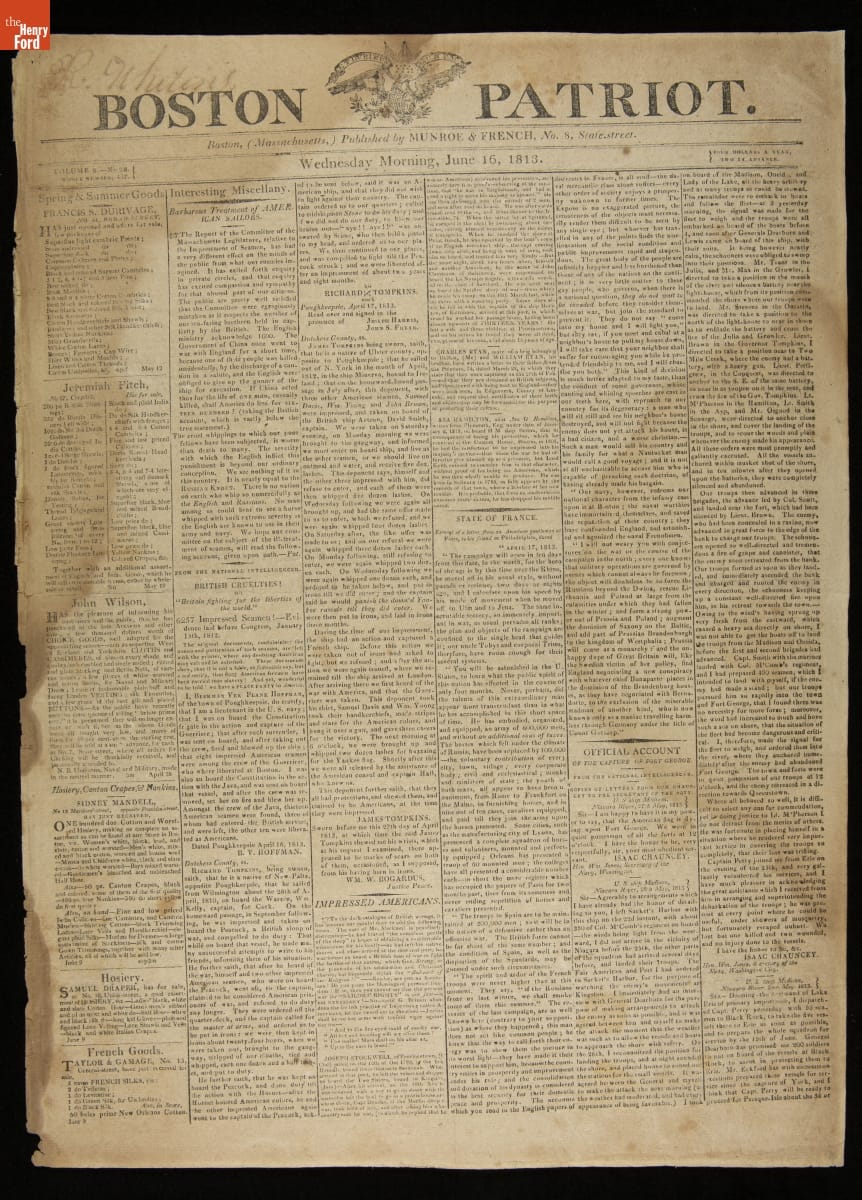
- Boston Patriot, Volume 9, No. 28, June 16, 1813 -
- June 16, 1813
- Collections - Artifact
Boston Patriot, Volume 9, No. 28, June 16, 1813
- Photograph Album of the H. J. Heinz Company War Production Division, circa 1945 - Company photograph albums are often reminders of the company's history, significant moments in time, and the employees who worked there. This album, compiled by the H.J. Heinz Company, includes text and photographs describing the company's involvement in producing airplane parts during World War II.
- circa 1945
- Collections - Artifact
Photograph Album of the H. J. Heinz Company War Production Division, circa 1945
Company photograph albums are often reminders of the company's history, significant moments in time, and the employees who worked there. This album, compiled by the H.J. Heinz Company, includes text and photographs describing the company's involvement in producing airplane parts during World War II.
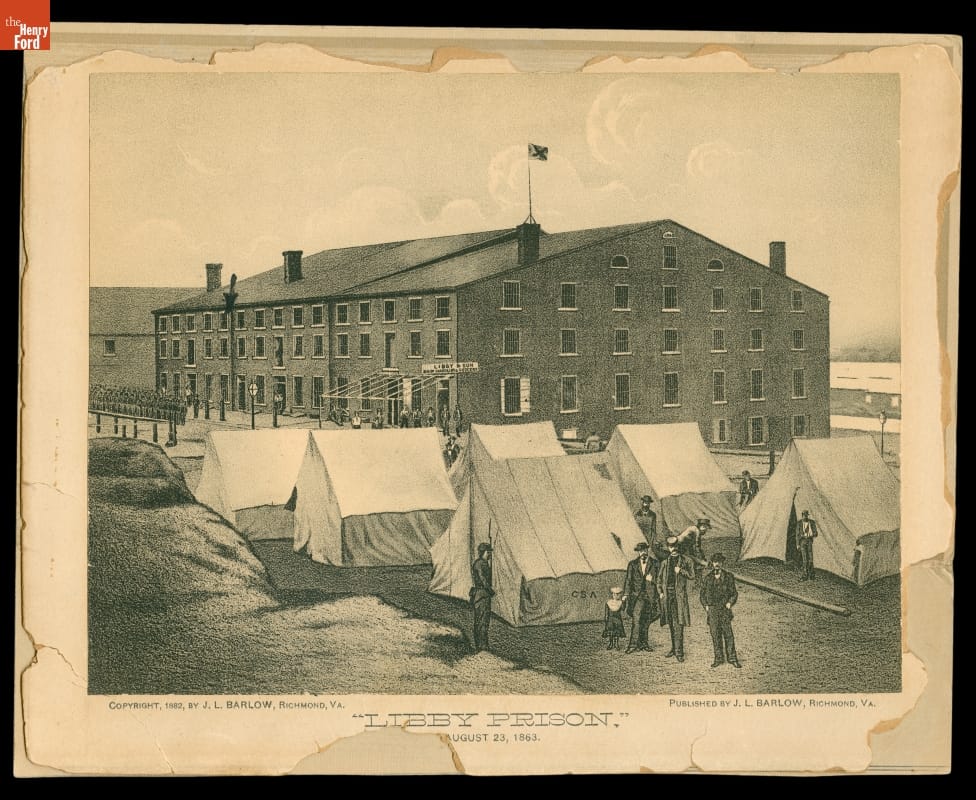
- Lithograph, Libby Prison as it Appeared on August 23, 1863 - This 1880s print is based on an 1863 photograph of the infamous Libby Prison in Richmond, Virginia. It belonged to Union Army Captain Milton Russell, who spent a year in the harsh conditions of this warehouse-turned-prison as a prisoner of war. Russell drew the arrow to mark the top floor room where he was allotted living space during his imprisonment.
- August 23, 1863
- Collections - Artifact
Lithograph, Libby Prison as it Appeared on August 23, 1863
This 1880s print is based on an 1863 photograph of the infamous Libby Prison in Richmond, Virginia. It belonged to Union Army Captain Milton Russell, who spent a year in the harsh conditions of this warehouse-turned-prison as a prisoner of war. Russell drew the arrow to mark the top floor room where he was allotted living space during his imprisonment.
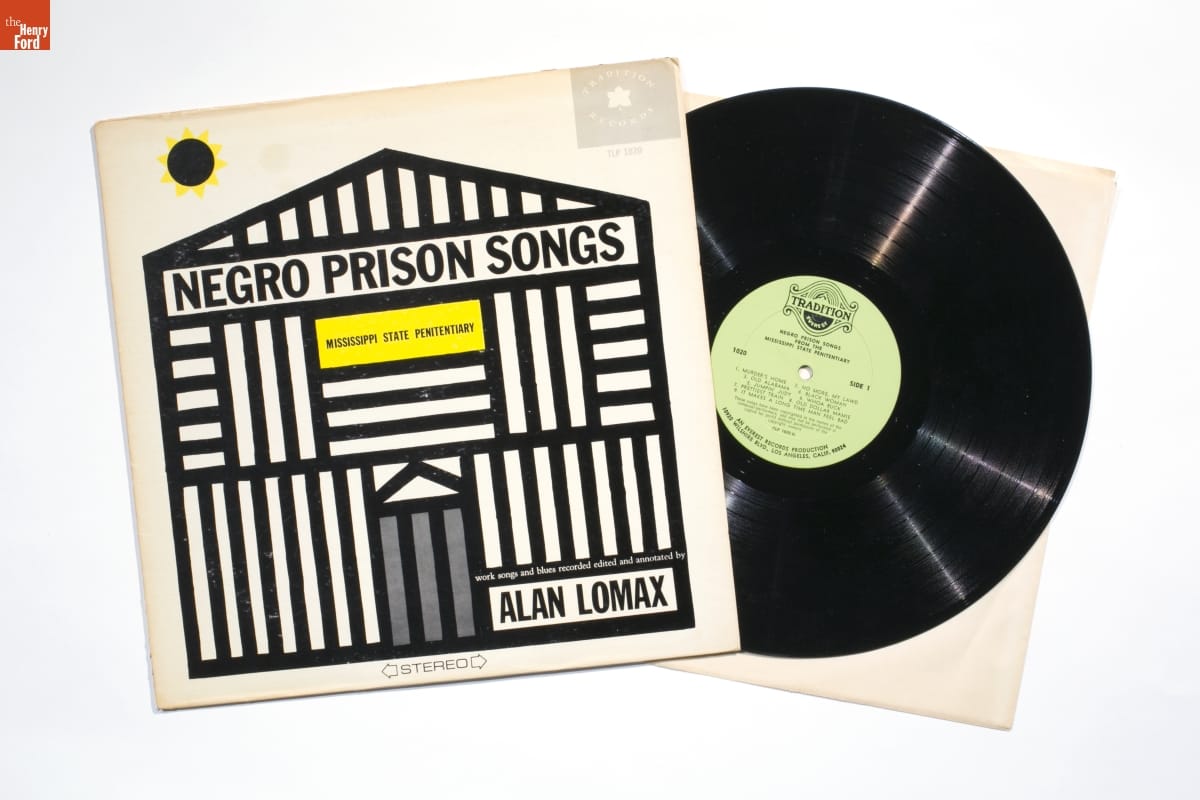
- Record Album, "Negro Prison Songs," 1958 - Folklorist Alan Lomax, believing all people and cultures deserved equal respect, spent his career documenting remote musical traditions. This record's powerful songs, collected 1947-8 at the Mississippi State Penitentiary, attest to the parallels between the Deep South's oppressive prison system--requiring arduous physical labor under constant threat of physical punishment--and the experiences of enslaved work groups on 19th-century plantations.
- 1947
- Collections - Artifact
Record Album, "Negro Prison Songs," 1958
Folklorist Alan Lomax, believing all people and cultures deserved equal respect, spent his career documenting remote musical traditions. This record's powerful songs, collected 1947-8 at the Mississippi State Penitentiary, attest to the parallels between the Deep South's oppressive prison system--requiring arduous physical labor under constant threat of physical punishment--and the experiences of enslaved work groups on 19th-century plantations.
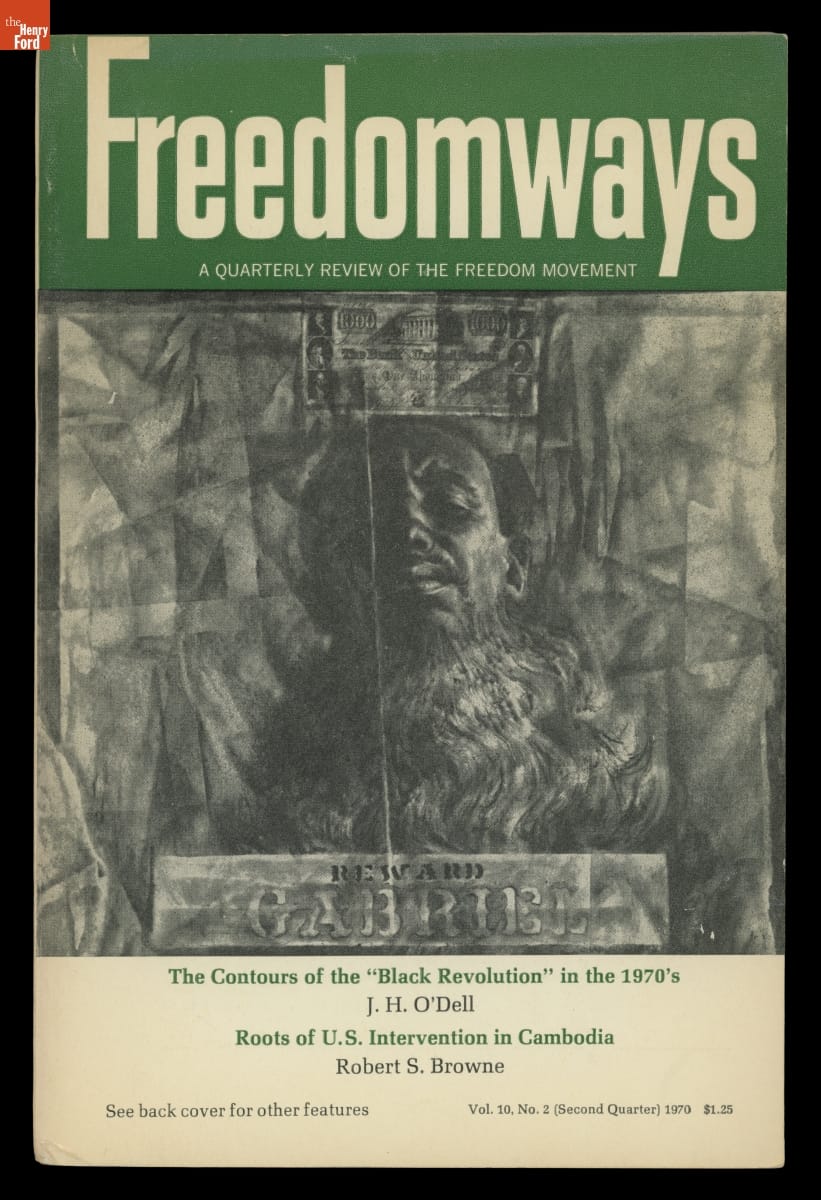
- "Freedomways," Vol. 10, No. 2, Second Quarter, 1970 - In 1961, Louis Burnham, Edward Strong, and W. E. B. Du Bois founded Freedomways, the leading African American theoretical, political, and cultural journal of its time. The journal included written works by leading Black authors, artists, politicians, and activists. The journal also reported on the political movements of the era, especially the American civil rights movement. Publication ceased in 1985.
- 1970
- Collections - Artifact
"Freedomways," Vol. 10, No. 2, Second Quarter, 1970
In 1961, Louis Burnham, Edward Strong, and W. E. B. Du Bois founded Freedomways, the leading African American theoretical, political, and cultural journal of its time. The journal included written works by leading Black authors, artists, politicians, and activists. The journal also reported on the political movements of the era, especially the American civil rights movement. Publication ceased in 1985.
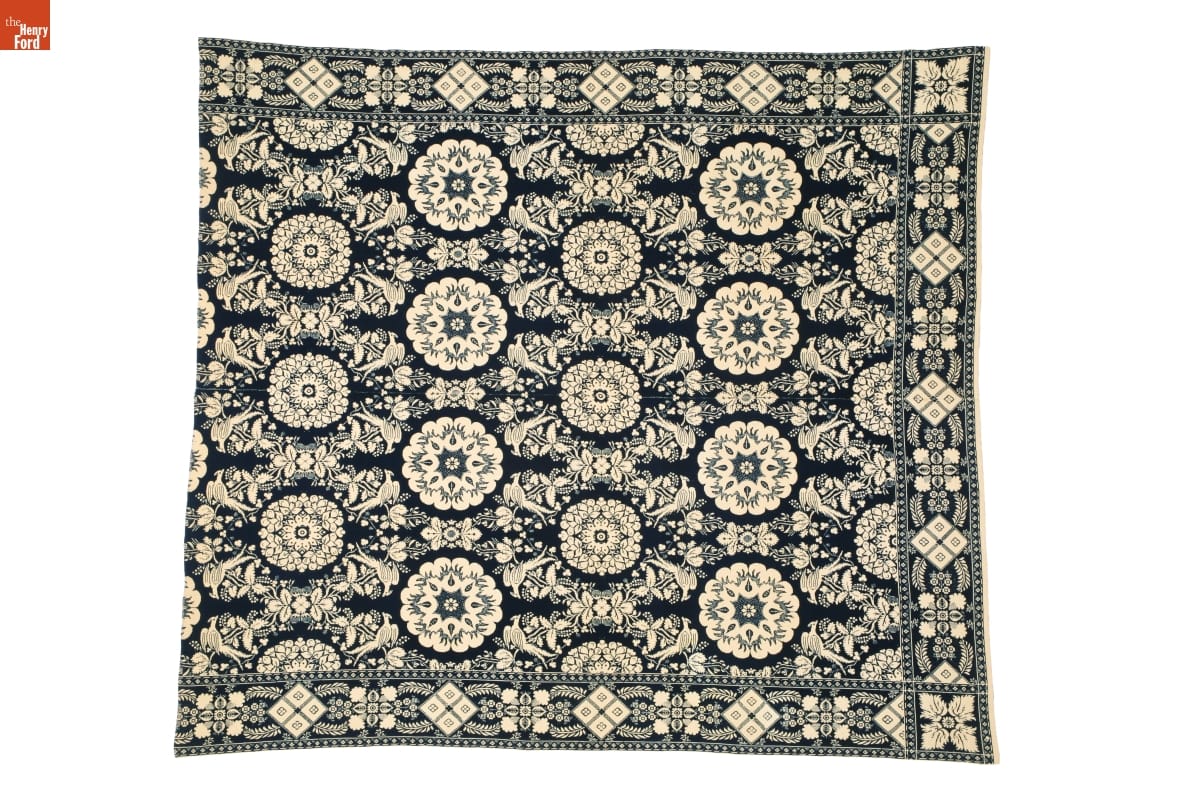
- Coverlet Attributed to Auburn Prison Weaving Shop, 1830-1840 -
- 1830-1840
- Collections - Artifact
Coverlet Attributed to Auburn Prison Weaving Shop, 1830-1840
- Inglam Gem Ergo Hair Dryer, circa 2001 -

- circa 2001
- Collections - Artifact
Inglam Gem Ergo Hair Dryer, circa 2001
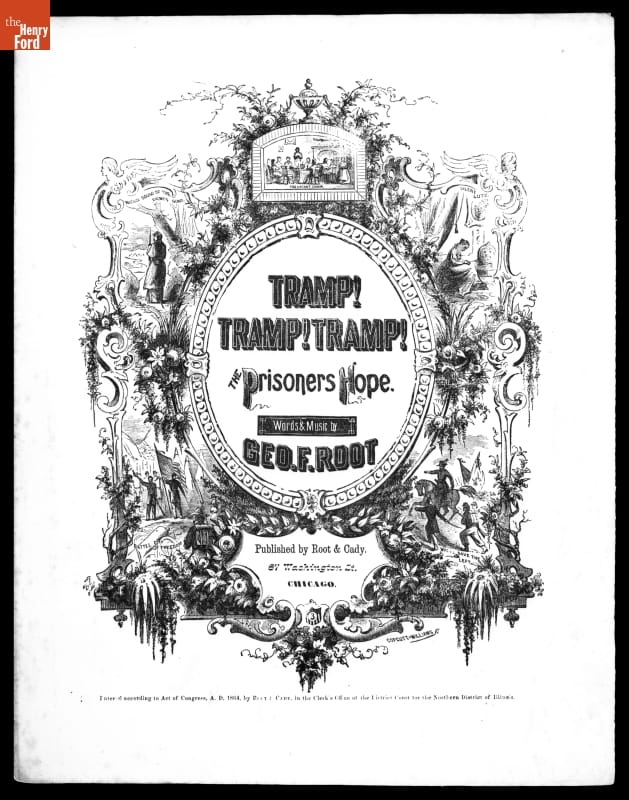
- "Tramp! Tramp! Tramp! The Prisoners Hope," 1864 - Composed by George F. Root during the Civil War, this song expresses the hopes of an imprisoned Union soldier. The song's melancholy verses give way to the chorus of "Tramp! Tramp! Tramp!" -- signaling the oncoming liberators and the time when the prisoner will return to his beloved home. It became a popular song during the war.
- 1864
- Collections - Artifact
"Tramp! Tramp! Tramp! The Prisoners Hope," 1864
Composed by George F. Root during the Civil War, this song expresses the hopes of an imprisoned Union soldier. The song's melancholy verses give way to the chorus of "Tramp! Tramp! Tramp!" -- signaling the oncoming liberators and the time when the prisoner will return to his beloved home. It became a popular song during the war.
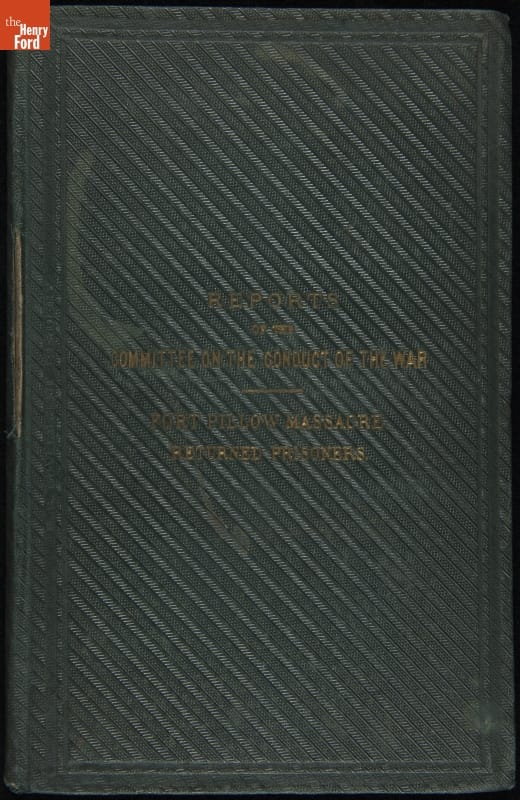
- Book, "Reports of the Committee on the Conduct of the War: Fort Pillow Massacre. Returned Prisoners," 1864 -
- 1864
- Collections - Artifact
Book, "Reports of the Committee on the Conduct of the War: Fort Pillow Massacre. Returned Prisoners," 1864
- Letter from Frederick Haldimand to George Clinton, October 10, 1781 -
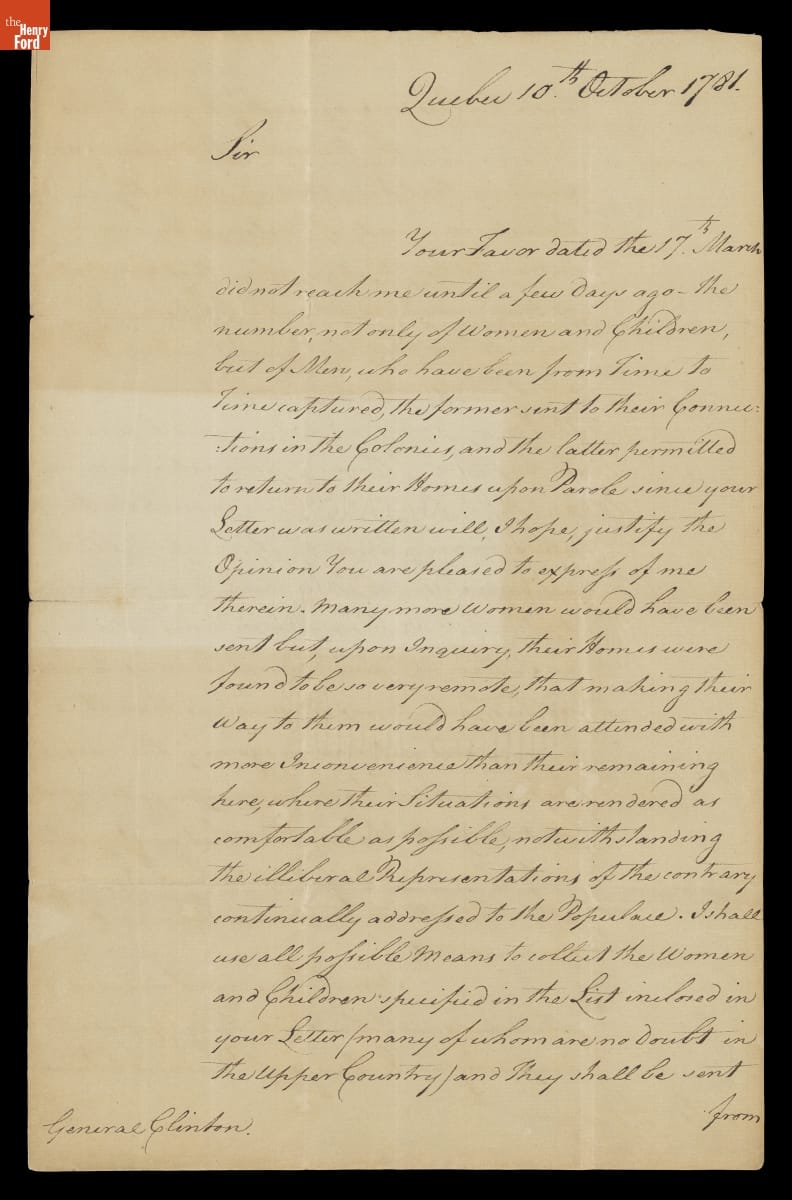
- October 10, 1781
- Collections - Artifact
Letter from Frederick Haldimand to George Clinton, October 10, 1781