
Search
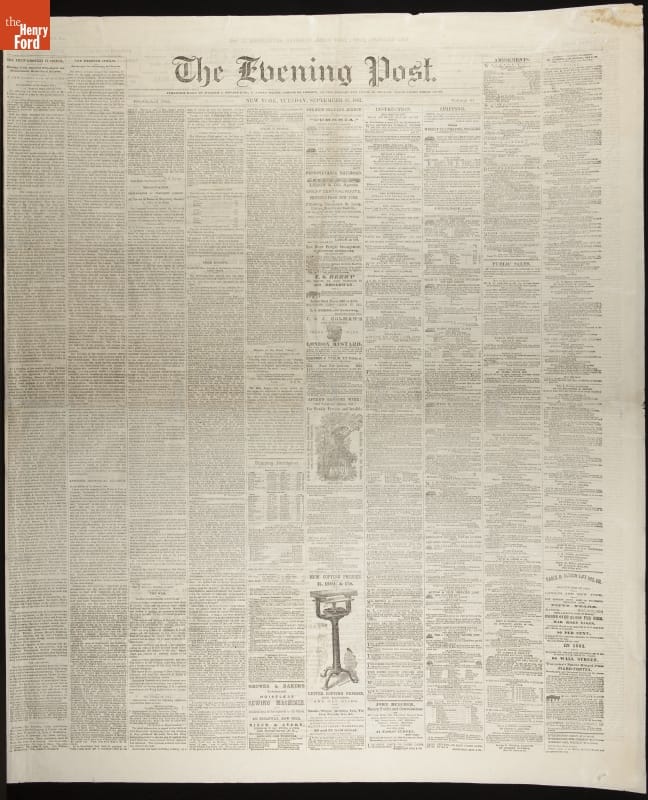
- New York Evening Post Newspaper for September 23, 1862, "Emancipation Proclamation of President Lincoln" -
- September 23, 1862
- Collections - Artifact
New York Evening Post Newspaper for September 23, 1862, "Emancipation Proclamation of President Lincoln"
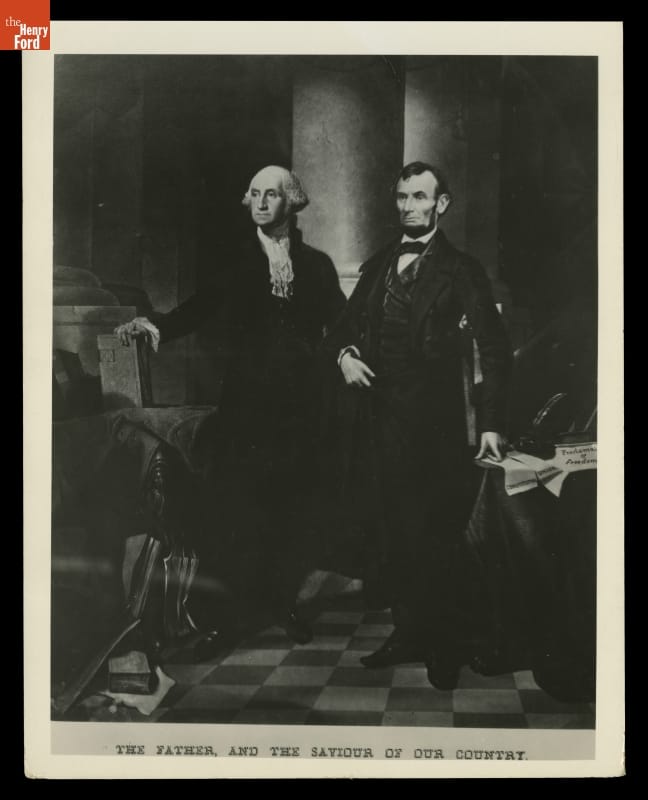
- "The Father and the Saviour of Our Country," 1865 - During the late 19th century, no one would have equated Abraham Lincoln with the most esteemed American of all time, George Washington. Opinions about President Lincoln were too divisive. But the more Lincoln was paired with Washington, the stronger his reputation grew until, by the early 20th century, Lincoln--"man of the people"--eclipsed the more aristocratic Washington in popularity.
- 1865
- Collections - Artifact
"The Father and the Saviour of Our Country," 1865
During the late 19th century, no one would have equated Abraham Lincoln with the most esteemed American of all time, George Washington. Opinions about President Lincoln were too divisive. But the more Lincoln was paired with Washington, the stronger his reputation grew until, by the early 20th century, Lincoln--"man of the people"--eclipsed the more aristocratic Washington in popularity.
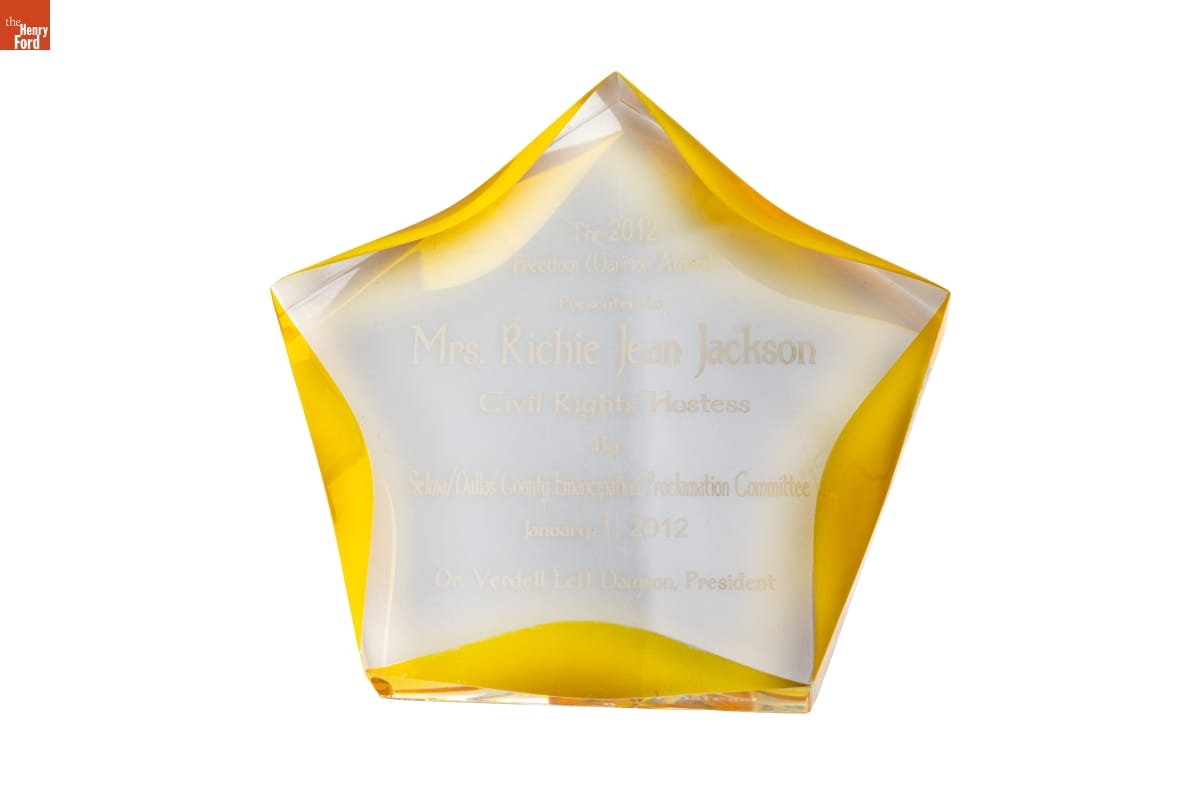
- Selma / Dallas County Emancipation Proclamation Commitee Freedom Warrior Award Presented to Richie Jean Jackson -
- January 01, 2012
- Collections - Artifact
Selma / Dallas County Emancipation Proclamation Commitee Freedom Warrior Award Presented to Richie Jean Jackson
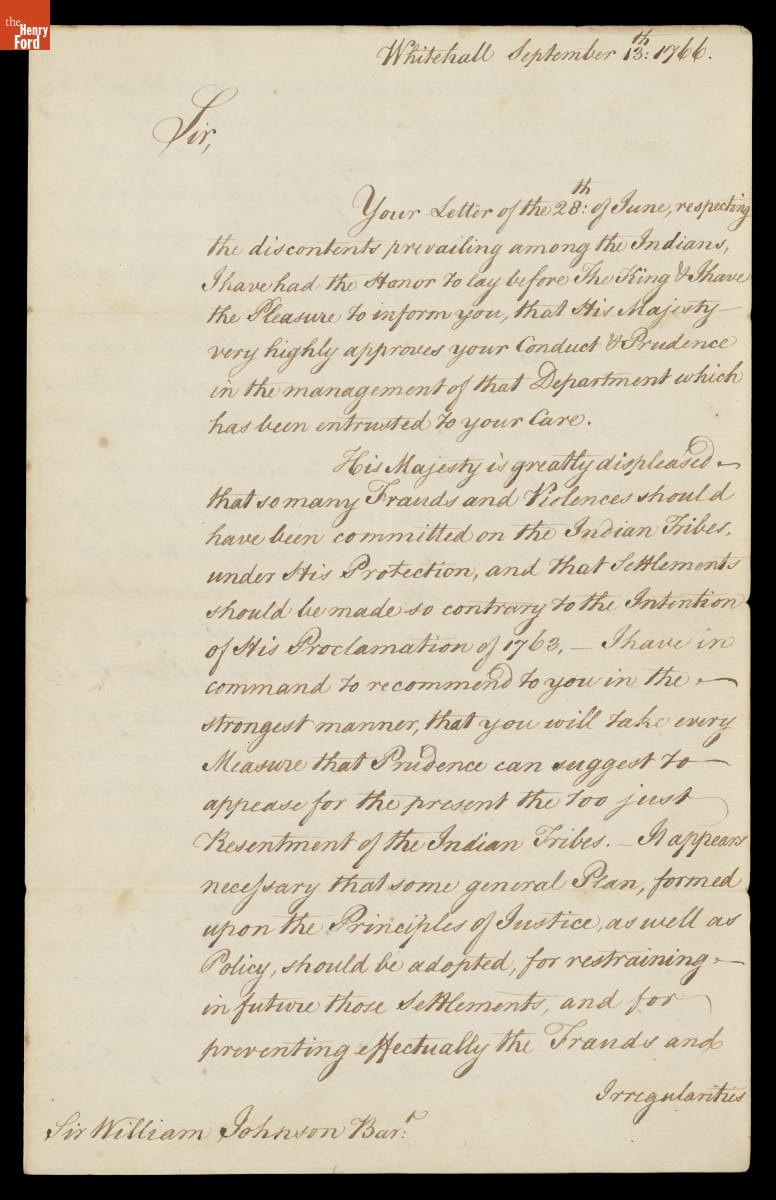
- Letter from William P. Fitzmaurice, Earl of Shelburne, to William Johnson, September 13, 1766 - The Proclamation of 1763, issued by King George III, defined a boundary to separate the American colonists from Indigenous nations. Despite the proclamation, colonial incursions and settlement continued. William Petty Fitzmaurice, the Earl of Shelburne, aware of the colonists' disregard for the proclamation, expressed his concern -- along with King George III's -- to Sir William Johnson, the Superintendent of Indian Affairs in North America.
- September 13, 1766
- Collections - Artifact
Letter from William P. Fitzmaurice, Earl of Shelburne, to William Johnson, September 13, 1766
The Proclamation of 1763, issued by King George III, defined a boundary to separate the American colonists from Indigenous nations. Despite the proclamation, colonial incursions and settlement continued. William Petty Fitzmaurice, the Earl of Shelburne, aware of the colonists' disregard for the proclamation, expressed his concern -- along with King George III's -- to Sir William Johnson, the Superintendent of Indian Affairs in North America.
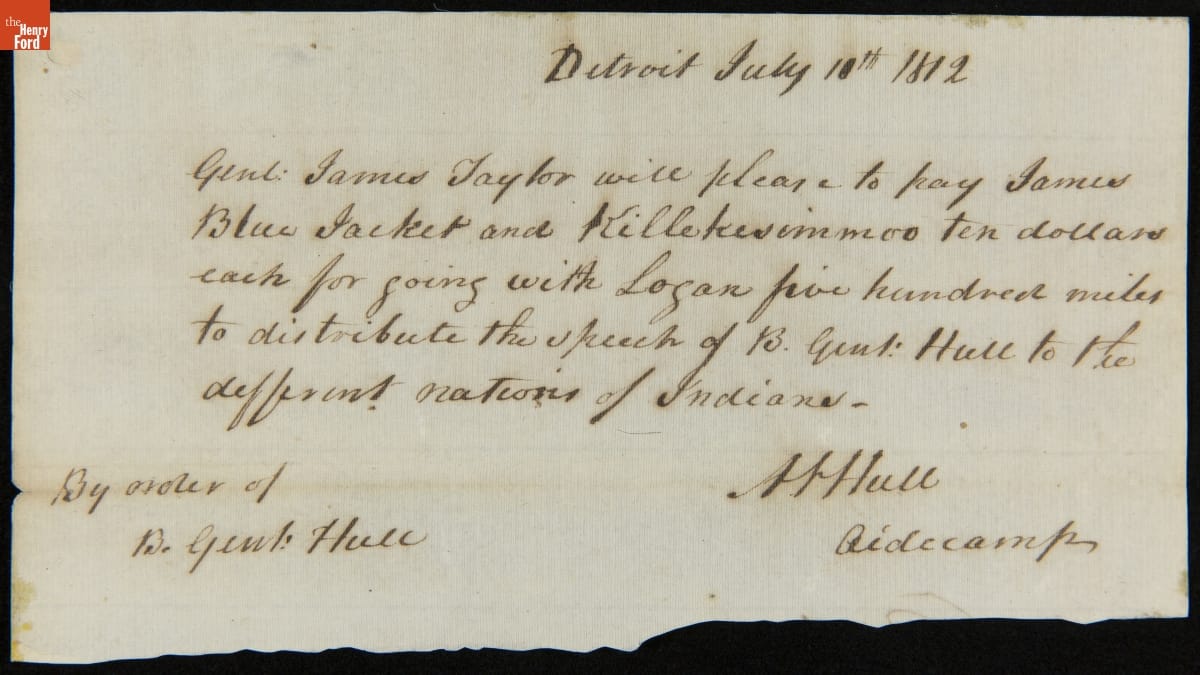
- Promissory Note by Order of General Hull to Pay James Blue Jacket and Killekesimmoo, July 18, 1812 -
- July 18, 1812
- Collections - Artifact
Promissory Note by Order of General Hull to Pay James Blue Jacket and Killekesimmoo, July 18, 1812
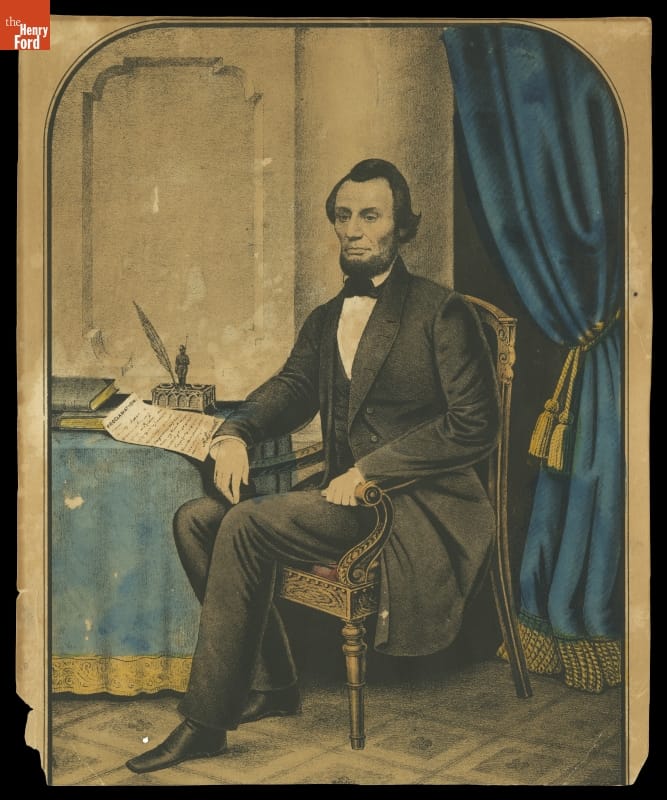
- Print, Abraham Lincoln with the Emancipation Proclamation, 1863 - Following the American Civil War, this print commemorated a crucial event and became popular for home and classroom display across the country. President Lincoln is shown in this hand colored lithograph with a draft of the Emancipation Proclamation. Publicly announced by Lincoln in September 1862 to become law on January 1, 1863, it was the essential first legal step in eliminating slavery.
- 1863
- Collections - Artifact
Print, Abraham Lincoln with the Emancipation Proclamation, 1863
Following the American Civil War, this print commemorated a crucial event and became popular for home and classroom display across the country. President Lincoln is shown in this hand colored lithograph with a draft of the Emancipation Proclamation. Publicly announced by Lincoln in September 1862 to become law on January 1, 1863, it was the essential first legal step in eliminating slavery.
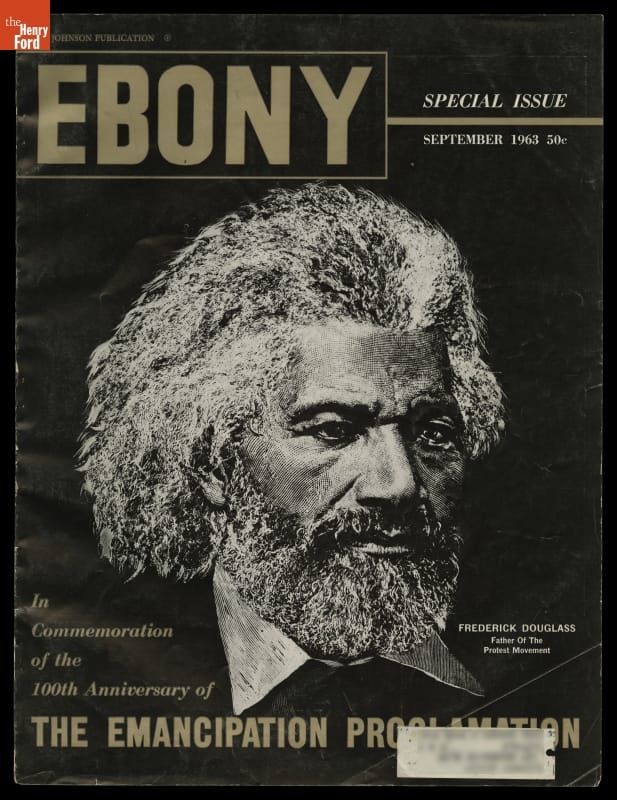
- Special Issue, "Ebony" Magazine, September 1963 - Since 1945, <EM>Ebony</EM> has focused upon issues, personalities, and interests geared to the African-American market. During the civil rights era of the 1950s and 60s, the magazine regularly kept Americans apprised of the movement for equality. This special issue focused on the 100th anniversary of the Emancipation Proclamation and the historic aspects of the Civil Rights movement.
- September 01, 1963
- Collections - Artifact
Special Issue, "Ebony" Magazine, September 1963
Since 1945, Ebony has focused upon issues, personalities, and interests geared to the African-American market. During the civil rights era of the 1950s and 60s, the magazine regularly kept Americans apprised of the movement for equality. This special issue focused on the 100th anniversary of the Emancipation Proclamation and the historic aspects of the Civil Rights movement.
- "State of Massachusetts-Bay. A Proclamation for a Day of Public Thanksgiving and Prayer," October 20, 1777 - Just a few days after a large British force surrendered at Saratoga, New York, in October 1777, the Massachusetts Bay legislature issued a proclamation for a day of thanksgiving and prayer throughout the state for November 20. The legislature would issue a second proclamation at the end of November supporting the Continental Congress's call for a National Day of Thanksgiving for December 18.

- October 20, 1777
- Collections - Artifact
"State of Massachusetts-Bay. A Proclamation for a Day of Public Thanksgiving and Prayer," October 20, 1777
Just a few days after a large British force surrendered at Saratoga, New York, in October 1777, the Massachusetts Bay legislature issued a proclamation for a day of thanksgiving and prayer throughout the state for November 20. The legislature would issue a second proclamation at the end of November supporting the Continental Congress's call for a National Day of Thanksgiving for December 18.
- Proclamation of Augusta Roddis Crossing the Equator, 1948 -

- May 12, 1948
- Collections - Artifact
Proclamation of Augusta Roddis Crossing the Equator, 1948
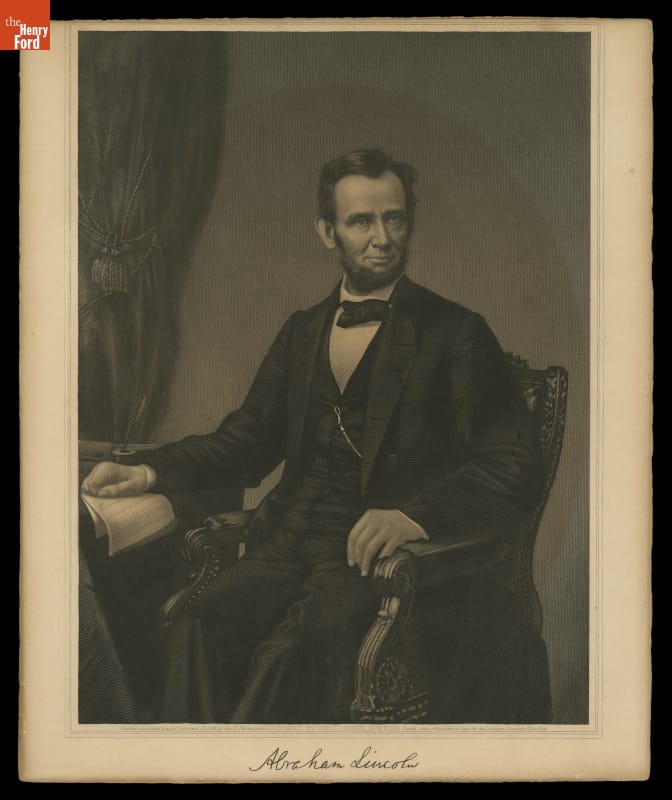
- Engraving, Portrait of Abraham Lincoln, 1864 - During the American Civil War, this print commemorated a crucial event and became popular for home and classroom display across the country. President Lincoln is shown in this engraving with a draft of the Emancipation Proclamation. Publicly announced by Lincoln in September 1862 to become law on January 1, 1863, it was the essential first legal step in eliminating slavery.
- January 01, 1863
- Collections - Artifact
Engraving, Portrait of Abraham Lincoln, 1864
During the American Civil War, this print commemorated a crucial event and became popular for home and classroom display across the country. President Lincoln is shown in this engraving with a draft of the Emancipation Proclamation. Publicly announced by Lincoln in September 1862 to become law on January 1, 1863, it was the essential first legal step in eliminating slavery.