
Search
- Produce Stand near Cadillac Meat Market at Cadillac Square, Detroit, Michigan, circa 1895 -
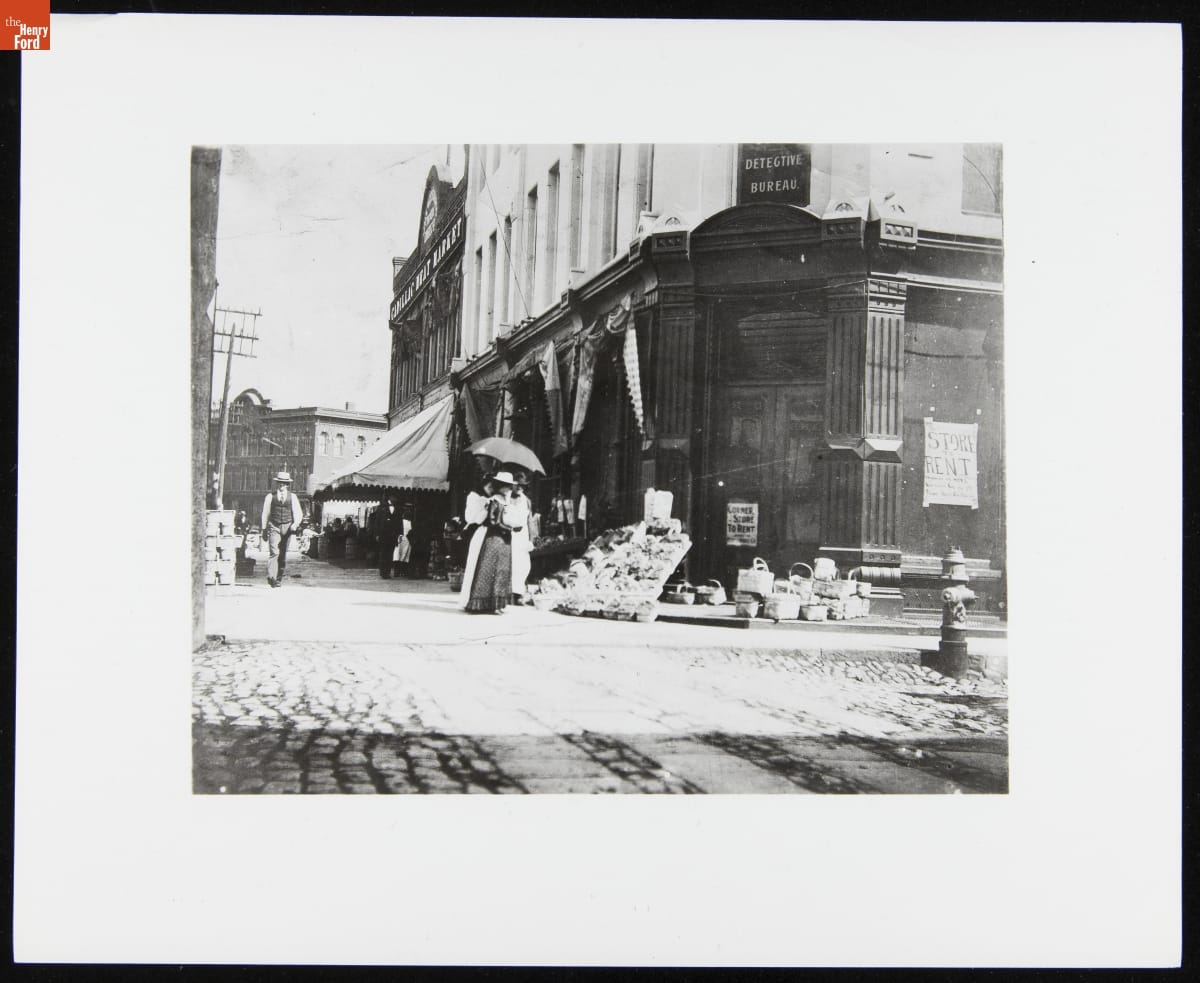
- circa 1895
- Collections - Artifact
Produce Stand near Cadillac Meat Market at Cadillac Square, Detroit, Michigan, circa 1895
- Wholesale Produce Market on a Busy Day, Chicago, Illinois -
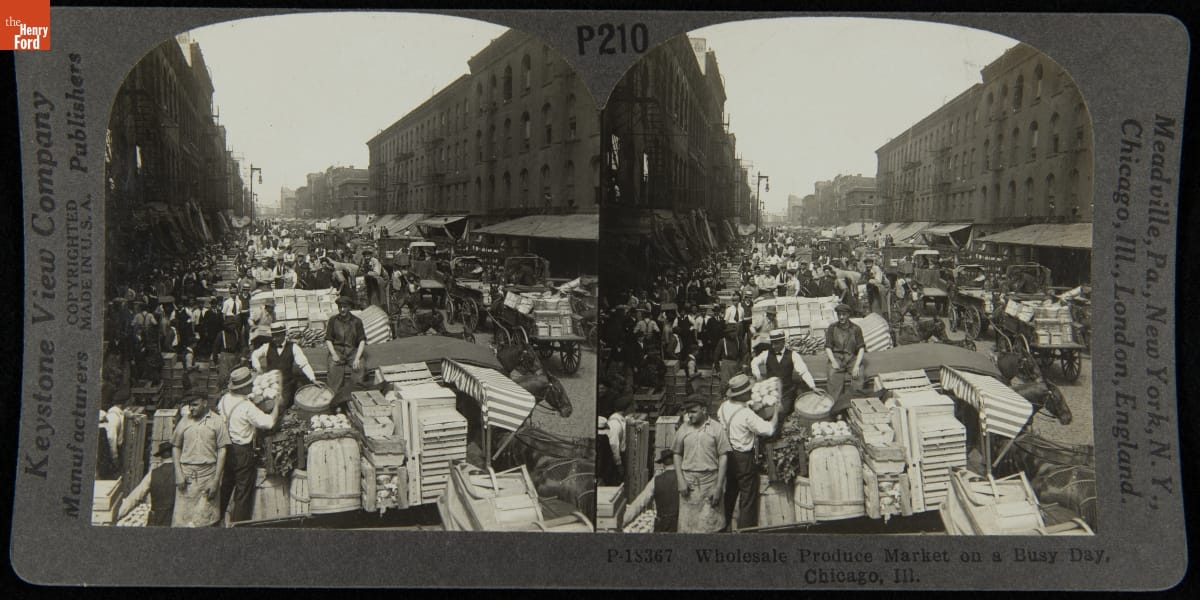
- circa 1920
- Collections - Artifact
Wholesale Produce Market on a Busy Day, Chicago, Illinois
- Camp Legion Produce Stand at Michigan and Greenfield, Dearborn, Michigan, October 1941 - In 1938, Henry Ford opened Camp Legion for the sons of World War I veterans. Groups of young men lived and worked here from April until November, sleeping in tents and earning $2 for each eight-hour workday. The camp was designed to provide income to otherwise unemployed teenagers while teaching vocational skills, instilling a strong work ethic, and fostering good health.
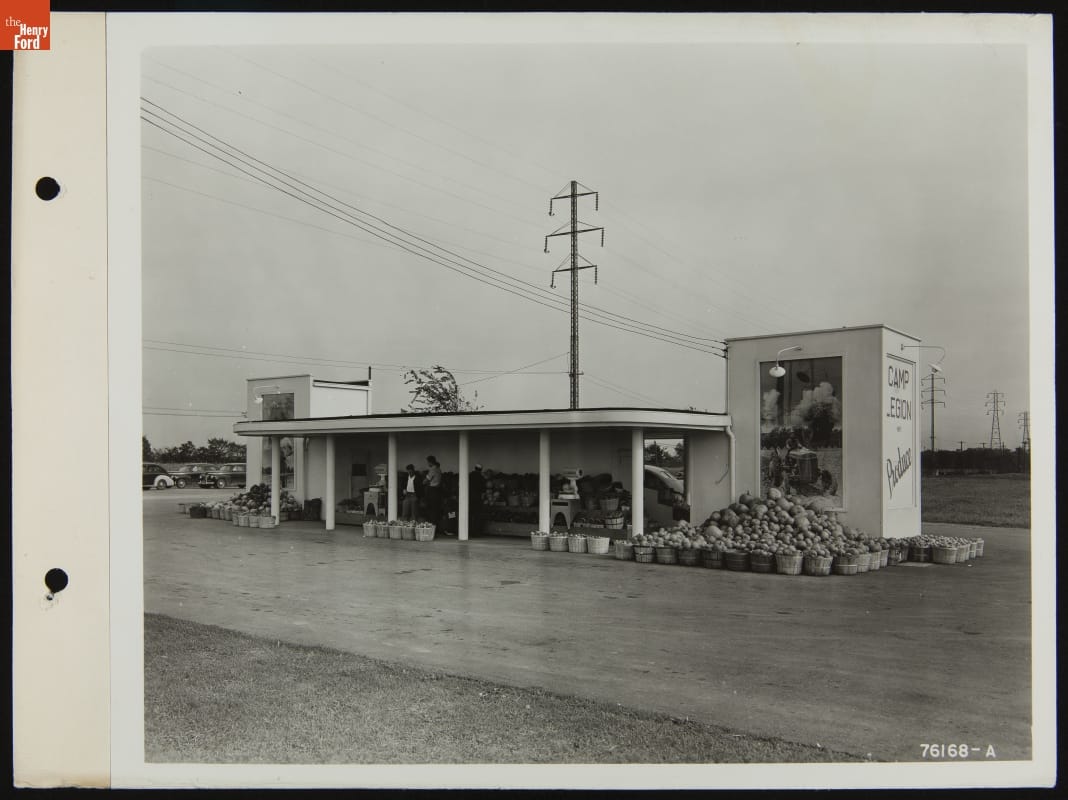
- October 02, 1941
- Collections - Artifact
Camp Legion Produce Stand at Michigan and Greenfield, Dearborn, Michigan, October 1941
In 1938, Henry Ford opened Camp Legion for the sons of World War I veterans. Groups of young men lived and worked here from April until November, sleeping in tents and earning $2 for each eight-hour workday. The camp was designed to provide income to otherwise unemployed teenagers while teaching vocational skills, instilling a strong work ethic, and fostering good health.
- Open Air Market Scene (Franklin Street, East from 17th Street), Richmond, Va. - These farmer entrepreneurs sold melons at the Richmond, Virginia, market on 17th and Franklin streets. They used horse-drawn carts to transport their goods from farm to city even as others adopted the automobile. Racist language on the back of this postcard, however, blinded viewers to the superhuman efforts required to sustain crops as well as family and human dignity during the era of Jim Crow.
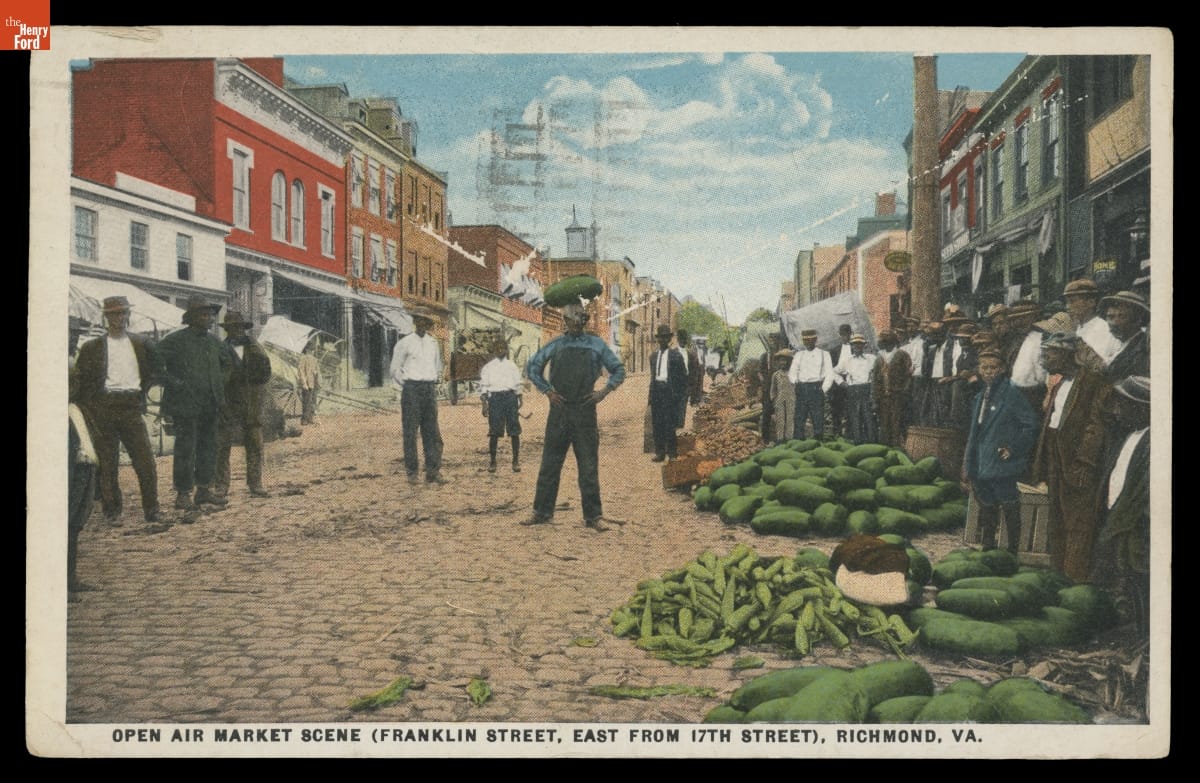
- April 19, 1921
- Collections - Artifact
Open Air Market Scene (Franklin Street, East from 17th Street), Richmond, Va.
These farmer entrepreneurs sold melons at the Richmond, Virginia, market on 17th and Franklin streets. They used horse-drawn carts to transport their goods from farm to city even as others adopted the automobile. Racist language on the back of this postcard, however, blinded viewers to the superhuman efforts required to sustain crops as well as family and human dignity during the era of Jim Crow.
- Camp Legion Produce Stand at Michigan and Greenfield Roads, Dearborn, Michigan, October 1942 - In 1938, Henry Ford opened Camp Legion for the sons of World War I veterans. Groups of young men lived and worked here from April until November, sleeping in tents and earning $2 for each eight-hour workday. The camp was designed to provide income to otherwise unemployed teenagers while teaching vocational skills, instilling a strong work ethic, and fostering good health.
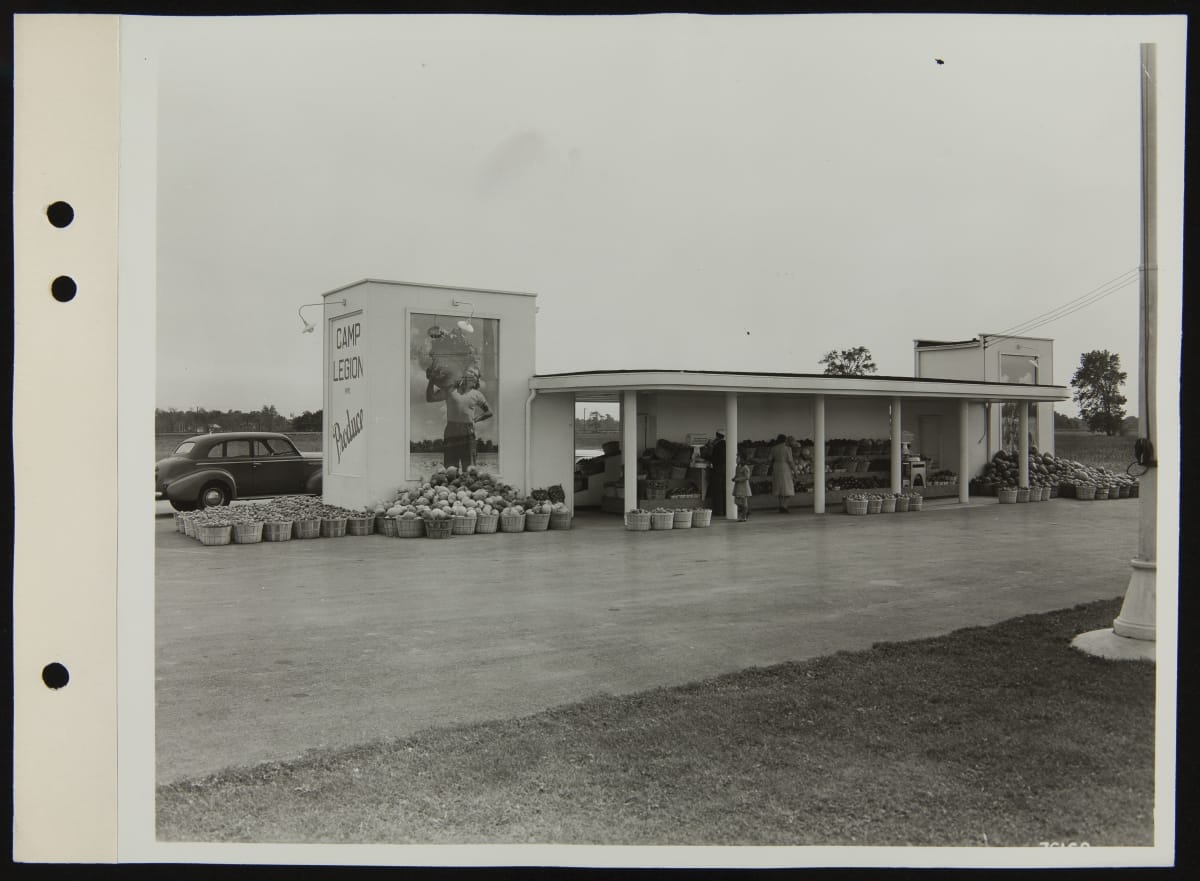
- October 02, 1941
- Collections - Artifact
Camp Legion Produce Stand at Michigan and Greenfield Roads, Dearborn, Michigan, October 1942
In 1938, Henry Ford opened Camp Legion for the sons of World War I veterans. Groups of young men lived and worked here from April until November, sleeping in tents and earning $2 for each eight-hour workday. The camp was designed to provide income to otherwise unemployed teenagers while teaching vocational skills, instilling a strong work ethic, and fostering good health.
- Hallmark "Tender Touches: Farmer's Market" Spring Club Ornament, 1997 - Hallmark introduced a line of Christmas ornaments in 1973. These ornaments appealed to customers' interest in marking memories, commemorating milestones, and expressing one's personality and unique tastes. This success led the company to produce ornaments for other holidays. Hallmark marketed and sold Easter and springtime ornaments in several series dating back to the 1990s.
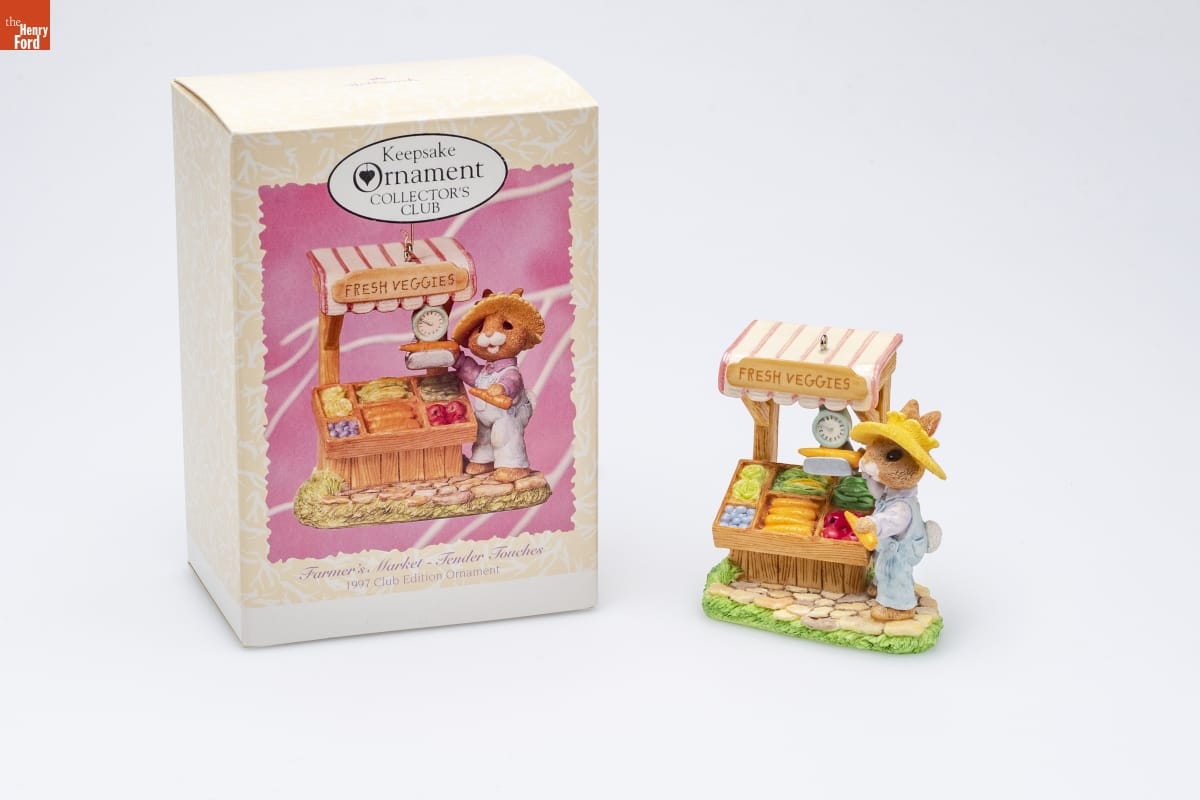
- 1997
- Collections - Artifact
Hallmark "Tender Touches: Farmer's Market" Spring Club Ornament, 1997
Hallmark introduced a line of Christmas ornaments in 1973. These ornaments appealed to customers' interest in marking memories, commemorating milestones, and expressing one's personality and unique tastes. This success led the company to produce ornaments for other holidays. Hallmark marketed and sold Easter and springtime ornaments in several series dating back to the 1990s.
- J. F. Ryders's Market, Maine, circa 1890 - Professional photographers began producing cabinet cards in 1867, and people soon preferred these photographic prints on cardboard stock to the earlier, smaller cartes-de-visite. American commonly collected and exchanged cabinet photographs through the early 1900s. This example from around 1890 shows J. F. Ryder's Market in Maine.
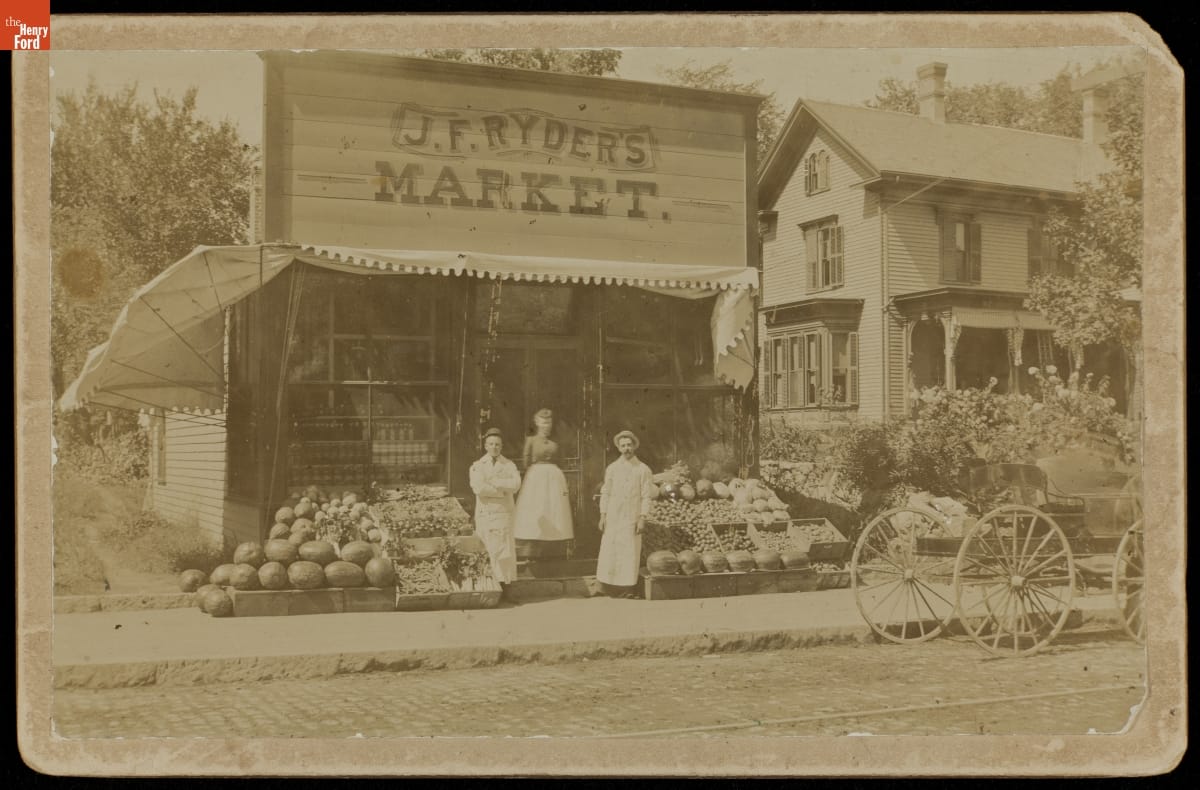
- circa 1890
- Collections - Artifact
J. F. Ryders's Market, Maine, circa 1890
Professional photographers began producing cabinet cards in 1867, and people soon preferred these photographic prints on cardboard stock to the earlier, smaller cartes-de-visite. American commonly collected and exchanged cabinet photographs through the early 1900s. This example from around 1890 shows J. F. Ryder's Market in Maine.
- 1925 Ford Coupe Advertisement, "Get All the Joy out of June" - Automakers have long realized that, in many families, women have the final say in car-buying decisions. Many advertisements, like this one, were directed toward female customers. This ad ran in the June 1925 issue of <em>Ladies' Home Journal</em>. It encouraged women to buy a Ford Model T, head onto the road, and "get all the joy out of June."
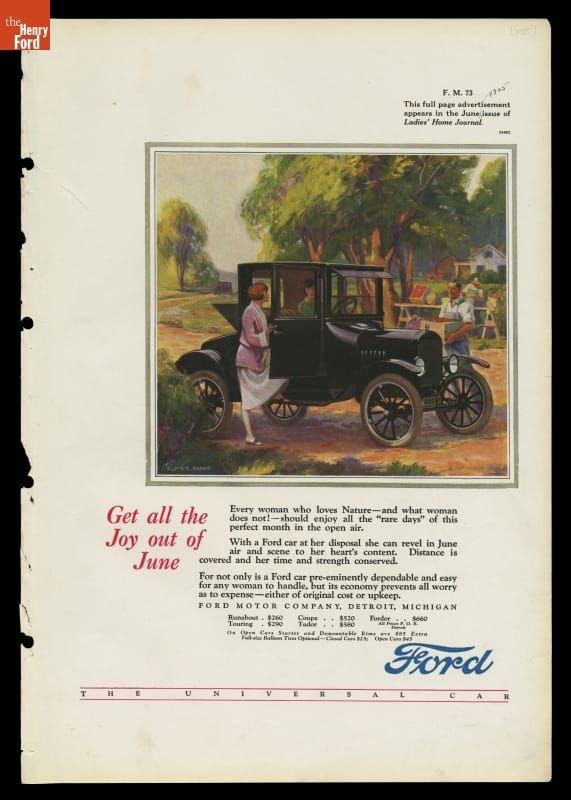
- June 01, 1925
- Collections - Artifact
1925 Ford Coupe Advertisement, "Get All the Joy out of June"
Automakers have long realized that, in many families, women have the final say in car-buying decisions. Many advertisements, like this one, were directed toward female customers. This ad ran in the June 1925 issue of Ladies' Home Journal. It encouraged women to buy a Ford Model T, head onto the road, and "get all the joy out of June."